Puerto Vallarta has surpassed 300 free public internet access points through the state's Red Jalisco digital network. More than 20 of those points are located in public spaces across the city. Separately, 184 schools in the municipality now have internet access through the same programme.
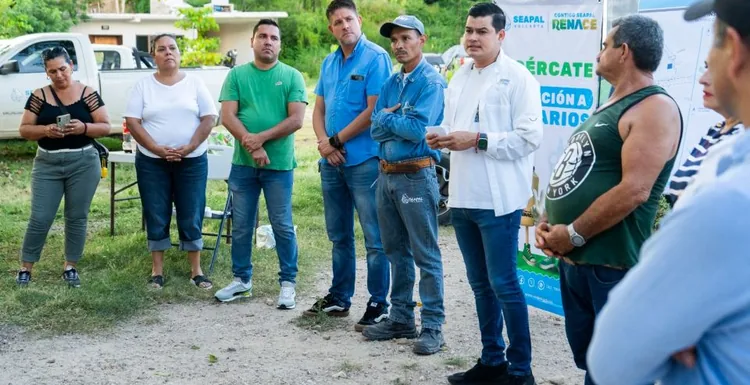
The figures were presented by Ángel Marcial Carrillo, manager of Organisation and Strengthening of Public Service, on behalf of Mayor Luis Munguía, at a regional working session that brought together municipal leaders from coastal and southwestern Jalisco alongside representatives from the state's Connectivity and Internet Access Agency.
184 Schools Connected
The school connectivity figure is the more operationally significant number in the announcement. Public internet points in plazas and streets are accessible to anyone within range. School connections are persistent infrastructure tied to specific institutions, where the presence or absence of connectivity directly affects the daily learning environment for teachers and students.
In Puerto Vallarta, where the school-age population includes a significant proportion of children from lower-income households whose homes may not have broadband access, a school connection can function as the primary digital access point for both students and their families outside school hours.
The 184 figure covers public schools across the municipality rather than a single zone. Geographic distribution within the city matters: schools in outlying colonias and peripheral neighbourhoods tend to have lower pre-existing connectivity than those in central areas, and the programme's coverage of those locations determines how effectively it addresses the access gap.
Regional Coordination Session
The working session hosted by Puerto Vallarta brought together municipal officials from multiple coastal and southwestern Jalisco municipalities. The meeting's focus was on strengthening coordination between municipal administrations and the state connectivity agency, with particular attention to underserved communities that current infrastructure does not yet reach.
The participation of smaller telecommunications providers in the Red Jalisco model was noted as a distinguishing feature of the programme's approach. Larger commercial carriers typically prioritise coverage in areas where subscriber density justifies the infrastructure investment. Smaller providers operating within a state-coordinated framework can extend service into lower-density areas that commercial logic alone would not reach.
2 Million Users Statewide, Puerto Vallarta in the Leading Group
Statewide, the Red Jalisco network has registered more than 2 million users across all 125 municipalities in Jalisco. The figure represents cumulative unique connections rather than simultaneous users. It indicates the scale of reach across the state but does not by itself describe how frequently or intensively the network is used in any given location.
Surpassing 300 access points positions Puerto Vallarta among the better-connected municipalities in the Red Jalisco network, consistent with its status as the state's second-largest urban centre. The concentration of public infrastructure in the hotel zone and downtown areas gives the city a higher baseline from which expansion can operate compared to smaller or more dispersed municipalities.
The scale metric also has a limitation worth noting. A user who connected once at a public plaza counts the same as a student using a school connection daily. More meaningful indicators of the programme's impact would include usage frequency data and the proportion of access occurring in underserved areas rather than those with existing commercial alternatives. These granular measures are not published routinely.
Frequently Asked Questions (FAQs)
Q: How many free internet access points does Puerto Vallarta now have?
A: Puerto Vallarta has surpassed 300 free public internet access points through the Red Jalisco state digital network, including more than 20 in public spaces such as plazas and parks. The figures were presented at a regional working session by Ángel Marcial Carrillo on behalf of Mayor Luis Munguía.
Q: How many schools in Puerto Vallarta have internet access through Red Jalisco?
A: 184 schools in Puerto Vallarta now have internet access through the Red Jalisco programme. The school connectivity is distinct from public space access points and provides persistent infrastructure tied to specific educational institutions.
Q: What was the purpose of the regional working session Puerto Vallarta hosted?
A: The session brought together municipal leaders from coastal and southwestern Jalisco alongside representatives from the state's Connectivity and Internet Access Agency. It focused on strengthening coordination and expanding coverage, particularly in underserved communities not yet reached by existing infrastructure.
Q: How many users has the Red Jalisco network reached statewide?
A: The Red Jalisco network has registered more than 2 million users across all 125 municipalities in Jalisco. The figure represents cumulative unique connections rather than simultaneous active users.
Q: Why does Puerto Vallarta use smaller telecommunications providers for Red Jalisco?
A: Smaller providers operating within a state-coordinated framework can extend service into lower-density areas that commercial logic alone would not support. Larger commercial carriers typically prioritise coverage in areas where subscriber density justifies the infrastructure investment, leaving lower-density communities underserved.