







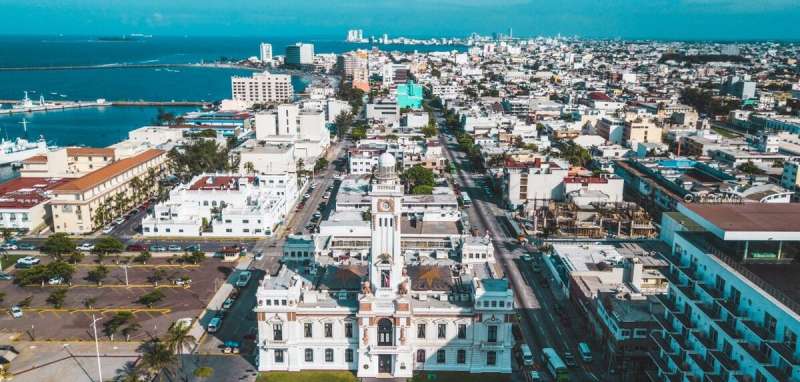
Veracruz's role as a migration transit state reflects geography as much as policy. The state sits between the southern entry points into Mexico and the northern border crossings into the United States. Overland migration routes that enter Mexico through Chiapas and cross the Isthmus of Tehuantepec reach the Gulf coast corridor through Veracruz before continuing north through Tamaulipas or west through San Luis Potosí toward the border.
The Gulf Corridor: From Chiapas to Tamaulipas and Into Texas
The primary northbound migration routes follow a limited number of overland corridors. The Gulf coast corridor through Veracruz connects Oaxaca and Chiapas in the south with Veracruz, then north through Tampico toward Matamoros and the Brownsville-McAllen crossing area into Texas. The Gulf corridor has remained a primary channel because it follows the most direct road connection between southern Mexico and the Texas crossing points that see the highest US entry volumes.
Alternative routes through central Mexico are longer and cross different criminal territories. The Pacific coast route involves greater distances and different terrain.
Criminal Control of Smuggling Routes
Criminal organisations in Veracruz have historically charged fees for allowing smugglers to operate on their territory, or have taken over smuggling operations directly. The organisations involved have changed over time as cartel power structures in eastern Mexico have shifted, but the economic logic has remained constant: a transit route with high migrant traffic generates revenue either through extortion of independent smugglers or through direct operation of the smuggling service.
Migrants who travel without paying a recognised smuggling organisation face higher risk of kidnapping, robbery, and violence. The fee-based smuggling system and the criminal threat to those outside it create strong incentive for migrants to use established smuggling networks even when the conditions of that transit, as in the Veracruz truck case, are dangerous in themselves.
Mass transportation in trucks is a specific operational choice by smuggling networks. Moving large numbers of people in a single vehicle reduces per-person cost, concentrates payment collection, and allows the operation to absorb checkpoint risk across fewer vehicles. The risk to the migrants is proportional to the density of the transport: 229 people in one trailer is considerably more dangerous than smaller groups in multiple vehicles.
This Case Was Not Found at a Checkpoint
Mexico's migration enforcement operates through checkpoints on major highways, coordinated by the National Immigration Institute and the National Guard. Smuggling networks use modified vehicles, sealed trailers, and bribed officials to move migrants past them.
The Veracruz truck was not detected at a checkpoint. It was stopped on theft-related grounds. The migrants were only found when they made noise at the impound lot hours later. This reflects both the failure of the specific smuggling operation and the structural limitation of checkpoint enforcement against sealed cargo vehicles carrying migrants who cannot be detected without opening the trailer.
Frequently Asked Questions (FAQs)
Q: Why does northbound migration in Mexico pass through Veracruz?
A: Veracruz sits between the southern entry points into Mexico and the northern border crossings into the United States. The Gulf coast corridor through Veracruz follows the most direct road connection between southern Mexico and the Texas border crossing points. Migrants entering Mexico through Chiapas typically travel through Oaxaca and into Veracruz before continuing north toward Tamaulipas and the Texas border.
Q: How do criminal organisations control migration routes in Veracruz?
A: Criminal organisations charge fees for allowing smugglers to operate on their territory or take over smuggling operations directly. Migrants who travel without paying a recognised smuggling network face higher risk of kidnapping, robbery, and violence. This creates strong incentive to use established but dangerous smuggling operations rather than travel independently.
Q: Why do smuggling networks use large trucks to transport migrants?
A: Mass truck transportation reduces per-person cost for smuggling networks, concentrates payment collection, and allows the operation to absorb checkpoint risk across fewer vehicles. The economics favour moving large groups in single vehicles even though the conditions are significantly more dangerous for the migrants than smaller group transport.
Q: Why wasn't the Veracruz truck discovered at a checkpoint?
A: The truck was not detected at a migration checkpoint. It was stopped on theft-related grounds and taken to an impound facility. The migrants were only found when they made their presence known hours later. The case illustrates both the failure of the specific smuggling operation and the limitations of checkpoint enforcement in detecting migrants hidden in sealed cargo vehicles.
Q: What is the route from Veracruz toward the US border?
A: The Gulf coast corridor continues north from Veracruz through Tampico toward Matamoros and the Brownsville-McAllen area crossing into Texas, which sees high US entry volumes. Alternative routes through central Mexico are longer and pass through different criminal territory. The Gulf corridor has remained a primary channel due to its direct road infrastructure connection to the Texas crossing points.