







Vallarta Today: Puerto Vallarta News
In The Spotlight
SEAPAL Vallarta
- Details
- Vallarta Today Staff
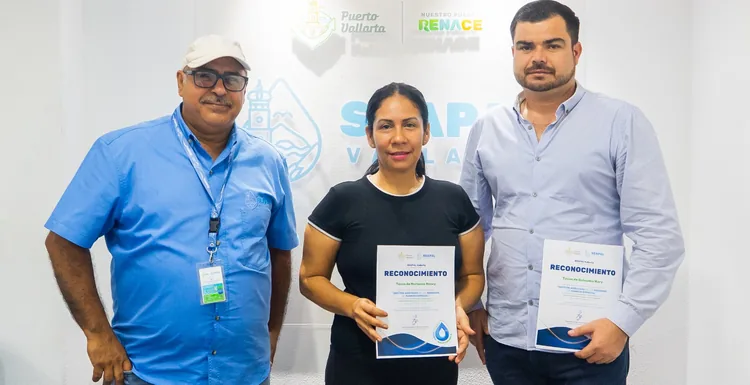
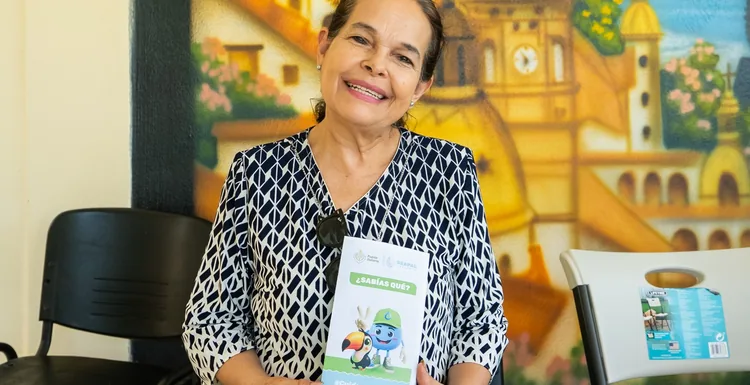
SEAPAL Vallarta held an orientation session for vendors and merchants at Mercado Palmar de Aramara as part of its “Cero Grasas, Cuidemos el Drenaje” campaign.
SEAPAL Vallarta
- Details
- Vallarta Today Staff
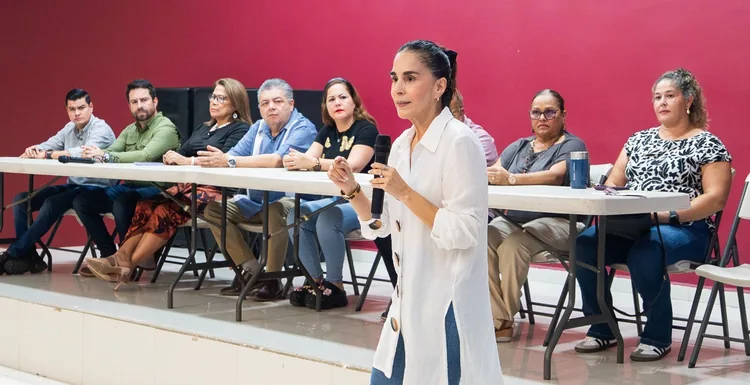
SEAPAL Vallarta says it is planning measures aimed at addressing longstanding wastewater spills affecting the Versalles neighborhood.
National Hurricane Center / NOAA
- Details
- Vallarta Today Staff
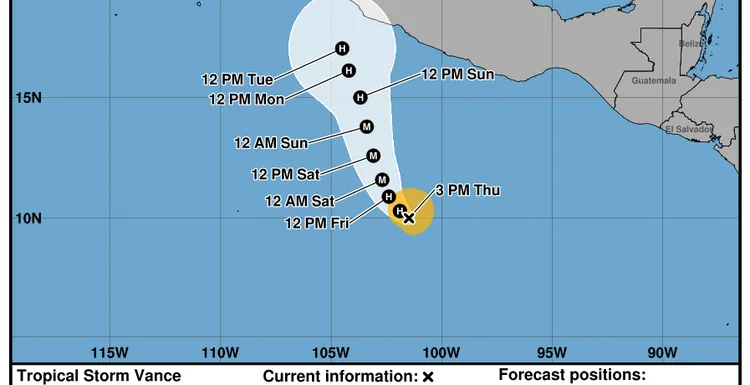
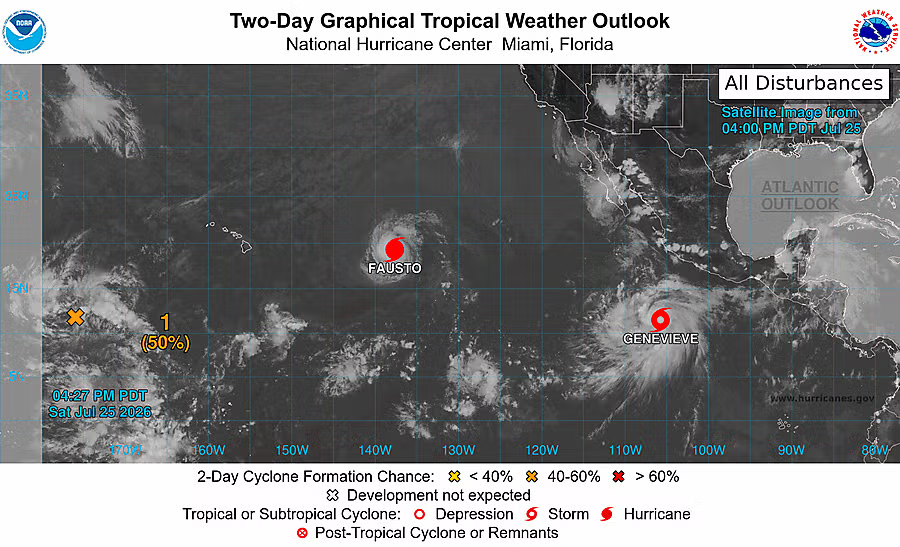
In its 3 p.m. CST Thursday advisory, the National Hurricane Center said Vance had 65 mph winds and remained far offshore, with no coastal watches or warnings in effect.
SEAPAL Vallarta — Noticias
- Details
- Vallarta Today newsroom
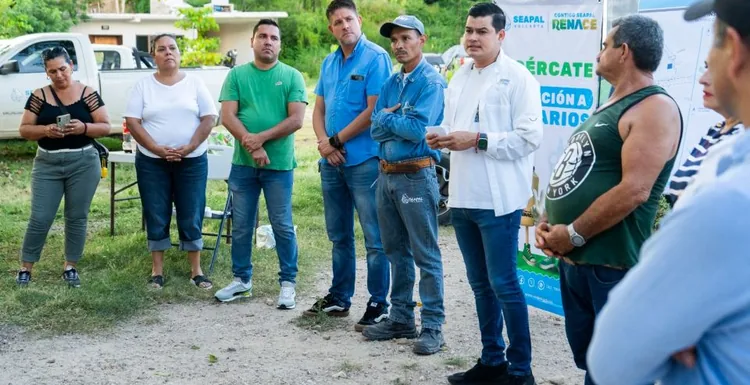
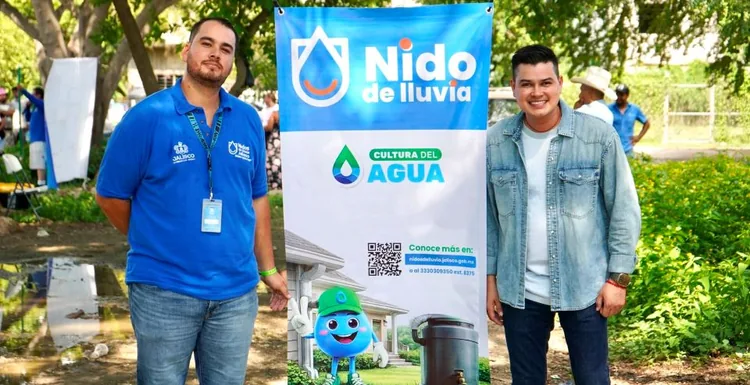
SEAPAL says four drinking-water extensions and two sanitary-drainage extensions will benefit 160 residents in La Mina I and II in Ixtapa.
CIRA/NOAA/NESDIS/STAR
- Details
- Vallarta Today newsroom
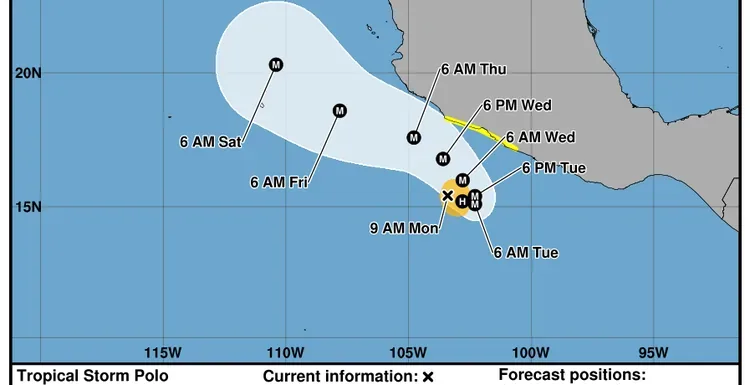
Puerto Vallarta is outside the current tropical-storm watch, but official forecasts still call for hazardous coastal rain and waves.

Photo: Jeff Coffin
- Details
- Vallarta Today Newsroom
Longtime friends Joe Schlesinger and Colin Williams reunite for two no-cover performances shaped by New Orleans, Muscle Shoals and more than 25 years of musical friendship.
WOComm AI-generated editorial illustration — not a photograph of the municipal event.
- Details
- TeD
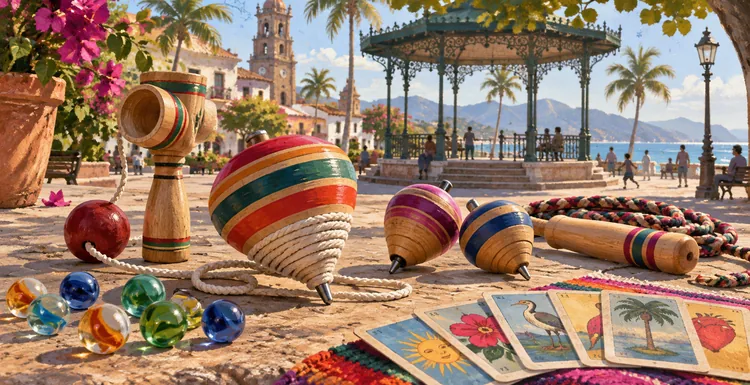
Municipal education officials reported that about 1,200 students, children, young people and families took part in a three-day National Traditional Games Day in Ixtapa, Las Juntas and El Pitillal.
WOComm AI-generated editorial illustration — conceptual depiction, not a photograph of the project site.
- Details
- TeD
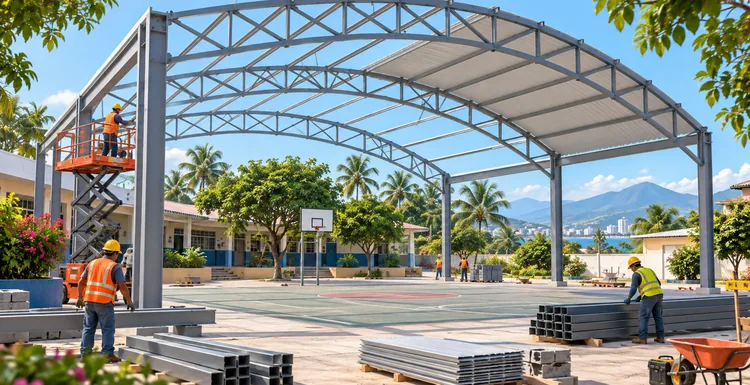
Municipal officials announced a 480-square-meter covered structure at the Las Aralias school that they said will benefit nearly 1,000 students.

WOComm AI-generated editorial illustration — conceptual depiction, not a photograph of an actual site.
SEAPAL Vallarta
SEAPAL Vallarta
SEAPAL Vallarta
A rainy-season storm over Puerto Vallarta. File photo: Jet’s Private Boat Tours.
- Details
- Vallarta Today Weather Desk

Vallarta Shores overlooks Los Muertos Beach and Banderas Bay from Puerto Vallarta’s Romantic Zone. Photo: Vallarta Shores.
- Details
- Vallarta Today Newsroom
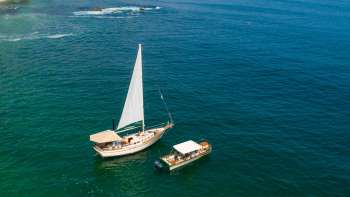
Ada and Bruna on Banderas Bay. Photo: AdaSailing.
- Details
- Vallarta Today Newsroom
SEAPAL Vallarta — Noticias
SEAPAL Vallarta — Noticias
Architectural rendering courtesy of Crystal Cove.

Photo: SEAPAL Vallarta
National Hurricane Center, Two-Day Graphical Tropical Weather Outlook, July 25, 2026
- Details
- The TED Perspective - Vallarta Today Weather Desk
More Vallarta News

Photo Credit: Jay Sadler Project A.C. / Commander Rey Spearo







-

127 vistas 22 jul 2024
In this video, I talk you through our 2 weeks in Puerto Vallarta including where to stay, what to do, and any advice and tips I can think of to share with you. We really enjoyed our 2 weeks in Puerto Vallarta so I hope you enjoy this video!? Where We Stayed:
? LINKS
Shop all my clothes, shoes, health & beauty, camera & tech here: https://rosieandre.com/products/
Shop all the tools & services I use to make and manage my money: https://rosieandre.com/tools-services/? CONTACT
Email:This email address is being protected from spambots. You need JavaScript enabled to view it.
Website: http://www.rosieandre.com
Instagram: / rosieandre_com?? ABOUT ME
I am a 30 something English woman, married to a French man. I am a photographer, podcast host and I love to travel! I post travel & lifestyle content. Enjoy the videos!? DISCLAIMER: Links included in this description might be affiliate links. If you purchase a product or service with the links that I provide I may receive a small commission. There is no additional charge to you! Thank you for supporting my channel so I can continue to provide you with free content each week!
MUSIC: The music in my videos is from Epidemic Sound, a royalty free music sharing site which you have to pay a monthly fee to be able to access. Click this link for a FREE 60 day trial https://share.epidemicsound.com/s9cb3m
TAGS
Puerto Vallarta, Puerto Vallarta Mexico, Puerto Vallarta vlog, Puerto Vallarta travel vlog, Puerto Vallarta advice, zona romántica Puerto Vallarta, what to do in Puerto Vallarta, where to stay in Puerto Vallarta, what to see in Puerto Vallarta, Puerto Vallarta beaches, Puerto Vallarta culture, Puerto Vallarta tips, Puerto Vallarta Mexico vlog, Puerto Vallarta Mexico travel vlog,
Lugares destacados
Obtén más información en Google MapsEl Malecón - Puerto Vallarta
Salón de playa- 8
(69 k)Detalles
Transcripción
Sigue el contenido con la transcripción.Mostrar transcripción
Rosie Andre
- 4 K suscriptores
Videos
InformaciónIG
-

157,638 vistas 4 sept 2022 #puertovallarta #mexico #viajes
En esta guía de viaje de Puerto Vallarta México exploraremos algunas de las mejores cosas para hacer en Puerto Vallarta. ¡Te mostraré algunas de las mejores cosas para ver en Puerto Vallarta como la Zona Romántica, Mantamar Vallarta, Malecón Puerto Vallarta, Marina Vallarta, Playa de Puerto Vallarta, Playa de Los Muertos y más!También te mostraré algunos de los mejores restaurantes de Puerto Vallarta y te mostraré la vida nocturna en Puerto Vallarta.
Si está buscando una guía de Puerto Vallarta y quiere saber cuáles son las mejores atracciones de Puerto Vallarta, ¡esta guía de viaje de Puerto Vallarta es para usted!
Gracias por mirar y espero que disfrutes este vlog de viajes a Puerto Vallarta.
Si alguna vez has estado en Puerto Vallarta y tienes algunas recomendaciones de cosas que hacer en Puerto Vallarta, ¡no olvides dejarlas en la sección de comentarios!
? Enlaces a todas mis Redes Sociales ? https://linktr.ee/israelplata
? Instagram ? / isra_plata
? Correo electrónico para propuestas comerciales ?This email address is being protected from spambots. You need JavaScript enabled to view it. ? Apoya este canal con Patreon ? / israelplata
? Apoya este canal con PayPal ? https://www.paypal.com/donate/?hosted...
?? Mi canal de YouTube en Español ? / @israplata
Guía de viaje de Puerto Vallarta
Blog de Puerto Vallarta
Tour Puerto Vallarta
Cosas que hacer en Puerto Vallarta
Consejos de viaje para Puerto Vallarta00:00 Introducción
02:08 Información importante sobre Puerto Vallarta
03:19 Dónde alojarse en Puerto Vallarta
04:18 Malecón Puerto Vallarta
05:02 Parroquia de Nuestra Señora de Guadalupe
06:08 Paletas en La Michoacana
07:34 Tiempo en Puerto Vallarta
08:41 Desayuno en Fredy´s Tucan
10:24 Almar Resort
11:16 Marina Vallarta -

19,844 views May 27, 2023 PUERTO VALLARTA
Puerto Vallarta Best Things To Do in town 2023. It's time to get off the resort in Puerto Vallarta! Today we're taking you around PV and showing you the top things to do in the Centro and Zona Romantica areas. Puerto Vallarta is one of Mexico's top vacation destinations, and there are a lot of day trips to take from PV. But today, we want to show you what you can do on a day trip to Puerto Vallarta!EXTENSIVE PUERTO VALLARTA GUIDE (beyond the city + day trips) ? https://www.thatch.co/guide/37sbfgykh...
/// BEST PUERTO VALLARTA TOURS & EXPERIENCES ///
Downtown Taco and Tequila Tour:
Evening Streetfood Taco Tour:
Private Los Arcos Snorkel Boat Tour:
Rhythms of the Night Cruise and Dinner:
More PV Adventures:/// THINGS WE RECOMMEND ///
?The BEST travel shoes (fully waterproof!): https://crrnt.app/VESSI/pjlz_AwJ
? International travel insurance we use and trust: https://safetywing.com/?referenceID=t...
? Camera gear and must-have travel items: https://www.amazon.com/shop/thebomsaway/// LET’S CONNECT! ///
? Instagram:/ ericandsarah_
? Website: https://www.ericandsarah.ca
✏️ Need help trip planning? https://www.thatch.co/@ericandsarah
? Travel tips and BTS updates: http://ericandsarah.ca/newsletter/For business inquiries, email
This email address is being protected from spambots. You need JavaScript enabled to view it. ☕ If you found valuable information or entertainment in this video, consider buying us a coffee ! https://www.buymeacoffee.com/ericands...
/// ABOUT US ///
Hi! We're Eric and Sarah, a couple of Canadians currently travelling full time through the Americas. Our passion is creating helpful and inspiring videos that makes you feel capable and confident to explore places you may have never considered travelling before! And if you're not a traveller... we hope our videos at least provide you a little entertainment and make you smile as you experience how beautiful the world is :) Thanks for following along and please leave a comment to say hi!FILMED APRIL 2023
CHAPTERS:
0:00 - Welcome to Puerto Vallarta!
0:44 - Puerto Vallarta Malecon
2:56 - Centro PV
4:44 - Zona Romantica
5:40 - Best tacos in PV?!
8:39 - Cuele Island Market
9:10 - Sunset drinks
10:18 - PV at night* Disclaimer: Some of these links are affiliate links where we earn a small commission if you make a purchase at no additional cost to you.
-

1,963 views Jun 23, 2023 #puertovallarta #puertovallartarealestate #mexicorealestate
In this video I show you one of my favorite neighborhoods in Puerto Vallarta, Marina Vallarta. Located a few minutes away from the airport and 15 minutes away from Downtown, Marina is a very sought out upscale neighborhood. Watch this video to learn more!For more info about investing or relocating in beautiful Puerto Vallarta, please feel free to contact us at anytime! We have been receiving so many messages and we absolutely love it!
00:00 Intro
00:41 Presentation
01:11 The Marina
05:30 The Boardwalk
08:59 "El Faro"
09:55 Golf course
11:18 OutroText or Whatsapp ?+52-322-262-0783
This email address is being protected from spambots. You need JavaScript enabled to view it.
www.pvcondoinvestments.com
SEAPAL Vallarta
- Details
- Vallarta Today Staff
SEAPAL Vallarta held an orientation session for vendors and merchants at Mercado Palmar de Aramara as part of its “Cero Grasas, Cuidemos el Drenaje” campaign.
SEAPAL Vallarta
- Details
- Vallarta Today Staff
SEAPAL Vallarta says it is planning measures aimed at addressing longstanding wastewater spills affecting the Versalles neighborhood.
National Hurricane Center / NOAA
- Details
- Vallarta Today Staff
In its 3 p.m. CST Thursday advisory, the National Hurricane Center said Vance had 65 mph winds and remained far offshore, with no coastal watches or warnings in effect.
SEAPAL Vallarta — Noticias
- Details
- Vallarta Today newsroom
SEAPAL says four drinking-water extensions and two sanitary-drainage extensions will benefit 160 residents in La Mina I and II in Ixtapa.
CIRA/NOAA/NESDIS/STAR
- Details
- Vallarta Today newsroom
Puerto Vallarta is outside the current tropical-storm watch, but official forecasts still call for hazardous coastal rain and waves.
WOComm AI-generated editorial illustration — conceptual depiction, not a photograph of the project site.
- Details
- TeD
Municipal officials announced a 480-square-meter covered structure at the Las Aralias school that they said will benefit nearly 1,000 students.
- Details
- Patricio Banda Orozco
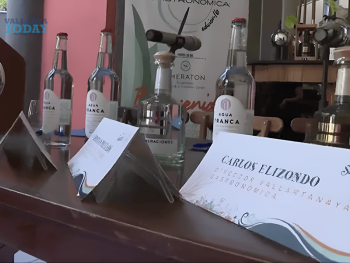
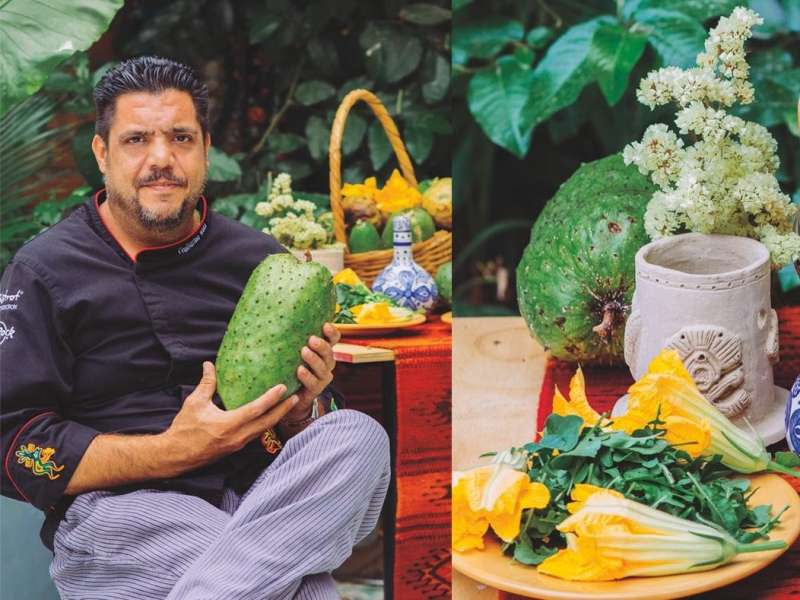
A constellation of the most innovative chefs and mixologists from Mexico, Latin America, and Europe, including Michelin Stars, 50 Best, and Top Chefs.


- Details
- Cristian Granados
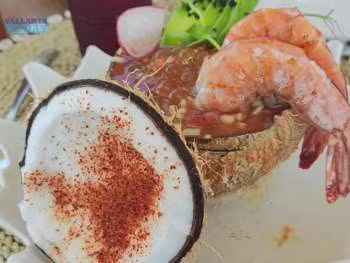
The Magical Italian Restaurant Offers a Great Gift for Puerto Vallarta
- Details
- Cristian Granados
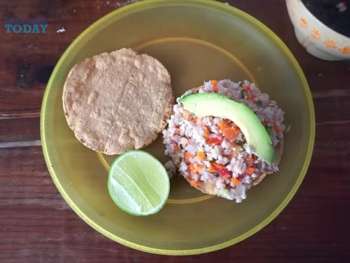
A Culinary Treasure of Coastal Areas like Puerto Vallarta.

- Details
- Patricio Banda Orozco
The Taco Tavern in Pitillal.
Photo: Jeff Coffin
- Details
- Vallarta Today Newsroom
Longtime friends Joe Schlesinger and Colin Williams reunite for two no-cover performances shaped by New Orleans, Muscle Shoals and more than 25 years of musical friendship.
WOComm AI-generated editorial illustration — not a photograph of the municipal event.
- Details
- TeD
Municipal education officials reported that about 1,200 students, children, young people and families took part in a three-day National Traditional Games Day in Ixtapa, Las Juntas and El Pitillal.

- Details
- Norway Master
Across the city, a series of infrastructure upgrades is beginning to influence daily routines in subtle but meaningful ways. Rather than dramatic transformations, these changes appear in small improvements to connectivity, mobility, and access to shared public spaces, the kinds of developments that shape how residents interact with their city every day.

- Details
- Norway Master
While galleries and markets often define Puerto Vallarta’s cultural calendar, two quieter traditions say just as much about the city’s identity: open-air film nights and nonprofit home tours. Both are continuing this season, reinforcing the role of community events in the local economy and social life.

- Details
- By Vallarta Today News Service
Hosting the Prestigious Spirits Selection Competition

Ada and Bruna on Banderas Bay. Photo: AdaSailing.
- Details
- Vallarta Today Newsroom
A classic sailboat bearing a grandmother’s name continues to carry one Puerto Vallarta family’s story across Banderas Bay.
AdaSailing was founded in 2007 by Captain Ernesto Alfano, an Argentine adventurer who arrived in Puerto Vallarta with his daughter Andrea in 2004. Ernesto restored a neglected sailboat he discovered at the Opequimar marina and named it Ada in honor of his mother.
What began as one sailor’s dream became a family business built around private experiences on the bay. After Ernesto died in 2017 following a battle with cancer, Andrea continued the company and the traditions they had created together.
Today, Ada is a carefully maintained 45-foot classic sailboat offering private trips along Puerto Vallarta’s coastline. The company’s experiences range from daytime and sunset sailing to whale watching, with food, drinks and bilingual crew service available aboard selected tours.
The family has also added Bruna, a 29-foot handcrafted powerboat designed to reach destinations throughout Banderas Bay more quickly. Its routes include Los Arcos, Yelapa, Quimixto and the Marietas Islands.
The two vessels provide distinctly different ways to experience the bay. Ada offers the quiet rhythm and character of traditional sailing, while Bruna combines classic craftsmanship with the speed needed for longer coastal excursions.
Travelers have responded enthusiastically. AdaSailing currently holds a 5.0 rating from 441 reviews on Tripadvisor, with guests frequently highlighting the crew, food, service and condition of the boat.
Behind those ratings is a story that began long before the first guest stepped aboard. It is the story of a father and daughter who built something together, a sailboat named for the woman who believed in Ernesto, and Andrea’s decision to keep that family legacy moving forward.
Nearly two decades after AdaSailing began, Ada still crosses Banderas Bay—not simply as a charter boat, but as a living family tribute.

- Details
- Norway Master
Álvaro Fidalgo's first call-up to Mexico's national team follows a career trajectory that runs from Spain through Mexican club football and back to Spain. His selection is the product of both a deliberate eligibility decision and the specific injury circumstances that created an opening in Aguirre's midfield at the moment his citizenship process was completing.

- Details
- Norway Master
Manager Javier Aguirre named a 26-man roster on Thursday for warm-up matches against Portugal on March 28 at Azteca Stadium and Belgium on March 31 at Soldier Field in Chicago. The squad's two headline selections are goalkeeper Guillermo Ochoa, returning to the national team at age 40 after missing the Gold Cup, and midfielder Álvaro Fidalgo, who receives his first senior call-up after gaining Mexican citizenship earlier this year.

- Details
- Norway Master
On March 8th, Teatro Vallarta hosts the 12th edition of What A Drag, a fundraiser that has become one of the more financially consequential evenings in Puerto Vallarta's civic calendar. The format, competitive drag transformation combined with professional entertainment, has stayed consistent across twelve years, but the stakes attached to it have grown. The event currently funds more than half of Casa Esperanza's annual operating budget. Casa Esperanza is the region's dedicated domestic violence shelter for women and children, operated by Compassion for the Family.
That figure is worth sitting with. A single evening of performance covers the majority of what a domestic violence shelter requires to keep its doors open for a year. It says something about the depth of community engagement this event has built, and something about the structural funding constraints that organisations like Casa Esperanza navigate in a country where state provision for domestic violence services remains inconsistent across municipalities.
- Details
- Cristian Granados
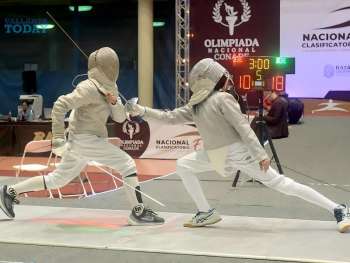
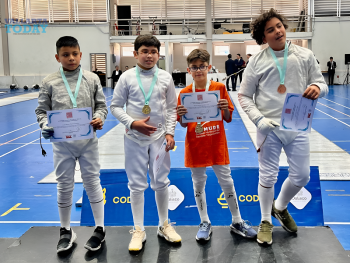
Maestra Jenny Lobato on her way to the Olympus of Elite Sport.
On the shores of the Mexican Pacific, where the sea breeze mixes with the heat of daily effort, a select group of young people has learned to wield the sword not only as a sport, but as a way of life. Esgrima Vallarta, led by the extraordinary Jenny Lobato, has had one of its most memorable seasons in the 2024-2025 cycle, making it clear that passion, discipline, and high performance can flourish even in a city better known for tourism than for Olympic podiums.
With 42 participations in total, this elite club has managed to put its fencers on the national and international map. But beyond the quantity, what stands out is the quality: 15 medals distributed in state, national, and international competitions, an achievement that very few academies in the country can boast. It is a record that speaks not only of technique, but also of an unwavering commitment to the art of combat sports.
Under the firm and sensitive gaze of Jenny Lobato, the athletes have trained with a determination that transcends age: from the youngest in the Children's category, through the fierce Cadets and Juniors, to the Seniors who compete both individually and in teams. Fencing, a sport historically reserved for aristocratic circles, has become a path to excellence for those willing to master body and mind with surgical precision.
The high point of this season has undoubtedly been the qualification of one of its athletes for the 2025 National Olympics, a competition that brings together the best in the country in a fight for sporting supremacy. This honor went to Iyari López Cueto, a young man who has demonstrated not only skill but also the mettle of a true modern warrior. He will represent Puerto Vallarta at the event to be held June 20-28, carrying in his weapon and his gaze the dreams of many and the pride of an entire community.
But the glory does not end there. Another key member of the team, Darío Romo, has achieved what many consider the threshold of high-level fencing: qualification for the 2025 Pan American Children's and Veterans Championship, an event to be held from August 15 to 21 that will pit him against the best on the continent. It is an achievement that does not come by chance, but through years of dedication, sweat, and commitment.
And while the spotlight is on these athletes, the figure of Jenny Lobato emerges as the soul of this dream machine. Teacher, coach, and mentor, she has managed to combine the demands of technique with respect for the personal growth of each of her students. It is not just about medals, but about shaping human beings who understand the value of strategy, respect for the opponent, and the beauty of fair play.
Esgrima Vallarta is not just another club. It is a trench of dreams and swords, a space where the select and the profound go hand in hand. Where the nobility of sport is lived out between masks and foils, between cries of victory and silences of concentration. In a Puerto Vallarta that often forgets the talent it holds within, this group has become an example of what can be achieved when you work with your heart.
Because in combat, as in life, the winner is not only the one who knows how to attack, but also the one who understands when to wait, when to advance, and when to give their whole soul in a single touch. This is how Esgrima Vallarta has written its history this season: with passion, strategy, courage, and a deep love for the sport that only the powerful of spirit can practice. And the best, without a doubt, is yet to come.
SEAPAL Vallarta
- Details
- TeD
SEAPAL Vallarta says more than 3,000 older adults currently receive a 50% discount on water service and can access free purified water through its Gogomáticos program.
SEAPAL Vallarta — Noticias
- Details
- TeD
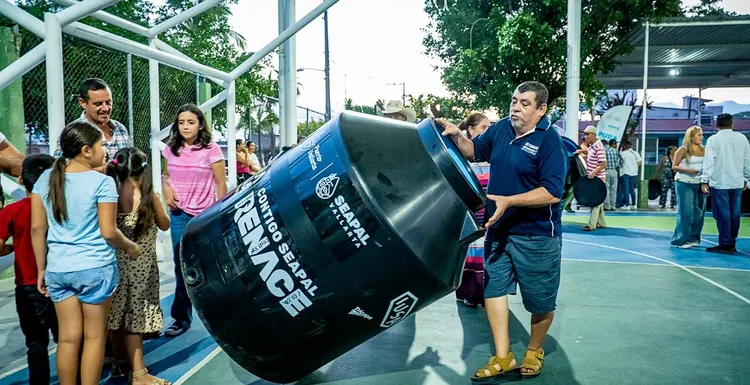
SEAPAL Vallarta reported that 60 water-storage tanks were distributed as part of work in Puerto Vallarta’s rural Las Palmas delegation.
SEAPAL Vallarta — Noticias
- Details
- TeD
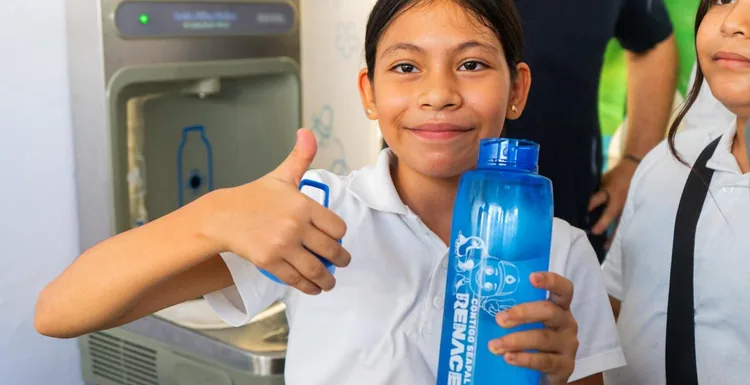
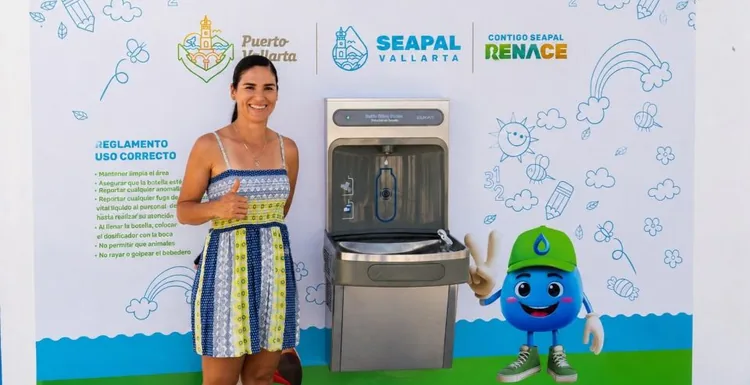
The municipal water utility says seven drinking fountains are planned for sports, civic and tourist-area locations in Puerto Vallarta during the program’s first stage.
Architectural rendering courtesy of Crystal Cove.
- Details
- By TeD
New photographs show the oceanfront condominium’s curved façade, pools and rooftop amenities taking shape on El Tizate Beach.
Photo: SEAPAL Vallarta
- Details
- By TeD
SEAPAL Vallarta says an urgent repair to a line supplying the San Francisco Tank will affect 139 neighborhoods and residential developments in the city’s north starting Friday, July 31.
- Details
- Vallarta Today Publisher
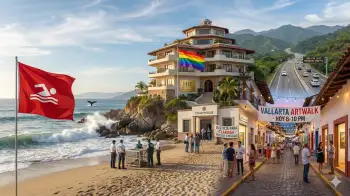
Good morning, Puerto Vallarta! As the city settles back into its rhythm after the holiday weekend, today's focus is on legal resolutions in a high-profile case, a major hospitality milestone for the Romantic Zone, and the peak of the whale-watching season in Banderas Bay.

- Details
- Dental Avant-garde - Dr Octavio
Dr. Octavio's Quest: Free Smiles for the People of El Colomo, Nayarit

- Details
- Guillermo Hernández Rosales
The Hotel Sector Could Combat It with Anti-Stress Measures.
- Details
- Patricio Banda Orozco
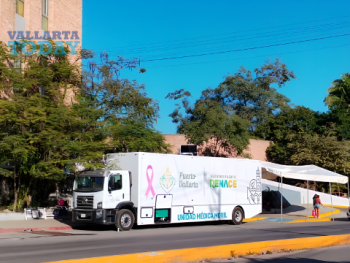
An Initiative of the Municipal Government of Puerto Vallarta.

- Details
- Patricio Banda Orozco
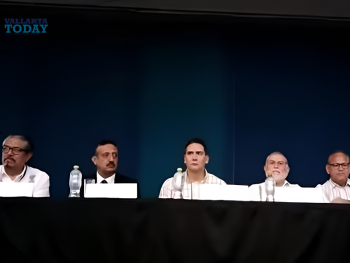
200 Students from Across the Country Will Learn About AI in Medicine

- Details
- Patricio Banda Orozco
Grand Finale of the XLVIII Annual Meeting of the Mexican Academy of Neurology

SEAPAL Vallarta
SEAPAL Vallarta
National Hurricane Center / NOAA
SEAPAL Vallarta — Noticias
CIRA/NOAA/NESDIS/STAR
Finance


Current Events

- 27 May 2022 - 27 May 2022
- Municipal Palace
- Independencia #123, Puerto Vallarta

- 28 May 2022 - 28 May 2022
- Ejidal Hall of the Municipal Delegation of Ixtapa
- Juarez 178, Ixtapa

- 25 February 2022 - 25 February 2022
- Teatro Vallarta
- Uruguay 184, Puerto Vallarta
- 14 August 2020 - 14 August 2020
- Puerto Vallarta, Mexico
- FaceBook Live Stream at 7:00pm
SEAPAL Vallarta
- Details
SEAPAL Vallarta held an orientation session for vendors and merchants at Mercado Palmar de Aramara as part of its “Cero Grasas, Cuidemos el Drenaje” campaign.
SEAPAL Vallarta
National Hurricane Center / NOAA
SEAPAL Vallarta — Noticias
CIRA/NOAA/NESDIS/STAR
- Details
A constellation of the most innovative chefs and mixologists from Mexico, Latin America, and Europe, including Michelin Stars, 50 Best, and Top Chefs.


Recipes
- Details


Photo: Jeff Coffin
- Details
Longtime friends Joe Schlesinger and Colin Williams reunite for two no-cover performances shaped by New Orleans, Muscle Shoals and more than 25 years of musical friendship.
WOComm AI-generated editorial illustration — not a photograph of the municipal event.



Ada and Bruna on Banderas Bay. Photo: AdaSailing.
- Details
A classic sailboat bearing a grandmother’s name continues to carry one Puerto Vallarta family’s story across Banderas Bay.
AdaSailing was founded in 2007 by Captain Ernesto Alfano, an Argentine adventurer who arrived in Puerto Vallarta with his daughter Andrea in 2004. Ernesto restored a neglected sailboat he discovered at the Opequimar marina and named it Ada in honor of his mother.
What began as one sailor’s dream became a family business built around private experiences on the bay. After Ernesto died in 2017 following a battle with cancer, Andrea continued the company and the traditions they had created together.
Today, Ada is a carefully maintained 45-foot classic sailboat offering private trips along Puerto Vallarta’s coastline. The company’s experiences range from daytime and sunset sailing to whale watching, with food, drinks and bilingual crew service available aboard selected tours.
The family has also added Bruna, a 29-foot handcrafted powerboat designed to reach destinations throughout Banderas Bay more quickly. Its routes include Los Arcos, Yelapa, Quimixto and the Marietas Islands.
The two vessels provide distinctly different ways to experience the bay. Ada offers the quiet rhythm and character of traditional sailing, while Bruna combines classic craftsmanship with the speed needed for longer coastal excursions.
Travelers have responded enthusiastically. AdaSailing currently holds a 5.0 rating from 441 reviews on Tripadvisor, with guests frequently highlighting the crew, food, service and condition of the boat.
Behind those ratings is a story that began long before the first guest stepped aboard. It is the story of a father and daughter who built something together, a sailboat named for the woman who believed in Ernesto, and Andrea’s decision to keep that family legacy moving forward.
Nearly two decades after AdaSailing began, Ada still crosses Banderas Bay—not simply as a charter boat, but as a living family tribute.




- Details
Dr. Octavio's Quest: Free Smiles for the People of El Colomo, Nayarit





- Details
This international sporting event will take place from October 28th to 30th in this city


Events
- Details

More Articles
- Details
- Patricio Banda Orozco
- Details
- Patricio Banda Orozco
- Details
- Cristian Granados
- Details
- Cristian Granados
- Details
- Cristian Granados
- Details
- Patricio Banda Orozco

- Details
- Patricio Banda Orozco

- Details
- Cristian Granados

- Details
- BEATRIZ VAZQUEZ

- Details
- BEATRIZ VAZQUEZ

- Details
- Beatriz Vazquez

- Details
- Emma Flash