







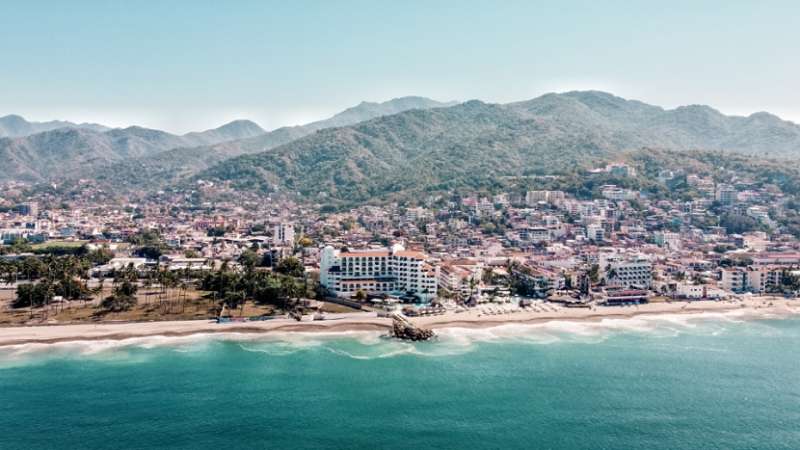
Coastal tourism cities in Mexico present a specific digital divide pattern. The hotel zone, commercial areas, and downtown districts in cities like Puerto Vallarta have robust commercial internet infrastructure driven by the hospitality industry's operational requirements. The colonias on the city's periphery, where lower-income residents live, often have limited or no commercial broadband coverage.
Why Tourism Zones Get Infrastructure First
Commercial broadband providers make coverage decisions based on expected revenue per connection point. The hotel zone in Puerto Vallarta concentrates high-value subscribers: large hotels with bandwidth-intensive operations, restaurants and retail with payment systems requiring connectivity, and a dense population of international visitors with smartphones generating data demand.
The result is that the areas of Puerto Vallarta with the least economic need for a subsidy programme already have multiple commercial providers competing for customers. The areas with the greatest need, working-class colonias in the city's northern and eastern expansions, have fewer commercial options and are precisely the locations where Red Jalisco access points and school connections have the most transformative potential.
This geographic asymmetry is not unique to Puerto Vallarta. It is a feature of most mid-sized Mexican cities with a tourism-dominant economic structure. The infrastructure investment pattern follows the economic activity rather than the population distribution.
Workers in the Hospitality Economy Feel the Gap Most
Households without broadband face compounding disadvantages. Children cannot complete assignments requiring online research, access digital textbooks, or participate in remote learning. Adults cannot access digital government services or apply for jobs through online portals.
In Puerto Vallarta's context, the hospitality workforce is particularly affected. A hotel or restaurant worker without home broadband cannot develop the digital skills increasingly required for advancement in an industry that is becoming more technology-dependent. The connectivity gap between resort infrastructure and the colonias where workers live creates a structural disadvantage within the same economic sector.
Red Jalisco addresses this asymmetry by targeting public spaces and schools in commercially underserved areas. An access point in a colonia plaza serves a fundamentally different population than one in the hotel zone beachfront. But it cannot replicate home broadband, which does not require physical presence at a shared location and is available at all times.
Frequently Asked Questions (FAQs)
Q: Why do tourism cities like Puerto Vallarta have uneven internet connectivity?
A: Commercial broadband providers prioritise areas with high expected revenue per connection point. In Puerto Vallarta, the hotel zone concentrates high-value subscribers including large hotels, restaurants, and international visitors. Peripheral colonias where lower-income residents live have fewer commercial options. The infrastructure investment pattern follows economic activity rather than population distribution.
Q: What disadvantages do households without broadband face?
A: Children without home connectivity cannot complete assignments requiring online research, access digital textbooks, or participate in remote learning. Adults cannot access digital government services, apply for jobs through online portals, or develop skills through online platforms. In Puerto Vallarta's hospitality economy, the connectivity gap also limits workers' ability to develop the digital skills increasingly required for career advancement.
Q: Does Red Jalisco solve the connectivity problem for underserved colonias?
A: Red Jalisco addresses part of the problem by placing access points in public spaces and schools in commercially underserved areas. It cannot replicate home broadband, which requires users to be physically present in a shared space. A full solution would require extending commercial or subsidised home broadband to underserved households directly.
Q: Why is school-based internet access important for Puerto Vallarta students?
A: In households without home broadband, a school connection can function as the primary digital access point for students. School-based access enables digital learning, research, and skills development that students without any connectivity cannot access at all. However, school access has temporal and physical constraints: students can only use it during school hours or nearby, unlike home connectivity which is always available.
Q: What does the hospitality industry's digital evolution mean for Puerto Vallarta's workforce?
A: The hotel and restaurant sector is becoming increasingly technology-dependent across reservations, payment systems, customer communications, and operational management. Workers who cannot develop digital skills due to lack of home broadband face a structural disadvantage in an industry that increasingly expects digital competency. The connectivity gap between resort infrastructure and the colonias where workers live creates an inequality within the same economic sector.