







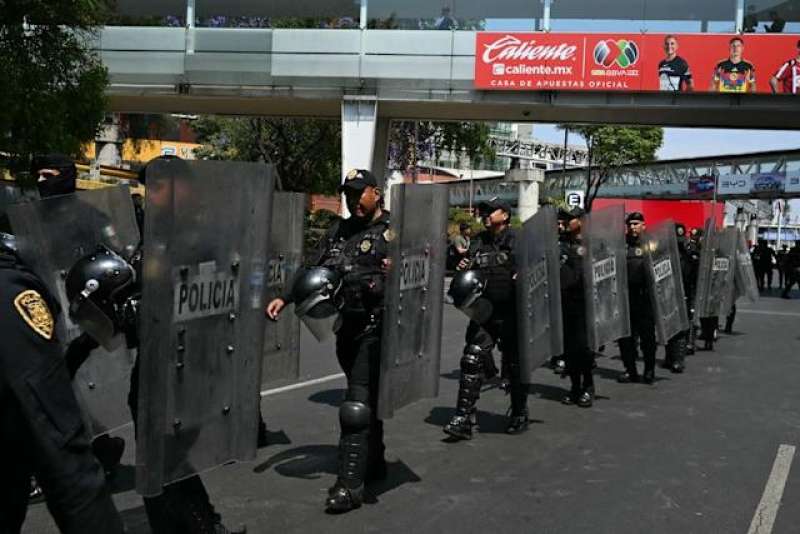
Mexico City International Airport has begun deploying National Guard units to prevent Uber, DiDi, and other ride-hailing services from operating inside airport facilities. The enforcement measure, effective March 12, is framed by airport authorities as an application of federal transportation regulations governing ground mobility services within federal airport zones.
The announcement comes as Mexico prepares to co-host the 2026 FIFA World Cup. Mexico City's Azteca Stadium hosts the opening match on June 11, making the airport's ground transportation situation a logistical concern for tournament planners.
Taxi Drivers Blocked Access Roads to Force Government Response
The enforcement announcement was preceded by a protest action from the concessioned taxi group Transportación Terrestre Nueva Imagen, which blocked access roads to both airport terminals. The group said the action was triggered by what it described as a lack of consistent enforcement against ride-hailing services in areas where federal regulations prohibit their operation.
Carlos Lobera, an adviser to concessioned taxi operators at the airport, said the demonstration was aimed at opening dialogue with the Sheinbaum government. He warned that protests could expand to other airports nationwide if authorities do not respond to the sector's demands. Lobera added that taxi operators would prefer not to escalate but may be forced to intensify pressure as the World Cup approaches.
The Current Rule: Drop-Offs Yes, Pick-Ups No
Under current federal regulations, ride-hailing drivers are permitted to drop off passengers at Mexico City International Airport without penalty, but are not permitted to pick up passengers from airport terminals. This means trips cannot originate at the airport, a restriction that applies across all Mexican airports.
The asymmetry creates a situation where a passenger can use Uber to arrive at the airport but must use a concessioned taxi or the official airport taxi service to depart from it. This structure has been a consistent source of friction because it is not self-evident to arriving passengers, particularly international visitors.
Timing and World Cup Pressure
The enforcement escalation in March 2026 occurs approximately ninety days before the World Cup opening match. International visitor volumes at Mexico City airport are expected to rise significantly during the tournament period. The airport's ground transportation situation has been a documented concern in World Cup planning discussions, where the ease of movement between the airport and downtown or stadium locations is a baseline visitor experience metric.
Taxi operators have explicitly framed the World Cup as a deadline for resolution. If the dispute remains unresolved by June, the influx of international visitors unfamiliar with the pick-up restriction will create visible confusion at arrival terminals. That visibility, in a tournament context, amplifies the commercial and reputational stakes of a transport policy conflict that has been running for years without definitive resolution.
Frequently Asked Questions (FAQs)
Q: What transportation change is happening at Mexico City International Airport?
A: Airport authorities have deployed National Guard units to prevent Uber, DiDi, and other ride-hailing services from operating inside airport facilities. Under existing federal regulations, ride-hailing drivers may drop off passengers at the airport but cannot pick up passengers or originate trips from airport terminals.
Q: Why did taxi drivers block access roads to the airport?
A: The concessioned taxi group Transportación Terrestre Nueva Imagen blocked access roads to both airport terminals to pressure federal authorities into enforcing regulations against ride-hailing pick-ups inside airport zones. The group said the lack of consistent enforcement had forced the sector to take direct action.
Q: Can Uber and DiDi drop off passengers at Mexico City airport?
A: Yes. Under current federal rules, ride-hailing drivers can drop off passengers at the airport without penalty. The restriction applies to pick-ups: drivers cannot collect passengers from airport terminals or originate trips from airport zones. This asymmetry applies across all Mexican airports.
Q: Why is the World Cup creating urgency around this dispute?
A: Mexico City's Azteca Stadium hosts the World Cup opening match on June 11. International visitor volumes at the airport are expected to rise significantly during the tournament. Arriving international visitors unfamiliar with the pick-up restriction may encounter confusion at arrival terminals. Taxi operators have explicitly framed the World Cup as a deadline for resolution.
Q: What has Carlos Lobera said about escalating the protests?
A: Lobera, an adviser to concessioned taxi operators at the airport, warned that protests could expand to other airports nationwide if authorities fail to respond. He said taxi operators prefer not to escalate but may be forced to intensify pressure as the World Cup approaches if the dispute remains unresolved.