





Puerto Vallarta Restaurant Week
 Restaurant Week in Puerto Vallarta has been held yearly since 2005. The event is actually celebrated over 17 days, from May 15 to 31.

 Vallarta Today - Puerto Vallarta's Only Daily English Newspaper - Vallarta Daily News
The Newspaper Of The Bay
Vallarta Today - Puerto Vallarta's Only Daily English Newspaper - Vallarta Daily News
The Newspaper Of The Bay
Restaurant Week in Puerto Vallarta has been held yearly since 2005. The event is actually celebrated over 17 days, from May 15 to 31.
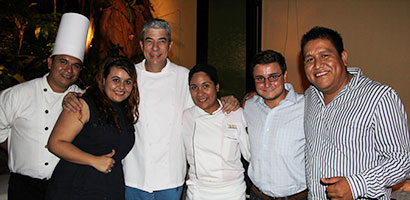 The restaurant Café des Artistes had the unique presence of one of the most important winemakers in Mexico, Central America and the Caribbean: Tomas Markmann, who was welcomed by the renowned Chef of the aforementioned restaurant, and together, they made an incredible Pairing Dinner for the special guests who enjoy fine dining.
 This event with a cause will take place on Friday, starting at 9:30 p.m. at Punto V. Attendees will be able to participate in the animal costume contest, raffles and other surprises.
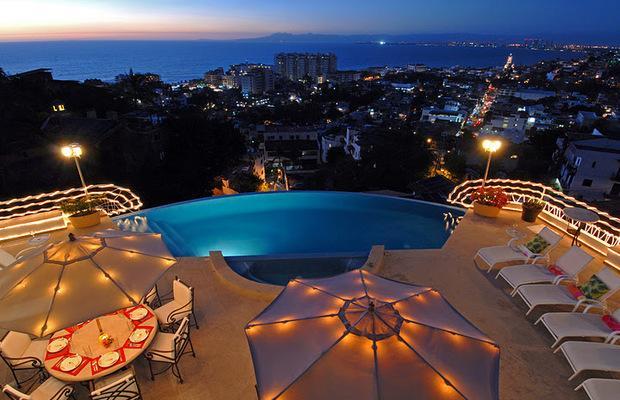 The Zona Romantica (aka Old Town) is Vallarta’s tourist hub. Packed with hotels, restaurants, bars, and taco stands, this historic cobblestoned neighborhood backs into the mountains and is shaped like an amphitheater, making the Zona-after-dark a contained and social place to party. In the daytime, come here to find souvenirs: blankets, silver, and tequila, the latter of which you can find in every flavor and strength as you walk the malecón (boardwalk). While there, fuel up on nacho-wrapped hot dogs, elote (corn, mayo, cheese, and churros, all of which are conveniently absorbent.
Stop at any OXXO and grab a six-pack of Pacifico, or step into one of the many locals for “un litro.” Drop your butt into the sand and watch the sunset (drinking in public is technically illegal but almost uniformly unenforced). Local mariachis will walk the beach and serenade the sun under the horizon. Around 20 pesos ($1.25 USD) will buy you a song.
The hours between sundown and dinner can be deceptively long, so do as the locals do and siesta. Vallarta will wake you promptly at nine o’clock every night, when the pirate ship anchored in Banderas Bay sets off fireworks. Your nap is over. Go to your balcony and open a beer.
Expect to eat late and take your time. In the Zona, have dinner or pre-drinks on the rooftop patio at Joe Jack’s Fish Shack; order the ginger mojito, seriously. Once you’re fed and lubricated, head over to Bolero’s. This is a decent place to start the tequila tour, but if you insist on the bar rail, ask for sangrita to cut the aftertaste.
Sometime in the morning hours, you’re going to get hungry. Time for the taco tour. Here’s a taco-stand primer: Each taquero(a) serves a different specialty; get the cebollitas (green friend onions) if they have them; try the salsas, carefully; cabeza means head; and gringo(a) palates will probably like barbacoa (barbecue), birria (stew), and tacos de pastor. By many accounts, the very best pastor in town is Takos Panchos, which is not a stand at all, but a small restaurant. Ask anyone, or look for the line on Olas Altas.
 We are very excited to present this musical classic that has inspired generations and hasn't been presented at the American School in over 10 years.
 The Bugambilia Festival, sponsored by the Puerto Vallarta Garden Club, is dedicated to improving the beauty of Puerto Vallarta
 March 24th - Months of preparation for the 1st Annual Luv in Art Festival featuring Kyle Lind has finally seen the light of day this past Saturday 22nd at Yelapa beach with great success!
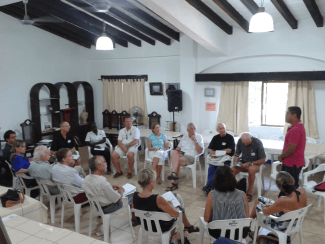 The International Friendship Club (IFC) has a long history of funding local area schools and educational programs. For many years, IFC member Mel Bornstein headed the Education effort, helped countless schools build playgrounds and bathrooms, and made sure many a student gained a better education. With Mel’s passing last summer, IFC President Dan Grippo put out a call for IFC members to join a new Education Committee. A robust committee of 9 members formed consisting of IFC members Marilyn Clark, Hélène Garneau, Ted Green, John Warren, Rosena Davison, Larry Peterson, Louella Levey, Penny Caceres, and Henry Golas, who serves as Education representative on the IFC Advisory Board.
The committee scheduled public forums in February and heard from a number of local organizations with educational programs. Groups were asked to submit funding proposals for consideration. As a result of this process as well as site visits to each institution, the IFC has awarded grants to the following six programs sponsored by local Asociaciones Civiles (registered non-profits):
1) American School’s “Leer y Crecer” program helps to build libraries in rural communities with the involvement of American School students and of the local families and students in the rural areas. Books are donated to start local libraries and teachers are offered workshops on how to use the libraries as centers of community learning.
2) British-American School’s “Me to We” program. Students and teachers from British-American School visit with students in public schools in economically challenged Colonia Volcanas, offering English and computer classes, other forms of assistance and support, and building ties and friendships across cultures.
3) Centro Comunitario SETAC. The IFC will help SETAC print informational brochures with specific, local resource and contact information targeted to Vallarta populations at risk for HIV infection, and will support SETAC efforts to reach remote barrios with information, testing, counseling and support services.
4) Biblioteca Los Mangos. The local community library is entirely funded by private sources and is in great need of an upgrade to its public-access computers that serve students and library patrons. The IFC will help them upgrade their computers with this grant.
5) Puerto Vallarta Youth Orchestra. This educational and artistic venture is well on its way to introducing hundreds of local children to the beauty, discipline, and challenge of learning classical music and participating in an orchestra. Classes for children ages 8 - 22 are conducted after school on a wide variety of instruments and alson on topics such as music theory and music history. Free concerts are offered at local and rural schools and several paid concerts a year help cover costs. Most of the students receive scholarship support, and there is always a need for musical instruments they can use to learn on, especially smaller instruments for younger students. The IFC will help them obtain some instruments with a grant.
6) Volcanas Community Education Project. This after-school project involves the families in one of the most economically challenged communities in the region in a collaborative effort with teachers and volunteers who offer English classes, computer training, and for those students who struggle reading Spanish, remedial reading classes. The IFC will help replenish their teacher stipend fund that has been depleted by needed construction costs.
The IFC is also looking at collaborative projects with other local organizations and hopes to fund further community education projects in the near future. IFC President Dan Grippo thanks all IFC members, supporters, donors, and volunteers whose fundraising efforts on IFC Tours, IFC Special Events, Classes, and Clubhouse Activities makes this educational funding possible.
The International Friendship Club is a registered charitable organization in Mexico listed as Club Internacional de la Amistad de Puerto Vallarta A.C. It is located at the northeast corner of the Rio Cuale Bridge above the HSBC Bank, Colonia El Centro, Puerto Vallarta, Jalisco, Mexico, 48300. Phone: 322-222-5466. Website: ifcvallarta.com. Email:
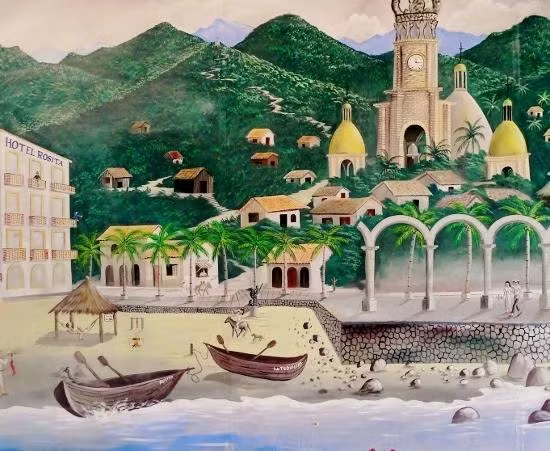 In the lobby of the Hotel Rosita in Puerto Vallarta there's a mural of what this Mexican beach resort looked like when the hotel was built in 1948. There wasn't much there, mainly a church, some homes scattered on hillsides above the village, the 12-room Rosita, and a short cobblestone walkway from the hotel to an arcaded plaza.
According to local chronista (historian) Manuel Encarnacion, about 7,000 people lived around the city in the late '40s, mostly fishing families. "The town," he said, "stretched out for about 12 blocks, looking much like it did when the whole world saw it in John Huston's 1963 film, "Night of the Iguana."
It turned out to be much more than a movie. Besides featuring a cast of superstars, among them Richard Burton, Ava Gardner, Deborah Kerr and Sue Lyon, the filming was spiced by an off-screen romance between Burton and Elizabeth Taylor, who'd followed him to Mexico. When word of this got out -- both were married to other people at the time -- the scandal made headlines around the globe.
Soon, hundreds of reporters were on the scene, straining to catch a glimpse of the couple cavorting between their secluded villas in an area of town known as "Gringo Gulch." Between snippets of Dick and Liz, the media sweetened its coverage with shots of the city's sundrenched beaches and the old-world charm of its cobbled lanes and colonial architecture.
Puerto Vallarta got millions of dollars worth of free publicity, and it hasn't been the same since.
As more and more tourists began showing up at "PV" (as the locals call it), developers began building posh hotels around the city and along the beaches edging its immense, crescent-shaped bay. Early entrants in the '60s were the Posada Vallarta (now part of Dreams Resorts) and the Camino Real (now part of the Krystal chain), recalls Encarnacion.
Fast-forward to today, and PV is one of Mexico's most-visited resorts, its beaches lined by some 300 high-rise hotels and boutique inns all told offering close to 23,000 rooms. It's now home to more than a quarter of a million people.
And what had been "a short cobblestone walkway" from the Rosita in 1948 is now PV's crown jewel: a mile-long beachfront promenade called the Malecon. Spruced up over the Iast few years at a cost of millions of dollars, the Malecon is packed with wall-to-wall art galleries, upscale jewelry and leather shops, tony restaurants, outdoor cafes and quirky bars.
Visitors wandering around the shops are treated to dozens of whimsical artworks peppering the beach side of the promenade. Gracing the sands are everything from Star Wars "Wookiee" characters to statues of giant seahorses, mermaids, jumbo-sized seashells, dancing dolphins and surrealistic high-backed chairs with sea critters sitting in them. Some of the works are by famous Mexican artists Sergio Bustamante, Alejandro Colunga and PV's own Manuel Lepe.
Right at the main entrance to the Malecon is the 112-room Rosita, now the oldest resort hotel in PV. Named after builder Salvador Gonzalez' wife, the hotel was enlarged a few times over the years, but it stayed on its original site.
"Little did (the builder) know that the Rosita would some day have such a wonderful location," said Marcelo Alcaraz, the hotel's general manager.
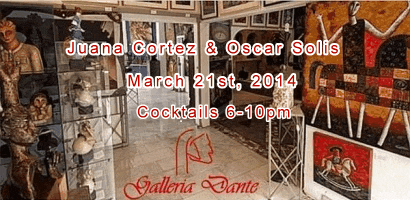 Juana Cortez
Juana Cortez, born in Apatzingan, Michoacan, began her journey as a painter under the teachings of artist Oscar Solis, who, as her mentor, was the fundamental person in helping her to achieve images filled with intense color.
 After a lengthy relationship and two children, Scott Disick and Kourtney Kardashian have announced they are now engaged. Though no date has been set, rumors are swirling around a wedding to take place in Casa Aramara Punta Mita.
 Semana Santa, or Holy Week, is the week leading up to Easter. This is the most important holiday in the church calendar because it is the celebration of the resurrection of Christ. Since Mexico is predominantly a Catholic country (nearly 90% of Mexicans practice Catholicism according to INEGI), Holy Week is a very important holiday.
Dates of Semana Santa:
Semana Santa is the week before Easter, from Palm Sunday (Domingo de Ramos) to Easter Sunday (Domingo de Pascua), but since students (and some workers) enjoy a two-week break at this time, the full week preceding Easter as well as the following week comprise the Semana Santa holiday. Find out the dates of Semana Santa, which vary from year to year.
Travel During Holy Week:
Since schools in Mexico have a two-week vacation period at this time, this is effectively Spring Break for Mexicans. This tends to be the hottest and driest time of year through most of the country, making the beach a magnet for those wanting to escape hot city streets. So if you're planning to travel to Mexico during this time, be prepared for crowds on beaches and at tourist attractions, and make hotel and travel reservations well in advance.
Religious Celebrations:
The religious observances of Semana Santa do not take a back seat to beach fun, however. Processions and passion plays take place all through the country, though different areas celebrate in different ways and certain communities have more effusive celebrations. Among those places where Holy Week is celebrated en grande are Taxco, Pátzcuaro, Oaxaca and San Cristobal de las Casas.
Jesus' final days are evoked in the rituals that take place during the week.
Palm Sunday - Domingo de Ramos
On the Sunday prior to Easter, known as Palm Sunday, the arrival of Jesus in Jerusalem is commemorated. According to the Bible Jesus rode into Jerusalem on a donkey and the people in the streets laid down palm branches in his path. In many towns and villages in Mexico on this day there are processions reenacting Jesus' triumphal entry, and woven palms are sold outside churches.
Maundy Thursday - Jueves Santo
The Thursday of Holy Week is known as Maundy Thursday or Holy Thursday. This day commemorates the washing of the feet of the apostles, the Last Supper and Jesus' arrest in Gethsemane. Some Mexican traditions for Maundy Thursday include visiting seven churches to recall the vigil the apostles kept in the garden while Jesus prayed before his arrest, foot-washing ceremonies and of course Mass with Holy Communion.
Good Friday - Viernes Santo
Good Friday recalls the crucifixion of Christ. On this day there are solemn religious processions in which statues of Christ and the Virgin Mary are carried through town. Often the participants of these processions dress in costumes to evoke the time of Jesus. Passion plays, dramatic recreations of the crucifixion of Christ, are presented in many communities. The largest takes place in Iztapalapa, south of Mexico City, where over a million people gather every year for the Via Crucis.
Holy Saturday - Sabado de Gloria
In some places there is a custom of burning Judas in effigy because of his betrayal of Jesus, now this has become a festive occasion. Cardboard or paper mache figures are constructed, sometimes with firecrackers attached, and then burned. Sometimes the figures are made to represent political figures.
Easter Sunday - Domingo de Pascua
You won't come across any mention of the Easter Bunny or chocolate eggs on Easter Sunday in Mexico. This is generally a day when people go to Mass and celebrate quietly with their families, though in some places there are festivities with fireworks.


 March 14 - With great expectation, Puerto Vallarta music lovers had the privilege of being captivated by the presence of Lorna Luft, who performed for the first time ever in Puerto Vallarta to an excited audience.
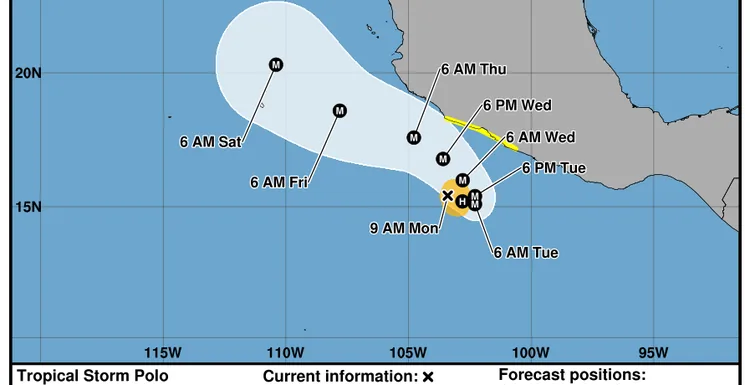
CIRA/NOAA/NESDIS/STAR
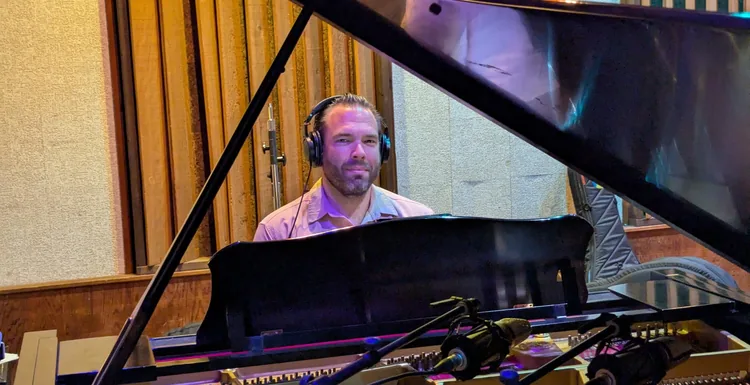
Photo: Jeff Coffin
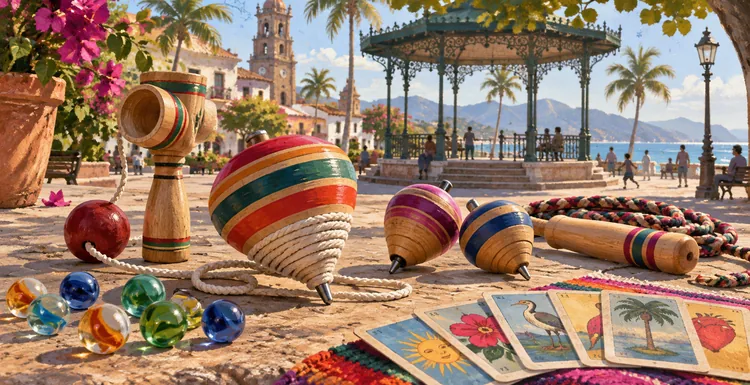
WOComm AI-generated editorial illustration — not a photograph of the municipal event.
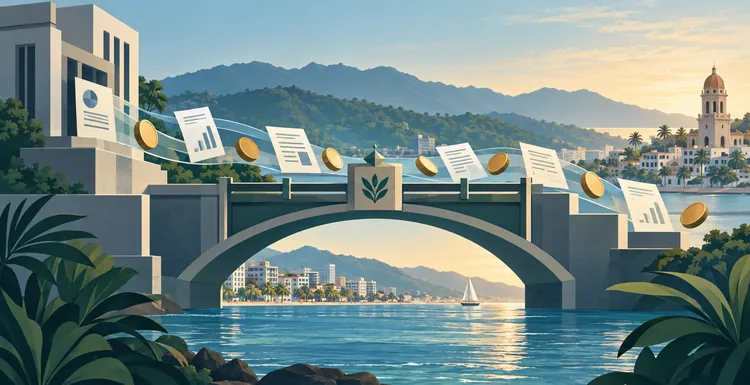
WOComm AI-generated editorial illustration — conceptual depiction, not a photograph of an actual site.
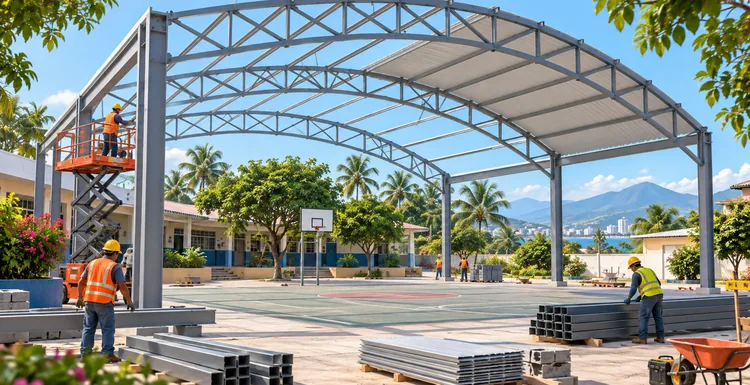
WOComm AI-generated editorial illustration — conceptual depiction, not a photograph of the project site.