





You'll Love a ... Yelapa

1241330724
 Photo By Clint J. Farr
A walk in the river's canyon in Yelapa

(I'd like to blame my editor for the title, but it's mine)

Puerto Vallarta, Jal.- On the plane to Mexico, I imagined how I would use my latent and well-hidden athleticism to fend off cartel gangsters trying to nap my kids. This "knowledge" of Mexico is based on hours of "Breaking Bad" and a few minutes on Homeland Security's travel advisory page.

Homeland Security's travel advisory page actually paints a worse picture of Mexico than "Breaking Bad." Wherever you go, you are going to die, violently. The travel pages for the Centers for Disease Control and Prevention are not much better. According to the CDC, if the cartels don't get you, dysentery will.

A bloated colon of insecurities, I wondered if our first trip to Mexico was our last trip anywhere. I was not reassured by the first hour in Mexico. A harrowing taxi ride to Boca, south of Puerto Vallarta, resembled a car chase, except nobody was chasing us. The water taxi from Boca to Yelapa skirted the coastline just outside and atop massive breakers from 25 foot swells. No one wore life vests. None were apparent. Once on the dock, I plucked the kids out of the boat with each rise of a wave.
Mexico has a different relationship with risk than the U.S.

Children and luggage accounted for, a Senor Gato gathered our bags into a wheelbarrow and pushed them to our casa three-quarters mile up the local river. It occurred to me, as I followed the elderly man, I should be carrying my own bags. He's old. I'm able-bodied. It felt bad. It felt vaguely colonial.
Senor Gato didn't seem to care one way or the other. He was gracious and patient with our questions. Senor Gato was our first experience with what would become an overriding Yelapian theme: kindness.

To a person, the locals were friendly. It is a decided contrast to other destinations like Hawaii where the locals tire of tourists. Even here in Juneau, as a fishing guide once told me, by the end of summer you can "run all out of friendly." But in Yelapa, your business is appreciated; as long as you're not a jerk.
I think this is due in large part to the locals being in charge. In Yelapa, all shops, restaurants, houses, and lodging are locally owned. Yelapa is a protected area for its first people, the Comunidad Indigena. From what the locals told me, a foreigner can live in Yelapa, but have to lease their place from a local. You can't live there if the locals don't like you.

The distinct lack of large boxy hotels in Yelapa also no doubt stems from local ownership. There's no land for the big chains to buy. After all, Yelapa is not undiscovered country. Bob Dylan hung out there in the 70s. The beach makes top ten lists in travel magazines. I'm sure the Hyatt would love to build some monstrous gray monolith on the beachfront, but can't.

Which brings me to the next obvious point. Yelapa is not for people looking for a safe and sterile travel experience. Yelapa is about mules, stray dogs, chickens, and their gifts to the world. It's about your kids stepping barefoot in those gifts. Electricity has only been around for 10 years so no surprise when Yelapa's dark trails might surprise you. These things build character and your immune system.

Yelapa is organic. Not organic in a hippy way, but in a don't-have-enough-money-to-buy-pesticides sort of way. Lack of pesticides means there are bugs; many bite. My irrational fear of cartels was quickly replaced by a much more rational fear of scorpions.

But again, the roughness is more than made up with Yelapa's friendly hosts and amazing sights.

Our first day, we splayed out on the beach like a hide nailed to the shed. When sufficiently toasted, we came home to find the door handle to our casa locked. We had specifically been instructed to lock only the deadbolt, but somehow the door handle was locked and we had no key.

Tired, hungry, thirsty and sun burned, we needed to get to the bed, fruit, water and shade inside. I tried to sacrifice my Costco card to trip the latch, but no luck.
A crowd started to form.

Neighbors came out to help. They called Geraldo, Jelapa's fixer. He is like Wolf in "Pulp Fiction." Geraldo, I was assured, would figure it out. And he did. I won't say exactly how, but it was genius and simple. Some even clapped. I tried to pay Geraldo with a Pacifico cerveza. "Gracias!" I croaked like a drunk John Wayne to a Tijuana barkeep. But, as fixers do, Geraldo had disappeared.

Just so you know, my ignorance of Spanish does not reflect on my family. My wife and daughters have been taking Spanish for years. I, on the other hand, have no time for things like knowledge. This is probably why I made our 6-year-old daughter sound precociously man-hungry. "Tiene hombre" does not mean "She is hungry," it means "She has a man." And just in case you were wondering, "A ella le gustan los caballertos," does not mean "the girl likes horses." It means "the girl likes gentlemen."
I think most folks knew what we meant, through the titters.

The Yelapian children were delighted and confused with my girls. They were mystified why they couldn't swim. "They turn blue in Juneau's ice cold public pools" is obviously beyond my Spanish, so I'd shrug.

A grandmother and her granddaughter, Osmara, guided us upriver for one of our better adventures. We were in search of the langoustine, a large crayfish that ply the local river. Osmara bounded up the trail and back to check on us. She was eight, in cutoffs, a t-shirt, and barefoot. She waited as her guests took their sandals off at every water crossing. She jumped into the river wearing her clothes and treaded water while her guests put on their bathing suits. Osmara had no concern for the thorns, ants, sand fleas, snakes, spiders, scorpions, jaguars, rocks, rapids, or quickly darkening skies. She helped my girls with an emphatic sign language, held their hands over the lip of the rock wall, and was sweet; so very sweet.

I am happy childhoods like this still exist.

My girls were bit by mosquitoes, ants, fleas, and stung by at least one jellyfish. We were a lumpy, splotchy, peeling mess by our last day, but happy. Perhaps the extra risk heightened our sense of joy. Perhaps it was a vitamin D high; a melatonin euphoria. But for a brief moment on our last day, we considered ditching all our Juneau obligations. We could stay longer; one more swim, one more bowl of ceviche, one more walk with Osmara. We could stay longer...we could never leave.
Alas.

As we left (carrying our own bags), the girls sounded like exotic birds chirping "gracias" to everyone on the trail. I imagine to the locals, visitors say "thank you" a lot. Yes, in part, that's because it's the only word we know in Spanish. I just hope the locals also realize we mean it.
Adios Yelapa, go with God.

• Clint J. Farr can be reached at This email address is being protected from spambots. You need JavaScript enabled to view it..
Yelapa rescources:
Yelapa connexion- www.yelapaconnexion.com
Air B n B - www.airbnb.com. Type in "yelapa".
Yelapa English-Spanish Institute - www.talkadventures.com/spanish/index.html

vallartatodaysource

reportproblem

Yelapa, Mexico: In a Secret Hideaway, Luxuriating on The Edge of The Jungle

yelapa boy.jpg.size.xxlarge.letterbox

Casa Pericos is built directly onto the mountainside in the tiny village of Yelapa. Here a traveller can enjoy ‘eco-barefoot luxury’

Puerto Vallarta, Jal.—Granite boulders protrude through the back wall and a giant jungle-strangler fig grows from the floor. This jungle paradise is not your typical tourist accommodation. It is one of many well kept secrets in Mexico.

The four-storey Casa Pericos is built directly onto the mountainside in the tiny village of Yelapa. It is a 40-minute boat ride from bustling Puerto Vallarta, yet it seems like a world away.

Owners, Blair Shurtleff and Shane Hayward, say they have put their heart and soul into this exotic palapa-style dwelling. They are part of a growing group of small business entrepreneurs who are re-energizing Mexico’s tourism industry.

Shurtleff admits to some frustration over what he calls exaggerated media reports on crime in Mexico, insisting it would be hard to find a safer place than the close-knit community of Yelapa. “Only someone who was born in Yelapa can own land here,” he says.

After spending many years visiting nearby Puerto Vallarta, he discovered the place and convinced the community to let him lease land and build his “eco-barefoot luxury” property. High end linens and finely appointed furnishings make it easy for guests at the hotel to forget they are in such a rustic locale.

As the boat hits the sandy beach, I realize the lack of a dock means it’s time to kick off the sandals and step in.

After a short walk along a rocky path, I make my way to the stunning four-level property. There are no windows or walls to obstruct the panoramic view of the ocean. We’re on the edge of the jungle here, so I keep my shoes on to avoid stepping on a variety of interesting bugs and creatures.

As I dive into the warm ocean waters with the stunning backdrop of Casa Pericos and lush landscape, it’s easy to understand why Yelapa has stolen the inkeepers’ hearts.

Shurtleff and Hayward are not the only entrepreneurs who believe in Yelapa. I encounter a couple of women committed to boosting Mexico’s tourism industry.
Susan Pasko chose to start her own restaurant, Café Bahia, in Yelapa. It’s hard to believe that, in this remote Mexican village, you can find one of the best Eggs Benedict out. Pasko was a New York executive who decided to take a new direction in life and moved to Paris where she trained as a chef, then worked for restaurants in the U.S. She discovered Yelapa on her travels and after several years working at restaurants in the village she decided to start her own restaurant.
“This is my home, my life and my heart,” she says.

On the beach, as the sun sets, Tatiana Rodriguez-Anderson, 26, a Yelapa resident, is having a private launch party for her hip restaurant, Chicos Yelapa. There is pulsating music from a D.J. and guests are lounging on beds on the beach while servers bring out Texas-size margaritas and chilled bottles of sparkling wine.
Cheers!

Flight, meals and activities for Sherri Haigh’s trip were provided by Puerto Vallarta. Accommodations were provided by Fiesta Americana, Sheraton Buganvilias Resort and Casa Pericos. Follow her @fishinggal30 or email her at This email address is being protected from spambots. You need JavaScript enabled to view it.
Where to Stay

The Fiesta Americana Puerto Vallarta is an oceanfront resort surrounded by the Western Sierra Madre Mountains. While it provides a tranquil environment, it is only minutes from the charming old town where there are a host of restaurants and bars. The Nakawe Spa emphasizes the zen-like feel of the property with its lush gardens and trickling waterfalls and offers a variety of spa treatments.

The hotel also offers a special Fiesta Club floor with special amenities and super-sized balconies. The introduction of the all-inclusive program has sparked interest from major tourism operators such as Sunquest, Air Transat and Air Canada, fiestamericana.com
Another popular destination hotel in Puerto Vallarta is the Sheraton Buganvilias Resort. It also offers views of the Pacific Ocean and the Banderas Bay. With 90 feet of beach front, four restaurants and five bars, as well as a fully equipped gym and tennis resorts on hand, guests won’t get bored or hungry, sheraton.com/Buganvilias


In Puerto Vallarta

In Puerto Vallarta, an ambitious Mexican woman Carmen Porras operates a popular restaurant El Arrayan.

Porras admits that being a female businesswoman in Mexico has its challenges yet she has not let these deter her. She stresses the menu is not Tex Mex, but focuses on authentic Mexican cuisine, dishes billed under the label “Intangible Cultural Heritage” (as declared by UNESCO). I skipped the crispy cricket tacos, but the duck tostadas were delicious.

In an effort to draw in tourists, Mexico offers a broad range of tours so it is important to ask questions so you make the right choices. If you choose the Hidden Mexico tour in Puerto Vallarta, then make sure you buy bug spray in advance spray liberally.

My favorite tour was the Vallarta Food Tours. No nonsense guide Alex Naba takes you behind the food trucks as well as into the best restaurants in the city.
A group of us are eyeballing the tequila lined up in shot glasses on the table.

“You must sip it and never get drunk on tequila,” he explains. (I could have used this advice when I was 18.)

I also learned that burritos aren’t a Mexican food and, when you make tacos, you don’t marinate the meat; it’s all about the salsa.
“We invented salsa,” he says.

The tour also includes a chat with the colourful Mr. Concepcion. Donning a bright white hat and outfit, he roams through town selling his Tuba drink, made with the juice of the coconut palm, walnuts, apples, sugar and some “secret” ingredients.

For more info, go to visitpuertovallarta.com

vallartatodaysource

reportproblem

American Legion’s Two Fund Raising Events

2evenPuerto Vallarta, Jal.- With the purpose of raising funds to help a variety of Puerto Vallarta and Bahia de Banderas’ local associations, the Foundation American Legion is inviting the community to participate in two events that will be taking place in the city.

Destination Birthday: Turning Sixty in Sayulita

2015 03 09 1425935991 8804489 IMG 0203 thumb

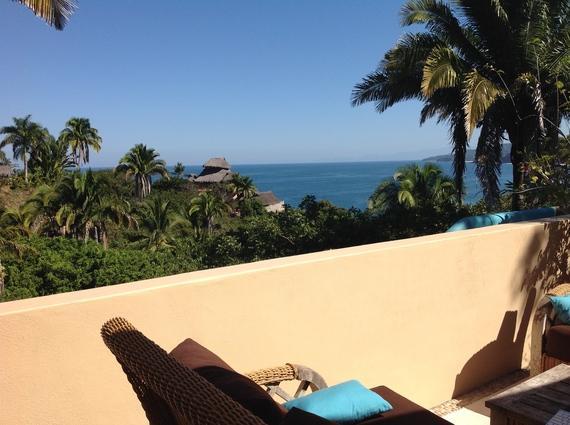
Puerto Vallarta, Jal.- Never mind destination weddings. When you're celebrating your sixth decade on the planet, like many baby boomers will this year, you deserve a destination birthday. If sun, sand, surf, and cerveza are what you crave, there's no better spot for a boomer birthday than Sayulita. This small fishing village and artisan community, just a 40 minute ride from the Puerto Vallarta airport, has been a popular surf getaway and summer vacation spot for Guadalajarans for several decades. Today, even with the huge influx of CanAmerican expats and retirees, Sayulita is still just as down home rustic Mexico as it ever was. Or not, depending on how much Mexico you can handle.

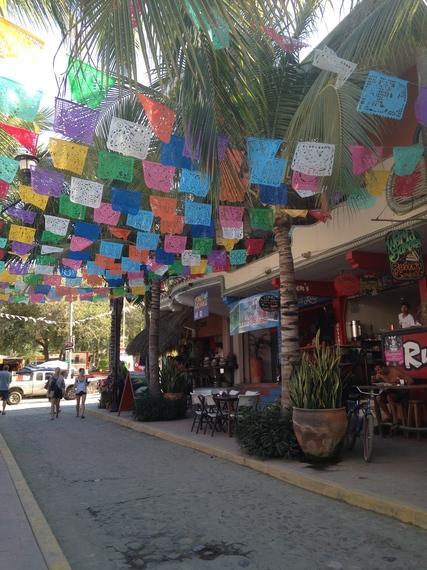
We made our first trek to Sayulita in April, 2006, during the Mexican pre-Easter holiday of Semana Santa. This year marked our fourth visit. Amazingly enough, not that much has changed. Four of the sunken, rutted, sometimes muddy and trash-ridden dirt streets that extend from Avenida de Revolucion to the beach have been cobblestoned over, turning the beachfront into an open air mall of cafes and shops. The chaise-lounge colonies now extend north of the Sayulita River as do many new (since our last trip in 2010) beachfront accommodations. They managed to bury all the electrical and phone lines, but they still haven't gotten around to taking the old telephone poles and wires down. Why bother, right? The CanAmericans wanted to bury the lines, but nobody ever said anything about getting rid of the old lines. Who knows? They might come in handy some day.

There's no question that Sayulita has been "discovered." Vacationers that may have once stayed in one of the dozens of highrise beachfront hotels in PV can enjoy many of the same comforts and amenities in Sayulita, albeit on a "lowrise" scale (Sayulita prohibits buildings higher than three stories, though a thoroughly greased civic palm will get you up to five stories on a hillside.) Villa Amor is as ritzy as Mexican resorts get, though golfers need to go to Punta Mita and the tennis courts are in need of repair. And even though Sayulita has a broad range of lodging options, the town fills up fast and reservations are often made years in advance. (You can always go in July, August, September and October. The place is deserted, and for good reason.)

If anything has changed, it's the amount of cognitive dissonance we experienced on the ten minute walk from our luxuriously appointed casita overlooking the ocean to the beach. We had to clamber down a steep cobblestone drive which inexplicably turned back to slippery, rutted dirt, past a purple house with a snarling pit bull behind bars, through a couple of overgrown vacant lots where locals parked pigs and horses and burnt their trash, and then to one of the main drags, Ninos Heroes, (still a single lane dirt road) where abuelas napped in hammocks, little brown babies played in the mud and scores of homeless street dogs left their unattended piles. Some homes have storefronts - mini-supers - that sell milk and a million varieties of Mexican sabritas. Others have converted their front patios into a five table restaurants for the weekend. One family set up a restaurant under an awning - not for tourists, but rather a place where the homies in the hood could gather, drink cokes, snack on mama's tamales, text their buddies and play Pajaro Enojado on their smartphones.

After successfully dodging the souped-up golf carts and ATVs we make it to the beach, where the dissonance continues. Beautiful Huichol (pronounced "weetchel") children skip school to hawk their handmade "animalitas" (stuffed animals), locals selling cigars might sidle up to your chaise and whisper "Weed? Cocaine? Whatever you want...," the old mestizo women pack hand-knit rugs on their backs in the hot sun, young women in white offer massages, and the donut man cries "Dos Donuts" all day, day in, day out. Meanwhile the musicians are playing La Bamba in the background for the umpteenth time while a porky Huichol child beats on a drum and screams - literally hollers at the top of his little lungs - "Ay yay yay," punctuated with the plaintive tremolo trumpet of his ponytailed father. Drums and trumpet. All this while you sip margaritas, nibble fish tacos and frolic in the waves.

This last trip to Sayulita I couldn't help but wonder: Is it that much easier to build a cell and wi-fi network than it is to build a functional sewer? How could someone - American, Canadian, Mexican - be trading stocks on the internet one minute, then deposit their stained toilet paper in a bucket the next? How is it possible that you can swipe your iPhone to buy a bottle of water, but you don't dare brush your teeth with the bacteria-laden poison coming from the tap?

I guess you could say that Sayulita is the classic example of the good news/bad news story. The good news is it is one of the most beautiful beaches in the world, surrounded by verdant, lush jungle and a million different tropical flowers and birds. The water's warm, there are waves for both beginner and advanced surfers, there are accommodations and restaurants for every budget, the beer is cheap, there must be a thousand varieties of tequila, and the drug cartels are far, far away. The bad news? That depends on how much you like Mexico, because once you set foot outside the small central area, even if it's only on the way to your casita, that's where you are: charming, trashy, colorful, stinky, impoverished, dusty, dirty, primitive Mexico. And you still can't drink the water.

Even so, if I could, I would go back tomorrow. Sayulita is alive with color, laughter, music, dancing, beautiful women, dashing caballeros and mole enchiladas (Mary's Cantina) that will make you jump for joy. As our driver mentioned in his broken English on the trip from the airport: "I couldn't live in the Bay Area. It's too much pressure. Always work, work, work. Here, I work for 2 or 3 days, then go fishing." Si, claro amigo!

I'm already planning our next trip. Meanwhile, feliz cumpleanos los Boomers!

2015 03 09 1425936171 8246369 IMG 1085 thumb

vallartatodaysource

reportproblem

Local Group Distributes Water Filters in Puerto Vallarta

607588 dt0 water filters tx495
Clark County: Wendy Kelley, left, of Camas and other members of the Rotary Club of Vancouver traveled to Puerto Vallarta, Mexico, to distribute water filter systems in February. (Handout)

Puerto Vallarta, Jal. — Eight members from the Rotary Club of Vancouver and six spouses recently traveled to Puerto Vallarta, Mexico, to distribute and help assemble water filter systems to families in need of clean water.

The group assembled 150 water filter kits in total. The Vancouver Rotary Foundation and Rotary District 5100 of Oregon and Southwest Washington gave funds that contributed toward a $64,000 grant for the water filters from Rotary International.

The rotary clubs of Vancouver and Puerto Vallarta Sur are sister clubs.

vallartatodaysource

reportproblem

7 Weird and Crazy Facts About Mexico

2015 02 19 CrazyFactsMexico 1 thumb
Credit: Shutterstock (Edited)

There's a decent chance you've been to Mexico before, because it's like... right there. So you don't need anyone to list reasons that it's awesome. (Tacos! Beaches! Tequila!) But just in case you were actually curious about what's going on beneath that spicy, sunny, oh-my-god-take-me-there-now surface, here's a smattering of strange and true facts about America's southern neighbor.

2015 02 19 CrazyFactsMexico 2 thumb
Credit: Wikimedia Commons

1. The Caesar salad was invented here.

Julius Caesar did not invent the Caesar salad. And it wasn't Caesar Augustus, either, for that matter. No, it was the brainchild of Caesar Cardini, an Italian-American restaurateur and chef who dreamt up the dish at his Tijuana restaurant. Or so legend has it. The origin has been disputed, as Livio Santini, who worked in Caesar's restaurant, claimed to have brought the salad to the world from his mother's recipe. All that's for sure: That's a damn good salad.

2. There's a 3-foot tamale that weighs 150 pounds.

Sure, you've probably had tamales. And if you live in Chicago, you've probably even seen the Tamale Guy. But you haven't dominated el zacahuil. This tamale, typical of the state of San Luis Potosi, is a 3-foot monstrosity of chile, spices, and hunks of pork or turkey, typically served on grilled banana leaves with pickled jalapeños. If you have tackled one of these, well, you probably won't make it to the end of this list, either from a food coma or heart attack. But good work.

2015 02 19 CrazyFactsMexico 3 thumb
Credit: Flickr/Francisco Soto

3. Mexico has the world's smallest volcano.

Hawaii has Mauna Loa, the world's largest volcano. Well, Hawaii can keep it, because in Mexico, it's about the motion in the magma, not size of the stratovolcano. The Cuexcomate volcano outside the city of Puebla is just 43 feet tall. To put it into perspective: That's not even half as tall as the Statue of Liberty, and it's equal to about 6.45 LeBron Jameses stacked on top of one another. But why would you have six LeBrons, let alone 0.45 of him? Let's move on....

4. Perform the anthem correctly, or else....

The Mexican national anthem (himno nacional mexicano) is nothing to joke about. There are actually nine or 10 articles in a chapter of the law that go into detail about how to properly honor and perform the national anthem. If you play it incorrectly, you will be fined, and in some cases, will need to issue an apology to the country. I probably shouldn't even make a joke about it here, in case someone in Mexico is reading.

2015 02 19 CrazyFactsMexico 4 thumb
Credit: Drew Swantak

5. Hot chocolate is literally the drink of the gods.

When Hernán Cortés landed on the shores of Mexico, the Aztecs thought he was a white god and welcomed him with what they thought was a heavenly beverage: hot chocolate. How did Cortes repay them? Rape, pillaging, and burning their homes to the ground. It wasn't on account of the hot chocolate being bad. He just was not a pleasant guy.

6. Mayans fought with hornets.

Swords and spears are all fine and good but, if you ask the Mayans, a tad simple. A more effective method of scaring the sh*t out of enemies: harnessing a nest of hornets and throwing them into an oncoming attack. It's like Wu Tang Clan's dream fights all rolled into one. OK, they were killa bees, but you get the point.

2015 02 19 CrazyFactsMexico 5 thumb
Credit: ITU Pictures

7. The world's (sometimes) richest man lives there.

OK, to be fair, Bill Gates is currently the richest man in the world. But he keeps duking it out for that no. 1 slot with Carlos Slim, the Mexican business magnate, who's currently valued at $72 billion. To put it into perspective, he's worth 7 percent of Mexico's entire GDP. For Bill Gates to be worth that much in the U.S., he'd need to have more than $900 billion and own Alcoa, Phillip Morris, Sears, Best Buy, TGI Friday's, Dunkin' Donuts, Marriott, Citibank, and JetBlue.

vallartatodaysource

reportproblem

Nayarit Students to Receive Electronic Tablets.

54c5891607d17

During School year 2015-2016, 19,613 students enrolled in fifth grade of Primary in Nayarit’s Public Schools, will be getting a tablet as part of the “Digital Inclusion and literacy” program; a program run by the Department of Public Education with the purpose of obtaining social and educational fairness by incorporating the digital culture in our last primary years of our students’ education.

This program was originally for the States of Mexico, Puebla, Sonora and Tabasco, also for the Federal District. These were the only states that were going to benefit; but Nayarit was included after the recent visit of the Secretary of Public Education, Emilio Chuayfett Chemor, to Nayarit; it was during his visit that he announced that Nayarit was going to be another of the States receiving this benefit.

The tablet will be given, free of charge, to all fifth graders in the public School System, for their personal and family use, so as to improve their learning conditions, reduce the digital breach, as well as to reinforce and bring up to date school instructors’ teaching techniques.

17,732 primary students from Federal Schools, 167 from the Board of the Ministry of Public Education and 1,714 from the State Educational System, which makes a total of 19,613 students, who will be receiving the electronic tablets next school year.

[readon1 url="index.php?option=com_sobipro&pid=1&sid=703:mar&Itemid=212"]Source:www.VallartaToday.com-by MAR Translation Services[/readon1]

reportproblem

Government Bring Social Justice to Disabled Citizens.

imagenWith an investment of more than 250,000 pesos (a little over US$16,000), the Special Education and Rehabilitation Center donated prosthesis to people with different disabilities. The donation was headed by Ana Lilia Lopez de Sandoval, who runs the social aid institution.

“This is the third prosthesis donation we have done. Nayarit DIF will continue with this program in coordination with the National DIF; each institution providing the resources that are needed. Working with the families day after day, is what motivates us to go forward with the same passion and fortitude”, expressed the Governor’s wife.

“I don’t have my parents, but I have a great attitude and wings to be able to fly. The prosthesis will change my life, I only needed this opportunity, which for me it seemed unreachable; I thank you for your support from the bottom of my heart”, said Emilia Teofila Carreno, from Santa Maria, El Nayar municipality, who received one of the prosthesis.

Maria del Carmen Gonzales, from Tepic, said: “I feel very emotional to receive something so valuable; my life has been hard because due to a tumor, my leg was amputated; I acknowledge that the Governor is doing what he promised to do, and with that our quality of life is improving”.
Jalisco, Santiago Escuintla, El Nayar and Tepic, were the towns to benefit with this program


[readon1 url="index.php?option=com_sobipro&pid=1&sid=703:mar&Itemid=212"]Source:www.VallartaToday.com-by MAR Translation Services[/readon1]

reportproblem

Paying Forward the American Dream

ttt
Juan Torres and his wife Yohana Torres started a tutoring program 5 months ago for children who speak English as a second language at St. John United Methodist Church. Their children are Sofia Torres, 2, and Juan Mario Torres, 7. (Sharon This email address is being protected from spambots. You need JavaScript enabled to view it.)

Juan Torres of Mobile remembers vividly the moment that changed his life.

Puerto Vallarta, Jal.- Strolling down a street in Puerto Vallarta, Mexico, where he had just moved to live with his sister, Torres, then 14, paused at a shop window. Never in his life had he seen a window like that - the plate-glass kind that showcases mannequins wearing the latest apparel. This window displayed a jacket with a price tag of $170 pesos.

Having grown up in a poor section of Tepic, near the Pacific Ocean, Torres was the seventh child of 13. He had just taken a cleaning job at a hotel, a move up from his uncle's farm, where he'd been working cultivating corn since he left junior high. "I didn't know if it was the serial number," recalled Torres, referring to the price. "I was making $35 to $38 every two weeks."

While he stood there puzzling over the jacket, a passer-by posed a question: "Hey, do you like that?"

The man was Father Tony Clark, a missionary priest based out of Davenport, Iowa, who was working with violent teens in Mexico. The two struck up a friendship that would eventually give Torres a chance to learn English and get an education in the U.S.

Today, Torres is 44, a University of South Alabama graduate and a manager at Alto Products Corp. in Atmore. He and his wife, Yohana Carrillo, launched a tutoring program five months ago to offer young immigrants the kind of support he got from the priest three decades ago.

"What I see in them is what Father Tony saw in me - kids that, given the opportunity can have a better future," Torres said at one of the Wednesday night tutoring sessions held at St. John United Methodist Church in Mobile. "What you see here is everything I got on an individual basis."

He and Clark, he said, have remained friends and keep in touch.

The need is great

On a recent Wednesday, Torres greets a teenager in Spanish and turns to explain: "If he doesn't apply himself in five years, nobody will care," he said.

The need for tutoring is great, he said, because parents - many of whom are immigrants working construction and plant nursery jobs - lack sufficient English to help their children with their homework. Some weeks, as many as 75 to 100 people have shown up weekly for the tutoring, English as a Second Language and GED classes.

"We welcome the whole family," said Torres. "One day we had so many people that the aisle-ways were packed."

Most adult classes offered by other organizations fit neither the families' work scheduled nor their budgets, Torres said. "The services that are provided by institutions are provided during the daytime," he said. "They're also paying their bills or whatever debt they've acquired to get here."

The program is heavily dependent on volunteers, who forge relationships with immigrant families, creating a sense of community. "What we have here is a group of compassionate volunteers who are brothers, sisters, aunts, uncles, parents, grandparents to our children," he said.

Changing the course of history

In a nearby classroom, second-grader Emily Reyes, wearing a pink jacket and pink rabbit earrings, sat with her pencil poised over her paper. Her assignment: Write five sentences about butterflies.

"She's very good at making up sentences," comments her tutor, Kitty Emery, an administrative assistant at the Marx Library at the University of South Alabama. "I try to incorporate some of her spelling words."

Emily, 7, wants to be a dentist. "Miss Kitty," she pipes up. "Tomorrow, I'm going to the dentist."

In the hallway, another young girl was working on a poster about Rosa Parks, the Montgomery civil rights activist who refused to give up her bus seat to a white passenger. "She has to dress as Rosa Parks on Friday," said Yohanna Carrillo, who was helping the girl glue printouts on the poster. The girl declined to give her name.

"She's been here three months, Carrillo said.

Once the poster was finished, the girl read a paragraph aloud: "Rosa Parks changed the course of history, not only for African-Americans, but for all of America."

The American Dream

The missionary priest who befriended Torres took him along as he worked with youth, the elderly and people on the outskirts of life. After a couple years of years, Torres was offered a chance to attend an English academy. Then one day Father Tony asked, "What would you say if there's an opportunity to go to the U.S. and study?

"I thought he was kidding," Torres recalled.

Soon, the teen had received a student visa and was enrolled in Our Lady of Lourdes, a Catholic school in Nogales, Ariz. Then it was on to Mobile, where Clark had contacts, and the University of South Alabama, where he stayed with a variety of fellow students who took him in. Torres graduated in 2002, received a work visa and started a marketing job at Alto. He got married and has two children.

Torres said he is close to obtaining permanent residency, followed by citizenship, and has already realized his version of the American Dream. "If you're an orphan, maybe finding hosting parents may be the American Dream," he said on a recent Wednesday as he helped his 2-year-old daughter with an apple. "If you come from a dysfunctional family, maybe creating your functional family may be the American Dream."

For him, it's about remembering where he comes from by paying it forward. His old friends from Mexico, he said, may think he's a different guy because of his education. They would be wrong.

"I'm pretty much the guy who ran and worked on the streets of Tepic for tips with them 35 years ago," he said.

A ministry and a church

Many churches look for opportunities to reach out to the community. In this case, the tutoring program was a community outreach looking for a safe place to be - in this case, a church. Alabama had earned a reputation as anti-immigrant after passing the nation's harshest immigration law in 2011. Most of the law's provisions have since been struck down.

At first, Torres and his wife hosted a potluck dinner for unaccompanied minors to gauge the need. At the time, St. John was made up of two very different congregations that met on Sundays -- a core group of United Methodists meeting at 11 a.m. and a diverse group of believers meeting for a "Grace Place" contemporary service at 9 a.m. St. John also hosted the worship services of a Spanish-speaking nondenominational congregation, El lugar de Gracia, at 1 p.m. Torres was a member of that congregation.

Since then, the program has won over all three congregations. Church members have helped to recruit volunteer tutors from across Mobile to help the immigrants, many of whom have no connection to St. John. Some of the tutors are retired college professors who are Methodist, and others are area residents who heard about the program and volunteered.

"What we are seeing is that people may not go to church for worship, but people are always open to serve others," said Torres.

Pastor John Russell, who is African-American and in his first pastoral appointment, praised the diversity that the program brings to St. John. "If a church is not reaching everybody, we're not holding the gospel to its full potential," said Russell, who grew up in a military family.

In November, the congregants at El lugar de Gracia, including Torres, voted to merge with St. John and join the Methodist denomination, more than doubling the hosting church's membership. Russell, who was not a Methodist until college, welcomed them in.

"We are learning to be Methodists together," Russell said.

Photo Gallery

10524807 1

Carol McPhail | This email address is being protected from spambots. You need JavaScript enabled to view it.
About Me: From the pews and pulpits to pressing issues of the day, I report on matters of faith and values along Coastal Alabama. Connnect with me at This email address is being protected from spambots. You need JavaScript enabled to view it. or on Twitter @cmcphail.


vallartatodaysource

reportproblem

Mexico Circus Owners Say New Animal Laws Will Result in Death

amexc

Puerto Vallarta, Jal.- Due to Mexico’s continual ban on animal abuse, the head of the country’s circus owner’s association says his animals may just die.

Armando Cedeno says that the new law banning the use of animals in circuses does not include any provisions as to who will take care of the animals once the ban is in effect.

Large animals such as elephants and large cats cost nearly $100 a day to feed. With the animals no longer being able to ‘work’, Cedeno says many of them will likely have to be put down.

“If we can’t feed them, we’re going to have to put them to sleep. We don’t have any other option,” Cedeno explains while providing a tour of a ranch north of Mexico City. Cedeno says that there are about 200 circuses around Mexico with permits to use animals in circus shows and this ban could affect thousands of animals.

The federal ban, which has been headed by Mexico’s Green Party, is set to go into full effect July 8. Out of Mexico’s 31 states, 12 already participate in the new law.

Lourdes Lopez Moreno, a Green Party member who leads the environment committee in congress’ Chamber of Deputies, says “The inspection of circuses doesn’t work. There are no data for how many circuses there are, how many animals. Ten circuses a year are reviewed.

“We find cases of physical and psychological abuse, the feeding and training programs are not correct,” Lopez said.

A spokesman for The Ringling Bros. and Barnum & Bailey Circus, Stephen Payne, says these circuses will not be coming to Mexico this year due to the bans.

Circus owners say that the bans do little to protect current circus animals.

The new laws, which are meant to protect circus animals from mistreatment, require all circuses to submit the list of animals they own. This list will then be shared with zoos that may be able to take the animals. However, many of Mexico’s public zoos are cash-strapped and are not certain if they could offer a compensation to take on any of the animals.

Cedeno figures about 10 percent of Mexico’s circuses have shut down due to the new animal ban, while Jamie Castillo, a trapeze performer, says “I am out of work directly because of the Green Party campaign, and the drop in ticket sales that led us to bankruptcy.”

To that, Lopez notes, “you can have a circus without animals. You can change what’s offered and the public’s culture.”

vallartatodaysource

reportproblem

Rain, Rough Surf Target Some Top Spring Break Destinations

14669566344 1b3095bcde o

Puerto Vallarta, Jal.- While happy to leave coats and snow boots at home, vacationers seeking a full week of sunshine and calm seas at the top five Spring Break destinations this week will be disappointed.

U.S. News ranked Miami Beach, Florida; South Padre Island, Texas; Cancun and Puerto Vallarta, Mexico, and the Bahamas as the top five for Spring Break getaways.

This determination was based on expert opinion, traveler sentiment and affordability, accessibility and popularity amongst students.

A week-long washout is not expected at these destinations, but the prospect of showers will force vacationers to keep umbrellas handy. That is especially true at South Padre Island and Cancun, where the same storm system set to soak the U.S. Gulf Coast will lead to an extended wet spell.

Meanwhile, rough surf will create hazards for swimmers at Miami Beach and across the Bahamas.

Miami Beach, Florida

From the city's beaches to the clubs and bars that line the streets, U.S. News ranked Miami Beach as the top Spring Break destination with South Beach being highlighted.

"Many travelers see South Beach not only as one of the best vacation areas in Florida, but as one of the best in the country," according to the U.S. News report.

650x366 03071757 hd31

A stray shower threatens to dampen South Florida daily this week with a persistent moist flow streaming in from the Atlantic Ocean. The good news is that the showers will generally be light and spotty, meaning some may even bypass parts of Miami and South Beach.

There will otherwise be a mixture of clouds and sunshine this week with highs in the 80s. A gusty breeze will also blow. Beachgoers should use caution as the gusty breeze will stir up the ocean and heighten the rip current danger.

south padre island

South Padre Island, Texas

South Padre Island is one of the two Spring Break destinations facing more than nuisance spotty showers.
"The start of Spring Break will be a wet one for those vacationing in South Texas," stated AccuWeather.com Meteorologist Becky Elliott.

Rain will continue periodically through Tuesday with occasional downpours. A bit more rain will clip South Padre Island on Wednesday.

The coolest days of the week will be Tuesday and Wednesday with highs in the lower 60s. A cool breeze will hold AccuWeather.com RealFeel® temperatures to be held to the 50s these days.

Elliott added that it will take until Thursday for the sun to make an appearance as drier weather returns.

"The warmest temperatures [of the week] will come on Friday and the weekend."

650x366 03071633 160098495

Cancun, Mexico

Similar to South Padre Island, those headed to the popular Spring Break destination of Cancun should anticipate rain ruining beach and other outdoor festivities for a time.

Vacationers should soak up all the sunshine they can early this week as AccuWeather.com Senior Meteorologist Rob Miller anticipates the weather to turn downhill as the week progresses.

"Early in the week does not look too bad with nothing more than a passing shower, seasonable temperatures and otherwise mostly sunny conditions." Highs in the mid-80s are common this time of year.

"However, during the middle to end of the week, the weather will turn stormier with increasing clouds and showers," Miller added. "It will stay stormy through next weekend before more typical weather with a daily passing shower resumes the following week."

puerto vallarta mexico

Puerto Vallarta, Mexico

Puerto Vallarta will have the least rain chances out of the top five Spring Break destinations, but a full week of dry weather cannot be promised.

"There will be clouds and maybe a stray shower early in the week," continued Miller. While the weather will begin to deteriorate around Cancun later in the week, Miller expects the opposite around Puerto Vallarta.

"Temperatures otherwise this week will be in the lower 80s, which is near to a hair below normal"

Cabo San Lucas, which ranks ninth on the U.S. News list of top Spring Break destinations, will actually win the award for the best weather for vacationers across Mexico next week.

"Cabo San Lucas has a fairly dry climate outside of hurricane season and tranquil weather will dominate over the next couple of week," Miller continued.

bahamas

The Bahamas

The weather across the Bahamas will be fairly similar to what is expected in Miami. Vacationers will want to keep an umbrella handy, but will not need to use it frequently.

One or more days of the week will pass without a shower at any given location (such as Nassau), but the spotty showers will be around the island nation daily.

"These are the type of showers that will last only 10 to 15 minutes and then will be gone," stated AccuWeather.com Meteorologist Eric Leister.

The weather will otherwise feature a partly to mostly sunny sky and temperatures in the lower 80s. A gusty breeze will kick up rough surf.

For those who are not heading to the Bahamas or Miami until the week starting March 16, the prospect of ideal weather for vacationers looks grim.

"The storm threatening Cancun later this week might shift to Miami and the Bahamas early that week with heavy rain and thunderstorms," continued Miller. "But that should clear out later in the week."

vallartatodaysource

reportproblem

Promotional Tour Trains Over 600 National Travel Agents

acarava

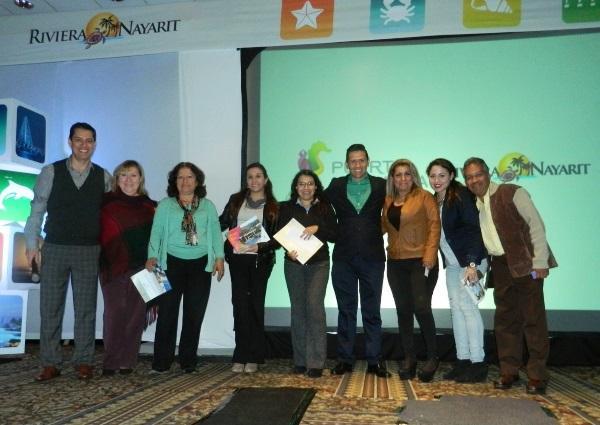
Puerto Vallarta, Jal.- Four hundred travel agents received training in Guadalajara, Monterrey and Mexico City. During the visit to the capital city, the team also trained 80 Magnicharters’ sale agents and another 200 more at the Interjet Call Center.

The Riviera Nayarit and Puerto Vallarta National Promotion Tour contacted over 600 travel and sales agents during the first week of March, when it visited the three most important cities in Mexico: Monterrey, Guadalajara and Mexico City.

These events were conducted in conjunction with 28 hotels from both destinations in order to strengthen promotional efforts with looking at the upcoming vacations, which are the key for the domestic market.

On March 3rd the team visited the Sultana del Norte (Monterrey), then the Perla Tapatía (Guadalajara) on the 4th and, last but not least, the capital city on the 5th and 6th of the month. The stay in Mexico City lasted two days, as they took advantage of their visit to train 80 sales agents at Magnicharters and another 200 at the Interjet Call Center.

“It’s important that we maintain a constant presence in the domestic market, which represents over 50% of our total visitors—especially taking into consideration the upcoming vacation days during Holy Week, Easter and summer,” commented Pamela Zepeda, Sales and Promotions Manager for the Riviera Nayarit CVB.

According to the survey conducted by the Riviera Nayarit Convention and Visitors Bureau (CVB), Guadalajara is the main destination for visitors to the Riviera Nayarit at 25.8%, followed by Mexico City in third place with 9% and Monterrey in fifth place with 3.8%.

Each event on this Tour included the usual interactive promotional activities where the agents participated and competed against each other in different games. These events generate interest in different topics and are incentivized via points, which are then converted by the winners into complimentary stays at regional hotels.

reportproblem

Pack Puts on Clinic for Local Children in Puerto Vallarta

SB

Puerto Vallarta, Jal.- Scenic ocean views and palm trees in late-February provided a pristine backdrop for the Nevada softball's team trip to Mexico for the Puerto Vallarta College Challenge last week, a tournament that also served as a final tune-up for the Wolf Pack's home opener against Idaho State this weekend

But beyond the beaches and the games, the most fulfilling and talked-about part of the trip for the student-athletes happened off the diamond. Across the street from the field where the tournament was played, in the concrete courtyard of the local Club de Leones, or Lion's Club, head coach Matt Meuchel and the Pack put on a softball clinic for the local school children prior to its Thursday matchup against BYU.

The clinic was made up of four different stations that taught the basic fundamentals of the game including fielding, throwing, catching and properly fielding groundballs.

"Working with the kids was a very rewarding experience," said senior Alex Youngberg, a secondary education major at Nevada. "The enthusiasm they showed for us being there and the smiles on their faces really showed us that we were making a difference in their lives."

Pitchers Megan Dortch, McKenna Isenberg and Chase Redington instructed the children at their station the proper softball pitching motion while freshman Alyssa Mendez and sophomore Nikki Orozco, both fluent in Spanish, taught fielding and catching mechanics. At the conclusion of the clinic, members of the Pack handed out Nevada softball t-shirts to the newest Pack fans.

Overall, Meuchel felt it was the most rewarding part of a memorable trip for his program.

"It was an amazing opportunity for our players to share the game they love with children in another country and to see their love for playing sport as well," said Meuchel. "I know that each of our players left that experience feeling touched by the vigor and love that those children had for our sport."

Photo Gallery


vallartatodaysource

reportproblem