






Mexico's postal blues remade in hot pink

MEXICO CITY -- Mexico's notoriously unreliable postal service is getting the shock treatment - shocking pink, that is.

Infamous for lost packages and tardy delivery, the postal service is getting a hot-pink makeover to try to brighten up its image, win back customers - and pull it out of the red.

Changes include a new logo, new uniforms and pink-and-lime-green painted post offices. Some will also sell cut-rate rice, beans and powdered milk alongside stamps. Coffee mugs and envelopes - something the post office didn't sell before - will also be available, but only in hot pink and lime green.

The service's new symbol - a white carrier pigeon holding a letter in its beak - hit the streets Tuesday, a day after President Felipe Calderon unveiled the new look at a gala ceremony. The government hopes the new image and services will help the post office break even next year, after annual losses of up to $50 million.

Officials promise high-speed Internet access at post offices where clerks still struggle with manual typewriters and sort mail by hand.

Out are the dingy blue-and-white paint and threadbare uniforms the postal service has used for decades. The trendy new color scheme was chosen because "we want to be very visible ... in colors as brilliant, as vibrant as Mexico," said Purificacion Carpinteyro, who oversaw the remake and wore a hot-pink dress to Monday's ceremony.

All 1,450 post offices will be painted with the new colors, both inside and out.

But in a country where mail theft is widespread and letters often arrive weeks after they're sent, the public is skeptical.

"I don't trust it," Mexico City resident Beatriz Stern said as she mailed a "very important letter" at a post office sporting a fresh coat of pink paint. She said she went there only because she doesn't believe anyone bothers to collect mail from the country's red street-corner mailboxes.

"They say it was faster in colonial times, when they used horses and carriages," Stern said.

The new name, Correos de Mexico, or Mexican Mail, is actually a throwback to the days of the early 20th century, when the service was trusted and the government built a main post office meant to look like a Renaissance palace.

While there will be no horses, the new postal uniform unveiled Tuesday - a visored cap and shirts of lime green, hot pink and white - look like something jockeys would wear.

Alberto Izquierdo, a native of Madrid who was waiting in a long line to mail a letter at the main downtown post office, wasn't impressed.

"I think they're focusing a little too much on appearances and not substance," he said.

Mexico's postal service delivers only about seven pieces of mail per inhabitant per year; Americans get an average of 700.

The low volume reflects a lack of confidence. Federal officials acknowledge most businesses won't send bills, statements or receipts through the mail, preferring pricey but safer private courier services, about 4,000 of which have sprung up here, according to industry estimates.

Then there's crime.

In 2003, police captured a gang of thieves who stole thousands of U.S. Social Security checks bound for retired workers in Mexico.

And in February, legislators demanded a federal investigation after police found several tons of opened and undelivered letters, most from the United States, at a home in the border town of Ciudad Juarez. Three postal workers were charged with stealing the correspondence, some of which dated back to the 1990s.

Just a couple of years ago, the entire postal system had only seven inspectors. Now, 170 inspectors are on duty - many with new pink-and-green bicycles or motorcycles to help chase down fraud, Carpinteyro said.

Many expatriates don't even bother with Mexico's postal service. Chris Davis, an English teacher from Philadelphia who lives in Mexico City, said he doesn't "even take the risk" of having packages sent from the United States.

"I ask people who are coming down to bring things," he said.

Those who do use the service tend to be like Jorge Garcia, 38, who sees it as an affordable alternative to courier services for the few personal letters he mails.

"It's slow, but it's cheaper," he said.
Getting a Mexican Driver's License

By Wendy Wilson

Living a life in a foreign country does have its challenges. Recently, I realized that my California driver's license was about to expire, and, due to a new law to presumably protect the world from my terrorism, I had to physically show up at the DMV to renew it. What is an ex-pat to do? Spend mucho dinero to get to the nearest California airport (San Diego), spend a night or two in a motel, rent a car, dine out, etc., or get a Mexican license? The best option became instantly clear. And so, as with my new visa status that brings me as close to being a Mexican as an American citizen can be and still collect social security, I chose to become even more Mexicanized.

But, "hello", the driver's test is in Spanish, and no booklet to read. I started checking around. Surely, I am not the first gringa to face this problem.

As with most things Mexican, the system is a bit loosey goosey. I could pay someone else to take the test for me. PERFECT! You got that right...pay someone else to take the test for me. I can't say it is an "accepted" practice, but it apparently happens all the time. OK. No problema here.

So, on the scheduled date, Jimmy, our male maid and all around lovely person, and I set out to acquire said license. We show up at "Transito" about 12:30PM. Sorry, lady, you cannot take the test until 2PM. Get in line with tens and tens of other people now sharing the same steamy boat.

Now, it is a cultural blind spot that Mexicans simply don't know how to "queue up". More than once I have been aced out of my place in line by someone who simply believed that his bubble belonged ahead of mine for whatever the reason. I am now acutely aware of this pattern, and always ready for bear. My antennae were swinging so wildly that I almost lost my balance.

Finally, Jimmy and I are led into a dungeon of a test room with no windows. But wait. Before the test was given, we had to sit through one hour of a bureaucratic Napoleon with thick lips who read to us, excruciatingly slowly, a five page memo in eight point font on God knows what. Picking up words here and there, I believe it was the history of how Transito got started, where it stands on the food chain of the Mexican government, and a few basic traffic laws to be followed. At one point, Napoleon got out of his chair and began waving his arms and blowing a whistle so loudly that I thought my eardrums would rupture. But being the only gringa in the room, I was under intense scrutiny by everyone, including Napoleon, and I did my darnedest to look alive with intense interest.

Finally, the test was handed out. Jimmy and I openly discussed each question in Spanglish. Nobody blinked an eye.

Odd those questions! Nothing about how many feet (or meters in my case) that you must park away from a water hydrant, or how fast can you drive through a school zone? No questions about dotted lines, or double lines. Not a hint of concern over who has the right of way. Rather, the one question that really stuck out for me was, "What do you do when the hood of your car flies up, and you cannot see out your windshield"? W-H-A-T???? I flew into hysterical laughter and responded to Jimmy, "the same thing you do when the motor drops out of your car, you idiots." Well, that was the end of it for both of us. We had to ask for Kleenex to wipe away our tears. Napoleon was not amused.

Well, "I" passed the test with flying colors, paid my 350 pesos (about $33US), had my picture taken, produced copies of my entire life, e.g., passport, visa, telephone bill, California driver's license, and away I went for four more years. No driver's test, no eye test, no proof of insurance, none of that.

So, dears, what DO you do when the hood of your car flies up in your face?

You can help fulfill a dream…

A heartfelt request for any golfing related items

Alfredo Cervantes (known as Charlie to his Gringo friends) has a passion for golf and for teaching. A native of Mexico, Alfredo and his young family returned to Puerto Vallarta after 17 years of living in Southern California. Shortly after returning to the city that he loved in 1997, a tragic head-on collision with a local Vallarta bus occurred, and forever changed Alfredo's life. Alfredo awoke from a 42 day coma to learn that his 11 & 14 year old boys and golfing partners were killed. His wife was severely injured as well and his hopes and dreams were shattered. Golf he says "is the only thing that takes my mind off of the pain."

So now, six days a week at 4:00 o'clock in the afternoon, a humbled and modest Alfredo closes his taco stand and heads to the Municipal Stadium in Puerto Vallarta behind the Sheraton Hotel to give free golf lessons to any person wanting his coaching and swing critique. Alfredo says "with the rise of the superstar golfer Lorena Ochoa, kids of all ages are lining up at his makeshift chain link swing cage. Lorena Ochoa is to Mexican kids, what Tiger Woods was to American kids in the 1990s." Many of the kids he works with have natural talent and clearly enjoy the sport but just cannot advance beyond anything else but the cage at the stadium. "I just do not have enough clubs or the resources to meet the demand, neither do these poor local kids."

How can you help? Donate your old or second set of golf clubs, bags, shoes, gloves, balls, tees, shirts & hats or any other golf-related items! Whether or not you are planning to golf during your next vacation, just pack your clubs on your next visit to Puerto Vallarta and leave them here in the hands of a potential pro. Your clubs will be matched to specific person or refurbished to fit a boy or girl when possible. In addition, some equipment will be consigned and sold at various local used sporting goods stores to pay for special kid-sized clubs & greens fee at local courses.

Don't have a 2nd set? You can still give by donating cash or green fees gift certificates at any of the local courses in the Banderas Bay Area. Just drop us an email to coordinate the details. We'll come to you! We make it easy to donate. We will come to your hotel, casa, condo, or any other location of convenience, pick up your donation and thank you personally. It's that easy! Simply e-mail This email address is being protected from spambots. You need JavaScript enabled to view it. and we'll take it from there. Additional details can be found online at www.clubsforkidsmx.com.

Northern California Family Donates Baseball Equipment

Coach Max Valencia of Kevin's baseball team at De La Salle High School was a big help as well, urging his players to add to the donations. The school is located in Danville, California, just east of San Francisco and is where the Peters family lives.
Kevin began to assemble three duffle bags that contained 20 aluminum bats, mostly Easton, which sell for $150 - $350 per bat when brand new. These bats only were used for one season. Baseball gloves totaled 15 and also were used for only one season and I remember it took me almost half a season to get a new mitt in game condition. New team hats totaled 20 and an additional two full sets of catcher's gear was included.

It was initiated by Kevin Peters, who decided to donate equipment that he had, as he had been to Puerto Vallarta before and knows that baseball bats and gloves are quite expensive and public schools would not likely have the money in their budget to spend on bats, balls and mitts. Kevin then started to ask friends to donate their equipment and the response was great.

ThankS Kevin, his brother Jake, their friend Patrick and their Mom and Dad for being so thoughtful and bringing along the three extra bags to donate while on vacation.

The youngsters from Northern California that put it all together. From left to right, Jake Peters, Kevin Peters and Patrick Pezet.

South of the Border

Interview: Manolo Cardona

Studio Expects 'Breakout Role' for Columbian Actor Manolo Cardona. Liv Boughn sat down with him at "La Terazza di Roma" restaurant in the Marina during his final week of shooting in Vallarta.

Manolo Cardona, the ruggedly handsome thirty year old Columbian actor perhaps most well known for his role in the critically acclaimed "La Mujer de mi Hermano,"
sat across from me wearing a trendy western-style plaid shirt and green oversized movie star shades.
Having been one of People in Español Magazine's 50 Most Beautiful People and having seen him already on the set I expected his dashing looks. What I was pleasantly surprised to discover, however, is that beneath those tinted glasses was a very intelligent, articulate, and deep actor. The following interview took place over breakfast.

VT: How did you get started?

MC: I was living in Cali (Columbia) and I always loved theatre...I started working professionally at a very young age...17...[later] a couple of friends and I created a theatre company, then I moved to study, and I realized I wanted to do this for the rest of my life.

VT: Which actors inspire you?

MC: There are a lot...Sean Penn, Johnny Depp, Javier Bardem...

VT: You have two production companies with your brothers, "11-11" and "Miramas." Can you tell us about what you're currently working on?

MC: We have a movie in development and a documentary.
The movie is a black comedy that will come out in November about two inseparable friends, the antihero, love and friendship.

VT: What is it like working with your brothers?

MC: We always do everything together.

VT: What did your parents have to do with your choice to become an actor?

MC: My parents really didn't have anything to do with it, but they support me. Especially my mom at first, and then my father too after a while.

VT: I hear you're passionate about soccer. Who is your favorite team?

MC: América de Cali, a Columbian team [not to be confused with Mexican team, Club América]

VT: How do you feel about Vallarta?

MC: [nodding, satisfied] I like it: Being in Vallarta meeting amazing people, having adventures...

VT: What are some of your favorite spots in Vallarta?

MC: Tacos Marlín, Archie's Wok, the Blue Shrimp...

VT: It sounds like you like food. Do you cook?

MC: I love food...yes, I cook... [but not as much as he would like while filming on location].

VT: What has your experience on SOTB been like?

MC: I've worked with such beautiful human beings.
Everybody from every department is looking out for each other...

VT: And working with a mixed Mexican/American crew?

MC: It was pretty much the same...Sometimes it can be difficult for the ones that don't speak both languages...for me it's fine...

VT: Some people are saying that this is your "breakout role". What do you think?

MC: This isn't really my breakout role, but it is a huge opportunity for people in the American market to get to know me more. It's my first English speaking movie, my first kid movie...I have two nieces and one nephew, so they are really going to like it... [He went on to say] I never go for the gold, I just enjoy the ride.

VT: Tell me about your character, Sam.

MC: He is a landscaper... [the love interest of the ingénue played by Piper Perabo] passionate...noble.

VT: How are you and Sam alike? How are you different?

MC: We have the same loyalty for people and life...we love to work, to be happy, to bring happiness to people around us. But we have different points of view. Sam is more pragmatic: I am more spiritual.

VT: One of the things I heard from various crew members is how "down to earth you are" for a movie star.

MC: (a smile,) Stars are in heaven...

VT: They were particularly impressed that you brought your own car all the way to Vallarta...

MC: I am very familiar with Mexico, and very independent so I drive and get to know cities. I like to get lost, drive...I love driving.

VT: What do you think of the Hollywood Scene? Do you try to keep it "low key" there too?

MC: I live in Venice Beach, California right now, so it's very different from the Hollywood style. I can walk out of my house, walk to my friends´... I'm very happy to live there, in an old neighborhood and not be stuck trying to ´be somebody´ in Hollywood...

VT: What was it like working with dogs?

MC: They're amazing. It's amazing what they can do...so trained, so well behaved, they're like people. Also, as an actor I have to be more aware of things. In a perfect world everything is quiet. In this case you're in the middle of the scene and they're yelling commands at the dogs. It's been an interesting experience and I've learned a lot.

VT: Do you like dogs?

MC: I love animals...and dogs. [went on to say that he doesn't currently have one because of his hectic travel/work schedule].

VT: For your female fan base: How does it feel to have been one of Latin People in Español Magazine's 50 Most Beautiful People several times now?

MC: [He briefly winced, then modestly answered:] I've been trying to understand in these years...I try to keep my life, things private. For me it's just work.
If I don't have a story to share I prefer not to be in magazines...

VT: Do you have any words of advice for young Latin boys who want to become actors?

MC: First, study. The opportunity to prepare is an
important process in your career. But most
important: Believe in yourself. If you don't believe in you, nobody else will. [Lastly,] Never stop. It's not about who gets there first; it's about who stays.

VT: Vallartans are very loyal, so most likely everyone will go see the movie because our beloved town is a backdrop, but why do you recommend we see South of the Border?

MC: It has something for grown ups and kids both...young and old... It has the ingredients of comedy, action, adventure, animals. The subtext is about how you can really change, no matter who you are, and that you can change for the good. Chloe [lead dog, voice played by Drew Barrymore] reflects the typical Beverly Hills girl, and by the end she really changes for the better. For parents, it's about what's
real: when you breathe, the sunrise, being with people you love...

Mexico, Hot Spot for U.S. Retirees

Luma Leading Trend

According to several major U.S. publications, there is a burgeoning trend of American retirees buying property in Mexico. Luma Living, an active adult community on the Bay of Banderas, is at the forefront of this movement, with groundbreaking set for late this fall.

One of the most recent major magazines to cover the development is Kiplinger's Personal Finance. Its Retirement Planning 2007 guide feature titled, "The Lure of Living South of the Border" discusses the trend in depth. The article states, "Seeking a year-round tropical climate and a relatively low cost of living, U.S. retirees are flocking south of the border," and goes on to say Mexico is a "perennial favorite."

The Kiplinger's article, which also ran on Yahoo! Finance, profiled Luma as a new active living community being built in Nuevo Vallarta, naming it "the first U.S.-developed active-adult community in Mexico." Lee Ratta, senior vice president at Front Porch, the organization behind Luma, was quoted in the article as saying, "Luma has all the advantages of a Mexican lifestyle and the convenience of American-style living."

Earlier this spring, The Washington Times published an article, "Mexico's Pacific Coast Beckons Retirees" (April 1, 2007), describing Mexico as being in the midst of a "building boom" and listing Luma as one of the new developments under way. RealtyTimes also ran a story, "Retiring in Mexico: No Longer Just a Dream," on April 23, 2007.

Designed for residents aged 50 and over, Luma offers a unique blend of setting, style and services, including a Lifestyle Concierge Program. The first phase of residences are set to open spring/summer of 2009 and will feature designer kitchens, soaring 11- to 13-foot high ceilings, glass walls and large terraces for indoor/outdoor living. Pricing for Luma residences range from the $400,000s to $1.8 million.

Alex Urrutia, Luma sales director for Prudential California Realty, Vallarta Division, said buyer interest in the property is high: "The response is an excellent confirmation of baby boomers' desire to live in beachfront active adult communities in Mexico."

A Front Porch Development Company project, Luma will be built in partnership with Mexico-based Grupo Krone. Front Porch Development Company is the real estate development partner of Front Porch, California's largest nonprofit provider of senior living communities. When completed, Luma will showcase bold contemporary Mexican design by the renowned Ernesto Del Castillo Marquez Architecture Firm and offer over 400 stunning residences, 264 of which will be beachfront.

Focused on Making PV a Premier Destination

When the summer student travel industry seems to be shrinking or perhaps going to new destinations, why is it that GradCity's number of travelers to Puerto Vallarta during summer high school graduation time are growing? "We attribute it to our training, our destination knowledge and our passion to celebrate youth through travel," says Director of Business Development for GradCity, Barbara Hooper. "Having been part of the Student Travel Industry for almost 20 years I have never been part of a company that cares more about who they surround themselves with, how well them train their representatives and how passionate they are to provide ultimate experiences for both students and concerned parents and faculty.Puerto Vallarta is a perfect destination for us to focus on for safety, value and amazing cultural opportunities. We have strived to educate our customers on our "Break Smart Program" and PV again makes the destination decision and easy one to make." More information is available on "Break Smart" via www.gradcity.com.

"Our reps enjoy representing Puerto Vallarta because they are so well versed on the facts that this destination has to offer. We actually certify our reps to be Travel Specialists during our training. The relationships our on site staff has with locals and vendors only reinforces to our nationwide force how thoughtful and amazing the people of Puerto Vallarta are," adds Jennifer True – Director of GradCity Operations.

When parents and students ask where they should choose to celebrate high school graduation, Puerto Vallarta is now one of the favorites to offer for GradCity. In addition, GradCity's gateways out of the western US have exploded, they expect their 100% growth year after year for PV to continue. "Our numbers doubled from last year to this year and we expect double that number for next year's 2008 Summer Program. This plus our impressive Spring Break numbers through our college division, StudentCity.com, makes PV extra exciting for us!" concludes Adriane Carozza, Director of Grad City.

GradCity is the high school division of First Choice Student Travel. First Choice Student Travel is the nation's leader in young adult travel, events and promotions and has successfully provided over 250,000 vacations this year alone. Since 1987, they have marketed, sold and operated more international and domestic event and vacation packages than any other company in the youth travel industry.

New travel requirements

By Barrett,Devlin

Washington — Frustrated travelers who paid an extra $60 to get their U.S. passports expedited - and still had to wait for them - can now get a refund from the government.
The decision to refund the money, disclosed in a State Department document sent Tuesday to members of Congress, represents the latest effort to come to grips with a massive backlog in passport applications that has ruined or delayed summer vacation plans for thousands in the United States.

The delays were largely due to a new rule that requires U.S. citizens to have passports when flying to Canada, Mexico, the Caribbean and Bermuda. Last week, the government announced it was suspending that rule until September, as long as travelers to those countries carried a printout receipt showing they had applied for a passport.

The passport delays were so bad that many of those who paid for faster service, at a cost of $60 plus the regular processing fees of $97 for a new passport, did not receive their passports within the expected 14 days. Some who paid extra waited for a month or more.

"It's an outrage to pay over $150 for a passport and still have your travel plans ruined," said Sen. Charles Schumer, D-N.Y., who had previously called for the refunds.

Schumer also chided State officials for not doing more to publicize the refunds, saying they should be "shouting this refund policy from the rooftops, not whispering it in the wind."

The State Department document, obtained by The Associated Press, says passport applicants who paid for, but did not get, expedited service should send a written refund application to the agency's refund office in Washington. They should provide their passport number, if available, their name, date and place of birth, the approximate date they applied for the passport, as well as a mailing address and phone number.

Homeland Security officials have warned that the passport delays will not affect their schedule of requiring passports of everyone driving across the border into Canada or Mexico beginning in January 2008 - a rule that some experts believe will lead to a fourfold increase in new demand for passports.

Refund applications should be sent to the following address:

Department of State,
Passport Services/PPS/Refunds,
2100 Pennsylvania Ave. NW,
Washington, DC 20037-3202.

Mexico's Newest Destination is Unveiled

Riviera Nayarit: Mexico's Newest Destination is Unveiled

Luxurious resorts, championship golf, protected ecotourism and miles of undeveloped coastline characterize this new destination.

There's a great new destination in Mexico and now it has a name: Riviera Nayarit. With the launch of this exciting destination, comes an amazing transformation of 100 miles of Pacific coastline that unfolds just minutes north of the Puerto Vallarta International Airport which will continue to develop over the next decade. Already this spectacular new destination has over 12,000 hotel rooms, two-thirds of which are four-star to five diamond; four major golf courses and protected ecotourism.

At Tianguis Acapulco on March 27, 2007, the Governor of the Mexican state of Nayarit, Mr. Ney González, officially named this new destination "Riviera Nayarit", delineating its location from the Rio Ameca at Nuevo Vallarta to the colonial town of San Blas including the exclusive resort enclave, Punta Mita.

This week Mr. Marc Murphy, director general of the Riviera Nayarit Convention and Visitors Bureau is launching Riviera Nayarit in the U.S. and Canada. He is introducing Riviera Nayarit's official logo that features its mascot, the sea turtle which is a protected species in the region.

Riviera Nayarit's official website, www.rivieranayarit.com will also be launched at this time and will provide travelers with key information so that they can plan their vacation accordingly. Information on the website will include features on the region's attractions like eco-tourism and major events.

To garner North American interest in the destination, Riviera Nayarit will kick off an engaging online contest called "Treasures" for agents and the traveling public to use their creativity to name Riviera Nayarit's attractions. The most creative entrants can win a trip to be the first to experience the wonders of Riviera Nayarit.

Mr. Murphy will also share news of new developments that are taking place in Riviera Nayarit. These include:

• A major new resort area called Litibu which will inaugurate a Greg Norman golf course in December

• An elegant St. Regis Resort in Punta Mita

• A second Jack Nicklaus designed golf course at the spectacular Four Seasons Resort in Punta Mita

• A new marina and future resort development at La Cruz de Huanacaxtle.

"I am so thrilled to be part of the launch of such a spectacular new vacation region in North America's favorite destination – Mexico," said Mr. Murphy. Born in Canada, he and the tourism industry of the region have been working closely over the last three years to make the dream that is Riviera Nayarit become a reality.

"We plan to make Riviera Nayarit a haven for luxury travel, matchless golf and experiencing our protected ocean and mountain nature and wildlife," he continued.

Hugging 100 miles of Pacific coast north of Puerto Vallarta and protected by the dramatic Sierra Madre Mountains, Riviera Nayarit blends the timeless authenticity of Mexican culture and hospitality with the latest in tourism facilities and services. The Four Seasons and St.

Regis are among the hotel companies bringing a new level of luxury; superstars like Greg Norman and Jack Nicklaus are redefining the game of golf here. An extraordinary abundance of wildlife from giant manta rays and whales to protected sea turtles and rare migratory birds draw both vacationers and experts from around the world. And, with ambitious plans for new resorts, hotels and recreational facilities, Riviera Nayarit is well on its way toward making a major impact on North American tourism.

For visitors, the gateway to Riviera Nayarit is Puerto Vallarta International Airport, only ten minutes away from Nuevo Vallarta. Most of the region's current tourism facilities are located on Banderas Bay, one of the world's largest bays, which is also renowned for its extensive variety of water sports from diving and snorkeling to sailing and deep sea fishing.

Riviera Nayarit is also fast-becoming one of Mexico's foremost golfing destinations. Renowned professionals and designers such as Jack Nicklaus, Greg Norman, Robert Von Hagge, Jim Lipe and Joe Finger have created aesthetically pleasing golf courses with varying degrees of difficulty. Among the highlights is the El Tigre Golf Club at Paradise Village designed by Von Hagge; the Jack Nicklaus designed course at the Four Seasons Golf Club in Punta Mita; and the Mayan Golf Resorts Vallarta by Lipe.

*And there is so much more to discover in Riviera Nayarit.*

Ecological wonders abound on this "slice of heaven on earth," like whale watching on a catamaran, viewing of sea turtle preservation efforts and snorkeling in crystal clear aquamarine waters to get closer to colorful coral reefs and underwater species. Precious ecological sanctuaries for rare birds are located in Islas Marietas and La Tovara National Park. In Nuevo Vallarta and the Banderas Bay, visitors can even swim and interact with friendly seals. For outdoor adventurers the rich natural habitat that is Sierra Madre beckons culminating in a visual hike and 2,000 feet stop above sea-level. Canopying from tree top to tree top, jungle expeditions, or horseback riding are just a few ways that clients can dare to conquer this majestic mountain chain.

North of Banderas Bay and Punta Mita are miles of seemingly endless white sand beaches, the somewhat bohemian surfing town of Sayulita and friendly fishing villages where new tourism facilities will be developed in the next decade. Driving along the thickly forested and scenic two lane highway north of Punta Mita to San Blas, visitors cannot resist stopping in colorful roadside markets to sample homemade candies, fresh juices and succulent tropical fruits.

Riviera Nayarit's cultural history dates back thousands of years, encompassing four ethnic traditions, including pre-Columbian cultures and the Huichols. Nayarit's excellent preservation of its culture can be seen in its native Huichol tribe who have preserved their rich culture and ancient beliefs through their art. The Huichols are renowned for the detailed bead sculptures that contain elaborate symbols borne out of their culture and shamanistic traditions. Mexcaltitan is a small island of floating mangroves that is reputed to be the birthplace of the Aztecs. Archeological sites with hundreds of petroglyphs and vestiges of ancient villages remain still waiting to become accessible to visitors.

With every visit to Riviera Nayarit, there is always something new to discover and the essence of this destination will rejuvenate and excite the most jaded of travelers.

Riviera Nayarit’ in Canada

Governor to Promote 'Riviera Nayarit' in Canada

Nayarit Governor Ney González Sánchez will be traveling to Canada in the coming days, accompanied by Bahía de Banderas Mayor Jaime Cuevas Tello, in order to sign agreements with Canadian tour operators, mainly Air Transat Holidays and Tours Mont Royal in an effort to increase the numbers of passengers from Canada to Riviera Nayarit.

"We expect to maintain Bahía de Banderas as a world class tourist destination indefinitely, and promoting the new Riviera Nayarit brand is a job of all," Mayor Cuevas said. "It is our priority, that is why this week we will accompany the governor on his trip to Montreal in this consolidation process of our touristic activity."

Cuevas noted the importance of the participation of entrepreneurs in this joint promotion effort; "they participate because they know we will all benefit from it," he said.

Alfonso Rizzuto, President of the Entrepreneurs Association and Fernando González Ortega, President of the Hotels and Motels Association of Bahía de Banderas will integrate the committee that will represent Bahía de Banderas in Canada.

Cuevas Tello said the governor has a well-founded development plan, within which Bahía de Banderas plays a key role; "we are in full agreement to support the governor's drive to boost and strengthen the Riviera Nayarit because our municipality also reaps the benefits," he said.

More demand creates more investments and therefore more jobs for the people, "giving the city hall a proportional increase in taxes which will translate into a greater capacity to provide services and public works," Cuevas added.

The municipal mayor added that the decree creating the Riviera Nayarit mandates for a Territorial Order and Urban Development Plan of Bahía de Banderas, one that guarantees sustainable development and protects the environment and the natural riches, this plan is the basis for a quality touristic destination.

Mexico Finalises World Cup Security Plan With Three Host Cities Coordinated

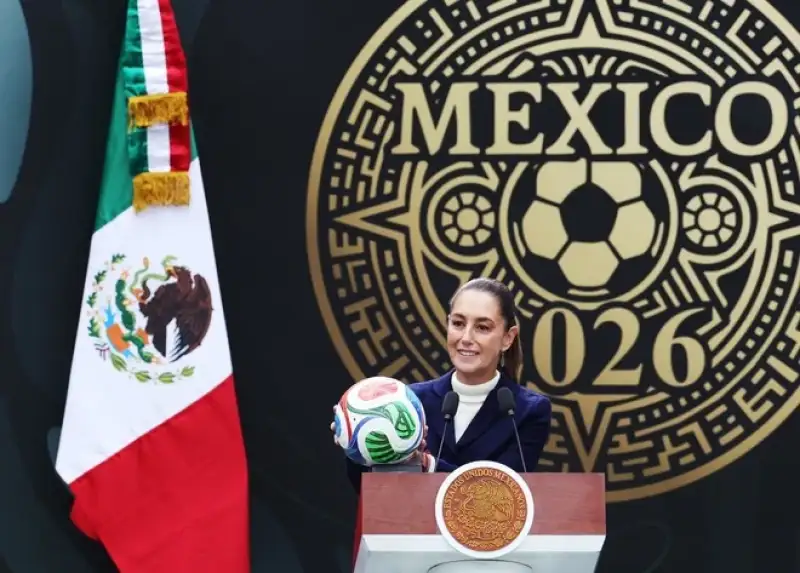
Mexican federal authorities and FIFA representatives met in Mexico City last week to finalise the security framework for the 2026 World Cup, which Mexico is co-hosting with the United States and Canada. Federal Security Secretary Omar García Harfuch confirmed the meeting established intelligence-sharing protocols and operational frameworks covering all three Mexican host cities: Mexico City, Guadalajara, and Monterrey.

Thirteen Matches, Two Cities: What the World Cup Means for Mexico

FIFA's confirmed commitment to Mexico as a World Cup host, covered in our main piece, is more than a sporting announcement. Thirteen matches played across Guadalajara and Mexico City over several weeks in June 2026 represent a concentrated, high-value tourism and commerce event of a scale that few other occasions in a country's calendar can match. Understanding the economic dimensions of that opportunity matters for businesses, investors, hospitality operators, and local governments planning around the tournament.

The Tourism Economics of World Cup Hosting

A FIFA World Cup match brings with it a specific economic ecosystem: visiting supporters who need accommodation, food, transport, and entertainment; international media and broadcast operations that require facilities and support services; corporate hospitality and sponsorship activations that generate premium spending; and the sustained international media attention that functions as destination marketing for years after the tournament concludes.

The multiplier effect of a World Cup match in a host city extends well beyond the stadium. Hotels within reasonable distance of match venues typically see full occupancy at premium rates during match days and the days surrounding them. Restaurants, bars, and street food vendors in host city centres experience demand spikes that significantly exceed typical weekend or holiday levels. Ground transport, taxis, ride-sharing, metro systems, operates at or above capacity. Retail sales in souvenir, apparel, and food categories rise sharply.

For Guadalajara specifically, hosting four group-stage matches plus the intercontinental playoff in late March creates a multi-month economic activation window rather than a single event. The March playoff brings an initial wave of international visitors, media, and commercial activity, followed by the sustained peak of the June group-stage matches. Local businesses that position themselves effectively for both events have an extended revenue opportunity.

Mexico City's World Cup Moment at the Azteca

Estadio Azteca is one of the most historically significant football venues in the world. It hosted the 1970 and 1986 World Cup finals, witnessed Diego Maradona's 'Hand of God' and 'Goal of the Century' in 1986, and has a capacity of over 87,000. Matches at the Azteca attract not only supporters of the competing nations but also Mexican football fans for whom attending a World Cup match at the country's most iconic venue is a once-in-a-generation opportunity.

Mexico City's hospitality, retail, and entertainment infrastructure is the most developed of any city in Mexico, and its capacity to absorb large numbers of international visitors is substantially greater than smaller host cities. The challenge for the city's commercial sector is not capacity, it is positioning and pricing to capture the specific demand profile of World Cup visitors, who tend to be higher-spending than typical tourists and willing to pay premiums for quality, convenience, and proximity to match venues.

Who Captures the Most Economic Value

The businesses best positioned to capture World Cup economic value are those that combine proximity to match venues with service quality and the ability to handle large volumes during compressed time windows. Hotels within 30 minutes of Estadio Akron or Estadio Azteca, whether luxury properties or well-managed mid-market options, are likely to achieve full occupancy at premium rates on match days. Restaurants with capacity, outdoor seating, and the ability to serve large parties quickly will outperform those built for intimate dining.

For Mexican businesses outside the two host cities, the World Cup still represents an opportunity through internal tourism. Many Mexican nationals who cannot attend matches in Guadalajara or Mexico City will watch games in their home cities, driving demand for sports bars, fan zones, food delivery, and retail purchases of merchandise and equipment for at-home viewing parties. The tournament's economic footprint extends well beyond the stadiums and into the everyday commercial fabric of the country.

Longer term, the international media coverage generated by a successful World Cup has sustained effects on inbound tourism. Cities that host World Cup matches typically see measurable increases in international visitor arrivals for two to three years after the tournament, as the global television and streaming audience that watched matches in those venues develops destination awareness and travel intent. For Mexico's tourism sector, a well-executed hosting performance is an investment in future arrivals as much as it is an immediate revenue event.

Frequently Asked Questions

Q: How much does hosting World Cup matches typically contribute to a city's economy?

A: Economic impact estimates for World Cup host cities vary widely depending on methodology, but consistently show significant contributions across accommodation, food service, transport, retail, and media activity. The combination of direct visitor spending, broadcast infrastructure investment, and sustained post-tournament destination awareness generates returns that extend well beyond the tournament period.

Q: Will the World Cup bring international visitors directly to Mexico, or will most spectators be Mexican?

A: Both. Mexico's passionate domestic football culture will generate significant local attendance at Guadalajara and Mexico City matches. International supporters from competing nations, particularly those in the same group as teams playing in Mexico, will travel directly to Mexican host cities. FIFA's allocation of tickets across national federations, hospitality partners, and general sales creates a deliberately mixed attendance profile.

Q: What should businesses near Mexican World Cup venues do to prepare?

A: Hospitality businesses should review capacity, pricing, and staffing for match days and immediately surrounding periods. Food and beverage operators should develop simplified, high-volume menus for peak demand windows. Retailers should stock football merchandise and fan category products well in advance. All customer-facing businesses should ensure multilingual capability in English, Portuguese, Spanish, and French given the international visitor mix.

Q: Which match days in Guadalajara will see the highest international visitor volumes?

A: The specific visitor volumes for each Guadalajara match will depend on which national teams are allocated to play there and the travel distances and supporter cultures of those nations. Nations with large, well-organised travelling supporter bases, European teams in particular, tend to generate the highest international attendance at their matches.

Q: Does Mexico receive any direct revenue from FIFA for hosting World Cup matches?

A: Host country arrangements with FIFA typically involve a combination of infrastructure investment commitments, revenue sharing from ticket sales, and in-kind support including broadcasting infrastructure and operational support. The specific financial terms of Mexico's hosting agreement are part of the tri-nation arrangement with the US and Canada and have not been publicly detailed in full.

FIFA Reaffirms Full Confidence in Mexico as Guadalajara Prepares to Host

FIFA president Gianni Infantino has publicly reaffirmed his organisation's full confidence in Mexico as a co-host of the 2026 FIFA World Cup, following a direct call with Mexican President Claudia Sheinbaum. 'I reiterated our full confidence in the host country and look forward to it staging all scheduled matches there at what will be the most inclusive and the greatest FIFA World Cup ever,' Infantino said. Sheinbaum echoed the commitment: 'We continue working as usual to successfully host the 2026 FIFA World Cup. We reaffirm our confidence in the country.