






Widespread snowstorm pelts Midwest, heads East

chicago1

The system dropped a foot of snow in the Dakotas Monday as it trekked eastward

Mother Nature is apparently saving the best, or at least the biggest, for last.

Chicago residents expected to find themselves in the midst of a storm that could wind up dumping as much as 10 inches of snow in the area before the end of Tuesday — the most since the 2011 blizzard and its more than 20 inches of snow.

"This will be the biggest widespread storm of the winter," National Weather Service meteorologist Amy Seeley said. The forecast is for 8 to 10 inches throughout northeastern Illinois and northwest Indiana, a far cry from last March, which saw less than a half-inch of snow and was the warmest one on record in Illinois.

Hardware stores in and around the city did brisk business Monday, selling salt and snow shovels at a time many usually turn their thoughts toward gardening and baseball.

"Everybody's got a little comment with every bag they're buying," said Mike McIntosh, who works at Dressel's Hardware in Oak Park just outside Chicago. Workers had started to stock the shelves with tools and supplies associated with spring and summer, only to find the shovels and salt they thought they'd hold for another year were still in demand.

"Everybody's a bit surprised, but it's good for us, we've got a lot of this stuff to move," he said.

On Monday, the system moved across the Dakotas and Minnesota, dropping up to a foot of snow in some areas and freezing rain in others. Some schools closed and officials warned motorists to stay off the roads.

As it moved eastward, emergency officials in a number of states issued similar warnings in the hopes that commuters will leave their cars in the garage and take public transportation to work. In Wisconsin, where as much as a foot of snow is in the forecast, emergency managers urged residents to put winter survival kits in their vehicles and check on road conditions.

State patrol officers were searching for a semi driver in the Red Cedar River near Menomonie in western Wisconsin early Tuesday after the vehicle slid off the nearby snow-covered Interstate 94 into the frigid waterway.

A wet snow pelted commuters as they slid along the slick streets of downtown Chicago through the soggy wintery mix early Tuesday. Snow was forecast for the morning and afternoon rush hours, Seeley said. The weather service also said that as much as 1.5 inches of snow could fall per hour, "making snow removal difficult and travel extremely dangerous."

Ill. Gov. Pat Quinn urged motorists to avoid driving unless absolutely necessary, insisting that "safety comes first."

The Illinois Department of Transportation planned to send a fleet of 360 trucks to plow roadways in northeastern Illinois early Tuesday, with a total of 600 throughout Northern Illinois.

The storm is creating wet, heavy snow — known euphemistically as "heart attack snow" — which could pose a risk when it comes time to shovel for the elderly, sedentary people or those who have heart problems.

"Shoveling snow is a lot of work. ... It is taxing their bodies and their hearts," said Dr. David Marmor, a cardiologist at NorthShore University HealthSystem in Evanston. "People are really testing their limits, and if they're already at high risk they are better off paying the kid across the street to do it."

If the area does get 10 inches of snow, it would only underline that this has been a mild winter, Seeley said. That amount would raise the snowfall this season from 20.3 inches to 30.3 inches — just a tenth of an inch more than what Chicago sees in a typical winter.

In northern Iowa early Tuesday, at least one person was enjoying the gentle snowfall.

"It's absolutely gorgeous out," said Mary Hermanson, the night shift front desk clerk at the Super 8 in Mason City.

"If I'm going to have snow come down, that's what I want to have come down," she said of the 10 inches that had fallen in the area in the past 24 hours. She happily said it reminded her of Christmas.

[readon1 url="http://news.msn.com/us/widespread-snowstorm-pelts-midwest-heads-east"]Source:news.msn.com[/readon1]

Canadiens come back to beat Bruins

canadianjokerWin extends points streak to 11 games, puts Montreal first in Eastern Conference


BOSTON — The Canadiens took advantage of Zdeno Chara’s absence to stage a third-period comeback and defeat the Boston 4-3 Sunday night at the TD Garden. The Canadiens scored two goals while Chara was serving a 10-minute misconduct for being the instigator in a fight with Alexei Emelin. Max Pacioretty tied the score at 3-3 when he scored his eighth of the season at 5:31 and then set up David Desharnais, whose second goal of the game proved to be the winner at 9:17.

Back on top: The win put the Canadiens back in first place in the both the Eastern Conference and the Northeast Division with 32 points. The Canadiens, who have an 8-0-3 record in their last 11 games, are two points ahead of Boston but the Bruins still hold three games in hand.

Streak continues: Max Pacioretty scored at 4:31 of the third period to tie the game at 3-3 and then assisted on Desharnais’ go-ahead goal. The points extended Pacioretty’s current point streak to four games with four goals and three assists. He’s the Canadiens’ leading scorer with 20 points.

Boychuk helps out: David Desharnais received an assist from Bruins defenceman Johnny Boychuk when he tried to find Pacioretty in the crease at 11:03 of the first period. Desharnais gave the Canadiens a 2-1 lead when his pass caromed off Boychuk’s stick.

Mixed results on the PP: Tomas Plekanec opened the scoring when he beat Tuukka Rask on a power play at 9:57 of the first period. Michael Ryder set up the goal for his first point since rejoining the Canadiens. But Montreal finished the night with a 1-for-5 record and managed only one shot when they had a 5-on-3 advantage for 1:10.

Budaj delivers: Backup goaltender Peter Budaj made 30 saves, including a game-saver on Tyler Seguin in the dying seconds, to post his third consecutive win. He’s 3-2 on the season and 2-1 lifetime against the Bruins. Tuukka Rask took the loss and he’s 2-7-1 lifetime against the Canadiens.

Tempers flare: There were two fights late in the second period. Brandon Prust and Milan Lucic exchanged unpleasantries at 15:01 and Zdeno Chara went after Alexei Emelin at 15:45 after it appeared that Emelin cross-checked Tyler Seguin Emelin is reluctant to fight because he has had reconstructive facial surgery and Chara took an extra two minutes as the instigator and what proved to a crucial 10-minute misconduct.

What’s next: Boston was the first stop on a five-game road trip which continues Tuesday on Long Island (7 p.m., RDS, TSN-690 Radio). The Canadiens are in Carolina Thursday and then head to Florida for back-to-back games Saturday against the Tampa Bay Lightning and Sunday against the Florida Panthers.

canajoker1


[readon1 url="http://www.canada.com/sports/hockey/montreal-canadiens/Canadiens+come+back+beat+Bruins/8043241/story.html"]Source:www.thestar.com[/readon1]

This retiree’s $22.75 Canada Pension Plan shock

canadapensionSheila Billard paid into the Canada Pension Plan all her life. When she died her husband’s survivor benefit came to $22.75 a month.

The decision to start taking the Canada Pension Plan at 60, or to wait until as late as 70, is one that requires some thought.

Starting early gives you the satisfaction of enjoying a benefit that you’ve paid into all your working life. Waiting gives you a much bigger payment.

But as the case of two Nova Scotia retirees Winston and Sheila Billard shows, even the best laid plans can go astray.

Winston, 72, is a retired teacher who lives in Cape Breton and paid into the Canada Pension Plan for 37 years. He started drawing the pension when he was 63 and last year was receiving $883 a month.

His wife Sheila, a nurse, made contributions for 44 years. She enjoyed being active and continued to work part-time at a local nursing home into her 60s. This additional income, plus other pensions and savings, meant the couple didn’t need her pension immediately, so she delayed taking CPP.

Last year, when Sheila was 66, she was diagnosed with an aggressive cancer. She applied for CPP and received two monthly payments of $1,053 before she died in June.

In addition to the distress surrounding his wife’s death, Winston received two other shocks when he applied for her survivor pension. Most pension plans have a default survivor benefit, often at 60 per cent which can be adjusted upward. If one spouse dies, the other gets a reduced, but substantial, monthly payment to maintain their lifestyle.

Not so in the case of the CPP. Even if both spouses have contributed all their lives as in the case of the Billards, the survivor is only entitled to the maximum of one full benefit. The rationale is the retiretnotion that nobody should be able to get more than the maximum that one person would receive who had worked all his life.

Had Winston not worked he would have been entitled to 60 per cent of his wife’s benefit.

“I was shocked,” Winston says. “I thought this must be a mistake.”

retirement pensio 32382artwThe second shock was the size of the benefit he would receive. He is getting just $22.75 more a month which doesn’t bring him up to the maximum. When Winston appealed the payment they showed him the details of the calculation and said he could not be paid any more.

He’s now getting $933 a month, including the $22.75 versus the 2013 maximum of $1,012.

“It doesn’t seem fair,” he says. “In my case, the extra amount would not buy me a good meal in a restaurant,” he says. “This in effect is another form of taxation with the government the winner.”

It doesn’t seem fair, but it would require a change in legislation to get Winston a better deal. Amélie Maisonneuve with Human Resource & Skills Development Canada (HRSDC) which administers the CPP, could not discuss the specifics of the case. She offered her sympathies, but says HRSDC has strict rules it must apply.

“The rationale for establishing a limit . . . reflects the principle that no person should receive a combination of pensions that is greater than the amount payable to an individual who made the maximum contributions to the Plan throughout his or her working life,” she said.

She added that survivor’s benefits are meant to provide some help, not a second income.

“The benefits are not intended to replace a second source of household earnings or the retirement income of a dual-earning family,” she said.

The CPP is governed by the principle of pooled risk. This recognizes that some people live longer than others and will get more benefits from the fund. The money that would have gone to pay Sheila Billard’s benefits is now available for another Canadian’s pension.

The Billard’s case might seem to make a good argument for why we should all take CPP early.

But Fred Vettese, chief actuary at human resource consultant Morneau Sheppel, says not. While offering sympathies to Winston Billard, he says the odds are in your favour if you wait. If you’re healthy and can wait, you should, he says.

HRSDC says if you delay CPP until 70 you will receive roughly double the amount that you would have received at age 60 and 42 per cent more than what you would get at age 65.pareja

Statistics Canada says a 65-year-old Canadian can expect to live, on average, another 20 years, so by waiting, you get a bigger payment that is inflation protected for a long time.

The great unknown is longevity. Statistics and probability are one thing, individual circumstances another. While it’s likely that we’ll all live longer and probable that we will, that’s cold comfort when life gets in the way.

[readon1 url="http://www.thestar.com/business/personal_finance/2013/03/03/take_or_delay_cpp_read_this_retirees_2275_pension_shock.html"]Source:www.thestar.com[/readon1]

New wind power rules coming in Ontario to curb output

 toronto1New rules that will curb wind power output in Ontario are coming. But wind form operators will receive payment for lost output

Ontario wind power companies have reached an agreement that will curb electricity output from wind turbines when there’s surplus power on the grid.

In return, the companies will get compensated for lost output, within certain limits.

The agreement puts an end to a dispute before the Ontario Energy Board that pitted the wind companies against provincial power agencies.

Until now, wind power has had almost unrestricted access to the power grid, under rules designed to encourage the development of renewable power in Ontario.

Wind power is especially tricky to deal with, because there’s a lot of it and the wind often blows strongest overnight or on weekends, when demand is low.

Nuclear plants also produce power regardless of market conditions, because most nuclear units are very difficult to control – they’re either on or off.

As more wind power floods onto the grid, the combination of wind and nuclear sometimes leads to power surpluses, forcing Ontario to sell power to its neighbours at a loss, or even pay them to take it.

The new rules will allow the Independent Electricity System Operator (IESO) to switch off the flow of power from wind turbines if there’s too little demand.ontario1

Wind operators will be compensated for some, but not all, of their lost output.

The Ontario Power Authority outlined a compensation model recently under which wind companies would have to absorb a certain portion of the lost output, but would be paid if the loss output exceeded certain limits.

(Other generators also get paid not to produce at times. Bruce Power is sometimes asked to cut the output from several of its nuclear units, but is compensated for the lost production.)

ontarioControlling power output has become a pressing issue in Ontario as more and more renewable power connects to the grid. An additional 3,000 megawatts of wind power alone is due to come on stream in the next 18 months.

The IESO had estimated that coping with surplus power production will cost Ontario’s power system up to $200 million a year if market rules don’t change.


[readon1 url="http://www.thestar.com/business/2013/03/04/new_wind_power_rules_coming_in_ontario_to_curb_output.html"]Source:www.thestar.com[/readon1]

In Medical First, a Baby With H.I.V. Is Deemed Cured

rojoDoctors announced on Sunday that a baby had been cured of an H.I.V. infection for the first time, a startling development that could change how infected newborns are treated and sharply reduce the number of children living with the virus that causes AIDS.

The baby, born in rural Mississippi, was treated aggressively with antiretroviral drugs starting around 30 hours after birth, something that is not usually done. If further study shows this works in hivkidsother babies, it will almost certainly be recommended globally. The United Nations estimates that 330,000 babies were newly infected in 2011, the most recent year for which there is data, and that more than three million children globally are living with H.I.V.
If the report is confirmed, the child born in Mississippi would be only the second well-documented case of a cure in the world. That could give a lift to research aimed at a cure, something that only a few years ago was thought to be virtually impossible, though some experts said the findings in the baby would probably not be relevant to adults.

The first person cured was Timothy Brown, known as the Berlin patient, a middle-aged man with leukemia who received a bone-marrow transplant from a donor genetically resistant to H.I.V. infection.

“For pediatrics, this is our Timothy Brown,” said Dr. Deborah Persaud, associate professor at the Johns Hopkins Children’s Center and lead author of the report on the baby. “It’s proof of principle that we can cure H.I.V. infection if we can replicate this case.”

womenDr. Persaud and other researchers spoke in advance of a presentation of the findings on Monday at the Conference on Retroviruses and Opportunistic Infections in Atlanta. The results have not yet been published in a peer-reviewed medical journal.

Some outside experts, who have not yet heard all the details, said they needed convincing that the baby had truly been infected. If not, this would be a case of prevention, something already done for babies born to infected mothers.

“The one uncertainty is really definitive evidence that the child was indeed infected,” said Dr. Daniel R. Kuritzkes, chief of infectious diseases at Brigham and Women’s Hospital in Boston.

Dr. Persaud and some other outside scientists said they were certain the baby — whose name and gender were not disclosed — had been infected. There were five positive tests in the baby’s first month of life — four for viral RNA and one for DNA. And once the treatment started, the virus levels in the baby’s blood declined in the pattern characteristic of infected patients.

Dr. Persaud said there was also little doubt that the child experienced what she called a “functional cure.” Now 2 1/2, the child has been off drugs for a year with no sign of functioning virus.

The mother arrived at a rural hospital in the fall of 2010 already in labor and gave birth prematurely. She had not seen a doctor during the pregnancy and did not know she had H.I.V. When a test showed the mother might be infected, the hospital transferred the baby to the University of Mississippi Medical Center, where it arrived at about 30 hours old.

Dr. Hannah B. Gay, an associate professor of pediatrics, ordered two blood draws an hour apart to test for the presence of the virus’ RNA and DNA.

The tests found a level of virus at about 20,000 copies per milliliter, fairly low for a baby. But since tests so early in life were positive, it suggests the infection occurred in the womb rather than during delivery, Dr. Gay said.

Typically a newborn with an infected mother would be given one or two drugs as a prophylactic measure. But Dr. Gay said that based on her experience, she almost immediately used a three-drug regimen aimed at treatment, not prophylaxis, not even waiting for the test results confirming infection.

Virus levels rapidly declined with treatment and were undetectable by the time the baby was a month old. That remained the case until the baby was 18 months old, after which the mother stopped coming to the hospital and stopped giving the drugs.

babyhivWhen the mother and child returned five months later, Dr. Gay expected to see high viral loads in the baby. But the tests were negative.


Suspecting a laboratory error, she ordered more tests. “To my greater surprise, all of these came back negative,” Dr. Gay said.

Dr. Gay contacted Dr. Katherine Luzuriaga, an immunologist at the University of Massachusetts, who was working with Dr. Persaud and others on a project to document possible pediatric cures. The researchers, sponsored by amfAR, the Foundation for AIDS Research, put the baby through a battery of sophisticated tests. They found tiny amounts of some viral genetic material but no virus able to replicate, even lying dormant in so-called reservoirs in the body.

There have been scattered cases reported in the past, including one in The New England Journal of Medicine in 1995, of babies clearing the virus, even without treatment.

Those reports were greeted skeptically, particularly since testing methods were not very sophisticated back then. But those reports and this new one could suggest there is something different about babies’ immune systems, said Dr. Joseph McCune of the University of California, San Francisco.

 One hypothesis is that the drugs killed off the virus before it could establish a hidden reservoir in the baby. One reason people cannot be cured now is that the virus hides in a dormant state, out of reach of existing drugs. When drug therapy is stopped, the virus can emerge from hiding.

“That goes along with the concept that, if you treat before the virus has had an opportunity to establish a large reservoir and before it can destroy the immune system, there’s a chance you can withdraw therapy and have no virus,” said Dr. Anthony S. Fauci, the director of the National Institute for Allergy and Infectious Diseases. Adults, however, typically do not know they are infected right as it happens, he said.

Dr. Steven Deeks, professor of medicine at the University of California, San Francisco, said if the reservoir never established itself, then he would not call it a true cure, though this was somewhat a matter of semantics. “Was there enough time for a latent reservoir, the true barrier to cure, to establish itself?” he said.

Still, he and others said, the results could lead to a new protocol for quickly testing and treating infants.research90 250x264

In the United States, transmission from mother to child is rare — several experts said there are only about 200 cases a year or even fewer — because infected mothers are generally treated during their pregnancies.

If the mother has been treated during pregnancy, babies are typically given six weeks of prophylactic treatment with one drug, AZT, while being tested for infection. In cases like the Mississippi one, where the mother was not treated during pregnancy, standards have been changing, but typically two drugs are used.

But women in many developing countries are less likely to be treated during pregnancy. And in South Africa and other African countries that lack sophisticated testing, babies born to infected mothers are often not tested until after six weeks, said Dr. Yvonne Bryson, chief of global pediatric infectious disease at the University of California, Los Angeles.

Dr. Bryson, who was not involved in the Mississippi work, said she was certain the baby had been infected and called the finding “one of the most exciting things I’ve heard in a long time.”

women-with-hivStudies are being planned to see if early testing and aggressive treatment can work for other babies. While the bone marrow transplant that cured Mr. Brown is an arduous and life-threatening procedure, the Mississippi treatment is not and could become a new standard of care.

While it might be difficult for some poorer countries to do, treating for only a year or two would be cost effective, “sparing the kid a lifetime of antiretroviral therapy,” said Rowena Johnston, director of research at amfAR.

[readon1 url="http://www.nytimes.com/2013/03/04/health/for-first-time-baby-cured-of-hiv-doctors-say.html?pagewanted=2&_r=0"]Source:www.nytimes.com[/readon1]

Boy, 6, writes book, raises $92,000 for best pal's rare disease

boy6Never underestimate first-graders.

Jonah Pournazarian, 7, is best friends with Dylan Siegel, 6. Jonah has been diagnosed with glycogen storage disease type 1B , a rare liver disorder that doesn’t have a cure. Dylan decided to raise money for research to help his friend. Late last fall, he hatched a plan and approached his parents.

“We said, ‘Let’s do a lemonade stand, the typical thing,’” David Siegel, Dylan’s dad, told ABCNews.com. “He looked at us and said, ‘I want to write a book.’”

After just two months on the market, sales of the handwritten and illustrated book and chocolate bars have raised $30,000 and counting, David Siegel said.

Now Dylan’s goal is $1 million, his father said.

The 16-page book “Chocolate Bar,” uses the term to mean “cool.” “Disneyland is so chocolate bar,” the book starts out. Theht-dylan-nt-13 ending? “I like to help my friends. That is the biggest chocolate bar.”

Jonah’s parents, who live in Los Angeles, set up a fund for their son six years ago that has raised $400,000, but now, “Chocolate Bar” looks set to exceed that sum, his father, Rabin Pournazarian, told ABCNews.com.

Whole Foods has donated hundreds of chocolate bars.  A local Barnes & Noble bookstore hosted a book signing that drew 200 people, Dylan’s father said. People from states including Tennessee and Missouri have donated money to the cause via Facebook and a website. The boys appeared on CBS television show “The Doctors” last week, pinching each others’ cheeks as they told their story.

Jonah’s genetic condition afflicts one in a million children, his father said. Most days all he eats is cornstarch mixed with chicken soup with vegetables that his mother makes and feeds him through a tube, his father said.

His feeding schedule is sensitive — the couple keeps an alarm in the bedroom set for 3:30 a.m., his father said. At school, Jonah’s parents have had to ask parents of other children to keep their child home if they get sick or to at least notify Jonah’s parents so they can keep him home.

“What could be a common cold … will land Jonah in the hospital for five to six days,” his father said. “It happened last month.”

Jonah was diagnosed with his illness when he was a baby and suffered from night sweats and low blood sugar, his father said. The existing fund has been “very grassroots” and mostly friends and family have contributed to it, Rabin Pournazarian said.

Jonah, who has a fraternal twin brother Eli who does not suffer from the condition, “gets the importance of finding a cure as much as a 7-year-old can,” his father said. “He doesn’t want his (feeding) tube forever.”

The money from the fund and book and chocolate sales have been sent to the University of Florida School of Medicine in Gainsville where research is taking place under Dr. David Weinstein, who is working with 200 families, he said.

It’s the first time the rare disease has gotten national attention, Pournazarian said.

Jonah and his family couldn’t be happier.

“We never dreamed that this was going to happen,” David Siegel said. “It’s just  struck a nerve and now we don’t want to stop until we’ve hit our mission.

Never underestimate first-graders.

Jonah Pournazarian, 7, is best friends with Dylan Siegel, 6. Jonah has been diagnosed with glycogen storage disease type 1B , a rare liver disorder that doesn’t have a cure. Dylan decided to raise money for research to help his friend. Late last fall, he hatched a plan and approached his parents.

“We said, ‘Let’s do a lemonade stand, the typical thing,’” David Siegel, Dylan’s dad, told ABCNews.com. “He looked at us and said, ‘I want to write a book.’”

After just two months on the market, sales of the handwritten and illustrated book and chocolate bars have raised $30,000 and counting, David Siegel said.

Now Dylan’s goal is $1 million, his father said.

The 16-page book “Chocolate Bar,” uses the term to mean “cool.” “Disneyland is so chocolate bar,” the book starts out. The ending? “I like to help my friends. That is the biggest chocolate bar.”

Jonah’s parents, who live in Los Angeles, set up a fund for their son six years ago that has raised $400,000, but now, “Chocolate Bar” looks set to exceed that sum, his father, Rabin Pournazarian, told ABCNews.com.

Whole Foods has donated hundreds of chocolate bars.  A local Barnes & Noble bookstore hosted a book signing that drew 200 people, Dylan’s father said. People from states including Tennessee and Missouri have donated money to the cause via Facebook and a website. The boys appeared on CBS television show “The Doctors” last week, pinching each others’ cheeks as they told their story.

Jonah’s genetic condition afflicts one in a million children, his father said. Most days all he eats is cornstarch mixed with chicken soup with vegetables that his mother makes and feeds him through a tube, his father said.

His feeding schedule is sensitive — the couple keeps an alarm in the bedroom set for 3:30 a.m., his father said. At school, Jonah’s parents have had to ask parents of other children to keep their child home if they get sick or to at least notify Jonah’s parents so they can keep him home.

“What could be a common cold … will land Jonah in the hospital for five to six days,” his father said. “It happened last month.”

Jonah was diagnosed with his illness when he was a baby and suffered from night sweats and low blood sugar, his father said. The existing fund has been “very grassroots” and mostly friends and family have contributed to it, Rabin Pournazarian said.

Jonah, who has a fraternal twin brother Eli who does not suffer from the condition, “gets the importance of finding a cure as much as a 7-year-old can,” his father said. “He doesn’t want his (feeding) tube forever.”

The money from the fund and book and chocolate sales have been sent to the University of Florida School of Medicine in Gainsville where research is taking place under Dr. David Weinstein, who is working with 200 families, he said.

It’s the first time the rare disease has gotten national attention, Pournazarian said.

Jonah and his family couldn’t be happier.

“We never dreamed that this was going to happen,” David Siegel said. “It’s just  struck a nerve and now we don’t want to stop until we’ve hit our mission.

Red Carpet What's buzzing at the 2013 Academy Awards

fallEntertainment's biggest night of the year finally arrived Sunday. and with it, came plenty of buzz: From red carpet news to emerging fashion trends, click through to find out what was buzzing at the 2013 Academy Awards ...

Jennifer Lawrence has had her share of luck this awards season, but not so much luck when it comes to accepting the awards. After it was announced that she had won Best Actress for her role in “Silver Linings Playbook,” Lawrence took a spill as she attempted to walk up the stage to accept her award. “You guys are standing up because I fell and that’s really embarrassing,” she said. Awards show junkies may remember that her dress nearly fell apart upon accepting a SAG award this year. Next time maybe she can just give her speech from her seat.

[readon1 url="http://wonderwall.msn.com/movies/whats-buzzing-at-the-2013-academy-awards-23881.gallery?photoId=105980
"]Source:wonderwall.msn.com[/readon1]

Giant goldfish threaten pristine Lake Tahoe

fishFormer pet goldfish and those used for bait are living large in Lake Tahoe, threatening native fish species and the clarity of the lake.

VALLEJO, California — Giant goldfish have mysteriously found their way into the famously crystalline waters of Lake Tahoe, the nation's second-deepest lake, alarming researchers and raising questions about the invasive species' long-term effects.

Goldfish weighing as much as 4 pounds and measuring up to a 1½ feet in length have recently been caught in Tahoe, which straddles the California-Nevada border. Scientists say the influx threatens native species while posing a potential waste pollution problem.

"These fish are competing with the native fish, and that's a big part of the problem," said Heather Segale, spokeswoman for the Tahoe Environmental Research Center at the University of California at Davis.

A group of researchers from Davis, the University of Nevada at Reno, and the fish and wildlife departments of both California and Nevada were the first to study the presence of goldfish in Lake Tahoe, beginning an annual survey in 2006.

ELECTROFISHING

electroIn 2011, the group began a project to reduce the number of goldfish and other non-native fish from the lake through "electrofishing," dangling metal wires from the bottom of a boat to stun fish with electrical current, then capturing the fish as they float to the surface.

Researchers then sort the fish, releasing native species and sport fish such as trout, and removing the rest.

The project has rid the lake of 50 to 60 goldfish a year since 2011, but their foraging abilities and potential to multiply means removal efforts must continue to keep populations under control, said Christine Ngai of the University of Nevada.

FROM FISHBOWL TO LAKE

The influx at Tahoe, at the base of a world-class ski area in the eastern Sierra Nevada mountain Gold-fish-in-a-bowl f0Y5I rrange, is believed to have originated from specimens dumped from a fish bowl by pet owners who no longer wanted them.

Some used as bait may also have escaped into the lake over time, Ngai said. Goldfish, members of the carp family, are known to grow in size when they inhabit larger environments.

While their precise numbers are difficult to track, the proliferation of large goldfish in the wild is not unique to Tahoe. James Schardt, an invasive species expert for the U.S. Environmental Protection Agency, said he has received reports of giant goldfish in lakes from around the country, mostly from the Great Lakes.

"Goldfish are very good at getting what they need," Ngai said. "They can potentially compete with native fish for food, vegetation and bugs."

"Because they eat a lot, they also excrete a lot. They can transfer that into the water and encourage algae growth," she added, saying that could create murky water.

tahoeWith a maximum depth of 1,645 feet and an average depth of 1,000 feet, the 22-mile-wide lake is the nation's deepest after Crater Lake in Oregon and the 10th deepest on Earth.

It is also one of the clearest in the world, with visibility recently measured to a depth of 70 feet, reduced from 100 feet when clarity readings were first taken in the 1960s, according to the U.S. Geological Survey.

[readon1 url="http://news.msn.com/science-technology/giant-goldfish-threaten-pristine-lake-tahoe"]Source:news.msn.com[/readon1]

San Diego, California

sdc3Relatively free from smog and overbuilt freeways, San Diego, set around a gracefully curving bay, is the second most-populous city in California – affluent and libertarian, but also easygoing and friendly.

High-end Products that get top marks in Consumer Reports' tests

stufaThat glimmer of hope some are seeing in the economy may be the glint of a diamond or the sheen of a silk scarf. Buoyed by signs of life in the real estate and stock markets, wealthy Americans are spending more freely on luxury goods, according to the Wall Street Journal. Then there's the rest of us. Fortunately, we found something for everyone in the products tested by Consumer Reports. Here are some high-end appliances and electronics that earned top marks in our tests and some less-expensive alternatives that don't sacrifice performance.

Built-in refrigerator: Thermador KBUDT4265E[S], $8,750refri
This 42-inch-wide built-in refrigerator from Thermador combines very good temperature performance with energy efficiency to keep your food fresh and your energy costs in check. The side-by-side model has a through-the-door ice and water dispenser but that means it can't accept an integrated panel if you want to match the refrigerator to your cabinetry. For the price, it's not as feature-laden as other refrigerators we've tested. While it has a temperature-controlled deli bin and gallon door storage it lacks split shelves and spill guards.
Alternative: Our Best Buy built-in is the Liebherr CS2062, $5,000.

STUFFAPro-style range: GE Monogram ZDP364NDPSS, $7,500

This dual-fuel 36-inch pro-style range pairs a gas cooktop with an electric oven. Superb simmering and impressive baking helped make this a top pick, but the high-power burners didn't deliver heat as fast as the other recommended kitchen ranges and broiling was mediocre. There are four burners and all are high power. The cooktop also has a built-in griddle. The GE offers plenty of oven space and the convection feature cuts cooking time.
Alternative: Our Best Buy regular gas range is the Frigidaire Gallery FGGF3032MW, $775.

Television: Panasonic Viera TC-P65VT50, $3,300
Part of Panasonic's flagship VT50 plasma series, this 65-inch, 3D-capable 1080p HDTV is easily one of the best (if not the best) TVs tvwe've tested, with excellent high-definition picture quality and very good 3D performance. The set's deep black levels are among the best we've seen and it has very good sound. This model is loaded with features, including built-in Wi-Fi and Panasonic's Viera Connect online service, with a full Web browser, access to an apps market, and streaming movies and TV shows. It can also make Skype video calls when used with an optional webcam.

Alternative: The 60-inch LG 60PM6700, $1,250, is a Best Buy.

generatorGenerator: Kohler 8.5 RES-QS7, $3,200
Diamonds may be a girl's best friend but survivors of Hurricane Sandy would trade them for a generator in a New York minute. A stationary generator turns itself on and off when needed and runs on propane or natural gas for longer run time and safer fueling. In our generator tests, the Kohler delivered smooth, steady power and offered 7,000 watts with natural gas and 8,500 using propane. It was also the quietest of the models we tested, and shuts down automatically if the engine-oil level gets low. Installation costs extra.
Alternative: Our Best Buy standby generator is the Generac CorePower 5837, $1,800

Gas grill: Weber Summit E-670, $2,500
In our tests of gas grills, this beefy grill was impressive at low- and high- heat grilling and indirect cooking, has lots of stainless steelgrill and ample cooking area and is made in America. There are six main burners, a side burner, infrared rotisserie burner, stainless-steel grates, and electronic igniter. You're also paying for a lighted cooking area, smoker burner, searing burner, lit control knobs, and utensil hooks.

Alternative: Our Best Buy large grill is the Huntington Patriot 658184, $700.

camaraDigital camera: Canon EOS 7D Digital, $1,800

Heavier and pricier than most, this advanced SLR offers the best combination of superb photos, fast response, and sure shake handling. It also comes bundled with a powerful image-stabilized lens, has a weatherproof camera body, and can fire off eight still images per second. It's one of just a few advanced cameras in our tests that has excellent image quality for regular photos. It also has long battery life.
Alternative: The Canon EOS Rebel T3i, $650, scored the same and is a Best Buy.

Vacuum cleaner: Kirby Sentria, $1,350
From an iconic brand, this Kirby bagged upright was stellar at at all cleaning tasks in our vacuum tests and is among the least repair-prone vacuumupright brand according to our reader surveys. It's self-propelled, good since it's especially heavy, and comes with myriad features and attachments. Unfortunately, the attachments are cumbersome to connect, requiring removal of the powerhead, and the Kirby was fairly noisy. Alternatives: The Kenmore Progressive 31069, $200, and Hoover WindTunnel Max UH30600, $180, are both Best Buys.

Blender: Vitamix 5200, $450
blenderThe Vita-Mix 5200 is one of the most powerful blenders on the market today. Backed by a two horsepower motor, it aced our ice-crushing and icy drinks tests, and more. In our blender tests, this robust machine was excellent at grating cheese and pureeing soup. It also excelled at the durability task in which we perform the ice-crushing test 45 times. Fans like the Vitamix online community, which shares recipe ideas and other tips.
Alternative: Sharing top-billing is the Ninja Master Prep Professional QB1004, $60, a Best Buy.


readon1 url="http://homes.yahoo.com/news/high-end-products-top-marks-tests-150000784.html"]Source:homes.yahoo.com[/readon1]

In Modern World, Meteorite Impacts go Global in an Instant

metThat Celestial rock had been zooming along at 40,000 mph for thousands of years when it exploded over Russia on Friday — and that’s when it really picked up speed.
The first big meteorite of the media age rocketed through the consciousness of its target planet at the speed of Twitter. A rare event in a remote place went viral, thanks to the ubiquitous dashboard cameras of bad Russian drivers. And it instantly grabbed the attention of an electronic age that thought it was beyond being stunned by a bolt from space.

Bionic Eye Implant Approved by U.S. for Rare Disease

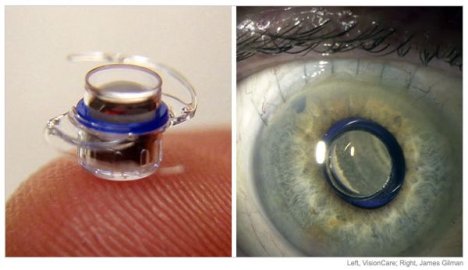
telescope-eye-implantA bionic eye, proven effective in assisting people with a rare disease that causes blindness, has been approved for use in the U.S. While the Argus II Retinal Prosthetic System does not completely restore vision in people diagnosed with retinitis pigmentosa, it does allow the patient to distinguish light and shadow. A study of 30 people with the implant indicated the technology allowed them to recognize large letters and made it easier for them to walk on a sidewalk and more easily detect curbs. At over $100,000, the implants don't come cheap. But, then, how do you put a price on not being hit by a bus?

[readon1 url="http://now.msn.com/bionic-eye-approved-for-use-in-us
"]Source:now.msn.com[/readon1]

Ecuador Vice President Lenin Moreno and His Wheelchair Revolution

ECUADOR3QUITO, Ecuador — Like many upper-class Ecuadoreans, Lenin Moreno rarely noticed people with disabilities. A successful businessman and politician, he was too busy being an overachiever.

All that changed in 1998. After buying bread at a Quito grocery store, Moreno was approached by gunmen in the parking lot. Even though he gave up his wallet and keys, the carjackers shot him in the back, leaving Moreno paraplegic.

Now, a dapper Moreno, 59, is sitting in a wheelchair at the colonial Carondelet presidential palace in Quito as newly arrived foreign dignitaries present him their credentials. Moreno was elected vice president in 2006. But, last month, he became acting president when President Rafael Correa took a leave of absence to campaign for re-election in Ecuador’s Feb. 17 vote.

That makes Moreno the world’s highest-ranking government official in a wheelchair. By nearly all accounts, he has used his power wisely. A fierce advocate for people with mental and physical disabilities, Moreno has helped turn Ecuador into one of Latin America’s most advanced countries for disabled people.
“The nice face of this government”

His work “is by far one of the best things this government has done,” said Monica Almeida, an editor at El Universo, one of the ECUADOR1country’s largest newspapers. “The vice president is the nice face of this government.”

When Moreno first received the vice presidential sash, the government didn’t even know how many disabled people lived in Ecuador. It was rare to see people in wheelchairs in public. In rural areas, people with severe disabilities were treated as outcasts and hidden from society. Some were even confined to sheds and chicken coops.

But Moreno has tried to upend this grim scenario. Using profits from the OPEC country’s oil boom, the government is installing wheelchair ramps all over Quito — the capital — and other cities. People with severe disabilities now receive $300 monthly stipends from the government. Moreno helped draw up a law that compels Ecuadorean companies to set aside at least four percent of jobs to people with disabilities.

“We are going to make sure that not a single person with disabilities goes unattended,” Moreno said in a recent speech. “This is a revolution.”
Motivating the disabled to move forward

This campaign on behalf of the disabled includes providing free artificial limbs to poor Ecuadoreans. Imported prosthetics can cost well over $5,000. However, about 90 prostheses are being produced every month at three Ecuadorean workshops and are then distributed to people who once hobbled around on crutches or learned to get by with just one arm.

ECUADOR2In the wing of a government hospital in Quito on a recent afternoon, several workers used saws and power sanders to put the finishing touches on new limbs as project manager Jorge Costa looked on. He said about 300,000 people are waiting for prostheses.

“The idea is to reinsert them into society,” he said. “With these limbs, they will become more motivated to find work.”

One person who has made this transition is Sarita Carlosama. A disease affecting her spinal cord left Carlosama paraplegic 20 years ago. Back then, she was studying to be a doctor at a Quito university. But she quit because there was no wheelchair access to the fifth-floor classrooms.

Carlosama ended up studying administration at a business academy where the classrooms were on the first floor. After graduating, finding a good job was tough. But following passage of the new four percent law to bring disabled people into the work force, Carlosama was hired by an oil company where she works as an accountant.

Now, her self-esteem is soaring. Three days a week she rises before dawn to practice tennis in her wheelchair before going to work. Not surprisingly, she’s full of praise for Vice President Moreno.

“He has achieved so much,” she says. “But even if he hadn’t done anything, just the fact that the vice president is in a wheelchair changes perceptions about disabled people.”

[readon1 url="http://www.voxxi.com/ecuador-vice-president-wheelchair/#ixzz2KtjKODBk"]Source:www.voxxi.com[/readon1]