w48M55rUJKjS2OFoWhen the TRMM satellite flew over Cristina on June 11, 2014 at 1142 UTC (4:42 a.m. PDT) it was a hurricane. A rainfall analysis that used data from TRMM's Microwave Imager (TMI) and Precipitation Radar (PR) instruments was overlaid on an enhanced infrared image received by NOAA's GOES-East satellite at 1145 UTC (7:45 a.m. EDT) to provide a complete picture of the hurricane's cloud extent and rainfall rates. The TRMM TMI data clearly revealed that an eye had developed indicating that Cristina was definitely a hurricane. TRMM PR found that rain was falling at a rate of over 74.4 mm (2.9 inches) per hour in a strong feeder band east if Cristina's eye. Another smaller area of strong convective thunderstorms west of Puerto Vallarta, Mexico was also found to contain very heavy rainfall with the tallest thunderstorm tops reaching heights of about 16.5km (10.2 miles).

Later on June 11, at 19:59 UTC (3:59 p.m. EDT) when NASA's Aqua satellite passed over Hurricane Christina as it was rapidly intensifying, the Atmospheric Infrared Sounder (AIRS) instrument gathered infrared data on the cloud top temperatures of the storm. By early morning on June 12, Cristina had a circular central dense overcast with very cold cloud tops near -80C (-112F).

At 11 a.m. EDT (8 a.m. PDT) on June 12, Hurricane Cristina's maximum sustained wind were near 150 mph (240 kph). Cristina was about 250 miles (400 km) southwest of Manzanillo, Mexico, near latitude 16.6 north and longitude 107.1 west. Cristina was moving toward the west-northwest near 8 mph (13 kph) and a northwestward to west-northwestward motion is expected through Saturday morning (June 14).The estimated minimum central pressure is 935 millibars.

The NHC said that light vertical wind shear and a deep warm ocean should allow Cristina to maintain major hurricane strength for another 36 hours.
 
[readon1 url="http://www.sciencecodex.com/nasa_and_noaa_satellites_analyze_category_4_hurricane_cristina-135565"]Source:/www.sciencecodex.com[/readon1]

huc

Hurricane Cristina, the second hurricane of the 2014 Eastern Pacific hurricane season, has formed off Mexico's Pacific coast.

According to The Weather Channel, Hurricane Cristina will continue to strengthen and churn to the west of the coast of Mexico.

Cristina started off as a Tropical Depression Three-E Monday afternoon, about 160 miles south of the city Zihuantanejo in Mexico. However, within six hours the National Hurricane Center upgraded it to a tropical storm and named it Cristina.

Now forecasters predict that it would develop into a hurricane later on this week.

By Wednesday, the tropical storm strengthened into a category 1 hurricane as it moved away from Mexico's Pacific coast, prompting authorities to warn of heavy rains in the region. The hurricane's maximum sustained winds early Wednesday were around 75 mph, while the U.S. National Hurricane Center predicts that it will strengthen even more over the next two days.

Cristina is located about 265 miles south of the port Manzanillo, and is moving west near 6 mph. Because swells generated by Cristina are affecting parts of Mexico's south central and southwestern coast, the Hurricane Center says this could cause life-threatening surf and rip current conditions.

Although the hurricane is expected to gain strength, it is unlikely to make landfall. Still, Cristina is close enough to land to have some effect on Mexico. For instance, the circulation around Cristina is bringing moist air onshore and wringing it out in the form of some locally heavy rain from portions of Mexico's Pacific coast alway the way into Mexico City.

Officials in Mexico warned of rising rivers and mudslides caused in southern and western Mexican states including Oaxaca, Guerrero, Michoacan, Colima and Jalisco.

Plus, Cristina could cause waves of up to four meters high in coastal areas, according to a statement released by the National Weather Service.

Hurricane Cristina is centered about 425 kilometres south of Manzanillo, Mexico, and is moving west near 9 km/h.


[readon1 url="http://www.latinpost.com/articles/14660/20140611/hurricane-cristina-update-path-maps-and-info-second-hurricane-of-the-eastern-pacific-hurricane-season-forms-off-mexicos-coast.htm"]Source:www.latinpost.com[/readon1]

gfi

The Guadalajara International Book Fair, better known as the FIL (from its Spanish name: Feria Internacional del Libro de Guadalajara) is the second most important annual event of its kind in the Spanish-speaking world after Buenos Aires International Book Fair, and the second largest book fair in the world after Frankfurt's.

The purpose of the FIL is to provide an optimal business environment for the book-industry professionals and exhibitors who attend the fair, and for the reading public eager to meet authors and pick up the latest entries in the market.

Created in 1987, the FIL is put on by the University of Guadalajara and is held at the Expo Guadalajara convention center, which has 40,000 m2 of floor space. FIL is held every year, starting on the last Saturday in November and continuing for nine days, in Guadalajara, Jalisco, Mexico.

The current managing director of the Guadalajara International Book Fair is Marisol Schulz, and its president is Raúl Padilla López

The Guadalajara International Book Fair is the most important publishing gathering in Ibero-America. It is also an amazing cultural festival. Created 28 years ago by the University of Guadalajara, the Fair is aimed at professionals and the general public alike, a characteristic that sets it apart from other book fairs around the globe. With business as one of its main goals, it is also a cultural festival in which literature plays a major role including a program where authors from all continents and languages participate, and a forum for the academic discussion of the major issues of our time.

For nine days, people willingly stand in long lines to listen to their favorite authors, the book industry makes Guadalajara its beating heart and the whole city is filled with the music, arts, cinema and theatre from the featured Guest of Honor which this year is Argentina.


  MI   
 

Alfredo Mirandé's new book, “Jalos USA: Transnational Community and Identity,”
examines the effects on migrants of raising a family in two countries.


For generations, immigrants from the Mexican town of Jalostotitlán, Jalisco, have migrated between their native community—which they call "Jalos"—and Turlock in California's Central Valley.

A new book by University of California, Riverside sociologist Alfredo Mirandé, "Jalos USA: Transnational Community and Identity" (University of Notre Dame Press), examines this circular pattern of migration and how the ability of these migrants to stay connected to their native roots facilitates success in the United States.

Mirandé made numerous trips to Turlock and Jalostotitlán beginning in 2006 to observe and interview migrants who identify themselves as "being from Jalos." Among others, he interviewed youth in Jalos and Turlock, as well as priests and social service providers.

He examined courtship, family, gender, and culture of this community and their impact on identity that transcends both the border and traditional national identities. He also identified an emerging ideology he calls "El Que Quiere, Puede" ("Those Who Want, Can"), which inspires Jalos residents to pursue a Mexican version of the American Dream and asserts that those who are motivated and hard-working can succeed in the U.S.

" 'Being from Jalos,' regardless of one's place of birth or immigration status, is facilitated by biannual religious fiestas that reinforce identification with a global transnational community," explained Mirandé, who teaches in the sociology and ethnic studies departments at UC Riverside. "Religious-based fiestas bring residents back to the community on pilgrimages that serve not only to promote a transnational Jalos identity but also as a dating and marriage market for young people."

His study also focuses on the role religion has played in a strongly Catholic region of Mexico that has a turbulent past and was at the center of the Cristero War, a counter-revolution against the anti-cleric policies of the ruling Mexican government in the 1920s and 1930s. He also examined the community's veneration of and devotion to Toribio Romo, a young priest and Cristero War martyr from Jalos, popularly known as El Padre Pollero, or the patron saint of undocumented migrants.

"While most studies of migration have looked at transnational migration among indigenous communities in México and Central America, this study focuses on a less indigenous community," the researcher said. Mirandé proposes that "while people from Jalos may be 'light' and derive certain privileges because of their phenotype or lighter skin tone, they are certainly not accepted as 'white' in the United States." He develops a new theory of discrimination based not only on race but on language and real or perceived immigration status.

Community studies have a long history in modern Mexican research, said Diego Vigil, professor emeritus of criminology, law and society at UC Irvine. "The study of international migration today requires that we look at the binational, bilingual, and bicultural nature of the movement of large bodies of people," he said. "Mirandé adds a new theoretical perspective when he also examines the bi-community effects of living and raising families in two countries."


[readon1 url="http://phys.org/news/2014-06-sociologist-effects-migrants-families-countries.html"]Source:phys.org[/readon1]

7391921

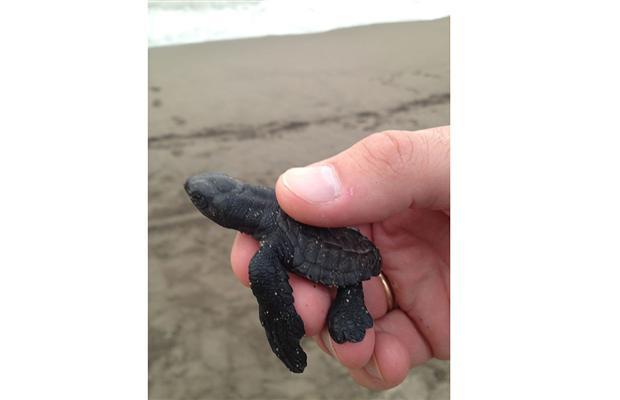
It's not just tourists that like the beaches in Puerto Vallarta. Sea turtles love them, too.

Female turtles, specifically Olive ridley sea turtles, come in droves every year to the Puerto Vallarta beaches where they were born to lay their own eggs, but there's a good chance that they weren't actually born there, but in a turtle egg nursery operated by the CasaMagna Marriott Hotel. Several other Puerto Vallarta hotels operate nurseries, but the Marriott's is the biggest.

For the past decade, the Marriott has hired biologists to patrol the Mexican city's beaches at night during the egg-laying season to collect the eggs so they can be safely incubated in a controlled environment that is safe from predators and human interference.

When the eggs hatch, the turtle hatchlings are released into the surf. What's great is that anyone can go to the beach in front of the hotel to participate in the event which takes place almost every night during the season from July to December. Each person in attendance gets to release their own little turtle into the sea and cheer it on in its effort to swim against the waves and head out to deep water where it can avoid being eaten by birds and fish.

Last year alone, the hotel released 47,000 turtles.  Over the life of the program, it has raised and released more than 290,000 of them. Sadly, only about 5% of them ever survive to adulthood.

One of the original motivations for the hotel to start the program was simply to remove the turtle nests from the beach so that its guests could frolic on them without harming them, but it turned out to be a great public-relations exercise and it's also educational for local residents.

Among some Puerto Vallartans, turtle eggs are eaten because of their alleged aphrodesiac properties. A black market exists for people who want the eggs, but the hotel hopes that the conservation message it delivers to the many local school kids that visit will help educate them and eventually help reduce the demand for the eggs.

During my visit, I watched an excited group of grade school students and equally eager tourists all line upon the beach near sunset to receive instructions on how to safely release their turtles.

The hotel's biologist carried a large, red bucket of turtles which were all hatchlings from the same nest and hand them one by one to each person, as if they were in a line to receive Holy Communion.

Everyone lined up parallel to the ocean and were instructed to walk a metre toward the water where there was another line in the sand. Everyone was to release their turtle and step back to the first line to avoid stepping on the scurrying creatures as the surf flung them back up the shore.

The school kids were squealing with excitement as the countdown began for the release. On the count of uno, dos, tres, everyone walked forward and let their turtle go. We all gave cheers of encouragement to them as they were battered by the overpowering waves which must have been tsunami-sized to the tiny turtles which were only a few centimetres long. Eventually, they all made it beyond the breaking waves and you could see tiny, black heads bobbing in the sea. Everyone wished them well on their long, perilous journey to adulthood.

Releasing Sea Turtles

[readon1 url="http://www.canada.com/travel/Releasing+turtles+Puerto+Vallarta+lesson+perseverance/7391871/story.html"]Source:www.canada.com[/readon1]

2014-06-05-Huasamota2-thumb

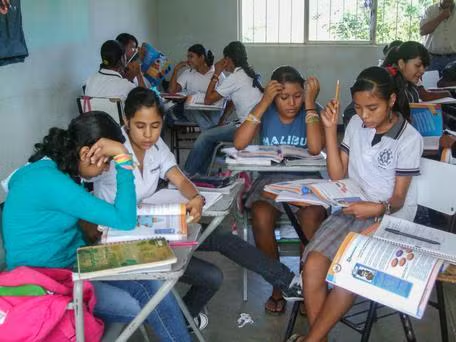
Nestled in the lush mountains of Durango, Mexico, the villages of Los Charcos and Huazamota are unlikely to catch the eye of the average visitor. Both boast a population of less than 800 people, there is little to no phone reception or internet access in either town, and the closest city is five hours away. They are also both located in a region with some of the highest levels of poverty in the country. Perhaps most notably, however, both villages are the site of an innovative approach to the challenge of bilingual and multicultural education.

This region of Mexico is home to a heavily indigenous population of non-native Spanish speakers. In Los Charcos, the vast majority of students belong to the Tepehuan ethnic group and many are only fluent in their native language O'dam. In Huazamota, the student population is more ethnically and linguistically diverse. Most students identify as either mestizos who speak Spanish, Tepehuanes like those in Los Charcos, or Huicholes, another indigenous ethnic group who speak a different language. Given that most of the teachers in both sites only speak Spanish, and there exist very few educational and literary materials in these indigenous languages, bilingual education may seem like a nearly impossible endeavor in this context.

This is where a teaching methodology known as relación tutora comes in. Using this method, students choose a topic according to their interests, and the teacher guides them by Socratic-style questioning to discover the knowledge they already have of the topic. Using this knowledge as a base, the students learn as much as possible about their topics through self-directed research. Once they have mastered their topic, they serve as tutors to other students -- either one-on-one or in small groups -- who wish to learn about it. These classmates then become tutors themselves upon mastering the topic in question, and the cycle continues. In an effort to improve educational attainment in its poorest regions, the Secretary of Education of Durango, in tandem with the organization Redes de Tutoría, has been working to implement this method throughout the state's telesecundarias (distance education middle schools), including those of Los Charcos and Huazamota. As part of the Redes de Tutoría team, I had the opportunity to visit and observe schools in these two sites last winter.

To manage the bilingual challenge, teachers will try to ensure that the students with the best handle on Spanish become tutors. Once these students have mastered their topics, they tutor their fellow classmates in the same topic. Special effort is made to match Tepehuan tutors with Tepehuan students, Huichol tutors with Huichol students, and so on. In many cases, students are tutored in their native language. Yet, depending on the demographics of the class and the academic proficiency of the students, this is not always possible, and many of the tutoring groups are multicultural. Regardless of the language of instruction, however, Spanish grammar practice is integrated into every tutoring session. For example, no matter the subject, students have to create a personal glossary of words that they struggled to understand and search for their definitions in a dictionary. They also have to perform a grammatical analysis where they categorize various words from their readings according to their type (verbs, nouns, adjectives, synonyms, antonyms, etc.).

According to math teacher Alan Montelongo, this strategy has had a profound impact on the Spanish proficiency of indigenous students.

With relación tutora, indigenous students are able to receive instruction in both Spanish and their native language. There is evidence that such a method puts students in a better position to improve their Spanish and avoid falling further behind their peers who have higher levels of Spanish proficiency. For example, a longitudinal study of bilingual (Spanish-English) programs in the U.S. showed that students in programs which emphasized gradual transition to English fared better academically in the long term than students in either English-only immersion programs or "quick-exit" programs where their native language is used for a short period of time and abruptly phased out after.

In addition to the scholastic benefits, bilingual education helps children to maintain pride in their cultural heritage and linguistic background. This is especially important when one considers the history of oppression and cultural shame that indigenous groups have suffered in Mexico and the Americas in general. Bilingual education can also help to foster a sense of community and inclusion among students of different cultural backgrounds. According to teacher Sixto Mares Navarrete, since implementing relación tutora, "student relations have improved...there is now less discrimination due to a student's indigenous identity. Before, there was a problem where a student didn't want to work another student because he is Huichol or because he is Tepehuan."

Ultimately, the most powerful aspect of relación tutora, regardless of the language of instruction, is that it helps to develop independent learners. As opposed to the traditional model of education where a teacher is the sole party responsible for instruction, relación tutora is based on the idea that all students have the potential to become self-directed tutors and learners by drawing on their prior knowledge and using it to guide further research and exploration. Within the educational context of places like Los Charcos and Huazamota, this methodology empowers indigenous students to draw on their knowledge of their native language to better not only their understanding of Spanish but other subjects as well.

2014-06-05-Los Charcos-thumb

[readon1 url="http://http://www.huffingtonpost.com/chi-anunwa/the-language-of-community_b_5452229.html?utm_hp_ref=mexico"]Source:www.huffingtonpost.com[/readon1]

painting

A coat of paint can go a long way.

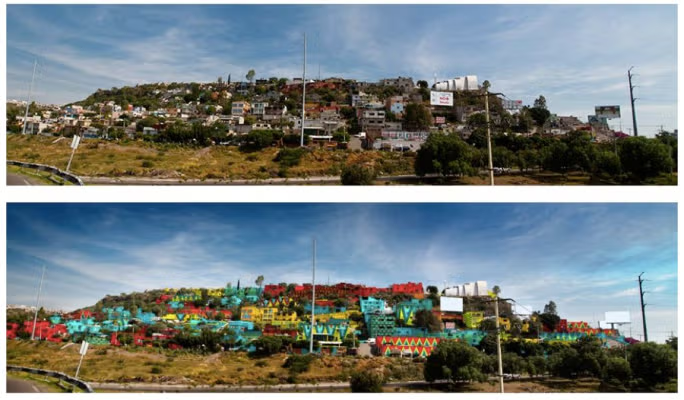
That's the mantra at the heart of Boa Mistura, a Madrid-based artist collective that has a history of traveling the globe, spreading street art as a symbol of social change. From Sao Paulo, Brazil to Cape Town, South Africa, the group of painters, engineers and architects transform the typical brown and gray colors of cities across the world into a spectrum of wild reds, blues and yellows. All in an effort to demonstrate how community-based artwork can shape the identity of a neighborhood.

Boa Mistura's latest intervention took place in Querétaro, México, where the team recruited members of the working class town to paint over 30 buildings overlooking the nearby highway. That was only the first phase in the ongoing project -- the collective and their endeavoring volunteers hope to cover all 1,074 of Querétaro's buildings in electric oranges and vibrant teals, bringing together children and adults who take great pride in their home in the process.

"Witnessing the youth of the neighborhood sharing their time with others from social centers, when maybe there was never any excuse to meet each other," a member of Boa Mistura explains in the video below. "They are thinking in a different way right now. [They] have a new reality, a modified one. That's actually really good."

"At the end they believe this community can live in better conditions," he adds, "and keep that spark of life produced by knowing that... if the neighborhood looks so beautiful, it's because of them."

The Best Way To Rejuvenate A City Just Might Be To Paint It Every Color Of The Rainbow

[readon1 url="http://www.huffingtonpost.com/2014/04/25/boa-mistura-mexico_n_5206967.html"]Source:www.huffingtonpost.com[/readon1]

PANews P-95db2d03-6d3f-4ea3-8b32-4d5b0a4870d1 I1

Mexican police were called to help with an unusual situation in Tlajomulco de Zunigaa in the state of Jalisco.

A hippopotamus was seen wandering aimlessly through the streets.

But, it seems the half-tonne animal wasn't alone.

A man who said he kept the animal at his home was not too far away.

The man told police the animal wandered off into the streets when he let it out of its cage for a walk in the park.

After some coaxing, police surrounded the hippo and guided it into a cage.

Officers then arrested the man, who didn't have the documentation to prove he was the owner.

A local circus has since come forward claiming they own the animal.

Local authorities are investigating.


[readon1 url="http://www.independent.ie/world-news/and-finally/mexican-police-track-down-hippo-30336790.html"]Source:www.independent.ie[/readon1]

a-vbg-2

From improving their bilingual signage to hosting environmental celebrations, not to mention the completion of its new orchid conservatory, the Vallarta Botanical Gardens are using the Summer months to their fullest advantage. Here are some of their latest updates.

With World Environment Day celebrated every year on June 5, the Gardens will be featuring a special day with birdwatching tours that will include identification of some of the orchids and bromeliads that can be found in the property. The special event will begin at 8 am and continue until noon.

For this particular event, the Gardens welcomes Linda Ascencio, a Peace Corps volunteer that will begin a two-year term during which she will divide her time working at the Gardens and visiting surrounding communities to help in environmental education and conservation of our region’s natural resources. A Texas-born biologist and teacher, Ascencio looks forward to the challenge. In addition, she will be available to conduct tours of the Gardens in Spanish along with bilingual Executive Director, Neil Gerlowski.

Two special events commemorating national celebrations will follow: July 2 and 10 mark the National Botanical Garden Day and National Tree Day, respectively. The Gardens will use these days to continue attracting visitors and locals to discover this increasingly important Puerto Vallarta attraction.

Work continues on the construction of the highly anticipated new Conservatory of Mexican Orchids. On July 26, the new facility’s main staircase will be dedicated in memory of Mexican orchid researcher Roberto González Tamayo, whose field research resulted in the discovery of many orchid species endemic to Mexico. The Gardens anticipate that construction of the facility will conclude sometime during the Summer, with a grand opening tentatively scheduled for December 13.

Visiting the Vallarta Botanical Gardens during the Summer is a time to experience the tropical forest in its full glory, and even the region’s well-known rains provide an attraction of their own. Storm-watching from the balcony of the Hacienda de Oro Visitor Center provides a stunning panoramic view over the surrounding Sierra Madre Mountains, forest, and Horcones River canyon. The Vallarta Botanical Gardens will remain open six days a week (closed Mondays) all through the summer. For more information, click here.


[readon1 url="http://virtualvallarta.com/puertovallarta/news/local/vallarta-botanical-gardens-announces-summer-projects-1405282.shtml"]Source:virtualvallarta.com[/readon1]

a-rivieraluxury

Riviera Nayarit was prominently featured in two important publications, Elite Travel and Bold Magazine, during the month of May. Both publications are distributed in private jet hangars and first-class airline lounges. Published in the United States, Elite Travel is distributed worldwide, while Bold Magazine is a Canadian publication distributed in the Air Canada VIP lounge and in the country’s largest bookstore chain. Its quarterly circulation encourages intrepid travelers to visit the world’s most exclusive destinations.

In a feature titled Riviera Nayarit: A Little Piece of Paradise, Bold Magazine praises the destination: “Under trekked, the Riviera Nayarit is an indigenous treasure emerging like most luxury Mexican finds; rugged & worthy of international recognition. In recent years, the Riviera has quietly welcomed Mexican and international visitors drawn to its breathtaking views, healing seas and abundant gifts.”

For more information about Riviera Nayarit, please visit their website

[readon1 url="http://virtualvallarta.com/puertovallarta/news/local/riviera-nayarit-featured-in-top-notch-publications-1406041.shtml"]Source:virtualvallarta.com[/readon1]

Mexico22

MEXICO CITY, Jun 5 2014 (IPS) - The Las Cruces hydroelectric project in the northwestern state of Nayarit is one of the threats to biodiversity in Mexico, according to activists.

“It will have an impact on the Marismas Nacionales wetlands reserve, because the dam will retain 90 percent of the sediment which is necessary for the survival of the ecosystem,” said Heidy Orozco, executive director of the non-governmental organisation Nuiwari.

Besides, “the hydrological regime would be modified and the low-lying jungle would be flooded,” she told IPS.

Nuiwari, which forms part of the Free San Pedro River Movement, has been dedicated since 2006 to protecting the San Pedro river basin, where the dam would be built.

The Federal Electricity Commission plans to build and operate the hydropower plant 65 km north of the city of Tepic, in Nayarit. It will have an installed capacity of 240 MW and a 188-metre high dam, with a reservoir covering 5,349 hectares.

The environmental impact study for the dam acknowledges that subsistence-level farming and small-scale livestock production will be replaced by fishing activities in the reservoir.

The Marismas Nacionales Biosphere Reserve, the most extensive mangrove forest system along Mexico’s Pacific coast, is the year-round habitat for 20,000 water birds and is a winter home to more than 100,000 migratory birds.

The reserve is recognised as a Wetlands of International Importance under the Ramsar Convention.

In the Marismas – which means marsh – Reserve more than 300 species of animals have been reported, 60 of which are endangered or threatened, especially due to overuse and destruction of habitat, and 51 of which are endemic, according to the Ramsar Convention, in effect since 1975.

Fishing activity that depends on the wetland ecosystem generates between 6.5 and 13.5 million dollars a year for local communities, according to official figures.

Furthermore, the dam would destroy 14 sacred sites and ceremonial centres of the Náyeri or Cora, Wixárica or Huichol, Tepehuano and Mexicanero indigenous communities.

Protection of biodiversity and the distribution of benefits are the core focuses of the Nagoya Protocol on Access to Genetic Resources and the Fair and Equitable Sharing of Benefits Arising from their Utilisation, signed in Nagoya, Japan in 2010.

The protocol, which complements the Convention on Biological Diversity, in force since 1993, stipulates that every signatory must adopt measures to ensure access to traditional knowledge associated with genetic resources and held by indigenous and local communities.

The protocol establishes that such knowledge must be “accessed in accordance with prior informed consent” and under “mutually agreed terms”.

“Parties shall in accordance with domestic law take into consideration indigenous and local communities’ customary laws, community protocols and procedures, as applicable, with respect to traditional knowledge associated with genetic resources,” the protocol adds.

Pedro Álvarez-Icaza, general coordinator of Biological Corridors and Resources in the government’s National Commission for the Knowledge and Use of Biodiversity (CONABIO), described the difficulties in complying with these stipulations.

“The big problem is how the benefits are to be distributed,” he told IPS. “Who do they go to – the community? The person providing the information? A group of people? I’m also worried about false expectations – about the idea that a plant could give rise to a medicine, and people spend 10 years waiting for that to happen.”

The government official also said “the legal framework is not necessarily the most up-to-date. The key is to strengthen the capacity of local and indigenous communities and raise their awareness of their right to the fair distribution of benefits.

“The important thing is information, so that if a country wants to patent a resource, it has to demonstrate that the information was obtained through a benefit-sharing agreement, with prior, informed consent,” he said.


With financing from Germany’s technical cooperation agency, GTZ, CONABIO is carrying out the project “Governance on Biodiversity: Fair and Equitable Benefit-Sharing Arising from the Use and Management of Biological Diversity”, to establish a group of pilot cases to serve as reference points.

The initiative, which has a budget of six million euros (8.2 million dollars), is to run though 2018.

“As long as the autonomy of indigenous peoples is not recognised and traditional knowledge is not valued, it is a mere expression of good intentions. There will be no fair and equitable distribution of benefits,” independent consultant Patricia Arendar told IPS.

Mexico is one of the 12 most biologically diverse countries in the world. The country has identified 2,692 species of fish, 361 amphibians, 804 reptiles, 1,096 birds, 535 mammals and over 25,000 plants, according to CONABIO statistics.

The Commission also indicates that there are 127 officially extinct species, 475 endangered, 896 threatened and 1,185 species subject to special protection in Mexico.

The Sectoral Programme of Environment and Natural Resources 2013-2018 indicates that natural ecosystems have been lost in nearly 29 percent of Mexican territory while the ecosystems in the remaining 71 percent are surviving with different levels of conservation.

Natural capital is one of the issues on the agenda of the Jun. 6-8 Second World Summit of Legislators of GLOBE International (the Global Legislators Organisation) in Mexico City, which will draw nearly 500 parliamentarians from more than 80 nations.

With financing from the World Wildlife Fund (WWF), Mexico’s environment ministry is leading the analysis of options for adapting the country’s legal framework to the Nagoya Protocol. The alternatives are modifying the law on wildlife, passed in 2000, or creating a specific new law.

So far, 92 countries have signed the Nagoya Protocol. But only 36 of the 50 needed for it to enter into force have ratified it. The only Latin American countries to have done so are Honduras, Mexico and Panama.

“Without a state policy for the protection of biodiversity, it is very difficult to develop strategies around the Nagoya Protocol, for example,” Arendar said. “It’s not a priority in today’s politics. There are more natural land and marine areas, and greater knowledge about biodiversity, but we’re still losing biodiversity.”

“The dam shouldn’t be built,” argued Orozco. “It is unacceptable from any point of view; the few benefits don’t justify the terrible permanent impacts. We demand that Mexico live up to international environment and human rights treaties, but experience from other cases indicates to us that this doesn’t always happen.”


[readon1 url="http://www.ipsnews.net/2014/06/mexicos-biodiversity-under-siege/?utm_source=rss&utm_medium=rss&utm_campaign=mexicos-biodiversity-under-siege"]Source:www.ipsnews.net[/readon1]


bnwLast week I said goodbye to Sayulita, wrapping up 7 months in Mexico. I’ve said all I have to say on the subject for right now and it’s on to new adventures, but not before we wrap up our enormous Mexican honeymoon:

Total Time: 209 Days or about 7 months.

Days that it Didn’t Rain: I estimate it probably rained a grand total of maybe 14 times during our entire stay. From the first week of January until the day we left it didn’t rain once. Amazing right?

Favorite Place: Sayulita, of course. We didn’t travel much once we got settled, and part of that was because of how comfortable we felt there.

Least Favorite Place: Might have been the heat, or the gritty-city feel, but Guadalajara didn’t do much for me. The Pinterest-famous Playa del Amor was also a disappointment.

Favorite Food: So many things! Tacos of course, in all their variety, but I also developed a penchant for chilaquiles (fried tortillas in tomato sauce) that I will have to learn to re-create. Pozole, sopes and tortas ahogadas are all a close second.

Most Memorable Moments: Releasing baby turtles on the beach at sunset, celebrating the Day of the Dead with the locals and eating my way through Puerto Vallarta’s food scene.

Biggest Annoyance: Mexico is SO LOUD. Sometimes I loved it, like when the crazy trucks would go by broadcasting their wares. Sometimes I hated it, mostly when I was trying to sleep and someone was blasting mariachi music late into the night.

Scariest Wildlife Encounter: In April our bathroom was invaded by an enormous wolf spider- I mean, huge. Mike and I were both too chicken to kill him so we named him Wolfie and tried to co-exist. Eventually (like two weeks later) he crawled out the window on his own.

Coolest Souvenir: Before we departed I loaded up on beaded bracelets, cute t-shirts and Mexican vanilla.

Biggest Regret: Not making it to Mexico City, Puebla or Oaxaca. It wasn’t really in the budget this time around but it’s a great reason to return!

Biggest Misconception: Obviously that Mexico is a dangerous war-zone. While some parts I definitely wouldn’t visit, we never felt safer than in our little town by the beach.

Best Advice: When it comes to food, be willing to push past your comfort zone. Sure you could come to Mexico and stick to restaurant-made quesadillas and enchiladas, but what is the fun in that? The street stands are where all the real Mexico action is.

Also, if you’re planning to rent an apartment in Sayulita like we did, get there well before the start of high season.

Would I Go Back? In a heartbeat! There is so much more of Mexico I need to see. Plus, I know we’ll be back in Sayulita someday in the future, although the place is changing so rapidly we may not recognize it anymore.

[readon1 url="http://twenty-somethingtravel.com/2014/05/mexico-best-worst/"]Source:twenty-somethingtravel.com[/readon1]