2014-06-30-BBPA2BHIM1-thumb

In 2012, when Brittney Borjeson first visited the beachside town of Sayulita, Mexico--a village with fewer than 4,000 residents just 25 miles north of Puerto Vallarta--it was a life-altering experience. Having spent the previous 13 years living in Boston and New York City, she was immediately smitten with the stunning Pacific seascape and easygoing attitudes of the local artisans.

2014-06-30-BBPA2BHIM2-thumb

Borjeson decided it was time to make a major change: for the next year and a half, she rented a tiny studio in a family-run hotel and traveled the country gathering native crafts, a collection that would eventually become the contents of her first shop. "I came for what was supposed to be a short vacation," Borjeson jokes. "And, two years later, I'm still here."

Borjeson wears a dress of her own design. Find it at: evokethespirit.com

2014-06-30-BBPA2BHIM3-thumb

The Pacific landscape is what first drew Borjeson to the hillside home. "I wake up to the sound of waves," she says. "I can see the ocean from every room in my house."

2014-06-30-BBPA2BHIM4-thumb

In the living room, cement platforms--common to the architecture of many Mexican homes--are covered with cushions to form a sectional sofa. The coffee table is made of two unfinished plywood crates stacked one on top of the other.

2014-06-30-BBPA2BHIM5-thumb

This past September, Borjeson--and her rescue poodle, Pepino--moved into her dream home: a quiet two-bedroom house overlooking the ocean in the southern hillsides of Sayulita. While decorating her sanctuary, Borjeson drew inspiration from her surroundings, opting to keep things true to their natural form--for better or worse. On the terrace, a hand-woven hammock is surrounded by banana leaves and bougainvillea

2014-06-30-BBPA2BHIM6-thumb

Borjeson scored this chair--which she wrapped in white vinyl--from a local craftsman.

Rug from evokethespirit.com
Chair from domino.com

2014-06-30-BBPA2BHIM7-thumb

"Mexico is filled with so many beautiful things," she explains. "But it's very hard to find actual furniture here." As a result, almost everything in Borjeson's two-story, all-white abode is custom-made, either by herself or with the help of village craftsmen. In the kitchen, whitewashed reed shades are hung with strips of linen.

2014-06-30-BBPA2BHIM8-thumb

However inspirational the landscape may be, it's the culture and community of Sayulita that have brought Borjeson the greatest joy and fulfillment. Last year, she opened Evoke, a shop of Mexican crafts and artifacts. Much of the merchandise is designed by Borjeson and made by local artisans from the indigenous Huichol tribe. This March, she launched Spirit, a smaller beach outpost, near shops owned by many of her friends.

2014-06-30-BBPA2BHIM9-thumb

"White is simple," Borjeson says. "It isn't a call to action or an emotional color; it's just peaceful and serene, and lets nature do the talking."

2014-06-30-BBPA2BHIM10-thumb

Borjeson made the guest bedroom's two-toned curtains herself by dipping linen panels into indigo dye.

Curtains (similar to shown) Ohanahomedecor "Tie & Dye" $26/panel, etsy.com
Feathers (hung around lamp) evokethespirit.com

2014-06-30-BBPA2BHIM11-thumb

In the master bedroom, a pair of arched windows offers views of the surrounding jungles and ocean. "My favorite design elements are the sea and the palm trees," Borjeson says.

2014-06-30-BBPA2BHIM12-thumb

Evoke, the larger of Borjeson's shops, is located just three blocks from her beachside outpost.

2014-06-30-BBPA2BHIM13-thumb

Out and about on Sayulita's beachfront.

2014-06-30-BBPA2BHIM14-thumb

Borjeson loves the light-filled ambience of Debbie de la Cueva's tiny jewelry shop.

2014-06-30-BBPA2BHIM15-thumb

Pompoms are a popular Huichol artisanal product.

2014-06-30-BBPA2BHIM16-thumb

The Artifacto Store, one of Borjeson's favorites, stocks pottery, textiles, and other local crafts.

[readon1 url="http://www.huffingtonpost.com/domino/personalizing-a-two-bedro_b_5543703.html"]Source:www.huffingtonpost.com[/readon1]

ayas

With an additional four new Clean Beaches, two more re-certified beaches and another four that are still certified, the Riviera Nayarit takes the lead in clean beach destinations in Mexico with 10 out of a total of 31 certifications.

The Riviera Nayarit considerably increased its number of Certified Clean Beaches from six to 10, thanks to the four new beaches that were certified on June 26th by the Instituto Mexicano de Normalización y Certificación (IMNC by its acronym in Spanish).
 
This occurred during the 10th Clean Beach Conference that took places in Puerto Vallarta, Jalisco. The National Water Commission (Conagua, by its acronym in Spanish) led the inauguration, accompanied by other governments and branches having to do with the topic at hand.  
 
The four new certified beaches include Palladium at Punta de Mita; Platanitos in Banderas Bay; Costa Capomo Becerros in Compostela and El Borrego in San Blas. These helped the Riviera Nayarit to take the lead, placing it at the top of the list of domestic destinations with certified clean beaches.
 
Los Muertos in Sayulita and Vallarta Norte II were also recertified during the event. The beaches at Nuevo Vallarta Sur, Nuevo Vallarta Norte I and Bucerías in Banderas Bay, as well as Chacala in Compostela, still retain their certification.
 
Pronatura Mexico also recertified the beach at Nuevo Vallarta Norte with the Blue Flag, awarded by the Foundation for Environmental Education (FEE). There are a total of 11 Blue Flag beaches in Mexico.
 
Within Mexico there are 31 Certified Clean Beaches divided among nine states, with Quintana Roo in second place with five. The Riviera Nayarit now boasts 32 percent of the clean beaches in the country.
 
These Clean Beach certifications are awarded based on the NMX-AA-120-SCFI-2006 guidelines established by the Ministry of Environment and Natural Resources (Semarnat by its acronym in Spanish).
 
These results have been made possible through the participation of three levels of government, a non-profit association and local businesses. They serve to strengthen the positioning of the Riviera Nayarit, making it more attractive to both domestic and international tourists.

mexico-political-map

Mexico has devised a national digital strategy aiming to groom a digital economy creating thousands of jobs in the technology sector. The five-year plan also aims to bolster the country’s ICT sector.

Sparking innovation and supporting young enterprises in technology and digital services sector are the key components of the strategy.

At the 35th Annual National Convention of the National Chamber of the Electronic Telecommunications and Information Technology Industry (CANIETI), representatives from four states – Distrito Federal, Jalisco, Tamaulipas and Yucatan – briefed the guests about their plans to support the national strategy.

Distrito Federal

Chief information officers (CIOs) in government offices should not be seen as computer maintenance personnel and they need to be qualified to make business decisions as their counterparts do in the private sector, said Salomon Chertorivski Woldenburg, the Economic Growth Secretary of the Distrito Federal.

“There are cities in the world that have CIOs who actively participate in the development of digital strategy. This is what we hope to replicate in Mexico,” he stated. “If you really want to reap the real IT benefits, achieve a higher success rate, you should change the mentality of the public officials.”

Infrastructure & Connectivity

 “A city such as Mexico City, home to approximately 16 million people, needs to have an efficient connectivity,” said Woldenburg, adding that his government is rolling out fiber optic cables to give better Internet access to everyone.

Mexico City is one of the 25 best connected cities in Latin America, and the 10th in the use of social networks.  Even so, we need better connectivity, which, in turn, requires investment,” he added.

The Mexico City Government has collaborated with companies associated with CANIETI to invest around $2 billion for bolstering broadband network.

As part of the digital strategy, Mexico City has launched an applications development laboratory, entitled Code for Mexico City(Code CDMX), to facilitate interaction between citizens and government officials about new technologies.

About 15 apps – including InfoDF Móvil, Mi Policía, Ecobici, Alarma Sísmica, Ministerio Publica Virtual, and Sistema de Denuncia Ciudadano – have been released so far, with the government setting up a virtual office to disseminate information about economic activities.

Entrepreneurial Skills

 At Distrito Federal, university students are also trained in launching tech start-ups. According to one official, more than 80 youngsters will travel to the Silicon Valley this summer to learn how start-ups are created and run.

“We plan to work with CANIETI to generate the necessary synergies so that these youngsters can build on their enterprise,” the official said.

Jalisco

The state of Jalisco, in the meanwhile, is planning to roll out a few programs designed spark innovation among students and young enterprises.  According to Jose Palacios Jimenez, Economic Promotion Secretary, the Jalisco State Government is exploring ideas to meet its digital objectives.

With the construction of the Innovation Center for the Acceleration of Economic Growth (CIADE), Guadalajara has become Mexico’s first Digital Creative City (CCD).

World of Business Ideas (WOBI) and Jalisco’s Economic Growth Secretariat (Sedeco) have jointly planned a reality show designed to foster entrepreneurial culture among youths. The reality show, in which 15 participants will exhibit their entrepreneurial skills, will last about 13 weeks.

Tamaulipas

Monica Gonzalez Garcia, Economic Growth and Tourism Secretary of Tamaulipas, said that in her state most of the large businesses have already gone digital. But a large majority of  small and medium sized enterprises (SMEs), which represent 90% of the economic activity, are yet to go digital.

“The biggest challenge today is persuading everyone to go digital, and that’s what we need to focus on,” she added.  Tamaulipas’ science & technology park in Victoria City has long been offering research and training opportunities to young entrepreneurs.

The secretary stated that her government was joining hands with educational institutions to update the syllabus. “Education is being revolutionized, and, at the same time, the necessary infrastructure is being provided so that people can launch their own business.”

Business Incubation Program

Yucatan’s business incubation program has helped creation of more than 22 IT companies in the past three years, according to the state’s economic promotion secretary David Jesus Alpizar Carrillo.

The incubator, according to Carrillo, is focusing on a few industry vertical including logistics, tourism, information technology and manufacturing.

Under the Digital Wellbeing program, the Yucatan Government will supply higher education students with a laptop loaded with information about educational programs. And the state has provided Internet access to most of the communities, Carrillo said.

The state is also planning to construct a technology innovation center (CITI) in Merida, where office space will be offered to young enterprises to launch their own businesses.


[readon1 url="http://www.nearshoreamericas.com/mexican-states-put-plans-boost-digital-economy/"]Source:www.nearshoreamericas.com[/readon1]

no-manejes 1

One of the main safety issues in these times is the alcohol-related accidents. With 24 thousand fatal victims a year of car accidents caused by alcohol consumption, México is on the 7th place worldwide, according to international organizations of traffic matters.

Especially worrying has become the increase of percentage in alcohol consumption among teenagers and youngsters. In a city as ours, with an eminently touristic vocation, opportunities and availability turn everyone more vulnerable and exposed to an accident of this kind.

Fortunately, there also exist some ways to prevent these situations and they only require a bit of responsibility on everyone’s side. Although sometimes, when we are under the influence of alcohol, we fail to recognize situations clearly enough we must be aware and not drive. Our friends can play a very important role in these instances.

Tolerance to alcohol varies from person to person, but we must be able to realize when we have exceeded our own limit and, if we are in charge of a vehicle, leave parked and take a taxi to our destination. In Puerto Vallarta, many places feature a service of safe taxi for their patrons, who are advised to ride them in order to avoid accidents.

There will never be enough precautions you may take in these cases. Your safety must always be the most important matter, and not acting upon it may be the most expensive case scenario.

[readon1 url="http://blog.cupocity.com/2014/03/don%E2%80%99t-drink-and-drive/"]Source:blog.cupocity.com[/readon1]

golf

Besides the Malecón, the beautiful beaches and the small and large hotels, Puerto Vallarta and the area of Riviera Nayarit have something truly interesting to offer the visitors: their golf courses. History of golf in the area started over 30 years ago with the construction of the Flamingos Golf Club, designed by Percy Clifford. This course has been renovated a number of times since being built. Afterwards came the Marina Vallarta course, followed by several others built by hotels in the area.

Nowadays the zone of Vallarta-Riviera Nayarit features courses built by the most famous golf courses architects and designers such as Jack Nicklaus, Tom Weiskopf and Robert von Hagge. These courses have hosted important international tournaments with top players and are available for all golf aficionados.

The variety of degrees of difficulty in the courses allows every player to find a suitable one for his level of game. This variety is part of the reasons which have turned Puerto Vallarta into one of the favorite golf destinations in Mexico.

Visit www.cupocity.com and find our golf promotions in our beautiful bay.

[readon1 url="http://blog.cupocity.com/2014/05/golf-in-puerto-vallarta/"]Source:blog.cupocity.com[/readon1]

tmThis June the Riviera Nayarit Convention and Visitors Bureau participated in two events focusing on the meetings market both on a domestic and an international level, working together with hotels and its sister bureau from Puerto Vallarta.

The meetings market is very important for the Riviera Nayarit, as it generates income on different levels as a result of the many professional and incentive events in the destination. Both events resulted in over 200 one-on-one business meetings between exhibitors and buyers.

The promotional work began on the first day of the month with the Meeting Place Mexico (MPM) event held in the state of Morelos, where a total of 125 business meetings with domestic meeting planners and corporate representatives took place.

The Riviera Nayarit Convention and Visitors Bureau (CVB) and the destination’s hotels showcased the variety of products and services the destination can offer this type of market.

The second event was held in Orlando Florida, during the American Incentive, Business Travel & Meetings Exhibition (AIBTM) from June 10 – 12.

This expo was attended in coordination with the Puerto Vallarta Convention and Visitors Bureau (CVB), where eight work agendas came together between the destinations and their hotels.

There were a total of 90 business meetings held in the United States, all focused on promoting the meetings market.

Both events have generated quotes for groups mainly towards the end of 2015 and 2016; there are hopes for an increase in hotel occupancy in the medium term.

The effort put forth by the Riviera Nayarit and Puerto Vallarta has reverberated in a positive manner among providers and corporate buyers and associates in the United States, Europe and Latin America.

perup

perup

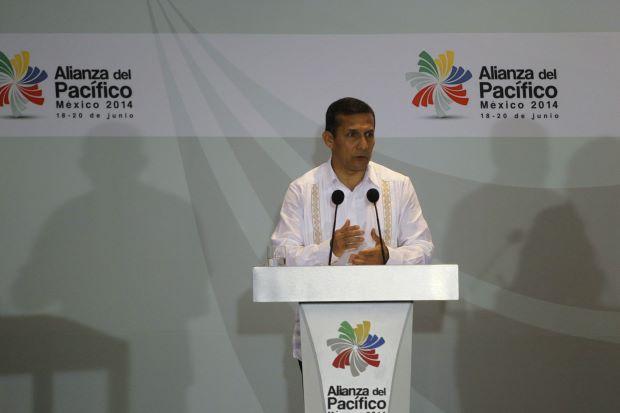
LIMA (Reuters) - Peru's President Ollanta Humala replaced his foreign affairs, interior and transportation ministers on Monday in a surprise cabinet shake-up as his popularity sinks to new lows.

Humala swore in Gonzalo Gutierrez, Peru's ambassador to top trade partner China, as his new foreign affairs minister. Daniel Urresti, currently the czar in charge of preventing illegal mining, will become the sixth interior minister.

Jose Gallardo, an economist on the board of the central bank, became Humala's new transportation and communications minister.

Humala, a former left-leaning military officer who turned to the right after being elected to the country's top job in July 2011, did not say why he made the replacements.

Environment Minister Manuel Pulgar-Vidal remained in power despite speculation he might step down after Humala proposed weakening some of his ministry's functions in an economic reform package delivered to Congress.

Humala has reshuffled his cabinet several times in his nearly three-year administration, as disappointment with unfulfilled electoral promises, concerns about crime and corruption and relatively sluggish economic growth over the past year have deflated his popularity.

Humala's approval rating slipped to 21 percent this month - a new low in his administration, according to an Ipsos poll. Those surveyed listed public safety and government corruption as top complaints.

Previous Peruvian presidents have governed with single-digit approval ratings.

Presidents in Peru, who cannot serve two consecutive terms, traditionally make cabinet changes in July and December.

(Reporting by Mitra Taj; Editing by Jonathan Oatis and Lisa Shumaker)

[readon1 url=http://www.thestar.com.my/News/World/2014/06/24/Perus-President-Humala-to-reshuffle-cabinet-as-popularity-sinks/"]Source:www.thestar.com[/readon1]

bariatric-solutions-main-image

NewswireGuadalajara, Jalisco (PRWEB) June 24, 2014
From today 24th of June and until the 31st of August 2014, Dr. Castaneda launches a new campaign in the USA that is going to save patients money on weight loss surgery. Gastric sleeve in Mexico for just USD$ 3,600 at one of the best hospitals in Guadalajara.

The website GastricBypassMexico.com is considered by general visitors and industry peers as one of the best for usability, content, mobility, and design. The launch of the new bariatric campaign this summer 2014, with an exclusive focus on gastric sleeve surgery (also known as gastrectomy sleeve) will benefit US patients under the current economic climate.

Dr. Castaneda explains: "We are continuously working to understand the needs of our international patients, and one of the main obstacles mentioned by people relates to the cost of bariatric surgery. At the same time, summer is particularly a better time to undergo weight loss surgery because it gives patients quality time to recover during a typical holiday season. Today, I am launching a new campaign aimed at patients in the United States looking for gastric sleeve surgery in Mexico. The interest received just on our Facebook page has been fantastic and we want to reciprocate."

Since its launch in the summer of 2013, GastricBypassMexico.com has grown exponentially in content, features and usability. From this week, patients looking for weight loss surgery in Mexico will be able to use the new Chat Line which gives website visitors a direct and easy way to contact Dr. Castaneda´s staff and support team right then and there. How much does bariatric surgery cost, which weight loss surgery is best, hospital information, references and more. Dr. Castaneda says: "I am really excited to introduce a live chat on the website to engage better with our visitors and respond to their questions more efficiently, right there without having to pick up the phone or email us. There is an excellent and highly trained patient support team in place to assist the public with professional guidance. And completely free to use for our visitors."

Gastric sleeve in Mexico is typically regarded as the most popular bariatric surgery and destination among patients arriving from the United States. Other types of weight loss surgery include gastric bypass surgery, gastric banding, duodenal switch surgery and mini gastric bypass, and in some cases some procedures can be done with minimally invasive surgery such as SILS (Single Incision Laparoscopic Surgery), the cost of gastric sleeve SILS in Mexico slightly higher than the standard gastric sleeve surgery and most definitely worth considering. Standard gastric sleeve is usually performed making up to 5 incisions in the surgery area, whilst laparoscopic gastric sleeve is made with just one incision.

"GastricBypassMexico.com is always a good starting reference point to watch video patient testimonials, before and after weight loss surgery photos, which we publish on the website in both Spanish and English, always very useful for new patients considering gastric sleeve surgery abroad. And the website is just the initial starting point, people are encouraged to call or email a member of the GastricBypassMexico team, free and under no obligation," confirms patient support team leader Judith Tabares.

Vertical-sleeve-12176784

[readon1 url="http://www.digitaljournal.com/pr/2008590"]Source:www.digitaljournal.com[/readon1]

06222014-Mexico

Widespread solidarity for 16 doctors in Guadalajara accused of negligence in teen's death.

Thousands of doctors and medical workers marched (link is external) in cities across Mexico on Sunday in support of 16 colleagues arrested (link is external) in Guadalajara and accused of negligence in the death of a teenager. Doctors, as part of the #YoSoy17 (link is external) or #YoSoyMedico17 (link is external) ("I am doctor 17") movement, protested (link is external) in Mexico City and more than 20 states across the country.

The physicians campaigned with the slogan, "We are doctors, we are not gods or criminals", demanding (link is external) more staff and medicine, and the release (link is external) of the arrested doctors.

The movement has also gained significant support on Facebook and Twitter. Facebook page "Yo SOY medico #17" has more than 91,000 likes, and hashtags #YoSoy17 and #YoSoyMedico17 have together been tweeted more than 92,000 times. Users shared protest images from across the country. The photos and video below show protesters marching through Mexico City on Sunday.

Demonstrations also took place in other cities, including Guadalajara, Oaxaca, Colima, and Veracruz.

[readon1 url="http://stream.aljazeera.com/story/201406232028-0023867"]Source:stream.aljazeera.com[/readon1]

AP PacificAlliance 2013 700pix

Updated May 19, 2014—One of the newest economic blocs to emerge from Latin America, the Pacific Alliance seeks to create a Latin American gateway to Asian markets. Composed of Chile, Colombia, Mexico, and Peru, the bloc is pursuing commercial, economic, and political integration among member countries. The group accounts for more than one-third of Latin America’s GDP and exports about 60 percent more than the Southern Common Market (Mercosur) bloc.

While only two years old, the Pacific Alliance has taken strides to liberalize trade, focusing on openness to foreign investment and the integration of a common market.

AS/COA Online details the Alliance’s Framework Agreement, its origins, its members, and its goals.

Browse by topic:

  •     Origins and Goals
  •     Members of the Alliance
  •     Organizational Institutions
  •     Goals and Progress of the Alliance
  •     Recent and Upcoming Meetings

The Alliance was informally created on April 28, 2011, when the presidents of Chile, Colombia, Mexico, and Peru signed the Lima Declaration. This initiative was developed by then Peruvian President Alan García to supplement the existing bilateral trade agreements between the four countries and create an economic bloc to negotiate and trade with other economies as a unified group. The Alliance wanted to increase competitiveness by integrating economies and allow for the free flow of capital, goods, people, and services among its members, in addition to seeking expanded trade with Asia-Pacific countries.

On June 6, 2012, the bloc officially launched when the four countries’ presidents signed the Pacific Alliance Framework Agreement at the Fourth Summit of the Pacific Alliance in Antofagasta, Chile.

Members of the Alliance

The Alliance members—Chile, Colombia, Mexico, and Peru—account for approximately 35 percent of Latin America’s total GDP and 55 percent of the region’s exports.

The Framework Agreement dictates that member countries must be democracies, practice the separation of the powers of state, and protect, promote, and guarantee human rights and fundamental liberties. They must also have existing bilateral trade agreements with member countries already in place. Article 3 of the Framework Agreement outlines requirements for countries seeking membership. The bloc aims to sign FTAs with Asia-Pacific countries based on existing bilateral trade accords.

Costa Rica was accepted as a fifth member of the Alliance at the Seventh Pacific Alliance Presidential Summit in May 2013. The Central American country already had FTAs with three members, and signed a trade accord with Colombia during the summit. Now, Costa Rica’s Congress must ratify the FTA and the Pacific Alliance Framework agreement before it becomes a full member.

Ecuador, El Salvador, the Dominican Republic, Guatemala, Honduras, Paraguay, Panama, and Uruguay are official observers to the Pacific Alliance and are candidates for future membership. A number of countries outside of Latin America are also observers; Australia, Canada, France, Japan, New Zealand, Portugal, and Spain have received this status. China, South Korea, Turkey, and the United States were accepted as observers in June 2013.

The Alliance also invited the Association of Southeast Asian Nations (ASEAN) to join as an official observer in November 2012. Observers to the Alliance could benefit from gaining increased access to Alliance-Asia Pacific trade links, as Canadian officials suggested after Ottawa gained observer status. Article 10 of the Framework Agreement gives the Council of Ministers responsibility to determine the conditions of each observer’s status. Approval by the Council of Ministers is required to gain full membership into the Pacific Alliance.

Organizational Institutions

High-Level Group: To accomplish the Alliance’s goals, the Declaration of Lima established a High-Level Group (HLG) that would meet as a council, made up of member countries’ ministers and vice ministers of commerce, trade, and foreign affairs. Officials form working groups on trade and integration, migration facilitation, and services and investments, and hold meetings to evaluate and discuss progress or changes within these areas. The Inter-American Development Bank provides technical assistance to working groups upon request.
    
The Pacific Alliance Business Council was established at the First Meeting of the Council of Ministers of the Pacific Alliance in August 2012. The Business Council is comprised of 14 businesspeople from member countries who meet to further private-sector integration. The Alliance is currently establishing a joint representative office in Turkey.
    
Pacific Alliance Parliament: On May 6, heads of legislatures from Alliance member countries signed an agreement to form a Pacific Alliance Inter-Parliamentary Committee. This body would develop legislation to approve Alliance trade agreements. The group will be formally presented to the Alliance at another legislative meeting in Chile this June.

Goals and Progress of the Alliance

Trade: At the HLG working meeting in January 2013, the Alliance agreed to liberalize trade by 90 percent by March 31, 2013, meaning that inter-member tariffs would be reduced to 10 percent. The bloc will move to accomplish its free-trade goal at its upcoming summit on May 23 in Cali, Colombia. Chilean Foreign Minister Alfredo Moreno said at the Alliance’s seventh summit that presidents of member countries plan to eliminate tariffs on 90 percent of internally traded goods, while the remaining 10 percent of goods experience periods of tax exemption.
   
 Migration: Advancements have also been made toward the free circulation of people. Member countries have a combined population of approximately 215 million. This would not only promote the tourism industries of Alliance members, but is also intended to increase the international competitiveness gained through academic and business exchange. In November 2012, Mexico exempted Colombian and Peruvian residents from visas for stays of up to 180 days (Chile has been exempt from this requirement in Mexico since 1991). The Alliance has also implemented a joint system to provide 100 annual university scholarships to promote student exchange.
    
Integrated Financial Markets: The Latin American Integrated Market (MILA) is the joint stock exchange between Chile, Colombia and Peru. In pursuit of financial integration, the three member countries combined their financial markets into one combined bourse, or stock market. Since May 2011, they have used MILA to conduct cross-border trading of companies. Mexico agreed to join the conglomerate at the Second Summit of the Pacific Alliance, a move that would double MILA’s size and make it larger than Brazil’s Bovespa, Latin America’s biggest bourse. The move has not yet happened, though Mexico bought a stake in Lima’s bourse in February 2013. While the creation of MILA was independent from Pacific Alliance negotiations, the Alliance agreement influenced Mexico’s move to join MILA and to expand the joint exchange.
    
Multilateral Ties: The Alliance is expanding connections with other regions. At the Community of Latin American and Caribbean States (CELAC)-EU summit in January 2013, the Alliance sought to deepen ties to European markets when member countries held bilateral meetings and signed agreements with European leaders. At the time, Chile penned pacts signed with Brazil, Germany, and Spain. With the exception of Colombia, Alliance members are also party to the Trans-Pacific Partnership (TPP), a free-trade agreement under negotiation with 11 Pacific-Rim countries. The most recent TPP negotiations were held in Malaysia in July, and included Japan in the talks.

Recent and Upcoming Meetings

Alliance leaders used the World Economic Forum as a meeting ground from April 23 through April 25, taking advantage of being in the same location to discuss business and finance. At the April 25 meeting, finance ministers discussed options for uniting policies related to capital flows, fluctuating currencies, and trade procedures.

[readon1 url="http://www.as-coa.org/articles/explainer-what-pacific-alliance"]Source:www.as-coa.org[/readon1]

6394596w

Mexico City, Jun 22 (EFE).- The Ancient Maya City and Protected Tropical Forests of Calakmul in Mexico's Campeche state have been named "mixed natural and cultural" World Heritage Sites by UNESCO, the National Anthropology and History Institute, or INAH, said.

The World Heritage Committee added the two Mexican sites to the World Heritage List at its meeting in Doha, Qatar, on Saturday.

This is the first mixed site in Mexico added by the United Nations Educational, Scientific and Cultural Organization, or UNESCO, to its list, the INAH said.

"The city played a key role in the history of this region for more than 12 centuries and is characterized by well-preserved structures providing a vivid picture of life in an ancient Maya capital," UNESCO said in a statement posted on its Web site.

The area added to the list is in the southern part of the Calakmul Biosphere Reserve and is considered the second-largest stretch of tropical forest in the Americas and the best protected, covering 723,000 hectares (1.78 million acres).

The Ancient Maya City of Calakmul was added to the World Heritage Sites list in 2002.

[readon1 url="http://www.laprensasa.com/309_america-in-english/2595352_unesco-names-2-world-heritage-sites-in-mexico.html"]Source:www.laprensasa.com[/readon1]

12-lies-people-tell

Over the years you’ve developed a set of beliefs based on what others have told you.  The problem is, many of these people weren’t telling the truth.  They were merely repeating the little, seemingly innocent lies someone else once told them.  Now, the false beliefs they’ve ingrained in your mind are impeding your potential and holding you back from the life you’re capable of living.

Here are twelve lies you’ve likely heard and the truth that will set you free:

1.  What you need in life is comfort and safety.
If you want to make an impact, big or small, get comfortable with being uncomfortable.  All growth begins at the end of your comfort zone.  Maybe the thing you’re scared of is exactly what you should do.  Sometimes life is about risking it all for a dream no one can see but you.

2.  You have way too much to lose.
In the end, you will not regret the things you have done nearly as much as the things you have left undone.  It’s always better to be left with a few “oh wells,” than a bunch of “what ifs.”  It’s better to have a lifetime full of experiences and mistakes you learned from, rather than a heart full of regrets and empty dreams.  Someday you will want to look back at your life and say, “I can’t believe I did that!” instead of, “Gosh, I wish I would have…” (Marc and I discuss this in more detail in the “Goals and Success” chapter of 1,000 Little Things Happy, Successful People Do Differently.)

3.  Your dream is impossible.
When a dream matters enough to a person, that person will find a way to achieve what at first seemed impossible.  Let that person be YOU.  It’s kind of fun to do the impossible.  Go after your dream, no matter how unattainable others tell you it is.  What’s impossible to them may not be impossible for you.

4.  Being self-centered is always wrong.
You must choose yourself and live your life from beginning to end; no one else can do it for you.  Claiming full control over your health, dreams, and well-being are some of the areas in your life where you get to be a little selfish and not feel bad about it.  If you want to reach your goals, you have to be the center of this part of your journey.  You have to make it work for you and you alone.  It’s not selfishness, it’s self-care and self-improvement.  Anything less is a setup for failure.

5.  You need the approval of others.
People are sometimes too quick to judge, but slow to correct themselves.  Don’t be one of them.  Focus on your own growth, goals, and self-worth.  Leave people to their opinions and judgments.  Let them respect you for who you are, and not for who they want you to be…  Or let them walk away if they choose.  Either way, they can’t harm you; it’s their understanding that is faulty, not yours.

6.  The strongest, happiest people have fewer problems.
Strength doesn’t come from what you can do; it comes from overcoming the things you once thought you couldn’t do.  When you are at your lowest point, you are open to the greatest positive change.  Happiness is not the absence of problems, but the strength to deal with them.  The strongest people are the ones who feel pain, accept it, learn from it, and fight through it.  They turn their wounds into wisdom.  (Read The Road Less Traveled.)

7.  Situations are either positive or negative.
The Chinese symbol for the word “crisis” is written using two strokes of a pen.  One stroke stands for danger, and the other for opportunity.  In other words, in a crisis, beware of the danger, but also recognize the opportunity.  Life always balances itself out.  Everything that happens is neither positive nor negative; it just depends on your perspective.

8.  Perfect relationships exist.
The love of your life isn’t perfect, you aren’t either, and the two of you will never be perfect.  But if you can make each other laugh once in awhile, cause each other to think twice about the sweetness of life, and both admit to being human and making mistakes, your relationship is something special.  No, you two may not always choose the most poetic words, and there will likely be inconsiderate slip-ups on occasion, but that’s what makes your bond real.  Smile when they make you happy, speak up when they make you mad, and miss them when they’re gone.  Love hard when there is love to be had.  Perfect love doesn’t exist, but true love does, and it’s worth the effort.

9.  Love is an obligation.
Love between two people comes because both people want to share their love, not because YOU want it from the other person.  Your family, friends, co-workers, partner – they all love you because they choose to, not because you want them to.  Love is meant to be felt, enjoyed and lived, not to be forced on anyone.

10.  You can’t be kind to everyone.
Kindness is not to be mistaken for weakness, nor forgiveness for acceptance.  It’s about knowing resentment is not on the path to happiness.  Having confidence and class is the ability to walk away from a bad situation with a smile on your face and forgiveness in your heart.

11.  You need more to be happy.
There are two ways of being rich: One is to have all you want, the other is to be satisfied with what you have.  Accept and appreciate things now, and you’ll find more happiness in every moment you live.  Happiness comes when you stop complaining about the troubles you have and offer thanks for all the troubles you don’t have.  And remember, you have to fight through some bad days to earn the best days of your life.  (Read The How of Happiness.)

12.  It’s too late
Anyone can run away; it’s super easy.  Facing issues and working through them makes you strong.  Focus on your dreams, not your problems.  It’s not too late.  A hundred disappointments in the past can’t equal the power of one positive action right now.  Talk is cheap; action is priceless.  Go for it!  Give yourself another chance.


[readon1 url="http://www.marcandangel.com/2013/12/02/12-lies-people-love-to-tell-you/"]Source:www.marcandangel.com[/readon1]

mistake 02 newsnextbd

You might think the “perfect employee” works around the clock, constantly checks email and never takes a break or goes on vacation. But it turns out this perception is all wrong. In fact, the most successful people tend to know when to switch off, kick back, and refocus their energy.

So whether you’re angling for a raise, a promotion or just a few kind words from your boss, here are a few common workplace mistakes you should quickly correct. Your employer will appreciate your newfound productivity, and so will you.

1. You’re Getting In Late

Even if your boss lets you set your own schedule, you should still aim to get to work early. A recent study found that bosses tend to exhibit a “morning bias,” rating employees who get in to work early as more productive and conscientious than employees who get in later -- even if they put in the same number of hours throughout the day.

2. You’re Checking Your Email First Thing In The Morning

inboxIt seems counterintuitive, but checking your email first thing in the morning can put a damper on your productivity for the entire day, according to time management expert Julie Morgenstern. Starting your day by responding to 46,966 emails puts you in immediate stress mode, and that will make it harder to focus later on.

“Those requests and those interruptions and those unexpected surprises and those reminders and problems are endless,” Morgenstern told The Huffington Post.

Instead, Morgenstern recommends starting your day with an important task that requires focus and then moving on to more trivial matters like replying to emails. "There is very little that cannot wait a minimum of 59 minutes,” she said.

3. Your Emails Are Too Long
Super-successful people generally avoid sending long emails, and so should you. Think of how many emails you receive in a day. Now think of how many TL;DR emails you’ve skipped over. Why expect more of others than you do of yourself?Our advice: Limit your emails to five sentences or fewer. Just make sure to keep it cheerful, so that you don’t come across as rude.

4. You’re Sitting At Your Desk

o-DESK-570
Sitting down, rather than standing, isn’t just bad for your health; it could be making you less engaged and creative at work. A new study from the Olin Business School at Washington University shows that standing up while engaging in a group project makes workers more creative, more enthusiastic, less defensive of their ideas and more willing to collaborate than when they’re sitting down.

Andrew Knight, a co-author of the study and an assistant professor at Washington University, told HuffPost that “if you work in a place where you’re standing up, you’re going to move more, and because of that you’re going to become more physiologically activated. Your body is going to be 'on.'"

5. You’re Trying To Multitask
o-MULTITASKING-570
Chances are, as you’re reading this, you have six other browser windows open, and you're convinced all of them are equally important. And you're making a phone call. And you're eating your lunch.

But studies show that you need to focus on one challenging task at a time in order to really nail it. Our brains can juggle menial tasks easily enough, but tasks that require real brainpower need your full concentration. Your short-term memory can’t process two separate streams of information at once, and the result is you’ll be doing a sloppy job at one or both of those tasks.

When you read something while you’re simultaneously trying to respond to emails, for instance, you’re not going to remember anything that you’ve read. And if you don’t remember it, you can’t brilliantly quote it later.

6. You’re Not Taking Stock Of Your Day

journal

Diaries aren’t just for tweens obsessed with selfies and Justin Bieber; they're for you, too. Taking as little as five minutes each day to jot down what you’ve learned, what went well and what went not-so-well during the workday can help you de-stress, identify solutions to problems and even come up with brilliant ideas that will boost your profile in the workplace.

It’ll also remind you to take stock of your successes, rather than just your failures, according to Theresa Amabile, co-author of "The Progress Principle: Using Small Wins to Ignite Joy, Engagement, and Creativity at Work."

"One of the big reasons to keep a diary is to record small wins that otherwise might slip through your memory," Amabile told Forbes. "You can leverage the progress principle and allow yourself to get that boost from realizing you are making progress. And it's also helpful to record major setbacks -- or minor ones that recur -- so you can think about how to get rid of inhibitors blocking your progress."

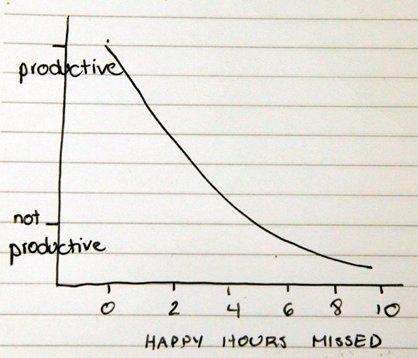
7. You’re Not Going To Happy Hour
original

Everyone needs a stress release. For some, that’s an hour-long run at the gym; for others, a pint of cookie-dough ice cream. But for many at the typical workplace, it's a chilled glass of beer at a local watering hole.

Whether or not you’re a drinker, you should considering heading to a bar after work every now and then. It’s a prime networking opportunity and a chance to make new friends with your co-workers. Constantly avoiding outside activities with your co-workers could make your seem like someone who doesn’t play well with others. And that's not the kind of impression you want to leave in the workplace.

8. You Don’t Have A Hobby

giphy

Nurturing your own creative interests actually makes you a better worker, according to a recent study from San Francisco State University. Spending mental energy on something that has nothing to do with work -- playing an instrument, knitting, learning to make the perfect burrito or simply unwinding with a book -- can make you more productive when you get back to the office.

In a press release, the study’s lead researcher said that creative hobbies made workers feel more refreshed and productive the next day. Study participants with hobbies were also found to be more creative and more likely to help out their coworkers in the office -- two metrics that translate to a significantly better performance review.

9. You're Not Taking Vacation
You may think you’re being conscientious and hardworking when you avoid taking vacation days, but you’re only hurting yourself. Nearly half of Americans reported using less than 25 percent of their allotted vacation time over the past year, according to a recent Glassdoor survey.

That's unfortunate, because taking a few days off to recharge your batteries is as good for your productivity and creativity as it is for your health.

"Vacations can spark creativity, offer a fresh perspective for problem solving, improve relationships and increase productivity," Dr. Glenn D. Braunstein, vice president of clinical innovation at Cedars-Sinai, wrote for HuffPost. "It may even save your life."

10. You Don’t Even Take A Break
giphy 1

In 2012, only 1 in 5 American workers ate lunch away from their desks, a trend that doesn’t seem to be reversing itself. But taking frequent breaks actually makes workers more productive and increases focus.

Even taking a short walk during the workday can improve memory and attention by as much as 20 percent, according to a University of Michigan study. Or if that's not for you, looking at pictures of nature scenes can recharge a fatigued brain better than downing another cup of coffee.

11. You’re Sacrificing Your Health And Your Sleep
giphy 2

After a long day at work, you might not have the energy to head to the gym. You just want to curl up on the couch with some cheese puffs and forget about the day with a Netflix binge. Or maybe you take your work home with you and stay up late, trying to get a head start on the next day. Either way, you’re doing yourself a huge disservice.

Eating right, exercising and getting enough sleep have all been linked to better productivity among workers. Exercise has been shown to boost creativity and reduce feelings of stress, which can lead to poor health and decreased productivity. And if you’re chowing down on the wrong foods, whether at home or at lunch, you’ll feel lethargic and unproductive afterwards, otherwise known as the dreaded food coma.

The brain’s waste removal system kicks into high gear when you sleep, literally clearing your mind in preparation for the next day. And while you sleep, your brain acts like a miracle drug, strengthening memories, repairing brain cells, regulating your metabolism and learning new motor tasks, all of which will recharge you for the next day’s work -- something both your boss and you can appreciate.

[readon1 url="http://www.huffingtonpost.com/2014/06/19/work-mistakes-youre-making_n_5501209.html?ir=Business"]Source:www.huffingtonpost.com[/readon1]