





December 12 The Virgin of Guadalupe Fiesta
 Before the Christmas season "officially"

 Vallarta Today - Puerto Vallarta's Only Daily English Newspaper - Vallarta Daily News
The Newspaper Of The Bay
Vallarta Today - Puerto Vallarta's Only Daily English Newspaper - Vallarta Daily News
The Newspaper Of The Bay
Before the Christmas season "officially"
 Hidden Moon premieres November 23 in Mexico. Director Pepe Bojorquez manages to capture the true beauty and complications of life. It intertwines the intricate feelings of love with the depth nature of truth. A talented filmmaker, Bojorquez says this story is not just his – it’s everyone’s reality.
“The story is easy to empathize,” Bojorquez said. “It’s about chasing your dreams, falling in love. Sometimes our goals and what we want to accomplish mask everything, such as love that’s right in front of us.”
Hidden Moon tells the story of a beautiful woman, whose dramatic appearance at the funeral of a man in California shocks his prosperous family. The man’s son then travels to Mexico to discover the truth about the woman’s relationship with his father. Upon finding her, he discovers that she is living with another man, and refuses to admit knowing his father. What happens when true love appears twice, at the same moment? This web of emotions is difficult to unravel. Is it possible for everyone to have a happy ending?
Filmed in Guanajuato and Veracruz, Hidden Moon showcases the unparalleled magnificence of Mexico. Its accomplished cast includes Wes Bentley from “American Beauty” and “The Hunger Games,” Mexican actress Ana Serradilla, actor and writer Jonathan Schaech and Linda Gray, the star of “Dallas.”
After its premiere in Mexico, it will come to European theaters, and then to the United States. A depiction of modern reality, Hidden Moon paints the exquisiteness and rarity of love against the background of gorgeous Mexico.
[readon1 url="http://www.vallartatoday.com"]Source:www.vallartatoday.com - Translation by Suyapa Ajuria Nov. 10, 2012[/readon1]

By Isabel Breseda
Vallarta Today
November 7, 2012
Warm welcome to the opening of what will be the Mexican holiday
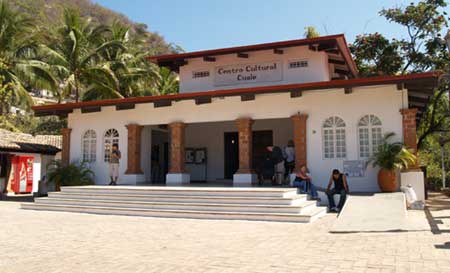 November 10 - November 14
Date Event Location
November 10, 2012.
8 pm Folk Group Presentation Teatro Vallarta Vallarta Azteca
Azteca Vallarta celebrates its 9th anniversary, presents program "Festival of Flowers" with pictures of Sinaloa, Yucatan, Veracruz, Oaxaca and Jalisco. Proceeds will represent Puerto Vallarta in an International Ballet in Europe. General admission $ 100
November 10, 2012.
10 am - 5 pm only occasion literary bridge in the park will Agustin Flores Contreras
Program supporting literature that sell, buy, exchange and donate new and used books. It has the presence of established writers. This time will be Eduardo Rincón Gallardo and Jorge Batiz
November 14, 2012
7 pm "Music for All" Aquiles Serdan Auditorium
(bows boardwalk)
Support Programme which presents music bands and guest musicians. This occasion presents Master Thomas Mujica workshop with students piano Municipal Cuale Cultural Center.
[readon1 url=" http://www.vallartatoday.com"]Source:www.vallartatoday.com - Translation by Suyapa Ajuria Nov. 9, 2012[/readon1]
 In compliance with the demands arising from the Mexican Revolution, begins a process of active participation of the state in social welfare.
• In 1920 the wives of the presidents led the delivery of provisions and other tasks for the benefit of the needy.
• In 1959 he established the National Campaign for the Protection of Children.
• In 1961 he founded the National Institute of Child Protection (INPI) which changes in:
• 1976 to Mexican Institute of Child Protection (IMPI)
• In 1977 he created the decentralized public agency: the System for Integral Family Development (DIF).
NATIONAL DIF
It is a public, decentralized, with legal personality and its own. Created by decree on January 13, 1977 in accordance with Article 13 of the Law on the National Social Assistance System 1986 is the promoter of social assistance.
[readon1 url="http://www.vallartatoday.com"]Source:www.vallartatoday.com- Translation by Suyapa Ajuria Nov. 8, 2012[/readon1]

Vallarta Center in coordination and support of Jalisco Ministry of Tourism (Setujal), Tourism Trust of Puerto Vallarta , Tourism Council and Transat Tours take place this Wednesday, November 7 Mexican Fiesta "Viva Puerto Vallarta
This festival will take place in the Park Lazaro Cardenas, Puerto Vallarta romantic zone and starts at 7:00 pm
According to information from the organizers, this event is the only private, it will be only for special guests.
Are expected to attend the tour operators of BC (Vancouver) Transat Nolitours and representatives of various associations and chambers, government representatives, restaurateurs, hoteliers, businessmen and representatives of various media.
Liney Cornejo, president of Centro Vallarta reported that after November 7, every Wednesday of the 15 days will repeat the Mexican Fiesta to the general public, the idea is to live the event and then share their experience with friends, colleagues and clients.
Another event that made ??Vallarta Center in collaboration with the tourism authorities was the Day of the Dead celebration that included performing Dead altars and popular festivals in the Cuale Market and Plaza Lazaro Cardenas.
Furthermore, the performance of the sample of Day of the Dead bread, pastry and bakery where Don Chonito were giving away pieces of this delicious dish. And the dead altars made ??each of the hotels in the downtown Puerto Vallarta.
Among the promoters of these initiatives are Maria José Zorrilla, Marcelo Alcaraz, Liney Cornejo, Abel Villa, and other businesses.
[readon1 url=" http://www.Vallartatoday.com"]Source:vallartatoday.com - Nov. 7, 2012 Translation by Suyapa Ajuria[/readon1]
 The president of the Municipal DIF System, Magaly Fregoso Ortiz in the company of Eliza Gomez, president of the board of the Nueva Vid Children's Shelter,
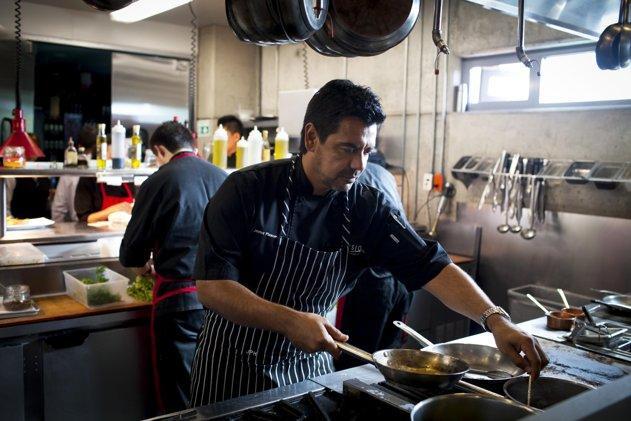 Until recently, Baja California's culinary contribution to the world amounted to the Caesar salad, a dish hardly associated with Mexican food. Beyond that, this long, thin peninsula was known more for its Chinese food and pizza thanks to the thousands of migrants from all over the world who began to settle the Mexican state south of California in the 19th century.
Now a group of chefs wants to change that, working to create a unique cuisine largely based on fresh seafood caught in the seas flanking Baja and the produce from its fertile valley. The new culinary craze, known as Baja Med, is a fusion of Mexican food with influences from the Mediterranean and Asia.
The movement has resulted in dozens of restaurants that are helping to pull a new kind of tourist to the beleaguered border city — one who enjoys great food and art rather than a brothel and a cheap drunk. People attending conventions in San Diego think of crossing the border for dinner in Tijuana, said Javier Plascencia, the chef of Mision 19, whose quest to put his city on the culinary map was the subject of a New Yorker magazine profile earlier this year.
Baja Med mixes uniquely Mexican ingredients such as chicharron and cotija cheese with lemon grass and olive oil. Signature dishes include tempura fish tacos and deep sea shrimp served with fried marlin, baby farm tomatoes, scallions and a sauce made with local cheeses.
"What Baja Med proposes is for the ingredient to be the main actor in the kitchen," said Miguel Angel Guerrero, chef of La Querencia, a Tijuana restaurant serving such dishes as beet carpaccio with blue cheese and mint vinaigrette. "Geographically, we are privileged because throughout the year we have a variety of products available. And yet, many generations have passed, and we still don't have a regional cuisine."
The port of Ensenada, 40 miles south of Tijuana, is one of the country's largest for mussels, oysters, clams and shrimp, as well as a hotbed of blue tuna sea farming. Baja California is the fourth largest producing vegetables in Mexico, according to the state government.
To come up with the right taste, chefs also bring in red lobster, manta rays, sea cucumbers and salicornia, a succulent that grows in sand dunes. They incorporate miniature vegetables from the fields south of Ensenada, olives from the winemaking region of the Guadalupe Valley just northeast of Ensenada, dates from San Ignacio and tomatoes and strawberries from the San Quintin Valley.
"Many of us were working on our own for some time but things fell into place for us to work together, while keeping our individual style," said Marcelo Castro, a leading producer of cheese in Real del Castillo and great-grandson of a Swiss immigrant who came to Ensenada in the late 19th century.
Area chefs conceived the movement eight years ago when they formed the Baja California Chef's Association. It's been boosted in the last three years by the state government, which has organized and promoted food festivals.
Now the 22 Baja Med chefs work with the state's wine and beer producers and the vegetable growers, fishermen and shellfish farmers. Another boost came this year after international culinary specialists started to visit some of the restaurants.
"Tijuana is one of the most interesting Mexican kitchens today. It's one of the great cities to eat across North America," international chef Rick Bayless said while taping a Tijuana segment for his PBS series "One Plate at a Time."
Great food is not the first thing that comes to mind when people think of the sprawling, dusty border city of 1.6 million people across from San Diego. Tijuana was once known for its souvenir shopping and cheap good times in border bars, then more recently for gruesome drug violence among cartels warring for the lucrative transport route at the busiest U.S.-Mexico border crossing.
Many of its restaurants had closed as the killings escalated, hitting 800 murders in the year 2007 and making Tijuana one of Mexico's most dangerous cities. That all but shut down cross-border tourism and forced the closure of restaurants including the famous Caesar's, where restaurateur and Italian immigrant Caesar Cardini invented the salad of whole romaine leaves, garlic, Worcestershire sauces, raw eggs and parmesan cheese back in the 1920s.
The violence has since subsided — some say because of a police purge, others say because one cartel managed to dominate the region. Either way, tourism is starting to return and even Caesar's reopened in 2010.
The mix of people who live in the state also accounts for the fusion of flavors. Half of the 3.5 million there are natives of other states of Mexico, where they mix with first- and second-generation families from Asia, Europe and the U.S.
"Baja Med cuisine is a mix of the cultures that all came with the intention of crossing to the other side, but they stayed," Plascencia said. "There were Italian and French restaurants established here because of Prohibition in the United States, and their principle clients were North Americans who came to have a good time at the border."
That's translated into local demand for products grown in the state, said Hector Gonzalez, manager of the Ensenada-based company Max Sea, which is dedicated to Manila clam cultivation and Kumamoto oysters, since 1999. Before, most of Baja California's products were being exported to the United States and Japan.
"What is happening in restaurants is a synthesis of all this," Gonzalez said.
One of those producers is David Martinez, owner of the farm Rancho Martinez e Hijos, who has grown vegetables and mini-vegetables for 25 years.
He first began experimenting with small vegetables that were more colorful and had better taste and texture. Soon, he was selling baby carrots without skin and small green-and-yellow squashes to meet demand from Los Angeles County chefs.
"There was not a market for these products in the United States, much less in Mexico," Martinez said. "We had to go to California to offer it. My idea was to take an old product and modify it and with that get the attention of the restaurants and the housewives."
"In the United States they started calling those vegetables gourmet products," he said. "I had no idea what they were referring to."
Like Martinez, about 80 wine producers of the Ensenada valleys and 20 artisan cheese producers in Real de Castillo, a town southeast of Ensenada, are helping fuel the new cuisine after growing the products for years.
There's no limit, said Plascencia, given the countless ingredients: "It all depends on the creativity of the chef."
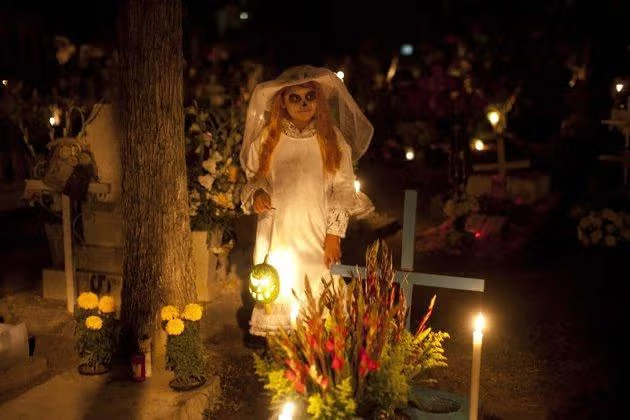
MEXICO CITY (AP) — Mexicans cleaned the bones of dead relatives and decorated their graves with flowers and candy skulls. In Haiti, voodoo practitioners circled an iron cross at a cemetery and poured moonshine to honor their ancestors. Some Guatemalans held a wild race of horses to remember the dead.
Across the Western Hemisphere, people are paying homage to lost relatives in observances that began Thursday on All Saints Day and continue Friday with All Souls Day.
The combined celebration known in many places as the Day of the Dead is a particularly colorful and macabre festival in Mexico that harks back to the Aztecs but has become part of Roman Catholic traditions.
"In the European-Christian notion of death, our loved ones go far away and we're left to survive on our own. But in the Mexican case, in Andean countries, the world of the living and the dead co-exist," said Elio Masferrer, an anthropologist who focuses on religious studies in Mexico.
"The living seek help and protection from the dead, especially on the Day of the Dead," Masferrer said.
And while in the Judeo-Christian traditions, the dead go to either heaven or hell based on their behavior on Earth, many in Mesoamerica and Andean countries believe they work for the Gods and are supported by their family members still on Earth, he said.
"It's none of this playing a harp in a cloud, family members have to feed them and between today and tomorrow they will leave their favorite food at the table and leave the door open so they can walk in," Masferrer said.
Families across Mexico took picnics to cemeteries, decorated graves with marigolds and sprinkled holy water on the tombs of their loved ones.
A "rezador" or prayer man whispered The Lord's Prayer at a cemetery in Pomuch in the southeastern state of Campeche, while Paula Maria Cuc Euan, dusted off the bones of her parents.
"I've been doing this since they died," Cuc Euan said as she returned a femur to a wooden crate lined with padded fabric decorated with hand-knitted flowers. "My mom died 32 years ago, and I have been doing this ever since."
Across the border in Guatemala, jockeys drank alcohol before mounting horses on a ride known as "The Death Race." It is celebrated every year in Huehuetenango state, some 168 miles (270 kilometers) from the capital, and tradition holds that if a rider falls during the race it's a sign that farmers will enjoy an abundant harvest.
Peruvians flocked to cemeteries, from low-lying ones on the coast overlooking the Pacific to graveyards high in the snow-capped Andes.
Thousands crowded Lima's Virgen de Lourdes cemetery, the country's largest, to leave flower offerings and dance to Andean music. Hilarion Ramos, 79, left a bouquet of Incan lilies at the grave of his son who died in 1979 at age 2.
"My little boy left 33 years ago, but I don't forget him. I still have the memory of his little face in my mind," said Ramos, who walked a mile (two kilometers) to take his offering to the cemetery.
Musicians played nearby while Lucila Mamani, 62, and her three brothers danced around the grave of her mother.
"Death is very sad so this allows me to remember with joy (the life) of the deceased. That's how we Andeans are. That's why I hire the musicians to play here," Mamani said.
Food played a big role in Bolivia where many people celebrated the "return" of loved ones with full tables.
Fruit, bread and wine were set on a white tablecloth for Blanca Jimenez's dead family members, who were represented by framed photographs next to lit candles.
"It's a re-encounter with our loved ones," Jimenez said.
The celebration permeates all social circles in Bolivia, including the very top of the government. Officials at the foreign relations department set up a large table with paintings of indigenous heroes and social leaders to "welcome their souls."
In Haiti, hundreds of voodoo, or Vodou, practitioners gathered at cemeteries, then marched in street processions to honor their ancestors in Day of the Dead, or "Fet Gede," ceremonies.
Circling an iron cross at a cemetery on the eastern end of the capital, Port-au-Prince, dozens of young men and women took turns pouring rum, moonshine and other libations. A woman wearing a black bra and a purple headband, the signature colors of the festivities, threaded through the crowd in a seeming trance as others looked on.
"Today is the day we come to celebrate the people who have died, the people we haven't seen in a long time," voodoo priest Jean-Robert Pierre said as he carried a bottle of rum. "We're celebrating our ancestors."
Day of the Dead festivities in Haiti are often used as an excuse to act out against social norms, for the voodoo spirits associated with the event are widely seen as rowdy and impulsive.
At a major cemetery in Port-Au-Prince, men and women dressed in top hats and wore ghostly makeup representing the entity Gede, a well-known voddoo spirit. A sign outside the burial site in Creole read: "Remember that you are dust."
 The delegation of Ixtapa celebrated the Day of the Dead in big with the exposure of more than ten dead altars, skulls and catrinas, made by students and colleagues of the regional school of Puerto Vallarta, and at the end presented awards to the top altars.
In this edition the coordinator and teacher Pedro Ruelas with students decided display the altars outside the school for all to appreciate and participate. Note that this tradition of Day of the Dead had little stake to just 20 years ago, so school start and continues to strengthen the delegation with such projects to rescue our traditions.
This Day of the Dead tradition is important to the nation, for nearly 3000 years of its existence remains a strong holiday distinguishes Mexico to the world. Today many countries of the world participate in the festival through some artistic creation as music, sculpture, paintings, prints and many more expressions, and colorful as its mystery draws much attention.
The celebration in Puerto Vallarta is not unique to downtown Vallarta, or for cultural centers, all residents in their homes, schools, associations and groups throughout the region placed their altar, painted their skulls and carefully prepared food for their dead, this is a holiday for all of Mexico.
In Puerto Vallarta the day of deaths every year grows in participation and expression, and this year was no exception, as the Institute of Culture Vallarta, and Vallarta association groupings Center made this festival.
 Quite an event was the celebration of the 70th anniversary of the Bodeguita del Medio in Puerto Vallarta extended the invitation to children of DIF,
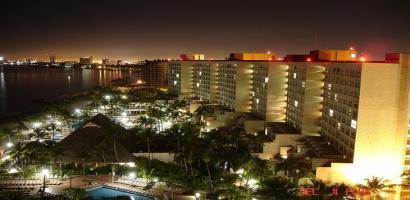 By reputation the second of Mexico's beach resorts, PUERTO VALLARTA may be smaller and younger than Acapulco, but it is every bit as commercial – and perhaps even more so, since here tourism is virtually the only source of income. PV, as it is known, attracts a greater number of foreign visitors (mainly Americans) than does Acapulco, and thanks to its localized attractions, its vicissitudes and vices – as well as its few virtues – are more glaringly apparent.
 By:Cecile Scriban
( BLM concert organisor )
Thursday, December 27, 2012 at 6:00 p.m.
T'is the season to be jolly indeed... and how!
SEAPAL Vallarta — Noticias
CIRA/NOAA/NESDIS/STAR
Photo: Jeff Coffin
WOComm AI-generated editorial illustration — not a photograph of the municipal event.
WOComm AI-generated editorial illustration — conceptual depiction, not a photograph of an actual site.