








From sold-out concerts to destination-driven travel, Latin music’s global rise is quietly reshaping how and why visitors choose Mexico in 2026
The global dominance of Latin music is no longer just a streaming statistic it is actively influencing where people travel. Across the Americas and Europe, major Latin artists are transforming concerts into destination-level tourism events, and that shift is beginning to redirect visitor flows toward culturally rich regions of Mexico, including coastal hubs like Puerto Vallarta.
Recent data from the Caribbean shows how powerful this phenomenon has become. Bad Bunny’s residency in Puerto Rico alone drew hundreds of thousands of visitors and generated roughly $200 million in direct economic impact, with fans extending their trips into full vacations that included dining, nightlife, and local cultural experiences. (Forbes)
The same pattern repeated elsewhere: tour stops in the Dominican Republic boosted hotel occupancy to more than 90% and attracted international travelers who combined concerts with beach excursions and cultural visits. (dominicantoday.com)
These events illustrate a broader transformation in tourism psychology. Music is no longer simply entertainment attached to a destination it is increasingly the reason for travel itself. Travelers now choose destinations that feel culturally aligned with the artists they follow, and Latin music’s global expansion is pushing that interest toward Spanish-speaking destinations with strong identity narratives.
Mexico Positioned as the Natural Beneficiary
Mexico sits at the center of this shift. As the largest tourism economy in Latin America, it already attracts travelers drawn by food, heritage, and coastline diversity. Now, the rise of Latin pop is adding a new emotional layer to the appeal. Concert tourism and cultural travel patterns show that visitors increasingly want destinations that reflect the authenticity celebrated in the music they consume.
In practical terms, this translates into visitors seeking more than beach holidays. They are looking for destinations that combine nightlife with cultural depth, gastronomy with storytelling, and leisure with a sense of regional identity. Mexico’s Pacific coast, with its blend of traditional culture and international lifestyle, fits that profile almost perfectly.
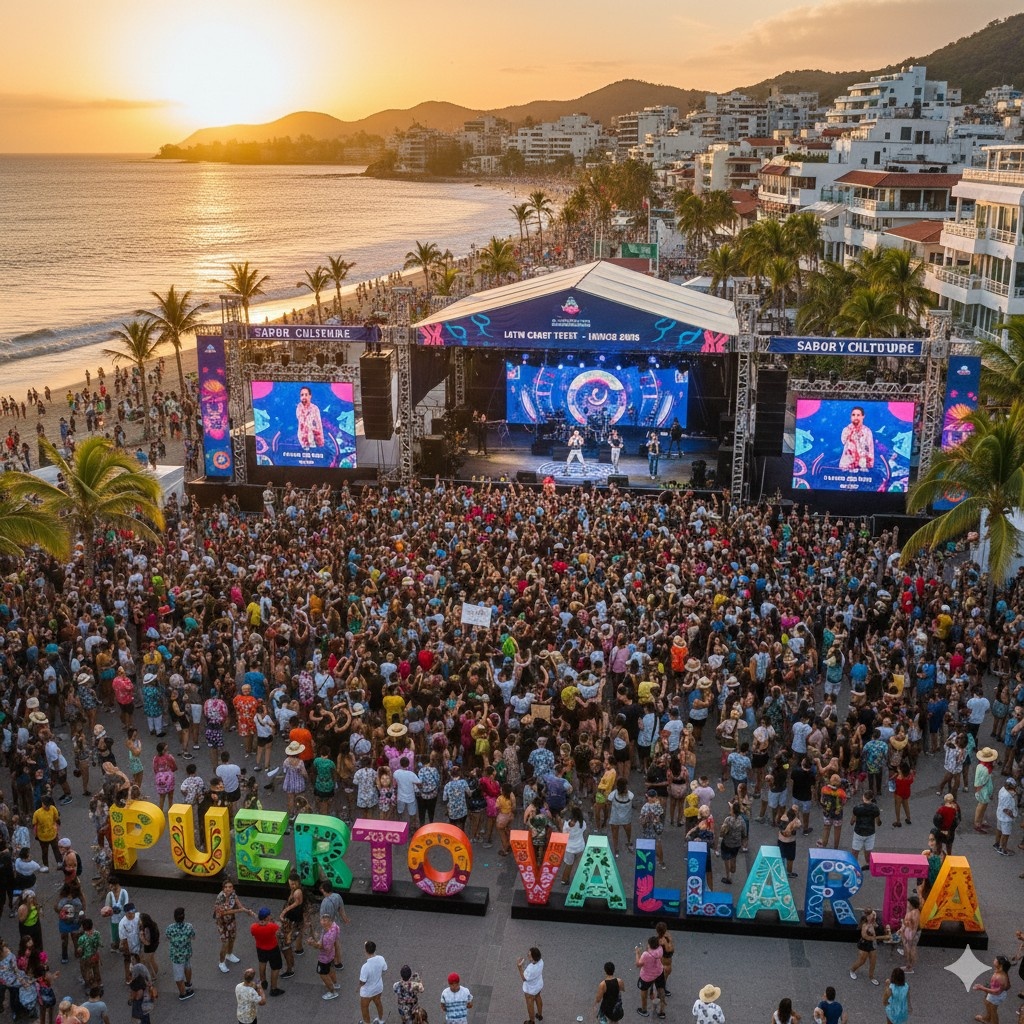
Here in Vallarta, the effects are subtle but visible. Beach playlists are changing, nightlife programming is shifting toward Latin-fusion sounds, and visitors are asking more questions about regional traditions from agave spirits to folk music. It feels less like a temporary trend and more like a reorientation of global taste toward Latin cultural expression.
Why Coastal Cultural Cities Are Winning
Not every destination gains equally from music-driven travel. The cities seeing the strongest impact are those where culture feels accessible rather than curated. Travelers want places where they can hear Latin rhythms in everyday life, not just on festival stages.
That is why smaller cultural hubs are increasingly competitive with mega-cities. They offer intimacy, walkability, and visible cultural continuity. Visitors can move from a concert to a local market, from a rooftop bar to a traditional restaurant, without leaving the same cultural atmosphere.
Puerto Vallarta fits this model naturally. The city already blends regional Mexican traditions with a global hospitality scene. As Latin music continues shaping travel narratives, destinations like Vallarta are positioned less as resorts and more as cultural gateways places where the global Latin identity feels lived rather than staged.
The Long-Term Tourism Signal
What we are seeing now is likely only the beginning. Latin music’s influence is expanding across genres and markets, and its connection to place is becoming stronger, not weaker. As artists continue to highlight regional identity in their work, fans will increasingly travel to destinations that reflect that identity in real life.
For Mexico’s tourism economy, this represents a strategic moment. The shift toward culturally motivated travel aligns perfectly with the country’s strengths: cuisine, heritage, music, and regional pride.
From the vantage point of those of us living here on the coast, the change feels tangible. Visitors are arriving with curiosity, not just itineraries. They want to understand the culture behind the music they love, and they are choosing destinations that can offer that connection.
If Latin pop continues to dominate global charts as all indicators suggest it will then Mexico’s cultural coastlines may quietly become the most relevant tourism stage in the hemisphere.