







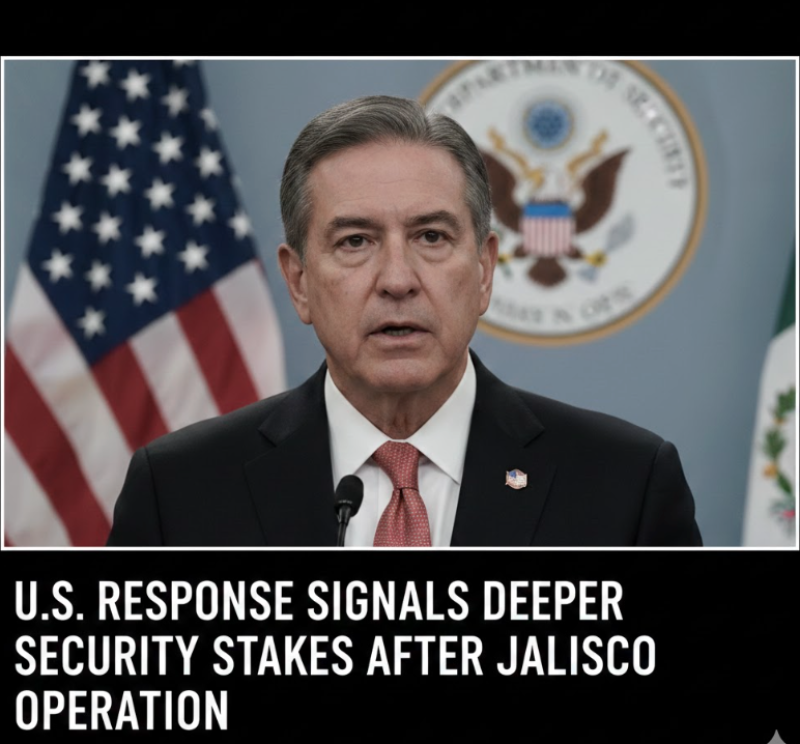
The killing of the CJNG leader did not remain a domestic security event confined to western Mexico. Within hours, the repercussions extended into diplomatic channels, intelligence briefings, and cross-border risk assessments, underscoring how cartel leadership shifts now resonate far beyond Mexico’s internal security landscape and directly intersect with U.S. strategic priorities.
Washington Frames the Killing as a Strategic Win
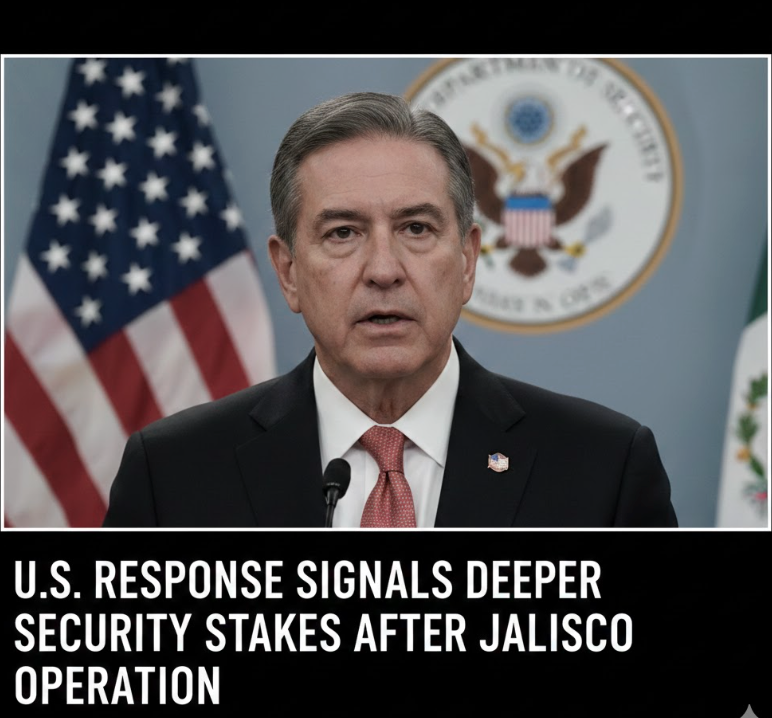
The death of CJNG leader Nemesio Oseguera Cervantes has triggered not only a wave of violence inside Mexico but also a swift diplomatic and security reaction from the United States. According to reporting by The Washington Post and The Guardian, U.S. intelligence played a role in the operation, and officials in Washington have described the outcome as a major blow to transnational organized crime networks that fuel the fentanyl crisis north of the border.
For U.S. policymakers, the significance extends far beyond one cartel leader. CJNG has been one of the primary organizations tied to drug flows into the United States, and Oseguera had carried a multi-million-dollar U.S. bounty for years. His removal therefore feeds into a broader American narrative that cartel disruption is directly tied to domestic public-health and border-security priorities.
Immediate Safety Measures for U.S. Citizens
The operational aftermath quickly forced the United States to shift from intelligence partner to crisis manager. According to embassy alerts and international reporting, U.S. authorities issued shelter-in-place guidance for citizens across multiple Mexican states, including tourist hubs.
These advisories were not symbolic. They were tied to real disruptions: road blockades, arson incidents, and temporary transport interruptions in areas linked to CJNG influence. U.S. and Canadian airlines also suspended flights to destinations including Puerto Vallarta as a precaution during the immediate escalation window.Such measures highlight how Washington now treats cartel violence not merely as a Mexican domestic issue, but as a cross-border security risk that can affect American citizens, tourism flows, and corporate mobility.
A Reinforced Bilateral Security Narrative
Beyond the immediate response, the episode reinforces a longer trend in U.S.–Mexico cooperation. The joint task-force structure involved in tracking Oseguera signals a shift toward intelligence-driven, coordinated operations rather than unilateral enforcement.
For U.S. officials, this cooperation serves two strategic purposes. First, it shows domestic audiences that Washington is actively confronting cartel networks responsible for drug flows. Second, it avoids the political risks associated with direct U.S. military involvement on Mexican soil, a step both governments have historically resisted.
The result is a model where Mexico executes operations, while U.S. agencies supply intelligence, surveillance capabilities, and sanctions leverage.
What the Reaction Reveals About Future Policy
The speed of the U.S. response suggests that cartel leadership changes are now treated as geopolitical events rather than routine criminal developments. The killing of a figure like Oseguera touches multiple American priorities simultaneously: border control, fentanyl policy, migration debates, and regional stability.
That means future cartel crackdowns in Mexico are likely to trigger similar reactions from Washington travel alerts, diplomatic messaging, and intensified intelligence cooperation even when violence remains localized.
For observers in coastal regions like Puerto Vallarta, the implication is clear: security events inland increasingly shape international perception through the lens of U.S. policy, not just Mexican reality.
FAQ
Did the United States participate directly in the operation against the CJNG leader?
According to international reporting, U.S. agencies provided intelligence support, while Mexican forces carried out the operation on the ground.
Why does Washington consider the killing strategically important?
U.S. officials link CJNG activity to fentanyl trafficking, border security, and organized crime networks affecting domestic public health.
Why were U.S. citizens advised to shelter in place?
Alerts were issued due to retaliation risks such as roadblocks, fires, and temporary disruptions in regions linked to cartel activity.
Did the response affect travel or flights?
Yes. Some airlines temporarily suspended routes to affected destinations, reflecting precautionary responses to regional instability.
Will this event change long-term U.S.–Mexico cooperation?
Analysts suggest it reinforces the existing model: intelligence sharing and coordinated operations rather than direct U.S. intervention.
Why do cartel events inside Mexico matter internationally?
Because U.S. policy increasingly frames cartel activity as a cross-border security issue tied to drugs, migration, and regional stability.