us-mexico-border

Protesting against new Mexican fees and rules placed upon the imports of used cars from the United States, Mexican demonstrators stalled and blocked traffic near at least four heavily crossed entry points along the United States' southern border.

According to Reuters, the Veterans International Bridge between Brownsville, Texas and Matamoros, Mexico remained, due to the demonstrations, closed until Monday evening.

The cargo lanes at the port of entry between Calexico and Mexicali remained closed until about 8 p.m.
The traffic at the Otay Mesa entry point in San Diego was finally clearing at around 7:30 p.m., where crowds of protesters had started to gather in demonstration since around 10:20 a.m. and eventually grew to a throng of several hundred people.

In the end, hundreds of fully loaded trucks were unable to cross in order to make deliveries to Tijuana maquiladora factories or even to stock grocery shelves.

The protests were expected, and the U.S. State Department sent out a message on Sunday that warned U.S. citizens of “significantly delayed crossing times and of the potential closure of many of the points of entry between the United States and Mexico due to multiple protests," U-T San Diego reports.

According to the Associated Press, Mexico imported more than 640,000 used cars from the U.S. for resale in 2013, while selling about 1 million Mexican-made cars, a number that has remained consistent for about four or five years now.

Alfonso Esquer, the Tijuana spokesman for the Mexican trucking chamber CANACAR, called the situation “a huge problem,” U-T San Diego Reports. He said that about 3,000 southbound trucks cross daily through Otay Mesa, and of this amount, 2,000 are loaded trucks and 1,000 cross the border empty in order to pick up products in Mexico and take them to San Diego.

[readon1 url="http://www.latinpost.com/articles/27411/20141209/mexico-news-mexican-protesters-block-major-border-entry-points-response.htm"]Source:www.latinpost.com[/readon1]

 300504-star-fish

Millions of starfish have died in recent months on the Pacific coast from Alaska to Mexico due to an epidemic across the ocean ecosystem caused by a pathogen agent that has been present for decades, recent research shows.

"It is not a new agent, and it might be a virus," Pete Raimondi, a professor in the Department of Ecology and Evolutionary Biology at the University of California at Santa Cruz, told Efe news agency.
"It has been on these coasts for at least 70 years. It is present in aquarium and museum specimens captured back then," the scientist said.

"What we need to find out now is why it has become so virulent," he said.

The outbreak of the starfish disease that has killed millions of these echinoderms, wiping out the species' populations, began around May and June 2013 on the coast of Washington state.

Starfish first lose their arms and then their tissue melts until they disintegrate.

Scientists have not yet identified the pathogen agent and although they believe it is present in other animals, like sea urchins, and in the sediment, so far it has only sickened and killed starfish.

"The fact that sea urchins may be vectors, but they are not affected, could hinder the starfish population's recovery because the agent will remain in the environment even if all starfish are killed," Raimondi said.

The massive loss of starfish is causing an increase in the population of mussels and sea urchins that are part of the creatures' diet, and a decrease in the numbers of other species that feed on starfish, thus creating an imbalance in the region's biodiversity.

[readon1 url="http://www.brazilsun.com/index.php/sid/228350087"]Source:www.brazilsun.com[/readon1]

o-ARIZONA-MEXICAN-AMERICAN-STUDIES-facebook

JUAREZ — Despite Mexico sharing a common border and economic and social ties with its U.S. neighbor, México is far from being a popular destination for American students.

Currently, only 3,800 American students study in México, according to U.S. government figures. That ranks Mexico as the 15th most popular country for U.S. students who want to study abroad.

Both governments are trying to change that.

A new initiative by President Barack Obama called "100,000 Strong in the Americas" intends to send 100,000 American students, not only to México, but to other countries in Latin America and the Caribbean. In exchange, the education initiative aims for the same number of students from those countries to learn and train in the U.S. by the year 2020.

The goal is to strengthen bi-national relations and better prepare young adults for the 21st-century global workforce, Acting Assistant Secretary of State for Consular Affairs Michele T. Bond said this week while in Juarez.

"It will be a tough goal to meet, but it is a great challenge," she said during a visit to promote the program.

According to the international non-profit Open Doors Report 2014 of the Institute of International Education, about 45,500 U.S. students study in Latin America and the Caribbean — three times less than the number of American students in Europe.

And most American students prefer to study in Costa Rica, Argentina and Brazil instead of México, the report says.

Bond acknowledged that Mexico's recent drug war and crime has deterred American students from México.

According to the report, there were almost 10,000 American students in México at the beginning of the 2007 school year when former Mexican President Felipe Calderón was beginning the country's offensive against the drug cartels and violence began escalating .

By 2009, there were 7,150 U.S. students in México, shrinking to almost 4,170 a year later, the report says.

The number of Mexican students studying in the U.S. also dropped slightly during the same years — from almost 14,850 Mexican students in the U.S. in 2007 to 13,710 in 2010. However, the number of Mexicans studying in the U.S. grew to a current 14,800 this year, the report says.

Bond said the U.S. government is determined to increase the number of student exchanges because of the contribution to the U.S. economy and prosperity.

Students who study abroad learn about what is needed to lead a globalized economy, as well as a new language and gaining a cross-cultural understanding, she said.

"We need to get students excited, interested and aware of all the opportunities they have to study abroad. It is not going just to happen," Bond said.

As part of the initiative, she said, the U.S. and Mexican governments have held six binational workshops over the past year to expand economic opportunities for U.S. and Mexican citizens. The two countries are also developing a shared vision on educational cooperation.

One of the workshops was held at the University of Texas at El Paso in March, when more than 90 U.S. and Mexican government, private sector, civil society and higher education representatives met to discuss the potential of the border region for binational higher education cooperation and exchanges.

The U.S. government has also established the "100,000 Strong in the Americas Innovation Fund," which promotes and supports international study programs.

For more information about the "100,000 Strong in the Americas," visit www.100kstrongamericas.org.

Lorena Figueroa may be reached at 546-6129.

[readon1 url="http://www.elpasotimes.com/news/ci_27079575/u-s-encourages-students-study-mexico"]Source:www.elpasotimes.com[/readon1]

IMG 1724 ABR07augt h5520bf9f840dc4

If you need a break from gift shopping and holiday parties, this is a perfect time to start planning a beach getaway. While we all have our favorite tropical destinations, it could be time to consider going somewhere new. The 2014–2015 beach season is offering a wide variety of new beach hotels which span the globe. Whether you’re looking to take a dip in the Caribbean, Pacific, or Indian Ocean, you can find thoughtful design, luxurious amenities and access to a great beach at all of these resorts. Here’s a look at the best new beach hotels opening around the world. Christina Valhouli writes about travel, beauty and lifestyle trends. Her work has appeared in The New York Times, The New York Post and Departures.com. Follow her on Twitte

VILLAC

Villa Celeste.

Where: Mexico

Imagine yourself in a private and glorious oceanfront estate overlooking the beautiful Bay of Banderas, the gentle blue bay that beckons travelers to world famous Puerto Vallarta, Mexico, the jewel of the Mexican Riviera. Experience magnificent vistas from the ocean rocks at Mismaloya to the northernmost point at Punta Mita, along with mountains, ocean and blue skies while enjoying cool ocean breezes. Luxuriate with incredible sunsets as "el Sol" dives behind the Pacific rim. Welcome to Villa Celeste, one of Puerto Vallarta's finest vacation retreats! An incredible 5 bedroom, 7 bath majestic Spanish-style estate on Conchas Chinas beach, Villa Celeste is the epitome of Mexican luxury. http://villacelestevallarta.com/

Belle-Mont-Farm-on-Kittitian-Hill

BELLE MONT FARM

Where: St. Kitts

Under-the-radar St. Kitts never gets as much attention as its glitzier neighbor, Nevis, but that could change with the opening of the new Belle Mont Farm. Slated to open December 12, the Belle Mont is the first full-blown luxury resort to open on the island (up until now, the island’s best accommodation was in plantation homes). It features stand-alone cottages dotted around a 400-acre organic farm, with private infinity pools and outdoor claw foot tubs.

Insider Tip: The Belle Mont farm grows the unusual and hard to find Miracle Fruit, which scrambles taste buds and makes sour food taste sweet for a few hours after consumption. Plan Your Trip: Visit Fodor’s St. Kitts and Nevis Travel Guide

El-Blok-Vieques

EL BLOK

Where: Puerto Rico

Just off the coast of Puerto Rico, Vieques is famous for its bioluminescent bay, which glows in the dark. The newest place to stay there is the El Blok hotel. Open since October 1, the hotel has an ultra modern style, featuring curved concrete and an exterior filigree design. El Blok features 22 rooms and a rooftop infinity pool. The in-house restaurant is helmed by James Beard-nominee Jose Enrique, and the menu will feature small plates and light fare such as wood-grilled meats. Insider Tip: Vieques is full of wild horses, which are descended from stock originally brought over by European colonizers. Plan Your Trip: Visit Fodor’s Puerto Rico Travel Guide

Saruni-Ocean

SARUNI OCEAN

Where: Kenya

If you’re debating between a safari or a beach vacation, one way to incorporate both is to book a stay at the new Saruni Ocean, located on Kenya’s south coast. Opening on December 15, the resort will features 7 villas, each with views of the Indian Ocean. The décor is sleek but uses traditional materials such as wood and thatch. The hotel’s Sarunity spa will offer water-based therapies that incorporate natural ingredients like seaweed. Snorkeling and diving are offered through the resort, but there are also land-based activities, such as safaris and game drives. Insider Tip: Guests looking for an adrenaline rush can sky dive – barefoot- over the Indian Ocean if interested. Plan Your Trip: Visit Fodor’s Kenya Travel Guide

thompson-miami-beach  large

THOMPSON MIAMI BEACH

Where: Miami

Miami is in the midst of a hotel explosion, and one of the most stylish is the new Thompson Miami Beach. Located just north of South Beach’s epicenter, the hotel, which opened November 21, features mid-century modern design with streamlined furniture, plenty of patterns, and bright pops of color. There are also two large pools and a restaurant run by James Beard winner Michelle Bernstein. Head to the 1930s House for innovative cocktails and nibbles. Insider Tip: Thompson Miami Beach uses turtle-sensitive lights in the hotel, as its beach is a breeding ground for the endangered sea turtle. Plan Your Trip: Visit Fodor’s Miami Travel Guide

Malliouhana-Anguilla

MALLIOUHANA

Where: Anguilla

This legendary resort re-opened on November 1 following a three-year closure for renovations. Now a member of Auberge Resorts, Malliouhana offers 44 ocean view rooms and 360-degree views of the Caribbean. Guestrooms feature a mix of pastel hues and white to blend in with the ocean views. For indulging, there’s a two-tiered infinity pool and an Auberge Spa. Guests looking to burn calories can sign up for paddleboard yoga, beach boot camp, or sunrise yoga. Insider Tip: Anguilla’s beaches are considered some of the best in the Caribbean, with some people claiming that the water’s color includes hundreds of shades of blue and green. Plan Your Trip: Visit Fodor’s Anguilla Travel Guide

Gates-Hotel-Key-West-Florida

GATES HOTEL KEY WEST

Where: Key West

The newest place to stay in the Keys will be the Gates Hotel Key West when it opens in February 2015. The 100-room hotel will have a contemporary design, and there will be a focus on fitness (as well as fun). Sign up for a guided sunrise/sunset bike tour, or try out water aerobics or stand-up paddle boarding. Don’t miss the hotel’s Rum Row bar to try out chef-distilled rum blends from local partner Key West First Legal Rum Distillery. Insider Tip: Any visit to Key West must include cigars, so head to the Rodriguez Cigar Factory in Old Town, is oldest cigar maker on the island, and learn how to roll a cigar. Plan Your Trip: Visit Fodor’s Key West Travel Guide

Hotel-Wailea-Hawaii

HOTEL WAILEA

Where: Hawaii

This boutique property on Maui is wrapping up a $15 million dollar renovation and is slated to re-open later this month. The Hotel Wailea will feature 72 one-bedroom suites, with kitchenettes and private lanais, spread over 15 acres. The brand new pool will offer luxury cabanas as well as a new apothecary-style pool bar, where the in-house mixologist whips up cocktails as well as freshly pressed juices. Those who want to do more than wallow on the beach can take advantage of daily yoga classes (the hotel has a partnership with Lululemon), canoeing, or kite-surfing lessons. Insider Tip: Kerry Mekeel, the poolside mixologist and raw food chef, treks through the jungle to hunt down fresh ingredients for her cocktails. Plan Your Trip: Visit Fodor’s Maui Travel Guide

Matlali-Hotel

MATLALI HOTEL

Where: Mexico

Opened in June, the new Matlali Hotel is located in the hills of La Cruz de Huanacaxtle and overlooks Mexico's Banderas Bay, just north of Puerto Vallarta. The resort has 40 private villas with ocean and mountain views, and the décor is contemporary with pops of color. At the resort, guests can get pampered at the Makawé Spa, or tuck into tuna sashimi or grilled octopus at the open-air Raixes restaurant. Matlali offers access to the Eva Mandarina Beach Club, where guests can sail, dive, surf, and snorkel. Insider Tip: Hop onboard the resort’s private yacht and sail to Islas Marietas, which offers crystal clear waters that are ideal for snorkeling. The interior of the island is accessible only through an underwater sea cave. Plan Your Trip: Visit Fodor’s Puerto Vallarta Travel Guide

Hotel-Cacao-Playa-del-Carmen

HOTEL CACAO

Where: Mexico

The new Hotel Cacao, which opened in September, offers travelers a beach getaway combined with urban amenities. Located on Playa del Carmen’s 5th Avenue, the hotel is surrounded by restaurants, shops, and clubs, but it’s just a five-minute walk to the beach and the hotel’s beach club. The 60 rooms have bold colors and a streamlined design, and natural materials such as Mexican travertine and tropical wood are used throughout the resort. Insider Tip: The rooftop bar offers tequila and mescal cocktails along with views of Cozumel island. Plan Your Trip: Visit Fodor’s Riviera Maya Travel Guide

KIM KELLER PHOTOKim Keller and her mother on a Christmas morning in the 1970s.

My name is Kimberly Helminski Keller, and I am a Latina.

My Polish surname hides the reality that the other half of my DNA is Puerto Rican, a genetic mix of Spanish, African and Taino Indian. As a child, I described my multi-ethnic heritage as “Puertolack,” a hybrid of Puerto Rican and Polack.

We lived in Buffalo, N.Y. in a neighborhood where most families were Polish, Italian or a combination of both. My father’s family had been there for generations. They were among the original Poles who came to the U.S. in hopes of making a good living working on the railroad. My father met my mother while he stationed at an Army base in New Jersey. Her family came to the mainland in 1929 to escape Puerto Rico’s poverty. She was a definite contrast to the girls back home with her tan skin, dark brown eyes and dark, curly hair.

Life in Buffalo was confusing to me. When I was with my dad, no one looked twice at me. I was just another little brown-eyed girl. However, the looks changed when my mother and brother were around. My mother was an absolute Latina beauty, and my brother inherited her tan skin and curls. They got stares from strangers. Some of our neighbors looked down their noses at them. I was too young to understand what was happening, but all the signs told my young mind that there was something wrong with me and the people I loved most.

I found solace and identity with my mother’s family, especially after my parents’ divorce. They loved us unconditionally. You couldn’t enter a room without my grandmother or aunts plastering your face with kisses. My cousins would tease me about being the whitest kid in the family and told me chocolate milk would make my skin turn brown. I drank a lot of it because I desperately wanted to be like them. My only sadness came from when we were around other Puerto Ricans in the community. People stared at me when I was outside. I knew enough Spanish to understand the muffled conversations about “the white girl.” They laughed when I called my grandmother, “Abuela.”

My life today as a multi-ethnic adult has its blessings and its challenges. I am so grateful to have had the opportunity to be a part of two very different cultures. Thanks to my mixed genes, my skin doesn’t show age as it does on my Caucasian friends. My hair is somewhat manageable during the summer heat; whereas, my mom, aunts and cousins rely on various straighteners to tone down frizz. I also have the ability to see life from both a white and Latina perspective.

Still, society wants to put me in an easily definable box based on the color of my skin. People get angry when I make my own box. I identify myself as Latina because my greatest influences in life came from that part of my heritage.

Unfortunately, the heritage doesn’t always embrace me back. I can speak Spanish, cook traditional foods and talk about shared cultural experiences, but other Latinos often acknowledge me with a patronizing grin.

I’ve met a few other people who share white and Latino genealogies. Most live their lives in the culture that best matches their physical features.

It’s easier to blend in than to stand out.

I straddle the fence. I want to be part of both cultures, but I know that in reality, society says I am a culture unto myself.

Kim Keller is a Latina public relations professional and the writer of the headline-making blog RoadkillGoldfish.com.

[readon1 url="http://latino.foxnews.com/latino/opinion/2014/12/04/my-life-as-white-latina-prejudice-comes-from-all-sides/"]Source:latino.foxnews.com[/readon1]

7fc9d6f4-1ec9-4f7d-a097-858979fa420a

  • The numbers indicate a total of 32 courses imparted including training and certification programs benefitting 1,142 employees from 22 hotels in the bay area.


In order to consolidate the level of service in the Riviera Nayarit through strategic training focused on increasing the destination’s growth and impact, the Banderas Bay Hotel and Motel Association’s (AHMBB by its acronym in Spanish) Human Resources Committee announced the results of the training and certification programs corresponding to 2014.

There were a total of 32 courses imparted including training and certification programs that benefitted a total 1,142 employees from 22 hotels, among them managers, department heads, supervisors, line staff, and security personnel.

The objective was to reinforce the management of human resources in the Banderas Bay hotels using an annual work plan focused on strengthening and maximizing the potentiality of those responsible in order to contribute to the healthy performance of the human talent in the hotel sector.

The certification award ceremony for the graduates of the Hotel Management Development Certification Program brought 2014 to a close. Among those presents were Abel Santos, the VP of AHMBB, as well as the coordinators for the Human Resources Committee, Alma González, and Alejandro Asomoza.

“It’s an honor to be present at this act, which is very satisfying and makes us proud of all of you, who will be helping the hotel industry here in the Rivera Nayarit and the region as a whole to become an example for Mexico and the world at large,” said Abel Santos to the graduates.

Gratitude and commitment abounded from all parties involved, but especially from the hotel employees, who were the happiest and most satisfied with this opportunity.

“The fact that they gave us this opportunity for growth by providing this recognition and the ability to benefit ourselves, our family and our businesses represents a big commitment for us,” declared the Luis Quintero, Rooms Manager for the Hotel Villa del Palmar Flamingos and one of the program’s participants.

wax ggm

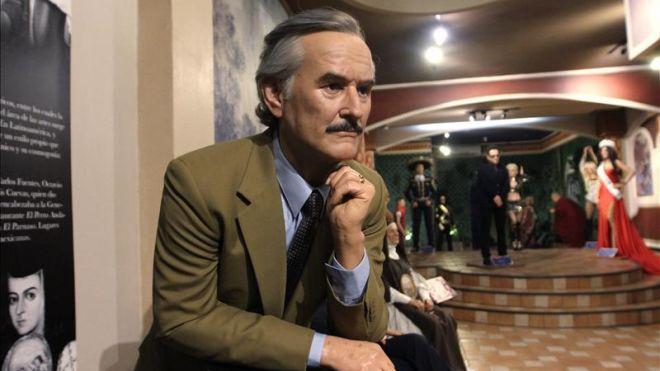
GUADALAJARA, MEXICO – Writers such as Octavio Paz and Gabriel Garcia Marquez have come back to Guadalajara, this time as wax figures exhibited in parallel with the International Book Fair, FIL, in this Mexican city.

The city's wax museum inaugurated an exhibition on Wednesday with six of the most important figures in Hispanic culture as a way of bringing more people closer to their works.

"It's a family museum and parents can help kids become aware of them. It may be enriching; it's something different than reading the book or going to the conference of a writer," Alejandra Urbina, the museum spokeswoman, told Efe.

The figures include Mexican writers Octavio Paz (1914-1998), Carlos Fuentes (1928-2012) and Carlos Monsivais (1938-2010), the writer, Sor Juana Ines de la Cruz (1651-1695), the Mexican painter Jose Luis Cuevas, born in 1931, and the Colombian writer Gabriel Garcia Marquez (1927-2014).

Their figures are accompanied by the biographies of these beloved personalities as well as their most famous quotes, while an audio tells visitors about the cultural context in which they thrived.

The immaculately dressed figure of Carlos Fuentes receives visitors leaning on the copies of some of his most well-known works such as "Aura" and the "The Most Transparent Region." His well kept moustache and salt and pepper hair make him appear almost life-like.

Next to him, stands Octavio Paz in a striped suit poised as if on the verge of starting one of his erudite conversations with Garcia Marquez who is standing in front of him.

It is impossible to quell the urge to go near "Gabo" as he was popularly known. The smiling countenance and the detailed hands of the Colombian author makes one forget that he died a few months ago.

In the background, the wax sculpture of Sor Juana looks on with an open countenance.

Right in front of the writer and enjoying his place amongst this small group of writers is the smiling wax figure of Cuevas as he finishes one of his drawings.

Simple and carefree, Carlos Monsivais' wax sculpture watches from a corner. Dressed in a denim jacket and informal trousers, his eyes reflect the curiosity and irony that characterized him during his life.

Joining these delightful figures are 120 others including those of Bono, the lead singer of the Irish band U2, or the popular Mexican singer, Vicente Fernandez, and the Canadian popstar Justin Bieber, the heartthrob of adolescent girls the world over.

The exhibition runs until January with plans to add figures of writers who come to the fair every year, according to the museum directors.

[readon1 url="http://latino.foxnews.com/latino/lifestyle/2014/12/04/octavio-paz-garcia-marquez-y-sor-juana-reviven-en-museo-de-cera-en-mexico/"]Source:latino.foxnews.com[/readon1]

villoro 173912-l0x0.jpg 1718483346

The writers Juan Villoro and Paco Ignacio Taibo II led the march Monday to mark the fifth Global Action for Ayotzinapa.

The Mexican writer Juan Villoro said Wednesday at the Guadalajara International Book Fair (FIL) that Mexico is “on the verge of a major social outburst,” referring to the 43 Ayotzinapa missing students, the corruption and the policies and reforms pushed by Mexico’s President Enrique Peña Nieto.

The writer identified the problem as a political and social decomposition. “There is a severe social decomposition, and the Ayotzinapa case has just demonstrated that we live in a country governed by impunity, where the government and the political parties are not subjected to legality, where the influence of peddling rules politics, and where being a politician is just a way to become rich,” said Villoro, in an interview with EFE.

Villoro and the Mexican writer Paco Ignacio Taibo II joined Monday, the march in Guadalajara to mark the fifth Global Action for Ayotzinapa, amidst the International Book Fair celebrated in this city.

Taibo said Monday, “It is important to make explicit our support to the cause, and doing it amidst the fair is very important. We can’t let the FIL to be a silent space when the country is shouting.”

Villoro pointed out that the situation in Mexico is alarming since the social indignation and empathy with the victims of violence is growing but there are no political leaders that share the indignation and could give a solution to the country’s problem. “We are on the edge of an abyss and if we don’t step back, we are going to fall down,” said the writer.

And added, “This is a very difficult moment because there is so much indignation on the streets, a lot of empathy with the victims of violence, but there is no hope, there is not a political figure or institution to identify with as our leader, or our party.”

Villoro thinks that the only way out of this difficult situation is, “to completely reform the State, to change the ways of political participation, and to citizen politics."[readon1 url="http://www.telesurtv.net/english/news/Mexico-on-Verge-of-Major-Social-Outburst-Villoro-Says-20141203-0032.html"]Source:www.telesurtv.net[/readon1]

Volcanes Editadas-74-e1417640317985

In the United States, children are required to attend school until they are 18-years-old and most continue their education at universities and community colleges to fulfill dreams of the people they would like to become with hundreds of different degree programs available for students wishing to continue their education after high school. Universities and community colleges award degrees at varying levels, from associate degrees to doctoral degrees.

But this is not the case everywhere.

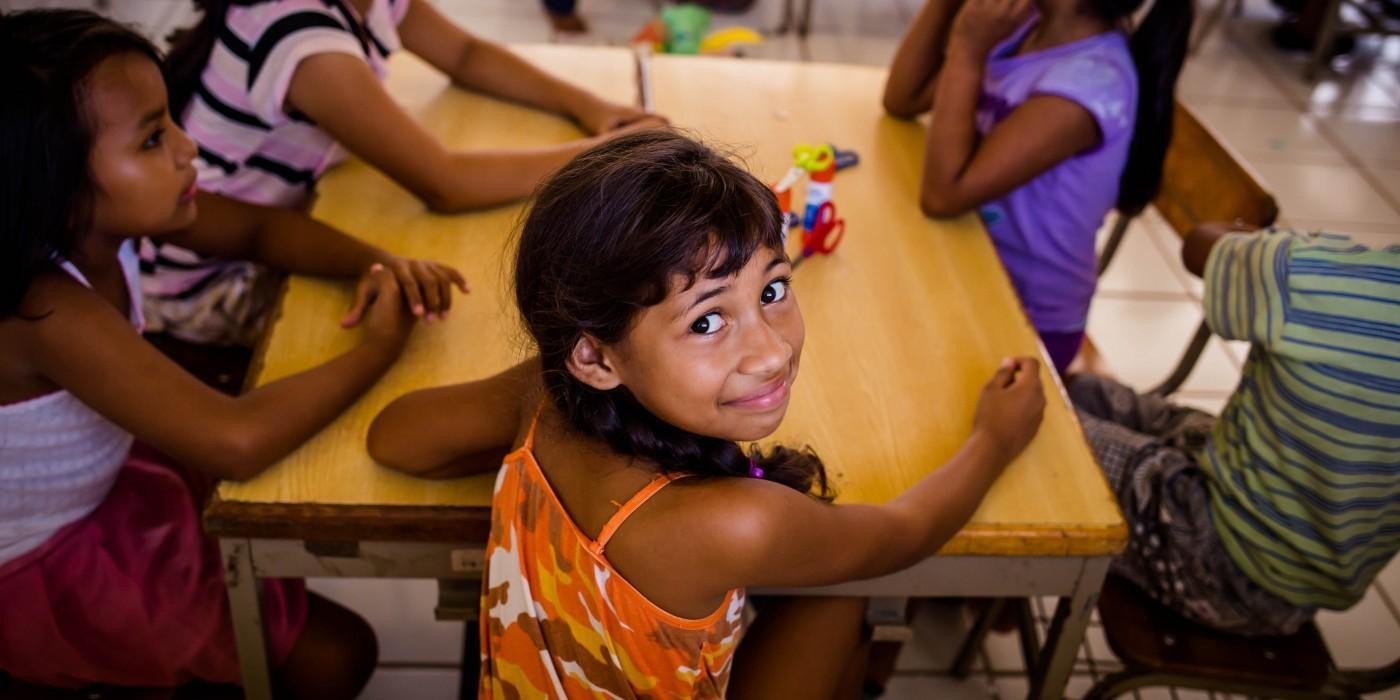
In Mexico, children are only required to attend public school until grade 6. After that, the families must pay tuition costs to allow their children to continue their education. For poor families, these funds are simply not available to allow their children to continue school beyond grade 6.

One area in Mexico, Puerto Vallarta, famous for its sunny climate, incredible beaches, wonderful food, and its amazing culture is nestled on a narrow strip of land between the Pacific Ocean and the nearby mountains is a prime example of the disconnect in education in this popular resort destination. The sun drenched shores, sparkling resorts, hotels and condominiums are a haven for tourists from around the world, making it a magnet for Mexicans desperate to find employment.

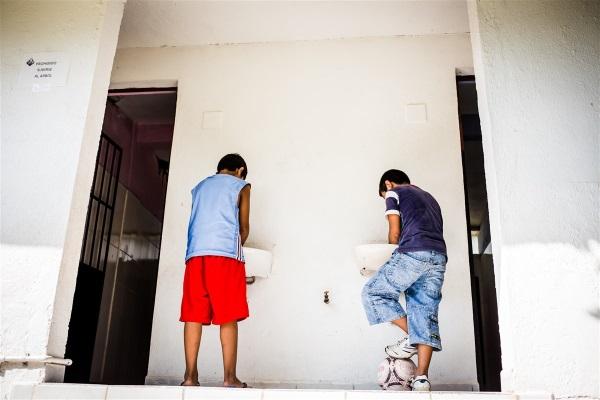
The poor of Puerto Vallarta can’t afford to live in areas close to the expensive shoreline, instead they live in areas pushed up as far up into the mountain jungle as possible where city services end. The most remote of these areas is the Colonia, or township, of Volcanes. Everywhere in the small community are homes without electricity, telephone, running water or toilets. Without employment, the families struggle simply trying to feed themselves and their children.

The government doesn’t have the resources to hire English teachers nor do they have the resources to buy computers,” said Megan Shelton, VCEP Project Coordinator. “So, we supplement [the students'] regular government program by providing the English and the computer classes free of charge.”

For the families of the small Colonia Volcanes, the new six room Volcanes Primary School has become a point of pride and loving care as local mothers and fathers spent many hours of volunteer work trying to transform it into a lush shade filled area where their children can continue to learn. At their own cost, they planted and watered trees, bushes as well as planted lawns.

The Volcanes Community Education Program is not funded by the Mexican Government, by the public school system, or by a charity or foundation. All funding for this program is by way of donations.

The major operating expense in the Volcanes Project is funding the teachers. Each teacher receives a small stipend of $3,000 pesos per month — about $240 — to teach at one of the sessions. $600 per month supports one full time teacher.

In comparison, The National Education Association reports the average annual starting pay for a teacher in Kansas is about $34,000 — about $2,800 per month.

Hsin-Yen Yang, assistant professor of communication studies, along with Lorie Cook-Benjamin, assistant professor of teacher education, received a grant from FHSU’s Tilford Diversity Awareness Group.

“Dr. Yang and I are both interested in providing our students with international experiences while promoting authentic learning through class projects,” Cook-Benjamin said. “Due to its diversity, the Volcanes Community Education Project was a natural fit for students in the Diverse Learners course. This was equally true for the Writing for Public Relations course, since the culminating project was development of a project for promotion on a crowdfunding site.”
Volcanes Editadas-142

Students in Hsin-Yen Yang’s Writing for Public Relations class, with Shelton’s help, have constructed a public relations campaign, Envision Volcanes, Mexico, to help families in Puerto Vallarta, overcome the cycle of poverty.

The on-campus portion of the project first began with students in Cook-Benjamin’s Diverse Learners course creating a take-home activity focused on the diversity of language. The activity is then shared with the Volcanes staff, students and the students’ families.

“The Volcanes Service-Learning project provides an international service-learning experience to teacher candidates in the on-campus and virtual sections of the diverse learners course,” Cook-Benjamin said. “The project is implemented through an Internet-based, clinical-based practice that focuses on multiple aspects of diversity.”

In addition to benefiting students at Volcanes Primary School, this project also benefits the teacher candidates, according to Cook-Benjamin.

“The project expands the candidates’ connections within their educational career as well as in other careers,” she said. “This is due to a virtual experience in another country, school system and culture. It also promotes commitment to lifelong learning, social relevance and global engagement.”

This semester, students in Yang’s course set up a Go Fund Me account to raise $15,000 by May of 2015 to help support the teachers of Volcanes. In the first week of the campaign, the class raised over $600.

During FHSU’s 2015 Spring Break, March 13 to March 22, teacher education majors will travel from Hays to Puerto Vallarta (Mexico), where they will experience wealth and poverty living side-by-side.

“Our hope is to travel with ten students,” Cook-Benjamin said. “While there, the students will assist the children and teachers during the school day to assess the Volcanes students’ English skills. They will also work one-on-one with the students to read books and perform other academic tasks to promote the students’ language processes.”

During the day, the students will teach English to children in Colonia Volcanes and spend their evenings and weekends experiencing the local culture, visit the Malecon Boardwalk, dine in authentic restaurants, go boating on the bay, or zipline in the jungle.

Envision Volcanes is also on Facebook, Instagram and Twitter. The campaign started November 24 will continue through January 7, 2015.

 comm349-wave-at-Volcanes[readon1 url="http://tmn.fhsu.edu/?p=16725"]Source:tmn.fhsu.edu[/readon1]

a57f14c8-a7ce-4b55-a6f7-71ebc70c7498

The process to obtain more blue flags for 2015 began after an initial meeting with Blue Flag personnel, representatives from three levels of government, plus regional businessmen and associations.
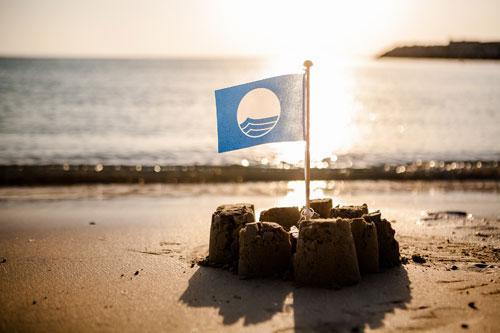
The Riviera Nayarit already leads the way in Mexico with 10 Certified Clean Beaches plus a Blue Flag certification and is striving to achieve even more for the coming year.

To this end a meeting was held at the start of November headed by Raúl Rodrigo Pérez, Secretary of Tourism for Nayarit, and Joaquín Díaz Ríos, coordinator for Mexico’s Blue Flag program and a member of Pronatura México.

Also, present were Marc Murphy, the Managing Director of the Riviera Nayarit Convention and Visitors Bureau (CVB), regional hoteliers and representatives from the three levels of government that deal with this subject.

Joaquín Díaz pointed out the Riviera Nayarit is the place with the highest potential to earn the bluest Flags within Mexico. To date there are 11 Blue Flag beaches in the country—the objective for 2015 is to raise that number to 16. Díaz Ríos assured those present that the Riviera Nayarit has what it takes to obtain more than one Blue Flag.

During the meeting, a tour of potential Blue Flag recipients was scheduled for December 9th. Both La Tranquila and the Iberostar Punta Mita hotels proposed Playa Litibú as one of the potential beneficiaries.

The Marina Riviera Nayarit was inspected the same day of the meeting; the conclusion was that it had a high probability of becoming the first marina in the country to win the coveted distinction.

“We were already committed to a yearly environmental impact program even before we had knowledge of the Blue Flag program,” commented Rafael Alcántara, the Marina Riviera Nayarit’s harbormaster. “Basically we already have an advantage in that aspect. I think we’re more than halfway there already so it will be easier for us to comply with the requisites.”

There are studies proving that Blue Flag beaches can generate up to a 300% increase in visitors once the distinction is awarded. In order to obtain it the beach must meet 33 rigorous criteria covering four distinct parameters: Environmental Education and Information, Water Quality, Environmental Management, and Safety and Services.

Mexico-2006-0274-181358-Melaque--Grocery-Store

You will be amazed at the quality produce you can buy here in Mexico - all the fruits and vegetables are fresh, meat is butchered daily and is very, very tasty. You can usually find an "Abarrotes" on every block. This is a small convenience store where you can find dry goods, bread, and fresh produce. There are also "Lecherias," which are like "Abarrotes" but have milk and refrigerated goods. The next step up is a "Super" which are like "Lecherias" but also have liquor. There are also several "Fred Meyer" style shopping centers here in Mexico: Comercial Mexicana and Gigante. Here you can find anything imaginable, furniture, appliances, pharmaceuticals, produce, dry goods, cleaning supplies, cosmetics, you name it. Prices vary - goods imported from the States are generally a little more expensive here than they are there. Local Mexican-made products are usually priced very reasonably. Here is some vocabulary you might find useful:

English


Spanish

Chicken   Pollo
Turkey   Pavo, Guajolote
Leg   Pierna
Thigh   Muslo
Breast   Pechuga
Wing   Alas
Beef   Res
Ground Beef   Carne Molida
Round Steak   Pulpa
Roast Beef   Rosbif
T-Bone   T-Bone
Pork   Cerdo
Sausage   Salchicha
Milk   Leche
Butter   Mantequilla
Margerine   Margarina
Yoghurt   Yoghurt
Cheese   Queso
Sour Cream   Crema Agria
Half-n-Half   Media Crema
Eggs   Huevos
Bread   Pan
Cake   Pastel
Cookie   Galleta
Pie   Pay
     

Fresh Meat

Most meat in the US and Canada has color added to give that nice red look. In Mexico this is not a common practice. Dead flesh turns grayish, so don't be put off it unless that gray has a greenish or bluish tinge, or smells "off".

Cook fresh meat the day you buy it.

Mexicans have a much more liberal "palette" compared to the sanitized tastes of her northern neighbors. You will find many more animal parts for sale, and many different types of cuts. They also eat a wider range of animals than we do. Experiment, but do so with guidance.

If you request your meals be served hot you probably won't experience any unnecessary problems.

Chicken should be treated like it is radioactive, until cooked (just as true in the U.S.).

Wash your hands after handling untreated, raw food, and frequently when preparing food.

Pork and bacon are excellent.

Bring your own deli meats such as salami, hot dogs, sausage, etc.

Mexican butcher shops are called Carnicerías in Spanish. Steaks are called Bistec.

  • Eggs are excellent.
  • Milk is inexpensive.
  • Chicken is of excellent quality.

Vegetables and Fruits

Mexico has a wonderful array of fresh fruits and vegetables, and if you are going to be in the country for any length of time, you will want to shop at the "mercados" (market) and peel the fruits or boil vegetables. Fruits and vegetables should be washed in sterilized water so that a weak chlorine bleach solution kills offensive bacteria.

Cleaning and Eating Vegetables and Fruit

Always wash, then soak in water containing 8 drops of iodine solution or 1 capful of bleach, for 30 minutes.

 
  • If you peel it before eating, you are safe.
  • If you cook it before eating you are safe.
  • If you want to eat it fresh, choose only unblemished items, and ALWAYS go through the wash/soak process.
  • Avoid fresh salads (they may not have been washed in bottled water). 
  • You can find a much variety in a Frutería (Fruit shop) than at the supermarket and prices are cheaper.

Shellfish and Hot Weather

Shellfish tend to spoil quickly. This is especially true when the weather is hot. Even though you love your oysters, the possible results are not worth it.

Fish Stores sell fillets of fish rather than the whole fish.
Canned tuna is available everywhere.

If You Do Get Sick

Even if all of your careful precautions should fail, and you get sick anyway, you know that you are not helpless. Many well-meaning articles have suggested "toughing-it-out" with intestinal ailments, and "letting nature take her course". Checked with your doctor before you leave home, and obtaine a prescription for "Bacrtrim F" tablets (also available in Mexico without a prescription). Bactrim effectively annihilates offensive bacteria within twelve hours after dosing. To control watery stool, you can also take Lomotil. Occasionally an unfortunate forager will come into contact with food poisoning. The symptoms are usually quite pronounced and "miserable". Happily, the most common variety of food poisoning in Mexico (infrequently encountered however) lasts only 12 hours. The only cure for food poisoning is time. Sipping sugary soft drinks is a good way to maintain energy. Make sure that you drink enough while sick so you avoid dehydration. Drinking Gastrolite (a powder you add to water) or even Gatorade will you stay hydrated.

[readon1 url="http://toursinmexico.com/general/groceries.htm"]Source:toursinmexico.com[/readon1]

 timthumb

Puerto Vallarta, Jal.-with the implementation of the first railway crossing rehabilitated in the metropolitan area that increases the safety of motorists and pedestrians, opens in Guadalajara "smart lights", which via a sensor detects the proximity of the train and turn on the red light, while the remainder remain green.

To spearhead this Act at the intersection of the avenues Arcos and Inglaterra, the Secretary of mobility, Mauricio Gudiño, reported with the launch of this restored Cruiser, vehicles will cross not only an easier way railway routes because it is more level and, therefore, more fluid that will do so in safer conditions.

He explained that this is an action most of which have been undertaken in the field of road safety to save lives, as a result of a policy clear to reduce road accidents.

With an investment of 115 million pesos, is rehabilitated 38 railway crossings in the metropolitan area; of these, three are located in El Salto, eleven in Tlaquepaque, eleven in Tlajomulco, eight in Zapopan and five in Guadalajara. The work began last November and will end on January next year.

This work will improve the relationship between the automobile and railway because the accidents will be reduced crossing motorists and pedestrians will be safer and will increase the flow of traffic.

Each piece includes horizontal and vertical signage, leveling and alignment of the rail steel placement of sleepers, bearing surface, as well as installation of track circuits to detect trains and installation, programming and operation of traffic lights.

Pablo Suárez Coello, director general de Transporte Ferroviario y Multimodal from the Secretariat of communications and transport (SCT), Bernardo Gutiérrez Navarro, director general of the Centre SCT Jalisco, and Antonio Uribe Ramos, director of operation of FERROMEX, division Guadalajara were also present at this event.

THE MAIN POINT

  • Of the total budget earmarked for the rehabilitation of railway crossings nationwide, 40 percent is destined to Jalisco
  •  115 billion pesos will be invested and 38 railway crossings are rehabilitated.

timthumb 1

[readon1 url="http://notivallarta.com/2014/12/03/entran-en-operacion-semaforos-inteligentes-en-cruces-ferroviarios/"]Source:notivallarta.com[/readon1]

 70230016 compassionate-hands thinkst

I'm not one for New Year's resolutions, but I was forced to make one this year. I was sitting with friends in Puerto Vallarta, my first vacation in over three years, and my friend sitting next to me had the idea that we should all go around the table and tell each other our resolutions. He went first and then I made them go around the table the other way, so I'd be last. As everyone went around the table, I struggled with the only thought I had, but it was blasting in my mind and so it was the only resolution I could come up with and the only one in which I had any interest. So when it was my turn, my resolution was to be kind to myself. It was a simple statement, but it was one of the most challenging things I've ever had to do.

2013 was the hardest year of my life, for better and worse, from being a new father, challenges at work and a personal relationship. Being a gay man and one who is a single dad and raising a little girl hasn't been easy because I often find myself trying to straddle different worlds and quite frankly, it's nearly impossible to do. Letting go of some of the things has been good and yet finding time for them on occasion where I can have a small slice of that life (in moderation, especially now that I'm 40) has been even better. 2014 was a transformative year and it wasn't easy because although at my core, I very much know who I am, but this year, I had to really learn what that meant. I had to go back and see what about me worked well and what needed to improve or change. And then I got angry. I was angry about the things I needed to improve or change because they were so obvious to me when I acknowledged them, but I was also angry because I couldn't figure out how to change them... overnight.

It took me a moment, but I discovered that the patience was the very first thing I needed in order to be kind to myself. Once I realized I needed that, to understand that time takes time, things started to feel a little lighter. Every time I started to struggle (and that's been often), I've gone back to that promise I made to myself to try to find a way to get through the challenges I've had and to just breathe through them. I've learned to let go and allow the things I can't control to happen as they should (well, at least I try and sometimes I succeed, but hey, Rome wasn't built in a day either). Throughout this year, I've discovered things about myself that deepened my strength, compassion and ultimately, my sense of self. Whenever I did that, a remarkable thing happened; people came into my life or those that were already there showed me grace, kindness, and love. It took everything I knew and turned it on its head and by doing so, deepened all that is good in my life, the way I live it and the way I connect with others.

When I decided to have a child on my own, I did so because I didn't want to have the regret of not having a child since I wasn't with someone and I didn't think I should wait for him because I didn't want to wait until it was too late. Almost three years in with my daughter, I can say for sure that I'm glad I didn't wait; the older I get, the more I realize the harder it would have been to have her later. Is it what I expected? No, it's actually more. It's more everything -- fulfilling, exhausting, frustrating, rewarding and every other feeling that comes along with being a parent, both the good and the not-so-good. Every day is long, up by 4:30 a.m. and on the go until I can finally sit down at 9 p.m. most days, trying to get it all in, from torturing myself at 5 a.m. at the gym, to getting my kid out the door and spending some quality time with her, to a hectic work schedule.

As a dad, there are moments I'm filled with doubt because my hope is that I'm doing everything I can to give my daughter the best life possible. To me at least, part of giving her the best life means giving her space to grow and be independent, even as a toddler. I want her to figure things out on her own, to discover, play on her own and be an independent thinker. Though I'm sure it will frustrate me down the road (in a different way, because there are times she absolutely frustrates me now), I want her to challenge me, to have her own opinions and to think for herself; it's a big way that I'll know I've done my job as her dad. But of course, I don't want her to just run her mouth because she can. I want her to be thoughtful and measured, but daring and adventurous. I want her to try because only not trying is the failure. I want her to be tough and strong, to not settle for anything less than she deserves from anyone. When I think about all of that, from the 2-year-old in front of me giggling as she runs around the playground to the woman she'll be someday, my goal is to give her a warm, loving and supportive home so that she knows that she is not only loved, but she is worthy of nothing less than everything.

One of the best ways I have been kind to myself is by allowing myself to trust that trying is enough. I stop and check myself from beating myself up for not getting it all done (whatever "it" is at the moment) and realize that I'm trying, that I show up. People have said some of the most amazing things to me about my daughter and about me and over the last year, hearing it from so many people has been incredibly humbling and whether they know it or not, has affected me in ways they can't even imagine.

I recently remembered something that was said to me by someone I was extremely close with up until this year. This person admired me for my strength and for realizing the things in life of which that person has only dreamed. From my perspective, it's not just the dream, it's about putting one foot in front of the other and breathing life in your dreams. Chances are what actually happens won't look like your dreams, but that's more than okay because it's the strength to try that matters most, or rather, it's the journey of getting there that makes everything so worth it. That person and I got into this discussion and what I said next hit home for both of us, but probably in different ways. I acknowledged that I had fear and that was okay, but what I didn't do was allow my fear to control me and I think it's driven me to face life head on, whereas the person with whom I was speaking hated having an entire lifetime of not believing in themselves and acknowledging just how much fear informs so much of that person's life. That was a huge reminder that I need to carry as my daughter gets older.

I want my daughter to have a lifetime of understanding that while she can have fears, she should always believe in herself and that's my job to make sure I do all that I can so that she does. Because the other biggest reminder I had this year and it's something that I hope I can instill in my daughter, is that no other person can give you your self-worth, it comes from within. My biggest hope is that she understands that she is loved, simply because she is enough and that is pretty damn amazing.

While my reality doesn't look exactly like what I dreamed, I wouldn't change it for the world. One of the greatest ways I teach my daughter is by example. So while I may not always be successful at it, I get to practice being kind to myself in a very meaningful way. What I've come to learn more deeply is that being kind allows me to be even more honest, to live as an out and proud man and father. But it also means living life with an open heart and by doing so it means being vulnerable, but that just simply means having strength to live fully and wholeheartedly. My daughter deserves nothing less for her sake, and so neither of mine.

[readon1 url="http://www.huffingtonpost.com/jason-guberman/learning-to-be-kind_1_b_6245574.html"]Source:www.huffingtonpost.com[/readon1]