





Live in Mexico, Geography and Climate

Despite its Latin American ties, Mexico is located in North America. Mexico is south of the U.S., north of Belize and Guatemala and surrounded by the Pacific Ocean and the Gulf of Mexico. The fifth largest country in the Americas and the fourteenth largest in the world, Mexico’s 760,000 square miles land mass is about one-fifth the size of the U.S.
Mexico spreads south from the U.S. border along its great central highland plateau, which occupies most of the width of the country from the U.S. border to the Isthmus of Tehuantepec. The central plateau is about 4,000 feet in elevation in the north and rises to around 8,000 feet in the center of the country. The Sierra Madre Oriental and the Sierra Madre Occidental flank the central plateau on the east and the west. Volcanic peaks rise to over 17,000 feet in several areas of the country. The high country descends to the coastal lowlands along Mexico’s Caribbean and Pacific coasts. Across the Sea of Cortez, the Sierra de Baja California and the Peninsular Ranges run down the center of the Baja California peninsula, with desert lowlands or fertile valleys extending to both Baja’s east and west coasts.
The Rio Grande, known as the Rio Bravo del Norte in Mexico, is Mexico’s most important river, extending 1,300 miles from the U.S. border.
Keeping time in Mexico is very easy since the country observes three of the time zones used in the U.S. Most of the country uses Central Standard Time. The Mexico states of Chihuahua, Nayarit, Sonora, Sinaloa and Baja California Sur use Mountain Standard Time and Baja California Norte uses Pacific Standard Time. Daylight Saving Time is used everywhere except the northern border state of Sonora, which remains on Mountain Standard Time throughout the year.
Mexico has a varied climate depending primarily on latitude and elevation. The Tropic of Cancer divides Mexico into temperate and tropical zones. North of it, cooler temperatures prevail during the winter months. To the south, temperatures generally are constant, but vary, depending upon elevation.
Areas south of the Tropic of Cancer with low elevations, which include the southern coastal plains and the Yucatan Peninsula, have an annual median temperature between 75 F and 82 F. Temperatures remain high throughout the year with less than a 10 F difference in median temperature between winter and summer.

As elevation rises toward the central plateau, yearly average temperatures range from about 61 F to 68 F. If you are living at this altitude, expect relatively constant temperatures throughout the year. North of the Tropic of Cancer, though, temperature swings are much larger.
Most of the country experiences a rainy season from June to mid-October and significantly less rain during the remainder of the year. February and July generally are the driest and wettest months, respectively.
Hurricanes affect regions of both coasts from June through November. West coast hurricanes are often less violent than those affecting Mexico’s eastern coastline. Earthquakes are also very common. The country’s Pacific coast is part of the earthquake-prone “Ring of Fire” that frequently generates very large earthquakes. Volcanic eruptions also occur in the central-southern part of Mexico.
People and Culture

Officially called the United Mexican States (Estados Unidos Mexicanos), Mexico’s over 123 million population makes it the eleventh most populous country in the world. Mexicans live in thirty-two states, including the Federal District of Mexico.
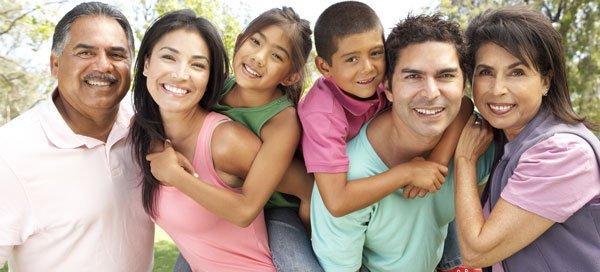
Mexico is the most populous Spanish-speaking country in the world. Nearly 93 percent of the population speaks Spanish. Mayan, Nahuatil and other indigenous languages also are spoken in Mexico.
Around 60 percent of Mexicans are of Indian-Spanish (mestizo) descent, another 30 percent are Indian and 9 percent are Caucasian. Just over 80 percent of the Mexican people belong to the Catholic Church, down from over 90 percent in the 1990s. That number still makes Mexico the second largest Catholic country in the world, behind Brazil.
Mexico’s capital city, Mexico City, is a sprawling urban area of over 21 million people, making it the largest metropolitan area in the Western Hemisphere and the fifth largest metropolitan area in the world. Located in Mexico DF (Federal District), the city sits in the Valley of Mexico at an altitude of 7,350 feet. It was originally built on an island in Lake Texcoco by the Aztecs in 1325 and was known as Tenochtitlan. Guadalajara is Mexico’s second largest city with a metropolitan population of nearly 4.5 million. Located in the central highlands, Guadalajara is a major commercial center. Farther north, Monterrey, Mexico’s third largest city with about 4 million people, is the industrial capital of the country.
Before the Spanish colonization in 1519, Mexico was the site of advanced Amerindian civilizations, which had elaborate urban centers for religious, political and commercial use. The Olmec civilization flourished from about 1600 B.C. to 400 B.C. in the south-central lowlands of Mexico. A later civilization in Teotihuacan reached its peak around 600 AD, and greatly influenced the cultural and theological systems of the Toltec and Aztec civilizations that followed. The Maya civilization, which existed for several thousand years, reached its peak between 250 and 900 A.D. throughout southeast Mexico and northern Central America.

From the time of Hernando Cortez’s conquest, Mexico was a colony of Spain. Along with other Spanish colonies in the New World, Mexico fought and gained its independence. On Sept. 16, 1810, in the town of Dolores Hidalgo, Mexico won its independence from the Spaniards. That date is now celebrated as Mexico’s Independence Day. In 1910, Francisco Madero led a revolution against the autocratic leader Porfirio Diaz that lasted a decade and led to a new Mexican Constitution in 1917.
In late 1994, a devaluation of the peso threw Mexico into economic turmoil, triggering the worst recession in over half a century. The elections held in 2000 marked the first time since the 1910 Mexican Revolution that an opposition candidate – Vicente Fox of the National Action Party (PAN) – defeated the party in government, the Institutional Revolutionary Party (PRI).
[readon1 url="http://myinternationaladventure.com/12/live-mexico/"]Source:myinternationaladventure.com[/readon1]


 In this Sunday, Dec. 21, 2014 photo, Michel Salgado drives his 1957 Mercury Monterey convertible along the Malecon in Havana, Cuba. After U.S. car sales were banned in Cuba in 1959, Cubans have been have been forced to patch together Fords, Chevrolets and Chryslers that date back to before Fidel Castro's revolution, which can make it appear like the country is stuck in a 1950's time warp. (AP Photo/Desmond Boylan)
  In this Thursday, Nov. 27, 2014 photo, Roberto Castellanos is reflected in a mirror at his house in Tegucigalpa, Honduras. Castellanos, who just turned 12, spends eight hours a day at a repair shop, sanding and painting ice cream carts for the daily pay of $2.50 in Honduran lempiras. When classes resume after the Christmas holidays, he says, he will cut back to five hours at the shop so that he can go to school in the afternoon and, hopefully, still have time to play soccer on the weekend. Abut 15 percent of Honduras' youth hold jobs. (AP Photo/Esteban Felix)
 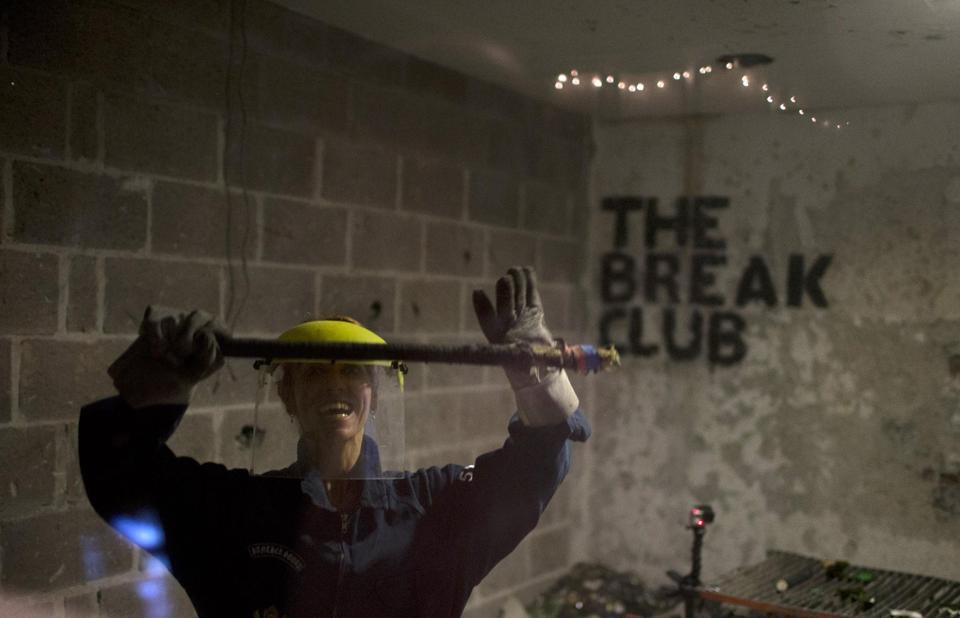 In this Tuesday, Dec. 9, 2014 photo, a client holds up her club to the camera after smashing bottles with it at The Break Club in Buenos Aires, Argentina. The breaking of computer monitors, telephones, TVs and empty bottles is offered as a method to release anger, in a space where the club says "one can let go." (AP Photo/Natacha Pisarenko)
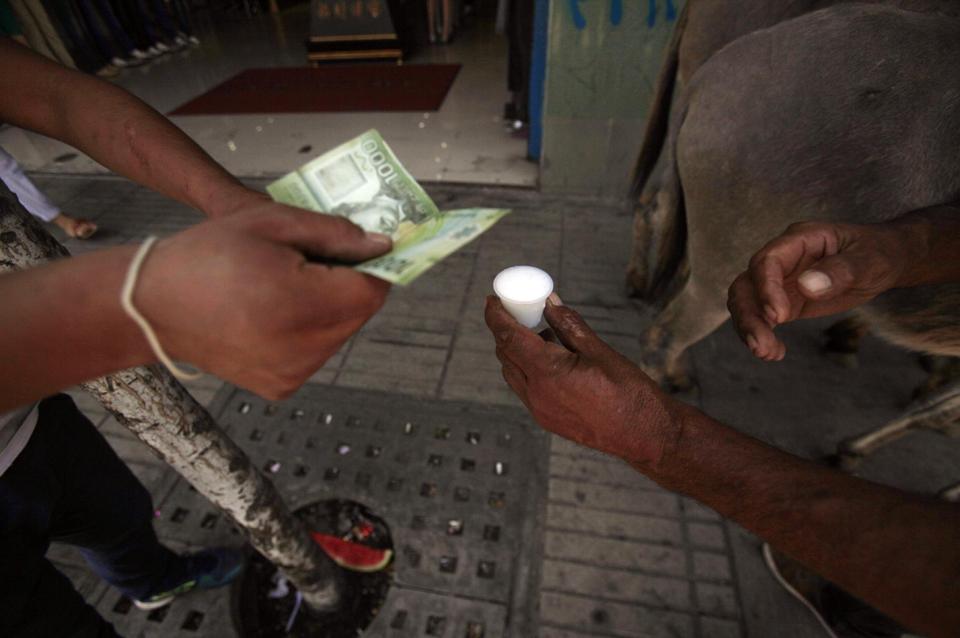 In this Saturday, Dec. 13, 2014 photo, Marco Alegria hands a customer a small cup of fresh donkey milk as the customer pays in the streets of Santiago, Chile. Alegria and his brother have been selling fresh donkey milk for the past 25 years, and say it's recommended as a vitamin boost. Shot glass size cups of the drink sell for about $2 dollars. Half a liter, which is the most he says his donkeys can give in one day, sells for about $20 dollars. (AP Photo/Luis Hidalgo)
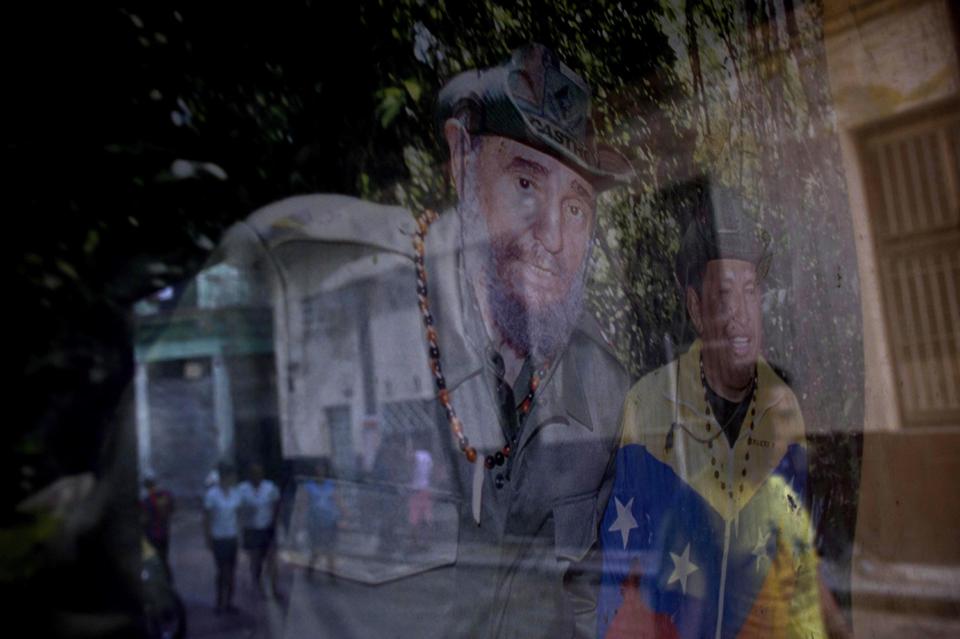 In this Friday, Dec. 26, 2014 photo, pedestrians are reflected in an image of Cuba's retired leader Fidel Castro, center, and Venezuela's late President Hugo Chavez, right, hanging inside a shop in Havana, Cuba. So far, the larger-than-life retired Cuban leader has made no public comment on the biggest news in years — that the U.S. and his island nation will restore diplomatic relations after more than 50 years of hostility. (AP Photo/Ramon Espinosa)
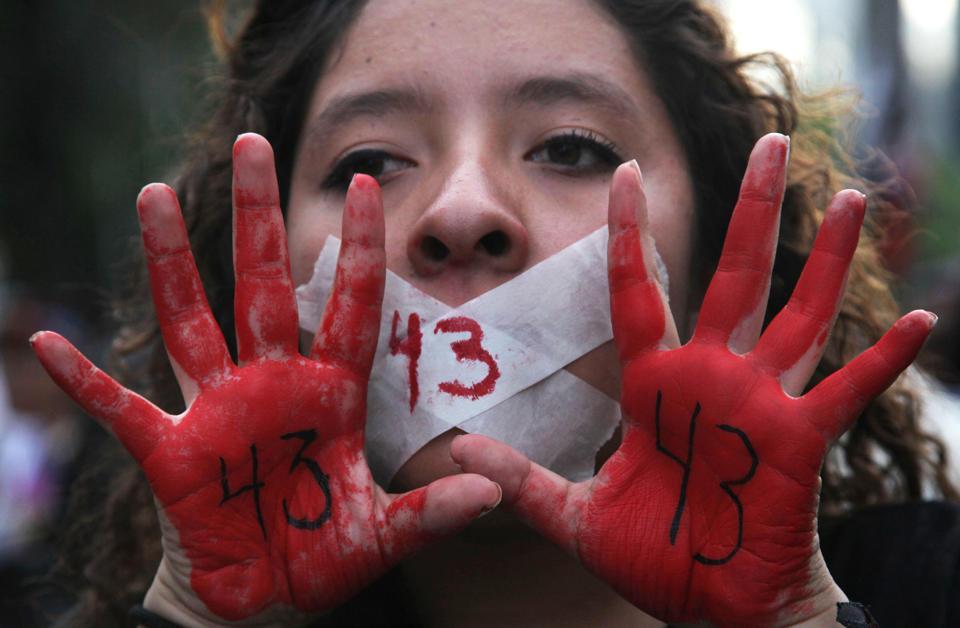 In this Friday, Dec. 26, 2014 photo, a woman holds up her red-painted hands and the number 43, representing the 43 missing students from the Isidro Burgos rural teachers college, during a protest in Mexico City, Friday, Dec. 26, 2014. Protesters marked three months since the students were taken by municipal police and handed over to a drug gang to be killed and burned, according to the results of the Attorney General's investigation. (AP Photo/Marco Ugarte)
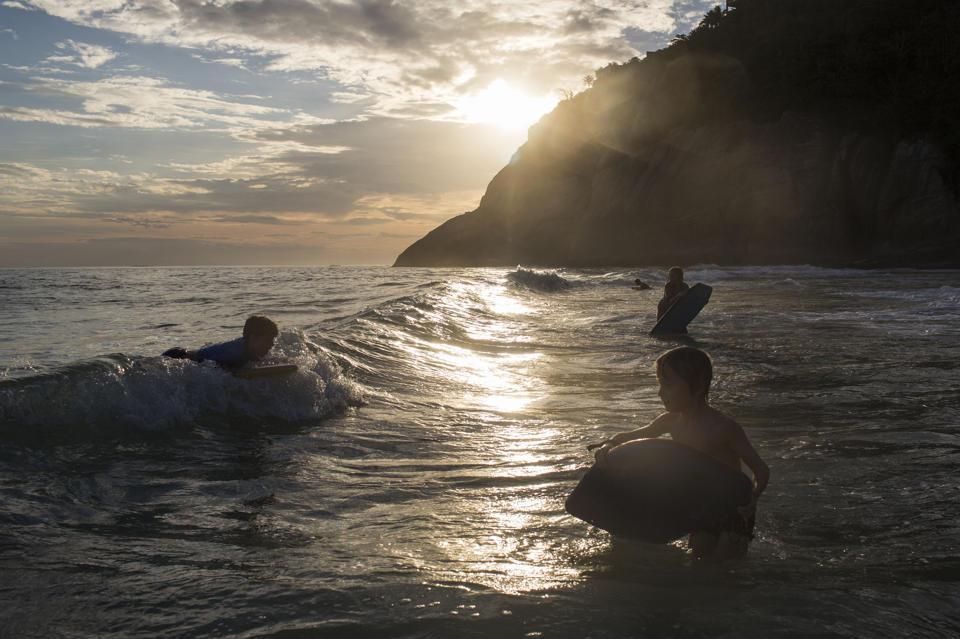 In this Sunday, Dec. 21, 2014 photo, youth bodyboard at sunset along Joatinga beach in Rio de Janeiro, Brazil. On the first day of summer, Brazil temperature reached over 40 degrees celsius. (AP Photo/Felipe Dana)
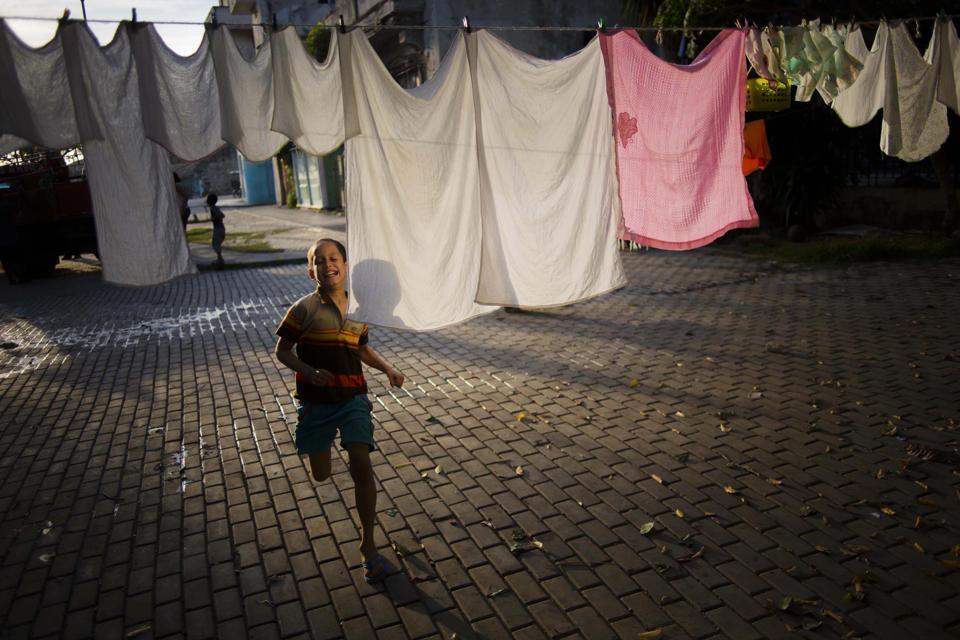 In this Saturday, Dec. 27, 2014 photo, a youth runs past a clothes line as he plays with neighborhood kids in Havana, Cuba. Cuba and the U.S. announced on Dec. 17 that the two countries would resume diplomatic relations for the first time since 1961. (AP Photo/Ramon Espinosa)
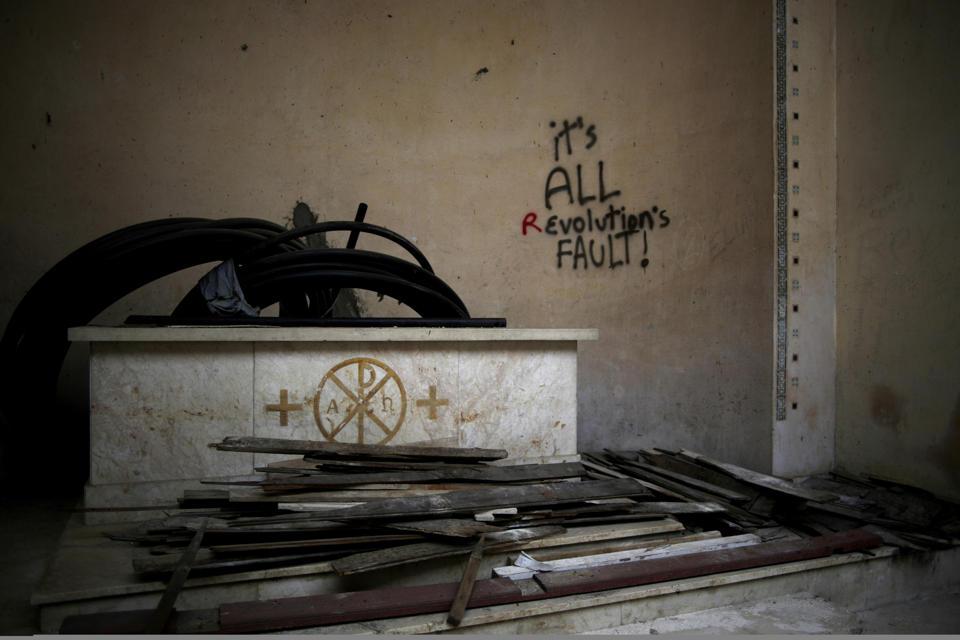 In this Monday, Dec. 1, 2014 photo, graffiti covers a wall next to an altar and debris inside the chapel of the former University of Santo Thomas of Villanueva in Havana, Cuba. The church is planning to restore the building to its former glory, along with more a dozen more churches, parish houses and other buildings, as part of a quiet reconciliation between the Catholic Church and the Cuban government that has brought relations to a historic high point this Christmas. (AP Photo/Ramon Espinosa)
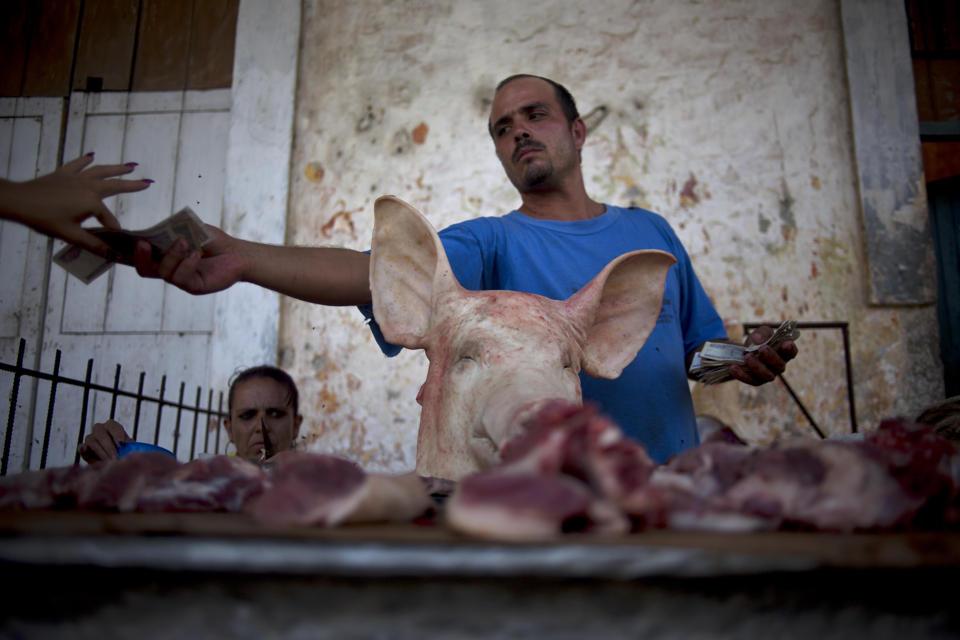 In this Wednesday, Dec. 24, 2014 photo, a butcher sells pork on the sidewalk in Campo Florido, east of Havana, Cuba. The restoration of diplomatic ties between Cuba and the United States has unleashed expectations of even more momentous changes on an island that often seems frozen in a past of classic cars and crumbling buildings. (AP Photo/Ramon Espinosa)
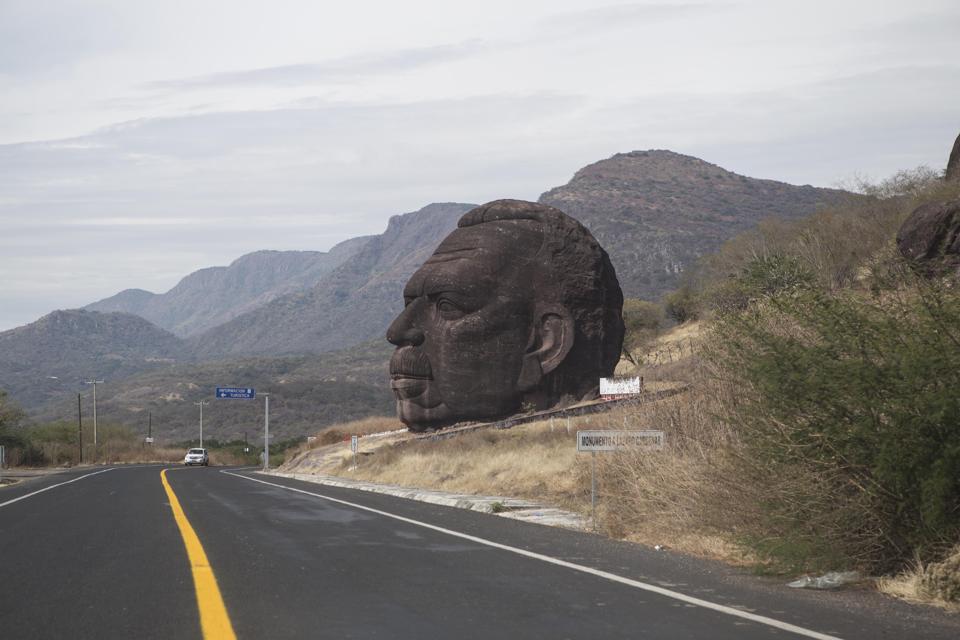 In this Tuesday, Dec. 23, 2014 photo, a monument in honor of Mexico's former President Lazaro Cardenas stands along a highway between Arcelia and Ciudad Altamirano near the state border of Guerrero and Michoacan, Mexico. The bishop of the diocese in Ciudad Altamirano said Friday, Dec. 26 that the Rev. Gregorio Lopez Gorostieta was found dead with a gunshot wound to the head, near this statue, on Christmas Day. Gorostieta disappeared on Monday from the seminary in the city where he taught. (AP Photo/Christian Palma)
 A recent trip to Puerto Vallarta Mexico yielded two lessons in protecting a brand and protecting your value. Although the little locally owned store may seem miles away from the international golden arches, each had a story to tell about value.


 Not everything in Punta de Mita has to be about the beach. Consider a hike in the subtropical forest, which takes you to the top of the highest point in the area: Cerro de Mono (Monkey Mountain).