





World Cup: Defending champion Spain out of World Cup

BqcOlPhCYAAeJ-i 1

(CNN) -- So goodbye.
Nobody wanted it to end this way -- the embarrassment and humbling of a side which has brought so much joy to the world.

"You cannot consider that this generation is finished," said Spain midfielder Xabi Alonso ahead of its crunch game against Chile. "On the contrary, we are still alive."
But Alonso's words rang hollow Wednesday as Spain sank to a 2-0 defeat by Chile at the Maracana -- almost as if this generation has been given the last rites.


Dumped out of the World Cup after just two group games on the same day that King Juan Carlos abdicated his throne and signed it over to Prince Felipe, the nation's footballers have now relinquished the crown they once wore with distinction.

Those fortunate enough to have a ticket for the dethroning came wearing red -- Chilean red.
Even before kick off, there was a sense of something special -- a wind of change, a new era about to be ushered in.

This was a moment nobody wanted to miss -- including the 85 Chilean fans who were apprehended by military police after trashing the stadium's media center.

While the spine tingling a capella version of the Chilean national anthem galvanized those in white with a call to arms, Spain shrunk away almost apologetically.

It was left to Eduardo Vargas and Charles Arranguiz to put the final nails in the coffin-- both men scoring in a high-octane first half.

There was no fightback -- no last stand, no heroics from Spain. Those who had once thrilled and mesmerized for so long, slowly and silently slipped away into the Rio night.

This was not a mere collapse -- this was an implosion of seismic proportions.

"We cannot complain we did not deserve to go out, they were better than us," Spain coach Vicente del Bosque told Spanish TV.

"The team showed character, we pressed forward but we had little luck in front of goal.
"We were certainly inferior to our rivals here at the finals. It is not the moment to think about the future. Little by little we will make the necessary assessments."

Spain left Salvador last Friday, beaten, thrashed and humiliated after being dismantled with ruthless efficiency by a Dutch side set on revenge following its defeat in final four years ago.

It was a defeat which not only brought a shattering halt to the domination it had enjoyed on the international stage -- it was a defeat which signaled the end of an era.

For the past six years, this Spanish side has thrilled those who marveled at its tiki-taka passing and ability to make the game look so effortless.

For so long a perennial failure, its victory at the 2008 European Championship finals ushered in a period of almost flawless football.

Victory at the 2010 World Cup was secured courtesy of a win over the Netherlands, while it retained its European crown comfortably two years later.

But the signs of weakness have been growing ever since it was swept aside in last year's Confederations Cup in Brazil.

The 3-0 defeat by the host nation in the final shocked not only seasoned observers but also those who had believed Spain's domination would surely continue.

A year on, and the weaknesses which were so ruthlessly exposed were laid bare for all to see.
After the 5-1 defeat by the Dutch, the Spanish players spoke of how this current generation were not yet finished.


Cesc Fabregas, the Chelsea midfielder, philosophized over how this occasion would mean "life or death" for his side.

But while coach del Bosque would have hoped to revitalize his team by resuscitating his ailing players, Chile arrived hoping to inflict the mortal wound.

Where Chile appeared hungry and sprightly, Spain looked slow, cumbersome and leaden footed.
The removal of Xavi, for so long the dominant force of the Spanish midfield, already hinted at the start of something drastic.

Gone too was Gerard Pique, the Barcelona defender, who endured a difficult time against the Dutch -- not that he was alone.

While 11 men in red Spanish shirts made the short walk onto the Maracana field, their minds appeared to be clouded, fuzzy, full of the doubt.

No more so than goalkeeper Iker Casillas -- the captain, the man who despite having not featured regularly for club side Real Madrid kept his place in the team.

A dismal showing in the previous game had led to calls for him to be replaced -- but on form or not, there was nothing he could do about Chile's opening goal.

Jorge Sampaoli's side, playing with a joyful and often naive innocence, roared into action with a thrust which would not look out of place on the dancefloor of a club in Santiago.

With 20 minutes played, Chile's ability to combine pace and intricacy cut through the Spanish defense and Vargas rounded off a wonderful flowing move.

The goal came with a sense of inevitability -- Chile, roared on by the majority of the stadium, were rampant.

Where Spain faltered, Chile stood strong. Where Spain was wasteful, Chile cradled possession like a mother holds its small child. Where Spain sporadically threatened, Chile moved to strike down each and every attack.

For a World Cup champion to exit the tournament at the group stage is not unheard of -- France were embarrassed in 2002 and Italy barely competed four years ago as it exited with a whimper.
But neither of those teams managed to dominate like this Spanish side.

Perhaps had Spain managed to arrive at the interval just one goal behind it may have been different -- but what transpired was nothing short of disastrous.

With three minutes of the half remaining, the much maligned Casillas, the man who lifted the trophy four years ago, all but relinquished his and Spain's grip on the crown.

Alexis Sanchez's 20-yard free kick appeared simple enough to save but Casillas contrived to punch the ball straight into the path of Aranguiz, who fired home from close range.

That self-inflicted wound proved fatal -- Spain never recovered.

It tried to fight back, Sergei Busquets missed a great opportunity from five-yards and striker Diego Costa, one of the biggest disappointments of the tournaments, also went close.

But it was more in hope than expectation.

Each and every time Chile moved forward, Spain fell away seemingly unable to cope with the pace of its opponents.

Mauricio Isla should have rubbed salt in Spanish wounds with 20 minutes remaining only to send his effort wide of the post with the goal gaping.

Del Bosque even sent on Koke as substitute -- a man whose surname is Resurrección.

Not that it mattered -- the curtain had already been brought down, the mourners had left -- the cortege was already on its way.

goalch


[readon1 url="http://www.cnn.com/2014/06/18/sport/football/spain-chile-world-cup-football/"]Source:www.cnn.com[/readon1]

Dreams at a Mexican Horse Racing Track, and Disappointment After Belmont

N18L140613-1MEXICO CITY – The 64 years that Arturo Ruiz Garcia has spent with the horses at the Hippodrome of the Americas have been enough to teach him that disappointment is the safest bet. All the pre-dawn training, the vitamins and corn-oil concoctions, the Sore No More liniment rubdowns, give no guarantees. “You don’t know what it’s like to be with a horse for a month, day and night, and then it wakes up colicky on race day,” the 76-year-old trainer said.

Then again, bad luck is no sure thing, either. There was the time in the early 1990s when Ruiz’s blazing thoroughbred won 40 races. “Still a record here,” he said. Or when his skinny teenage jockey, Victor Espinoza, won the first race he rode - and then kept on winning. “It takes a year to go from apprentice to jockey, minimum,” Ruiz said. “Victor did it in six months.” For his old colleagues at the Mexico City racetrack where he got his start, Espinoza’s victory atop California Chrome at the Belmont Stakes this weekend would have been a validation for them all — the first Triple Crown winner in 36 years, the first Mexican jockey to achieve the feat ever. But as it so often goes at the track, it was not to be.

To make it in the lucrative world of U.S. thoroughbred racing is a dream for many Latin American and Caribbean jockeys. And in recent years, they have come to dominate the sport. The three Kentucky Derby winners before Espinoza were all from Latin America: Joel Rosario from the Dominican Republic, Mario Gutierrez from Mexico and John Velazquez from Puerto Rico. Of the 11 riders in the Belmont Stakes, there were two Jamaicans, two Puerto Ricans, a Venezuelan, Espinoza and Rosario, who rode Tonalist to victory. “It’s all in the body. Americans are taller and heavier, we are shorter and lighter,” said Ricardo Mar, director of operations at the Hippodrome.

“We are like little Chihuahuas,” said his colleague, Jacob Morett. Although horse culture is ingrained in rural Mexico, racing is not as popular here as other sports, such as soccer or boxing. The Hippodrome, which opened in 1943, is the country’s only racetrack, situated downtown on 50 acres of military-owned land. For the country’s biggest race, which happened on May 31, about 8,000 people showed up. Most weekends, attendance is far lower. “People don’t know the sport well,” Morett said.

“They consider it elitist.” But most Mexican jockeys grow up poor in rural areas, the jockeys and trainers here said, learning to ride while doing ranch work. Espinoza was one of 10 siblings from central Hidalgo state. He began by training quarter horses with his siblings and drove a bus in Mexico City before starting his career at the Hippodrome. While he has earned millions of dollars racing in the United States, a Washington Post photo/oshua Partlow great jockey in Mexico makes about $30,000 a year, said Ruiz, his former trainer. “If you are riding well, it’s enough to live,” said Jose Angel Ambrosio, a 20-year-old jockey who has been racing here for five years.

He said he rides as many as nine races a day, resting long enough to change shirts and hop on a new horse. To maintain his 112-pound riding weight, he said, “there are days I don’t eat.” He hopes someday to follow Espinoza’s example and ride in the United States.

[readon1 url="http://www.thenews.com.mx/index.php/living-articulos/22912-dreams-at-a-mexican-horse-racing-track-and-disappointment-after-belmont"]Source:www.thenews.com.mx[/readon1]

World Cup 2014: Mexico and Brazil Play to a 0-0 Draw

2293501 FULL-LND

Brazil and Mexico took a step toward the second round of the World Cup with a lively, though a bit sloppy, 0-0 draw in Fortaleza on Tuesday.

Brazil was the better team, as expected, managing eight shots on goal to Mexico's four. But though Neymar was his usual active self on offense, the team was let down by poor finishing by Fred and his substitute, Jo.

And Mexico benefited from a controlled and occasionally spectacular performance by its goalkeeper, Guillermo Ochoa.

Both teams now have 4 points after two games. That is a bit disappointing for the hosts, but delightful for Mexico, which had entered the Cup with low expectations after a poor qualifying campaign.

The two teams are in the driver's seat to advance to the next round, barring something remarkable from pointless Croatia or Cameroon.


Shot, Mexico! Luiz Gustavo arrives too late, allowing Hector Herrera to fire a rocket from just outside the box. Julio Cesar gets a hand on it to tip it over, though it was a riser and may have gone over anyway. Good moment for Mexico.

And now a save at the other end. A header by Neymar brings a diving effort from Ochoa. It’s happening at both ends!

[readon1 url="http://www.nytimes.com/interactive/2014/06/17/sports/worldcup/world-cup-brazil-vs-mexico.html?_r=0"]Source:www.nytimes.com[/readon1]

Brazil vs. Mexico, 2014 World Cup Preview: Seleção Should Dominate Out Wide

20140612 mjr su5 042.JPG.0 standard 709.0

It's perhaps understandable that World Cup hosts Brazil looked a little nervy in their opener against Croatia, though they still recorded a victory and poster boy Neymar a brace to pacify the home fans. However, they'll certainly hope to be a little more composed in their second Group A game against Mexico on Tuesday, and set themselves up for the knockout stages.

But, if Mexico's opening game is anything to go by, they shouldn't make life too easy for Luiz Felipe Scolari's side. They completely dominated Cameroon, and had two goals incorrectly chalked off by the officials before Oribe Peralta's was finally allowed to stand in the second half. With their confidence high, El Tri may well fancy their chances.

Team news

Brazil's personnel was as expected in their opening game, albeit not quite in the regular order. Hulk started on the left instead of his usual right, with Neymar shifted into the centre of the attacking midfield band and Oscar in Hulk's normal position. It didn't quite work out, leaving the Seleção looking unusually disjointed and struggling to link their midfield and attack. It's likely Scolari will make amends and revert to his more regular shape here.

Mexico, however, aren't expected to make any changes from the team that downed Cameroon in their first match. That means coach Miguel Herrera should stick with his preferred back three, with Miguel Layún and Paul Aguilar tasked with providing width as wing-backs. Despite normally playing wide, Andrés Guardado will likely keep his position in central midfield, while Giovani dos Santos will operate in support of Oribe Peralta.

Projected lineups (left to right)

Brazil (4-2-3-1): Júlio César; Marcelo, David Luiz, Thiago Silva, Dani Alves; Luiz Gustavo, Paulinho; Neymar, Oscar, Hulk; Fred.

Mexico (3-5-2): Guillermo Ochoa; Héctor Moreno, Rafael Márquez, Francisco "Maza" Rodríguez; Miguel Layún, Andrés Guardado, José Juan Vázquez, Héctor Herrera, Paul Aguilar; Giovani dos Santos, Oribe Peralta.

abG6PdSabG medium

Key matchups

The wide battle - Brazil love to attack from the wide areas, and in this match, they'll be able to dominate them. Mexico's formation means they're wholly reliant on their wing-backs to patrol the flanks, which was fine against Cameroon -- whose wingers and fullbacks were too conservative with their positioning to ever prove too much of an attacking threat -- but will be rather more difficult against the more attack-minded Brazilians.

With Brazil's wingers regularly drifting inside and the fullbacks pushing forward, Mexico's wing-backs will have to deal with a nightmarish 2v1 situation; not knowing whether to stick man-to-man with the wingers or push out to prevent Marcelo and Dani Alves finding space on the overlap. If Brazil take advantage of this superiority, they'll probably win the game.

Luiz Gustavo vs. Giovani dos Santos - One of the star performers in Mexico's opening game was the mobile striker Giovani dos Santos, who scored both of Mexico's wrongly disallowed goals before playing a big part in Peralta's winner. He played as a second striker, drifting across the field into pockets of space behind his more immobile strike partner. If he can do the same on the counter for Mexico here -- particularly behind Brazil's fullbacks -- he could cause problems. It'll likely be up to Brazil's most defensive midfielder, Luiz Gustavo, to stop him.

Dani Alves vs. Andrés Guardado - When Mexico do have the ball, one of their most important players will likely be Andrés Guardado, who'll likely start in central midfield despite being naturally more comfortable wide left. That's because he still has a tendency to drift wide to support left wing-back Miguel Layún. Throw dos Santos into the mix too, and they could be able to work their way into some space in behind Brazil's right-back Dani Alves, and create some goal-scoring chances.

Prediction

Mexico showed promise in their opening group game, though Brazil are much, much stronger than Cameroon. They'll likely take advantage of Mexico's tactical weakness out wide to record their second consecutive victory. 2-0 Brazil.

[readon1 url="http://www.sbnation.com/soccer/2014/6/16/5812682/brazil-mexico-2014-world-cup-preview"]Source:www.sbnation.com[/readon1]

Soccer-Mexico Unlikely to be Overawed Against Favourites Brazil

2014-06-15T100945Z 1

SAO PAULO, June 15 (Reuters) - World Cup favourites Brazil will be expected to defeat Mexico in the second round of Group A matches in Fortaleza on Tuesday but their Latin neighbours have no reason to feel overawed.

The Mexicans have won big matches against Brazil before, beating them 4-3 in the final of the Confederations Cup in 1999 and more recently in the Olympic final in London.

Although that game was not a full international, the match featured several players expected to line up in Fortaleza including Neymar, Oscar and Thiago Silva for Brazil, and Oribe Peralta, the striker whose brace gave Mexico a 2-1 victory.

It gives Brazil pause for thought as they seek their 11th consecutive win.

"We know that Mexico are a good team, they always give Brazil a hard time and it won't be any different when we play in the next match," Oscar, one of the stars of the 3-1 opening day win over Croatia, said at the team's base camp on Saturday.

"Mexico are good coming forward and they are very fast on the counter attack," the Chelsea midfielder said. "The training we are going to do this week ahead of the Mexico game will be different from the training we did before facing Croatia. Mexico play totally differently from Croatia."

Mexico will also be encouraged by a rain-sodden 1-0 win over Cameroon on Friday when they received fantastic support from their travelling fans.

The home side, however, have won 22 of the 38 previous encounters including the most recent match almost exactly a year ago in the same stadium in the Confederations Cup when Brazil romped home more comfortably than the 2-0 scoreline suggests.

Both teams - and fans the world over - will also be watching the referee almost as closely as the players.

Brazil were given a contentious penalty at a crucial moment of the Croatia match, prompting talk about home field bias. And TV replays showed Mexico had two good goals disallowed before they finally got the winner in their opener against Cameroon. (Reporting by Andrew Downie, Editing by Nigel Hunt)

[readon1 url="http://news.yahoo.com/soccer-mexico-unlikely-overawed-against-favourites-brazil-080000373--sow.html;_ylt=AwrTWf0OoZ1TMkEAIZzQtDMD"]Sourcenews.yahoo.com[/readon1]

Mexico Vrs Cameroon (Kick-off 5pm BST)

     
  mexico-cameroon 2940738b   
   The heat is on: Samuel Eto'o and Giovani dos Santos go head-to-head as Cameroon face Mexico    

Mexico coach Miguel Herrera has left Manchester United forward Javier "Chicharito" Hernandez on the bench for their World Cup opener against Cameroon.

Herrera has chosen Villarreal forward Guillermo Dos Santos and Oribe Peralta to start in attack for the Group A encounter in Natal, Brazil.

He also ended speculation as to who will start in goal with Ajaccio's Guillermo Ochoa selected ahead of Jesus Corona of Cruz Azul.

"I know that all of my players are going to leave their soul on the pitch to achieve a result," Herrera said. "We are ready to go out and win."

With Brazil and Croatia also included in the pool, Mexico know how vital Friday's game is.

The Aztecs have failed to reach the knock-out round in the past five tournaments.

"This is a very important game for us, key to our aspirations to progress to the next round," Herrera said. "We know it's not going to be easy but we are going to work very hard to beat Cameroon."

Mexico will have to show a vast improvement as they suffered 1-0 defeats in their last two friendlies against Bosnia and Herzegovina and Portugal.

"We are only interested in a win and not on the actual result," he said. "A win is what matters, taking three points and that is what we want."

Mexico had to beat New Zealand in the play-offs to reach Brazil and maintain their record of qualifying for every World Cup since 1990.

Herrera believes Cameroon's pace poses the biggest danger for his side.
"They have a very good team, with fast players, who have experience," he said. "We will try to manage possession."

Cameroon go into the encounter at the Estadio das Dunas finally able to focus on football matters.

Volker Finke's squad threatened to refuse to board the plane to Brazil due to a row over bonuses before a deal was finally reached.

The African side beat Moldova 1-0 last week in a friendly after previously drawing 2-2 with Germany in Monchengladbach.

"We know that (Mexico) had a lot of problems in qualifying and that it was difficult," Finke said. "However, they are a very dangerous team, with an intense spirit.

"I can see that it is a difficult team but one that can be beaten."
Samuel Eto'o, who will compete in his fourth World Cup, is the Cameroon captain.


[readon1 url="http://www.telegraph.co.uk/sport/football/world-cup/10892657/Mexico-vs-Cameroon-World-Cup-2014-live.html"]Source:www.telegraph.co.uk[/readon1]

FIFA World Cup 2014 Will Start Tomorrow at Brazil

50722

The World Cup will start from 12th June and will continue to till 13th July. The final match will be held on July 13 at the historic Maracana stadium.

Thirty two countries will participate in this World cup. Renowned sand artist Sudarsan Pattnaik has created three different sand sculptures on FIFA World Cup with a message “Good Luck” at Puri beach of Odisha. Pattnaik has created a 9ft high sand sculpture of World Cup trophy and he also created a mini stadium with a football. He also created a sculpture on tomorrow’s opening match which will be between Brazil and Croatia.   

There is everywhere World Cup fever around the World. In puri beach there also people exited to watch the matches. Though India is not playing in this World cup still people are anxious to see the matches. Lots of tourist and local people gathered at Puri beach to see the sculpture.   

Pattnaik used about 15 tons of sand with some colour sand and took seven hours to complete this sculpture.  
 
Before also Sudarsan created many sand sculptures on FIFA World Cup at Puri beach. The World Cup will start from 12th June and will continue to till 13th July.  

The final match will be held at the historic Maracana stadium. The opening ceremony will attend more than 600 artists


[readon1 url="http://www.orissadiary.com/CurrentNews.asp?id=50722"]Source:www.orissadiary.com[/readon1]

First Ever Pan American Sports Festival Set For Mexico

Abertura Jogos Panamericanos 2 13072007

(ATR) The Pan American Sports Organization created the Pan American Sport Festival to bring together coaches, athletes, and international judges for competition and knowledge transfer.

Originally called the Pan American Olympic Festival, the event will take place all over Mexico during July, August, and September. For 23 sports in the Pan American program there will be training camps, coaching clinics, and competition in different venues across Mexico.

The idea was originally proposed by PASO President Mario Vasquez Rana, and was approved at the PASO assembly in Toronto last October.

Training camps will range from three to eight days, with two to three days devoted to coaching clinics and knowledge transfers with international officials. The competition schedules varies based on sport to sport.

Around 3,200 athletes from 41 countries will travel to Mexico to train and compete as part of the festival. It is not a centrally organized festival; rather it will use existing sport facilities around the whole country.

“There are going to be 10 states participating and it’s an important commitment for the states, for the sports institutes from each states, the Mexican Olympic committee and the ministry of sport,” Horacio de la Vega, Director General of the Pan Am Festival, told Around the Rings.

Each and every athlete that comes here is fully sponsored by us,” said de la Vega regarding travel, accommodation, and other expenses.

Not each country will send athletes for every sport, and the largest delegations are expected from the United States and Brazil. Both countries are expected to send between 400-500 athletes in their delegations.

Bowling, canoe slalom, canoe sprint, cycling, wrestling, modern pentathlon, racquetball, rowing, squash table tennis, archery and triathlon competitions will serve as qualifiers for the 2015 Pan American Games in Toronto. No competition will serve as a qualifier for the Rio 2016 Olympics.

PASO has not said whether the event will continue, but according to de la Vega “the idea is that we make this an important event. Let’s see how it is going to fit.”

“It’s an event that we are investing a lot of money with Pan American Games and our other big events because we really focus on the athletes," says de la Vega.

[readon1 url="http://aroundtherings.com/site/A__46808/Title__First-Ever-Pan-American-Sports-Festival-Set-For-Mexico/292/Articles"]Source:aroundtherings.com[/readon1]

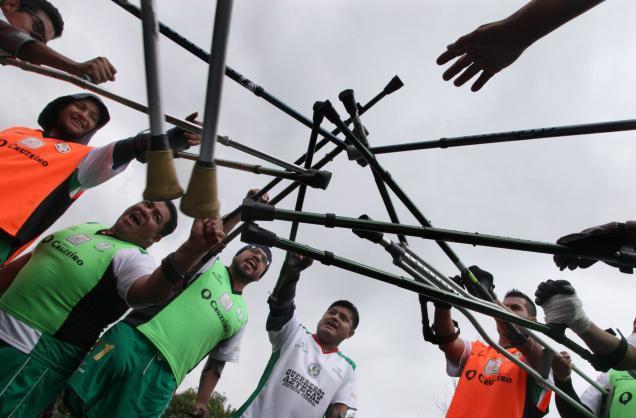
Mexico Amputee Soccer Players Train For Own Cup

TH MEXICO 1939322f

MEXICO CITY (AP) -- Two World Cups of soccer will be held this year, and members of the Mexico City's Aztec Warriors are training tirelessly with the dream of playing in one of them.

Players race across the field on special crutches, dribbling and kicking fierce shots at the net. Their goal: The Amputee Soccer World Cup, which will be held in Culiacan, Sinaloa, from Nov. 30 to Dec. 8.

Most of the players lost a leg in car accidents or to disease. One player, Niseforo Bazan, lost a limb to a stray bullet in Guerrero state. The goaltender is missing an arm.

Some team members play while still fighting to overcome health issues. Alejandro Balurch, 17, had a leg amputated because of cancer two years ago and now practices as much as his chemotherapy will allow.

''We want to show that there are no barriers or limitations to attaining what one desires,'' said the coach of the Aztec Warriors, Carlos Espinosa.

Before the start of each game players remove their artificial legs, playing only with crutches and kicking the ball with their remaining foot.

Espinosa says the players are practicing in the hopes that some of them will be chosen to join Mexico's national amputee soccer team that will play in Sinaloa.

[readon1 url="http://news.yahoo.com/mexico-amputee-soccer-players-train-153728489--spt.htmlp"]Source:news.yahoo.com [/readon1]

10 soccer Players Who Left Enduring Marks on The World Cup

SPWWith the World Cup in Brazil looming, The Associated Press takes a look at 10 great players in the tournament's history:

PELE:
Considered by many the greatest player in football history, Pele won three World Cups with Brazil. He was a teenager when he helped the "Selecao" lift the trophy in 1958, then four years later he won again despite playing only one match because of an injury. Pele's career was at its peak when he led Brazil to victory in 1970. He remains the only player to win three titles.

DIEGO MARADONA:
Maradona was joint FIFA player of the 20th century with Pele. "El Pibe de Oro" inspired Argentina to victory in the 1986 tournament. The English will never forgive him for his "Hand of God" goal en route to winning in Mexico. And perhaps his own people, the Argentines, will never forgive him for being a terrible national coach four years ago in South Africa. But as a player, Maradona was peerless in his heyday, although drug problems marred the end of his career.

RONALDO:
He is the most prolific scorer in World Cups with 15. He was a youngster in the Brazil squad that won the 1994 World Cup, then helped Brazil reach the final both in 1998 and 2002. He had convulsions hours before the 1998 final in France and didn't play well in a 3-0 loss to the hosts, but four years later in Yokohama he scored twice in the final to give Brazil its fifth world title. Ronaldo's last World Cup was in 2006.

ZINEDINE ZIDANE:
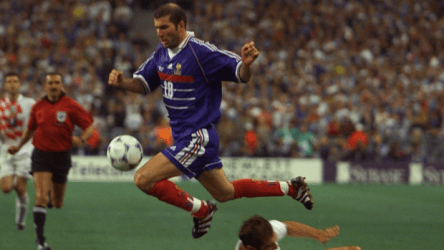
People who don't know football remember Zidane for the headbutt that put Marco Materazzi on the floor in the 2006 final. That earned Zidane a red card and an ignominious end to a glorious career. The connoisseurs cherish a player gifted with uncommon skill and technique, coupled with a penchant for big-game goals. The three-time world player of the year helped France win the 1998 World Cup on home soil -- scoring on two headers in the final -- and the 2000 European Championship. Soon after, he was sold by Juventus to Real Madrid for a then-record fee of $65 million.

JUST FONTAINE
Fontaine holds a record that is unlikely to be broken anytime soon: Scoring 13 goals in a single tournament. Fontaine took six games to achieve his feat in 1958 in Sweden, where he was a last-minute inclusion for France. Entering the tournament, the Moroccan-born Fontaine was a little-known forward outside of the French league. Yet he tormented opponents with his speed and finishing touch -- and even with someone else's boots. He had to borrow a pair after damaging his own boots in practice.

FRANZ BECKENBAUER
Beckenbauer defined the role of libero, and his elegant and effortless style earned him the nickname the Kaiser. Beckenbauer is the only man to captain (in 1974) and coach (1990) a team to the World Cup title. Beckenbauer made 103 appearances for Germany and is considered the football power's greatest player. He also served as coach and president of Bayern Munich, where he won every available club honour as a player. At 68, he has given up official functions but still works for television and remains vastly popular in Germany.

JOHAN CRUYFF
He never won a World Cup, never was top scorer and played only one final tournament. Yet it was more than enough to turn Johan Cruyff into a World Cup great because less than a handful of the game's greatest stars combined beauty, speed, vision and elegance like he did. At the 1974 event in West Germany, Cruyff led the Oranje with guile and cockiness as the Netherlands beat teams like Uruguay, Argentina and Brazil with free-flowing "Total Football" to reach the final against the host team. In his finest moment, the lanky playmaker used his dumbfounding body feints and speed to cut through the German defence from the opening kickoff to force a penalty and give the Netherlands the surprise lead. Shockingly, with the cup for the taking, Cruyff and the Dutch machine sputtered and stopped.

EUSEBIO
Of all the spectacular moments in Eusebio's two-decade career, perhaps the most memorable was the comeback he inspired by Portugal against North Korea in the quarterfinals of the 1966 event in England. After Portugal fell 3-0 behind, Eusebio scored four goals in just over 30 minutes, demonstrating the athletic prowess and sure-eyed finishing that made him one of the world's top scorers in the 1960s. Born into poverty in Africa, Eusebio became known as the Black Panther for his agility and hard-charging attacks. He was awarded the Ballon d'Or in 1965, and twice won the Golden Boot - in 1968 and 1973 - for being top scorer in Europe. He died in January.

LEV YASHIN
The only goalkeeper ever voted European footballer of the year, Lev Yashin helped to redefine goalkeeping, producing acrobatic saves and marshalling his defence as few had done before. After bursting onto the international scene with spectacular stops against eventual winner Brazil at the 1958 tournament, he led the Soviet Union to fourth place in 1966, a result the team has yet to better. During a 20-year professional sports career, Yashin's exceptional reflexes even allowed him to be a multi-sport champion, winning the Soviet Cup ice hockey trophy with Dynamo Moscow.

GIUSEPPE MEAZZA
Regarded by many as the greatest Italian player, Meazza played in two World Cups, and Italy won both. Born and bred in a Milan suburb, the diminutive Meazza was 24 when Italy hosted the tournament in 1934. Used on the right wing rather than his favouritecentre-forward position, he unsettled defences with his dribbles and set up the move that led to Angelo Schiavio's winner in the final against Czechoslovakia. Four years later, his only goal was from the penalty spot against Brazil in the semifinals, his last appearance in an Italy shirt. AC Milan and Inter renamed their venue Stadio Giuseppe Meazza (better known as San Siro) after his death in 1979.


[readon1 url="http://www.ctvnews.ca/sports/10-soccer-players-who-left-enduring-marks-on-the-world-cup-1.1852291"]Source:www.ctvnews.ca[/readon1]

Surfing in Mexico's Riviera Nayarit

1545667 285494304942685 772034756 nMany people are very surprised to learn that Riviera Nayarit is blessed with high quality point surf and reef breaks that provide variety and a premier experience for beginners and experienced surfers alike.

Seven different “breaks” circle the Punta Mita southern peninsula alone, from Anclote to Sayulita, providing surfers with the options of zippy reefs, to perfect point breaks, to fun beach breaks.

Other “breaks” line the coastline north to Chacala and San Blas. Traditional short board as well as long board and stand-up paddleboard surfing are all available for lessons and test “drives” at reasonable rates, and ultimate rides for more experienced boarders.

Here are some of the most frequented surfing locations in Riviera Nayarit. Catch a wave and the thrill of a lifetime!

The Cove
Location: Punta de Mita Point, southern most bay
Quality: Guides say it’s the best break around.
Access: Panga from Punta de Mita, or 40 minute rocky walk.
Tide: High, gets shallow on low tide
Notes: Go early! Can get crowded with tourists competing for the ride of their trip.

Surfing in Mexico's Riviera NayaritEl Anclote
Location: In front of condos
Type: Longboard, right
Quality: Good beginner break. Mellow pitch, slow, and long.
Tide: Most, inside gets shallow. Be sure to find best path out.
More: Usually 2-4 ft, right

La Lancha
1.5 miles south of El Anclote
Type: Longboard, most rights, few lefts
Quality: Good longboard wave
Access: Panga or 40 minute beach walk from Punta de Mita
Tide: Best on incoming tide, then outgoing tide. Shallow on low tide
More: Goes when everything else is flat.
Watch out for Coral heads, especially near the take off.

Punta Burros
Location: 10 minutes south of El Anclote at Palladium Vallarta Resort
Type: Longboard, shortboard
Quality: Great, favorite break in the area
Access: Stay at resort or park outside the resort gate on the left, near the taxis.
Find path along the fence line to the left.
Tide: High is best, but works on most anything
Note: Can get busy on weekends with locals and tourists.
More: Left is steeper and throws a bit. Right is longer with a mellower pitch.
Because Burros has easy access, don’t miss this wave.

Surfing in Mexico's Riviera NayaritSayulita
Location: 20 minute north of El Anclote
Type: Longboard, shortboard. Mostly rights.
Quality: Decent wave that goes without much swell.
Tide: works on most any tide
Fun, great atmosphere, but can get crowded with locals and tourists.

Los Veneros: Also known as Dinosaurs, this is a classic reef break with a long right It is a great short board wave, but long boarders enjoy it too. The wave is very much like Malibu Point, only more hollow.

Swimming Pools: Just north of Los Veneros is another point (you can see it break from the line up at Los Veneros) This is a fast hollow right that pitches big time Long boarders will like Los Veneros much better. The easiest way to get to the break is to simply paddle over to it.

The Beach Break: About 200 yards to the left from Los Veneros (looking at the ocean) is an excellent beach break with an outstanding wide open left that is perfect for getting barreled. It breaks over a sand bottom and has all the juice you need to do some hard core tube riding.

The Other Breaks

La Caleta: A short panga ride from the village of Chacala puts you onto the perfect left point known as La Caleta. This is a deep water peak that unwinds down a perfect left point. Long rides on steep and perfect walls follow a stimulating drop and bottom turn on the peak. This is another break that is frequented by Costa Azul Adventure Resort and when they show up, it is an instant crowd.

Matenchen Bay: Reputed to be the longest ride-able wave in the world, Matenchen Bay offers an excellent long right point over a cobblestone and sand bottom. It takes a focused swell to get it to break, but when it does, it is legendary. Rides of over a mile are possible on the right swell and don't mistake a long ride to mean a crappy wave. This wave pitches and peels all the way.

Stoners: The outer point of Matenchen Bay breaks more frequently and offers a wonderful right point with hollow sections. This is a high quality wave worth the wait.

Lolas: An excellent left point north of San Blas. One can negotiate for a panga to take you to the point and you will find a long and sometimes hollow left that you will always remember as epic. No crowds, remote jungle, regional class surf and barrels. What more could anyone ever want?

Courtesy: Mexico Surf Resorts

Record-Breaking 91-Year-Old Runner "Overwhelmed," "Elated" by Attention

91ywHarriette Thompson became a symbol of inspiration across the national running community after Sunday's trek

The 91-year-old runner who broke records during Sunday's Rock ‘n’ Roll San Diego Marathon is overwhelmed by the national attention but is still “eating it up.”

"It was a big surprise to me,” Harriette Thompson said the day after the race. “I just ran how I normally run -- only a little bit slower this time -- and I'm overwhelmed by all the attention I'm getting."

Messages of encouragement and inspiration began flowing in after Harriette Thompson ran the 26.2 miles in just over 7 hours, completing the fastest time in the U.S. for the 90-94 age group and becoming the oldest person to finish that race.


[readon1 url="http://www.nbcsandiego.com/news/local/-Record-Breaking-91-Year-Old-Runner-Overwhelmed-Elated-by-Attention-261608461.html"]Source:www.nbcsandiego.com[/readon1]