In Mexico, codex exhibit rethinks Moctezuma's death

afp-in-mexico-codex-exhibit-rethinks-moctezumas-death

Mexico's largest exhibit of Mesoamerican manuscripts features a codex made of fig tree bark suggesting that Aztec emperor Moctezuma was slain by a Spanish conquistador with a sword.

The piece is among 44 codices made by several pre-Columbian populations -- including the Mayas, Purepechas and Zapotecos -- on display at the National Museum of Anthropology.

Some of the pieces in the temporary exhibit, titled "Codices of Mexico: Memories and Wisdom," are as large as 10 square meters (108 square feet).

One cost the government $1 million to buy from the Bible Society in Britain.

"It's the biggest codex exhibit (in Mexico)," curator Baltazar Brito, director of the National Anthropology and History Library, told AFP.

The codices were written by tlacuilos, which in Mayan means a person who carves stones.

The ancient manuscripts present a vision of history from the point of view of "the people who were subdued after the conquest," Brito said.

"They are a very important demonstration of the knowledge acquired by Mesoamerican peoples throughout their history."

The collection's centerpiece is the Chimalpahin codex, which the government bought in May from the Bible Society to stop it from being auctioned off.

The manuscript was made by indigenous historians Domingo Chimalpahin (1579-1660) and Alva Ixtlilxochitl (1578-1650).

The piece recounts the daily life of Mexican society in the country's central regions as well as during colonial times under New Spain.

Another jewel in the museum's treasure trove is the Moctezuma codex, a two-meter (two-yard) long and 25-centimeter (10-inch) wide piece made with the bark of a fig tree.

Ancient chronicles say Moctezuma was stoned to death in 1520 by his own people, who considered him a traitor for surrendering to the Spaniards.

But the small drawings in the Moctezuma codex tell a different story of the final days of one of the last Aztec emperors.

"This codex shows us how he was captured by a Spaniard and then he is seen dead, bloodied with a sword," Brito said.

"This is another version of history that has a lot of value because the codices were considered works done by the people, for the people."

There are some 650 Mexican codices in museums around the world, and a third belong to Mexico's Museum of Anthropology.

The current exhibit, which runs through January, includes manuscripts describing plants and recipes that the Spanish crown forced the indigenous populations to elaborate after learning about their medicinal value.

The indigenous populations also used these manuscripts to appeal for their rights before the crown.

One codex was drawn on a nopal cactus to depict the family tree of the elite who lived in the ancient city of Tenochtitlan, where Mexico City lies today.

"The messages of the codices have yet to be completely deciphered," Brito said.

 [readon1 url="http://www.businessinsider.com/afp-in-mexico-codex-exhibit-rethinks-moctezumas-death-2014-10?utm_source=feedburner&utm_medium=feed&utm_campaign=Feed%3A+businessinsider+%28Business+Insider%29"]Source:www.businessinsider.com[/readon1]

How An Affordable Housing Company In Mexico Tripled Its Social Impact

chale-a-tu-casa-builds-affordable-social-housing-for-low-income-communities-in-mexico

International human rights law recognizes that everyone has a right to an adequate standard of living, but rights to adequate housing are rarely guaranteed, especially for those living on the margins of society.

“Millions around the world live in life- or health-threatening conditions, in overcrowded slums, and informal settlements or in other conditions which do not uphold their human rights and their dignity,” according to United Nations, which recognizes that a home is more than four walls and a roof.

There are up to 10 million people in rural Mexico — most of them agricultural workers and their families — who need a new home or home improvements in order to meet internationally recognized standards for adequate housing. In areas like Campeche, many families huddle together in a single bedroom — tin roof above, dirt floor below. “They live in shacks, carton or stick shacks,” said Raffaella Piazzesi.

But not after Piazzesi and her team from the for-profit housing development company ¡Échale! a tu Casa show up in town. Since 2006, they’ve built and sold 30,000 new homes and made 150,000 home improvements.
The ¡Échale! story is one of positive social disruption. It begins in 1997 after Hurricane Nora ripped through southwest Mexico. The Mexican government asked ¡Échale! — then a not-for-profit — to help with reconstruction by providing houses for one of the affected communities, providing disaster relief and effective charity work.

“It was pretty successful,” Piazzesi said. “We did the homes, people were happy, everyone was happy. We wanted to do another program with other people affected by the same hurricane, but the government decided their help had stopped. They didn’t want to continue giving away houses.”


So ¡Échale! went ahead without help from the Mexican government. They raised the funds needed to continue providing displaced and underserved people with housing solutions. Rather than building temporary, prefab houses, they created more long-term solutions: houses made of cement, steel, and their own eco-friendly, sun-baked Adoblocks.

Business was good. But when ¡Échale! sent a team to check-in with some of their families, what they found surprised them.

“Some of the houses were literally abandoned,” Piazzesi said. “Others were not treated right. People did not see the great benefit they had by having a house, because it was handed down to them as charity. We didn’t like that.”

The company regrouped, nine years after its first housing project.

“The way that we were working, and the impact we were having, was great — but it was really small,” Piazzesi said. “We were not growing fast. So that’s when we decided to spin-off as a for-profit.”

Profit is often considered a four-letter word in the development sector. But since ¡Échale! switched to a for-profit model — focusing its operations on offering the best houses possible at the lowest prices rather than fundraising — the company has made three times the impact, Piazzesi said.

There was a hidden benefit, too.

“When we started charging for houses, we started seeing a completely different mindset from the participants,” she said. “They saw it as something they were creating, not as something given to them — it was their work, their effort, their home. It was amazing to see.”


¡Échale! does more than just sell housing units, it uses a holistic approach to build communities, Piazzesi said. The company’s staff, architects, and engineers get to know their customers on a personal level — they move in next door during the construction process.

Staff advise rural farming families about the benefits of owning a home with a foundation, especially for families with children, and the comforts of services like running water, sanitation, and energy (solar power is a new option).

Once there is enough interest from the target community, ¡Échale! hosts a design and financial training workshop. The company showcases a basic model and allows the participants to add or remove key elements before they settle on a single blueprint to be used throughout the community. ¡Échale! home buyers are also trained to build their own doors and windows, while they master the construction process with Adoblocks, produced on-site with local resources like adobe, sand, and cement.

New homes cost between $6,000 and $12,000 apiece, and customers are asked to pay 10 percent of the total cost up front. That’s quite an investment for families who earn, on average, $8,800 per year.

Traditionally, ¡Échale! home buyers would qualify for a government subsidy, disbursed by third-party financial intermediaries that charged interest rates as high as 80 percent. Four years ago, the Mexican government capped those rates at 30 percent, but, as Piazzesi explained, “they still charge commissions and fees, making the actual effective annual interest rate somewhere between 60 and 70 percent — it’s huge.”

¡Échale! has designs on disrupting that system. They just launched their own non-profit finance company with pro bono support from American Express, to provide their hard-working customers with bigger housing credits and lower interest rates, helping them pay off their homes in a more timely manner.

“We’re not profiting from these credits,” Piazessi said. “We just charge an interest rate to be sustainable. The idea is that with this financial arm, we will be able to reach those who cannot meet the harsh conditions that other financial intermediaries impose, and we’ll be able to grow faster and reach new markets.

“Customers are excited that a ‘friend’ is the one that lends them the money — someone they already know and trust.”

When asked what the established (profiteering) financial intermediaries think about ¡Échale!’s latest program, Piazzesi laughed. “We don’t really know,” she said. “We haven’t asked them.”

This article is Part 1 of a series powered by American Express, whose Serve2Gether Consulting program provides pro bono support to social innovators like Rafaella Piazzesi. Keep up with the conversation and learn from American Express executives using the Twitter hashtag #amexserves.

 [readon1 url="http://www.forbes.com/sites/ashoka/2014/10/06/how-an-affordable-housing-company-in-mexico-tripled-its-social-impact/"]Source:www.forbes.com[/readon1]


Mexico's CFE announces new board of directors

Comisión-Federal-de-ElectricidadMexico's state power utility CFE has a new board of directors, part of the country's energy reforms which will define the firm and its affiliates' strategies in the transition toward a wholesale electricity market.


Energy minister Pedro Joaquín Coldwell is chairman of the board, which consists of 10 members including the ministers of economy, Ildefonso Guajardo, of finance, Luis Videgaray and of the environment and natural resources, Juan José Guerra.

The board members were nominated by President Enrique Peña Nieto and approved by the senate and include four independent members, which are not part of the government but members of the country' scientific and academic community.

One of the independent board members is the 1995 winner of the Nobel prize for chemistry, Mario Molina, who was part of the team that discovered the causes of the depletion of the ozone layer.

The board also comprises the energy ministry's undersecretary for electricity, César Emiliano Hernández and the secretary general of CFE's union, Victor Fuentes.

During the presentation of the board, Coldwell said CFE's new budgetary, technical and management autonomy will allow it to generate maximum value and revenues with social and environmental responsibility.

BNamericas will host its 11th Southern Cone Energy Summit in Lima, Peru, on November 12-13. Click here to download the agenda.

CFE-Electrical-Towers

[readon1 url="http://www.bnamericas.com/news/electricpower/mexicos-cfe-announces-new-board-of-directors"]Source:www.bnamericas.com[/readon1]

Mysterious crack appears in earth in Mexico

Hermosillo.jpeg
Mysterious crack appears in earth in Mexico; video screen grab
Experts are trying to determine the cause of the mile-long crack, but a recent earthquake and leaking levee are possible explanations

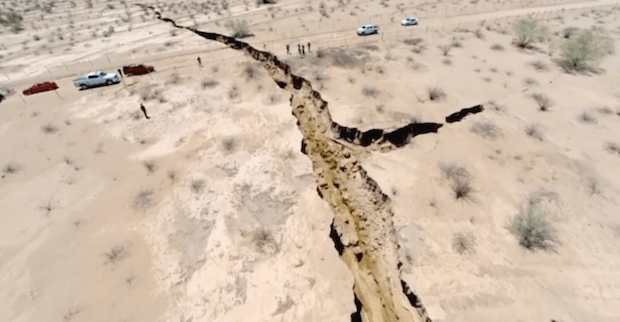
A giant crack in the earth mysteriously appeared last week in a remote agricultural region near Hermosillo, in the Mexican state of Sonora.

Scant reports about the mile-long crack, which is 26 feet deep and 15 feet wide, are being posted this week, with no concrete explanation regarding the cause.

The online newspaper Terra reports that among the theories “is a rearrangement in the underground water tables and ground movement due to an earthquake on August 10” in the Sea of Cortez (Gulf of California) between Guaymas on the mainland and Baja California Sur.

Humberto Romero, who owns the property, said the crack has widened since it first appeared on August 13.

Zocalo.com reports, “According to a group of geologists, the earth opened up by an increased groundwater flow as a result of rains in recent days.”

Sky News reports that farmers, before the crack appeared, had erected a levee to collect rainwater, and that the levee developed a leak that created an underground stream.

The crack has blocked access from Highway 126 to the coast. The area is mostly uninhabited, six miles from the nearest town.

There were no reports of injuries or fatalities, and an investigation is underway to determine the precise cause of the crack.

[readon1 url="http://www.grindtv.com/outdoor/outposts/post/mysterious-crack-appears-earth-mexico/"]Source:www.grindtv.com[/readon1]

Jack White cancels tour in Mexico after keyboardist Isaiah 'Ikey' Owens dies

Jack White-Keyboardist-1A publicist for Jack White says the rocker is canceling his remaining tour dates in Mexico after the death of his band's keyboard player Isaiah "Ikey" Owens.

The statement said Owens, 38, died Tuesday morning in Mexico. Owens was from Long Beach, California, but had recently moved to Nashville, Tennessee, to perform with White's band.

The band was scheduled to perform in Guadalajara on Tuesday and Monterrey on Wednesday.

Owens also played in other bands, including Mars Volta and Free Moral Agents.

"We will all miss you Ikey," the band said in a statement. "You were and are an incredible artist."

[readon1 url="http://www.foxnews.com/entertainment/2014/10/15/jack-white-cancels-tour-in-mexico-after-keyboardist-isaiah-ikey-owens-dies/"]Source:www.foxnews.com[/readon1]

The Mexican Fairy Tale World of The Book of Life

film5-570x300
THE BOOK OF LIFESuck it, Disney.

Racists, if they pay attention, will hate the animated film The Book of Life, which somehow stuffs a love triangle and a story about self-identity into a cosmology shaped heavily by the mythology of Mexico's Day of the Dead.

Early on, as we're introduced to the magical city of San Angel, we're treated to a bit of proud and declarative orienteering that's very different from what we usually hear in El Norte—namely that San Angel sits at the center of Mexico, which is an even bigger deal when you consider that Mexico already sits at "the center of the universe" itself.

That kind of unabashed statement means there's no mistaking what you're about to watch: a fairy tale completely disinterested in the usual tropes of a genre perfected by the Disney machine—stories about troubled Northern European ladies and the dashing Northern European lords who save them.

Death, unsurprisingly, looms over the film's three main characters: Manolo the reluctant bullfighter (voiced by Diego Luna), Joaquin the cocky soldier (Channing Tatum), and Maria the scholarly, willful, kung fu-trained anti-princess (Zoe Saldana). But that weight's also been balanced by a surprising amount of lightness and whimsy—thanks to some of the most stunning animation and set design you'll ever see. (As if a kids' movie produced by Guillermo del Toro wouldn't look beautiful.)

Also, Ice Cube plays god. There's that, too.

[readon1 url="http://www.portlandmercury.com/portland/mexico-andgt-disney/Content?oid=13816179"]Source:www.portlandmercury.com[/readon1]

Harvard junior who took mom to Mexico can return

LOS REYES LA PAZ, Mexico (AP) — Only hours after the publication of an Associated Press story on his case Tuesday, the U.S. government issued a humanitarian visa enabling the return of a Harvard University student who broke immigration rules by taking his dying mother to Mexico.

Dario Guerrero was born in Mexico and moved with his family to California when he was 2. The Obama administration granted him and hundreds of thousands of other young immigrants a reprieve from deportation two years ago.

But these people can't leave the U.S. without government approval. And Guerrero's mother was dying of cancer.

Desperate to save her, Guerrero took his mother to clinics in Mexico before getting that approval. She died there in August, and he's been stuck since then. The government denied his initial request to return, saying he effectively deported himself by taking his mother across the border before the paperwork was done on his approval request.

Guerrero has been languishing since then at his grandparents' home outside Mexico City, saying he's hoping for another chance to return home to his family in California and complete his studies in Massachusetts.

Hours after the AP explained his story, he got his answer: In a two-page letter to his lawyer, the U.S. Citizenship and Immigration Service said it has conditionally approved a 2-year parole for Guerrero, meaning he can return without fear of deportation.

"He should be back in America in a few days," his attorney Alan Klein told the AP.

Since his mother died in August, the film studies major stayed with his grandparents in a gang-controlled suburb of Mexico City. His effort to get a exemption from the rules was a long shot: Last year, the agency approved only about a third of the humanitarian parole petitions it received.

Agency officials declined to discuss any details of Guerrero's case because it is ongoing. However, spokesman Chris Bentley said earlier Tuesday that "immigration law is complex; anyone considering taking an immigration action needs to clearly understand the potential consequences of that action first."

Guerrero told the AP that he had submitted two requests for fast-tracked permission to leave while his mother's health declined at the family's home in Long Beach, California, and was asked to more fully document his mother's medical condition. He could have tried to plead his case in person, but he left instead before getting an answer.

"My mom had a lot of ups and downs," he said. "The decision to actually leave was made overnight."

Miami-based immigration attorney Ira Kurzban says it's not infrequent for immigrants to lose their legal status by leaving the country without permission. It happens when they go on cruise ships — thinking they haven't really left the U.S. — or take off due to a family emergency. Many discover only later that they can't return, or are barred for entering for as much as 10 years.

"There's no question (Guerrero) didn't follow the rules. The question is what the penalty should be," Kurzban said.

Any immigrants with pending cases need permission to go abroad, which is not difficult to get eventually, if their requests are deemed valid. But those who don't wait for sometimes slow responses are considered to have voluntarily given up their effort to remain in the U.S.

Advocates say it should be easier for immigrants who have lived in the U.S. for many years to get permission to travel. Visas for skilled H-1B temporary workers already allow travel internationally without preapproval, and giving others this freedom would reduce heartbreak and add only minimal administrative work, Kurzban said.

But no such provisions were included in last year's immigration reform bills, and they aren't expected to be included in any executive action President Barack Obama might announce later this year. Kurzban thinks that's because the issue affects a relatively small group, and there are so many other priorities.

When Rocio Meneses Diaz died Aug. 14 at the age of 41 in the central Mexican state of Guanajuato. Guerrero's 16-year-old brother also was by her side. As a U.S.-born citizen, he is allowed to travel freely. Their father, a building contractor in the U.S. illegally, stayed behind with their 9-year-old sister, also a citizen.

Guerrero says he regrets his rash decision most of all because he thinks his mother would have been happier living her final days in Southern California with her husband and children, "but then we still had hope — and if we delayed that treatment any longer because of immigration issues, I don't think I would have been able to forgive myself."

Guerrero's parents had kept his immigration status secret for years. They came clean only when he began taking community-college engineering classes while still in high school, and the Social Security number his parents submitted bounced back.

Before her death, Guerrero's mom opened up about the past and her reasons for leaving Mexico: Her father had been kidnapped twice; her father-in-law and other relatives faced extortion; armed thieves broke into her clothing and jewelry store, holding a knife to her stomach.

Guerrero recorded her stories and her struggle with kidney cancer, hoping to turn it into a documentary back at school.

Instead, he has passed time in a room next to a garage just big enough to fit his twin bed and bureau. A picture of his mother and a single rose hang above the bed. His grandparents rent out the nearest bathroom during weekends for a pop-up street market. Guerrero sees his cousins after they get off work, and "writes poetry and stuff" at night.

Former Harvard lecturer Eoin Cannon, who taught history to Guerrero, was surprised to learn of his student's predicament. Cannon described him as "one of the most thoughtful and creative and original students that I had the pleasure of teaching," and "an exceptional writer." Guerrero tackled homelessness in a student film, and later co-produced "A Dream Deferred," a documentary about other immigrants like himself at Harvard.

"He's as American as anyone I know," Cannon said. "The law needs to sort of recognize that and have a mechanism for accounting for that ... For the law not to be able to handle his kind of case is hurting America."

Guerrero says it's been liberating to have no term-paper deadlines to worry about, but the lack of a routine keeps him edgy. He watches his back when he ventures outside. Crime cartels have moved in, extorting neighborhood businesses. Weeks ago, a relative was mugged and shot in the stomach.

Harvard has been supportive, granting him leave and helping him find sympathetic ears in Washington, including Sen. Dick Durbin, an Illinois Democrat. But when asked what's hardest about being stuck in Mexico, he loses his bravado and his voice drops to a whisper: "That I don't have a mom anymore."

[readon1 url="http://news.yahoo.com/harvard-junior-took-dying-mom-mexico-now-stuck-180131320.html"]Source:news.yahoo.com[/readon1]

What Made Mexico’s Most Mysterious Beach?

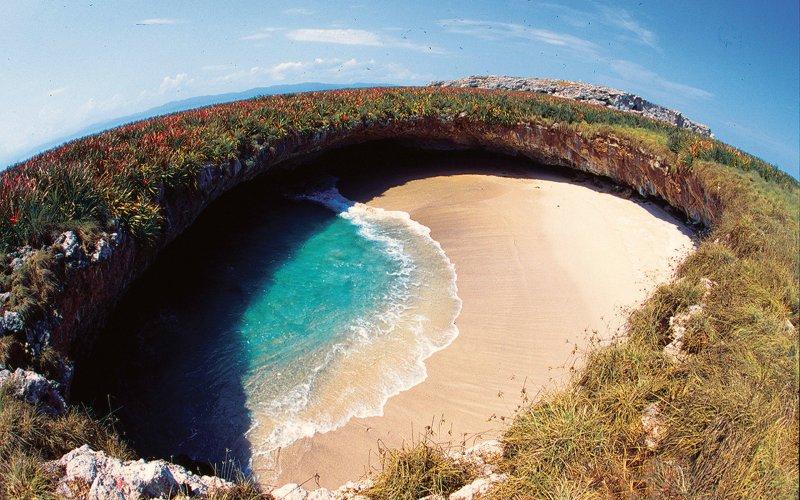
1413279915648.cachedThere’s an islet off the Pacific coast of Mexico with a pristine beach drilled into its central core like the hole of a donut. This hidden Eden continues to baffle geologists with its oculus of volcanic stone.
It’s sunset in the pre-Columbian wilds of Nayarit. The jays silence their song as night falls. The jaguars lurk nearby. Smoke rises above the canopy as gentle chanting rumbles across the jungle floor. The Huichol—ancient dwellers of Mexico’s Pacific coast—burn flowers and seeds in honor of their gods. They sing songs and recite prayers in order to maintain the holy balance of nature between Father Sun and Mother Ocean.

“For thousands of years the Huichol have performed these sacred rituals,” explains Enrique Alejos, the cultural concierge at the Four Seasons Punta Mita. “The masculine deities of light and the female goddesses of the dark work in unison through dutiful tribute in order to protect the precarious lives of the indigenous people.” And the gods’ Olympus, if you will, is a small couplet of islands just beyond the luxury hotel, where the sun rejoins the sea after its daily journey across the clouds.

Uninhabited by humans since its explosive inception over five million years ago, the volcanic Marieta Islands symbolized the tangible union of sea and sky to the god-fearing Huichol. But when modern-day conservationists surveyed the offshore rocks they discovered something even more ethereal lurking within.

At the center of Isla Redonda was a quirk of nature seen only on the pages of a fantasy novel—a sandy beach carved into the rounded core of the island like the hole of donut. Although completely invisible from the shoreline, a bird's eye view reveals lapping crystal waters and an empty dune like dazzling colors at the end of kaleidoscope's funnel.

“You see a lot of bizarre geological formations from limestone, like in the Thailand, but with volcanic rocks it’s much more surprising to find a beach encased in stone like this,” posits Dr. Benjamin Black, a volcanologist and post-doctoral scholar at the University of California, Berkley. “Volcanic rocks tell a continuing story from the moment they form after an eruption. This tale of erosion—the slow grind of the sea against the rocks—is particularly unique.”

But there’s an added twist. Before the area fell under the jurisdiction of Mexico’s national park system, the lonely islands were used as a bombing test site by country’s military.

For years the government detonated explosives on the Marietas, far away from human contact, until a movement led by Jacques Cousteau encouraged the navy to cease their testing in order to protect the surrounding reefs and delicate breeding grounds of the migrating humpback whales.

“Tests measuring cosmogenic nuclides can determine exactly how the hidden beach was formed, but regardless of whether or not it began with erosion or a bomb, it’s nonetheless a perplexing geological oddity,” continues Black, who likens the rocky terrain to a cherry bon bon.

“Erosion always proceeds from the top down, so the interior of the island, before it was hollowed out, was likely made up of what we call ‘explosive’ rocks—fragments belched up by volcanic activity. These stones erode more quickly, while the island’s thick exterior shell is made of a substance that is less susceptible to decay.”

According to Black’s initial assessment, a few thousand years remain before erosion eats away at the delicate structure, turning the hidden beach into a crescent-moon cove.

“We are more concerned, however, of the impact that excessive visits might cause to the eco-system,” says Marc Murphy, the managing director of Riviera Nayarit’s convention and visitor’s bureau, who has witnessed a massive spike in tourism to the Marietas after a photo of the hidden Eden went viral approximately two years ago. “Excessive tourism could lead to a more rapid destruction of this sanctuary.”

Alejos and his colleagues at the Four Seasons count an average of 300 people a day who cross the shallow straight beyond the hotel to explore the now-famous ring of hidden peach sand.

Although tourists aren’t allowed to climb on the islands, according to the national park laws, they gain access to the secreted beach within through a submarine tunnel that is naturally chiseled into the island’s side. When the tides recede, the top of the long passageway emerges just above the waves allowing the right amount of space to swim through James Bond-style, sans scuba gear.

Once inside, there’s plenty of space to sunbathe or relax under the crown of arcing shrubs and rocks high above. From deep within, looking up at the tropical sky is like staring through the dome of some kind of earthen cathedral.

“The natural formation of an oculus in nature is extremely rare,” adds Black, who cites the prominence of rounded portals across many ancient cultures—“the Romans, for example, built oculi in their temples as a representation of their gods’ watchful eyes.”

“Here you have two mysterious openings, one from the sea and one to the sky,” Black continues, “no wonder the Huichol believed it was the holy place where Father Sun and Mother Ocean united.”

[readon1 url="http://www.thedailybeast.com/articles/2014/10/14/what-made-mexico-s-most-mysterious-beach.html"]Source:www.thedailybeast.com[/readon1]

Whale sharks at Mexico’s Holbox Island attract tourists

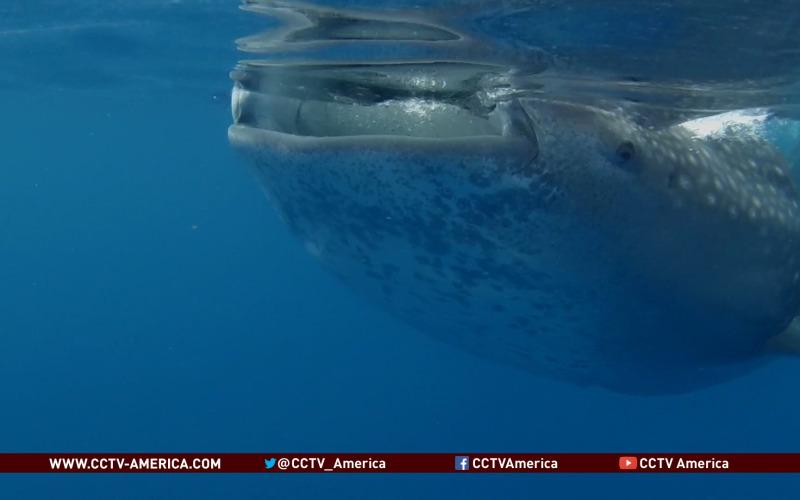
AN-SHOW-41-D-BLOCK.Still004-800x500The biggest fish in the world swim in the waters around Holbox, Mexico ever year. Though they are called whale sharks, have 300 teeth, and can grow to 18 meters long, they are completely harmless. Their presence has also brought hordes of eco-tourists that hope to swim with these massive, beautiful creatures.
A group of normally solitary sharks come together to feed on the mass of plankton and other tiny organisms that gathers near the tiny Mexican island every year from July to September.

With the influx of tourists who hope to see these creatures, comes the desire to develop the area and build big resorts, much like those found 100 miles south in Cancun. So far, small eco-hotels have serviced the island’s needs, but since the island has become whale shark central, the number of those hotels has doubled.

Investors have recently unveiled plans for a major resort, which locals say could damage the fragile environment. Holbox is part of a national park, meaning much of the island is reserved for birds and mangroves. However Mexico’s laws do not prevent a Cancun style development on the island. The resort has currently been put on hold by Mexico’s environmental authorities.

The island is safe for now, and the views are incredible. Correspondent John Holman reports from the tip of Mexico’s Yucatan Peninsula.

[readon1 url="http://www.cctv-america.com/2014/10/10/whale-sharks-at-mexicos-holbox-island-attract-tourists"]Source:www.cctv-america.com[/readon1]

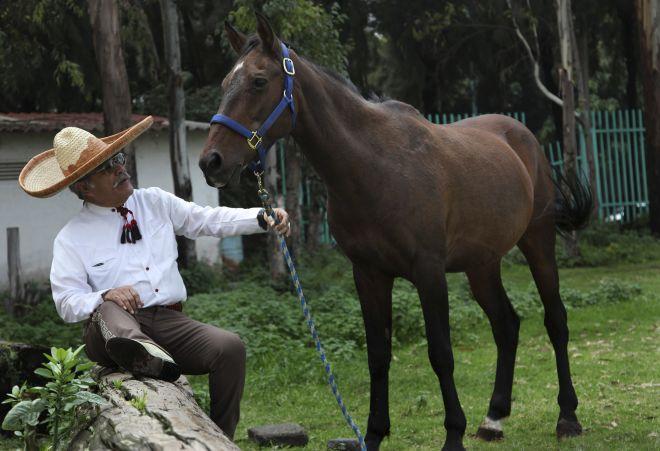
Mexico celebrates the animal at the heart of its cowboy tradition, the 'charrería' horse

Mexico Charro Culture 12Since their arrival aboard Spanish ships in the 1500s, horses have been part of the story of the New World. In Mexico, there is perhaps no better representative of the country's combined cultures and history than the horse trained for "charrería," the Mexican version of a rodeo.

Horses competing in this embellished display of skills once necessary to ranch life, must be agile, well-tempered and intelligent — able to execute the commands of their charros, the horsemen whose traditional riding suits and wide-brimmed sombreros are part of the cultural iconography.

For the charro, his horse is as inseparable from himself as it is from the history of Mexico.

"We were conquered by horses, we gained our independence with horses, we made our Revolution with horses and we continue to love horses," said Daniel Flores Yeverino.

The 73-year-old Flores, who began learning the skills of a charro when he was about 5 years old, continues to participate in charrería tournaments, where riders compete in riding and roping events. His father and grandfather were charros, and his children and grandchildren have followed the path.

Just as charrería is a combination of Old World and New World influences, the horse preferred by charros is itself a combined breed: the American Quarter Horse, which descends from European thoroughbreds and the "native" horses derived from the various stocks brought by the Conquistadors. Other breeds such as Arabians are viewed as too high-strung for the demands of charrería.

Horses begin training for charrería at age 3. In Mexico, the career of charro horse runs about a dozen years — 15 if it is cared for particularly well, Flores said. Calm demeanor and strength are prized over lightning speed.

Horses can live another 20 years after their charrería days. Unfortunate horses may end their lives pulling rickety garbage carts through city streets or, at worst, a slaughterhouse. The lucky ones find second careers in breeding or as therapy horses.

One former charro horse, Pollito, works with therapist Columba Ortega to help children who suffer from emotional trauma or physical disabilities.

"The charro really loved this horse, but he didn't want it to fall into the wrong hands," Ortega said. "He didn't want anyone to mistreat it."

Saddling up with Mexico's famed cowboys

[readon1 url="http://latino.foxnews.com/latino/lifestyle/slideshow/2014/10/14/saddling-up-with-mexico-famed-cowboys/?intcmp=related#slide=11"]Source:www.latino.foxnews.com[/readon1]

Why Mexico is turning into a vineyard hub

BOAT-WINERY.Still003-800x500Mexico has long been the king of the agave drinks, tequila and mezcal, and it is often joked that the one phrase you need to know in Spanish before visiting the country is, “Cerveza, por favor (Beer, please).” However, in the Guadalupe Valley of Baja, a different adult beverage is making waves–Wine. 70-miles south of San Diego and called the Napa Valley South by some, the valley is quickly becoming one of the most popular vineyard regions in the world.
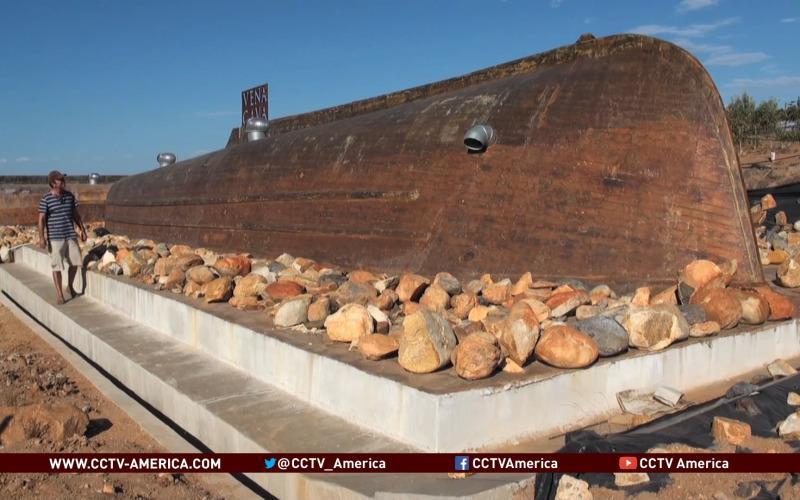
In this region, a unique and fascinating vineyard called Vena Cava has sprouted up from the imagination of a British couple and a Mexican architect. Phil and Eileen Gregory met by chance while sailing in the West Indies and have been together ever since. As a tribute to that, their friend Alejandro D’Acosto decided, when Phil asked him to help him build a winery, to have the grapes grow inside boats, just like the Gregory’s love. Today, their strange, upside-down marina produces wine enjoyed by world leaders at the 2012 G-20 summit in Mexico.

As CCTV America’s correspondent Mike Kirsch tells us in this report, the winery began as an extension of the Gregory’s estate, La Villa del Valle, and has taken off since then. What was just producing enough for Phil and Eileen to share with their friends and guests, the 70 acres of land now produce 30,000 bottles every year.

The estate has grown alongside the winery. San Pellegrino named the restaurant on the property, Corazon de Tierre, one of the 50 best restaurants in Latin America. Also on the estate are a Mediterranean spa and a bed and breakfast.Despite wine’s long history in Mexico, Spanish invaders brought it with them in the 16th century, it was not popular with Mexico’s middle class until as recently as the 1980s. Today, more than 100 wineries dot the landscape on the “ruta del vino,” the wine route, in Northwestern Mexico.

[readon1 url="http://www.cctv-america.com/2014/10/05/mexico-turning-into-a-vineyard-hub"]Source:www.cctv-america.com[/readon1]

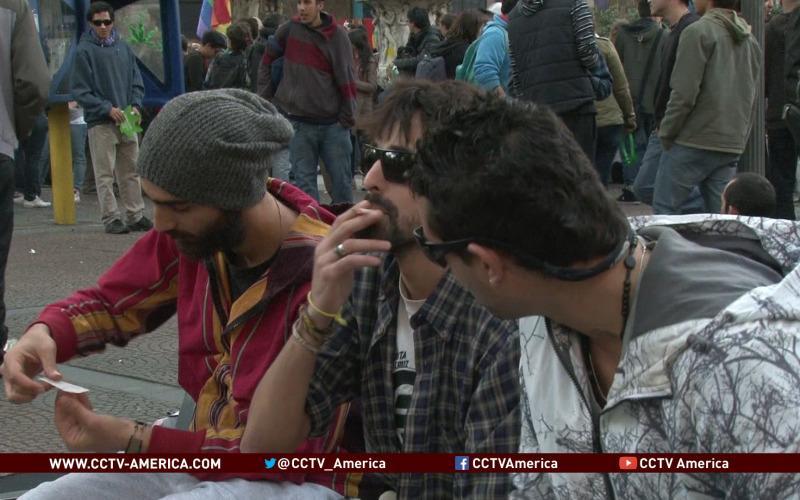
Mexico’s Jalisco state to legalize medical marijuana

LAURA-CARLSEN1-800x500The widespread legalization of marijuana is no longer the unlikely proposition it once seemed to be. While Uruguay has initiated the debate, other countries and states are starting to follow suit.
One state in Mexico is currently in the process of legalizing the medical use of marijuana. The state of Jalisco, which borders the Pacific Ocean in the central part of the country, will most likely have a plan in place by the end of the year.

U.S. and Mexico come together to clean up trash along Tijuana River

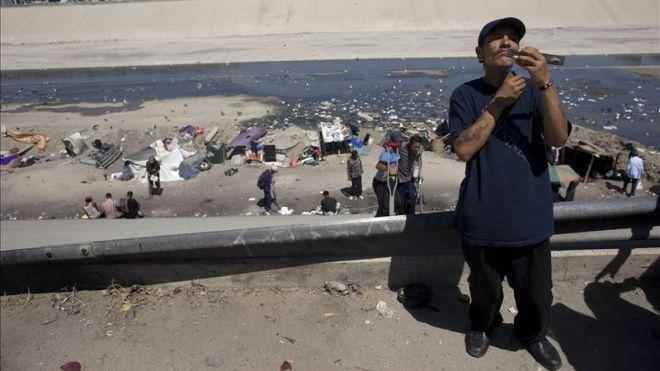
 Tijuana pick upDozens of volunteers turned out this weekend for a binational event aimed at cleaning up the Tijuana River Valley between the United States and Mexico.

The volunteers removed trash and other items to prevent them from being washed into the Pacific Ocean.

Saturday's clean-up was organized by the Tijuana River Action Network, or TRAN, whose members include about a dozen grassroots and community organizations from the Mexican border city of Tijuana and San Diego.

There has been "unprecedented" cooperation among groups on both sides of the border in developing strategies to deal with pollution, 4 Walls International executive director Steven Wright said.

"The organizations involved in this have a great commitment and we are working united for the common good," Wright told Efe.

A mural made by young people and volunteers from recycled materials was inaugurated after the event at the Friendship Park on the U.S.-Mexico border.

"We believe the arts have the power to unite the community and make some changes in the world," Rob Tobin, of the A Reason to Survive organization, said.

The U.S. Environmental Protection Administration, or EPA, said last week that it was creating a fund totaling more than $8 million to pay for environmental projects that benefit both the United States and Mexico.

[readon1 url="http://latino.foxnews.com/latino/lifestyle/2014/10/13/us-mexican-environmentalists-come-together-to-clean-up-trash-along-tijuana-river/"]Source:latino.foxnews.com[/readon1]

world-online-communications-WOComm
cellstime-vallarta
Lake Medical Group Medical Servcies
cellstime-vallarta
ada-sailing-banner-ad-250x250
ada-sailing-charters