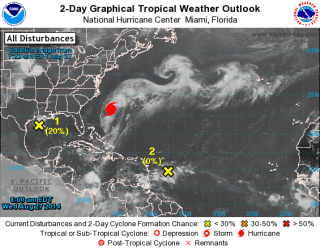
AGUAAs Hurricane Cristobal aims for Bermuda, hurricane forecasters are watching two other possible trouble spots in tropical waters.

At 8 a.m. EDT, the National Hurricane Center said shower and thunderstorm activity associated with a weak low pressure area over the northwestern Gulf of Mexico has increased, and some additional development is possible before it moves inland over southern Texas and northern Mexico. An Air Force Reserve Hurricane Hunter plane is scheduled to investigate later on Wednesday, if necessary, according to the Hurricane Center.

The chance of development within the next two to five days was listed at 20 percent.

A tropical wave located about 600 miles east of the Lesser Antilles was given even less of a chance of development as it produces disorganized cloudiness and showers.

There was no chance of development within the next 48 hours, and 10 percent chance within the next five days.

"However, environmental conditions could become favorable for some development by early next week in the western Caribbean Sea or southern Gulf of Mexico," the Hurricane Center said.

The Hurricane Center also said a tropical wave is forecast to move off the west coast of Africa on Friday, and "conditions appear favorable for some development thereafter while the system moves westward at 10 to 15 mph across the eastern Atlantic. Forecasters said there is a 40 percent chance of development within the next five days.

[readon1 url="http://www.bradenton.com/2014/08/27/5324320_hurricane-watch-forecasters-tracking.html?rh=1"]Source:www.bradenton.com[/readon1]


MATwo lost Maya cities recently uncovered by an international team of scientists in Mexico could help decipher the story of the empire's early capitals to the south that were eventually abandoned for large cities on the Yucatan peninsula.

Both discoveries are in the southeastern part of the Gulf state of Campeche on the Yucatan peninsula.

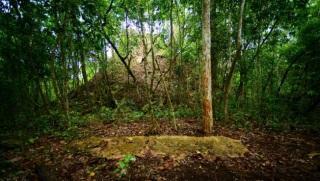
The first site, known as Tamchen, features plazas, palatial buildings and a 45-foot-tall (15-meter-tall) pyramid. Its name means "deep well," and comes from a collection of underground water tanks.

The second, Lagunita, was discovered 40 years ago by American researcher Eric von Euw. His sketches of various monuments, including a facade resembling the jaws of a reptile, were never published, and the location of the site was lost. Scientists used his drawings and photographs to relocate the ruins.

"It's amazing that we're still discovering new sites," said Lisa Lucero, a University of Illinois anthropologist, noting that the cities are located in an area once considered a buffer or a no-man's land. "We're starting to fill in the gaps ... and they're more densely populated with centers and farmsteads than we thought."

The buildings indicated Lagunita was a place of regional importance, according to a statement by Mexico's National Institute for Anthropology and History. The discoveries will help archaeologists study the cultural and political histories of an area known as the Central Lowlands of the Maya region, now a remote part of the Calakmul Biosphere Reserve, the statement says.

Researchers have found unique characteristics in the lost cities, including the shapes of some altars and the forms of hieroglyphics.

Lucero said the new findings could better connect the Maya centers of the south, such as Palenque in Chiapas and Tikal in Guatemala, which were abandoned, with the later northern centers such as Chichen Itza.

MA MA1

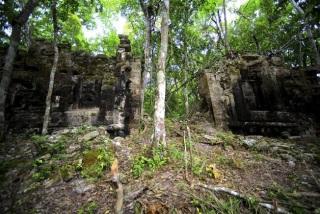
In this Oct. 28, 2013 image released by Mexico's National Institute of Anthropology and History (INAH) on Monday Aug. 25, 2014, ruins belonging to an ancient Maya city called Lagunita stand out in the jungle on a remote location in the southern state of Campeche, Mexico. Archaeologists in Mexico have made public the existence of an ancient Maya city in the state of Campeche and have rediscovered this forest-covered site that first was stumbled upon in the 1970s. The INAH says the discoveries will help archaeologists study the cultural and political histories of an area known as the Central Lowlands of the Maya region. Photo: Mauricio Marat, AP


[readon1 url="http://www.sfgate.com/news/world/article/2-new-Maya-civilization-centers-studied-in-Mexico-5713841.php"]Source:www.sfgate.com[/readon1]


DSC 0382

People's Government congratulates Juan Lamas on his career engaged with the boost to art and contribute to the development of the nayaritas artists, Mrs Ana Lilia López de Sandoval, President of the Desarrollo Integral de la Familia (DIF) State system, attended the pictorial exhibition called "Tetralamas", performed by Juan Avila Lamas, on the occasion of his 47 career anniversary.

"Is holds a magna exhibition which takes place once a year, in which one of the most important characters in the arts allows us to appreciate his artistic talent," said the head of the DIF Nayarit, to greet the Nayarit artist Juan Lamas, who presented more than 80 pieces in different techniques.

"Tetralamas" of its author Juan Avila Lamas - who throughout his career has made more than 20 solo exhibitions (3 of them in the United States), and participated in more than 300 collective (17 international) - will be displayed in five rooms and corridors of the center of contemporary art Emilia Ortiz for two months and a half.

Within the framework of this event, where also attended the general director of the DIF Nayarit, Zaira Rivera Veliz, the proprietor of the CECAN, Catalina Ruiz Ruiz, and responsible for the center of contemporary art Emilia Ortiz, Gabriela Gutiérrez Ortiz, was held the delivery of the awards to those who participated in the courses organized by the Government of the people with the support of CONACULTA.

"Graduates who were offered for the first time free of charge, consisted in the formation of cultural companies and contemporary art, which gave the participants of historical and theoretical tools to understand, from different methodological approaches, development and features of the latest art of our country", concluded Mrs Ana Lilia López de Sandoval.

DSC 0311

nayaritlogo222


 e labarra large

A mining project linked to the expansion of the Mexican Gulf port of Veracruz threatens North America's largest jungle preserve, which would be the source of 2 million cubic meters of basalt rock.

Grassroots organizations and scientists, especially those from the National Autonomous University of Mexico, or UNAM, are warning that the project will harm the Los Tuxtlas Biosphere Reserve, which is already plagued by poachers and traffickers of exotic wildlife.

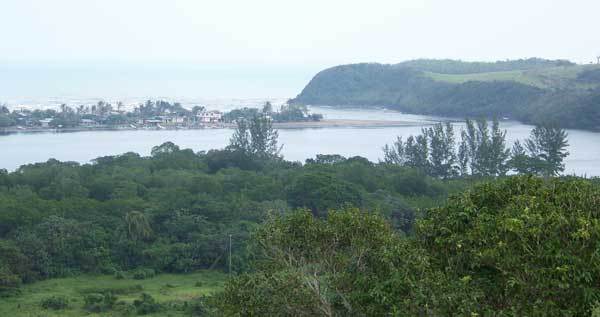
The mining project would be developed in Balzapote, a village outside San Andres Tuxtla, one of eight cities located in the reserve, which was created in 1998 and sprawls over more than 155,000 hectares (382,716 acres).

Residents and grassroots organizations are gathering signatures for an online petition to stop the project, which requires the dynamiting of a mountainous area that is home to a large number of animal and plant species.

Some residents, however, said on condition of anonymity that they supported the project because it would provide an economic boost to the area and were willing to sell land for basalt mining.

The project threatens 565 species of birds, 140 species of mammals, 117 species of reptiles and about 100 species of butterflies that call the area home, Colectivo la Roca representative Lili Rosas told Efe.

[readon1 url="http://latino.foxnews.com/latino/news/2014/08/25/mining-project-threatens-mexican-nature-preserve/"]Source:latino.foxnews.com[/readon1]


 PuntaElCustodio4

Amazed by the scenery of exuberant palm trees and the beautiful Pacific, numerous people have decided to establish Punta El Custodio as their new home.

Many wonderful villas and condominiums of low ecological impact have been constructed in this destination, ready to receive those fortunate lovers of sand, sun and sea that have chosen to visit this gem of the Riviera Nayarit.

This is also an ideal destination for nature lovers, as Punta El Custodio is home to one of the state’s most important turtle sanctuaries, which receives dozens of volunteers from a variety of countries every year.

They come here to watch over the nesting marine turtles and protect their eggs.

All along the town’s eight-kilometer (five-mile) beach it is common to see jovial young people running into the waves with their boogie boards, or people tranquilly enjoying the rays of the sun as they contemplate the ocean.

If you are looking for a family-friendly environment, apt for young children to play in calm waters, head over to Las Tortugas beach.

Farther north you will come upon a small peninsula formed by whimsical rock formations known as Isla Bonita. And across from Punta El Custodio is Platanitos Beach, a fishing village where you can dine on delicious dishes prepared in thatched-roof huts lining the seashore.

[readon1 url="http://www.rivieranayarit.com/punta_el_custodio13"]Source:www.rivieranayarit.com[/readon


Karen-Jacobson-3

Puerto Vallarta star athlete, Karen Jacobson gains international attention as CBS sports announces it will broadcast the newly recognized Ultimate SUP Showdown taking place mid-August on the surfer-favorite beaches of Waikiki.

Duly noted, the Puerto Vallarta Board of Tourism financially sponsors and supports the professional surfer during the World Cup Circuit in Hawaii and California. The young athlete proudly represents Puerto Vallarta and our country in a series of international tournaments attended solely by the best in world rankings.

Born and raised in Puerto Vallarta, Karen began her career in the world of surf at age 13 and soon conquered the highest ranks in Stand Up Paddle Surf. The current Mexico National Champion has quickly positioned herself within the top ten SUP Surfers worldwide.

The Ultimate Sup Showdown is the first major SUP race to be broadcast on National television. The invite-only race has ranked our own Karen Jacobson amongst the top 16 female SUP surfers competing for the grand $25K prize and the opportunity to be named world's best.

National broadcasting of one of the most competitive invitational SUP events of the summer is set to air in late September. Viewers may also follow Karen's rise to the top online www.facebook.com/puertovallarta

For more information visit Puerto Vallarta Blog

Karen Jacobson Puerto Vallarta

puertvallartalog


eeThe Mexico City International Airport is ready to deal with any possible cases of Ebola, a disease that is spreading through West Africa, aviation officials said. Posters informing travelers about the disease and the measures to take to avoid spreading it are being put up around the airport. The airport ‘is fully complying with the regulations established by the World Health Organisation (WHO) and the International Civil Aviation Organisation (ICAO) regarding the outbreak’, airport management said in a statement.

The facility is ready to operate under the Airport Security Plan if officials suspect a traveller is infected with the disease, general manager Alfonso Sarabia de la Garza said. ‘We are prepared for the early detection of suspicious cases so we can take the necessary corrective actions, but the health ministry has confirmed that the virus is not present in Mexico at this time,’ Sarabia de la Garza said. (Read: Ebola Virus Travel Tips — Precautions you should take)

The chances of the Ebola virus reaching Mexico are small, but health officials are ready to deal with any threat, Sarabia de la Garza said. Over the past four months, 2,127 people have been infected with the virus in West Africa, of whom 1,145 have died. Ebola, which is transmitted through direct contact with blood or body fluids of infected people or animals, causes serious haemorrhaging and can have a 90 percent mortality rate.

This is the first time that the disease has been identified and an epidemic has been confirmed in West Africa, with outbreaks to date having been confined to Central Africa.


 photoEscudo San Sebastian del Oeste SSANSEBASTIANDELOESTE Home Header 950x434

Just the name of the town made us want to go there: located at the foot of the Western Sierra Madre in West Jalisco, San Sebastian del Oeste ('Saint Sebastian of the West) made us dream about the wild west and its cowboys. In reality, this Magical Town was an important mining city with over 20,000 residents, a number that is currently reduced to just 600. San Sebastian del Oeste preserves the memories of good times pasts, the charms of tranquility, and many natural destinations for the curious adventurer.


dontmissDon't Miss, San Sebastian del Oeste, Jalisco

Visit this old mining city that once had up to 20,000 inhabitants, which still maintains its grandeur albeit with a tranquil charm of a village that is currently home to just 600 people. Its cobbled streets take you done tree-lined paths flanked by mossy walls and vines, all hypnotically set to music by the sound of a stream passing underneath old stone bridges. Discover its most intimate secrets, such as the factory that produces handicrafts to be exported for foreign consumption, or the distillery that produces mezcal from the “agave lechuguilla” plant.

Essentials

Going up Cerro de la Bufa for a fantastic sunset.
Taking a morning walk around San Sebastian. If you like trekking, don't miss the paths that head out to Mascota and La Bufa.
Taking a look at the small parish church and its curiosities.
Strolling about the main plaza in the afternoon when the fog rolls in and the town takes on a different character.

Festivities

  • The San Sebastian (Saint Sebastian) Fiesta on January 20th with traditional rodeos and more.
  • The Virgen de la Asuncion (Our Lady of the Assumption) Fiesta on August 15th featuring processions.
  • The Independence Celebrations are the year's most important featuring fiestas on September 15th and a parade on the 16th.
  • The Christmas Celebrations are colorful and feature pastorelas ('Shepherd's Plays') among other events.
howtoHow to Get There
San Sebastian del Oeste, Jalisco

From Puerto Vallarta take Highway 70 north and exit at Las Palmas using the dirt road until getting to San Sebastian. The trip takes about an hour and a half.
Distance chart: To Mexico City - 824 km; To Guadalajara - 272 km; To Puerto Vallarta - 60 km
Itinerary, San Sebastian del Oeste, Jalisco
int

Friday

4:00 p.m. From the sea to the mountains

Puerto Vallarta's heat behind us, the bus gained 1,480 meters in altitude and left us at La Estancia, a town where we caught a taxi to San Sebastian del Oeste. There the pavement ended and we began our way along cobbled streets flanked by trees and beautiful white houses. They led us to a flat earthen plaza with a central gazebo and archways all around. We couldn't help but think we were in a movie: the old adobe houses and signs looked like they were straight out of a Clint Eastwood film.

7:00 p.m. The gourmet wild west

As fog rolled into town, Fortin de San Sebastian lit its streetlamps. A restaurant right on the main square, we ordered huitlacoche guisado con cebolla (stewed corn fungus and onions) and finished it off with chocorraiz, or hot chocolate with raicilla (homemade liquor similar to tequila), a San Sebastian specialty. To make sure we slept well we had a peach, rompope (eggnog-like drink), and cinnamon desert. Although the town is warm during the day, at night the temperature drops significantly so we headed to our cabin and chimney at La Galerita.

Saturday

8:00 a.m. Waking up in Eden

In the morning we went out for a walk and were astonished by the place's beauty: just a couple of blocks from downtown San Sebastian del Oeste and we were immersed in a garden of fragrant trees, walls covered in mosses, fences cloaked in vines, and the sound of a nearby creek passing under old stone bridges.

Just in front of Hacienda Esperanza de la Galera we found a garden full of fruit trees open to visitors. There we picked guavas, lemons, plantains, oranges, peaches, and faisanes, a type of blackberry.

12:00 noon. A peaceful walk about town

In the afternoon we continued walking about town, going up and down cobbled streets, discovering alleyways, and admiring the stately homes where the mines' owners once resided. In an old house next to the Presidencia Municipal we saw a sign for the Doña Conchita Encarnacion Museum, exhibiting objects that were collected by Doña Conchita, who belonged to an important mining family. Her daughter, Maria Guadalupe Berm, takes care of the place.

At night through town, it's safe and you can inquire at the Office of Tourism information. They can bring you to the cemetery. Encarnacion told us the story of San Sebastian through [his/her] family and a world of curious objects.

We crossed the plaza and found Raul Bernal sitting on his porch. He makes cigars using Nayarit tobacco and his main customers are Americans and Canadians that come from Puerto Vallarta to stock up on the sweet-smelling products.

Later we visited Quinta Mary where they sew and produce 100%-organic highland coffee. From there we went to La Hacienda Jalisco, which is currently a museum and hotel. It's famous for doing away with electricity and having served as a getaway for a long list of celebrities. We went back to town and sat down at La Fonda Eva Maria where they served us a mixed plate with stuffed chiles, gorditas (fried stuffed corncakes), machaca (a type of dried beef or pork), and agua de nanche (nance juice).

5:00 p.m. A sea of clouds

After our late lunch we decided to go to Cerro de la Bufa where they say you can get a view of the ocean when it's clear out. As we had time to spare we stopped at Real Alto where you'll find the area's oldest church dating back to the 17th century. There we met Señora Mariana who offered us cajeta, a local type of fruit jam; we bought quince, tecojote, and apple jams in addition to ponche, a fruit liqueur that we absolutely loved.

We got to the top of Cerro de la Bufa as the sun lit the surrounding clouds a bright red and took a stroll along a path there. The setting was the most magical on our entire trip and we stayed until it was dark out, snacking on cajeta and drinking ponche.

Sunday

8:00 a.m. Exploring the surroundings

We left early for Los Reyes, a community just 13 kilometers from San Sebastian del Oeste following a difficult and sinuous road. Along the way we stopped at Santiago de Los Pinos to have breakfast. There we delighted in tortas de picadillo (ground beef sandwiches), ranchero-cheese quesadillas, and a delicious type of local tuber known as tacuacines.

We got to Los Reyes using a road that crosses a stone bridge. There we met up with Olga, who would be our guide at the cave of basaltic prisms. We got to the ruins of La Hacienda La Victoria and continued using a creekside trail. The vegetation along the way is exuberant and tropical with plantain and avocado trees all over the place; we also saw old entrances to mines and the remains of walls, chimneys, and water channels.

11:00 a.m. Finding 'La Escondida'

We crossed a hanging bridge and found the cave known as La Escondida ('The Hidden One'), a cavern with basaltic prisms crowded together like teeth. Olga picked fruits from a passionflower vine, similar to the sweet granadilla, which she gave us to try. We took a different trail back and saw Los Reyes from far away. To our surprise the town is built on a rock foundation out of which a waterfall flows, creating a postcard-perfect scene unlike any we had ever seen.

We feel asleep on the way back and woke at the entrance to San Sebastian del Oeste: in the two hours that it took to get back we didn't feel a single bump along the rough dirt road. Thus, we recommend that you don't try to go to Los Reyes or Cerro de la Bufa in your car, it's best to go on a tour.

4:00 p.m. A farewell meal

We ate at Los Arcos de Sol where the specialty is beef tongue in an almond sauce. For dessert we had tamales colados (a regional type of sweet tamale). On the recommendation of the locals we stopped at El Parral on the way out. There, master raicilla-maker Eduardo Sanchez showed us how he produces his homemade liquor, distilling it from agave.

If you want to try the town's best fruits visit in June.

San Sebastian del Oeste, Jalisco Pueblo Magico

[readon1 url="http://www.visitmexico.com/en/magicaltowns/pacific-region/san-sebastian-del-oeste"]Source:www.visitmexico.com[/readon1]


 

10247498 245079415694168 6886604735445130864 n

Puerto Vallarta, Mexico -- (ReleaseWire) -- 08/15/2014 -- Mexico Assisted Living provides a new opportunity for senior people, who live in America and Canada to spend assisted living vacation in the appealing beach resort, Puerto Vallarta in Mexico. They will be able to combine pleasure with beneficial activities to improve their health at very low costs.

More and more people from Canada and America choose Puerto Vallarta as a Mexican top destination for assisted living vacation or retirement due to a variety of reasons. This place is recognized as especially appealing dental and medical tourism destination because of the professional doctors and dentists and affordable medical procedures that cost about a tenth part of what they would have to pay for the same treatment in their own countries.

This explains the fact that people prefer to live in Mexico after their retirement, when they will no longer worry about the expenses they will pay for caregivers and doctors. Mexico Assisted Living Company offers people a room with all the needed amenities in it and appropriate care for just $3000 per month. The rooms feature an ocean panorama and provide patients with the opportunity to combine natural and medical treatment, taking advantage of sun and various water activities.

The customers can choose between various low cost procedures offered at Mexico Assisted Living. A massage that continues for an hour costs less than $20, while having a lunch in a great restaurant, located on the very beach, will cost people between 10 and 20 dollars.

Mexico Assisted Living Company offers 24 hour care, nurses and a doctor, who live on site and are always available to help, two swimming pools, air conditioning, direct access to the beach, and much more. Patients are able to enjoy TV with more than 60 channels and Internet in their rooms and use their medical alert necklaces at any time to signalize for emergency, resting assured that the caregivers will immediately respond. There are wheelchairs available in the whole community and the activity director schedules daily activities for people.

Adults may meet in the large common areas to share their stories and make new friends, or just to interact with other patients and to not feel alone. The company offers also transportation to different medical or dental appointments. Three meals per day are included and the customers can visit Tiki Bar.

The company offers several services to meet the needs of tourists. These are vacation stay, senior vacations, where senior people can choose to stay for a period of a few days to a month or so, and assisted living with high quality care and low prices, with all inclusive and where doctors and nurses are reachable 24 hours a day.

All, who are interested in this opportunity, can visit Mexico Assisted Living for more information.

About Mexico Assisted Living Company
Mexico Assisted Living Company is the first international community that offers assisted living vacations and 24/7 nurses and doctors at very low rates compared to those offered in the USA and Canada.

For more information on this press release visit: Release Wire

Media Relations Contact
Joshua Ketner
Telephone: 206 855 3239
Email: Click to Email Joshua Ketner
Web: http://mexicoassistedliving.com/


perfect weather puerto vallarta 53dacd8c7b45b


While it’s true that Puerto Vallarta is considered one of the most beautiful places on the face of the earth, our climate, considered "tropically perfect" helps draw millions of visitors to our tourist destination.

We enjoy over 300 days of sunshine annually with comfortable overnight temperatures in Puerto Vallarta.

During the winter, the temperature is at its best. At night, the thermometer can drop to 15 ° C, and during the day the maximum temperature is between 20 ° to 25 ° C, which is Ideal for any tour or activity.

The reason we enjoy such a perfect climate year round is because Puerto Vallarta is geographically sheltered by the lush Banderas Bay and we are actually located on the same latitude as Hawaii, and have similar weather.

So what are some of the best ways to take advantage of the great Puerto Vallarta weather?
• Water Activities
• Fishing
• Whale Watching
• Banderas Bay water tours
• Beaches
• Land Activities
• Golf
• Shopping
• Restaurants

Vallarta has a population of approximately 300,000 friendly residents and covers a little more than 1,200 square kilometers. Puerto Vallarta has something in store for all tastes and ages so come and enjoy it!

Learn more about Puerto Vallarta's tours and activities.


 fashion firstladies 6756527 ver1.0 640 480

Sex can sell everything from cars to yogurt, but the biggest test may be whether it can sell the idea of a first lady as just another woman — one who is not beholden to outdated or outsized expectations about the cultural traditions she should represent, the message she should deliver from her bully pulpit or how much of her own person she’s allowed to be. That question is the simmering subtext of a new profile of the first lady of Mexico, Angelica Rivera de Peña.

Rivera appears on the July cover of Marie Claire — the Mexico and Latin America edition — looking unabashedly sexy, alongside her daughter Sofia Castro, who smolders as well.

Mother and daughter are dressed in complementary styles — ruffled white blouses and two different riffs on a tuxedo jacket. The first lady wears leggings and her daughter wears an extremely abbreviated skirt. In each case, the aesthetic is all about legs — long, long legs. On the inside pages, Rivera is pictured wearing a swashbuckling leather trenchcoat, a strapless evening gown that dips low in the back and a liquid skirt that slips open to reveal her legs.

From the vantage point of the United States, where some folks still disapprovingly hyperventilate over bare arms in the East Wing, the attire is startling. It’s just not what first ladies wear – certainly not one who is posing for formal pictures in the presidential residence.

Rivera’s fashion is striking, but its her poses that are the most provocative. It’s the body language that is sexy, not the sheath dress or the jumpsuit. On the magazine’s cover, her posture is particularly declarative. Rivera has taken a wide-legged stance with one hand on her hip and her gaze directed straight at the viewer. Next to her, Castro has her head tilted upward as she gives the viewer a sidelong glance that is both haughty and confident. Inside, Rivera is photographed casting a seductive look over the back of her shoulder, standing on an elegant staircase with her hip cocked to the side and stroking her bare legs as she locks the viewer in her gaze.

By comparison, when U.S. first ladies have been photographed for glossy magazines, the mood of the images has been regal, maternal and occasionally even business-like. Sex appeal is not an intentional part of the package.

AP0907060300051363117381

Here’s a look at a few magazines that have turned the first lady into a cover model.
Michelle Obama is featured in the April 2013 issue of Vogue. It is her second time appearing on the magazine's cover. Annie Leibovitz/Vogue

And while the traditions are different in every country, these photographs of Rivera are unusual — a point that Marie Claire editor-in-chief Ariadne Grant proudly trumpets in an editor’s note.

The theme of the 22-page story is a new definition of “Girl Power.” And Rivera is quoted saying that power lies in both personal independence and female kinship. “I always ask myself why am I considered ‘The First Lady’, when in fact, all women in this country should be considered first ladies,” Rivera says. “It is a title that was established a long time ago, that is why I say that all women are important and all Mexican women are ‘a first lady.’ ”

1270525 789730967733208 8375496425950452068 o

The subject of power is tricky territory for a fashion magazine. Such glossies, after all, are fueled by an industry that plays fast and loose with female autonomy, regularly creating templates and installing signposts in the culture that quietly guide public thinking on what it means to be a modern woman. The feminine ideal that fashion magazines depict — in perfect, air-brushed detail — is an impossible one to emulate. And the ubiquity of those flawless images can be dispiriting and oppressive.

But on at least one point, fashion magazines make a strong argument. There is a certain degree of personal power to be gained by reveling in one’s looks. Not fretting about them or wallowing in self-doubt, but in owning them and celebrating them — if one chooses — with a hippie chic wardrobe that brings delight or lipstick, high heels and a body-conscious dress that’s all dangerous curves and clean lines. Fashion is a way of announcing one’s presence on individual terms.

But for women in the public eye, that very personal pleasure can become tortured. Their body becomes communal property. It is judged — criticized and ogled. In Hollywood, for example, a woman’s body can become her burden — something that has to be maintained within brutal parameters. For starlets, there is a constant slog of cardio and denial. The resulting physique isn’t so much a triumph as it is resignation.

For an American woman who steps into the role of first lady, the body must be denied. It can’t be too exposed. Too strong. Too overtly sexual. Beauty is acceptable — even expected. But that most intimate expression of self — sex appeal, sexuality — is off limits. It goes unmentioned. Where it might have been obvious, or at least visible prior to her new role, it tends to evaporate within the bounds of life as first lady.

Other countries have been somewhat more forgiving. In France, for instance, the media referenced former first lady Valerie Trierweiler’s “sexy decollete” with approval, not reproach. But Rivera seems to go a step or two farther than a neckline. Her sex appeal is holistic: studiously planned, styled, professionally lit and air-brushed. And the result is a portfolio of pictures in which she seems exceptionally alive — wholly visible.

In the Marie Claire interview, Rivera is asked about her style and — as one might expect — talks about her devotion to Mexican designers. “I have had the honor to represent Mexican women when I accompany my husband to other countries, and have been dressed with Mexican designs that have achieved international recognition,” Rivera says. “I am convinced that our designers are the best of the best, and so far the only brands that dress me are Mexican, given they are very capable of interpreting the current Mexican woman style, which is a woman who likes to look good, dress up, is cultured, who works, and who cares for her children and family.”

As first lady, traveling with her husband, her body is a conveyance of national pride, economic exigency and political correctness. That’s what first ladies do. Their body is a three-dimensional, patriotic billboard. And indeed, Rivera wears clothes by Mexican designers Macarios Jimenez and Benito Santos.

But for this particular story, Rivera is photographed in mostly international brands: Dolce & Gabbana, Tom Ford, Hermes, Tory Burch and Louis Vuitton among others. The most notable Mexican brand is Alejandro Carlin. According to a spokesman for the magazine, the editors supplied the wardrobe for the shoot. But Rivera was in charge of what she did or did not wear. And in her politically incorrect choices, Rivera pushed the constraints of first lady-dom a little farther away.

Rivera indulged her personal fashion tastes. Unleashed her sex appeal. And was just a woman.

Perhaps other first ladies can find a way to do the same.

First ladies are regal and patriotic, but should they be sexy?

[readon1 url="http://www.washingtonpost.com/blogs/style-blog/wp/2014/06/26/first-ladies-are-regal-maternal-and-patriotic-should-they-be-sexy-too/"]Source:www.washingtonpost.com[/readon1]

imrs Robin Givhan is a fashion critic and writer, covering fashion as a business, as a cultural institution and as pure pleasure.


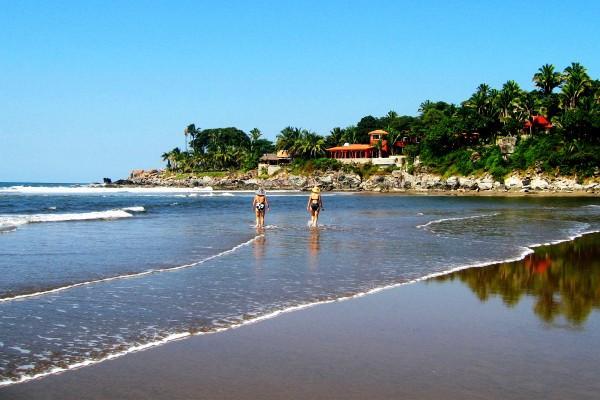
PlayadelBeso-20Hidden, beautiful and secluded... perfect spot for an adventurous romance in Riviera Nayarit. Maybe that's the reason why locals also know Freideras beach as "Playa del Beso", which translates kissing beach. Getting there is as romantic as it can get: you have to walk holding hands trough a rough path in the jungle that starts at the very south end of Los Ayala Beach, no need to say that is it the only way apart from arriving by boat.
A small rustic restaurant offering traditional mexican sea food can be found and nothing else. Are you ready to kiss?