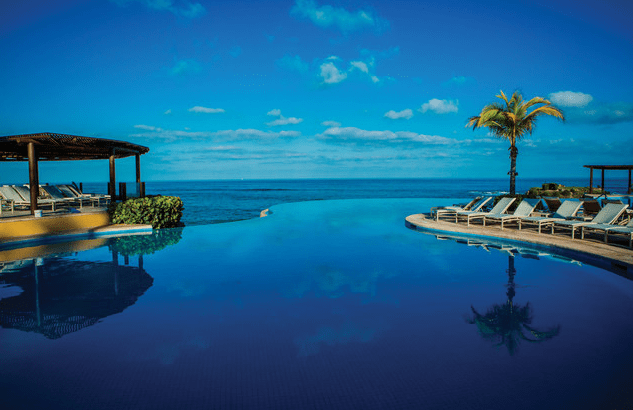
images 2Located directly to the west of the Puerto Vallarta Hotel Zone you will find Fluvial Vallarta, a large residential and light commercial development that is bringing smart urban planning and green space conservation to Puerto Vallarta.

Offering paved and flat streets, underground wiring, and controlled building codes, Fluvial Vallarta is a Mexican contemporary neighborhood. Beautifully landscaped parks, running trails and proximity to major shopping areas as well as some of the best private schools and hospitals in Puerto Vallarta are just some of the reasons that Fluvial has become a popular choice for professionals and families.

Intelligent community planning means that Fluvial has all the services that residents find desirable like restaurants, small retailers, pharmacies and services but that nightclub and industrial permits will not be granted in the neighborhood. The one large retailer in the area, Costco, is popular with residents from all over Banderas Bay and has a well-landscaped parking area, shaded by large trees and flowering plants, in keeping with Fluvial Vallarta design.

With an ideal location halfway between the Vallarta Marina district and the charming downtown and Old Town of Puerto Vallarta, public beach access less than one kilometer away and direct access to the city’s two major thoroughfares, Francisco Villa and Francisco Medina avenues, its easy to understand why the area is so popular with local doctors, lawyers and entrepreneurs as well as foreign residents


islas

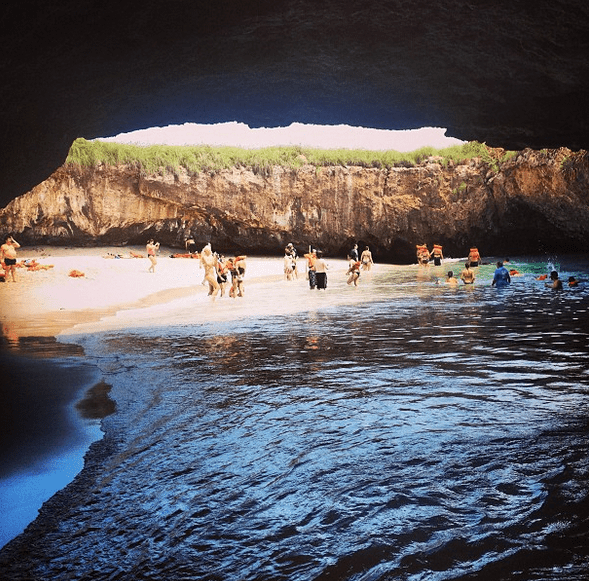
The Marietas Islands continue to cause a stir around the world: this time Condé Nast Traveler included them in two posts on exceptional places. One was an entire article dedicated to the islands and the other placed them among the 13 most curious destinations in Mexico.

Condé Nast Traveler, one of the world’s top tourism publications, spotlighted the Riviera Nayarit’s Marietas Islands twice. There’s no doubt these beautiful islets continue to cause a stir around the world.

The iconic islands of Nayarit were designated as one of the world’s “101 Incredible Places” in an article written by Matías Callone published on July 30th, titled “An Inland Beach (Hidden Within an Island) in Mexico.”

“We’re not talking the typical beach or an expanse of sand facing the sea in the ‘traditional sense,’” writes the author. “In this blog we like to showcase places that are a bit more original and unusual. In Mexico or more precisely, in the Marietas Islands, there’s another hidden beach that’s quite lovely. It’s a place that’s accessible, but only after some adventure.”

In the same section of the “101 Incredible Places” there’s another article called “13 Unusual Spots in Mexico You Might Not Know Even Existed.” The Playa Escondida, or Hidden Beach, appears in second place on this list of amazing places.

“This beach (called the Hidden Beach) is one of the attractions that lure hundreds of visitors each week to the Marietas Islands. These small, uninhabited but protected islets are located across the coast of Punta de Mita, in Nayarit, and can only be reached via authorized tours,” he describes.

Condé Nast Traveler has a vast collection of different formats and regions where it distributes its content, including magazines printed in Europe and the Americas, websites and social media platforms; together, they add up to hundreds of thousands of impressions for the Riviera Nayarit.

The two articles have caught the attention of other domestic and international media representatives, including Mexico’s opinion leader Carmen Aristegui, who replicated the information.

It’s important to note what Condé Nast writes about the Marietas Islands regarding its status as a Biosphere Reserve by recommending visitors access them only via authorized tours.


 6543234w r620x349

The fourth edition of the reality singing competition "La Voz...Mexico" (The Voice...Mexico) will be all about giving more support to the contestants, the producer of the hit show said.

The contestants who really stand out will be given support from the beginning of the program, rather than waiting until one of them wins a contest before beginning to think about his or her career, Miguel Fox told a press conference here.

"In order to discover big stars, we have to back them from the beginning," he said, acknowledging that previous winners have failed to achieve the expected success.

Fox presented this Thursday the fourth edition of the Mexican adaptation of the wildly successful Dutch show "The Voice," introducing the "coaches" for the new season: Ricky Martin, Laura Pausini, Yuri and Julion Alvarez.

In "La Voz", the coaches sit with their backs to whomever is singing and if they like the voice, they press a button to turn their seat around to choose the contestant for their team.

But as a novelty this year, the auditions will be even more blindfolded, since after pressing the button, the artists won't see the contestants, since they will be covered by a curtain until they confirm their identities to the coaches in question.

"We're doing that because in the first seasons we were always saying that what's important is the voice and not what you look like," Fox said about the program, which will air starting Sept. 7 on the Televisa network.

[readon1 url="http://latino.foxnews.com/latino/entertainment/2014/08/08/contestants-on-la-vozmexico-to-get-more-support/"]Source:latino.foxnews.com[/readon1]


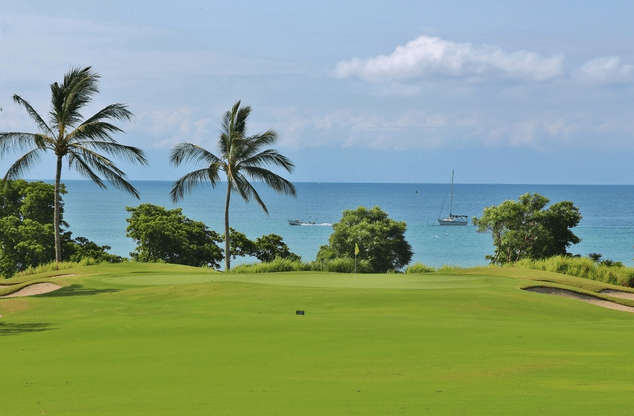
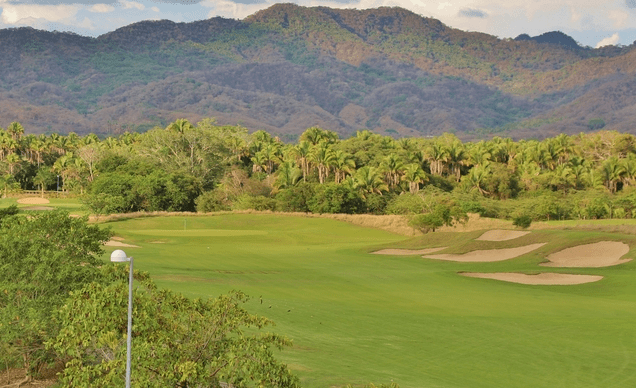
Vallarta Nayarit golf

In a private meeting with state authorities and representatives from the tourism industry it was confirmed that approximately 100 thousand seats have been recovered and the upturn in number of international arrivals exceeded that of other beach destinations in the country, thanks to the current joint campaign.

The head of the Mexico Tourism Board (MTB), Rodolfo López Negrete, announced the figures and percentages that prove the Vallarta-Nayarit joint campaign was a success during 2013-2014 and endorsed its validity for 2014-2015.

The above took place on Thursday, August 7, during a private meeting with the tourism secretaries of Nayarit and Jalisco, Rodrigo Pérez and Enrique Ramos, respectively, along with the Joint Committee and representatives from the hotel and tourism industries of Puerto Vallarta and the Riviera Nayarit.

López Negrete assured those present that the joining of these two destinations was right on the mark and expressed gratitude for the multilateral collaboration that took place in order to obtain said results. He also urged those present to “continue with this program, which was born of a long term vision. It must be maintained, investing the necessary resources for years to come.”

After the crisis of 2008, over 400 thousand seats were lost, which gravely impacted the destination. Rodolfo López confirmed 100 thousand of these had been recovered; this is a goal the destinations expect to repeat or even exceed by June of 2015.

One of the most relevant pieces of information offered was the upturn in foreign visitors arriving at the Vallarta-Nayarit International Airport during the first semester of 2014, reaching 18.5%, thus exceeding the numbers for Los Cabos and Cancún-Riviera Maya.

The average occupancy rate for Puerto Vallarta and the Riviera Nayarit is around 67% during the year, with upticks that exceed 90% during the best seasons. “This is a very healthy occupancy rate on a general level for a destination and all of the hotels and businesses are benefiting from this; that’s what it’s all about: the generation of collective well being and additional jobs,” added López Negrete.

The initial investment operating this joint campaign for 2013-2014 was over $11 million USD, with an injection of capital from the Federation, the states, the destinations and the partners involved. Besides this budgeted resource, the MTB applied an additional $8 million USD to extend its impact across the Americas and Europe.


 ukalavryta1

Suez-Max tanker United Kalavryta is anchored off the Texas coast (this is NOT the Texas coast pictured!) Photo Credit: Marine Management Services, M.C.

The future of a mystery tanker in the Gulf of Mexico remains clouded as international powers wrangle over ownership of the cargo. The name of the vessel is no secret–it’s the United Kalavryta, Greek-owned, and sailing under the flag of the Marshall Islands. “The vessel is carrying a cargo of oil from Turkey that arrived from Kurdistan,” says Keith Letourneau, Partner at Houston’s Blank Rome, LLP law firm. Ownership of the oil is the subject of international maritime debate. “It’s quite a quandary for Kurdistan at the moment, because they’ve got to make a decision as to what’s going to happen with that cargo, otherwise, they’re going to continue to accrue charter hire aboard the vessel offshore,” he says.

The impasse has created problems for other, associated contractors, like AET Offshore Services, which had been engaged to off load the oil and bring it ashore in Houston. AET got a judge to release them from their contract. “We’re not going to be conducting any lightering operations until the situation is fully resolved,” says Darrell Wilson, AET spokesman. “The Kurdish regional government wants to off-load the cargo, but the Oil Ministry of the Republic of Iraq has convinced the contracted lightering company not to off-load it and carry it ashore for fear of handling stolen goods,” Letourneau said. AET spokesman Darrell Wilson confirmed their stance, “We’re not going to be conducting any lightering operations in regards to disputed oil, until the situation is fully resolved.”

So what happens now?
“What happens to the cargo remains to be seen,” says Letourneau. “That cargo has to be off loaded, and somebody has to accept the responsibility for off loading it, and I’m not sure who that’s going to be at the moment,” he says. There are two main triggers, political and economic.

The United Kalavryta is a Suez-Max class vessel, with a double hull, a 175,000 ton deadweight capacity, and a displacement of over 201,000 tons. At 274-meters, she’s as long as three football fields, and her beam–or width–is more than half the length of a football field. She’s massive. She won’t fit in most US ports, including the Port of Houston.
That’s where AET Services fit in. With lightering vessels of smaller capacities, between 70- and 80,000 tons, its job would have been to transfer the United Kalavryta’s oil and ferry it to a terminal on the Houston Ship Channel. But with the tanker in a deadlock between Iraq and Kurdstan’s claims, all she can do is accrue daily charter billing for her owners, Marine Management Services, M.C., a Greek company.

“The market right now, prices are going up, so the rates are quite high,” says Letourneau. “She’s definitely in the $1,000’s of dollars per day, no question about it,” he says. If the money committed to contract the vessel runs out before this is resolved, Letourneau says Kurdistan would have no other alternatives for the tanker. “The vessel, at that juncture, likely would terminate the charter for breach of contract, and opt to transit to a different destination,” he says.

But who would take the oil? Certainly no one willing to run afoul of the Republic of Iraq. “As far as where it might go, I’m not really certain,” Letourneau says. There are alternatives, obviously, world wide, where that vessel could go–Venezuela comes to mind. But that country “is an outlier when it comes to dealing with the oil industry, generally, so I would be be surprised if that would happen,” he says.

For now, she’s riding the swells in the Gulf.

Kurdistan is putting forward an argument that the alleged-conversion of the oil did not occur aboard a vessel in navigable waters or in connection with traditional maritime activity. “Conversion” is a legal synonym for “theft.” “The alleged conversion would have taken place in Kurdistan when the oil was transported via pipeline to Turkey,” says Letourneau. He believes the cargo in the holds of the United Kalavryta has more worth as political capital, and that the Kurds have more at stake than a tanker-ful of crude. “I would imagine that Kurdistan is holding out prospects of possibly waiting until they can declare their own independence” from Iraq, Letourneau says. “Absent an agreement between these two parties, sooner or later that cargo is going to have to move ashore somewhere, and there, a legal battle will ensue over the cargo’s handling and ownership,” he says.

This isn’t going to be solved this weekend. “I think this is going to take a while,” Letourneau says.

[readon1 url=">http://news92fm.com/465315/mystery-ship-remains-in-gulf-of-mexico/"]Source:news92fm.com[/readon1]


limpieza

This Saturday, August 9th, Platanitos will join Punta de de Mita, La Peñita de Jaltemba and Bucerías; there has already been contact with San Blas and Guayabitos, both of which will eventually join in the cleanup effort.

The monthly beach cleanup of the destination’s beach communities will take place this Saturday, August 9th, with the full support of the Riviera Nayarit Convention and Visitors Bureau (CVB).

Platanitos and the Playa Platanitos Ecológico association will join Punta de Mita, Bucerías and La Peñita de Jaltemba in maintaining the beaches to benefit all of the people of Nayarit.

The Riviera Nayarit CVB provides the groups integrated by this civil society with the necessary cleaning materials like gloves, bags, t-shirts and water.

First contact has also been made with the San Pancho and Sayulita communities, and collaboration has begun with Guayabitos and San Blas; all have responded positively to the invitation to become part of the group. The objective is for all the picturesque towns of the Riviera Nayarit to be a part of this movement.

If you are with of a group that wishes to join in our community cleanups or are interested in putting together a group of volunteers in your community, please don’t hesitate to contact us at 2 97 25 16 ext. 108.

Times and meeting points.

In Punta de Mita the crews will gather at the Punta de Mita Sports Center at 7 a.m. The contact is the Punta de Mita Foundation at (329) 291 50 53 or (322) 779 29 06.

In Bucerías there are two meeting points with 8 a.m. schedules, as the Volunteer and Friends of Bucerías Group has joined in as well. The first group will meet on Allende street in front of Decameron and the second will be on Benito Juarez street in front of Karen’s place. The contact number is (322) 140 68 81.

The crew at Platanitos will meet at 9 a.m. at the Fiesta del Mar restaurant right at the entrance to the beach. The contact is Lulú Santana from the Playa Platanitos Ecológico association at (327) 105 69 47.

Finally, at La Peñita de Jaltemba the meeting is at 6 p.m. at the boardwalk with the Asociación Grano de Arena, contact number (322) 116 94 40.


10530915  10152609446209228 6029321871367427865 n

Our beloved Los Muertos Pier itself is a beautiful curved structure featuring a large walkway for the public to enjoy impressive panoramic views of Banderas Bay. Most recently, CNN has highlighted the city´s newest gem as one of the 10 most beautiful Piers in the world.

Read Full Feature: http://www.cnn.com/2014/07/28/travel/most-beautiful-piers/index.html

Once a simple dock utilized to transport the crew of the cult classic “The Night of the Iguana” (US, 1964), cult classic directed by John Huston and starring Richard Burton and Elizabeth Taylor, the film is largely credited for placing Puerto Vallarta as a tourist destination in the world´s eye.

The new Pier designed by architect Jose de Jesus Torres Vega re-opened in 2013 as part of the city´s renovation program; it stretches out to 328 meters long. Besides aesthetic appeal featuring a large spiral resembling a sail wrapped in the wind, the Los Muertos Pier serves a very practical function for visitors and residents as a docking point for boats and tours leading to south shore beaches such as Yelapa, Majahuitas and Las Animas.

The pier also provides an economic boost to the Olas Altas and Los Muertos beach areas, already popular with tourists and locals due to its large array of restaurants, bars, beach clubs and water sports.

So get your cameras ready and pay a visit to the new Los Muertos Pier for one of the most beautiful views and photo ops in Puerto Vallarta.

visitevallartalogo


xphotoNUEVO VALLARTA, Riviera Nayarit, Mexico -- I've experienced three very different trips to Puerto Vallarta over the past 20 years -- a cruise stop, a romantic trip with my wife, and as a young single guy traveling with family.

But I'd never made it across the Ameca River.

Turns out, Nayarit is not only in a whole different state. The Nayarit Riviera delivers a whole different state of mind.

The modern and lavish resort areas of Nuevo Vallarta and Punta Mita mix well with authentic Mexican towns to give tourists a chance to interact with the locals without the worry of safety concerns that plague other parts of the country.
My four-day golf bonanza (with a full travel day on either end) felt like a whirlwind, but any golfer looking to sample the region's best courses could easily pull it off

Riviera Nayarit: Day 1
The first day at a massive resort such as the luxurious Grand Luxxe Nuevo Vallarta can feel a bit overwhelming, especially when Mother Nature throws a curveball.

Rain spoiled the morning round at Nayar Golf Course after 11 holes. That made a layout already in transition even more chaotic.
The original Jim Lipe layout is a solid resort track that's been hacked up often. The opening of a new par 3 at no. 18 and the tweaking of a few other holes earlier this year completed its most recent transformation by the design team of Jack Nicklaus.
My only complaint would be that all the changes over the years have left the golf experience feeling disjointed. Long cart rides are required to find the first tee and driving range.

The forecaddie who accompanies every group will help you get pointed in the right direction.
We waited out the rain with an overstuffed lunch at the El Tigre Golf Club at Paradise Village, home to the area's largest clubhouse and pro shop. What the residential course lacked in views and character, it made up for in shot-making demands around lakes and more than 100 bunkers. The combination of five par 3s and five par 5s provides plenty of chances to score.

The side show at the end of the round -- caged tigers next to the 17th tee -- adds something unique to tell your friends.
Back at the Grand Luxxe, a fine Mexican buffet, featuring live music, capped our night.

Riviera Nayarit: Day 2
Two surprises made this the best day of the trip.
A scheduled visit to Flamingos Golf came with little hype. What a little gem. The region's oldest course, dating to 1970, still has that classic feel, although a recent update has upgraded the clubhouse's outdoor bar/restaurant and course. The fairways snake through narrow jungle passages. Natural lagoons filled with crocs temptingly add risk-taking elements. If I were a paying gringo, this might be my local hangout because it's more affordable.

Sayulita -- an eclectic town of bars, surfers and art galleries -- turned out to be even more of a hidden treasure. Lunch at Don Pedro's, an open-air restaurant/bar on the beach, served up the perfect combination of bikinis, cervezas and fresh fish tacos. A stroll through cobblestone streets led to a plaza where the Huichol Indians display their colorful art and handmade jewelry.

Home for the night wasn't far away, the new beachfront all-inclusive Iberostar Playa Mita. The first Iberostar on Mexico's Pacific Ocean will eventually become a popular vacation spot for families and golfers once word gets out. I've stayed at several Iberostar Resorts near Cancun, and the food never disappoints. Tsuba, the resort's Japanese steakhouse, combined good eats with entertaining chefs tossing around rice, knives and eggs. Nobody got hurt -- except that poor dessert bar.

Riviera Nayarit: Day 3
Course architect Greg Norman, who is designing another course near Nayar, made a surprise visit to the Litibu Golf Club the next morning just after my threesome teed off. Too bad we didn't meet. I would have praised him for creating such an interesting course. Some cool inland holes cut from virgin jungle complement the three holes showcasing ocean views. It's the best Norman design I've played to date, getting the nod over the old Doonbeg Golf Club (now the Trump International Golf Links & Hotel Ireland), the Norman Course at Red Sky Golf Club in Colorado, and others.

Normally moving hotels would get me grumbling again, but when it's the Four Seasons Resort Punta Mita, there's no complaining. I spent the afternoon in full vacation mode at the spa with the signature Punta Mita Massage. The massage began and ended with sniffs of tequila, an interesting twist. I finally got time after my treatment to enjoy what most tourists come for, a walk along the beach and a relaxing swim in the ocean.

Pre-dinner drinks set the stage for an interactive appetizer at Aramara, cooking delicious strips of beef on hot stones right at the table. Much of the fresh seafood on the menu comes right from Sayulita. More tequila -- of the drinking, not sniffing, variety -- was served for a nightcap at a tequila and mezcal tasting.

Riviera Nayarit: Day 4
The grand finale -- the reason I made the trip -- didn't disappoint. I'd walk from Michigan to Mexico to play the Pacifico Course and Bahia Course at Punta Mita Golf Club again. Between these two Jack Nicklaus designs, 14 holes snuggle up to the ocean. Playing the famous 3b hole on Pacifico turned out to be anticlimactic when I rinsed two tee shots in the ocean trying to hit the natural island green 190 yards away. Remembering the magical setting, however, takes the sting out of recalling the two poor swings.

Lunch at the open-air Tale of the Whale restaurant provided a welcome break in the shade between rounds. Nicklaus designed Bahia, which is several years older than Pacifico, to give the members a tougher challenge. His greens border on the insane, although they're fun, too.

The day ended at Bahia by Richard Sandoval, a beachfront restaurant back at the resort. The seafood risotto was, without a doubt, the best dish of the week. Maybe the sun's spectacular descent below the horizon over the Pacific Ocean and the sand between my toes made it taste just a little bit better. Not a bad way to say goodbye.

   
  sa4
  6
  sa1
  sa3
   

jason-scott-deegan

By Jason Scott Deegan,
Senior Staff Writer

[readon1 url="http://www.worldgolf.com/features/golf-trip-riviera-nayarit-mexico-14691.htm"]Source:www.worldgolf.com[/readon1]


 

 doctor SS

For anyone considering full or part-time living in Mexico, health care is an obvious concern. Luckily for those of us in the Banderas Bay area, finding quality health care is simple and easy.

HealthCare Resources Puerto Vallarta, headed by Pamela Thompson-Webb, American expat and long-time Vallarta resident, is an excellent resource for foreigners and residents of the Banderas Bay area to find the perfect medical professional for their needs.

The referral service arranges medical tourism, with surgical packages for plastic surgery, bariatric surgery, orthopedic surgery and eye surgery. Prices for these types of procedures are approximately 30 to 40% less than in the US and Canada.

Pamela Thompson-Webb is also an expert on helping visitors or foreign residents find healthcare insurance options that best suit their needs and budget, which is particularly important for snowbirds in Puerto Vallarta and Riviera Nayarit as neither U.S. Medicare nor Canadian Government coverage are accepted in Mexico.

HealthCare Resources Puerto Vallarta also offers special services like speaking engagements featuring Pamela Thompson-Webb to discuss common healthcare concerns in Banderas Bay, foot health clinics, breast health clinics and many other special events.

HealthCare Resources Puerto Vallarta can handle finding your perfect doctor and let you enjoy the luxury of zero wait lists and very affordable health care in Mexico.

[readon1 url="http://sarahelengornrealestate.com/blog/2014/july/healthcare-resources-puerto-vallarta/"]Source:sarahelengornrealestate.com[/readon1]


Sin títuloBy the end of 2014, 37% of the 114-miles Jala-Badeba road will be completed; this will allow the more than 10 thousand vehicles that transit that road during weekends, holiday weekends and vacation time to drive close to the Riviera Nayarit.

During an interview with the Riviera Nayarit Convention and Visitors Bureau (CVB), Jesus Miramontes, the director of the Center for the Secretariat of Communications and Transportations in Nayarit (SCT by its acronym in Spanish), indicated that the nearly 34 miles of road between Jala-Compostela will be finished by the end of the year, making it ready for use by summer 2015 at the latest.

This progress represents 37% of the 114 miles that make up the new Jala-Banderas Bay highway, which is already 88% in use. Authorities project the highway will be completely finished by 2017 at an estimated cost of 14 billion Mexican pesos. It will benefit the more than 20 villages that surround it.

Jesus Miramontes calculates there will be between five and six thousand vehicles using the highway on ordinary days, but during weekends, holidays and vacation time there will be over 10 thousand cars on the road, which will reduce travel time by 50% once it’s completed.

Two of the seven stretches of road that make up the Jala-Compostela highway are already completed; it must be noted the National Institute of Anthropology and History (INAH, by its acronym in Spanish) is getting ready to open up 100% of the remaining road, as there were archaeological finds in the area that needed to be explored.

Construction on the Compostela 2 junction at kilometer 54 is ready to begin so it can join up with the Compostela 1 junction. In order to connect them a fork needs to be built; construction crews are waiting for the rainy season to end so they can quickly get to work. If the weather doesn’t cooperate, completion would be extended no later than the first semester of 2015.

In the future, the road will connect to the Guadalajara-Tepic highway, the Tepic bypass and, eventually, with the Tepic-San Blas highway, bringing the state’s beach destinations closer to the domestic tourist, which will no doubt boosy tourism to the region.


huesped

The new Restaurantes Vallarta Nayarit app joins the popular Vallarta Nayarit and Guest-Huésped apps to further enhance both domestic and international tourists’ vacations in Puerto Vallarta and the Riviera Nayarit. 

Tech plays a huge role in society in this 21st century of ours, and that obviously includes Tourism. This is why the Riviera Nayarit and Puerto Vallarta are eager to enhance their visitors’ experiences through apps for smartphones and tablets.

The Vallarta Nayarit app is already in use, created by the Riviera Nayarit Convention and Visitors Bureau (CVB) and the Puerto Vallarta CVB as part of their joint campaign; as is the Guest-Huésped Rivera Nayarit app, created by the Riviera Nayarit CVB.

A third app, Restaurantes Vallarta Nayarit, was recently created by the Puerto Vallarta National Chamber of Restaurants and Food Condiments Industry (Canirac, by its acronym in Spanish).

“We’re trying out different strategies in order to develop the sector, because one of the top things our restaurant owners ask for is exposure. We have a fabulous gastronomic variety and we must continue to look for strategic ways to promote it,” said Ana María Lomelí, General Manager of Canirac Puerto Vallarta.

Today nearly everyone has access to an Internet-ready mobile device or has Wi-Fi available at the click of a button. That’s why it’s so important to move into this territory and take advantage of the benefits technology can offer.

The objective is to bolster the promotion of the region’s gastronomy and the different attractions within Puerto Vallarta and the Riviera Nayarit.

Besides promoting the restaurants in both destinations, the Restaurantes Vallarta Nayarit app also offers space for other types of businesses; it serves as a tour guide and links to the official websites for both destinations.

Among its services, the Vallarta Nayarit app allows users to call to or from Mexico to the United States or Canada, their main markets. The Guest-Huésped Riviera Nayarit app is wholly an interactive guide.

To learn more about these apps—compatible with Android and iOS systems—simply download them and start enjoying their many benefits.


lgbt-rainbow-flag 100375401 m

This market is experiencing an 11% growth in the tourism sector, while the conventional market grows at 3.5%. Within the United States, the annual income of same-sex couples is 20.4% higher than heterosexual couples.

Attention to the Lesbian Gay Bisexual Transgender (LGBT) market is imminent as part of the diversification of the tourism markets for the Riviera Nayarit.

The Riviera Nayarit is a viable destination for this segment thanks to its infrastructure, quality, luxury, the diversity of its coastal towns and its innate warmth and inclusivity towards tourists, which presents an annual growth of 11% versus the traditional segments at 3.5% according to the International Gay Lesbian Travel Association (IGLTA).

They also cited this market spends $600 billion dollars a year in tourism. Within the United States—a natural market for our destination—same-sex couples earn 20.4% more than conventional couples.

Forty-five percent of homosexual couples in the United States travel abroad versus 9 percent of heterosexual couples, plus they travel a minimum of four times a year and spend an average of 30 percent more. They are both trendsetters and brand loyal.

All these numbers justify an eventual growth of this market towards the Riviera Nayarit, especially considering there are already hotels in the area that manage yearly LGBT groups and symbolic weddings.

Case in point: the Hard Rock Hotel. It receives visits from groups such as Atlantis and Olivia, which together brought in more than 1,500 guests from the LGBT segment in the span of two weeks. This hotel has an “Out Now” certification, which indicates hotel staff has been trained to understand and provide the best service to the LGBT market.

In another example, the Iberostar Playa Mita offers same-sex weddings. Various hotels in the area are also open to this market, including the Grand Palladium, Matlali, Occidental Grand, Garza Canela and St Regis, among others.

Chef Betty Vázquez commented that since the ‘50s the historic Port of San Blas has been open to this particular market, which was well-received by the locals to the point that there are now businessmen within this segment who are working in favor of Nayarit.

“There is a large LGBT community in town, all of them accepted and approved. Everyone simply sees them as productive and hard-working members of the community. In light of this, the LGBT community felt comfortable and little by little has stayed in the village, whether seasonally or for the long term,” said Betty Vázquez.


An LGBT Confex was recently held in the area sponsored by the Riviera Nayarit Convention and Visitors Bureau. This event opens the door to a renewed relationship with the destination and with this important market for the region’s tourism.


unm

The presidents of the University of Buenos Aires, or UBA, the National Autonomous University of Mexico, or UNAM, and the University of Sao Paulo, or USP, on Tuesday signed a cooperation agreement governing the recognition of titles, student exchanges and cooperation in finding financing sources.

Alberto Edgardo Barbieri, of the UBA, the UNAM's Jose Narro and Marco Antonio Zago, of the USP, signed the agreement during the 3rd International Meeting of Universia Deans, which wrapped up Tuesday in Rio de Janeiro and was participated in by 1,103 heads of academic institutions in 33 countries.

The letter of intent sets forth the "immediate" formation of an executive commission that will act to define the joint strategies and activities among these three universities, which are the most important educational institutions in Argentina, Brazil and Mexico.

The tripartite agreement is aimed at fostering academic and cultural integration in Latin America and the document states that moving apace down the "Latin American knowledge highway" is something that "cannot be put off."

The three universities committed themselves to strengthening the exchange of students and professors in areas of common interest.

In addition, they agreed to provide mutual recognition of one another's curricula, both in the regular four-year study programs and in post-graduate work, a move that ensures the recognition of degrees and facilitates mobility for students and staff.

In this regard, the three educational institutions will promote the unification of criteria to allow the reciprocal validation of coursework, respecting the specifics of each university.

The three educational centers will also strengthen their links with production sectors and will share resources and experiences in the areas of innovation and information technology.

Meanwhile, Banco Santander president Emilio Botin announced at the conference's closing ceremony that the Spanish bank will invest 700 million euros ($945 million) in its program to support Ibero-American universities between 2015 and 2018.

Forty percent of that total will go to fund scholarships and facilitate national and international mobility for students, thus creating 40,000 new places for students and professors.

Thirty percent will be allocated to foster research and innovation and the remaining 30 percent will support academic projects and initiatives to incorporate new technologies.

Botin said at the conference's inaugural session on Monday that Banco Santander's "clear and solid commitment" to Ibero-American universities had led it to invest 594 million euros ($793 million) in universities between 2010 and the end of this year.
 
 
[readon1 url="http://latino.foxnews.com/latino/news/2014/07/29/universities-from-buenos-aires-sao-paulo-and-mexico-city-sign-agreement/"]Source:latino.foxnews.com[/readon1]