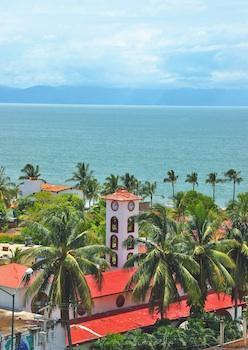





viewimage storyIt’s 7:05 a.m. as the sun rises over the Pacific. There is a knock at my door. It’s Carlos, my butler, with a tray holding The New York Times Digest and a pot of coffee. Carlos sets my coffee down on my veranda; I enjoy it in my robe as he takes my shirts off to be ironed.

Did I mention that Carlos is really good-looking?

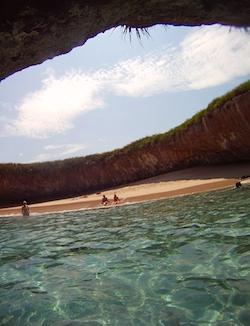
Later on this morning, I’ll be off on an excursion that will involve pods of humpback whales, nearly extinct birds, a 16-foot manta ray and a swim through a 50-foot cave to a hidden beach that was a former bomb-testing site.

This is my quintessentially favorite kind of travel, born in front of the TV in my parent’s house watching "I Love Lucy" as the cast jaunted throughout Europe. My favorite episode took place in Rome, where Lucy, in an attempt to "soak up some local color" as research for a bit role she’d been offered in an Italian art film, ends up in a cat fight in a grape-stomping vat. In one scene she’s getting advice from a knowledgeable bellhop in her suite at a cosmopolitan hotel with a view of the Colosseum in the Eternal City; after a short commercial break, she’s in a vineyard in the bucolic village of Toro. To me, that’s travel: adventure by day and sumptuous comfort at night. And that is exactly what I discover in Nayarit, Mexico ... minus the grape stomping.

For those unfamiliar, the Mexican state of Nayarit is located on the west coast of the country, nestled between the Pacific Ocean and the western Sierra Madre mountains. In addition to its charming countryside and stunning mountain and seaside vistas, the Riviera Nayarit shares the same latitude with the Hawaiian Islands, which affords it a mildly tropical climate with warm water and cool breezes. Thanks to a summer rainy season, visitors can enjoy a lush tropical environment virtually free of rain or any residual humidity three seasons a year.


viewimage story elementQueen for a Day at the St. Regis

The St. Regis Hotel is located in Punta de Mita, a peninsula on the uppermost tip of Bahia de Banderas (Bay of Flags), with sweeping views of both the bay and open Pacific. Its campus, which stretches across hundreds of yards of private white-sand beach, includes 120 exclusive guest rooms and suites over 22 acres with tennis courts, three pools, a Remède Spa and three restaurants. It is flanked on either side by not one, but two world-class Jack Nicklaus golf courses. Little wonder that this exclusive out-of-the-way enclave has attracted more than its share of Hollywood A-listers.

My room has a private garden entrance and stunning view of the bay from the spacious lanai that includes a table and sun bed. The room’s elegant Mexican-Mediterranean décor is straight out of a design magazine. With two sinks, large tub, and indoor and outdoor shower, the luxury and comfort of the bathroom made it difficult to get dressed in the morning. Two items common to most rooms that are conspicuously missing from mine: a coffee maker and iron. This brings me back to Carlos.

Of the numerous top-of-the-line amenities offered by St. Regis properties, their signature butler service, which puts a modern spin on an almost archaic art form, is perhaps the most memorable. From making drinks and coffee to packing, unpacking, ironing and other bespoke services, my butler manages the impossible by providing the option of refined elegance without making the experience stuffy.

Rituals unique to St. Regis properties include the sabering of Champagne, where the top of an unopened bottle of Veuve Clicquot is lobbed off in a clean cut by a single swoop of a very large and imposing sword before being poured into flutes at sunset.

Of the three dining options onsite, Carolina, the property’s AAA Five Diamond Award-winning restaurant, is not to be missed. Romantic dining is on a vast outdoor terrace among gentle ocean breezes, with an offering of several foie gras appetizers and a variety of freshly caught fish, poultry and beef entrees prepared in Mexican-Mediterranean fusion style. A dessert coffee prepared tableside with a parlor trick of ladled flaming tequila is a warm ending to an unforgettably luxe experience that prepares me for the following day’s adventure.
viewimage story element 1Island Hopping

The Marietas Islands are located six nautical miles from our beach at the St. Regis. Six of us and a crew of three travel in a small boat operated by Punta Mita Expeditions. Our trip to the islands, which could take as little as 20 minutes, is delayed numerous times to stop and observe several small pods of spouting adult humpback whales and their calves.

A national park since 2005, the Marietas Islands, which were formed from volcanic rock, are called the "Galapagos of Mexico" for the number of rare species of birds that inhabit them. As our boat approaches the rocky coast to get a good view of some blue-footed boobies, our crew tells tales of when they used to cliff dive off the island before it was declared off-limits to visitors. Coral reefs and crystal-clear water offer the perfect opportunity for snorkeling, scuba diving and paddleboarding.

One of the few places on the Marietas where visitors are allowed on land is the hidden beach, a secluded formerly subterranean beach believed to be formed in the 1950s when the Mexican government used the islands as target practice for bombs.

To reach the hidden beach, our boat moors roughly 300 feet off the coast of the island. We’re given life jackets and snorkeling gear and have to swim nearly the length of a football field before reaching a cave where the tide takes us 50 feet underground to a spectacular beach inside the perimeter of the island. Getting back to our boat after our brief trip on land takes more than a bit of doing, but the adventure is well worth the effort. Upon getting back in the boat, a 5-meter (16 foot) manta ray gracefully swims a mere 10 feet under us.

viewimage story element 2Coastal Discoveries

Heading down the coast from Punta Mita, we stop off in the seaside village of Bucerías for a first real taste of local culture. Meaning "the place for divers," Bucerías is an unassuming Mexican coastal town built in the 1930s with cobblestone streets and a number of charming shops and restaurants. Literally split in half by a dry riverbed, Bucerías features an authentic open-air Mexican market selling any number of souvenirs, from ironic T-shirts, Lucha Libre wrestling masks and a plethora of the ever-present Day of the Dead skeleton figurines. A donkey tethered to a nearby tree completes the postcard experience.

Lunch at the beach restaurant El Brujo proves my theory that sometimes the best things in life come in modest packages. Seated in a plastic chair at a table with mismatched umbrellas, I feast on the most delicious mahi mahi I have ever had the pleasure of eating in a lifetime of seafood dining. Caught fresh that morning, the generous portion of mahi is covered with huitlacoche, a fungus grown on corn, dubbed by Mario Batali as the "Mexican truffle." Earthy, nutty and deeply savory, this traditional Mexican delicacy pairs beautifully with the local fish.

Tableside entertainment comes with the arrival of quite possibly the worst mariachi band ever to grace the Pacific sands. Two drums, an out-of-tune trumpet and the vocal styling of a tone-deaf 8-year-old boy provide more than a few unintentional laughs. Their rendition of "Canta y No Llores" (the "Ay-yi-yi-yi" song) prompts me to give them 50 pesos with the promise of a quick adios, proving another theory: mariachi bands are like prostitutes. You pay them to leave.

[readon1 url="http://www.edgeonthenet.com/nightlife/photo_albums/159940/luxury_and_local_adventure_in_mexico%E2%80%99s_riviera_nayarit"]Source:www.edgeonthenet.com[/readon1]
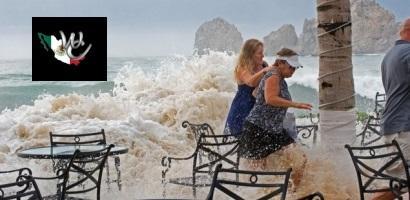
wciHelpful Tips When Planning For a Hurricane in Mexico. Puerto Vallarta is one of the most beautiful vacation destinations in the world. With a wide array of beautiful beaches, shopping and exquisite and exciting nightlife,

Jose-Cuervo-Express-1-e1372186712523

Ever wondered where your hangovers come from? Well now you can find out first-hand on Jose Cuervo’s express train to the town of Tequila.

Billed as the only train that actually takes passengers to Tequila, one of Mexico’s fabled “pueblos magicos,” (magic towns) the Cuervo Express opened in February. It is not be confused with rival service, the Tequila Express, which for 14 years has been transporting tourists to the Herradura distillery in nearby Amatitan.

The leisurely 60-kilometer journey from Guadalajara to Tequila takes exactly two hours. Holding up to 395 passengers, the finely furnished seven-carriage train rumbles along at a gentle pace through the rugged Jalisco countryside, past volcanoes and row upon row of spiky blue agave plants. As much agave-based booze as you can handle (margaritas, shots, long drinks) is readily available throughout the return journey, along with delicious nibbles, including empanadas, tacos and tortas ahogadas.

Upon arrival in Tequila, guests are transferred by bus to the Jose Cuervo factory. Home of the iconic Cuervo raven, La Rojeña was founded in 1795, making it the oldest distillery in Latin America. The distillation process and the history of Casa Cuervo are explained at length on the factory tour, which also includes free samples of various tequilas in case anyone’s attention starts to wane.

The most potent spirit on offer is a 55-percent white tequila, which is so strong it must be watered down before it can be sold legally. The longer a tequila is aged in wooden barrels, the richer its flavor and the darker amber its color. The finest sample available is the Reserva de la Familiar, a limited edition añejo (aged tequila) made from hand-selected mature agaves. A bottle will set you back over 3,000 pesos (around $250 USD), but its smooth taste with hints of honey and vanilla makes it worth every centavo.

In a later tasting session guests are taught to appreciate the different smells and subtle flavors of white, gold and añejo tequila. Brewers such as Cuervo want tequila to enjoy the reputation it deserves as a fine drink comparable to Cognac or Scotch. The recommended way to consume tequila is not to down it with a smearing of salt and lime like an over-excited student on spring break, but to hold it in the mouth for five to ten seconds and absorb the rich flavors.

For those who prefer not to take their tequila straight, guests are offered a round of strawberry margaritas during a live show in the gardens of the Cuervo estate. Tribal music is blasted out as smoke wafts across a small stone amphitheater where men and women dance in Aztec-style costumes, symbolizing the ancient roots of Mexico’s fiery national drink. Agave cultivation dates back hundreds of years to when pre-Columbian civilizations brewed a sticky drink known as “pulque,” although tequila as we know it was born later when the Spanish introduced more advanced distilling techniques.

After this colorful history lesson, guests are treated to a flurry of mariachi music and traditional folkloric dancing, while enjoying a buffet of traditional Mexican cuisine. Then it’s back aboard the train, where there’s plenty more tequila for those still standing, or freshly brewed coffee for anyone that’s had one too many.

Ticket information:
At 1,290-1,700 pesos ($100 – $130 USD), the Jose Cuervo Express is a little more expensive than the Tequila Express, which costs 1,200 pesos. However, it promises a more upmarket experience, without such a relentless barrage of mariachi music throughout the day, and it is the only rail option for those who want to actually see the town of Tequila.

The train leaves from Guadalajara’s Estacion Ferrocarril on Avenida Washington, next to Parque Agua Azul. Friday evening tours leave the station at 7:30 p.m., returning early on Saturday at 2.30 a.m. On Saturdays and Sundays the Express leaves at 11:00 a.m. and returns at 8:00 p.m. Children and senior citizens travel at discounted prices.

For reservations or more information, visit http://www.josecuervoexpress.com/ or call free on 01-800-681-0442. Tickets can also be purchased in Guadalajara at the Jose Cuervo store on Avenida Vallarta #5005 or in the Hotel Camino Real on Mariano Otero.
 
 [readon1 url="http://www.nearshoreamericas.com/aboard-cuervo-express/"]Source:www.nearshoreamericas.com[/readon1]

0400057001402896005MEXICO CITY – Health Secretary Mercedes Juan Lopéz said Sunday that the principal aims of the new health reforms will be to ensure access by the people to health care, create a regulatory body that monitors medical services and establish a National Health System Commission.
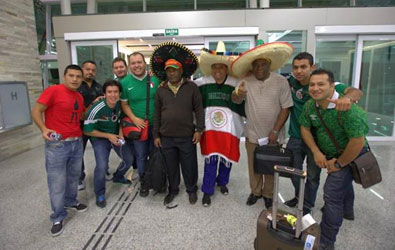
Mercedes Juan Lopéz was speaking during the “Health Policy of the Mexican State” conference attended by master’s degree students in National Defense School’s military administration program.

The health reform proposal, she said, is part of the government’s Universal Health System plan.

She said these reforms will work by gradually increasing the number of diseases that can be treated in the health care coverage system while maintaining quality standards, minimizing wait times, improving the responsiveness of medical institutions and standardizing the costs of services.

She added that the new medical monitoring system will guarantee that institutions provide adequate services. When these institutions cannot address the needs of a patient the health care institutions will have a system where they can refer patients to alternate health care providers.

Mercedes Juan Lopéz added that the National Universal Health System Commission would have the responsibility of identifying a patients condition and determining treatment costs.

In addition, she said healthcare institutions would be charged with strengthening ties between all other health institutions making it easier for them to share information and provide better health care.

She added that the health care reform will include legal modifications that will provide the foundation for a health system that is much more interconnected, thereby benefiting the welfare of the whole population.

The National Universal Health System Commission seems to come in coordination with President Enrique Peña Nieto’s launch of the national strategy to prevent and control overweight and diabetes problems.

This program integrates intervention and prevention efforts with comprehensive medical care, advertising and food labeling initiatives.


[readon1 url="http://www.thenews.com.mx/index.php/mexico-articulos/22947-juanintroduceshealthreforms"]Source:www.thenews.com.mx[/readon1]

mexicanosbrasil2The Foreign Relations Secretariat (SRE) has created three mobile consulates in Brazil to meet the contingencies of the 40-55,000 Mexicans there for the World Cup.
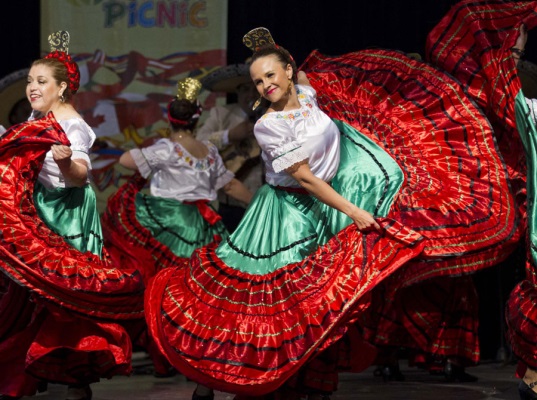
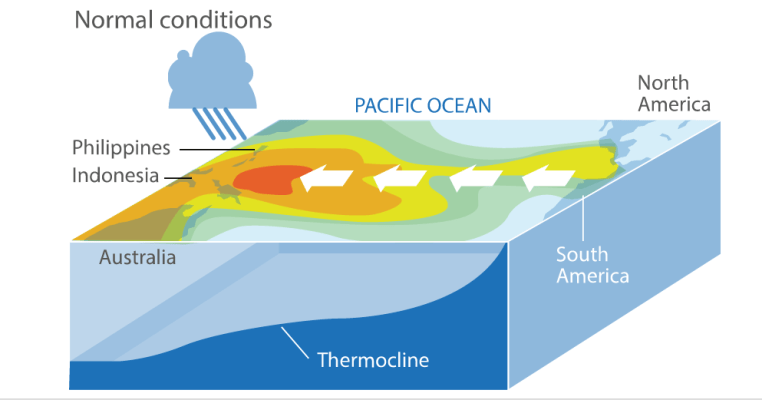
Three mobile consulates — in Natal, Fortaleza and Recife — are in operation and will be until June 25, but the dates could be extended if the Mexian team advances to the later rounds of the competition.

Four diplomats were sent to the cities where Mexico will play matches against Cameroon, Brazil and Croatia. They will support citizens in Brazil in matters such as the loss or theft of documents, or in cases when urgent assistance is needed.

Up until day 14 of the tournament, efforts will be concentrated in Natal where Mexico plays its first game Thursday. Mexico’s representatives will move around the country following the Mexican team and its supporters.
Mexico’s General Consul in Rio de Janeiro María Cristina de la Garza said that the goal is “to provide consular protection and assistance for Mexicans supporting their national team.”

She said that as of Wednesday there had been no incidents involving Mexican nationals registered in Brazil. She also said that diplomatic authorities are in “constant contact with the Brazilian authorities.”

In a directive issued by the Foreign Relations Secretariat on its website, fans are urged to respect Brazilian laws, avoid illegal substances and have digital copies of documents, such as passports.

It is also recommended that supporters verify the validity of their tickets in advance. Mexicans who are still planning to travel are urged to register with the SRE system, available on the website sirme.sre.gob.mx.

[readon1 url="http://www.thenews.com.mx/index.php/mexico-articulos/22891-mobileconsulatescreatedinbrazil"]Source:www.thenews.com.mx[/readon1]

racul

NEW YORK, NY -- Miguel Torruco Marques, the Secretary of Tourism for Mexico City, was recently in New York conducting numerous press events, interviews and hosting duties as part of a new initiative Mis Raíces (My Roots), to promote tourism to Mexico City among Mexican-Americans in the United States.

“Mis Raíces” represents the first concentrated effort to bring in U.S. Latinos with a connection to Mexico. “We know that we have a lot of future in this market,” said Marques at a press conference.

Marques came to the Big Apple as part of the program’s first launch. Mexican-Americans are the fastest growing demographic in the New York City, with a population over 500,000. A few days later Marques was in Chicago to make the same overtures to that city’s growing Latino population, followed by Los Angeles and Houston. According to Pew Hispanic 2012 estimates, there are about 33.7 million Hispanics of Mexican origin living in the United States.

“Mis Raíces” is being done in collaboration with Mexico City Mayor Miguel Angel Mancera and the U.S.-Mexico Chamber of Commerce. Mexico City’s Tourism Board is travelling with members from Aeromexico and Mexitours, two key partners in the campaign.

Mexico City has seen a promising growth in tourism, about 12 percent in 2013. Over a third of its tourists are coming from the United States; it is the biggest destination in Latin America.

The first phase of “Mis Raíces” centers on popular local Latino newspapers including El Diario in New York and La Raza in Chicago. The second, which is web-based, focuses on business travelers who might want to extend their stay in Mexico City. Ultimately, the city hopes that these travelers, no matter how long they are staying, consume these tailored tourist packages.

“The goal is to make it as easy as possible,” says Mauricio Reyna from the Mexico City Tourism Ministry.

In that spirit Mexico City collaborated with the existing campaign from Mexico launched two years ago, “Live it to Believe It” on television ads. They are stylishly produced advertisements that highlight the cultural impact of Mexico City that will run on stations around the United States. One even features a celebrity cameo from Ringo Starr who met his wife of thirty years ago a few blocks from the Frida Kahlo Museum.

“Mis Raíces” hopes to capitalize on the abundance of culture available in Mexico City. In addition to packages that highlight over 180 museums, there are tours which are specifically designed for foodies and sports enthusiasts.

The gastronomic rise of Mexico City has inspired much tourist fanfare. Marques is particularly proud of Mexico City’s representation on San Pellegrino’s annual list of the best restaurants on the world: Pujol and Biko came in at number 20 and 59 respectively.

Mexico City just opened to the public the biggest aquarium in Latin America, financed by global magnate Carlos Slim, which Marques said is another addition to Mexico City's cultural impact in the region. He did, however, provide a cautionary tale to visitors at the press conference. Marques actually has a small scar on his right hand from a time when he put his hand into a tank with two piranhas. It turns out the sharp teeth piranhas are famous for do indeed bite.

When asked whether potential travelers might express security concerns, Marques points out that the State Department offers no current advisory regarding travel to Mexico City (also known as the Federal District). “We are like any other [huge] city,” he said.

The impact of “Mis Raíces could potentially bring in over one million more visitors this year to Mexico City. Marques and his team are particularly proud of the tours available for visitors who might be seeing family and do not necessarily have a tremendous amount of money to spend. There are still many cultural sites to see like the Estado Azteca and Chapultepec.

Ultimately “Mis Raíces” is about motivating the paisanos in the United States to discover or re-discover Mexico City and schedule time to journey through their heritage, as well as keep coming back. One word of caution - don't put your hands in a piranha tank.

misraices

[readon1 url="http://www.nbcnews.com/news/latino/mis-raices-aims-bring-u-s-mexican-tourists-mexico-city-n130901"]Source:www.nbcnews.com[/readon1]

NINI22

With a 90% chance of the global weather phenomenon striking this year, impacts both devastating and beneficial will be felt from India to Peru

he global El Niño weather phenomenon, whose impacts cause global famines, floods – and even wars – now has a 90% chance of striking this year, according to the latest forecast released to the Guardian.

El Niño begins as a giant pool of warm water swelling in the eastern tropical Pacific Ocean, that sets off a chain reaction of weather events around the world – some devastating and some beneficial.

India is expected to be the first to suffer, with weaker monsoon rains undermining the nation’s fragile food supply, followed by further scorching droughts in Australia and collapsing fisheries off South America. But some regions could benefit, in particular the US, where El Niño is seen as the “great wet hope” whose rains could break the searing drought in the west.

The knock-on effects can have impacts even more widely, from cutting global gold prices to making England’s World Cup footballers sweat a little more.

The latest El Niño prediction comes from the European Centre for Medium-range Weather Forecasts (ECMWF), which is considered one the most reliable of the 15 or so prediction centres around the world. “It is very much odds-on for an event,” said Tim Stockdale, principal scientist at ECMWF, who said 90% of their scenarios now deliver an El Niño. "The amount of warm water in the Pacific is now significant, perhaps the biggest since the 1997-98 event.” That El Niño was the biggest in a century, producing the hottest year on record at the time and major global impacts, including a mass die-off of corals.

“But what is very much unknowable at this stage is whether this year’s El Niño will be a small event, a moderate event – that’s most likely – or a really major event,” said Stockdale, adding the picture will become clearer in the next month or two. “It is which way the winds blow that determines what happens next and there is always a random element to the winds.”

The movement of hot, rain-bringing water to the eastern Pacific ramps up the risk of downpours in the nations flanking that side of the great ocean, while the normally damp western flank dries out. Governments, commodity traders, insurers and aid groups like the Red Cross and World Food Programme all monitor developments closely and water conservation and food stockpiling is already underway in some countries.

Professor Axel Timmermann, an oceanographer at the University of Hawaii, argues that a major El Niño is more likely than not, because of the specific pattern of winds and warm water being seen in the Pacific. “In the past, such alignments have always triggered strong El Niño events,” he said.

El Niño events occur every five years or so and peak in December, but the first, and potentially greatest, human impacts are felt in India. The reliance of its 1 billion-strong population on the monsoon, which usually sweeps up over the southern tip of the sub-continent around 1 June, has led its monitoring to be dubbed “the most important weather forecast in the world”. This year, it is has already got off to a delayed start, with the first week’s rains 40% below average.

“El Niño could be quite devastating for agriculture and the water supply in India,” said Dr Nick Klingaman, an El Niño expert at the University of Reading in the UK. Two-thirds of Indian farmland lacks irrigation and is reliant solely on rainfall, meaning even current official prediction of a 5% reduction in monsoon rains would have a major impact: a 10% fall is an official drought. Krishna Kumar, an Indian meteorologist and El Niño expert, said that even if the 2014 El Niño turns out not to be a very hot one, it can still have a major effect on the monsoon because it is the specific location of the warm Pacific water which is the critical factor. “The moderate El Niños of 2002 and 2009 impacted the monsoon in India much more greatly then the major 1997 event,” he said, adding that the biggest cut in rainfall is not usually felt until September.

NINONO

[readon1 url="http://www.theguardian.com/environment/2014/jun/11/-sp-el-nino-weather-2014"]Source:www.theguardian.com[/readon1]

maya-underworld

The Maya underworld, known as Xibalba, is actually an incredible labyrinth of underground rivers in the Yucatan Peninsula. The Yucatan is otherwise devoid of rivers and lakes, but the Mayas believed that the underground fresh water pools that dotted the landscape were sacred portals to the Maya underworld. Now, the Maya underwater civilization is being explored and it is now known that the Maya underworld was created by a unique chain of dramatic natural events.

There are thousands of entrances to Xibalba, the Maya underworld, hidden among the dense shrubs of the Yucatan. These sacred portals to the Maya underwater civilization are actually water-filled sinkholes known as “cenotes”, a Spanish version of the Maya word “dzonot”. These underground water sources were created by rainwater which slowly erodes the limestone bedrock and forms underground caves. Eventually, the roofs collapse and expose the subterranean caves to the surface, from small caverns to vast underwater networks.

The great Maya cities of Chichén Itza and Mayapán , as well as small cities, were strategically located near cenotes, as they were not only part of the Maya underworld but also their primary source of fresh water.

According to mythology, the Maya underwater civilization was ruled by 12 Maya Death Gods known as Lords of Xibalba. Their court lied below the surface of the Earth, in the Maya underworld, and the two ruling death Gods were Hun-Came (One Death) and Vucum-Came (Seven Death). The other Lords were demons that worked in pairs, each in charge of a specific type of human suffering: sickness, starvation, fear, destitution, pain and death. Other residents of the Maya underwater civilization were said to be people who had fallen under the spell of the demons.

According to the Popol Vuh book, the Maya underworld was a civilization that had various structures and including a council for the Lords, houses, a ball-court, homes, gardens and other Maya temple buildings which indicate that the underwater civilization was a great city. Visitors to the Maya underworld had to pass through great obstacles, tests and traps before arriving. Once there, the Lords would put the visitors to trial in one of the 6 deadly houses, where they would either outwit the test or be sentenced to death.

The Maya underworld's rulers were worshipped and offered human sacrifices. Eventually the civilization on Earth began to trick the Xibalba rulers into taking false sacrifices. According to mythology, two Maya hero twins were able to conquer Xibabla and overthrow its rulers. Even after the fall of Xibalba, the dark Maya underworld continued to be referenced in mythology.

Now the area is the center of an underwater archaeology research project that is being studied and mapped. Divers have found remnants of humans, animals, plates, bowls and other signs of the Maya ritual sacrifices to the Gods of Xibalba, the Maya underwater civilization. The majority of the Maya sacrifices were to request water from the underworld Gods. However, during difficult periods of drought, the offerings were more elaborate and even included human sacrifices.

[readon1 url="http://www.donquijote.org/culture/mexico/history/maya-underworld.asp"]Source:www.donquijote.org[/readon1]

mexico-traditional-toys

Children around the world all share a common interest with young warm blooded animal cubs: an innate urge to play. The use of play is a natural method for learning how to coordinate movements and for practicing actions and routines. Later, in the adult phase, these skills will be essential for the development of the animal… and the child. Traces of toys have been found dating back to the beginning of time and from all cultures in every part of the planet.

In our modern world, with all its super high tech devices, it seems that the world of play is linked to high definition, hyper-real screen images. It is always surprising to see little children however, perhaps your own child, opening a Christmas present only to promptly remove and brush aside the shiny new toy robot inside and go about playing with the empty box, transforming it into a helmet, a boat, a house, a fort… Imagination needs little to flourish.

Wooden Toys
Mexico has an old and valuable tradition of creating carefully crafted wooden toys decorated with vibrant colors. It is no coincidence that Mexico is the world’s third largest producer of toys after China and Spain. Over 220 traditional toy manufacturing companies employ some 28,000 workers. Traditional Mexican toys, some of which have been inherited from pre-Colombian cultures, continue to prevail and bravely stand up to videogames, with whom they coexist in relative harmony.

The importance of traditional toys is made evident by the existence of various museums which display these tools of traditional child’s play. The most relevant one is likely the Museo del Juguete Popular Mexican (the museum of popular Mexican toys, popularly known as “la Esquina” given its corner location). The museum is in San Miguel de Allende, in the state of Guanajuato, and it houses over one thousand of these play items. Other noteworthy museums include the Museo de Culturas Populares del Estado de México in Toluca and the Museo del Juguete Antiguo México (known as the MUJAM) in Mexico City.

The Most Popular Traditional Mexican Toys

La lotería

A game in which each player purchases pieces of cardboard decorated with certain pictures and symbols that match those found in a deck of cards. The first player to complete their cardboard gets to take all the other players’ money. This is a popular game to play in Mexico at family get-togethers.

Marionetas

These are puppets, made of wood or cardboard and fabric, which can be manipulated by the hand with or without strings. The puppets may represent a wide variety of characters from popular children’s stories.

El balero

A toy that fosters manual dexterity. It is made up of a long wooden stick that is joined to a ball made of the same material and which has a hole in it that is just barely larger than the diameter of the stick. The object of the game is to insert the stick into the hole in the ball by balancing the ball with only one hand.

La matraca

This is a noise maker designed for users to make the loudest noise possible. They can be seen at stadiums and at popular festivals. Other traditional “musical” objects include ceramic whistles, which when filled with water imitates the chirping of birds.

La pirinola (or perinola)

This is a hexagon shaped top with a different number painted on each side. Players take turns spinning the top. The player who scores the most points after several spins wins.

La piñata

This is perhaps the most internationally recognized traditional Mexican toy. It is a ceramic or cardboard container filled with candy. Blindfolded players must try to hit and break the piñata.

El trompo

This is a wooden top that players fling onto the ground and spin by pulling a string wound around the toy. It is common for players to fling their tops together to watch them “fight”.

El atrapanovios

These are tubes made of braided palm leaves. When fingers are inserted into the ends of the tube, it is impossible to get them out again if the person tries to do so quickly and with force.

Traditional Mexican toy makers will continue using their creativity and inspiring skill to create all these toys and many more, such as rag dolls, slingshots, wooden cars and airplanes, doll houses, and all types of objects designed to make children happy in exchange for a small amount of money and a big amount of creativity.

[readon1 url="http://www.donquijote.org/culture/mexico/society/customs/traditional-mexican-toys.asp"]Source:www.donquijote.org[/readon1]

6285444w 1"El Americano 3D," billed as the first major U.S.-Mexican animated co-production, will be released in the first quarter of 2015, Variety magazine reported.
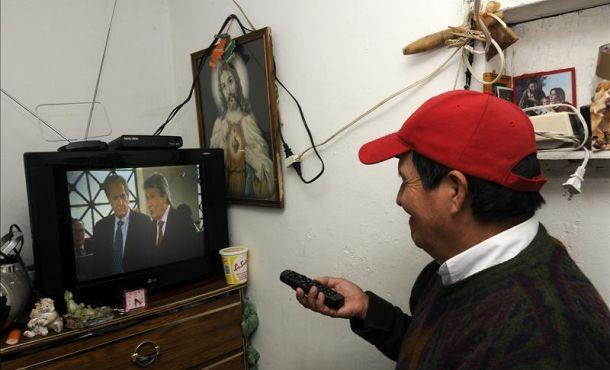

Lisa Kudrow, known for her work on the hugely popular TV series "Friends," heads an ensemble voice cast that also includes teenage actor Rico Rodriguez ("Modern Family"), Cheech Marin ("Spy Kids"), Kate del Castillo ("La reina del sur"), Erik Estrada ("CHiPS"), and Mexican-American actor and director Edward James Olmos, who is also a co-producer.

"El Americano" is the fourth film - and first CGI movie - made at the Animex Producciones animated studio in Puebla, Mexico. Burbank, California-based Olmos Productions also has co-production credits.

The film will premiere in both Mexico and the United States in the first three months of 2015, including an initial 1,200-screen U.S. theatrical release.

Deals also have been reached at the ongoing Cannes Film Festival to distribute the film in Russia and in Asian countries.

Variety describes the movie as a "revisionist take on the U.S. as a fount of role models for young Mexicans."

The film "makes us realize that the answers to our struggles are right there in our own hearts," Olmos was quoted as saying.

It tells the story of Cuco, a young Mexican parrot who embarks on an epic quest to persuade an American crime-fighting TV celebrity to help defend his family from bullies, the magazine said.

Cuco learns, however, that he can become a hero without anyone else's help.

[readon1 url="http://www.laprensasa.com/309_america-in-english/2548524_mexico-u-s-animated-co-production-el-americano-to-hit-theaters-in-2015.html"]Source:www.laprensasa.com/[/readon1]

6366945w

Mexico's telecommunications regulator has postponed a deadline for potential bidders to apply to take part in an auction of two new nationwide television networks.

The decision "offers greater certainty to interested parties and promotes the maximum participation in this bidding process," the IFT said in a statement.

The deadline for potential participants to obtain anti-trust clearance had been June 16-17 but it is now set for Sept. 2-3.

The rules for the auction, aimed at weakening the duopoly of No. 1 Mexican broadcaster Televisa and rival incumbent TV Azteca and fulfilling one of the main goals of last year's telecommunications and broadcast TV overhaul, were unveiled in March.

The IFT said the deadline needed to be postponed to bolster legal certainty since the overhaul's secondary laws have not yet been approved.

The auction will be the first of television frequencies in Mexico's history.

The auction of the 20-year concessions is aimed, among other things, at diversifying content.

In March, Mexico City-based Televisa said in a statement that the IFT had declared it a dominant operator in broadcast television and published an invitation to a public option in which companies - not including Televisa and TV Azteca - may bid to obtain frequencies to set up at least two additional national digital broadcasting networks in Mexico.

Televisa said that under the tighter regulatory regime it also will have to "make its broadcasting infrastructure available to third parties on a non-discriminatory and non-exclusive basis."

Carlos Slim-controlled America Movil was likewise declared by the IFT as a "preponderant economic agent" in the telecommunications sector.


[readon1 url="http://www.laprensasa.com/309_america-in-english/2582431_mexican-regulator-pushes-back-tv-auction-deadline.html"]Source:www.laprensasa.com[/readon1]

genoma-adn-acido-desoxirribonucleico-gene-vida

Mexicans from different regions of the country are as genetically different as Europeans are from Asians, researchers have found.

The vast differences in the patchwork of Native American ancestry indicate that Mexicans should no longer be lumped into one homogeneous group, particularly when it comes to clinical practice, according to a report published Thursday in Science. The study was led by a group of scientists from Stanford University’s School of Medicine, the University of California San Francisco (UCSF) and the Mexican National Institute of Genomic Medicine.

“When you walk into a clinic, whether you know it or not, someone makes a decision about you. Are you white, are you European, are you African, are you Asian?” says Esteban Burchard, professor of bioengineering and therapeutic sciences and medicine at UCSF. “In the U.S., one of the things we ask is, are you Hispanic?”

Now, says, Burchard, it has become clear that what is normal for one ethnic group may be borderline abnormal for another—and taking the finer details of Latino health into consideration can make the difference between an accurate diagnosis and an erroneous one.

Researchers studied lung function, in particular, and concluded that diseases such as asthma and emphysema are determined by a person’s type of Native American ancestry. For example, a person in northwest Mexico would have lungs that appear approximately 12 years younger than a person of the same age and height in the country’s southeast region.

Scientists also found that people of mixed European and Native American heritage—two groups that began exchanging genes some 500 years ago during the Spanish colonization—were found to have genomes corresponding to their local indigenous population. A person in the northern state of Sonora, for example, is more likely to have Seri or Tarahumara genomic components while someone from Yucatan, in the country’s southeast, would probably display a Mayan gene component. These, in turn, are as genetically different as the Europeans are from the Chinese.

These results can be used to spot larger trends. “This is not just relevant to Mexico. It’s relevant, number one, to all of Latin America, so a fifth of the world population. The method, the observations, are generalizable to the entire world,” said Burchard.

“We’re showing, for the first time on a country-wide level, genetic variation in Native American population,” added Burchard.

Since most genetic studies to date have concentrated on Europeans or European Americans, researchers said, the team decided to focus this study on Native American ancestry. It was a way to both celebrate and understand a marginalized and understudied segment of the global population, says Carlos Bustamante, professor of genetics at Stanford and one of the lead authors of the study.

Mexico was a natural choice not only because it has one of the largest amounts of pre-Columbian genetic diversity in the Americas but also because some scientists in the team had already been collecting samples from the area for years. In the end, researchers utilized 1,000 samples, about half of which belonged to Native Americans and half to mestizos, or people with mixed descent. Together, scientists had nearly 1 million genetic variants to work with.

The study, its authors say, highlights the need to study populations worldwide so that the fruits of the Human Genome Project become accessible to all.

“Our hope is that we can move the needle and develop genomic medicine so that it benefits everyone, not just the populations of European descent,” says Bustamante.

The findings, Burchard says, will also help advance precision medicine, a practice in which a person’s genetic information is used to tailor a specific medical treatment.

Bustamante said his team plans on using the samples to study signatures of natural selection in different environments, as well as biomedical traits such as height.

About 40 experts, including researchers from Puerto Rico, Spain, France and the United Kingdom, participated in the study, which was financed by the Mexican government, the UCSF Chancellor’s Research Fellowship, the American Asthma Foundation and the National Institutes of Health, among others.

[readon1 url="http://www.newsweek.com/dna-proves-not-all-mexicans-are-created-equal-254642l"]Source:www.newsweek.com[/readon1]

w48M55rUJKjS2OFoWhen the TRMM satellite flew over Cristina on June 11, 2014 at 1142 UTC (4:42 a.m. PDT) it was a hurricane. A rainfall analysis that used data from TRMM's Microwave Imager (TMI) and Precipitation Radar (PR) instruments was overlaid on an enhanced infrared image received by NOAA's GOES-East satellite at 1145 UTC (7:45 a.m. EDT) to provide a complete picture of the hurricane's cloud extent and rainfall rates. The TRMM TMI data clearly revealed that an eye had developed indicating that Cristina was definitely a hurricane. TRMM PR found that rain was falling at a rate of over 74.4 mm (2.9 inches) per hour in a strong feeder band east if Cristina's eye. Another smaller area of strong convective thunderstorms west of Puerto Vallarta, Mexico was also found to contain very heavy rainfall with the tallest thunderstorm tops reaching heights of about 16.5km (10.2 miles).
Later on June 11, at 19:59 UTC (3:59 p.m. EDT) when NASA's Aqua satellite passed over Hurricane Christina as it was rapidly intensifying, the Atmospheric Infrared Sounder (AIRS) instrument gathered infrared data on the cloud top temperatures of the storm. By early morning on June 12, Cristina had a circular central dense overcast with very cold cloud tops near -80C (-112F).

At 11 a.m. EDT (8 a.m. PDT) on June 12, Hurricane Cristina's maximum sustained wind were near 150 mph (240 kph). Cristina was about 250 miles (400 km) southwest of Manzanillo, Mexico, near latitude 16.6 north and longitude 107.1 west. Cristina was moving toward the west-northwest near 8 mph (13 kph) and a northwestward to west-northwestward motion is expected through Saturday morning (June 14).The estimated minimum central pressure is 935 millibars.

The NHC said that light vertical wind shear and a deep warm ocean should allow Cristina to maintain major hurricane strength for another 36 hours.
 
[readon1 url="http://www.sciencecodex.com/nasa_and_noaa_satellites_analyze_category_4_hurricane_cristina-135565"]Source:/www.sciencecodex.com[/readon1]