 A rainbow is an optical and meteorological phenomenon that is caused by both reflection and refraction of light in water droplets resulting in a spectrum of light appearing in the sky. It takes the form of a multicoloured arc. Rainbows caused by sunlight always appear in the section of sky directly opposite the sun.
Rainbows can be full circles, however, the average observer sees only an arc, formed by illuminated droplets above the ground.
In a "primary rainbow," the arc shows red on the outer part and violet on the inner side. This rainbow is caused by light being refracted (bent) when entering a droplet of water, then reflected inside on the back of the droplet and refracted again when leaving it.
In a double rainbow, a second arc is seen outside the primary arc, and has the order of its colours reversed, red facing toward the other one, in both rainbows. This second rainbow is caused by light reflecting twice inside water droplets.
Overview
The rainbow is not located at a specific distance, but comes from an optical illusion caused by any water droplets viewed from a certain angle relative to a light source. Thus, a rainbow is not an object and cannot be physically approached. Indeed, it is impossible for an observer to see a rainbow from water droplets at any angle other than the customary one of 42 degrees from the direction opposite the light source. Even if an observer sees another observer who seems "under" or "at the end of" a rainbow, the second observer will see a different rainbow—farther off—at the same angle as seen by the first observer.
A rainbow spans a continuous spectrum of colours. Any distinct bands perceived are an artefact of human colour vision, and no banding of any type is seen in a black-and-white photo of a rainbow, only a smooth gradation of intensity to a maximum, then fading towards the other side. For colours seen by the human eye, the most commonly cited and remembered sequence is Newton's sevenfold red, orange, yellow, green, blue, indigo and violet.
Rainbows can be caused by many forms of airborne water. These include not only rain, but also mist, spray, and airborne dew.
Visibility
Rainbows can be observed whenever there are water drops in the air and sunlight shining from behind at a low altitude angle. The most spectacular rainbow displays happen when half the sky is still dark with raining clouds and the observer is at a spot with clear sky in the direction of the sun. The result is a luminous rainbow that contrasts with the darkened background.
The rainbow effect is also commonly seen near waterfalls or fountains. In addition, the effect can be artificially created by dispersing water droplets into the air during a sunny day. Rarely, a moonbow, lunar rainbow or nighttime rainbow, can be seen on strongly moonlit nights. As human visual perception for colour is poor in low light, moonbows are often perceived to be white. It is difficult to photograph the complete semicircle of a rainbow in one frame, as this would require an angle of view of 84°. For a 35 mm camera, a lens with a focal length of 19 mm or less wide-angle lens would be required. Now that powerful software for stitching several images into a panorama is available, images of the entire arc and even secondary arcs can be created fairly easily from a series of overlapping frames. From an aeroplane, one has the opportunity to see the whole circle of the rainbow, with the plane's shadow in the centre. This phenomenon can be confused with the glory, but a glory is usually much smaller, covering only 5–20°.
At good visibility conditions (for example, a dark cloud behind the rainbow), the second arc can be seen, with inverse order of colours. At the background of the blue sky, the second arc is barely visible.
As is evident by the photos on this page, the sky inside of a primary rainbow is brighter than the sky outside of the bow. This is because each raindrop is a sphere and it scatters light in a many-layered stack of coloured discs over an entire circular disc in the sky, but only the edge of the disc, which is coloured, is what is called a rainbow. Alistair Fraser, coauthor of The Rainbow Bridge: Rainbows in Art, Myth, and Science, explains: "Each color has a slightly different-sized disc and since they overlap except for the edge, the overlapping colors give white, which brightens the sky on the inside of the circle. On the edge, however, the different-sized colored discs don't overlap and display their respective colors — a rainbow arc."
Light of primary rainbow arc is 96% polarised tangential to the arch. Light of second arc is 90% polarised.
Number of colours in spectrum or rainbow
A spectrum obtained using a glass prism and a point source is a continuum of wavelengths without bands. The number of colours that the human eye is able to distinguish in a spectrum is in the order of 100. Accordingly, the Munsell colour system (a 20th-century system for numerically describing colours, based on equal steps for human visual perception) distinguishes 100 hues. The apparent discreteness of main colours is an artefact of human perception and the exact number of main colours is a somewhat arbitrary choice.
Newton originally (1672) divided the spectrum into five main colours; red, yellow, green, blue and violet. Later he included orange and indigo, giving seven main colours by analogy to the number of notes in a musical scale. Newton chose to arbitrarily divide the visible spectrum into seven colours out of a belief, derived from the beliefs of the ancient Greek sophists, who thought there was a connection between the colours, the musical notes, the known objects in the Solar System, and the days of the week. According to Isaac Asimov, "It is customary to list indigo as a color lying between blue and violet, but it has never seemed to me that indigo is worth the dignity of being considered a separate color. To my eyes it seems merely deep blue." Others suggest that Newton in fact called "indigo" the color now called "blue", and "blue" the color now called "cyan"
The colour pattern of a rainbow is different from a spectrum, and the colours are less saturated. There is spectral smearing in a rainbow owing to the fact that for any particular wavelength, there is a distribution of exit angles, rather than a single unvarying angle. In addition, a rainbow is a blurred version of the bow obtained from a point source, because the disk diameter of the sun (0.5°) cannot be neglected compared to the width of a rainbow (2°). The number of colour bands of a rainbow may therefore be different from the number of bands in a spectrum, especially if the droplets are either large or small. Therefore, the number of colours of a rainbow is variable. If, however, the word rainbow is used inaccurately to mean spectrum, it is the number of main colours in the spectrum.
Explanation
The light is first refracted entering the surface of the raindrop, reflected off the back of the drop, and again refracted as it leaves the drop. The overall effect is that the incoming light is reflected back over a wide range of angles, with the most intense light at an angle of 42°. The angle is independent of the size of the drop, but does depend on its refractive index. Seawater has a higher refractive index than rain water, so the radius of a "rainbow" in sea spray is smaller than a true rainbow. This is visible to the naked eye by a misalignment of these bows.
The amount by which light is refracted depends upon its wavelength, and hence its colour. This effect is called dispersion. Blue light (shorter wavelength) is refracted at a greater angle than red light, but due to the reflection of light rays from the back of the droplet, the blue light emerges from the droplet at a smaller angle to the original incident white light ray than the red light. Due to this angle, blue is seen on the inside of the arc of the primary rainbow, and red on the outside.
The light at the back of the raindrop does not undergo total internal reflection, and some light does emerge from the back. However, light coming out the back of the raindrop does not create a rainbow between the observer and the sun because spectra emitted from the back of the raindrop do not have a maximum of intensity, as the other visible rainbows do, and thus the colours blend together rather than forming a rainbow.
A rainbow does not actually exist at a particular location in the sky. Its apparent position depends on the observer's location and the position of the sun. All raindrops refract and reflect the sunlight in the same way, but only the light from some raindrops reaches the observer's eye. This light is what constitutes the rainbow for that observer. The bow is centred on the shadow of the observer's head, or more exactly at the antisolar point (which is below the horizon during the daytime), and forms a circle at an angle of 40–42° to the line between the observer's head and its shadow. As a result, if the sun is higher than 42°, then the rainbow is below the horizon and usually cannot be seen as there are not usually sufficient raindrops between the horizon (that is: eye height) and the ground, to contribute. Exceptions occur when the observer is high above the ground, for example in an aeroplane (see above). Alternatively, you might see the full circle in a fountain or waterfall spray if you have the right vantage point.
Variations
Multiple rainbows
"Double rainbow" redirects here. For other uses, see Double Rainbow.
Secondary rainbows are caused by a double reflection of sunlight inside the raindrops, and appear at an angle of 50–53°. As a result of the second reflection, the colours of a secondary rainbow are inverted compared to the primary bow, with blue on the outside and red on the inside. The secondary rainbow is fainter than the primary because more light escapes from two reflections compared to one and because the rainbow itself is spread over a greater area of the sky. The dark area of unlit sky lying between the primary and secondary bows is called Alexander's band, after Alexander of Aphrodisias who first described it.
Twinned rainbow
Unlike a double rainbow that consists of two separate and concentric rainbow arcs, the very rare twinned rainbow appears as two rainbow arcs that split from a single base. The colours in the second bow, rather than reversing as in a double rainbow, appear in the same order as the primary rainbow. It is sometimes even observed in combination with a double rainbow. The cause of a twinned rainbow is the combination of different sizes of water drops falling from the sky. Due to air resistance, raindrops flatten as they fall, and flattening is more prominent in larger water drops. When two rain showers with different-sized raindrops combine, they each produce slightly different rainbows which may combine and form a twinned rainbow.
Until recently, scientists could make only an educated guess as to why a twinned rainbow does appear, even though extremely rarely. It was thought that most probably non-spherical raindrops produced one or both bows, with surface tension forces keeping small raindrops spherical, while large drops were flattened by air resistance; or that they might even oscillate between flattened and elongated spheroids. However, in 2012 a new technique was used to simulate rainbows, enabling the accurate simulation of non-spherical particles. Besides twinned rainbows, this technique can also be used to simulate many different rainbow phenomena including double rainbows and supernumerary bows.
Tertiary and quaternary rainbows
In addition to the primary and secondary rainbows that can be seen in a direction opposite to the sun, it is also possible (but very rare) to see two faint rainbows in the direction of the sun. These are the tertiary and quaternary rainbows, formed by light that has reflected three or four times within the rain drops, at about 40° from the sun (for tertiary rainbows) and 45° (quaternary). It is difficult to see these types of rainbows with the naked eye because of the sun's glare, but they have been photographed; definitive observations of these phenomena were not published until 2011.
These higher-order rainbows around the sun should not be confused with ice halos, which are very common around the world and visible much more often than rainbows (of any order), yet are unrelated to rainbows.
Higher-order rainbows
Higher-order rainbows were described by Felix Billet (1808–1882) who depicted angular positions up to the 19th-order rainbow, a pattern he called a "rose of rainbows". In the laboratory, it is possible to observe higher-order rainbows by using extremely bright and well collimated light produced by lasers. Up to the 200th-order rainbow was reported by Ng et al. in 1998 using a similar method but an argon ion laser beam.
Supernumerary rainbow
A supernumerary rainbow—also known as a stacker rainbow—is an infrequent phenomenon, consisting of several faint rainbows on the inner side of the primary rainbow, and very rarely also outside the secondary rainbow. Supernumerary rainbows are slightly detached and have pastel colour bands that do not fit the usual pattern.
It is not possible to explain their existence using classical geometric optics. The alternating faint rainbows are caused by interference between rays of light following slightly different paths with slightly varying lengths within the raindrops. Some rays are in phase, reinforcing each other through constructive interference, creating a bright band; others are out of phase by up to half a wavelength, cancelling each other out through destructive interference, and creating a gap. Given the different angles of refraction for rays of different colours, the patterns of interference are slightly different for rays of different colours, so each bright band is differentiated in colour, creating a miniature rainbow. Supernumerary rainbows are clearest when raindrops are small and of uniform size. The very existence of supernumerary rainbows was historically a first indication of the wave nature of light, and the first explanation was provided by Thomas Young in 1804.
Reflected rainbow, reflection rainbow
When a rainbow appears above a body of water, two complementary mirror bows may be seen below and above the horizon, originating from different light paths. Their names are slightly different.
A reflected rainbow may appear in the water surface below the horizon (see photo above). The sunlight is first deflected by the raindrops, and then reflected off the body of water, before reaching the observer. The reflected rainbow is frequently visible, at least partially, even in small puddles.
A reflection rainbow may be produced where sunlight reflects off a body of water before reaching the raindrops (see diagram and photo at the right), if the water body is large, quiet over its entire surface, and close to the rain curtain. The reflection rainbow appears above the horizon. It intersects the normal rainbow at the horizon, and its arc reaches higher in the sky, with its centre as high above the horizon as the normal rainbow's centre is below it. Due to the combination of requirements, a reflection rainbow is rarely visible.
Six (or even eight) bows may be distinguished if the reflection of the reflection bow, and the secondary bow with its reflections happen to appear simultaneously.
Full circle rainbow
A complete rainbow's shape appears as a circle, though it is by definition a cone. A full circle rainbow can be seen only from above, as from an aircraft. The height of the sun when the rainbow appears determines how much of the circle can be seen; as the sun approaches the horizon, more of the circle comes into view, whereas the higher the sun is in the sky, the smaller the arch of the rainbow becomes.
Occasionally a shower may happen at sunrise or sunset, where the shorter wavelengths like blue and green have been scattered and essentially removed from the spectrum. Further scattering may occur due to the rain, and the result can be the rare and dramatic monochrome rainbow.
Rainbows under moonlight
Spray moonbow at the Lower Yosemite Fall
Moonbows are often perceived as white and may be thought of as monochrome. The full spectrum is present, but our eyes are not normally sensitive enough to see the colours. So these are also classified (on the basis of how we see them) into seven-coloured rainbow, three-coloured rainbow and monochrome rainbow. Long exposure photographs will sometimes show the colour in this type of rainbow.
Fogbow
Fogbows form in the same way as rainbows, but they are formed by much smaller cloud and fog droplets that diffract light extensively. They are almost white with faint reds on the outside and blues inside. The colours are dim because the bow in each colour is very broad and the colours overlap. Fogbows are commonly seen over water when air in contact with the cooler water is chilled, but they can be found anywhere if the fog is thin enough for the sun to shine through and the sun is fairly bright. They are very large — almost as big as a rainbow and much broader. They sometimes appear with a glory at the bow's centre.
Circumhorizontal arc
The circumhorizontal arc is sometimes referred to by the misnomer "fire rainbow." As it originates in ice crystals, it is not a rainbow but a halo.
Rainbows on Titan
It has been suggested that rainbows might exist on Saturn's moon Titan, as it has a wet surface and humid clouds. The radius of a Titan rainbow would be about 49° instead of 42°, because the fluid in that cold environment is methane instead of water. A visitor might need infrared goggles to see the rainbow, as Titan's atmosphere is more transparent for those wavelengths.
Scientific history
The classical Greek scholar Aristotle (384–322 BC) was first to devote serious attention to the rainbow. According to Raymond L. Lee and Alistair B. Fraser, "Despite its many flaws and its appeal to Pythagorean numerology, Aristotle's qualitative explanation showed an inventiveness and relative consistency that was unmatched for centuries. After Aristotle's death, much rainbow theory consisted of reaction to his work, although not all of this was uncritical."
In the Naturales Quaestiones (ca. 65 AD), the Roman philosopher Seneca the Younger devotes a whole book to rainbows, heaping up a number of observations and hypotheses. He notices that rainbows appear always opposite to the sun, that they appear in water sprayed by a rower or even in the water spat by a launderer on dresses; he even speaks of rainbows produced by small rods (virgulae) of glass, anticipating Newton's experiences with prisms. He takes into account two theories: one, that the rainbow is produced by the sun reflecting in each water drop, the other, that it is produced by the sun reflected in a cloud shaped like a concave mirror. He favours the latter theory. He observes other phenomena related with rainbows: the mysterious "virgae" (rods) and the parhelia.
According to Hüseyin Gazi Topdemir, the Persian physicist and polymath Ibn al-Haytham (Alhazen; 965–1039), attempted to provide a scientific explanation for the rainbow phenomenon. In his Maqala fi al-Hala wa Qaws Quzah (On the Rainbow and Halo), al-Haytham "explained the formation of rainbow as an image, which forms at a concave mirror. If the rays of light coming from a farther light source reflect to any point on axis of the concave mirror, they form concentric circles in that point. When it is supposed that the sun as a farther light source, the eye of viewer as a point on the axis of mirror and a cloud as a reflecting surface, then it can be observed the concentric circles are forming on the axis." He was not able to verify this because his theory that "light from the sun is reflected by a cloud before reaching the eye" did not allow for a possible experimental verification. This explanation was later repeated by Averroes, and, though incorrect, provided the groundwork for the correct explanations later given by Kamāl al-Dīn al-Fārisī (1267–1319) and Theodoric of Freiberg (c.1250–1310).
Ibn al-Haytham's contemporary, the Persian philosopher and polymath Ibn Sīnā (Avicenna; 980–1037), provided an alternative explanation, writing "that the bow is not formed in the dark cloud but rather in the very thin mist lying between the cloud and the sun or observer. The cloud, he thought, serves simply as the background of this thin substance, much as a quicksilver lining is placed upon the rear surface of the glass in a mirror. Ibn Sīnā would change the place not only of the bow, but also of the colour formation, holding the iridescence to be merely a subjective sensation in the eye." This explanation, however, was also incorrect. Ibn Sīnā's account accepts many of Aristotle's arguments on the rainbow.
In Song Dynasty China (960–1279), a polymathic scholar-official named Shen Kuo (1031–1095) hypothesized — as a certain Sun Sikong (1015–1076) did before him — that rainbows were formed by a phenomenon of sunlight encountering droplets of rain in the air. Paul Dong writes that Shen's explanation of the rainbow as a phenomenon of atmospheric refraction "is basically in accord with modern scientific principles."
According to Nader El-Bizri, the Persian astronomer, Qutb al-Din al-Shirazi (1236–1311), gave a fairly accurate explanation for the rainbow phenomenon. This was elaborated on by his student, Kamāl al-Dīn al-Fārisī (1267–1319), who gave a more mathematically satisfactory explanation of the rainbow. He "proposed a model where the ray of light from the sun was refracted twice by a water droplet, one or more reflections occurring between the two refractions."
An experiment with a water-filled glass sphere was conducted and al-Farisi showed the additional refractions due to the glass could be ignored in his model.
As he noted in his Kitab Tanqih al-Manazir (The Revision of the Optics), al-Farisi used a large clear vessel of glass in the shape of a sphere, which was filled with water, in order to have an experimental large-scale model of a rain drop. He then placed this model within a camera obscura that has a controlled aperture for the introduction of light. He projected light unto the sphere and ultimately deduced through several trials and detailed observations of reflections and refractions of light that the colours of the rainbow are phenomena of the decomposition of light. His research had resonances with the studies of his contemporary Theodoric of Freiberg (without any contacts between them; even though they both relied on Aristotle's and Ibn al-Haytham's legacy), and later with the experiments of Descartes and Newton in dioptrics (for instance, Newton conducted a similar experiment at Trinity College, though using a prism rather than a sphere).
In Europe, Ibn al-Haytham's Book of Optics was translated into Latin and studied by Robert Grosseteste. His work on light was continued by Roger Bacon, who wrote in his Opus Majus of 1268 about experiments with light shining through crystals and water droplets showing the colours of the rainbow.
In addition, Bacon was the first to calculate the angular size of the rainbow. He stated that the rainbow summit can not appear higher than 42° above the horizon. Theodoric of Freiberg is known to have given an accurate theoretical explanation of both the primary and secondary rainbows in 1307. He explained the primary rainbow, noting that "when sunlight falls on individual drops of moisture, the rays undergo two refractions (upon ingress and egress) and one reflection (at the back of the drop) before transmission into the eye of the observer."He explained the secondary rainbow through a similar analysis involving two refractions and two reflections.
Descartes' 1637 treatise, Discourse on Method, further advanced this explanation. Knowing that the size of raindrops did not appear to affect the observed rainbow, he experimented with passing rays of light through a large glass sphere filled with water. By measuring the angles that the rays emerged, he concluded that the primary bow was caused by a single internal reflection inside the raindrop and that a secondary bow could be caused by two internal reflections. He supported this conclusion with a derivation of the law of refraction (subsequently to, but independently of, Snell) and correctly calculated the angles for both bows. His explanation of the colours, however, was based on a mechanical version of the traditional theory that colours were produced by a modification of white light.
Isaac Newton demonstrated that white light was composed of the light of all the colours of the rainbow, which a glass prism could separate into the full spectrum of colours, rejecting the theory that the colours were produced by a modification of white light. He also showed that red light is refracted less than blue light, which led to the first scientific explanation of the major features of the rainbow. Newton's corpuscular theory of light was unable to explain supernumerary rainbows, and a satisfactory explanation was not found until Thomas Young realised that light behaves as a wave under certain conditions, and can interfere with itself.
Young's work was refined in the 1820s by George Biddell Airy, who explained the dependence of the strength of the colours of the rainbow on the size of the water droplets. Modern physical descriptions of the rainbow are based on Mie scattering, work published by Gustav Mie in 1908. Advances in computational methods and optical theory continue to lead to a fuller understanding of rainbows. For example, Nussenzveig provides a modern overview.
Culture
In the book of Genesis, a rainbow is the sign of God's covenant to never again destroy all life on earth with a global flood.
Rainbows form a significant part of human culture. They occur frequently in mythology, and have been used in the arts. One of the earliest literary occurrences of a rainbow is in Genesis 9, as part of the flood story of Noah, where it is a sign of God's covenant to never destroy all life on earth with a global flood again. Rainbow flags have been used as a symbol of hope or social change for centuries, featuring as a symbol of the Cooperative movement in the German Peasants' War in the 16th century, as a symbol of peace in Italy, and as a symbol of gay pride and LGBT social movements since the 1970s. In 1994, Archbishop Desmond Tutu and President Nelson Mandela described newly democratic post-apartheid South Africa as the rainbow nation.
Rainbows
[readon1 url="http://en.wikipedia.org/wiki/Rainbow"]Source:en.wikipedia.org[/readon1]








 Formerly a sacred meeting place for ethnic, exclusive Punta Mita is destined to be the leading luxury enclave in Mexico. Turning The Cross Huanacaxtle (fishing village with a pier and beautiful beaches) and the beach Destiladeras, is not very visible entrance to the development of Punta Mita, which is a rugged terrain that just sits in the sea at the northern tip of Bay. Punta Mita spans the Pacific Ocean and Banderas Bay, with beautiful coves and beaches along the Pacific (unfortunately now closed to the public). For now, Punta Mita is the exclusive home of the development of the same name; condominiums, resorts and golf courses are springing up along one of the most beautiful coastal regions of Mexico.
 Mismaloya comes from Nahuatl: [michmaloyan] "place where they grab fish with their hands" and is a small village, located on the coast of the Bahía de Banderas in the Mexican state of Jalisco [Xalixco] "on the surface of the sand". Mismaloya lies on Highway 200, south of Puerto Vallarta.
 Just let me set the scene: toes in the sand, hand-in-hand with your beloved, and 30 of your nearest and dearest to bear witness. It’s exactly what happened when these two New Yorkers escaped the winter cold for a destination adventure at the Hyatt Ziva Puerto Vallarta. Of course, they brought the amazing Megan W Photography along to document the day, and you can consider the full gallery your own virtual vacay. Enjoy!


 Actress Circee Rangel taught improvisation techniques within the framework of the XVII Meeting of Teatro del Interior
 Tourism Office reporting an 8% increase the first 4 months of 2014 with a 72% hotel occupancy rate.
 Thank you to everyone who has supported the Banderas Bay Women's Shelter with your time, finances and prayers. We remain optimistic that the shelter will be completed near the end of this year. Unfortunately, funds right now are very tight and there are a lot of expenses (doors, windows, stucco, paint, flooring, etc.) and unless we receive a good infusion of funds before the end of this month we will have to lay off two of our four workers.


 Research and assess Puerto Vallarta as a location for living, working or retirement in Mexico.
 While most people are familiar with kiwifruit, it may come as a surprise to find out that many have never experienced its delicious simplicity. Kiwifruit also looks as good as it tastes, and brings a bright green accent to every dish as a primary ingredient, savory accompaniment, or mouth-watering garnish.
 Many of you have already heard that a few days ago Wayland Coomb-Wright fell from a roof he was repairing at he and his wife’s restaurant, The Octopus’s Garden.
 The recovery within North America’s captive markets during the first four months of 2014 registered an increase of 19 percent over the same period in 2013. In South America, the wholesalers partners from Colombia and Brasil commit to additional financial resources for advertising.
 It’s no secret that social media is the perfect tool to connect, communicate and engage with customers. The real challenge is using your company’s social media marketing to engage new audiences and reach potential customers who may not yet be familiar with your brand. Standing out to new customers in the crowded world of social media – used by every brand from Google and Lady Gaga to your local bakery – isn’t easy. Use these three tactics to increase your audience scope and attract new customers:
 The need to fight sexual violence was an outstanding concept during the opening today of an international seminar about that subject, currently held at the Mexican Foreign Ministry.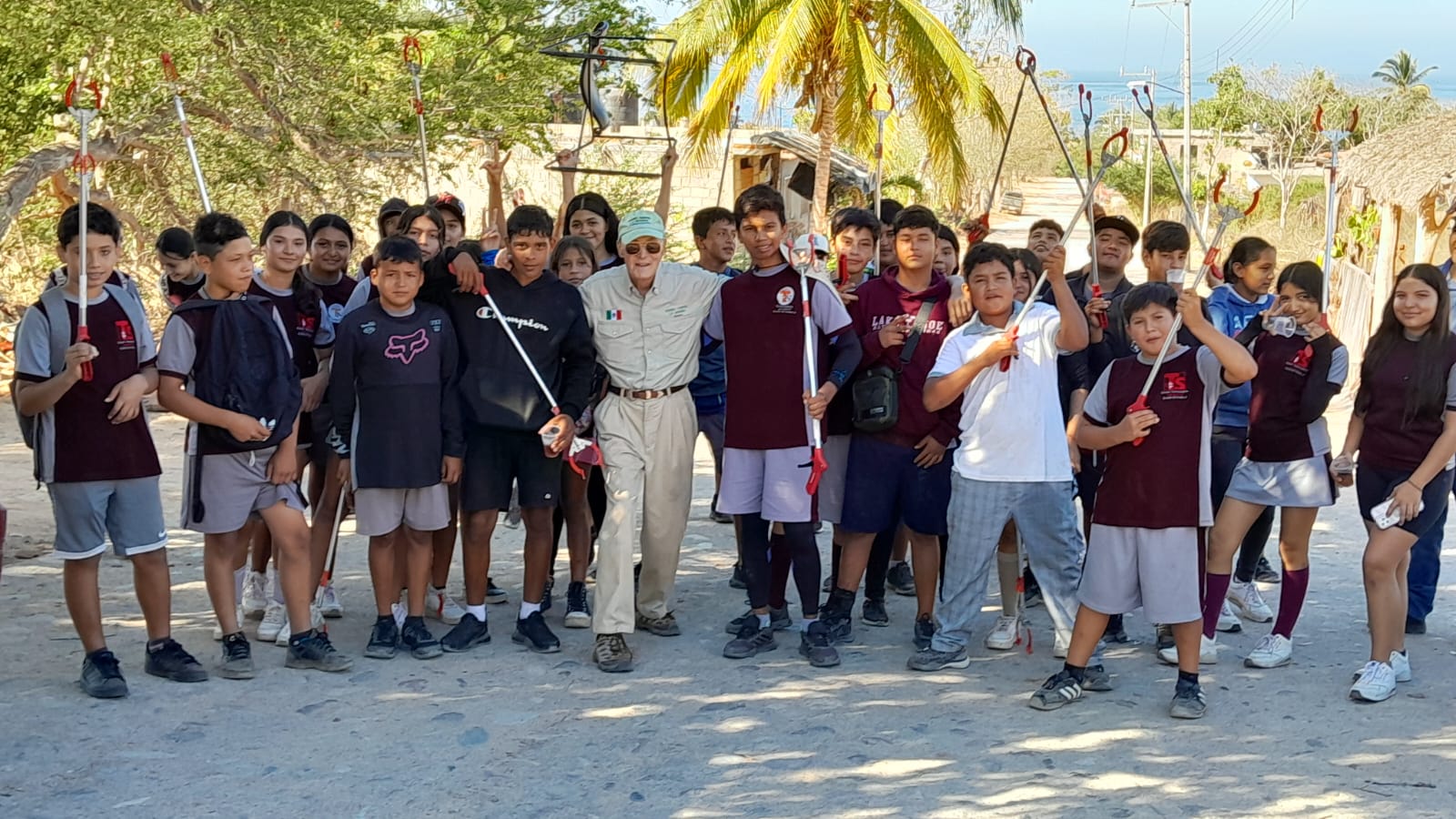


 How to resolve AdBlock issue?