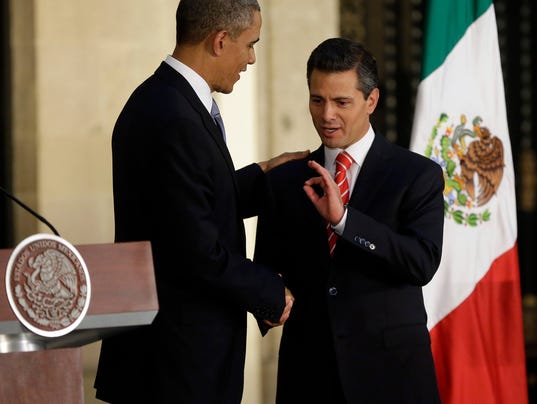
AP OBAMA US MEXICO I MEX(Photo: Pablo Martinez Monsivais, AP)

President Obama opens the new year in foreign diplomacy Tuesday by welcoming the leader of Mexico to the White House.

Obama and President Enrique Pena Nieto will discuss "strengthening the strategic partnership between the United States and Mexico and advancing our common goals," says the White House schedule.

The agenda is likely to include Obama immigration actions that would grant legal status to millions of migrants currently in the U.S. illegally.

The drug wars are another possible topic of discussion.

The White House says "the two leaders will highlight the importance of expanding dialogue and cooperation between the United States and Mexico on economic, security and social issues, as well as underscoring the deep cultural ties and friendship that exist between our two countries."

[readon1 url="http://www.usatoday.com/story/theoval/2015/01/04/obama-mexico-enrique-pena-nieto-immigration/21255615/"]Source:www.usatoday.com[/readon1]

Screen Shot 2014 12 25 at 7.04.48 PM

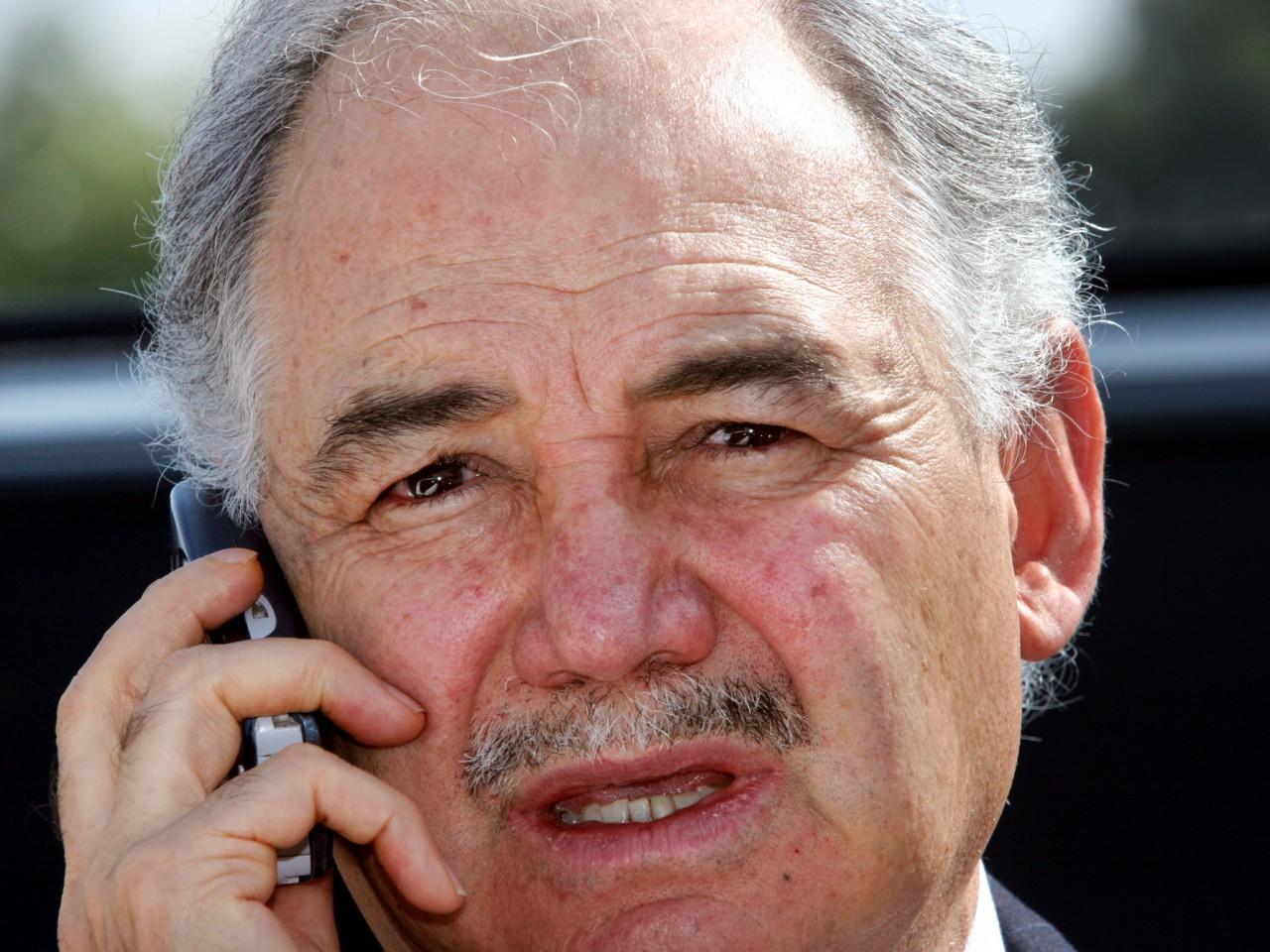
MCALLEN, Texas — The latest scandal surrounding Mexican corruption and politics deals with Mexican authorities exonerating the brother of a former president who had been accused of ransacking millions out of the president’s secret account as well as making money through other corrupt means.

After more than 19 years of court battles and a short trip to jail, Raul Salinas De Gortari, the brother of former President Carlos Salinas De Gortari, was declared innocent of the charges against him, Mexico’s Reforma newspaper reported.

Salinas’ exoneration is the most recent court case that has left the Mexican public scratching their head at the apparent impunity with which people with ties to power are able to beat criminal accusations. Salinas had initially been jailed in 1995 accused of the financial crimes as well as of the murder of Jose Francisco Ruiz Massieu, a former polititician who was one of the main power brokers of the time in Mexico until his execution in 1994.

As time went on, Raul Salinas started beating the many charges filed against him including the murder one and just last year on July 19, 2013, Mexican judge Carlos Lopez Cruz issued an absolution on the financial crimes. Mexico’s Attorney General’s Office (PGR) filed an appeal which was just ruled against thus exonerating Salinas of all crimes.

In August 2013 another Mexican court released Rafael Caro Quintero, a legendary capo who ruled the Guadalajara which the original crime syndicate that later became the Sinaloa Cartel. Caro Quintero remains a fugitive in the U.S. wanted for the capital murder of DEA agent Enrique “Kiki” Camarena.

Just this summer, another Mexican court released Rogelio “El Kelin or Z2” Gonzalez Pizana one of the original Zetas who had been arrested in Matamoros in 2005 after a fierce firefight outside of a strip club.

mexico salinas.jpeg 1280x960


[readon1 url="http://www.breitbart.com/texas/2014/12/25/former-mexican-presidents-brother-acquitted-of-raiding-mexicos-coffers/"]Source:www.breitbart.com[/readon1]

mexicanmother 1940x1293

As the search for the 42 missing students continues, Mexico’s deep-seated history of corruption and impunity is unearthed.

This past October, while savoring a fancy quinoa salad in one of Mexico City’s trendiest neighborhoods, I heard the news that Toño, the longtime doorman of a nearby building I’d once lived in, had been fatally beaten. A rebar, shoved through his eye and skull, is what eventually caused his death.

A group of franeleros — individuals who secure street parking spaces and then demand pay for their use, often in collaboration with local police, are the presumed murderers. According to a recent news story, they ambushed Toño for not allowing them to park at the entrance of the building the doorman watched over in the Roma neighborhood, a popular nightlife destination. There, as in much of Mexico, a false sense of security reigns.

Toño’s gruesome death didn’t make world news, but just like the presumed massacre of 43 students last September, it is a symbol of a rapidly spreading cancer gradually bringing Mexico to its knees. Cases of corruption, injustice and the appalling loss of respect for human life and dignity are so pervasive that they’ve become the norm. With an impunity rate of 93 percent, Mexico isn’t likely to bring Toño’s murderers to justice.

Last February, President Enrique Peña Nieto was featured in a Time Magazine cover story titled “Saving Mexico” as his “sweeping reforms” were praised abroad and clouded flagrant human rights violations at home. Fast-forward seven months and Mexico is living one of its worst crises in recent memory.

On September 26, a violent clash between police and students in the southern city of Iguala, in the state of Guerrero, resulted in six deaths and the disappearance of 43 students. According to the government, the young men were carried away by police and subsequently turned over to a criminal gang called Guerreros Unidos. They say some were asphyxiated in the back of a truck, others executed, and all eventually burned at an isolated dump site nearby. Scores have since been arrested.

In addition to municipal police involvement, prosecutors have said that the town’s then mayor, José Luis Abarca, and his wife, both accused of deep ties to organized crime and since arrested, masterminded the kidnapping of the students for being too unruly. The 43 men were students at a rural teachers college in Ayotzinapa, also in the state of Guerrero, with a long history of activism.

forbes ayotzinapa 1940x1293
Thousands march in Mexico City on October 8, 2014 to protest the disappearance of 43 students
in the state of Guerrero. Photo: Sandra Larriva Henaine

But even this official version of events is now being questioned after a news investigation stated that it was federal officials who orchestrated and executed the attack, with possible collaboration from the military. Mexico’s Attorney General Jesús Murillo Karam, who has said it is “absurd” to search for the students in military bases, has denied these claims. of Guerrero, with a long history of activism.

To date, only one student has been identified, yet several graves have been uncovered as a result of the ongoing investigation. Corpse after corpse, experts announce that the remains do not match any of the students’ DNA, begging the question: If not the students, who lies at the bottom of these pits? And who is responsible?

This “elimination of human beings” in Mexico, said Mexican writer Elena Poniatowska last month, “reminds us of concentration camps, of Auschwitz, of Birkenau, of Treblinka, it reminds us of World War II.”

Last year, Mexico’s National Human Rights Commission (CNDH) reported 2,443 disappearances in which the state was presumably involved. The official figure for missing people during former president Felipe Calderón’s bloody drug war exceeds 26,000. This June, 22 presumed criminals were killed by the army in Tlatlaya, State of Mexico. Apparently, some died during crossfire while others were executed after having surrendered, according to a CNDH report.In the last decade, “at least 370 journalists have been murdered in direct connection to their work,” says the Committee to Protect Journalists. In 90 percent of the cases, no convictions have been made.

To top it off, Mexico was ranked the most corrupt among OECD countries in a Transparency International report released earlier this month. It comes as no surprise, then, that Peña Nieto’s administration is also at the heart of favoritism and conflict of interest allegations involving a prominent government contractor.


“How can Peña Nieto take on government corruption and impunity when he has become the most obvious symbol of those ills?” asked writer Francisco Goldman in a recent New Yorker article.

Ayotzinapa is not an isolated incident, but it’s the one that caught the world’s attention. Forensic experts from Argentina and a lab in Innsbruck, Austria, are assisting in the investigation of the case while countries around the globe press Mexico for answers. In a nation where the public’s mistrust of its government is at an all-time high and the president’s approval ratings have plummeted, foreign scrutiny may very well be this catastrophe’s silver lining.

Since the students’ disappearance, #AyotzinapaSomosTodos (“Ayotzinapa is all of us”) has emerged as a popular hashtag in the Twittersphere. Ayotzinapa isn’t just the 42 students who, to date, are still missing, or the 19-year-old aspiring teacher whose remains have been identified, or the dozens of family members who’ve kindled Mexico’s largest protest movement in recent years.

Ayotzinapa is also the tens of thousands kidnapped and often killed every year, or the 72 migrants who were massacred in the border town of San Fernando in 2010. Ayotzinapa is also Toño, the kind and humble doorman who was brutally murdered last October for doing his job.

As the three-month anniversary of the disappearances nears and the government attempts to close the case, Mexico’s dirty laundry is being hung out to dry. It’s not a pretty sight, but one whose shocking barbarism is opening the world’s eyes to the deep-seated lawlessness that rules over this North American nation and affects us all. We can sit at a hip Mexico City café and look the other way as franeleros take over the streets and organized crime eats away at a broken nation, or we can seize this historic opportunity to start putting the pieces back together, one case at a time.

Ayotzinapa is all of us.

 forbes headshot Sandra Larriva

Ms. Larriva is a freelance multimedia journalist


[readon1 url="http://world.einnews.com/article/241179230/gBjC-k5yPXUlyfmi"]Source:world.einnews.com[/readon1]

 Journalism In MexicoThe Mexican Senate has called on authorities at all levels of government to protect human rights activists and journalists.

Rights activists and members of the media must deal with harassment, threats, forced disappearances and murder, the Senate said in a statement.

Officials should take measures to prevent attacks on journalists and human rights activists, senators said.

The Senate called on the federal Attorney General’s Office and on the state attorneys general to investigate human rights violations.

The Government Secretariat and state and municipal authorities should issue reports on the mechanisms established to protect human rights, the Senate said.

During the 2010-2012 period, 89 aggressions targeting these groups were registered in Mexico, of which 38 percent were threats; 13 percent were arbitrary actions; 12 percent constituted harassment; 11 percent involved the taking of lives; 11 percent were arbitrary arrests; 6 percent were attacks; 7 percent involved arbitrary use of the criminal justice system; and 2 percent involved forced disappearances, the U. N. High Commissioner for Human Rights said.

The Senate called on officials to continue taking actions aimed at promoting, protecting and guaranteeing the human rights of journalists and rights activists.

[readon1 url="http://world.einnews.com/article/240957826/3ITy9oCB9ZEz_D0B"]Source:world.einnews.com[/readon1]

bs

Puerto Vallarta, Jal.- One of President Barack Obama's first meetings of the New Year will be with Mexican President Enrique Peña Nieto (PAYN'-yuh nee-EH'-toh).

The White House says the leaders will meet in the Oval Office on Jan. 6.

The White House says Obama looks forward to working with Peña Nietoto continue strengthening economic, security and other ties between the U.S. and Mexico.

Obama said earlier this week that the U.S. has offered to help Mexico figure out what happened to a group of 43 college students who have been missing since September.

Next month's meeting follows Obama's trip to Mexico earlier this year.

[readon1 url="http://notivallarta.com/2014/12/12/obama-recibira-a-pena-nieto-el-6-de-enero/"]Source:notivallarta.com/[/readon1] 

 8040181w

Spain's King Felipe VI on Monday called on the Ibero-American community to make history by taking advantage of its "cultural power" to improve a world that demands "collective responses."

Making needed changes through the "culture of cultures" was the idea at the heart of a meeting entitled "Rethinking Ibero-America: Building the Future," held as part of the 24th Ibero-American Summit that began Monday in this Mexican port city.

The cultural event was an opportunity for the king to stress the importance of cooperation among Ibero-American nations with a view to the future while always respecting their diversity, a fine sample of which was on display at the event in Veracruz's Teatro de la Reforma.

Latin American artists, musicians and writers performed and contributed their different points of view in brief appearances that climaxed with the awarding of Mexico Prizes for Science and Technology to scientists Juan Carlos Garcia from Chile, Victor Alberto Ramos from Argentina and Carlos Martinez Alonso from Spain.

"We're in a world where we have to form alliances, join forces and work together - we have to give collective responses to collective challenges," the king said onstage, accompanied by the presidents on hand: Mexico's Enrique Peña Nieto, Chile's Michelle Bachelet; Ollanta Humala from Peru, and Uruguay's Jose Mujica, along with the head of the Ibero-American Secretariat, Rebeca Grynspan.

The king noted the "institutional system" of Ibero-American nations, created by means of summits like the one beginning Monday in Veracruz, since they provide "a meeting place for sharing experiences, exchanging visions and projecting ourselves to the world."

For the Spanish monarch, the "best starter we have for doing that is the culture we share, founded on such human values as tolerance and solidarity with one another. We ought to make it pay."

Felipe VI is convinced that "if we work to strengthen and enrich our cultural power," using it to "multiply social and economic benefits" and to provide greater opportunities for students, creative people, scientists and entrepreneurs, the contribution of Ibero-America will be "historic" and can change the world. EFE

[readon1 url="http://latino.foxnews.com/latino/politics/2014/12/08/spain-king-urges-ibero-america-to-unite-to-meet-collective-challenges/"]Source:latino.foxnews.com[/readon1]

Cumbre Ibero Veracruz2014 Presidente LuisGuillermoSolis RCS 20141207 3499-1000x647

MEXICO CITY – The Ibero-American summit to be held in December this year in the Mexican city of Veracruz will seek to combine efforts of different regional organizations to achieve better results, said Ibero-American General Secretariat (SEGIB) chief, Rebeca Grynspan.

“One of the challenges is to make an Ibero-American system, not only in SEGIB,” Grynspan said in Mexico City during a forum organized by the Mexican Council on Foreign Relations (Comexi) on the perspectives of the Veracruz meeting.

Currently, the Ibero-American states have organizations for Education, Science and Culture, Social Security, Youth, and the Conference of Ministers of Justice, among others.

According to Grynspan, these organizations, which have worked separately until now, “could offer a much more articulated and strategic proposal” if they coordinate their efforts.

“If we could bet all together for the construction of an Ibero-American space, we could get better results than separately,” she said.

In this regard, she said that the summit is “an essential forum giving political visibility and relevance to many initiatives taken by these organizations in their sectoral fields.”

She added that the secretary generals of the different organizations signed an agreement to work in coordination and expressed her confidence that the summit will approve the initiative.

Another topic to be discussed in Veracruz will be the improvement of academic mobility, workers, talents and cultural goods.

“I think that this could give a dynamism and deepness to the Ibero-American space,” Grynspan added.

During the Comexi forum, the ex-vice president of Costa Rica also warned against betting exclusively on the Asian market and on exporting raw materials and food items to satisfy the demands of the Ibero-American population.

Although she acknowledged that “the Chinese phenomenon without doubt has been very important in the growth of Latin America in the last few years,” she warned that a country alone cannot provide all the necessary growth opportunities.

According to Grynspan, “to generate quality employment and incomes required by the new middle class, the Latin American region will have to maintain a privileged relationship with the European continent and the Iberian Peninsula.”

Grynspan is in Mexico for a series of meetings prior to the Ibero-American Summit in December.

In the XII Ordinary Assembly of the organization, held on Wednesday in Mexico City, the appointment of Brazilian Paulo Speller as secretary-general for 2015-2018, substituting Alvaro Marchesi of Spain, was unanimously approved.

The XXIV Conference of Ibero-American Ministers of Education, with the participation of Grynspan, will be held on Thursday.

In this meeting, several long-term projects will be presented by participating ministers, which will then be submitted to leaders’ approval in the summit, Mexican secretary of education Emilio Chuayffet said.

In a press conference, the minister highlighted the Paulo Freire program for university teaching students, which provides academic flexibility thanks to study periods in Ibero-American institutions.

On Friday, Mexico will also embrace the XXIV Ibero-American Conference of Culture.

The XXIV Ibero-American summit will be held in the port city of Veracruz, in eastern Mexico, on Dec. 8-9 this year under the slogan “Ibero-America XXI Century: Education, Innovation and Culture.”

[readon1 url="http://www.laht.com/article.asp?ArticleId=2349946;CategoryId=12394"]Source:www.laht.com[/readon1]

tren del .jpg 1718483346

Mexican authorities denied that they have paid US$16 million to China Railway Construction Corporation.

Mexico’s Ministry of Communications and Transportation (SCT) denied reports Wednesday that the government paid US$16 million to Chinese consortium China Railway Construction Corporation (CRCC) as a compensation for canceling its contract for constructing a high-speed train in Mexico.

Chinese newspaper South China Morning Post quoted an anonymous source Wednesday saying that the Mexican government had paid CRCC some US$16.2 million dollars as a compensation for revoking its decision.

“SCT states that the information of a payment as a compensation to the consortium led by China Railway Construction Corporation (CRCC) has no basis, since there has not 0been any payment,” said the ministry in a press release. The statement was confirmed by the CRCC.

On November, Mexican government revoked a bid for constructing a high-speed rail in the country that was won by CRCC. The deal was worth US$3.7 billion to build the high-speed rail from Queretaro, a central city in the state of Queretaro (some 180 miles north of the capital) to Mexico City.

CRCC said it was surprised of the decision of the Mexican government, and announced that it would think of taking legal measures., though the consortium was officially notified of the cancellation last Monday.

Though SCT did not explain the reasons for the cancellation, it happened after an investigation revealed a possible conflict of interest between Mexico’s president, Enrique Peña Nieto, and Mexican enterprise Grupo Higa.

Grupo Higa was one of the Mexican constructing enterprises participating in the rail construction and has been awarded various millionaire government contracts by Peña Nieto since he was the governor of the central State of Mexico. Grupo Higa was also said to own the luxurious US$7-million house that Peña Nieto’s wife, actress Angelica Rivera, was intending to buy.

[readon1 url="http://www.telesurtv.net/english/news/Mexican-Government-Denies-Paying-Off-Chinese-Consortium-20141204-0004.html"]Source:www.telesurtv.net[/readon1]

COMUNICADO INJUVE 1

With the representation of Governor Roberto Sandoval Castañeda, Deputy Secretary General of Government, Héctor López Santiago, led the ceremony of the State Prize of youth 2014, whereby nine Nayarit, in equal number of categories were recognized.

"The State Youth Prize is a moral, social and economic; "on this occasion, are 10 thousand dollars for each winner: 90 thousand dollars in prizes for young people who Excel in any activity promoting peer or adult people", said the director of the Institute of youth Nayarita, Otoniel Pérez Figueroa.

The winners of this award were Miguel Cortes Lopez (contribution to the political culture), Luis Alejandro Góngora Benítez (disability and integration), Pearl Emilia Rosales flowers (human rights) and Ida Edisa Altamirano Dominguez (strengthening of indigenous culture).

In addition, Ismael Stanislav Pérez Ibarra (environmental protection), Andrés Aharhel Mercado (academic achievement), Antonio Barajas Gonzalez (artistic expressions), Paul Guadalupe Alvarado (science and technology) and Jans Izac Martínez (entrepreneurial ingenuity).

COMUNICADO INJUVE 2

COMUNICADO INJUVE 3

COMUNICADO INJUVE 5

MEXICO-master675
President Ollanta Humala of Peru greeted Christiana Figueres, a United Nations official, on the eve of climate change talks.CreditAgence France-Presse — Getty Images

EJIDO RANCHO OJO LAGUNA, Mexico — For six years, while drought ravaged Chihuahua State, Mario Ruiz clung to his small herd of cattle.

The pasture where his cattle graze, about 45 miles north of the city of Chihuahua, turned bare. Many of his cows starved. Others he sold to buy fodder for those worth saving. Of 130 cows, just 30 are left.

Now that the rains have returned, turning the dusty steppe a rich green, farmers like Mr. Ruiz, 41, are struggling to restock their herds and dig themselves out of debt. They fret that the drought, which devastated crops and killed 400,000 head of cattle in Chihuahua State, just south of the United States border, could become a familiar enemy.

“If it rains, we’ll survive,” Mr. Ruiz said. “But it seems like it rains less and it rains later.”

Faced with the growing threat of extreme weather — droughts, hurricanes and rising coastal waters — Mexico has positioned itself as a leader in the fight against climate change. It pledges to curb the rise in emissions significantly by 2020 and to produce one-third of its energy from clean sources by 2024.

Mexico, the world’s 13th-biggest emitter of carbon dioxide, has passed a stack of federal and state laws that regulate emissions, promote sustainable forest management and establish funds for renewable energy and energy efficiency. In 2012, it became one of the first countries in the world to pass a climate change law.

But as world leaders meet in Lima, Peru, this week to lay the groundwork for a new agreement under the United Nations Framework Convention on Climate Change, some analysts doubt that Mexico can meet its much-lauded targets.

“Mexico put on the climate change T-shirt because it was in vogue,” said Carlos undersecretary, a public policy analyst at the Mexican Center for Environmental Law, known as Cemda, an environmental advocacy and research organization. “We are the champions of the climate change fight — the good boy who does his homework — but the resources dedicated to climate change are few.”

The government introduced a carbon tax in January that levies an average of $3 per ton of carbon, and Mexico’s stock exchange started a platform to trade carbon credits last year.

Mexico has also been among the most diligent of developing nations in submitting its inventory of greenhouse gas emissions under the United Nations convention, according to Globe International, an organization that promotes sustainable development laws.

But there are no penalties for missing emissions targets, and environmental experts say current initiatives are falling short.

While there is a detailed plan for federal entities to reduce emissions — aiming to cut 83 million tons of carbon dioxide between 2014 and 2018 — there is no equivalent, experts say, for reductions by the private sector, or by state and municipal institutions. And a fund established in 2012 to finance climate initiatives was given $78,000 to start, they say, but has yet to receive any other money.

Rodolfo Lacy Tamayo, under secretary for planning and environment policy, said the government would pursue a series of initiatives, including cutting pollutants like methane, shifting from diesel and gasoline to natural gas in cars and public transportation, and developing climate change programs with state governments.


“We set an objective,” he said, “and we are getting sectors on board: states, municipalities, the paper industry, the timber industry, the farmers, the auto sector. We are lining up all the policy instruments to meet our objective.”

Experts say those plans should include significantly expanding renewable energy sources. More than 80 percent of current consumption comes from fossil fuels.

But measures passed in August, which opened Mexico’s oil and gas reserves to foreign investors, reduce incentives for renewable energy, critics argue.

“There is a very strong perception that oil is part of our culture, and that renewables aren’t viable,” said Miguel Soto, spokesman for Greenpeace Mexico’s renewable energy program.

He and other experts blame government inefficiency and the power of entrenched interests for a lack of progress toward the country’s lofty climate goals.

“There is no doubt among the ruling class that climate change exists,” said Mr. Tornel, the analyst. “But there is a lack of political will, and a lack of institutional coordination at the state and municipal levels to design initiatives and take action.”

Harsh climate is a growing burden. The government estimated that the annual average cost of disasters was $2.1 billion between 2000 and 2013, about three times the annual average registered between 1980 and 1999.

In September, Hurricane Odile hit the western, coastal state of Baja California with 115-mile-an-hour winds and torrential rains, destroying houses and leaving 200,000 people without electricity. In October, flooding and mudslides caused by Tropical Storm Trudy killed six people in Guerrero State, a year after storms caused a landslide in La Pintada, Guerrero, that buried about half the village and killed 71 people.

The drought that devastated northern Mexico in recent years has eased in many areas, but the country has lost about 30 percent of its cattle.

In Chihuahua, where wide fields of corn, alfalfa, oats, and beans abut neat orchards of pecan, apple and peach trees, drought and the expansion of farmland have produced a fierce contest for water.

The crisis has led to tension with Texas water officials, who say that Mexico has failed to deliver its quota of water from the Rio Grande under a 1944 treaty with the United States.

Some farmers said drought had been a cyclical problem in the region for centuries, although others said the rains had become shorter and patchier. They say they have to dig deeper to reach the water; they blame both a lack of rain and big farms that overuse aquifers.

“They are devastating the local flora and fauna,” said Enrique Ochoa, who grows alfalfa and grazes sheep and Jersey cows on 125 acres about 30 miles north of the city of Chihuahua.

When his well, dug 150 feet deep in 1970, dried up a few years ago, his beans and sorghum withered and his 500 sheep grew thin. He sold most of the sheep and planted no crops for three years, he said, because he could not water them.

“I lived on beans and dry bread,” Mr. Ochoa said. With the help of a government grant, he has just dug another well — 1,000 feet deep.

Mr. Ruiz, who has no permit to dig a well and cannot afford one anyway, said he had little choice but to watch the clouds and pray. He stopped sowing beans and corn on the communal land near his house 15 years ago, he said, because the rains came too late in the season.

He is not sure he will make it if the drought returns next year. He cannot afford to buy new cows because the price has shot up to about $1,000 a head. He said many of his neighbors had given up and migrated to the United States or to the state capital.

“If you can’t sow your land, if you can’t keep your cows, what do you do?” he said. “You sell up. You migrate to the city.”

[readon1 url="http://www.nytimes.com/2014/11/30/world/americas/as-mexico-addresses-climate-change-critics-point-to-shortcomings-.html?_r=0"]Source:www.nytimes.com[/readon1]


timthumb

Puerto Vallarta, Jal. -expose the riches of indigenous groups and share their traditions is the objective of the exhibition "Meeting of our roots of Mexican culture" that takes place at the Centro Universitario de la Costa, inaugurated on Thursday by Arturo Dávalos, general director of Social development, who stressed the importance of rescuing the archaeological zone of Ixtapa and as project promote there a traditional corridor where indigenous groups work display and sell their crafts, this in coordination with the Ministry of tourism.

"I acknowledge the effort made by Dr. Edmundo Andrade and the authorities of the CUC to maintain this type of samples, precisely to twin the University with the ethnic groups, I agree that paramount is the union of the groups to be strengthened and project your wealth. As a municipal government, we have worked since social benefit programs that support their development and that of their families", expressed the official ethnic tricks, Otomi, Zapotec and Mixtec, members there present.

Arturo Dávalos Peña ceremony together with Edmundo Andrade Romo, on behalf of the President of the Centro Universitario de la Costa (CUC), the director of the DIF system Adolfo López and the Deputy Director of the municipal tourism, Enrique Tovar, as well as students University students of various races, listened to the words of thanks by Virginia Guzmán García, who belongs to the Zapotec ethnicity and studied his career on the same campus. She spoke of the difficulties that have passed to promote their customs as indigenous group, and stressed the support of the educational authorities to achieve this.

After witnessing some traditional dances, the authorities took a tour for the different food and craft jobs, prompting the Indians to preserve our culture. The Friday morning program includes a presentation of regional music Huichol at 12:00 and the sample ends at 17:00.

[readon1 url="http://notivallarta.com/2014/11/28/reitera-apoyo-el-gobierno-municipal-para-grupos-indigenas/"]Source:notivallarta.com[/readon1]

COMUNICADO ICATEN

On instructions from the Governor, Roberto Sandoval Castañeda , director general of the Institute of Training for Work in Nayarit , Paulina Sanchez Sanchez, met in Mexico City , with the national coordinator of ICAT'S , Patricia Alejandra Fernández , before whom managed construction of a new campus in the town of Bahía de Banderas.

In this regard, Sanchez Sanchez - who was accompanied the Senator Margarita Flores - reported that the current conditions of the institution will take advantage to facilitate procedures and integration of the relevant file to build such facilities, and thus to give more educational infrastructure so that people have access to more training options.


Currently, the ICATEN comprises three campuses and six mobile actions in Nayarit; building one more campus provides greater opportunities to upgrade and training to the population, in addition to the generation of direct and indirect employment in the State, finally explained Sanchez Sanchez

COMUNICADO SAGADERP 1

In the search for sustainable development of the sectors agriculture and fisheries, the Government joins efforts with the Federal Government to develop a scheme of work that aims to improve the quality of life for thousands nayaritas families devoted to the primary activities.

The Secretariat of Agriculture, Livestock, Rural Development and Fisheries (SAGADERP), in coordination with the delegations of SAGARPA and CNA, implement actions to strengthen the organization of the field (agriculture, livestock and fisheries), high performance production systems, general sanitation and training .


In addition, investment in equipment and supplies, research climate and soils, study market and business, free legal consulting and project development plan, information on federal and State program's ease of financing and administrative support, and permanent expo.

Thus, the Center for Performance Excellence Agricultural Nayarit (CREAN) arises as an opportunity to achieve concurrency support, legal, financial and agricultural advice; financing, training and exchange of strategic information, reducing the bureaucracy that producers face in order to have access to government support.

The CREAN is equipped with cutting edge technology and has modern facilities, which allow the optimal development of actions for training and knowledge transfer, such as a main auditorium, classrooms, offices of attention, and so on.

The owner of the SAGADERP, Emeterio Carlon Acosta, reported that, as part of the comprehensive strategy of the Government to promote the strengthening of productive capacities of the nayaritas farmers, the create account with independent offices to ensure federal and State agencies that operate sectoral programmes and grant funding, with a space of direct attention to producersavoiding intermediaries.

COMUNICADO SAGADERP 2

COMUNICADO SAGADERP 3

BOLETINDEPRENSA