








Mexican workers log an average of more than 2,226 hours per year, among the highest of any country in the Organisation for Economic Co-operation and Development (OECD). Yet the country ranks last in labour productivity and wages across all 38 OECD member states. Against that backdrop, Mexico's Chamber of Deputies has passed a landmark bill that will phase the standard workweek down from 48 hours to 40 hours by the year 2030, in what advocates are calling the most significant labour reform in the country in decades.
The bill cleared the Chamber of Deputies late on a Tuesday, drawing on a remarkably broad base of support. Out of 500 deputies, 469 voted in favour of the bill's broad outline, while none opposed it. The specific terms were then approved with 411 votes in support, a result that came after nearly ten hours of floor debate, during which critics raised concerns about certain provisions tucked into the legislation's fine print.
A Gradual Reduction Rather Than an Overnight Shift
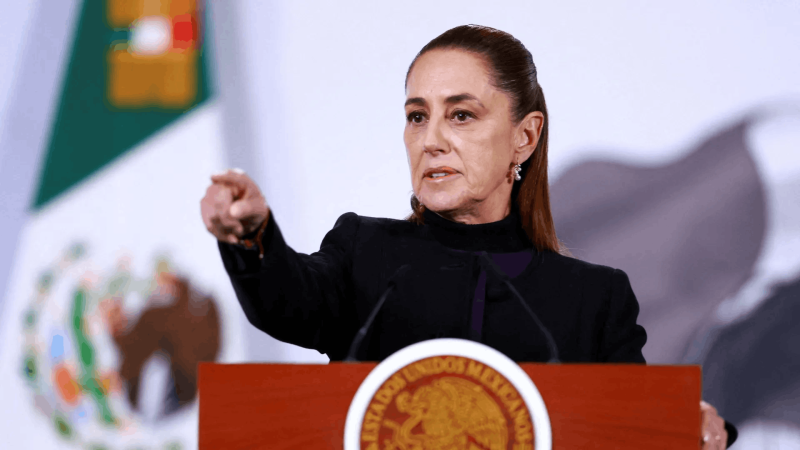
The reform, introduced by President Claudia Sheinbaum in December, is designed to take effect incrementally. Beginning next year, the workweek will be trimmed by two hours per year until the 40-hour target is reached in 2030. This phased approach is intended to give businesses time to adapt to the new legal framework without abrupt disruptions to operations or payroll.
The legislation is expected to directly benefit approximately 13.4 million formal workers across Mexico. For context, Mexico's economy is the second largest in Latin America, with a gross domestic product of roughly $1.86 trillion according to the World Bank, making the scope of this reform economically significant far beyond its headline figure.
Pedro Haces, a Morena representative and the secretary general of the Autonomous Confederation of Workers and Employees of Mexico, captured the mood on the chamber floor succinctly: 'Productivity is not measured by exhaustion. It is built with dignity.' Morena, Mexico's ruling party, has championed this reform for years, navigating sustained opposition from the business community before arriving at this week's vote.
The Trade-offs Critics Are Watching
The bill is not without its detractors, and the criticisms are substantive. While total standard hours per week are set to decrease, the law simultaneously permits employers to raise the amount of weekly overtime, a provision critics say could erode much of the relief workers are meant to gain. The legislation also fails to change the minimum number of mandatory rest days. Under current Mexican law, workers are entitled to one rest day for every six days worked, a ratio that will remain unchanged under the new framework.
Alex Dominguez, a lawmaker from the opposition PRI party, summarised the dissent plainly: 'The idea of the reform is not bad, but it is incomplete and was done in a rush.' His concern echoes a wider anxiety among analysts: that without parallel protections around overtime regulation and rest entitlements, the shorter workweek may exist on paper without translating into meaningfully shorter hours in practice.
The reform still needs ratification by two-thirds of Mexico's state legislatures before it goes into full legal effect, a requirement that introduces uncertainty into the timeline and creates space for further political negotiation at the regional level.
The Informal Sector and the Structural Limits of the Reform
Perhaps the most structurally significant caveat is who the reform does not reach. Approximately 55% of Mexico's workforce operates in the informal sector, meaning they are not covered by formal labour contracts and lack the legal protections that the new bill would extend. For more than half the country's workers, the 40-hour workweek is not a right the state can currently enforce on their behalf.
This reality does not invalidate the reform, but it does frame it correctly: as a step forward for formal workers within an economy that has yet to formalise the majority of its labour force. Broader gains will depend on parallel efforts to expand formal employment and strengthen labour inspection capacity.
What the Reform Means for Foreign Businesses and Investors
For multinationals and foreign-owned businesses operating in Mexico, a constituency that has grown considerably amid the nearshoring boom of recent years, the reform introduces a compliance timeline that requires attention. Human resources and legal teams will need to map out how the two-hour annual reduction intersects with existing collective bargaining agreements, shift schedules, and overtime frameworks.
The business community's concerns are not new; they have been part of the back-and-forth with Morena since the party first floated this reform. Ultimately, the passage of the bill signals that the Sheinbaum administration views improved working conditions as structurally compatible with, and perhaps necessary for, Mexico's long-term economic competitiveness, particularly as the country seeks to position itself as a premier nearshoring destination for U.S. and global companies.
Frequently Asked Questions
Q: When will Mexico's 40-hour workweek officially take effect?
A: The reform will be implemented gradually, beginning in 2026 with a two-hour reduction per year, until the 40-hour standard is reached in 2030. However, it still requires ratification by two-thirds of Mexico's state legislatures before it formally takes effect.
Q: Does the reform apply to informal workers in Mexico?
A: No. Approximately 55 percent of Mexico's workforce operates in the informal economy and is not covered by formal labour law protections. The 40-hour workweek reform applies only to formally employed workers.
Q: Can employers still require overtime under the new law?
A: Yes. The bill includes a provision that allows employers to increase the amount of permissible weekly overtime, which critics argue could offset some of the benefit workers gain from the reduction in standard hours.
Q: How does Mexico's working hours compare to other OECD countries?
A: Mexico's workers average more than 2,226 hours per person annually, among the highest in the OECD. Despite these long hours, the country ranks last among OECD members in both labour productivity and wages.
Q: How does this reform affect foreigners working or running a business in Mexico?
A: Foreign nationals employed under formal contracts in Mexico will be covered by the new standard. Businesses operating in Mexico will need to review and potentially revise their employment contracts, shift structures, and overtime policies to align with the phased schedule.
Q: What happens if state legislatures do not ratify the bill?
A: The bill requires approval from two-thirds of Mexico's state legislatures to enter into force. If that threshold is not met, the reform cannot take legal effect nationally, and further legislative action would be required.