







Puerto Vallarta's February 24 formalisation of its Diversity Council, covered in our main piece, takes place within a national landscape of highly uneven LGBTQ+ legal protections across Mexico's 32 states and thousands of municipalities. Understanding where Puerto Vallarta's reform sits on that spectrum, and what the distribution of protections looks like across the country, provides context for assessing the significance of the municipal action.
The Federal and State Framework
Mexico's federal constitution was amended in 2011 to add an explicit human rights framework, and the Supreme Court has issued multiple jurisprudential rulings affirming LGBTQ+ rights, including a 2015 ruling establishing that state laws excluding same-sex couples from marriage are unconstitutional. Despite this, implementation has proceeded state by state rather than through a uniform federal mandate, resulting in a patchwork in which same-sex marriage is legally available in all states but the legislative basis varies considerably.
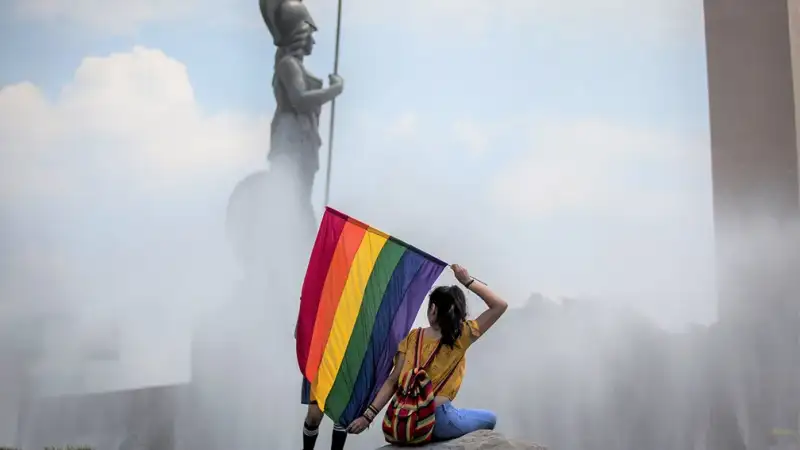
Jalisco, where Puerto Vallarta is located, legalised same-sex marriage through a Supreme Court-backed process, but the state's political culture has historically been more conservative on social issues than Mexico City or Oaxaca. The city of Guadalajara, Jalisco's capital, has a substantial LGBTQ+ community and has hosted significant Pride events, but the state government's institutional engagement with LGBTQ+ rights has been more cautious than its federal constitutional obligations require.
At the municipal level, protections are even more variable. Municipal governments in Mexico have authority over local police, public services, urban planning, and certain commercial regulation, areas where LGBTQ+ individuals can face discrimination that state-level civil rights frameworks do not directly address. A municipality with explicit non-discrimination policies, an active diversity council, and regular community engagement mechanisms provides a meaningfully different governance environment than one without those structures, even if state-level civil rights are nominally the same.
What Puerto Vallarta Has Built Municipally
Puerto Vallarta's approach to LGBTQ+ inclusion at the municipal level has developed through both organic community growth and, increasingly, formal institutional action. The Office of Sexual Diversity, which Carlos Plascencia leads as Deputy Director, is an administrative unit dedicated to LGBTQ+ affairs, an unusual municipal structure that reflects the city's particular relationship with its LGBTQ+ community and tourism market.
The February 24 reforms add a legislative layer to what had previously been primarily an administrative commitment. By embedding the Diversity Council in city ordinance rather than executive policy, Puerto Vallarta has created a governance structure for LGBTQ+ inclusion that is more durable and more institutionally substantive than what most Mexican municipalities of comparable size have established.
Comparable municipal structures in Mexico are most developed in Mexico City, where the capital's district government has decades of institutional engagement with LGBTQ+ rights and services. Outside the capital, formal municipal diversity councils with legislatively defined mandates are relatively uncommon. Puerto Vallarta's model, driven partly by the commercial imperative of its LGBTQ+ tourism economy, represents a template that other tourist destinations with significant LGBTQ+ visitor populations might consider adopting.
The Gap Between Legal Framework and Lived Experience
Legal reforms at the municipal level do not automatically translate into changed experiences for LGBTQ+ individuals in their interactions with public institutions. Police, municipal health services, public school environments, and government administrative offices all mediate the relationship between legal frameworks and daily reality. Training, oversight, and accountability mechanisms, areas where the Diversity Council's monitoring mandate is potentially significant, determine whether formal protections become operational ones.
Puerto Vallarta's LGBTQ+ residents and visitors have generally reported the city as one of Mexico's more welcoming environments for queer people, but informal tolerance and institutional protection are not the same thing. The formalisation of the Diversity Council is a step toward converting the former into the latter, a process that requires ongoing implementation rather than a single legislative action.
Frequently Asked Questions (FAQs)
Q: Is same-sex marriage legal throughout Mexico and how does implementation vary?
A: Same-sex marriage is legally available throughout Mexico following Supreme Court jurisprudence establishing that restricting marriage to opposite-sex couples is unconstitutional. However, implementation proceeded state by state rather than through a uniform federal mandate. The legislative basis and procedural ease varies across states, and some municipalities in conservative states have historically created administrative obstacles despite the legal obligation to register same-sex marriages.
Q: How does Jalisco's political culture affect LGBTQ+ institutional engagement?
A: Jalisco has historically maintained a more conservative political culture on social issues than Mexico City or Oaxaca, despite being home to a substantial LGBTQ+ community in Guadalajara and Puerto Vallarta. The state government's institutional engagement with LGBTQ+ rights has been more cautious than its federal constitutional obligations require. Puerto Vallarta's municipal reforms therefore represent a degree of institutional leadership that runs ahead of the state-level posture.
Q: What authority do Mexican municipalities actually have over LGBTQ+ rights enforcement?
A: Municipalities in Mexico control local police conduct, public service delivery, urban planning, and commercial regulation, areas where LGBTQ+ individuals can face discrimination that state-level civil rights frameworks do not directly address. A municipality with explicit non-discrimination policies and an active diversity council provides a meaningfully different governance environment than one without those structures, even when state civil rights protections are nominally identical.
Q: What does Puerto Vallarta's Office of Sexual Diversity actually do?
A: The Office of Sexual Diversity is a dedicated administrative unit within Puerto Vallarta's municipal government that coordinates the city's engagement with LGBTQ+ affairs, implements inclusion policies, liaises with community organisations, and provides institutional support for the Diversity Council. Dedicated municipal offices for LGBTQ+ affairs of this kind are unusual in Mexican cities outside Mexico City, reflecting Puerto Vallarta's particular relationship with its LGBTQ+ community and tourism economy.
Q: Could Puerto Vallarta's municipal LGBTQ+ governance model be replicated in other Mexican cities?
A: The model's replicability depends on two factors present in Puerto Vallarta but not universally: a politically organised LGBTQ+ civil society with the capacity for sustained institutional engagement, and a commercial incentive, the LGBTQ+ tourism economy, that aligns government interest in inclusion with economic interest in destination reputation. Tourist destinations with significant LGBTQ+ visitor populations have the strongest structural incentives to adopt comparable frameworks.