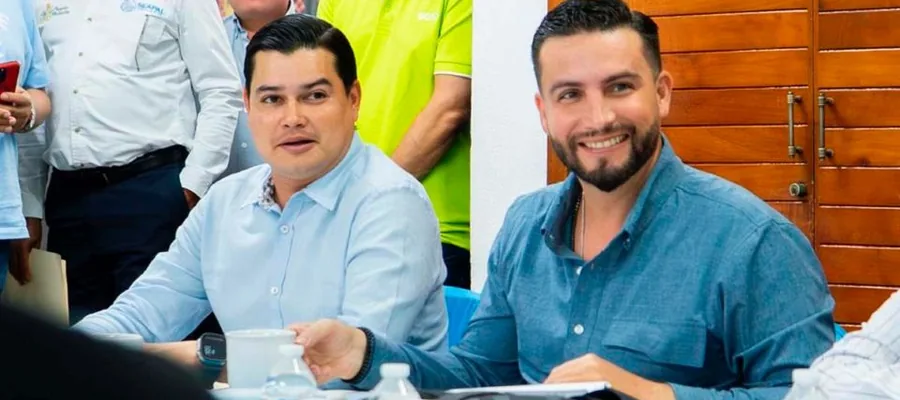








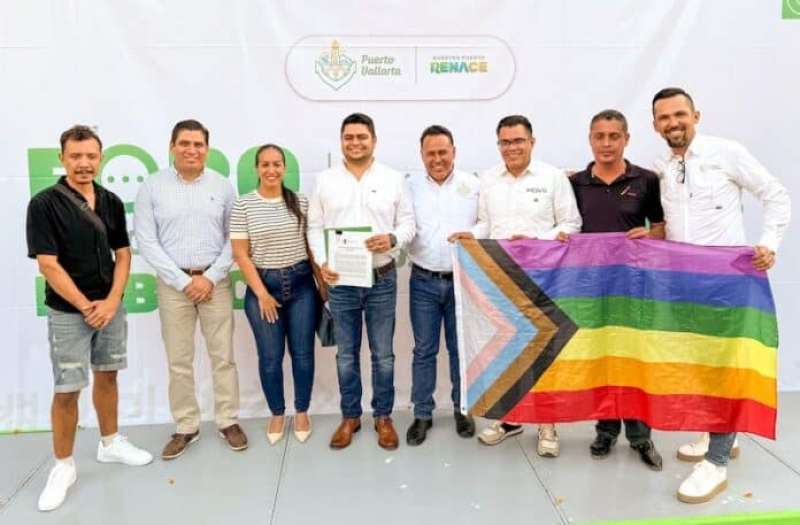
On February 24, Puerto Vallarta's City Council approved two structural reforms related to LGBTQ+ inclusion. The first formally establishes the Diversity Council, the Municipal Council for Sexual and Gender Diversity, as a regulated body with defined composition, operating rules, and a mandate to propose, review, and monitor public policies through a human rights lens. The second creates an annual citizen participation process to be held on May 17, the International Day Against Homophobia, Transphobia, and Biphobia, institutionalising a regular forum through which the LGBTQ+ community can engage with municipal government.
The reforms were presented by Councilors Christian Bravo and Víctor Bernal and described by Carlos Plascencia, Deputy Director of Sexual Diversity, as a structural advancement for the municipality. The framing of the reform, legal certainty, institutional permanence, human rights framework, reflects a deliberate effort to distinguish these measures from symbolic gestures or administration-specific commitments.
What the Diversity Council Reform Actually Creates
The approval of regulations governing the Diversity Council's integration and operation does something specific: it converts an advisory body from an entity that exists at the discretion of the current administration into one with a legal framework that survives changes in municipal government. A council created by mayoral decree can be dissolved by the next mayor. A council whose composition, mandate, and operating procedures are defined by legislation approved by the city council has a more durable institutional basis.
The council's defined mandate, to propose, review, and monitor public policies through a human rights lens, gives it a structured advisory role rather than a purely consultative one. The distinction matters: a council that proposes specific policy changes and monitors their implementation is a more substantive institutional actor than one that is periodically invited to comment on government initiatives. Whether the council exercises that mandate effectively will depend on its composition, resources, and the responsiveness of municipal departments to its recommendations.
The annual citizen participation process on May 17 addresses a different problem: the recurring question of how community voices are incorporated into policy-making between formal council meetings. By institutionalising an annual forum tied to a recognised international date, the reform creates a predictable channel for community engagement that does not depend on the goodwill of individual officials to convene.
The Legal Certainty Argument
Plascencia's emphasis on legal certainty as the reform's primary value reflects a practical concern that advocates for LGBTQ+ inclusion in Mexican municipalities know well. Policy commitments made by elected officials are only as durable as the officials who make them. An administration that prioritises LGBTQ+ inclusion creates programmes, appoints sympathetic staff, and cultivates community relationships, but those investments are vulnerable to reversal when administrations change, particularly at the municipal level where political turnover is frequent and the legal frameworks governing specific policy areas are often thin.
Embedding the Diversity Council in legislation rather than executive action raises the cost of dismantling it. A future administration that wished to eliminate the council would need to bring a repeal proposal to the full city council, generating a public process in which the political costs of reversal would be visible. That procedural friction does not make the reform irreversible, but it makes reversal significantly more difficult than simply ceasing to appoint council members or fund its operations.
Puerto Vallarta's LGBTQ+ Institutional History
Puerto Vallarta's reputation as Mexico's leading LGBTQ+ destination was built primarily through market dynamics, the organic development of LGBTQ+-owned businesses, community institutions, and tourism infrastructure in the Romantic Zone, rather than through proactive municipal policy. The formalisation of the Diversity Council represents a moment where institutional policy is being aligned with a social reality that the city's commercial and community life had already established.
That alignment is not trivial. Destinations that depend on LGBTQ+ tourism for a significant share of their economic activity are exposed to reputational risk if their municipal governance is seen as indifferent or hostile to LGBTQ+ rights. The February 24 reform provides a measurable, legislative signal that Puerto Vallarta's institutional posture matches its commercial identity, a signal relevant not only to domestic LGBTQ+ residents but to international visitors and investors assessing the destination's long-term stability as a welcoming environment.
Frequently Asked Questions (FAQs)
Q: What did Puerto Vallarta's City Council approve on February 24?
A: The City Council approved two related reforms: regulations governing the composition and operation of the Municipal Council for Sexual and Gender Diversity (the Diversity Council), converting it from an administratively created body to one with a formal legislative basis; and a regulated annual citizen participation process to be held on May 17 each year, institutionalising a recurring community forum tied to the International Day Against Homophobia, Transphobia, and Biphobia.
Q: What is the Municipal Council for Sexual and Gender Diversity?
A: The Municipal Council for Sexual and Gender Diversity is an advisory body designed to serve as a bridge between Puerto Vallarta's municipal government and its LGBTQ+ community. Its mandate includes proposing, reviewing, and monitoring public policies through a human rights lens, and participating in the design of initiatives that promote equality and non-discrimination. The February 24 reforms gave the council a formal legislative basis defining its composition, operation, and mandate.
Q: Why does the legal basis of the council matter?
A: Bodies created by mayoral or administrative decree exist at the discretion of the current administration and can be dissolved without legislative action. A council whose structure and mandate are defined in legislation approved by the city council has a more durable institutional basis, a future administration wishing to dissolve it would need to pass a repeal through the council, generating a public process with visible political costs. Legal certainty makes the council's existence more resistant to administrative reversal.
Q: What is the significance of May 17 as the date for the annual citizen forum?
A: May 17 is the International Day Against Homophobia, Transphobia, and Biphobia, commemorating the date in 1990 when the World Health Organisation removed homosexuality from its International Classification of Diseases. By tying the annual citizen participation process to this date, Puerto Vallarta connects its local governance forum to a recognised international framework and signals that the event is understood as part of a global human rights context rather than purely a local initiative.
Q: How does Puerto Vallarta's reform compare to LGBTQ+ protections in other Mexican cities?
A: Mexico City has the most comprehensive LGBTQ+ legal protections in the country, including same-sex marriage legalisation (2009) and broad anti-discrimination frameworks. Several states have followed with marriage equality. At the municipal level, formal advisory councils for LGBTQ+ affairs are less common, and Puerto Vallarta's combination of a legislatively grounded diversity council and an institutionalised annual forum represents a relatively advanced municipal governance model for LGBTQ+ inclusion in Mexico.
Q: Does the reform affect same-sex marriage or other civil rights in Puerto Vallarta?
A: The February 24 reform addresses governance and advisory structures rather than civil rights statuses. Same-sex marriage in Jalisco is governed by state law, not municipal ordinance. The Diversity Council's mandate to propose and monitor public policies could include advocacy related to municipal services, non-discrimination in public contracting, or other areas within the municipality's authority, but changes to civil rights frameworks require action at the state or federal level.