2-bgr-htc-one-m8-topWhether you're rocking the latest Android device from Samsung, HTC, or LG, these tips will help you get the most out of your phone or tablet.

1. Send Your Ex Straight to Voicemail

We've all got a few people we'd rather not talk to. Rather than manually screening every call, set up your phone to do the dirty work for you. Load up the culprit's contact card, select Edit, and then scroll down to Additional Info. Select "Send straight to voicemail" from the list to have every subsequent call from that person bypass your ringer entirely.

2. Screen Calls More Politely

Okay, you're not always sending people to voicemail because you can't stand them. Sometimes you're in a meeting and can't talk. Android has a way to silence a call without giving your friend the cold shoulder; you can send a custom text message to let him know you'll call back later. To create your own note, go to Phone Settings, and then Quick Responses. Next time you need to silence a call, swipe up to send your canned response.

3. Map it Out

Just because you're traveling somewhere without cell service doesn't mean you can't have Google Maps to guide. Before you head out, pull up the area where you're likely to go offline up in Maps, and then type "Ok Maps" into the search window on the page. Maps will download that particular portion of the map, making it available even in places where cell and Wi-Fi service are MIA.

4. Add Words to Your Dictionary

Tired of typing in every letter of your weird cousin's name or your group's inside-joke slang terms every time you send a text? Teach your phone new words by long pressing on a word to add it to your personal dictionary. Next time you go to type it in, your phone will suggest the word after a few letters, saving your fingers a little bit of time.

5. Watch Your Data

Avoid overage fees on your data plan by monitoring how much you use throughout the month. Go into Settings and then Data Usage to view not only a breakdown of how much data you've used, but also what apps are the biggest culprits. If you find yourself cutting it close month after month, you can set an alert to tell you when you're getting close to your limit—or program your phone to stop using cellular data altogether when you've hit your monthly cap.

6. Prevent Premature Loading

We love tabbed browsing. What we don't love is when we don't need the info in all the tabs you have open but they preload anyway, which can do some decidedly not awesome things to your data plan. Restrict Chrome so it preloads websites only when it's connected to Wi-Fi: Go into its Settings menu (accessible by pressing the three dots beside the address bar of a loaded webpage) and selecting Bandwidth Management. From there, uncheck the box beside preload webpages to prevent them from loading on their own.

7. Put Your Name on It

One day you leave your phone behind, but you get lucky—a good Samaritan finds it and wants to return it to you. But how will they know whom it belongs to? Android will let you put your name, email address, and an alternate phone number on your lock screen so that someone who picks up the device will know it's yours, but won't have access to any of the other info on your phone. To add your details, go into the Settings menu on your phone and then select Security, Screen Security, and then Owner Info.

8. Simplify Calls

Sometimes navigating through your contacts list to make a call is a bit more effort than you're looking to give. So add a speed dial button to your home screen to make it easy to call your mom, or, you know, that pizza place down the street. To add a number, press and hold on your home screen where you'd like to add it. A menu will pop up. From there, select Shortcuts and then Contact. Scroll down to select the number you want to add.

9. Become a Hard Drive

Need to transport a few files? Your Android phone can double as a portable hard drive. Connect your phone to your computer using your USB cable (the same one you use to charge it every night). The phone will ask if you want to enable it as a USB storage device. Say yes, and it will show up on your desktop just like any other hard drive, ready to hold any files you need to transport elsewhere.

10. Hide Your Kid's Mess

Tired of your kid's games filling up the homepage on your Nexus 7? If you're sharing your tablet with others, you can create an individual profile for each person where they can store their favorite apps and content. To create a profile on your device for someone new, go into the Settings menu and then select "Users" followed by "Add user or profile." On-screen instructions will guide you through adding a new account with its own apps to your device, or granting restricted access to your personal content for someone new.

[readon1 url="http://www.popularmechanics.com/technology/how-to/tips/10-things-you-didnt-know-your-android-phone-could-do-17058622"]Source:www.popularmechanics.com[/readon1]

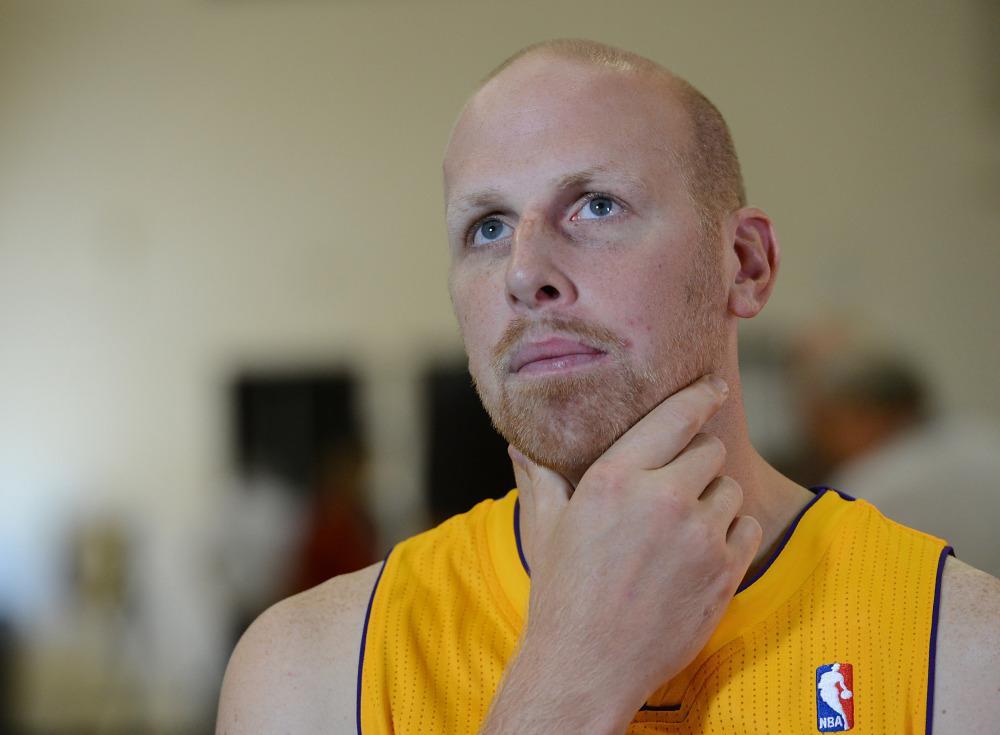
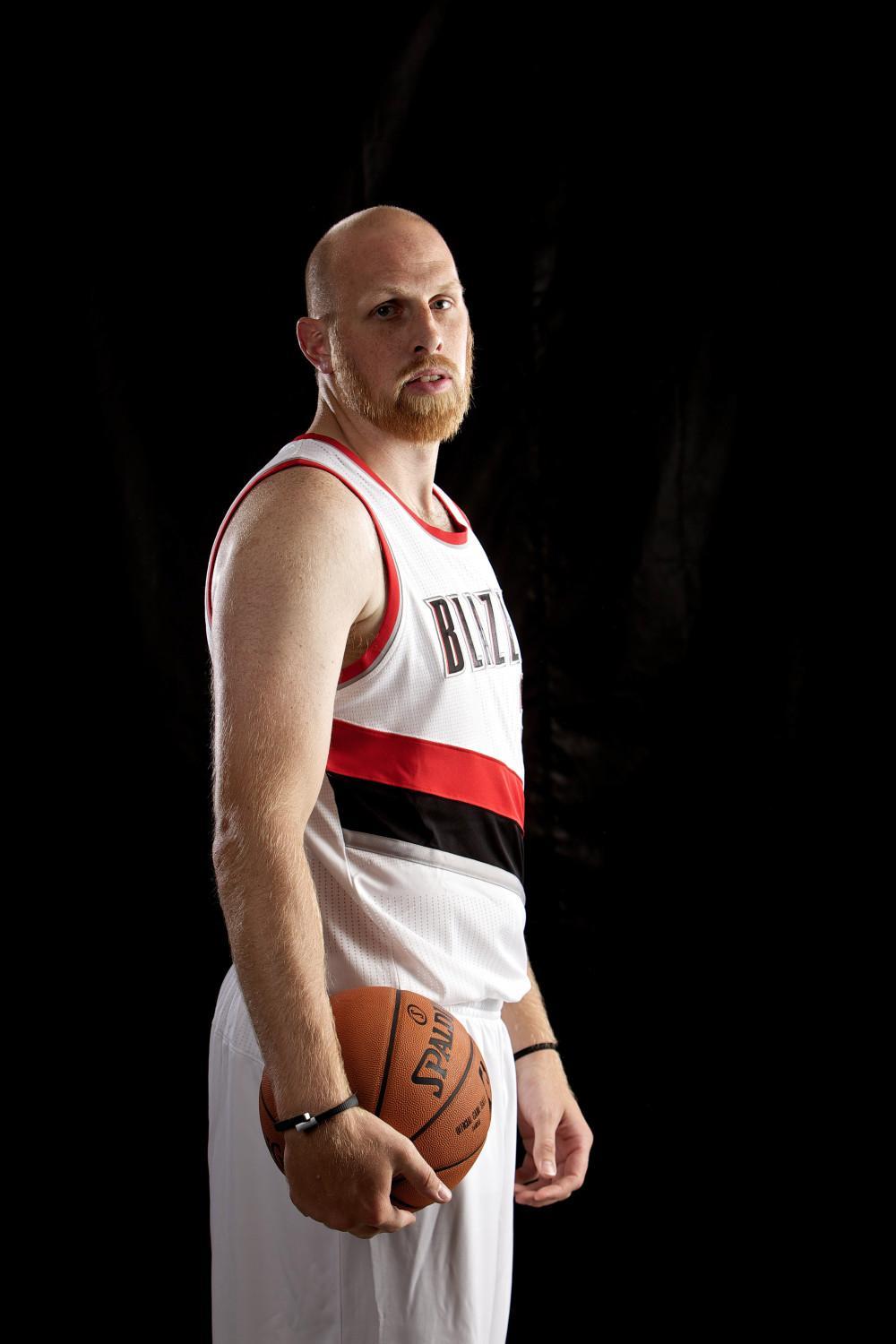
akaman3Portland Trail Blazers center Chris Kaman is a veteran NBA big man who’s also got a new reality web series coming out this Friday called “Exploring Kaman.” In the show Kaman goes fishing in Mexico, looking for the elusive blue and black marlin. He also shoots a .50-caliber gun at abandoned cars.

Kaman hopped on the phone with For The Win to talk about the show and the upcoming NBA season.

What’s the coolest thing you’ve ever shot?

For me, it’s always been stuff back home in Michigan. I’ve shot hogs, armadillo, deer, elk. I just shot a mule deer up in Oregon. One thing I want to do is a bear hunt.

But pretty much stuff like that back home. I don’t get much time though, because basketball starts back in October and that’s when hunting season starts. So I haven’t really shot the cool things that I wanted to shoot in my life.

So shooting a bear is the dream?

Bear, Alaskan moose would be sweet, a caribou, a musk ox, there’s so many cool hunts you could do. Potentially, like, a lion. That would be awesome, too.

It’s so hard with the seasons and the timings. I mean getting tags for something like that is an interesting adventure in itself. I think it’s $60,000 to kill a lion.

usatsi 7460331
Jayne Kamin-Oncea-USA TODAY Sports

What’s the most awesome fish in the ocean?

The marlin. The blue marlin and the black marlin. I mean, for me, they’re just so hard. They’re an elusive animal. Seeing them and getting one, man. I’ve caught some before, but it’s not easy.

What’s the lamest fish in the ocean?

Bait fish. Little pieces of ceviche you just rip out of the water. We’ll put ten or twenty hooks on a line, and then pull it in and there will be all these stupid fish on all the hooks. Like a greenback mackerel, those are the easy ones. Sardines, those are easy. There will be schools of hundreds of thousands of these fish, and you’ll pull a line up and every hook is full. Those are lame. Those are the bait fish.

Have you ever shot a gun at fish?

I have with my spearfishing gun, but that’s underwater. You don’t want to shoot from the top, because that’s hard. It’s possible, though. Hmmm. I don’t think I’ve ever thought about that, actually.

But down in Mexico it’s super illegal to have a gun on the boat. Period. Any type of gun, doesn’t matter what it is. They’ll take you to jail, and it’s really crazy like that down in Mexico. You don’t want to be caught with that.

usatsi 7460321
Jayne Kamin-Oncea-USA TODAY Sports

Why do you like fishing in Mexico so much?

The fishing is always the best where the water is warm. Mexico is so big, the coastal part stretches so far, the Pacific Coast of Mexico, whether it’s off the Baja Peninsula or all the way down toward Guatemala, it’s so vast. You’re looking for the blue water. So what happens is that the water settles down in Central America, and if they have hurricanes then it pushes the warm water all the way up to the middle or even the top of the Baja Peninsula. Cabo’s always big in October … that’s where the big fish come in, the black and blue marlin. They’re one of the most sought-after gamefish in the world.

Basically, you gotta get to where the blue water is. And the blue water is down in Mexico in the summer.

Have you ever taken any teammates fishing with you?

Nah, I’ve taken some members of the coaching staff and a few other people who work for the team, but none of my teammates have wanted to come on an adventure with me. I mean, most of them don’t know how to swim. They don’t want to go in a boat.

How did “Exploring Kaman” come into existence?

I had a fishing boat for years in L.A. when I was playing with the Clippers. The marina was really close, so I could go whenever the season was done for the Clippers. Generally we got done really early, with the exception of that one year.

It was always right on down to Mexico with the fishing boat, have myself a good break before I went back at it. Basically, I did it a couple years in a row, didn’t think about filming it or anything, but we’d do a couple Flip videos of fish we caught. But crazy stuff would happen to us in Puerto Vallarta, in Cabo, all sorts of interesting stuff.

And we thought it would be cool to film it, so I talked to some buddies back from Grand Rapids, Michigan, where I’m from. They came down and filmed it, and that was probably six years ago, maybe, seven years ago. For the last three years we’ve been editing it, and it got to the point where I’m comfortable with it and I like it. So we made six episodes and we’re going to release them online starting Friday.

Was there anything you wanted to include in the show but couldn’t for whatever reason?

There was a lot of stuff. We edited it three times, took a lot of stuff out. The first two times we had some stuff in there that was pretty wild, maybe a little over the top, and I wanted to be a little conservative on the first go-around. There were a few things on there that were a little inappropriate for certain ages, and I wanted to make it for everybody.

Anything you’re willing to talk about?

I’d rather have people watch it and talk about it after. It was mostly just language things [we had to cut]. I want it to be family-friendly. I’m trying to keep it clean. There’s some stuff we just had to leave on, though, just for people to see what happened. It’s all real. No one’s acting. No one made this stuff up.

The stuff that happens, you can’t plan it. The third year we filmed, even crazier stuff happened. Boats breaking down, people not having any idea what they were doing. We had to fly in people to fix problems. It’s a toss-up. We’re serious about trying to catch these fish, but no one seriously knew what they were doing.

So without giving too much away, we had the hardest time because none of us knew what we were supposed to do. We weren’t experienced enough. The show’s about our trials and troubles, trying to work out how to catch these fish. We spent all this money and spent all this time, but we really didn’t know what we were doing. It was crazy.

usatsi 8115211
Craig Mitchelldyer-USA TODAY Sports

What does the future of “Exploring Kaman” have in store for us?

We were talking about that the other day with the producer guy we’re working with back home.

More guns? Firecrackers?

[Laughs] I don’t know. After the last filming, you know, there’s some times you want to just hang out with your friends, have some privacy, be alone. Sometimes you don’t mind if they’re filming, but it’s hard to have cameras in front of your friends all the time. For one, it gets expensive. And two, it’s crazy and my friends don’t always know what to do in front of the cameras.

I’m working on what I want to do next. I’m glad this is finished, and it’s off my back, and now I can just watch people enjoy it.

usatsi 7096684
Jerome Miron-USA TODAY Sports

Let’s switch over to basketball. How many games do the Blazers win this year?

Ah, you know we just started the preseason. We’ve only had three preseason games, lost two, won one. The regular season doesn’t start until the end of the month.

How are you getting along with the new teammates?

Good. We’re meshing well. Me and Steve Blake are the newbies, we’re just trying to fit in, make sure the chemistry stays where it’s at. They had a great team last year.

Have you had any conversations with Robin Lopez yet? I’m very curious what you two would talk about.

Laughs Robin is such a great guy. He’s just so interesting to a lot of people because he’s pretty quiet. But he’s very intelligent. And when you talk to him about stuff he’s very knowledgeable. I mean, I don’t know if we’ve had any in-depth conversations, mostly just talking about basketball stuff.

I’m just trying to learn what he wants me to do. Sometimes I’m going to play with him, sometimes I’m going to play with Aldridge, and sometimes those two play. It’s a mix-up, and I’m just trying to work my way into the rotation and make sure I feel comfortable with everybody. And make sure that he feels comfortable, too.

usatsi 8130312
Chris Nicoll-USA TODAY Sports

OK, some rapid fire questions. What’s the No. 1 reason people should watch “Exploring Kaman?”

It’s funny, but it’s also sensible. We’re trying to do something serious. We aren’t acting. It’s something that you can enjoy. It’s got a lot of realism to it, and it’s got some comedy and some things you wouldn’t normally see in it.

What’s the No. 7 reason people should watch “Exploring Kaman?”

The No. 7 reason? [Laughs] I mean, if you like fishing, it’s also an interesting fishing show.

What away court has the best bench for napping purposes?

It’s gotta be the Cavaliers, huh? I’ve already tested that one out. It’s nice and soft.

Just get to chill and let them do the work for you?

Yeah, I’m like, “Uh, yeah fill it up with premium? You need me to do anything?” I’ve only lived in Michigan and California, and you gotta get out and do the work yourself. But I think it’s good, get some extra jobs for people. I think New Jersey and Oregon have it full service. You can have it in Michigan in some places, but it’s the deal here, you have no choice. And I like it. I’m married. My wife doesn’t have to pump any gas. That’s cool.

[readon1 url="http://ftw.usatoday.com/2014/10/chris-kaman-interview-reality-show"]Source:ftw.usatoday.com[/readon1]

AN-SHOW-41-E-BLOCK.Still003-800x500Ecuador’s Galapagos Islands are an eco-tourist’s paradise, teaming with so much biodiversity that Charles Darwin used the island’s species as the inspiration for his 1835 “Theory of Evolution.”

In 1961, the Ecuadorian government declared the islands a National Park and limited the amount of people who can live on them.

Over time, however, human settlement and tourism has upset the balance in this fragile ecosystem. Invasive species have also been a problem as animals such as cats, rats, dogs, goats and pigs have all multiplied exponentially on the islands over the years.

Hugo Arnal, director of the World Wildlife Fund in Ecuador, spoke with Americas Now about the future of the islands.

[readon1 url="http://www.cctv-america.com/2014/10/10/galapagos-islands-maintains-fragile-ecosystem"]Source:www.cctv-america.com[/readon1]

n-ZUCKERBERG-EBOLA-large300Facebook founder Mark Zuckerberg and his wife Priscilla Chan announced on Tuesday that they are donating $25 million to the Centers for Disease Control Foundation to fight Ebola.

Zuckerberg revealed the donation in a post on Facebook (of course), the site that has made him into the $33 billion man he is today.

In a status update, Zuckerberg compared the disease to Polio and HIV, noting that 8,400 people have already been infected by Ebola and that it has the potential to spread quickly.

There is no cure for Ebola yet, but the chairman for the CDC said earlier this month that he is "confident" the United States will not experience an Ebola outbreak.

Fellow tech billionaire Bill Gates announced last month that his foundation would give $50 million to fight Ebola, the largest donation that the Bill and Melinda Gates Foundation has ever made to a humanitarian cause.

[readon1 url="http://www.huffingtonpost.com/2014/10/14/zuckerberg-ebola_n_5982762.html"]Source:www.huffingtonpost.com[/readon1]

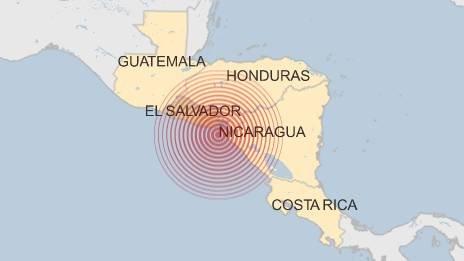
 78206905 centralamerica4641014A magnitude 7.3 earthquake occurred off the coast of El Salvador at approximately 11:51 EDT Monday, according to the USGS.

The major earthquake was felt all across Central America from Mexico to Panama with the epicenter being located 42 miles (67 km) southwest of Jiquililo, Nicaragua.

Shortly after the earthquake occurred, the Pacific Tsunami Warning Center issued a statement warning that hazardous tsunami waves could impact the coasts of Nicaragua, Honduras and El Salvador.
The threat of a tsunami in this area has since passed, according to the latest report from the PTWC.
A destructive Pacific-wide tsunami is not expected elsewhere in the Pacific Ocean, including Hawaii and Alaska.

There has been at least one fatality from the earthquake, Reuters reports, after an electricity pole fell on a man in El Salvador.

Showers and thunderstorms are in the forecast over the next several days in cities such as San Salvador, El Salvador; Managua, Nicaragua; and Tegucigalpa, Honduras.

This could dampen cleanup efforts around these major cities where the earthquake caused damage.


BDA-WC-FANS-RELIVE-1970-TRIP.Still001-800x500Hundreds of thousands of football fans have converged on cities across Brazil for the World Cup. After months of building delays, protests and financial controversy, the tournament’s highly anticipated kick off is only a day away.

For Ivan Charoux and Rafael Sawaya, the action isn’t limited to the 12 Brazilian stadiums. Back in 1970, the friends took their shared love of Brazil’s soccer team on the road. They drove some 8,000 kilometers from Sao Paulo to Guadalajara, Mexico to watch the home team versus some of its greatest global opponents.

The men are now 68 and 70 years old and they decided to take another road trip– same kind of car, same route. CCTV’s Bianca Davie has more about their trip

Bolivia.00 01 05 20.Still001-800x500Unofficial election results indicate that Bolivian president Evo Morales has won a third term. According to exit polls, he got about 60 percent of the vote. His closest opponent, Samuel Doria Medina, received just 25 percent. Morales addressed to his supporters gathered outside the presidential palace shortly after the numbers were released. CCTV America’s Dan Collyns reports from La Paz.

a2013 06 12 06 11 34US fugitive Edward Snowden, who was granted asylum by Moscow after revealing the extent of US global surveillance, has been reunited with his girlfriend in Russia, his lawyer said Saturday

Snowden's longtime partner, American dancer Lindsay Mills, joined him in Moscow in July, it emerged Friday.

"Love is love," Snowden's lawyer Anatoly Kucherena told AFP. "She lives with him when she comes here. Moral support is very important for Edward."

He said Mills does not live in Russia permanently because of visa constraints but visits frequently.

The couple, who previously lived in Hawaii, have been busy exploring Russia, he added. "They go to theatres and cultural events together."

Kucherena spoke after a documentary by Laura Poitras, shown at advance screenings in New York late Friday, revealed Mills had joined him in Moscow over the summer.

The two-hour documentary -- due for release on October 24 -- paints an intimate and sympathetic portrait of Snowden holed up in a Hong Kong hotel in June 2013 as he blows the whistle on National Security Agency dealings and then plots his escape

Mills is shown preparing dinner with Snowden in a wood-panelled kitchen, but the couple's conversation is not recorded and she is not interviewed.

The whereabouts of Mills, who once referred to herself on a blog as "a world-traveling, pole-dancing super hero", were not previously known.

She has never spoken publicly about her boyfriend, who has been charged in the United States with espionage, and some reports had suggested that the couple had split.

- 'I may not be coming back' -

But the documentary "Citizenfour" hints at a much closer union.

It shows Snowden breaking the news online to Mills from Hong Kong that he would not be back anytime soon after she told him agents had turned up at their home in Hawaii, suspicious about his absence from work.

"It's a tough situation," he says, close to tears on his hotel bed after telling Mills that he "may not be coming back".

"She has no idea what I'm doing," he says. He says he feels "badly" about simply disappearing while she was on vacation but said he did it to protect her.

After the NSA surveillance story breaks, the couple are shown to be still in touch.

Mills tells him that his rent cheques are no longer going through, which he calls "strange" because they had been set up automatically, and that trucks are all over the street outside their home.

"Citizenfour" shows Snowden at the Mira hotel in Hong Kong during interviews with journalists from the Guardian newspaper in 2013 that resulted in a series of stories about the extent of phone and Internet surveillance by the British and US governments.

There are some astonishing nuggets of information, such as his assertion that at NSA he could watch drone strikes and surveillance at anytime on his desktop -- -- "lots of them in all these countries".

Snowden is reluctant to talk about himself, but Poitras shows a man committed to exposing mass data surveillance, who says he would rather risk prison than have his intellectual freedom curtailed.

- Paranoia and disguises -

He patiently explains the extent of the surveillance and how it worked. Yet he admits he is nervous, and appears worried and jumpy.

The extent of Snowden's paranoia about being monitored is also laid bare.

He logs onto his laptop under a hood, in case any hidden camera can see his passwords.

He unplugs the hotel room phone, then makes a wry remark when the hotel starts testing the fire alarm.

"Maybe they got wind they couldn't listen in to us by the phone any more," he said.

They discuss when Snowden should go public as the person responsible for the intelligence leak, and he admits that he's eating less, and worried about someone "busting through the door".

Snowden watches the magnitude of his intelligence leaks unfold on TV. There are moments of levity, but the tension builds as he plots his escape from an advancing horde of journalists.

With TV in the background comparing the NSA story to a John Le Carre spy novel, Snowden tests out disguises in the mirror, by shaving and gelling back his hair. He also experiments with using an umbrella to shield part of his face.

The documentary, with its tantalising glimpses of Snowden's behind-the-scenes life, ends with journalist-activist Glenn Greenwald going back to Moscow to meet him.

[readon1 url="http://news.yahoo.com/snowdens-girlfriend-living-him-russia-film-143426722.html"]Source:news.yahoo.com[/readon1]

920x680

Photo: Brant Ward / The Chronicle
Dr Michael Lazar, a Santa Rosa urologist, has performed over 100 ultrasound procedures, most in Mexico.

SonaCare Medical believes its treatment for prostate cancer is unusually precise and powerful, but the therapy faces a major obstacle: It is not approved in the United States.

That barrier has not stopped SonaCare from treating American patients. Last year the company paid a small nationwide network of doctors hundreds of thousands of dollars to perform the therapy, usually not covered by insurance, outside the country on thousands of men.

A newly released database from the federal government offers an unprecedented window into the operations of a company that urges American doctors to conduct an unapproved procedure abroad, and compensates them for it.

In the last five months of 2013, the data show SonaCare paid two dozen doctors a total of just under $342,000 to use a device for high-intensity focused ultrasound, or HIFU, an alternative to surgery or radiation that heats the prostate to attack cancerous tissue.

Some of those doctors also invest in the company, according to a Chronicle analysis. Of the $25,000 that patients pay out of pocket for HIFU, physicians say they receive up to $7,000 or $8,000 from SonaCare, depending on the procedure.

Effective, affordable
Doctors say that SonaCare’s payments are legal, and that HIFU is more effective and affordable than the standard prostate-cancer treatments, radiation and surgery, which insurance typically covers. They note that it isn’t rare for physicians to invest in treatments they prescribe, nor for American patients to receive treatment in Mexico, the Bahamas and Bermuda, where HIFU is performed.

But an arrangement that combines all these elements is troubling, some medical ethicists say, because drug and device companies usually do not directly compensate doctors for medical care, and financial motives may color clinical decisions.

“It looks uncomfortably close to giving the doctors an undue incentive to do the procedure,” said Arthur Caplan, director of medical ethics at New York University’s Langone Medical Center. “The company’s paying and says, 'You go overseas and do it where it is.’ That’s a connection between the company and the doctors that I think should be raising ethical eyebrows.”

Patients could also be at risk from therapies that have not met the government’s standards for safety and efficacy. This month, a Food and Drug Administration advisory panel recommended against approving SonaCare’s HIFU device, saying clinical trial data did not prove it was effective over the long run in treating prostate cancer. The panel also recommended against another company’s HIFU treatment for prostate cancer earlier this year, citing similar concerns.

SonaCare’s payments are among millions of financial ties between drug and device makers, physicians and teaching hospitals now accessible to the public. An online database released Sept. 30 under the Affordable Care Act details $3.5 billion in payments from August through December 2013. The database is not without flaws: the government says it omits more than $1 billion in payments, and some information has been reported to be inaccurate or inconsistent.

Dr. Michael Lazar, a Santa Rosa urologist, said he has performed HIFU on more than 100 patients over the last seven years, mostly in Mexico. He said SonaCare’s payments have no bearing on his judgment and that he recommends procedures that best fit individual patients. Data show that Lazar received about $36,000 to treat patients late last year and has invested $223,000 in the company, a share he says amounts to less than one-tenth of 1 percent of the company’s worth.

“I’m very convinced that if it were equally covered by insurance as currently available treatments, a large amount of men are going to want it,” he said, “which is why I invested a large amount of my retirement money into the company.”

'Highly unusual’
SonaCare’s direct payments to clinicians are “highly unusual,” Caplan said, because doctors are usually reimbursed by some combination of government-funded programs like Medicare, private insurers and patients themselves.

SonaCare’s arrangement also differs from typical medical tourism. Millions of Americans travel to developing countries to receive care. But these procedures tend to be available in the U.S., albeit at higher costs. Even for services that are hard to obtain in the U.S., such as organ transplants and surrogacy, patients usually pay third-party medical-tourism agencies or doctors and hospitals in the countries where the procedure is done — not American companies and doctors.

SonaCare did not return requests for comment. Patients have received the treatment overseas since 2004, when SonaCare was founded, the privately held Charlotte, N.C., company told the New York Times six years ago.

The company’s device, the Sonablate, is designed to focus ultrasound energy on parts of the prostate gland. It raises the temperature of the targeted tissue to about 195 degrees in a few seconds and destroys that area, leaving others unharmed, according to the company.

12,000 worldwide
SonaCare’s website says more than 12,000 patients worldwide have been treated with one version of the Sonablate, which has been approved in more than 30 countries in Europe, Asia and Central and South America. Another version of the Sonablate, the one pending FDA approval, is undergoing clinical trials.
Lazar said he spends six to eight weekends a year in Puerto Vallarta, Mexico. He and his patients cover their own travel and lodging in the seaside resort city, he said. Typically, Lazar performs HIFU on two or three patients, and assists other American doctors with HIFU.

Such trips bring in less than 10 percent of his practice’s revenue, he said. “It sounds like a lot of money being paid, but it costs a lot to do this.”

HIFU’s appeal, Lazar said, is that it is minimally invasive and done in one to four hours.
“The morning patient is out to eat that night, the afternoon patient orders room service, and by the next day, they’re sightseeing,” Lazar said.

Not all doctors are as enthusiastic. An FDA panel wasn’t satisfied with SonaCare’s recent trial involving patients who had recurrent prostate cancer and had failed external radiation therapy, saying the data insufficiently proved Sonablate worked.

The decision was prudent, said Dr. Matthew Cooperberg, an associate professor of urology at UCSF, who was not on the panel or involved with SonaCare.

“(The FDA has) repeatedly declined to give it a thumbs-up, which I think is an entirely appropriate decision based on the evidence,” he said of HIFU in general. “There is certainly no evidence that it is any better than other treatments — than other types of cancer control — and there’s not any evidence that it’s even equivalent in terms of cancer control.”

1 in 7 men get it
Thousands of American men undergo treatment each year for prostate cancer, a disease that affects 1 in 7, according to the Prostate Cancer Foundation. Most men who are diagnosed do not die from the disease.
SonaCare’s website suggests that two of the most-feared side effects of prostate cancer treatments, erectile dysfunction and urinary incontinence, are less common with HIFU than radiation or surgery.

The doctors paid to use SonaCare’s HIFU device in the last half of 2013 received between $750 and $81,000, data show. They include Dr. George Suarez, a co-founder of SonaCare and board director. The Miami, Fla., doctor claims to have performed more HIFU procedures than any other urologist, upward of 700.

Suarez received $53,000 from SonaCare in the last half of 2013 and has invested $3.3 million, data show.

“I invest in it because I believe in it,” he said, but declined to confirm those figures.

Dr. Richard Chopp, an Austin, Texas, urologist who has been performing HIFU since 2006, has invested about $285,000 in SonaCare and made about $12,000 in the period covered by the database. Chopp said that HIFU is one of many treatments he discusses with patients, and when he does, he discloses his investment.

“There’s no conflict of interest that I know of if somebody elects to have HIFU and they know that I own part of the company, as long as everybody’s above board with it and everybody knows,” Chopp said. “I say to them, and truthfully, that when and if I get prostate cancer, if I have an early-stage disease, I’m going to get HIFU.”

Lazar said he tells patients about his investment if they ask.

Ethicists said the law doesn’t appear to require doctors to disclose their ties. But even if they do, it’s difficult to know if they are providing unbiased clinical care, the experts said.

'Unconscious biases’
“There’s data out there that these kinds of relationships do create unconscious biases in physicians,” said Patti Zettler, a fellow at the Center for Law and the Biosciences at Stanford Law School. “That’s not to say there’s anything nefarious about physicians in general. It’s just that we’re all human and, of course, receiving things changes the way we think.”

Even if physicians are upfront, “it’s concerning that the company is trying to get around the FDA process,” she said. “That process is in place to ensure that U.S. patients receive safe and effective medical treatments.”

Patients could also run into trouble if the procedure went wrong, because their legal recourse abroad isn’t clear, Caplan said. And there is no guarantee insurance would cover care for complications from use of an unapproved device. Lazar said his patients’ fees cover a year of follow-up treatment.
For Jim Wickstrom, a 66-year-old retired teacher in Carlsbad (San Diego County), HIFU was well worth the cost, though he knew doctors invested in the company and profited from the procedure.

Treated in Bermuda
Diagnosed with prostate cancer in 2011, he worried that radiation and surgery would cause impotence and incontinence. He learned about HIFU online and contacted a Boston doctor, who performed the treatment on him in Bermuda in 2012. To this day, he said he is cancer-free and surfs almost daily.

“Everything went like clockwork,” said Wickstrom, who felt well enough after the procedure to go on a mile-long walk the next day. “It couldn’t have been better.”

[readon1 url="http://www.sfgate.com/health/article/Doctors-pay-for-unapproved-prostate-cancer-5817054.php"]Source:www.sfgate.com[/readon1]


ABB8ne5GSANTA CLARA, Calif. (AP) -- San Francisco 49ers quarterback Colin Kaepernick said Thursday that he has been fined $10,000 by the NFL for the pink ''Beats by Dre'' brand name headphones he wore around his neck after Sunday's game.

While Kaepernick has an endorsement deal with Beats and has done a commercial, the league's contract is with Bose. Wearing the pink version for October breast cancer awareness month, Kaepernick knew he could be subject to a fine after the 22-17 win Sunday.

Yet it's more than the $8,286 fine the Broncos' Julius Thomas faces for a chop block on Cardinals defensive end Calais Campbell.

Kaepernick later took to Twitter to explain his decision and posted a photo of him with the headphones: ''I support breast cancer awareness! My grandma is a survivor!''

He declined to say whether Beats would pick up the cost of his fine, saying, ''we'll let that be unanswered.''

Last month, Kaepernick announced he had been fined more than $11,000 and had appealed the penalty for what an official called ''inappropriate language'' by the quarterback following a fourth-quarter interception in a 28-20 loss to the Bears in the Sept. 14 home opener.

Kaepernick reiterated that he did nothing wrong when he and Chicago defensive end Lamarr Houston went at it - and Kaepernick pointed to Houston's comments that the quarterback didn't say anything offensive or out of line. Kaepernick shoved Houston.

In early June, Kaepernick - one of the NFL's most dynamic young playcallers - received a $126 million, six-year contract extension that keeps him with the organization through the 2020 season. The deal includes $61 million in guaranteed money.

The sides had made it a top priority to get a deal done before the start of training camp.

BzOS2z CYAEDh-h

[readon1 url="http://www.msn.com/en-us/sports/nfl/kaepernick-hit-with-dollar10k-fine-for-wearing-beats-by-dre-headphones/ar-BB8nbBD"]Source:www.msn.com[/readon1]

BB8y3xn2They call it the Titanic of the ancient world – a luxury liner dating from before the Roman empire. Now divers and archeologists, who have completed a third season on this famous wreck off the remote Greek island of Antikythera, hope that their latest finds can at last help settle speculation surrounding the ship, its passengers and crew.

After mapping the treacherous site, the international team hope that a small but carefully selected haul of artefacts on the huge site more than 164ft (50m) beneath the surface can help unravel the truth about a vessel that may have been 164ft (50m) long.

Antiquities rescued on this visit include an intact table jug, bronze ornamentation that was probably part of a bed, a 6ft (2m) piece of a bronze spear, weighing more than 10kg and most probably part of a statue – perhaps of a warrior or the goddess Athena – and a bronze rigging ring with fragments of wood still attached.

Scientists also plan to trace the origin of the lead in huge anchors and hull sheathing to help determine whether the ship was of Italian, Roman or Hellenic origin. And they want to check DNA in the ceramic jug, one of nearly 50 found by various explorations of the wreck dating back to 1900, to establish whether it was carrying grain. Grain and stone carriers were the biggest sea-going vessels more than 2,000 years ago.

Even the first finds, made by sponge divers blown off course well over a century ago, included spectacular treasures – including enormous statues, and the elaborate Antikythera mechanism, a complex early “computer”, tracking cycles of the solar system. Many of the artefacts are now in the National Archaeological Museum in Athens.

Examination of hull remains, recovered in 1976, suggest that the planks, 4in (11cm) thick even in a shrunken state, come from a ship that was 15-20% bigger than any wreck of similar age.

The only wrecks that come close, according to Brendan Foley, of the Woods Hole Oceonographic Institution in Massachusetts, were the pleasure barges of the emperor Caligula discovered in Lake Nemi, Italy, in the 1920s and later destroyed in an allied bombing raid during the second world war.

“I have personally investigated 40 or 45 shipwrecks throughout the Mediterranean and never seen one like this. It is full of luxury goods. It is an enormous ship, massively built and built of the highest quality material available in the first century BC,” Foley said.

Among the stories built up around the wreck is that it may have carried a young bride and her dowry on her way to her wedding. But, Foley admitted, “we have no evidence of that. It is just a nice story we tell each other. A logical conclusion [of finds so far] is these are treasures, high-value goods travelling from the eastern Mediterranean, through the Aegean, to the growing centre [of Rome] but we don’t have actual proof of that.

Foley said his team thought the jar was part of the cargo, rather than belonging to a member of the crew. “We are excited about its recovery because it was full of sediment so we can anlyse that, and once we get the sediment out, we can run our DNA swabs and find out what it was transporting.

“Grain ships would sail out of Rome. They were the sort of first luxury liners. The wealthy would sail out in the spring, go to Egypt, tour the antiquities. Then at the end of the season, they would get back on board the ship with hundreds and hundreds of tons of grain to take back to Rome to feed the burgeoning population.”

The divers will be back next May and June hoping, among other things, to find more of the famous mechanism, of which only 50-60% is thought to have been recovered so far. They also hope they will not be hit by the bad weather they suffered this year, allowing just five days underwater and little use of a new diving suit that will allow divers to stay on the sea floor for hours without decompression problems.

Theotokis Theodoulou, of the Hellenic Ephorate of Underwater Antiquities, says this year’s finds were very promising. “We have a lot of work to do at this site to uncover its secrets.”

[readon1 url="http://www.msn.com/en-us/news/technology/scientists-hope-to-unravel-mystery-of-the-%E2%80%98titanic-of-the-ancient-world%E2%80%99/ar-BB8y62N"]Source:www.msn.com[/readon1]