a2013 06 12 06 11 34US fugitive Edward Snowden, who was granted asylum by Moscow after revealing the extent of US global surveillance, has been reunited with his girlfriend in Russia, his lawyer said Saturday

Snowden's longtime partner, American dancer Lindsay Mills, joined him in Moscow in July, it emerged Friday.

"Love is love," Snowden's lawyer Anatoly Kucherena told AFP. "She lives with him when she comes here. Moral support is very important for Edward."

He said Mills does not live in Russia permanently because of visa constraints but visits frequently.

The couple, who previously lived in Hawaii, have been busy exploring Russia, he added. "They go to theatres and cultural events together."

Kucherena spoke after a documentary by Laura Poitras, shown at advance screenings in New York late Friday, revealed Mills had joined him in Moscow over the summer.

The two-hour documentary -- due for release on October 24 -- paints an intimate and sympathetic portrait of Snowden holed up in a Hong Kong hotel in June 2013 as he blows the whistle on National Security Agency dealings and then plots his escape

Mills is shown preparing dinner with Snowden in a wood-panelled kitchen, but the couple's conversation is not recorded and she is not interviewed.

The whereabouts of Mills, who once referred to herself on a blog as "a world-traveling, pole-dancing super hero", were not previously known.

She has never spoken publicly about her boyfriend, who has been charged in the United States with espionage, and some reports had suggested that the couple had split.

- 'I may not be coming back' -

But the documentary "Citizenfour" hints at a much closer union.

It shows Snowden breaking the news online to Mills from Hong Kong that he would not be back anytime soon after she told him agents had turned up at their home in Hawaii, suspicious about his absence from work.

"It's a tough situation," he says, close to tears on his hotel bed after telling Mills that he "may not be coming back".

"She has no idea what I'm doing," he says. He says he feels "badly" about simply disappearing while she was on vacation but said he did it to protect her.

After the NSA surveillance story breaks, the couple are shown to be still in touch.

Mills tells him that his rent cheques are no longer going through, which he calls "strange" because they had been set up automatically, and that trucks are all over the street outside their home.

"Citizenfour" shows Snowden at the Mira hotel in Hong Kong during interviews with journalists from the Guardian newspaper in 2013 that resulted in a series of stories about the extent of phone and Internet surveillance by the British and US governments.

There are some astonishing nuggets of information, such as his assertion that at NSA he could watch drone strikes and surveillance at anytime on his desktop -- -- "lots of them in all these countries".

Snowden is reluctant to talk about himself, but Poitras shows a man committed to exposing mass data surveillance, who says he would rather risk prison than have his intellectual freedom curtailed.

- Paranoia and disguises -

He patiently explains the extent of the surveillance and how it worked. Yet he admits he is nervous, and appears worried and jumpy.

The extent of Snowden's paranoia about being monitored is also laid bare.

He logs onto his laptop under a hood, in case any hidden camera can see his passwords.

He unplugs the hotel room phone, then makes a wry remark when the hotel starts testing the fire alarm.

"Maybe they got wind they couldn't listen in to us by the phone any more," he said.

They discuss when Snowden should go public as the person responsible for the intelligence leak, and he admits that he's eating less, and worried about someone "busting through the door".

Snowden watches the magnitude of his intelligence leaks unfold on TV. There are moments of levity, but the tension builds as he plots his escape from an advancing horde of journalists.

With TV in the background comparing the NSA story to a John Le Carre spy novel, Snowden tests out disguises in the mirror, by shaving and gelling back his hair. He also experiments with using an umbrella to shield part of his face.

The documentary, with its tantalising glimpses of Snowden's behind-the-scenes life, ends with journalist-activist Glenn Greenwald going back to Moscow to meet him.

[readon1 url="http://news.yahoo.com/snowdens-girlfriend-living-him-russia-film-143426722.html"]Source:news.yahoo.com[/readon1]

920x680

Photo: Brant Ward / The Chronicle
Dr Michael Lazar, a Santa Rosa urologist, has performed over 100 ultrasound procedures, most in Mexico.

SonaCare Medical believes its treatment for prostate cancer is unusually precise and powerful, but the therapy faces a major obstacle: It is not approved in the United States.

That barrier has not stopped SonaCare from treating American patients. Last year the company paid a small nationwide network of doctors hundreds of thousands of dollars to perform the therapy, usually not covered by insurance, outside the country on thousands of men.

A newly released database from the federal government offers an unprecedented window into the operations of a company that urges American doctors to conduct an unapproved procedure abroad, and compensates them for it.

In the last five months of 2013, the data show SonaCare paid two dozen doctors a total of just under $342,000 to use a device for high-intensity focused ultrasound, or HIFU, an alternative to surgery or radiation that heats the prostate to attack cancerous tissue.

Some of those doctors also invest in the company, according to a Chronicle analysis. Of the $25,000 that patients pay out of pocket for HIFU, physicians say they receive up to $7,000 or $8,000 from SonaCare, depending on the procedure.

Effective, affordable
Doctors say that SonaCare’s payments are legal, and that HIFU is more effective and affordable than the standard prostate-cancer treatments, radiation and surgery, which insurance typically covers. They note that it isn’t rare for physicians to invest in treatments they prescribe, nor for American patients to receive treatment in Mexico, the Bahamas and Bermuda, where HIFU is performed.

But an arrangement that combines all these elements is troubling, some medical ethicists say, because drug and device companies usually do not directly compensate doctors for medical care, and financial motives may color clinical decisions.

“It looks uncomfortably close to giving the doctors an undue incentive to do the procedure,” said Arthur Caplan, director of medical ethics at New York University’s Langone Medical Center. “The company’s paying and says, 'You go overseas and do it where it is.’ That’s a connection between the company and the doctors that I think should be raising ethical eyebrows.”

Patients could also be at risk from therapies that have not met the government’s standards for safety and efficacy. This month, a Food and Drug Administration advisory panel recommended against approving SonaCare’s HIFU device, saying clinical trial data did not prove it was effective over the long run in treating prostate cancer. The panel also recommended against another company’s HIFU treatment for prostate cancer earlier this year, citing similar concerns.

SonaCare’s payments are among millions of financial ties between drug and device makers, physicians and teaching hospitals now accessible to the public. An online database released Sept. 30 under the Affordable Care Act details $3.5 billion in payments from August through December 2013. The database is not without flaws: the government says it omits more than $1 billion in payments, and some information has been reported to be inaccurate or inconsistent.

Dr. Michael Lazar, a Santa Rosa urologist, said he has performed HIFU on more than 100 patients over the last seven years, mostly in Mexico. He said SonaCare’s payments have no bearing on his judgment and that he recommends procedures that best fit individual patients. Data show that Lazar received about $36,000 to treat patients late last year and has invested $223,000 in the company, a share he says amounts to less than one-tenth of 1 percent of the company’s worth.

“I’m very convinced that if it were equally covered by insurance as currently available treatments, a large amount of men are going to want it,” he said, “which is why I invested a large amount of my retirement money into the company.”

'Highly unusual’
SonaCare’s direct payments to clinicians are “highly unusual,” Caplan said, because doctors are usually reimbursed by some combination of government-funded programs like Medicare, private insurers and patients themselves.

SonaCare’s arrangement also differs from typical medical tourism. Millions of Americans travel to developing countries to receive care. But these procedures tend to be available in the U.S., albeit at higher costs. Even for services that are hard to obtain in the U.S., such as organ transplants and surrogacy, patients usually pay third-party medical-tourism agencies or doctors and hospitals in the countries where the procedure is done — not American companies and doctors.

SonaCare did not return requests for comment. Patients have received the treatment overseas since 2004, when SonaCare was founded, the privately held Charlotte, N.C., company told the New York Times six years ago.

The company’s device, the Sonablate, is designed to focus ultrasound energy on parts of the prostate gland. It raises the temperature of the targeted tissue to about 195 degrees in a few seconds and destroys that area, leaving others unharmed, according to the company.

12,000 worldwide
SonaCare’s website says more than 12,000 patients worldwide have been treated with one version of the Sonablate, which has been approved in more than 30 countries in Europe, Asia and Central and South America. Another version of the Sonablate, the one pending FDA approval, is undergoing clinical trials.
Lazar said he spends six to eight weekends a year in Puerto Vallarta, Mexico. He and his patients cover their own travel and lodging in the seaside resort city, he said. Typically, Lazar performs HIFU on two or three patients, and assists other American doctors with HIFU.

Such trips bring in less than 10 percent of his practice’s revenue, he said. “It sounds like a lot of money being paid, but it costs a lot to do this.”

HIFU’s appeal, Lazar said, is that it is minimally invasive and done in one to four hours.
“The morning patient is out to eat that night, the afternoon patient orders room service, and by the next day, they’re sightseeing,” Lazar said.

Not all doctors are as enthusiastic. An FDA panel wasn’t satisfied with SonaCare’s recent trial involving patients who had recurrent prostate cancer and had failed external radiation therapy, saying the data insufficiently proved Sonablate worked.

The decision was prudent, said Dr. Matthew Cooperberg, an associate professor of urology at UCSF, who was not on the panel or involved with SonaCare.

“(The FDA has) repeatedly declined to give it a thumbs-up, which I think is an entirely appropriate decision based on the evidence,” he said of HIFU in general. “There is certainly no evidence that it is any better than other treatments — than other types of cancer control — and there’s not any evidence that it’s even equivalent in terms of cancer control.”

1 in 7 men get it
Thousands of American men undergo treatment each year for prostate cancer, a disease that affects 1 in 7, according to the Prostate Cancer Foundation. Most men who are diagnosed do not die from the disease.
SonaCare’s website suggests that two of the most-feared side effects of prostate cancer treatments, erectile dysfunction and urinary incontinence, are less common with HIFU than radiation or surgery.

The doctors paid to use SonaCare’s HIFU device in the last half of 2013 received between $750 and $81,000, data show. They include Dr. George Suarez, a co-founder of SonaCare and board director. The Miami, Fla., doctor claims to have performed more HIFU procedures than any other urologist, upward of 700.

Suarez received $53,000 from SonaCare in the last half of 2013 and has invested $3.3 million, data show.

“I invest in it because I believe in it,” he said, but declined to confirm those figures.

Dr. Richard Chopp, an Austin, Texas, urologist who has been performing HIFU since 2006, has invested about $285,000 in SonaCare and made about $12,000 in the period covered by the database. Chopp said that HIFU is one of many treatments he discusses with patients, and when he does, he discloses his investment.

“There’s no conflict of interest that I know of if somebody elects to have HIFU and they know that I own part of the company, as long as everybody’s above board with it and everybody knows,” Chopp said. “I say to them, and truthfully, that when and if I get prostate cancer, if I have an early-stage disease, I’m going to get HIFU.”

Lazar said he tells patients about his investment if they ask.

Ethicists said the law doesn’t appear to require doctors to disclose their ties. But even if they do, it’s difficult to know if they are providing unbiased clinical care, the experts said.

'Unconscious biases’
“There’s data out there that these kinds of relationships do create unconscious biases in physicians,” said Patti Zettler, a fellow at the Center for Law and the Biosciences at Stanford Law School. “That’s not to say there’s anything nefarious about physicians in general. It’s just that we’re all human and, of course, receiving things changes the way we think.”

Even if physicians are upfront, “it’s concerning that the company is trying to get around the FDA process,” she said. “That process is in place to ensure that U.S. patients receive safe and effective medical treatments.”

Patients could also run into trouble if the procedure went wrong, because their legal recourse abroad isn’t clear, Caplan said. And there is no guarantee insurance would cover care for complications from use of an unapproved device. Lazar said his patients’ fees cover a year of follow-up treatment.
For Jim Wickstrom, a 66-year-old retired teacher in Carlsbad (San Diego County), HIFU was well worth the cost, though he knew doctors invested in the company and profited from the procedure.

Treated in Bermuda
Diagnosed with prostate cancer in 2011, he worried that radiation and surgery would cause impotence and incontinence. He learned about HIFU online and contacted a Boston doctor, who performed the treatment on him in Bermuda in 2012. To this day, he said he is cancer-free and surfs almost daily.

“Everything went like clockwork,” said Wickstrom, who felt well enough after the procedure to go on a mile-long walk the next day. “It couldn’t have been better.”

[readon1 url="http://www.sfgate.com/health/article/Doctors-pay-for-unapproved-prostate-cancer-5817054.php"]Source:www.sfgate.com[/readon1]


ABB8ne5GSANTA CLARA, Calif. (AP) -- San Francisco 49ers quarterback Colin Kaepernick said Thursday that he has been fined $10,000 by the NFL for the pink ''Beats by Dre'' brand name headphones he wore around his neck after Sunday's game.
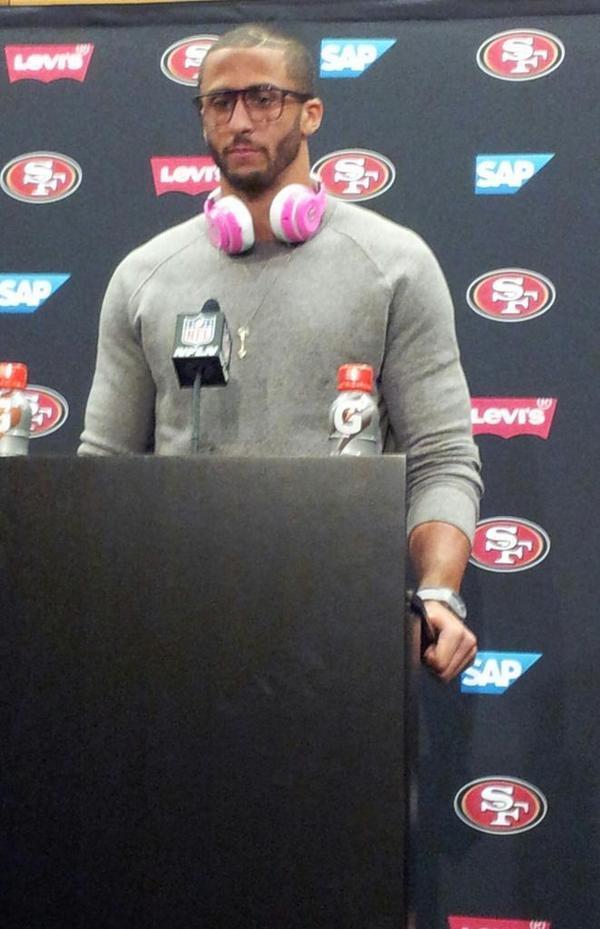
While Kaepernick has an endorsement deal with Beats and has done a commercial, the league's contract is with Bose. Wearing the pink version for October breast cancer awareness month, Kaepernick knew he could be subject to a fine after the 22-17 win Sunday.

Yet it's more than the $8,286 fine the Broncos' Julius Thomas faces for a chop block on Cardinals defensive end Calais Campbell.

Kaepernick later took to Twitter to explain his decision and posted a photo of him with the headphones: ''I support breast cancer awareness! My grandma is a survivor!''

He declined to say whether Beats would pick up the cost of his fine, saying, ''we'll let that be unanswered.''

Last month, Kaepernick announced he had been fined more than $11,000 and had appealed the penalty for what an official called ''inappropriate language'' by the quarterback following a fourth-quarter interception in a 28-20 loss to the Bears in the Sept. 14 home opener.

Kaepernick reiterated that he did nothing wrong when he and Chicago defensive end Lamarr Houston went at it - and Kaepernick pointed to Houston's comments that the quarterback didn't say anything offensive or out of line. Kaepernick shoved Houston.

In early June, Kaepernick - one of the NFL's most dynamic young playcallers - received a $126 million, six-year contract extension that keeps him with the organization through the 2020 season. The deal includes $61 million in guaranteed money.

The sides had made it a top priority to get a deal done before the start of training camp.

BzOS2z CYAEDh-h

[readon1 url="http://www.msn.com/en-us/sports/nfl/kaepernick-hit-with-dollar10k-fine-for-wearing-beats-by-dre-headphones/ar-BB8nbBD"]Source:www.msn.com[/readon1]

BB8y3xn2They call it the Titanic of the ancient world – a luxury liner dating from before the Roman empire. Now divers and archeologists, who have completed a third season on this famous wreck off the remote Greek island of Antikythera, hope that their latest finds can at last help settle speculation surrounding the ship, its passengers and crew.

After mapping the treacherous site, the international team hope that a small but carefully selected haul of artefacts on the huge site more than 164ft (50m) beneath the surface can help unravel the truth about a vessel that may have been 164ft (50m) long.

Antiquities rescued on this visit include an intact table jug, bronze ornamentation that was probably part of a bed, a 6ft (2m) piece of a bronze spear, weighing more than 10kg and most probably part of a statue – perhaps of a warrior or the goddess Athena – and a bronze rigging ring with fragments of wood still attached.

Scientists also plan to trace the origin of the lead in huge anchors and hull sheathing to help determine whether the ship was of Italian, Roman or Hellenic origin. And they want to check DNA in the ceramic jug, one of nearly 50 found by various explorations of the wreck dating back to 1900, to establish whether it was carrying grain. Grain and stone carriers were the biggest sea-going vessels more than 2,000 years ago.

Even the first finds, made by sponge divers blown off course well over a century ago, included spectacular treasures – including enormous statues, and the elaborate Antikythera mechanism, a complex early “computer”, tracking cycles of the solar system. Many of the artefacts are now in the National Archaeological Museum in Athens.

Examination of hull remains, recovered in 1976, suggest that the planks, 4in (11cm) thick even in a shrunken state, come from a ship that was 15-20% bigger than any wreck of similar age.

The only wrecks that come close, according to Brendan Foley, of the Woods Hole Oceonographic Institution in Massachusetts, were the pleasure barges of the emperor Caligula discovered in Lake Nemi, Italy, in the 1920s and later destroyed in an allied bombing raid during the second world war.

“I have personally investigated 40 or 45 shipwrecks throughout the Mediterranean and never seen one like this. It is full of luxury goods. It is an enormous ship, massively built and built of the highest quality material available in the first century BC,” Foley said.

Among the stories built up around the wreck is that it may have carried a young bride and her dowry on her way to her wedding. But, Foley admitted, “we have no evidence of that. It is just a nice story we tell each other. A logical conclusion [of finds so far] is these are treasures, high-value goods travelling from the eastern Mediterranean, through the Aegean, to the growing centre [of Rome] but we don’t have actual proof of that.

Foley said his team thought the jar was part of the cargo, rather than belonging to a member of the crew. “We are excited about its recovery because it was full of sediment so we can anlyse that, and once we get the sediment out, we can run our DNA swabs and find out what it was transporting.

“Grain ships would sail out of Rome. They were the sort of first luxury liners. The wealthy would sail out in the spring, go to Egypt, tour the antiquities. Then at the end of the season, they would get back on board the ship with hundreds and hundreds of tons of grain to take back to Rome to feed the burgeoning population.”

The divers will be back next May and June hoping, among other things, to find more of the famous mechanism, of which only 50-60% is thought to have been recovered so far. They also hope they will not be hit by the bad weather they suffered this year, allowing just five days underwater and little use of a new diving suit that will allow divers to stay on the sea floor for hours without decompression problems.

Theotokis Theodoulou, of the Hellenic Ephorate of Underwater Antiquities, says this year’s finds were very promising. “We have a lot of work to do at this site to uncover its secrets.”

[readon1 url="http://www.msn.com/en-us/news/technology/scientists-hope-to-unravel-mystery-of-the-%E2%80%98titanic-of-the-ancient-world%E2%80%99/ar-BB8y62N"]Source:www.msn.com[/readon1]

ano1The Nobel Peace Prize was awarded Friday to India's Kailash Satyarthi and Pakistan's Malala Yousafzai for their struggles against the suppression of children and for young people's rights, including the right to education.

Thorbjorn Jagland, chairman of the Norwegian Nobel Committee, said, "Children must go to school, not be financially exploited."

Yousafzai came to global attention after she was shot in the head by the Taliban -- two years ago Thursday -- for her efforts to promote education for girls in Pakistan.

Since then, after recovering from surgery, she has taken her campaign to the world stage, notably with a speech last year at the United Nations.

Nobel Peace Prize: They didn't win, either

Through her heroic struggle, she has become a leading spokeswoman for girls' rights to education, said Jagland.

According to the Nobel committee, at 17 she's the youngest ever peace prize winner

The Malala Fund, set up to promote girls' education, said via Twitter that Yousafzai would give her first statement after classes end Friday. She attends a school in Birmingham, England.

Meanwhile, Satyarthi, age 60, has shown great personal courage in heading peaceful demonstrations focusing on the grave exploitation of children for financial gain, the committee said.

Satyarthi told reporters that the award was about many more people than him -- and that credit should go to all those "sacrificing their time and their lives for the cause of child rights" and fighting child slavery.

"It is a great honor for all those children who are deprived of their childhood globally," he said.

"It's an honor to all my fellow Indians who have got this honor -- it's not just an honor for me, it's an honor for all those fighting against child labor globally."

'She has made her countrymen proud'

Pakistani Prime Minister Nawaz Sharif congratulated Yousafzai in a statement issued by his office.

"She is (the) pride of Pakistan, she has made her countrymen proud," he is quoted as saying. "Her achievement is unparalleled and unequaled.

"Girls and boys of the world should take lead from her struggle and commitment."

His Indian counterpart, Narendra Modi, congratulated both Nobel laureates via Twitter.

"Kailash Satyarthi has devoted his life to a cause that is extremely relevant to entire humankind. I salute his determined efforts," he said, adding that "Malala Yousafzai's life is a journey of immense grit (and) courage."

The Nobel committee said it "regards it as an important point for a Hindu and a Muslim, an Indian and a Pakistani, to join in a common struggle for education and against extremism.

"It has been calculated that there are 168 million child labourers around the world today. In 2000 the figure was 78 million higher. The world has come closer to the goal of eliminating child labour."

U.N. Secretary-General Ban Ki-moon congratulated both winners, describing Yousafzai as "a brave and gentle advocate of peace who through the simple act of going to school became a global teacher" and Satyarthi as having carried out heroic work to combat child exploitation.

"The true winners today are the world's children," he added.

Opinion: Malala is the new symbol of hope

'Absolutely thrilled'

Nigel Chapman, chief executive of the Plan International aid organization, said the award brought a "fantastic glow" to his heart.

"I think anybody who's interested in campaigning for children's rights is absolutely thrilled by this news," he said, speaking to CNN from New York.

"It's often hard to get these issues at the top of the agenda, and the fact that these two really important figures have been honored today is terrific news."

Chapman praised the Nobel committee for its smart move in awarding the prize jointly to Yousafzai and Satyarthi, who are "two major heroes" in their countries.

The issues of education and child labor are intimately linked together, he said, "because one of the reasons that girls in particular don't go to school is because they are working, often in difficult and dangerous circumstances, trying to earn money for their families."

There are still 65 million girls worldwide who are not in school, he said. Millions start lessons but drop out for reasons including having to work or being forced to marry very young.

He said it was also a great boost for campaigners on the eve of the International Day of the Girl.
Pakistani campaigner: Hard work is needed

Mosharraf Zaidi, a Pakistani education campaigner and former adviser to the Foreign Ministry, welcomed the award but cautioned that there is still a long way to go in his country

In Pakistan, he told CNN, there are 25 million children ages 5 to 16 who are not in school, more than half of whom are girls.

"So there's a huge need for a campaigner and a voice like Malala's," he said. "Unfortunately, that voice hasn't been welcome in Pakistan in the way that we would've hoped and the work that needs to be done to fulfill the dreams that Malala has, has not yet begun.

"Pakistan's politicians have become very good at paying lip service to the needs of Pakistan's children without doing any of the hard work that's needed."

Pakistan needs to dramatically increase its spending on education and improve how that money is spent, he said, and it "needs to get serious" about giving every child a good education.
Courage, determination and vision

Former UK Prime Minister Gordon Brown, who is the U.N. special envoy for global education, described the two winners as "the world's greatest children's champions."

They "deserve the Nobel Peace Prize for their courage, determination and for their vision that no child should ever be left behind and that every child should have the best of chances," he said.

"Kailash's life-long work in India fighting child labour -- which I have had the privilege to see at first hand -- complements Malala's work standing up for girls' rights to education from Pakistan to the rest of the world."

European Union leaders Jose Manuel Barroso and Herman Van Rompuy said the prize was a victory for all the children around the world who aspire to go to school.

When the European Union won the peace prize in 2012, they said, it decided to use the money for the same purpose, through an EU program for children in conflict zones.

U.N. High Commissioner for Human Rights Zeid Ra'ad Al Hussein said the award sends an important message of support to all those working for children's rights and rewards "two extraordinarily inspirational human rights defenders" who "have demonstrated tremendous courage in the face of powerful adversaries."

He said he hoped it would bolster the political will of countries and institutions worldwide to uphold the rights of children.

Salil Shetty, secretary general of Amnesty International, hailed the pair's work as representing the struggle of millions of children around the world.

"This is an award for human rights defenders who are willing to dedicate themselves entirely to promoting education and the rights of the world's most vulnerable children," he said.
Prerequisite for peace

The Norwegian Nobel Committee makes the point that 60% of the current population is under 25 years of age in the poorest countries of the world.

"It is a prerequisite for peaceful global development that the rights of children and young people be respected," it said. "In conflict-ridden areas in particular, the violation of children leads to the continuation of violence from generation to generation."
Yousafzai was among the favorites for the prize last year, which instead went to the Organisation for the Prohibition of Chemical Weapons, for its longstanding efforts to "do away with a whole category of weapons of mass destruction."

The Norwegian Nobel Committee received a record 278 nominations for the 2014 prize, 47 of which were for organizations.

Each prize carries with it a monetary reward of 8 million Swedish kronor (about $1.1 million) to be divided among the winners.


[readon1 url="http://www.cnn.com/2014/10/10/world/europe/nobel-peace-prize/index.html"]Source:www.cnn.com[/readon1]

owcOf all the prizes awarded during the Nobel week every October, none is more anticipated and talked about than the peace prize.
This year, the committee that picks the winner received 278 nominations, more than any other time in the past. And the buzz has steadily built leading to Friday's announcement.


The smart money is on Pope Francis. His win would be historic -- he'd become the first Roman Catholic pontiff to win the peace prize.

But the Nobel committee is notorious for making surprise choices. Think President Barack Obama's win the first year of his presidency.

Here are some of the most talked-about contenders for 2014. The winner could be someone from this group. Or it could go to someone we've completely overlooked.

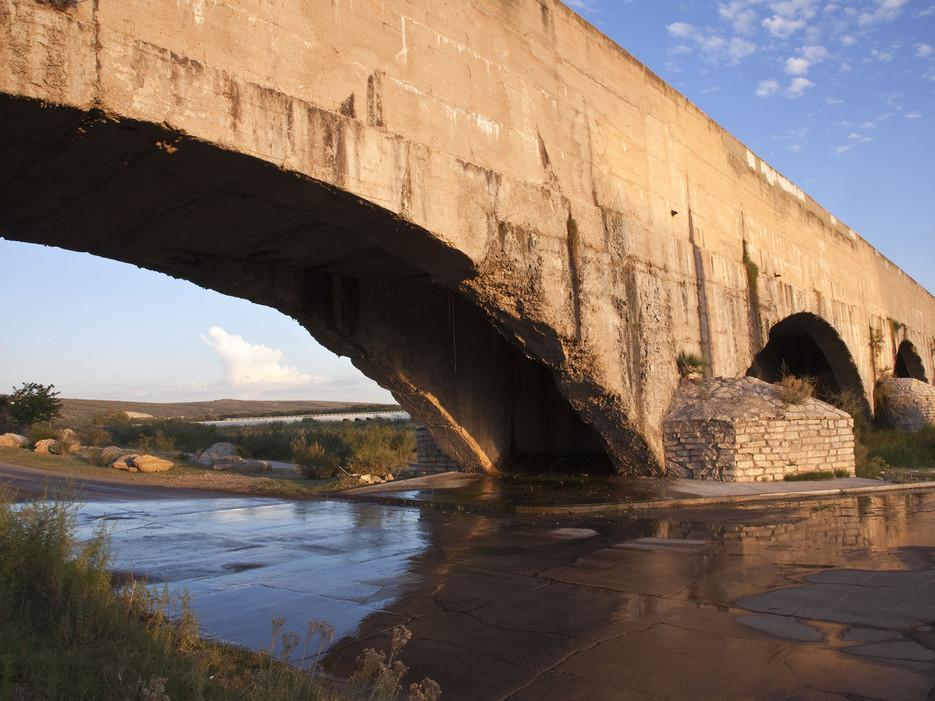
542ee308e0ce0bdc0faf40a7 pecos-river-flume-mapheadIn 1882, when Texas frontier judge Roy Bean began calling himself the "Law West of the Pecos," he was referring to the Pecos River, which flows from the mountains of New Mexico for almost 1,000 miles down through West Texas to the Rio Grande. The Pecos is an important source of water in the northern reaches of the Chihuahuan Desert—and that's how it attained its most unusual geographic distinction. Near Carlsbad, Mexico, locals brag, the Pecos becomes the world's only river that crosses itself.

• How can a river cross itself? In 1887, a group of settlers drew up plans for an irrigation canal on the Pecos, to irrigate crops in the semi-arid Pecos Valley. A series of hastily built dams and canals began to appear, and soon orchards and farms dotted the valley.

• The centerpiece of the project was a massive wooden flume. Supported by trestles, the 145-foot flume carried eight feet of water south through the main canal, crossing over a bend in the Pecos. Since water from the Pecos River was being carried across the Pecos River, Robert Ripley's Believe It or Not comic strip made the flume famous as the "World's Only River That Crosses Itself!"

• The flume carried 9,000 gallons of water a second, and its planners had lofty dreams of irrigating half a million acres. But the new canal proved no match for the region's flash floods. The flume was washed away and rebuilt in 1893, and within a decade the replacement was ready to collapse as well. With the help of the federal government, the wooden flume was replaced in 1903 with a majestic concrete version 47 feet high. At the time, the 497-foot structure was the largest concrete aqueduct in the world.

• Today, tourists still visit the Pecos River Flume, but it's seen better days: what was once one of the nation's premiere engineering feats is now a leaky, weed-choked overpass. But climb up the ruin and take a look: after heavy rain, water still flows through the channel above and along the rocks below. The Pecos River, over a century after Robert Ripley made it famous, is still crossing itself.

 ken
 Written by Ken Jennings

[readon1 url="http://www.cntraveler.com/stories/2014-10-06/how-the-pecos-river-became-the-only-river-that-crosses-itself?mbid=synd_digg"]Source:www.cntraveler.com[/readon1]

aaGEF ESPN JA02

Jay Adams, a skateboarding pioneer and one of the original members of the Zephyr skate team, died in Puerto Escondido, Mexico, early Friday morning. He was 53.

Adams' manager, Susan Ferris, says the Skateboarding Hall of Famer died of a heart attack. A full report from the Puerto Escondido medical examiner's office is pending.
Adams had been on an extended surf vacation in Mexico with his wife and friends, including Solo Scott and Allen Sarlo. He had been surfing across the point earlier Thursday and came in feeling sick, then began having chest pains around midnight, according to Scott.

"His wife called us over in the middle of the night and we administered CPR until we could get an ambulance, and they kept working on him the whole way but he never revived," Scott told XGames.com.
"The important thing is he went out peacefully in his sleep, during the best surf trip of his life. He'd been down here for three months surfing every day, and he was in great shape and really good spirits. I've never seen him so happy and content and at peace."

Adams was known for bringing his aggressive surf style to skateboarding, first on the sidewalks of Venice, California, and eventually into the area's empty backyard pools. He was the first to air above the lip in a pool on a skateboard and the first to try handplants and other tricks that since have become staples.

"I've had the good fortune of spending decades in this sport, and he was the purest form of skateboarder that I've ever seen," Stacy Peralta, another original member of the Z-Boys team and director of the documentary film "Dogtown and Z-Boys," told XGames.com. "He was literally skateboarding incarnate, and the genius of it was he wasn't the best at anything, he just was it. I've said before that he was the original virus that got so many people hooked on skateboarding. Now the original spore is gone, but that virus lives on in so many others. Jay's passing reminds all of us and reaffirms that we're connected. We're all rolling down the sidewalk together."

Adams was the youngest member of the original Zephyr skate team when it first formed in 1975, according to Zephyr Surf Shop owner and co-founder Jeff Ho.

"I first met Jay in the water when he was a little kid on a borrowed surfboard, even before he was the little kid on a skateboard everybody's seen pictures of," Ho told XGames.com. "You could tell even then that he was something special. Once the first photos of what he was doing on a skateboard came out, he was an instant icon. He was so creative in his skating that he was just so, so far beyond his time. He lived his life the way he wanted to live it, and, you know, he was surfing some mean sick barrels at Puerto and getting great shots with the boys right up until just before he passed away, still doing what he wanted to do."

Jim Muir, another member of the original Dogtown Z-Boys skate team, added: "Everyone involved in skateboarding needs to thank Jay for who he was and what he made our sport. He was one of a kind, and there will never be anyone else like him."

Adams will be remembered as much for his sneer and for flipping off the camera as for his brazen skateboarding prowess. When skateboarding got competitive and corporate and some of his peers became celebrities, he mostly opted out.

"Wearing uniforms? That wasn't me," he wrote in an essay for "My Rules," a forthcoming book by photographer Glen E. Friedman.

Friedman's first published image for Skateboarder Magazine was a shot of Adams airing above the lip in a pool for the first time. Adams was just 15 at the time; Friedman was 14. The image rocked the skateboarding world with new possibilities, even though Friedman admits Adams "was clearly not [landing the trick]."Even Adams' accidents could be inspirational.

"When you look at Jay, you have to think of the personification of all the Dogtown stories that Craig Stecyk wrote and all the Dogtown photos that I took: All we were trying to do was capture Jay Adams' essence," Friedman told XGames.com. "He was really f---ed up, and he was really incredibly great, all at the same time. For so many, he was the inspiration, he was the seed. He was one of the originators, and he didn't do any of it on purpose. He was as spontaneous as they come, and because of that he was one of the sport's great revolutionaries."

Friedman shared an excerpt of Adams' "My Rules" essay with XGames.com:
"I always skate for the love of it, the feeling that is like nothing else. Doing the thing I did, that some people after the fact look back and say it was so progressive and pushed the limits, that's cool but I wasn't thinking doing that. I just acted spontaneously and did stuff, see what happens and hope not to get hurt. I wouldn't think about it until afterwards, if at all. Style was a motivator at times, but honestly it just came naturally to me, and although it meant everything at times, who's to say the kook with horrible style isn't having more fun than you? Having fun is what really matters in the end, unless you're just out to impress others."

 252 14172753039 589943039 509527 5989 n
 Colin Bane, Writer

PHOTO GALLERY

[readon1 url="http://xgames.espn.go.com/skateboarding/article/11358968/influential-skateboarder-jay-adams-dies-mexico"]Source:xgames.espn.go.com[/readon1]

aaebolaToday the first man to be diagnosed with Ebola in the United States died in a Dallas hospital. That news, of one Liberian man’s death, is really just that: a mortality statistic.

The inability to save Thomas Eric Duncan, age 42, points to the devastatingly lethal potential of this once rare virus. Given that Ebola is spreading – it’s crossed the Atlantic and the Mediterranean – and even if it weren’t here in America – his death highlights the need to deal with this epidemic head-on, for the sake of people in western Africa, and ourselves.

Health care workers are, understandably, anxious about catching this virus. Hospital-acquired infections are notoriously hard to contain even when they’re not transmitted through copious amounts of bloody vomit and diarrhea, as characterizes active Ebola. Bacterial infections in hospitals are, most often, spread by hands and fomites – inanimate objects like doorknobs, remotes, keyboards or dollar bills (among countless examples). This is different.

As a mom and hematologist who worked with AIDS patients and in an AIDS lab before there were drugs for that disease, I can relate to these concerns. I used to worry about transmitting an infectious, blood-borne virus home to my family. I was cautious – and although I never shied away from my responsibilities – I made an effort and took time to be extra-vigilant. In those days before checklists, common sense played a role in my behavior: frequent hand-washing; minding not to put my fingers near my mouth (much easier in the days before cellphones), and that sort of thing.

Ebola, which is not transmitted by air, does get around by blood and, possibly, dried blood. It differs from HIV in this regard; most AIDS patients don’t bleed profusely – even full-blown AIDS is usually not such a messy condition as Ebola. The same goes for hepatitis C – which by is, by blood, at least 10-fold more infectious than HIV. As for Ebola, I’m not convinced that we know its “R0” – the degree of infectiousness.

As much as there’s a danger in being overly fearful, there’s a danger in overconfidence.

In the absence of a U.S. Surgeon General, Dr. Tom Frieden at the Centers for Disease Control (CDC) has done a terrific job in communicating what’s going on and, in general, appropriately assuring the public. But the agency could be more up-front about what we don’t know and should offer more guidance for ordinary people might do in homes, at work, in schools, in airports, prisons, churches, gyms and cafeterias – basically everywhere – to minimize chances of catching and spreading Ebola.

To this end, the CDC might answer some questions. Straight answers from public health officials could affect the behavior and lives of ordinary people, including patients with other medical conditions:

1. Can Ebola be spread by food handlers? Think of typhoid Mary. (Note that typhoid, or cholera, differs from Ebola in that it’s caused by a bacterial infection, not a virus.) But either might be spread by contaminated feces.

There’s a reason why my grandmothers feared raw vegetables, unpeeled fruit and uncooked foods. Because if someone has infectious diarrhea, or carries a germ on his or her hands, they might contaminate the food or beverages (and dishes).


2. Is it OK to eat salad in a restaurant? What about salad bars?

Relatedly, does heat – as might be applied by cooking – kill the Ebola virus? Homemakers and chefs, and guys in trucks and food stands around the world, might benefit from knowing the answer.

3. Does Purell kill Ebola? This is a very practical matter, as not everyone is in a position to wash their hands before, say, eating a sandwich on a plane. And if Purell is insufficient, what might ordinary people do to stay clean?

4. Can you get Ebola from a toilet seat? Seriously. I was traveling earlier this week, and I couldn’t help but notice the women working in hotel and airport bathrooms – whose job it is to keep those places clean. The CDC might offer guidelines (in many languages, clearly translated) about what you shouldn’t touch. And if you or they do accidentally brush up against an unclean surface, what then?

The risk of the CDC and local health authorities not addressing this sort question is that toilets will be left unclean – and then the odds of spread from just a few cases would grow. And if the answer is that cleaning workers, and homemakers like hospital aides – all, should all be trained in how to use Clorox CLX +2.17% or whatever it takes to clean up a bloody excretory mess, then do it

These are just a few of my questions as a physician-mom-patient-homemaker. Since around 1960, after the advent of antibiotics and polio subsided, we’ve lived – for the most part in the U.S – free from concern of rapidly-spreading contagious conditions with high death rates. That may be changing. Our near-sterile modern cocoon is no longer.

Maybe we need to re-think our attitudes about cleanliness and, in the absence of guidelines, invoke common sense. If there’s a serious, infectious virus that may spread by body fluids, including feces, basic hygiene practices – which many Americans have forgotten, or ignore – may prove life-saving.

My thoughts are with the family of Mr. Duncan, and who are struggling with the disease now. At the same time, I’m keenly aware – by the facts of history of epidemics, and current modes of world travel – that it’s impossible to stop this sort of infection by quarantine. We have to stop it with science. Meanwhile, we need to take care, and be prepared, and not down-play risks.

[readon1 url="http://www.forbes.com/sites/elaineschattner/2014/10/08/how-ordinary-people-and-public-health-officials-might-counter-the-spread-of-ebola/"]Source:www.forbes.com[/readon1]

aWilmerWilmer Valderrama has not been quiet about his disappointment over the lack of action by President Barack Obama and Congress on immigration this year.

The 34-year-old actor and activist said that the Latino community not getting what has been promised time and time again is the equivalent of "taking a back seat again.”

“It was a dark day for all of us,” Valderrama told Fox News Latino regarding the President’s decision to delay executive action until after November's midterm elections. “We needed a more comprehensive action, and it was delayed.”

He believes that the inaction by the country’s leaders will ignite a backlash from the Latino community at the midterms next month – and that is exactly what he wants.

“Minorities have been through many downfalls … many scenes of disappointment with the things that hit home, but they don’t have the champions to get things passed,” he said. “They are starting to see that it can’t be just the president fighting the battles. Unless you have the right people to fight these battles, it’s just not going to get done.”

Valderrama is calling on everyone who is eligible to vote – especially those in the Latino community – to register and to let their voices be heard at the polls next month.

“Make sure anyone in your family who is eligible to vote goes out and represents their household, your family and themselves," he told FNL. "We need to get the equation right to move the needle forward.”

Valderrama, who is well known for playing foreign exchange student Fez on “That '70s Show,” has been working with nonprofit group Voto Latino to ignite a passion in young millennial voters nationwide to get involved in politics and in their local communities.

For Hispanic Heritage Month, the organization launched a voter outreach program to get young Latinos registered. Valderrama said the response to the campaign has been incredible.

“There was no real emotional investment (from people) in the midterms. Most people thought elections stopped at the presidential elections,” he told FNL. “We have found a level of excitement for the midterm election and that has been the biggest gift of this movement.”

Valderrama, who had the opportunity to have dinner with Obama along with girlfriend Demi Lovato and director Robert Rodriguez this summer, said his message to get Latinos out to vote in the coming weeks is fundamentally non-partisan.

“Nobody (Democrat or Republican) has had the courage to stand up and be the swing vote in their party,” he said. “It’s a non-partisan conversation.”

In a handful of the most competitive gubernatorial and Congressional races this year, political analysts say the Latino community could determine who wins – a notion Valderrama strongly agrees with.

“That is a fact,” he said. “The history and future of both parties relies on Latinos. It’s math.”

When asked why he is so passionate about politics, Valderrama said that it’s because he is “so grateful for this country.”

The actor was born in Miami but grew up in Venezuela. His family moved back when he was 14 for the same reason that millions of immigrants have arrived in the U.S. have going back centuries: to find work.

“This country gave me the ‘American Dream’,” Valderrama said. “Everyone appreciates the opportunities given here, (but) we can’t pretend the government will fix everything.”

Despite his activism, Valderrama said he is not interested in going into politics. He admitted that people have asked him if he would consider running for office, but it’s not in the cards.

“I think I am a little louder on this side of the fence,” he said. “As artists we ignite passions to start the conversations. That’s my job. My work as an activist has been the most rewarding job I’ve ever had.”


[readon1 url="http://latino.foxnews.com/latino/politics/2014/10/08/wilmer-valderrama-future-both-political-parties-relies-on-latinos/"]Source:latino.foxnews.com[/readon1]


ahotelbedYou know the feeling: you wake up after a long night's sleep in a hotel bed, slip into your fuzzy hotel-issued slippers and hotel-issued robe, step onto the fluffy hotel carpet and think "WHY is this so amazing?!"

The question is certainly intriguing. So we asked a handful of HuffPost editors for their favorite hotel bed experiences. And the more we researched, the more we realized that all blissful hotel experiences have one important detail in common:

All the best hotel beds are white.

You've probably never thought about it, but try to imagine an ideal hotel bed that isn't white, and you'll see what we mean. And yet we all spend time trying to find colorful quilts and crazy bohemian-print sheets for our bedrooms at home... what's the deal?

Turns out white is a symbol of luxury, and the bet is that you'll feel more luxurious -- and sleep more luxuriously! -- in a white bed.

"Visually, the idea of the white bed is important," said Erin Hoover, vice president of design for Westin and Sheraton hotels. "Something about an all-white bed connotes luxury and a good night's sleep."

When Westin pioneered its now-famous Heavenly Bed in the 1990s, Hoover says, the idea of an all-white hotel bed was an unpopular one -- hotels mostly used colored bedspreads, which were easier to keep clean. But after seeing the results of trial testing, Westin designers were convinced there was only one way to go.

"The all-white bed created this halo effect -- people thought a room had been renovated, even if it was just the bed that had been changed," Hoover explained. "It had a huge impact."

It's not just Westin that features an all-white bed as the centerpiece of a perfect hotel room. The Miraval, Hilton and Park Hyatt -- home to some of our editors' other favorite rooms -- feature white beds, too. It seems to be a move toward simplification, a subtle sign that hotels are the place to leave your worries and the clutter of the world behind.

"Park Hyatt moved toward a clean, white bed and away from show pillows to present guests with a simple, clean and inviting place to lay their heads," said Sybil Pool, a spokesperson for Hyatt's luxury brand. She stresses that a central part of the experience is "clean, white, high-thread-count sheets."

And while there aren't exactly scientific studies to prove you get a better night's sleep in a nice hotel, we're using experience as proof that those all-white wonders really do work the best kind of magic.

Goodnight!

Hotels with Spectacular Views (PHOTOS)

[readon1 url="http://www.huffingtonpost.com/2014/09/25/best-hotel-beds_n_5881548.html"]Source:www.huffingtonpost.com[/readon1]