Kombipainorte 3 1Nico and Lola are two young Argentines who in the name of popularizing science will cross the Americas from bottom to top, from Buenos Aires to Alaska, in a 1981 Brazilian van that will be their home for two years.

"The idea is to teach kids where to find science in everyday life" and do away with the idea that "physics and chemistry are boring," Nicolas Poggi, an industrial engineer and promoter of the project, told Efe, adding that he will be accompanied by his girlfriend, the journalist and photographer Lucila Munilla Lacasa.

"We're going to give workshops in rural schools" with "simple experiments that can be performed with materials native to each place" and "using a way of speaking intelligible to youngsters at the elementary school level," Poggi said.

"We want the kids to be able to create their own experiments" as we deepen "our interaction with the children and the local communities," he said.

"We'll be backed by the support and experience of the team at the San Isidro Exploratory," a place where experiments in electricity, magnetism, chemistry, physics, solar energy, pneumatics and aerodynamics are carried out, and which will provide the travelers with their most useful exercises.

To make their dream come true, Nico and Lola sold their car a year ago and looked for a vehicle that would be "easy to repair and find spare parts for in different countries," which turned out to be a 1981 made-in-Brazil van, which they adapted and prepared to begin the journey just weeks after taking their university degrees on Aug. 10.

If all goes as planned, they will leave from the town of Tilcara in the northern Argentine province of Jujuy, and will follow their route through Bolivia, Peru, Ecuador, Colombia, and will continue along the Pacific coast from Panama to Alaska, after which they will cross Canada from west to east before descending along the Atlantic coast to the southern United States.

The idea is to have Miami as their final destination, where they want to ship their van home and fly back to Buenos Aires. If all goes as planned.
[readon1 url="http://latino.foxnews.com/latino/lifestyle/2014/08/31/argentine-couple-kicks-off-driving-adventure-to-alaska-fueled-by-love-for-science/"]Source:latino.foxnews.com[/readon1]


 Brazil Women Town 11A Town Of Beautiful Brazilian Women Who Are Looking For A Few Good Men

This small town of Noiva do Cordeiro in southeastern Brazil is made up of 600 beautiful, young women who are looking for men. Just don't plan on unpacking your suitcase, fellas, because you won't be allowed to stay.

It's like the set up to a bawdy joke or a pornographic movie.

The population of the small, southeastern Brazilian town of Noiva do Cordeiro is made up of some 600 women. Most of them between the ages of 20 and 35 and renowned in the region for their beauty.

And they are looking for more than just a few good men.

Just breath and keep it together, fellas, because there are a few caveats.

First off, men can’t actually live in Noiva do Cordeiro. The husbands of the townswomen who live in the idyllic town in the state of Minas Gerais, have to work far away and are only allowed to return for the weekend.

The only males who are allowed to live in the town, which sits in a remote valley 60 miles east of Belo Horizonte, are the women's sons, and they must move away when they turn 18.

The ladies-only rule in Noiva do Cordeiro dates back to the town's founding in the 1890s, when a woman accused of adultery was excommunicated by the Catholic Church and cast out of her home, relocated there. Other women in the region who were shunned followed, and, after multiple attempts over the decades by men to intervene, the women of Noiva do Cordeiro adopted the policy that literally made the town a “No Man’s Land.”

And while the women of the town – who run everything from the farms to the town’s policy planning to the churches – like their way of life, many see the sex stalemate they’ve created by not permitting men to live in a town renowned for gorgeous girls as a bit of a problem when it comes to dating.

"Here, the only men we single girls meet are either married or related to us. Everyone is a cousin. I haven't kissed a man for a long time,” 23-year old Nelma Fernandes told the Daily Mirror. "We all dream of falling in love and getting married. But we like living here and don't want to have to leave the town to find a husband.”

That’s the problem all the single ladies in town face: they want to find true love, but don’t want to change their way of life. And after one bad experience, who could blame them?

In 1940, an evangelical pastor, Anisio Pereira, married a 16-year old girl from the town, founded a church and turned Noiva do Cordeiro into his own personal fiefdom, imposing strict rules, banning the women from drinking alcohol, listening to music, cutting their hair or using contraceptives.

After Pereira died in 1995, the women banned men from the town for good.

“There are lots of things that women do better than men,” 49-year old Rosalee Fernandes said. “Our town is prettier, more organized, and far more harmonious than if men were in charge.”

So for all you eligible guys out there, it looks the rules aren’t going to change anytime soon.

A Town Of Beautiful Brazilian Women

[readon1 url="http://latino.foxnews.com/latino/lifestyle/2014/08/29/town-600-sexy-brazilian-women-desperately-seeks-men-for-love-marriage-but-dont/"]Source:latino.foxnews.com[/readon1]


 6586727wSinger Ricky Martin inaugurated Monday in his native Puerto Rico a comprehensive education center for more than 100 at-risk children and teens.

"Today, 120 children and teenagers get a new chance. We come here with the commitment to raise awareness about human trafficking and to eradicate it, which is the purpose of my foundation," Martin said at the opening of the Tau Center in Loiza, east of San Juan.

Six years after construction began, the center opened its doors in Las Cuevas, a mainly black community where 68 percent of the roughly 30,000 inhabitants live below the poverty line.

The unemployment rate in Loiza stands at 29.2 percent and the school dropout rate is 47.3 percent.

Besides the nine secondary and higher education classrooms, the Tau Center has the capacity to care for 120 children under 3, plus a library, an auditorium, and areas to promote the fine arts and recreational activities.

Attending the inauguration ceremony was Puerto Rican Gov. Alejandro Garcia Padilla and Senate leader Eduardo Bhatia, among other guests.

"Human trafficking looks for and finds more children and young people that we can imagine, and we can't be their accomplices. We have to give these kids the tools they need. That is part of the comprehensive mission of the Tau Center, of the school and of our allies," the singer said.

In May, the Ricky Martin Foundation presented the second part of a report that it published four years ago in collaboration with sociologist Cesar Rey, the University of Puerto Rico and Johns Hopkins University in Baltimore about human trafficking on the Caribbean island.

[readon1 url="http://noticias.alianzanews.com/309_hispanic-world/2679032_ricky-martin-inaugurates-center-for-at-risk-kids.html"]Source:noticias.alianzanews.com[/readon1]


 140824224049-14-ca-earthquake-0824-horizontal-gallery

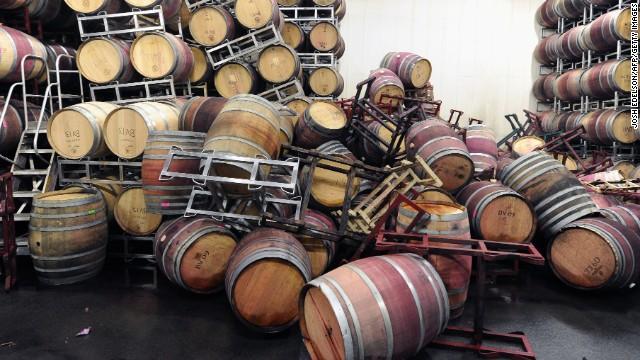
In the heart of Northern California's wine country, piles of stemware lay shattered on the ground.

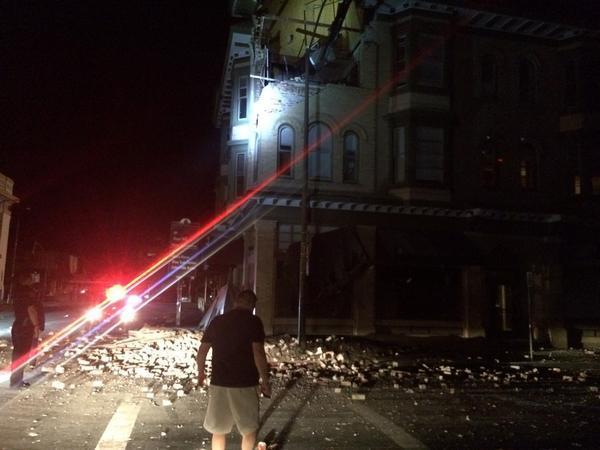
Building facades in historic downtown Napa crumbled into the streets.

And residents who enjoyed decades of calm were harshly reminded that intense quakes can strike anytime.

"I was in shock to see people's homes and offices on the floor," Napa resident Elise Martinez said. "This is life-changing."

"I was in shock to see people's homes and offices on the floor," Napa resident Elise Martinez said. "This is life-changing."

But even as the Bay Area tries to clean up from its strongest earthquake in 25 years, the tremor could have been much worse.

No one was killed in the 6.0-magnitude earthquake that jostled residents awake early Sunday morning, though more than 100 people were injured.

And while 70,000 customers lost power after the quake, that number dwindled 2,200 by Monday morning, electric company PG&E said. 'We need more help'

Still, the recovery will be daunting.
"Everything and everyone in Napa was affected by the quake," said CNN iReporter Malissa Koven. "My house, along with everybody else's, is a disaster. It looks like somebody broke in and ravaged the place, room by room."

Napa City Manager Mike Parness said the damage is beyond what the city can handle.

"We have exhausted our local resources," he said. "We need more help from the outside."

California Gov. Jerry Brown declared a state of emergency.

The earthquake triggered six major fires that destroyed several mobile homes, Napa Division Fire Chief John Callanan said.

And it could take up to a week to get the water system back to normal after dozens of reported water main breaks, Napa Public Works Director Jack Rochelle said. But he said running water is safe to drink.

More aftershocks expected
About 50 to 60 aftershocks rattled the area in the hours after the quake, said John Parrish, chief of the California Geological Survey. The strongest had a magnitude of 3.6.

{youtube}3Yux2smCBQc|600|450|1{/youtube}

"We do think the aftershocks will continue for several weeks," Parrish said.

The quake was the strongest to hit the Bay Area since 1989, when a 6.9-magnitude one struck during the World Series. The Loma Prieta earthquake caused 63 deaths, 3,757 injuries and an estimated $6 billion in property damage, according to the USGS.

The damage from Sunday's earthquake was relatively minor compared with the buckled highways and destroyed homes 25 years ago.

But some said Sunday's quake seemed more intense.

"Honestly it felt much worse than the '89 earthquake," CNN iReporter Garret Gauer said. "The refrigerator relocated itself to the other side of the kitchen"

One child was hurt when a fireplace collapsed and was airlifted to UC Davis Medical Center, hospital spokeswoman Vanessa deGier told CNN.

Nearly 160 were treated for minor injuries at the emergency room at Queen of the Valley Hospital, though hospital CEO Walt Mickens could not confirm that all of those patients were injured in the earthquake.

By Sunday night, only one patient was still in critical condition.

How did it feel?

Sunday's earthquake was centered six miles southwest of Napa and nine miles southeast of Sonoma, according to the USGS.
The USGS estimated that based on their locations, 15,000 people experienced severe shaking and 106,000 people felt very strong shaking.

The quake struck about seven miles deep and was considered "strong" by the USGS. Major quakes start at a 7.0 magnitude, according to the USGS scale.

The economic loss will likely top $1 billion, according to USGS data.

At Silver Oak Winery, owner David Duncan tried to clean up hundreds of broken wine bottles that tumbled off the shelves.

"Those bottles were very unique," he said. They were part of his private collection and worth hundreds of dollars.

California Lt. Gov. Gavin Newsom stressed that it's not just the wine country that needs help.

"There's a mythology about Napa, that it's all fancy wineries," Newsom said. "But underneath that there are a lot of folks here -- very low income -- that are going to need support."

[readon1 url="http://www.cnn.com/2014/08/25/us/california-earthquake/index.html?hpt=hp_inthenews"]Source:www.cnn.com[/readon1]


 BvzPJ- CQAE6zj5

A 6.0-magnitude earthquake struck Northern California early Sunday, the U.S. Geological Survey said.
In Napa, at least 90 people were injured, three critically, including a young child, according to Queen of the Valley Hospital spokeswoman Vanessa deGier.

One child was hurt when a fireplace collapsed and has been airlifted to UC Davis Medical Center, deGier told CNN.
"The majority of injuries that we are seeing are non-life-threatening, but still serious," she said. "Lots of lacerations and abrasions, obviously from fallen debris."

It was the strongest earthquake to hit the Bay Area since 1989, when a quake struck during the World Series. Gov. Jerry Brown declared a state of emergency.

Sunday's earthquake struck 4 miles northwest of American Canyon, 6 miles southwest of Napa, and 9 miles southeast of Sonoma, according to the USGS.

Quake locationQuake location
At least 30 water main breaks and leaks were reported, according to Napa public works director Jack Rochelle. "We have our crews out assessing all those locations," he said at a news conference. Water will be shut off to any damaged water main as quickly as possible, and the water that is still flowing is safe to drink, he said.

The earthquake triggered six major fires, including several mobile homes that completely burned down, Callanan said. The city has turned Napa High School into a shelter for those who have lost their homes.

People phoned in more than 100 reports of gas leaks and downed power lines, according Napa city officials.
Some historic buildings in downtown Napa showed extensive damage and at least 15,000 customers in and around Sonoma, Napa, and Santa Rosa lost power, according to Pacific Gas and Electric Company.

The USGS estimated, based on their locations, that 15,000 people experienced severe shaking, 106,000 people felt very strong shaking, 176,000 felt strong shaking, and 738,000 felt moderate shaking.

"I've got a lot of broken wine, being here in Napa," said Emily Massimi, who was woken up by the quake. "We tend to collect wine, so I have wine all over my kitchen, and glass, and pictures off the wall and books off of bookshelves," she told CNN.
At Silver Oak Winery, owner David Duncan spent the morning cleaning up hundreds of broken wine bottles that fell off the shelves.
"Those bottles were very unique," he said. They were part of his private collection and worth hundreds of dollars. "It's a tragedy, but it's nothing we can't overcome." Duncan said he plans to open the winery today.

The quake jolted downtown Napa resident Karen Lynch. "The refrigerator flew open and all the food fell out," she told CNN.
"It was not like other quakes we have felt," Lynch said. "This was a violent quake, jolting us to and fro."

There have been at least five aftershocks so far, according to the USGS, ranging from 2.6 to 3.6 magnitude

{youtube}dB6SWXRlVg0|600|450|1{/youtube}


[readon1 url="http://www.cnn.com/2014/08/24/us/california-earthquake/index.html"]Source:www.cnn.com[/readon1]


 n-KOURTNEY-large570

She may be a part of reality TV's "it" family, but Kourtney Kardashian is not necessarily a fan of living in the spotlight.

The 35-year-old mother of two -- soon to be three -- covers the September/October issue of Natural Health and opens up about dealing with all the pressures and drama that comes along with being a Kardashian.

"The hardest part is wanting privacy," she explains in the magazine. "It’s tough for people to understand: How can you want these moments to be private when you share so much? I need boundaries sometimes, so I force them, but it’s difficult when people don’t want to respect them. I’ll set times, like, 'On this day, I need everyone to leave me alone.' Being able to communicate that is important. I do become a recluse once in a while," Kourtney adds. "It’s so nice to just be at home and to not have to deal with the outside world."

As for how she deals with all the rumors, Kourtney says she simply doesn't pay attention to gossip rags and no longer Googles herself.

"I do not read tabloids. I used to get Google Alerts to be aware of what was being said, but it was just a waste of time," she says. "I thought, I don’t need to see this. Why do I care what people I don’t even know think? I’m busy with the kids, and they show you what life’s about, what’s really important. They make it really easy for me not to pay attention."

Kourtney, who is currently pregnant and has a son Mason and daughter Penelope with longtime boyfriend Scott Disick, says her family grounds her. And now that her sister Kim is a mom as well, the ladies bond over motherhood.

"Kim asks me for advice a lot, but she's such a great mom, very nurturing," Kourtney explains of Kim's relationship with daughter North West. "It's nice to see how people do it differently. Our kids are all lucky to have many different people around them to give them so much love."

Read Kourtney's full interview in the new issue of Natural Health, on newsstands now.

Kourtney Kardashian

[readon1 url="http://www.huffingtonpost.com/2014/08/20/kourtney-kardashian-tabloids_n_5695266.html"]Source:www.huffingtonpost.com[/readon1]


 1601441 718433948220789 7531759811385345238 n

If you haven't visited Mexico lately, you might not recognize the place.

Though breathless stories of drug-related violence and empty hotels contributed to an extended tourism slump, reports of declining violence over the past two years and an increasingly robust economy have been sparse.

But Mexico hasn't been standing still.

President Enrique Peña Nieto invested heavily in tourism and has reaped steady rewards: The number of international travelers increased 10.9 percent in the first half of 2014 alone, compared with the same period in 2013. As the hysteria slowly ratchets down, U.S. travelers are joining the party; those numbers include a 13.1 percent boost in arrivals from the United States.

President Enrique Peña Nieto invested heavily in tourism and has reaped steady rewards: The number of international travelers increased 10.9 percent in the first half of 2014 alone, compared with the same period in 2013. As the hysteria slowly ratchets down, U.S. travelers are joining the party; those numbers include a 13.1 percent boost in arrivals from the United States.

Caribbean coast
Cancun: The playground of the tanned and inebriated acquired an honest-to-goodness museum, the small but well-done Museo Maya de Cancun, in the wake of 2012's end-of-the-world furor. The Cancun Underwater Museum, designed to become part of the marine environment, sank its final set of sculptures and opened a visitor center in Kukulcan Plaza.

Half the city has hotels going up, expanding, renovating or changing ownership. There's no keeping up with Mexican tourism's cash cow; just view it as a new destination every time you go.

Of note when you're deciding how to get there: Southwest Airlines launches daily nonstop flights to Cancun in November, and Alaska Airlines will resume seasonal service to Cancun after giving up the route in 2010. Super Shuttle is a new option for getting to Cancun or Riviera Maya resorts; its counter is inside the airport.

Isla Mujeres: Images of sea creatures have popped up all over the island's downtown streets. The "Sea Walls: Murals for Oceans" project installed the 15 huge images, created by a group of Mexican, U.S. and international street artists who prepared for their work by swimming with and studying manta rays and whale sharks.

The intention is to raise public awareness and support of marine conservation efforts by tourists as well as locals. All the Sea Walls murals, each displaying the artist's own distinct style, are mounted in the center of town so people can view them in an easy stroll.

Riviera Maya: Other than a riot of new construction that seemed inescapable no matter where I turned this spring, the standout development here is Maya Ka'an. Often described as a destination, it's actually an ecotourism program encompassing numerous settings in natural reserves and communities - including Muyil, Punta Allen and Felipe Carrillo Puerto - that border or lie within the wondrous Sian Ka'an Biosphere Reserve.

Maya Ka'an's primary goal is to protect and nourish the region's Maya communities and natural environments. For visitors, that means an array of adventure trips, guided by members of small tour companies and cooperatives, that range from kayaking and nature tours in the Sian Ka'an reserve to visits with healers, homemakers and fishing families in remote Maya villages.

It's an experiment in both sustainable natural resource use and bettering the lot of people who so far seen little benefit from Mexico's hundreds of millions of tourism dollars, and it deserves to succeed.

On a completely different note, a resident Cirque du Soleil company set up camp in a custom-designed theater this year at the Grand Mayan Resort, between Puerto Morelos and Playa del Carmen. Its elaborate show "Joya" opens in November.

Less inspiring, but interesting, is the Experiencas Xcaret group's latest theme park. Much like Vegas casinos, Xcaret attempts to re-create other places. Until now, it stuck with the Maya world (cenotes, jungle adventures, Chichen Itza ...). Its fifth park, Xoximilco, takes its inspiration (and name) from the Mexico City neighborhood that occupies a remnant of the ancient lake that became the Aztec capital.

Gulf Coast
Campeche: Southern Campeche was all aflutter in late July, when President Peña Nieto came in to accept UNESCO's declaration of World Heritage status for the ancient Maya city and enormous biosphere reserve of Calakmul. The city itself - the largest Mexican ruin that most tourists never see - became a World Heritage Site in 2002.

The new declaration adds the southern part of the biosphere reserve, a 1.78 million-acre tropical forest ranking as the second-largest in the Americas. Calakmul is now Latin America's first "mixed natural and cultural" World Heritage site.

Calakmul could be dwarfed by a new discovery in the northern part of the biosphere reserve: an entire Maya city with pyramids, remnants of palace buildings, altars, ball courts and sculpted stelae.

Called Chactun, it consists of three distinct complexes that make up one of the largest cities in the Yucatan's central lowlands. Scientists believe Chactun might have been a government center, but work has barely begun at the site; no telling when it might open to the public.

Pacific coast

Mazatlan: When escalating crime reports and a faltering economy prompted five major cruise lines to abandon this traditional Mexican Riviera mainstay, city and state officials instituted safety measures that led to a 90 percent drop in crime. First Holland America, then Norwegian Cruise Lines and Azamara Club Cruises, and now Princess Cruises and Carnival Cruise Lines have returned.

Even when the cruise ships were absent, Mazatlan continued work on a new tourism corridor between the port and the continually evolving Old Mazatlan, one of Mexico's sweetest colonial centers. And about an hour north of town, the Institute of Anthropology and History created public access to one of Mexico's most intriguing and least-known archaeological sites.

Las Labradas doesn't have ancient pyramids, or any man-made structure except a new and very informative little museum. It's basically a big pile of black rocks on a lovely, nearly deserted beach. But these aren't any old rocks; as I started clambering about, they revealed themselves to be canvases for crazy carvings. Some were geometric forms looking curiously like engravings I've seen on Maya temples, while others took human or animal forms. One looked suspiciously like an alien.

Scientists say these petroglyphs, dating to 10,000 B.C., were left by the local Totorame Indians and are the precursor of symbols that led to writing. And that's about all they know, but research continues at Las Labradas National Park.

Puerto Vallarta: A renovated malecon that serves as art gallery, outdoor theater and universal front yard, along with a striking new pier impersonating a sailboat on lively Los Muertos Beach, have further boosted the appeal of this pretty port city.

Traditionally a magnet for gay travelers, it benefited from the recent Jalisco state law allowing civil unions that grant inheritance, property ownership, medical and other rights previously reserved for married couples.

The annual Vallarta Pride celebration expanded this year from a three-day weekend to five days of beach parties, a new women-only party, music festivals, fashion shows and a mass LGBT commitment ceremony.

Riviera Nayarit: Mexico has a habit of assigning a catchy name to a string of towns to create a "new" destination. It was just seven years ago that the 192-mile stretch of coast north of Puerto Vallarta became the Riviera Nayarit, taking in Nuevo Vallarta, Bucerias, the luxury enclave Punta Mita, Litibu (created by the folks who brought us Cancun and Los Cabos), Sayulita, and a collection of fishing villages including San Francisco (a.k.a. San Pancho), Rincon de Guayabitos and San Blas.

Except for some paved roads, rehabbed town squares, and a few new hotels and restaurants, these sleepy Old World oases didn't change all that much. But Puerto Vallarta joined the club this year, and Vallarta Nayarit was born, attended by $10 million in government funding for the rebranding.

We're keeping an anxious eye on what we still think of as "the coastal villages north of Puerto Vallarta."

No anxiety over this, though: Ten of the 31 cleanest beaches in the country, as certified last month by the Mexican Institute of Standardization and Certification, are on the Nayarit coast. Punta Mita, Banderas Bay, Compostela and San Blas were recognized for the first time this year, joining Sayulita, Nuevo Vallarta (with three beaches) and Bucerias.

If you go
Pacific Coast
Mazatlan Tourism Board: Mazatlan.

Las Labradas: 50 miles north of Mazatlan off Highway 15D. Go Mazatlan. 48 pesos.

Puerto Vallarta: Visit Puerto Vallarta.

Vallarta Pride

Riviera Nayarit

Caribbean Coast

Cancun/Isla Mujeres Convention and Visitors Bureau: www.cancun.travel.

Museo Maya de Cancún: Blvd. Kukulcan Km. 16.5, Zona Hotelera, Cancun. (998) 885-3842. www.inah.gob.mx/museums. 59 pesos (about $4.50); no credit cards or dollars. Free for age 60 and up and kids under 13.

Cancun Underwater Museum: in waters between Cancun and Isla Mujeres. www.musacancun.org. Access through Aquaworld, (998) 848-8326. www.aquaworld.com.mx/en/dive/underwater-museum.php. Snorkel tour $45 adult, $22.50 child.

Super Shuttle: (877) 392-1516 or (998) 843-5015 (in Cancun). .

Isla Mujeres murals

Maya Ka'an

Cirque du Soleil: at Grand Mayan Riviera Maya, Playa Paraiso, Km. 48 Carretera Federal 307, between Puerto Morelos and Playa del Carmen (35 km south of Cancun International Airport). (800) 247-7837 (Mexico) or (844) 247-7837 (United States/Canada). www.teatrojoya.com. "Joya," opening Nov. 8, $65 and up.Maya Ka'an.

Xoximilco: (998) 883-3143 (Cancun), (984) 206-0038 (Playa del Carmen), (855) 332-2130 (United States/Canada). www.xoximilco.com. $89 adult, $44 child.

Gulf Coast
Campeche tourism: Campeche.

Calakmul: 60 miles east of Escarcega to turnoff at Cohuas, then 37 miles south to Calakmul. Fees at the gate, the museum checkpoint and the archaeological site add up to 56 pesos (about $4.50) per car plus 140 pesos ($11) per person.

Christine Delsol writes about Mexico for SFGate and is a former editor of The San Francisco Chronicle's Travel section. E-mail: This email address is being protected from spambots. You need JavaScript enabled to view it.


[readon1 url="http://www.sfgate.com/mexico/article/Mexico-romps-back-into-the-tourism-game-5690097.php#photo-6707022"]Source:www.sfgate.com[/readon1]


 pope-francis-600

ROME - Pope Francis was grieving the loss of three family members on Tuesday following a traffic accident in Argentina. A Vatican spokesman confirmed to NBC News that the pope's niece and two great nephews had died. Father Federico Lombardi said "the pope has been informed and he is painfully sorry," adding that the pontiff asked for prayers.

Police in Cordoba told NBC News that a call came in just after midnight about an accident involving a cargo truck and a Chevy Spin. The Chevy driver - Francis' 35-year-old nephew, Emanuel Bergoglio - is in intensive care in an induced coma after suffering a variety of injuries including liver trauma and a fractured femur, police said. Bergoglio's wife, 36-year-old Carmona Valeria, and eight-month-old son Jose died at the scene. Bergoglio's two-year-old, Antonio, later died at the hospital, police added. The news - which was first reported by Agence France-Presse - came a day after the 77-year-old pope joked that he might die soon or follow in Benedict XVI's footsteps and resign the papacy. When asked Monday about his immense popularity, Francis said "this will last a short time, two or three years, and then to the house of the Father."

Pope Francis: I could quit like Benedict or even die by 2017

Pope Francis has suggested that he might one day resign the papacy like his predecessor, Pope Benedict XVI did last year, which would make him the second consecutive Pope to do so after almost 600 years. He said this yesterday Aug. 18th while speaking with reporters on his way back to Rome after his state visit to South Korea.


"Some theologians may say this is not right, but I think this way. Let us think about what [Benedict XVI] said, "I have gotten old, I do not have the strength", it was a beautiful gesture of nobility, of humility and courage. But you could say to me, if you at some time felt you could not go forward, I would do the same."

Asked about his immense popularity, the Pope, 77, joked that he would probably die in the next 2/3 years so should not get too proud:
“I know this will last a short time, two or three years, and then to the house of the Father.” he said

00


[readon1 url="http://www.nbcnews.com/news/world/three-pope-francis-family-members-die-argentina-car-crash-n183866"]Source:www.nbcnews.com[/readon1]


 o-CLASSROOM-facebook

We must keep children in school, especially during crisis and conflict

Whenever I read stories and see graphic images illustrating the heartbreaking human tragedy that results from violent civil and cross-border conflict, collapsing governments and political instability, my first thoughts invariably go to the innocent children caught up in the midst of it all.

How, I wonder, do the children cope with the chaos during a conflict, the ever-present dangers and deprivation and the loss of their loved ones and homes? How do they stay safe from the staggering threats to their physical and emotion well-being? How do they find the hope that, in spite of it all, they will survive and someday live the healthy and prosperous lives we all deserve?

And what can we, the citizens of the world, do to keep them safe, alleviate their pain and help them get past the trauma?

Education is a critical element of a humanitarian response

World Humanitarian Day, which we observe today, prompts us to ask these questions and keep them in our minds year round.

One of the first priorities of any humanitarian response in fragile and conflict-affected countries should be to ensure that children stay in school and learn.

School should be where children can feel secure and experience something approaching normal life, even as turbulence churns outside. And, perhaps even more importantly, it is where they can imagine and prepare for a future beyond their current situations.

And if there isn't education...

Without schooling -- particularly over extended periods of time -- children risk losing out on valuable learning time, exams, progress and the opportunity to tap their full potential. Without education, individuals are more likely to face a lifetime of poverty and higher health risks. Without educated citizens who will provide critical brainpower and leadership, battered societies struggle to progress economically, socially and politically -- often for decades to come. Without education there is more risk of continuing violence.

When crisis erupts, emergency measures are important to ensure that schooling continues and children can learn in a safe learning environment. This means integrating education at the outset of any humanitarian response, increasing the levels of predictable humanitarian funding to education commensurate with the scale of needs, empowering civil society institutions to keep schools open, ensuring a strong supply of qualified teachers, and allowing children safe access to learning environments.

Our aim must be, no matter how difficult the circumstances, a quality education for every child. It's also essential that humanitarian responses in conflict areas protect children, teachers and their schools from violent attacks by armed groups or from political exploitation. Such attacks are gross violations of human rights and international law -- war crimes.

It's a tall order. Consider that about half of the approximately 58 million children currently not getting a primary education live in fragile and conflict-affected countries. But it's a need we must not neglect.

The Global Partnership for Education, whose board I chair, plays a leading role in many such fragile countries. Currently, 28 out of its 59 developing country partners are considered fragile or conflict-affected. The Global Partnership helps accelerate assistance in emergency situations, and serves as a bridge among humanitarian and development groups that are responding to the crisis.

Also read the Call to Action: Education Cannot Wait, signed by numerous GPE partner organizations during the recent GPE Replenishment Conference.

Flexibility is the key

In such situations, flexibility is the key. Standard operational approaches that might work in more stable environments might not be possible in countries where there is insufficient government capacity to plan and deliver educational services.

It also calls for pooling financing resources quickly to ensure education needs are adequately financed and can keep up with fast-moving conditions on the ground.

Earlier this year, the Global Partnership provided $3.7 million in accelerated emergency funding to the Central African Republic where a civil conflict rages. The funding helped to rehabilitate schools, get new furniture and books, and support community teachers.

In Somalia, more than 75 percent of public schools had been destroyed during the civil war. Interventions in the education sector were difficult and limited and, as a result, two generations of children have largely grown up without access to basic education. With the help of the Global Partnership for Education, the country has now shifted away from fragmented, emergency activities toward better education planning and received funding to bridge the gap between emergency aid and medium-term development.

So much more to be done

Much of this work in fragile or conflict-affected countries can only be done thanks to the extraordinary and often dangerous efforts of local and international humanitarian aid workers who are committed to ensuring that children's basic needs are met during an emergency and that they get the schooling they need.

Unfortunately, the demand for these interventions continues as new conflicts and crises break out across the globe. As they do, we are all challenged, especially on World Humanitarian Day, to think not only of the children who are caught in the tumult, but, perhaps more importantly, of what we and the entire world are willing and able to do to help them.

[readon1 url="http://www.huffingtonpost.com/australian-prime-minister-julia-gillard/world-humanitarian-day_b_5688857.html?utm_hp_ref=worldir=World"]Source:www.huffingtonpost.com[/readon1]


 moon01 3001931b

The Perseid meteor shower coincides with the brightest 'supermoon', but both events could be obscured by the tail end of hurricane Bertha

Would-be stargazers keen to see the biggest and brightest 'supermoon' for 20 years could be disappointed as lingering storm clouds threaten to spoil the view in the UK.

The display, caused by the moon reaching the point in its orbit closest to Earth - known as perigee - at the same time as it became full, wowed viewers in the Southern Hemisphere on Sunday morning, but is due to be largely obscured by clouds that have brought heavy rain across the country.

It had promised to be more impressive than the supermoon seen on July 12, and next due to appear on September 9, as at 6.10pm it will be the closest the moon has been to Earth all year.

Supermoons occur relatively often, on average every 13 months and 18 days. At perigee, the moon is around 31,000 miles closer than when it is furthest away from the Earth.

The visiblity of the Perseid meteor shower, which started on Saturday and is expected to peak on Tuesday before finishing on Wednesday, has been affected by the supermoon's presence.

moon03 3001932c

Tony Markham, director of the Society for Popular Astronomy's meteor section, said: "You can minimise the effect of the moonlight by observing with your back to the moon – possibly viewing the Cassiopeia/Cepheus/Ursa Minor area.
"If possible, keep the moon hidden behind trees or a nearby building."
The Perseids are caused by comet Swift-Tuttle swings through the inner Solar System every 133 years leaving behind a trail of dust, which burn up in the Earth's atmosphere.

[readon1 url="http://www.telegraph.co.uk/earth/earthnews/11024366/Supermoon-could-be-a-flop-as-clouds-threaten-view.html"]Source:www.telegraph.co.uk[/readon1]


 451629318

China’s economic role in Latin America is expanding and far-reaching these days. In the meanwhile, U.S. leadership and influence with its neighbors to the south, except with Mexico, is declining. The Chinese presence comes – so far – without a political agenda, but together with the lack of U.S. initiatives, it has (and will eventually continue to have) a profound impact in the Inter-American landscape.

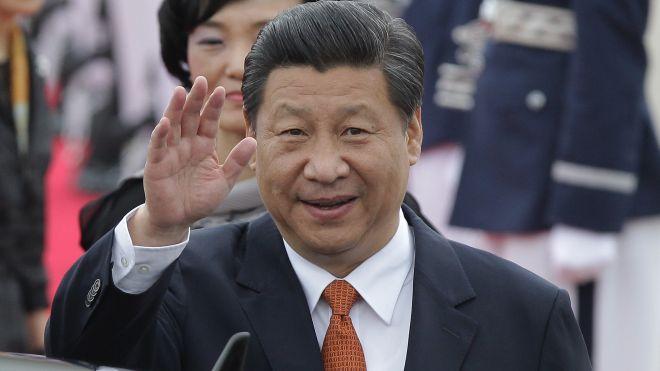
Chinese President Xi Jinping travels around Latin America over the past few weeks (his second tour in a year) sets the stage for what is coming. The round included Venezuela, Argentina and ended in Cuba, after a summit of the BRICS in Brazil.

In Brasilia, the Chinese president announced $35 billion in equity to finance projects in Latin America. These funds will be divided into three types: the first fund is endowed with an initial capital of $20 billion dollars to finance infrastructure, the second tranche of $10 billion is to offer credit lines to finance development projects in the region, while the last is a $5 billion dollars window to finance specific projects in areas defined by Beijing.

In response, Brazilian President Dilma Rousseff explained: "China offers us a very important relationship," referring to the offer of a strategic alliance between the largest Asian economy and Latin America. The United States tours to the region by President Obama or Vice President Biden are far from delivering when compared to any of the Xi Jinping visits.

On the other hand, the “realeconomik” is self-explanatory when assessing the impact of China’s importance for the Latin American economies today.

According to the International Monetary Fund, trade between China and Latin America grew 8 percent to US$255.5 billion in 2012. This growth rate surpasses 6.2 percent trade growth of the region with the United States.

On the other hand, China is already the biggest trading partner of Brazil, Chile and Peru. Trade with Brazil reached US$ 83.3 billion last year, signaling a growth rate of 10 percent, according to the Brazilian Ministry of Commerce.

Looking at the trade trends with Mexico (the U.S. biggest economic partner in the region) one comes to interesting numbers. China became Mexico's second largest trading partner behind the U.S. in 2003, with a growth trend of 823 percent over the past decade, thus creating a trade deficit for Mexico in the amount of $51.22 billion in 2012. According to the Sino-Mexican trade numbers, Mexico is only exporting around $6 billion to China, while importing close to $57 billion, which engages the Mexican government in a strong push to gain access to the Chinese markets.

One initial conclusion is that both Mexico and the U.S. are taken by Chinese imports leaving fantastic bilateral commerce and investment opportunities among them on the table, resulting in massive trade deficits for both economies with respect to China. Finally, according to a United Nations study, by 2016 China will surpass the euro zone as Latin America's second-largest trading partner.

In the finance front, as it is pointed out in a research project by the Inter-American Dialogue in Washington DC: “Since 2005, China has provided more than $100 billion in loan commitments to Latin American countries and firms. China's loan commitments of $37 billion in 2010 were more than those of the World Bank, Inter-American Development Bank and U.S. Export-Import Bank combined.”

In Venezuela alone, during the past seven years, according the publicly available information, China has provided about 57 billion dollars in loans to the Sino-Venezuelan Fund, were the Venezuelan government contributed another 12 billion dollars. The fund resources can only be invested in projects contracted to Chinese companies, or to finance imports from China, whose government gets repaid for the loans with future oil production from PDVSA.

In all, the Sino-Venezuelan fund has received and spent $70 billion in seven years, and the net result of these agreements is that Venezuela owes $45 billion to China, repaying with oil at $65 per barrel, when the average price of the same in the international markets is $100. The commitment of Venezuela’s oil supply to China is estimated at least 530,000 barrels per day.

In addition to the oil-secured financing to Sino-Venezuelan fund, China has provided loans to Venezuelan public sector entities from its Ex-Im Bank, or other sources, in the amount of $8 billion, bringing the debt balance as of 2014 to $52 billion, including the most recent commitment of $5 billion agreed in the round of talks personally attended by China’s President in Caracas in the past couple of weeks.

The three largest debtors after Venezuela are Argentina with $14 billion, Brazil with $13.4 billion, and Ecuador with $9.9 billion (an extraordinary amount given the size of this economy).

When it comes to direct investments, the vast majority of direct investment from China, over 90 percent, has gone to natural resource enterprises, including hydrocarbons, copper and iron ore, and agriculture, with Brazil, Argentina and Peru as the primary recipients, according to a research by Thomas Mellor and Brian Sogol, from Bingham McCutchen LLP.

Nonetheless, the flow of direct investment is triggering in many observers and experts a concern of “de-industrialization,” as China’s final goal is to secure commodities, targeting the Latin American economies as consumers of Chinese industrial products produced in the mainland. In other words, China demand for commodities fuels growth to a region that is targeted by China’s strategy as a debtor and an importer.

Although China’s economic strategy does not come, at least until this point, with a clear and declared political agenda – such as exporting a particular political model or posing a direct security or military concern to the United States – countries like Venezuela and Ecuador in South America, or Nicaragua in Central America (where the Chinese government intend to build a new canal to compete with Panama) have taken particular advantage of this cooperation system.

Given the close links between Venezuela, Cuba and their ALBA partners in the region, the impact of China’s role is providing margin of maneuver to a set of countries that are confronted to the democratic values and commitments expressed by the OAS charter and other instruments of international law.

This may present a challenge to U.S. interests and democratic values. However, the weaknesses of the Venezuelan economy in spite of the massive inflow of Chinese resources, and the more pragmatic approaches taken by Ecuador and Bolivia; or the Cuban gradual economic reforms (which seem like a transition out of the Venezuelan dependency of the past decade) might be signaling other issues instead, and suggesting aggressive economic policy strategies and approaches from the United States.

What does this mean from a political and policy perspective? The answer seems more an economic than a political one. The United States is giving away a fantastic opportunity to promote development partnerships across the Americas, which can integrate economies much further than we usually conceive in a free-trade agreements strategy.

The United States might also play a more significant role than China when it comes to the design of development strategies, pushing for industrialization in the region by promoting joint ventures and other forms of sustainable growth alliances.

However, the United States is playing at a disadvantage because government policy makers and businessmen strategize in a more distant way (or not together at all) than is needed to approach the Latin America opportunity.

But above all, policy makers in the United States are focused in other priorities or keep looking to the south with the offensive approach of the “backyard,” instead of thinking about Latin America, and particularly its leading economies, as neighbors that can be equal partners, whom should not be taken for granted.


Leopoldo Martínez is a former Venezuelan congressman currently living in Washington, DC, where he is the CEO of the Center for Democracy and Development in the Americas (CDDA).

[readon1 url="http://latino.foxnews.com/latino/opinion/2014/08/05/opinion-america-latina-or-america-lachina-new-challenge-for-us-policy/"]Source:latino.foxnews.com[/readon1]


 PKG0312-080714FNLFAMILIAENVENTA-3QMQOR8A FNC 080714 09-30

Puerto Rican actress Roselyn Sánchez is one busy woman. She is juggling motherhood and Hollywood and now she’s doing it in two different languages.

The 41-year-old who stars as aspiring singer Carmen Luna in Lifetime’s “Devious Maids,” will soon be starring in her first Spanish-language original television comedy series titled “Familia en Venta” which will air on MundoFox starting this Sunday.

"I’ve been wanting to do something in Spanish for a long time,” Sánchez told Fox News Latino, adding, “I read ‘Familia en Venta’ and I was laughing so hard.”

Sánchez filmed the show in Colombia two years ago, right after having her daughter, Sebella Rose.

"‘Familia en Venta’ prepared me for 'Devious Maids,' because I was able to do 13 episodes of full comedy, working along stand-up comedian Carlos Espejel," she said.

Up to that point Sánchez’ roles had all had a more serious tone. She’s played CIA Agents, lawyers and district attorneys in movies and TV series such as “Act of Valor,” ”Without a Trace” and “Kojak.”

“I don’t do stand up comedy, so to be able to study somebody's work and see how he [Espejel] breaks down the material and how he improvises, by the time I went back to do ‘Devious Maids,’ I was like, I got it!”

Mexican actor Carlos Espejel plays Pipo in "Familia en Venta." His character is divorcing Lili (Sánchez) after fifteen years of marriage and due to the housing market crash they are forced to live together.

Comedy ensues as they try raising a family that includes a quirky son, a free-spirited daughter and a grandfather.

The statuesque Puerto Rican beauty and the Mexican comedian make an unlikely pair, but Sánchez assures their on-screen chemistry was red-hot.

“Carlitos has what we call tumbao. Carlitos is very short, but Carlos walks a certain way, and he dresses a certain way and he has tumbao.”

The series premieres on August 10 on Mundo Fox. In the meantime, Sánchez is waiting to hear if Lifetime will pick up “Devious Maids” for a third season.

“Everyone is very positive, it’s the highest rated show for Lifetime so they need it, we are super proud of it,” she told FNL.

Sánchez said "Devious Maids" was a groundbreaking show that has made Hollywood executives thirsty for more Latino-themed content.

“All the networks are going crazy looking for the next Latino project. They first passed on a jewel, which was 'Devious Maids,' and now they all want something like 'Devious Maids.'”

Sánchez recently released a single, "Pick Up Your Game," her first musical release since 2003, and she isn't planning on slowing down anytime soon.

“Listen, I’m 41, and I have a TV show for both markets, I have a beautiful healthy child, I have a great marriage. Life is so good. Like they say, 40 is the new 30.”

Although Sánchez does admit that aging in Hollywood is easier for men that it is for women she says the life-experience she’s gained can help her connect with the audience.

“It’s important to cultivate the female audience, when you are in your late 30s and 40s you know what you want,” she said. "You're much more mature."

That maturity made Sánchez realize that she was ready to start a family a few years ago. Setting aside fears about how Hollywood would react to her new role, she focused on working actress she admired who have been able to balance motherhood and acting.

“Every single female that I look up to within the business, that I go, 'I wish I could have that career!,' they all have kids, and they’re doing it,” Sánchez said.

Sánchez admitted that she wants to give Sebella Rose a sibling.

“She needs to learn that she needs to share, we call her The Governor. She runs the house, that needs to change!” the actress said.

[readon1 url="http://latino.foxnews.com/latino/entertainment/2014/08/08/devious-maids-star-roselyn-sanchez-seems-to-have-it-all-including-spanish/"]Source:latino.foxnews.com[/readon1]


dd1a9d0b-c059-4132-aca5-6340552ceb4f

New York, August 7, 2014- A Mexican delegation comprised of the Mexico Tourism Board, the Mexican Chapter of MPI, Mexico City, the cities of Los Cabos, Monterrey, Puebla, Puerto Vallarta, San Miguel de Allende; hotel groups Grupo Presidente and Velas Resorts as well as the Puerto Vallarta's International Convention Center and San Miguel de Allende's La Casona Convention Center participated at Meeting Planner's International (MPI) annual World Education Congress (WEC).

The educational and networking event for the meetings and events community is the signature event through which MPI delivers top-rate education, networking and business opportunities to the meeting and event community.

During the conference Mexico's presence was maintained through a number of activities including hosting a special lunch for all participants, servicing the Hosted Buyer Lounge and MarketSquare in addition to having over 30 meetings with conference hosted buyers.

Puerto Vallarta, which recently became a Preferred Member of MPI, had the largest delegation with Patricia Farias, CEO of the International Convention Center, Miguel Andres Hernandez, Executive Director of Puerto Vallarta CVB and Gustavo Rivas-Solis from the city's PR agency, LATITUDE. Meetings were held with representatives from HelmsBriscoe, HPN Global, Applied Meetings & Hospitality Solutions, Rx Worldwide Meetings, Inc, Performance Improvements Incentives, First Incentive Travel and the World Council of Credit Unions; media interviews given to editors from Meetings Focus, MeetingsNet, Smart Meetings, Rejuvenate Magazine, Prevue Magazine and Successful Meetings.

Puerto Vallarta also hosted a Past and Present Chair Breakfast where the delegation networked with Kevin Kirby, Chairman of the Board, Fiona Pelham, Chairwoman-elect as well as Vice Chairman, Brian Stevens, Michael Dominguez, Immediate Past Chairman and Paul Van Deventer Ex-Officio. The Puerto Vallarta hosted LGBTA MPI reception also provided extensive time to network with the organization's members.

The delegates representing Puerto Vallarta also held meetings with the industry players such as SITE, AIBTM, IMEX, IAEE, and ICCA in an effort to promote the diverse opportunities the destination has for the business industry.

Additional information on Puerto Vallarta is available at www.visitpuertovallarta.com