aagorilla102708707 FILES This file photo taken on January 09 2014 shows Silverback gorilla Bantu at the C large transqVzuuqpFlyLIwiB6NTmJwfSVWeZ vEN7c6bHu2jJnT8

Mexico City's zoo was in shock on Thursday after its beloved male gorilla died as veterinarians prepared to transport him to another city to mate with two females.

Bantu, who was 24, died of cardiorespiratory arrest late on Wednesday after he was sedated and efforts to reanimate him failed, the city's environment department said in a statement, citing a preliminary autopsy.

The gorilla, who would have turned 25 on September 20, was one of the main attractions of the capital's vast Chapultepec zoo.

"This incident has caused great consternation among zoo personnel who cared for him for nearly 25 years," the statement said, adding that international veterinary protocols had been followed.


Bantu was supposed to be taken to the zoo of the western city of Guadalajara, where he would have been presented to two females in the hope that they would reproduce.

Some 20 doctors and experts from the two zoos were involved in the effort to transport him. Tests are being conducted to confirm the cause of death.

The death of a gorilla is cause for concern because populations have plummeted in the face of relentless habitat destruction. Fewer than 175,000 remain in the wild.

A controversy erupted in the United States in May when a silverback was shot dead by zookeepers in Cincinnati, Ohio, to protect a toddler who had fallen into the gorilla's enclosure.


VALLARTASOURCE


REPORT


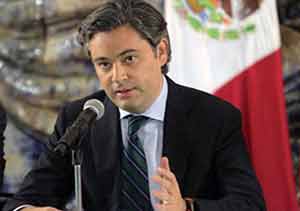
aurelio nunoThe head of the Public Education Ministry in Mexico, Aurelio Nuño assured that education reform is not the problem but the solution to bring the country today to modernity, while groups of teachers reject it.

Nuño added that only through education will be possible to break the existing inequality in Mexico.

He stressed that to eliminate those differences is necessary to end those existing in the educational system and can provide better infrastructure to schools across the country, particularly the most disadvantaged areas.

He also reiterated that the institution will soon deliver the new educational model, with curriculum and textbooks that will come along with the reform.

He announced that the investment of 50 billion pesos (about 2.7 billion dollars) intended to promote school infrastructure, is expected that by the end of this year half of it will be allocated.

He stressed that "it is the largest investment in decades" and noted that it is part of the education reform, which leads to provide decent living conditions for schools for the benefit of six million students.

Official figures indicate that 11 percent of public schools lack toilets and 10 percent are not connected to the electrical power, he said.

The day before, teachers of the National Coordinator of Education Workers (CNTE) kept partially blocked roads in the southern states of Chiapas and Oaxaca in opposition to this reform.

Other CNTE teachers marched from the monument to the Angel of Independence to the Zocalo, but the capital police blocked the way to the latter place again, sources reported.


VALLARTASOURCE


REPORT


IMG 20160702 WA0002 640x400

Computer programmers and hackers at this year’s Campus Party Mexico broke a Guinness record, and in the process came up with 265 proposals to combat poverty.


The week-long, annual event in Zapopan, Jalisco, which wrapped up yesterday, was the sight of a hackathon, where Campus Party’s 20,000 participants engaged in a collaborative programming effort to create projects to fight poverty.


Not only was a Guinness record at stake but a 1-million-peso first prize, which went to a team from Guanajuato called Brainiacs. The winning proposal was called Nodi, a free, text-based communications service intended to overcome connectivity shortcomings in remote communities.

By the end of the event, participating teams had created 265 viable proposals, beating the previous record of 250 to get the Guinness win.

The Brainiacs team will also receive some expert advice in the set-up and operation of their budding new company.

“We had been raising funds for a year but [money] was running out. It was then that we decided to risk it all at the Campus Party,” explained team leader Javier Dávila.

The Brainiacs team had been engaged in designing internet-connected sensors and was just a step away from figuring out how to apply their knowledge to help combat poverty.

The result was a cheap and easy-to-use service based on viper text, whose strongest point, said Dávila, “is that it’s based on a free frequency . . . we’re saving in connectivity. [The device] can also have a solar panel on its back, enabling communication and education for the people.”

The device has possibilities in health, education, public safety, communications, financial inclusion and environmental protection, among many other activities that promote employment and income generation.

The prize money represents the first step for the programmers because “in the hardware industry it’s a small amount . . . we can spend up to 300,000 pesos just in initial prototypes. It’s not a lot but it’ll help us take off.”

Next year’s Campus Party is expected to draw 25,000 programmers, and the promoters hope to end up with as many as 600 viable project

hackathon 400x269


VALLARTASOURCE


REPORT


545678030

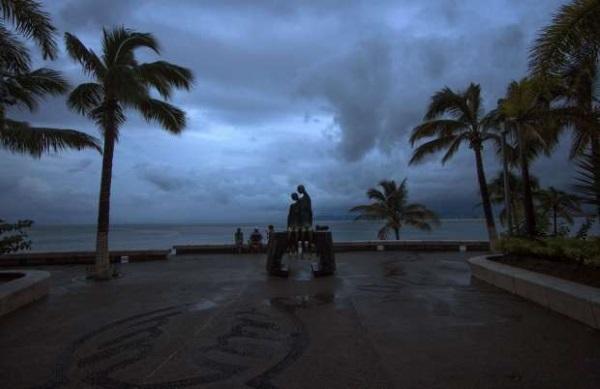
Puerto Vallarta is in the tropics, which means tropical storms and even hurricanes are normal occurrences throughout rainy season. Luckily for visitors to the city, Puerto Vallarta has a couple of natural barriers which prevent storms from entering the city. The predominant wind pattern is from the SW, which causes approaching weather patterns to be weakened over Cabo Corrientes. In addition, the Bay of Banderas acts as a natural buffer, keeping the storms out to sea instead of entering the city. As a result, Puerto Vallarta has the enviable position of being virtually hurricane-free all year round.

hur

Past Hurricanes

October 2016 - Category 5 Hurricane Patricia grew from a tropical storm to the most powerful hurricane ever recorded in only 30 hours. She packed sustained winds of 200 mph (320 km/hr) with gusts recorded up to 250 mph (400 km/hr) as she prepared to make landfall near Puerto Vallarta. Tourists and residents were evacuated by the tens of thousands in the hours before the storm, over 500 flights were cancelled, and residents prepared for the kind of catastrophic damage wreaked by Typhoon Haiyan in the Philippines in 2013. She was so strong, she had some experts considering raising the Category scale where she would rank as an incomprehensible Category 7 Hurricane.

Mercifully, Patricia made landfall about halfway between Puerto Vallarta and Manzanillo, along the sparsely populated Costa Alegre near Cuixmala, about 180 miles (290 km) south of Puerto Vallarta. Although her sustained winds were still a devastating Category 5 with 165 mph (265 km/hr) at landfall (trailing only 195 mph Hainan in recorded history), the hurricane force winds stretched only 35 miles from her center and metropolitan areas of Puerto Vallarta and Manzanillo were spared the brunt of her wrath, experiencing only rain and little wind with little or no damage. In an area of 8 million people, it was still bad, particularly for the villages along Costa Alegre, but could have been so much worse.

June 2016 - Hurricane Blanca became the earliest Category 4 storm on record as it neared Puerto Vallarta, thankfully dropping to a Category 2 and passing hundreds of miles offshore. Puerto Vallarta experienced some surf but otherwise was largely unaffected. There was no disturbance to flights or touristic activity save for a delay in beach and boating activities.


REPORT


VALLARTASOURCE

lynda 8

Puerto Vallarta, Mexico.- It is an exhilarating rush when a sea creature the size of a city bus glides past, not caring that I am floating close by, suspended in its world.


Normally I am terrified of the ocean, but put me out in really deep water, out of sight of land with a whale shark, and I am happy, ecstatically happy.

Neither a whale nor a shark, these misnamed giants are thought to be a separate species that originated 60 million years ago. They inhabit all of the warm tropical oceans, returning annually to Isla Mujeres and Isla Holbox via a migration route that takes them to the Philippines and back

It’s hard to get the proper perspective on the size of the whale sharks until they slide along beside or under a 10-meter boat — then you realize they are scary big.

The expensive and restricted licenses for the whale shark tour boats are issued annually in an attempt to protect these stunningly beautiful black and white creatures and, of course, the tour industry that has sprung up around them. These leviathans can range up to 20 meters in length and weigh up to 35,000 kilograms. They can live for up to 130 years.

Near Isla Mujeres all of the boat captains are instructed to keep a respectful distance from each other to allow their passengers the freedom to swim with the whale sharks. Only two people from any one boat are allowed in the water at a time to limit the amount of interference to the pod. And strict instructions include no touching!

My swim partner and I paddled around for a few minutes before we realized that the whale sharks were still too far away. Encumbered by the mandatory and annoying lifejackets bouncing around our necks, we dragged our bodies back on board while the captain moved the boat closer.

On the second attempt we toppled off the boat – right in the midst of a good sized pod. A bus-sized creature leisurely flicked its tail and cruised past me, uncaring. Wow! Just wow!

As I awkwardly paddled on the surface, peering myopically though the dive mask lens, I had to repeatedly remind myself that the whale shark is a filter feeder and lives on macro-algae, plankton, krill, crab larvae and extremely small squid. To feed, it sucks in a mouthful of water, closes its mouth and expels the water through its gills.

During the slight delay between closing the mouth and opening the gill flaps, plankton and assorted tiny sea creatures are trapped against the dermal denticles, lining its gill plates and pharynx. Denticles are similar to scales, but are modified teeth that are tightly packed together to capture the tiny food particles.

So these creatures are not really interested in squirming human bodies unless, of course, you happen to resemble a very small squid. Despite knowing those facts, swimming towards a freaking big fish with its mouth wide open is still spine-tingling amazing!

Protected by international law, the whale shark is also considered a deity in Vietnam called Cá Ông, or Lord Fish. In the Philippines snorkelers by law must remain a minimum of a meter and a half away. However, in 2014 National Geographic published an article about an illegal slaughterhouse in China that was processing more than 600 whale sharks a year.

The carcasses were worth up to US $30,000.00. The fins for were used for shark fin soup, the meat for food, the skin for designer purses and the oil for vitamin supplements. Something to remember when choosing a new bag or a bottle of supplements.

For me the experience was amazing, worth every penny of the cost which is currently around $125 per person, and typically includes cold non-alcoholic drinks plus a light snack: no drinking and diving. Adult beverages are allowed after the tour boat is headed back to shore.

Lawrie, my adventure-partner in all of our wacky life experiences, firmly shakes his head and says, no, he’s not swimming with any creature that has the word “shark” in its name. It’s that “Jaws” thing from the 1970s


Whale Sharks, Gentle Giants of The Sea


VALLARTASOURCE


REPORT

dent

Puerto Vallarta, Jalisco.- Mexico Dental Travel Made Easy! US Dentist Gives Free Mexico Dental Consultations – Sends US and Canadian Patients to Mexico Dentists

The Board Certified Mexican Dentist Organization announces its newest affiliate member American dentist Dr. Nelson Henry DMD of Windham Maine. Dr. Henry believes that many Americans and Canadians are unable to afford costly dentistry back home so he sends large treatment patients to BCMD Association member dentists in Mexico.

“Board certified dentists in Mexico are fine dentists…” says Dr. Henry.

Board certification is the key to getting the best, most qualified Mexican dentist for your important dental work as certified dentists have many years of additional dental training over and beyond what a general dentist has.

According to the doctor – you don’t want a general dentist in Mexico who only has basic dental school training in cleaning, drilling, filling and simple extractions doing complicated procedures such as root canals, crowns, bridges, cosmetic dentistry or dental implants. Much of that involves oral surgery and that takes special training. In fact it’s illegal in the US and Canada for general dentists to attempt those procedures for health and safety reasons.

You heard that you can save 1,000’s on big treatments such as dental implants in Mexico and dental makeovers, but how do you separate the un-qualified general dentists (they advertise like crazy) from the certified dentists in Mexico?

Answer: The Board Certified Mexico Dentist org. is a good place to start (and finish). For their English speaking staff and dentists (English is a membership requirement) will work with you every step of the way. And you can start the process by contacting American dentist Dr. Henry for a free telephone or online consultation.

Little known fact: Certified dentists in Mexico cost the same as general dentists in Mexico

The next biggest question is always – How much can I save by going to a dentist in Mexico? Take crowns for instance. In the US and Canada a porcelain metal crown can cost anywhere from $800usd to as much as $3,000 in an upscale clinic.

The cost for the same crown runs about $450-500 with a certified dentist in Mexico. If you are looking at a complete dental makeover of 27 teeth in the USA you might spend $50-100,000usd versus $10,000 – 25,000 with certified a dentist in Puerto Vallarta, Tijuana or at a Cabo dental clinic.

And you’ll find the Mexican dentists using the same materials and equipment ordered from the same international dental supply catalogues you dentist in the US orders from.

Board Certified Mexican Dentists Association offers free online consultations AND Toll-Free phone calls from within the USA and Canada to their American dentist affiliate Dr Nelson Henry DMD. He’ll give you Mexico dental costs, and info on Mexico dental vacations and even make your appointment with a certified dentist in Mexico.


VALLARTASOURCE


REPORT

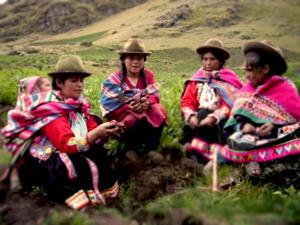
 mujeres agricolas mexico1Puerto Vallarta, Mexico.- Most women living in rural areas of the Mexican capital city have double and even triple working day, indicated a survey carried out by the Ministry of Rural Development and Equity for Communities.

According to the results of the research, nearly 90 percent of those surveyed said that during the day they should combine their work at home with agriculture and sale of their products or the first two activities in the service sector.

Of those working in agriculture, only 80 percent is paid.

The survey indicates that the household works they do are not only the traditional ones as cleaning, making food and caring for children and other relatives, but also they have to take care of the growing, feed the animals and fetch water and firewood.

Regarding agricultural activities these women have to prepare the soil, to prune and plant the growing, as well as fertilizing, harvesting, selecting, loading, packing and selling the products.


 VALLARTASOURCE


REPORT

avo

Puerto Vallarta, Mexico: Avocado prices topped $56 per box in late June on very low Mexican volumes, and even when Mexico ramps up again in July, markets for large fruit could remain tight.

The surprisingly quick end to the Mexican season started to become clear in May, and it’s played out as expected into summer, said Rob Wedin, vice president of sales and marketing for Calavo Growers Inc., Santa Paula, Calif.

“It started driving prices higher, and that’s continued,” Wedin said June 28. “Prices are as high as we’ve seen in the last 10 to 15 years.”

On June 28, the U.S. Department of Agriculture reported prices of $55.25-56.25 for 2-layer cartons of hass 48s from Mexico, up from $32.25-33.25 last year at the same time.

Wedin described a kind of perfect storm in which peak demand collided with the top supplier winding down very early.

“We’re really struggling to get to the 4th of July. It’s been a headache. The growth in Mexico has been so strong — that they would wind down a month early has been hard to accept.”

Robb Bertels, vice president of marketing for Oxnard, Calif.-based Mission Produce, said Mexico had been a “non-factor” in the market in the second half of June.

“It’s fairly unusual. Volumes have been much lower than expected.”

Into the void has stepped California, which was shipping peak volumes in late June and making up 60% of all volume shipping in the U.S. the week of June 20, Wedin said.

“California has responded quite well, and it’s been good for California growers.”

While California peaked in June, volumes should be strong through much of July, with weekly shipments in the “high teens,” Bertels predicted.

Mexican volumes fell from 30 million pounds weekly in mid-May to just 7 million pounds the week of June 20, but by the week of July 4, they could climb back up to 20 million pounds as new-season shipments begin arriving, Wedin said.

That should bring prices for smaller fruit down, but larger fruit could still be at a premium for some time, he said.

Size has been a battle for two months, Bertels said, with fruit from California, Peru and the late Mexican deal all on the small side.

While the Jalisco region of Mexico has been cleared for export to the U.S., some details in the work plan for the region haven’t been worked out, so Jalisco has not been able to help fill the June gap, Wedin said.

Another newcomer to the U.S. scene, Peru, also hasn’t been taking much of the pressure off of Mexico.

Heavy June rains caused Peruvian shippers to cancel a shipment of 20 containers of avocados and other fruits to the U.S. in late June, said Marianela Rodriguez of Peru’s Consorcio de Productores de Fruta S.A. (CPF).

El Nino-related problems throughout the Peruvian season have caused shippers to significantly scale back their export forecasts, Rodriguez said.

Exports are projected to rise just 3% this year, and because of strong demand from Europe, just 12% of Peruvian fruit had been exported to the U.S. through late June, she said.

El Nino has affected not just overall volumes this season but also fruit size, Rodriguez said.


VALLARTASOURCE


REPORT

vaca

Puerto Vallarta, Mexico: The Cousteau Society has committed to the preservation of the vaquita—the most endangered cetacean in the world—by partnering with the Mexican scientific consortium Oceanides Conservación y Desarrollo Marino, A.C. This consortium works on sustainable use of marine and coastal resources in the Sea of Cortez, and on the vaquita in particular with Dr. Lorenzo Rojas Bracho and Dr. Armando Martín Jaramillo.

What is the vaquita?

vaquitaThe vaquita, also known as vaquita marina and Gulf of California porpoise, is the world’s smallest porpoise and probably the smallest cetacean, no more than 150 cm long. With its dark gray back and light belly, its most visible characteristics are the black rings around the eyes and mouth.

It is probably the most endangered species of marine mammal on the planet. It is found only in the Sea of Cortez, or Gulf of California, on the western side of Mexico. The species is classified as “critically endangered” by the International Union for Conservation of Nature and Natural Resources (IUCN) Red List as well as by CITES (Convention on International Trade in Endangered Species of Wild Fauna and Flora) and by the government of Mexico.

Genetic studies have shown that the Gulf of California porpoise, or vaquita, is a naturally small population. It is also the only species of marine mammal endemic to Mexico. Because there are so few, the vaquita was unknown to scientists until the second half of the last century.

What is the primary threat to the vaquita?

Screen The primary threat to the vaquita is being caught accidentally in fishing nets, especially gillnets, that target other species like sharks, rays and shrimp. Studies estimate that 40 to 80 vaquitas die in nets each year, more than are born.

The species has fallen from about 600 individuals in 1997 to 150 in 2007, a drop of 70% in one decade.

What is the Mexican government doing to save the vaquita?

To preserve the vaquita, the government of Mexico has set aside a fund for the conservation of the species.

It has enabled:
– the creation of a reserve where gillnets are forbidden;
– support for fishers who are willing to change their activities, their practices or their fishing equipment.

What is the Cousteau Society doing?

The Cousteau Society is working as a partner with a Mexican scientific team.

Vaquitas emit a high-frequency sound that can be distinguished from other biological acoustic signals. This makes it possible to use acoustic detectors conceived specifically for the species. The idea is to put in place an autonomous network of hydrophones that could collect data continuously for weeks or even months. This would let researchers track the abundance of the population and its movements, which is essential for any conservation plan to evaluate progress and predict the success or failure of a given action.

Such an acoustic network is the most effective and most economical approach and, in the end, entails the least disturbance for the already fragile vaquita population. This first project is being supported by the French non-profit organization Save Your Logo.

Many species that are or may become endangered are found in the logos of companies and institutions throughout the world. The principle behind “Save Your Logo” is simple: enlist these brands in conserving the species that have contributed to their success and ask the companies to invest in biodiversity conservation activities. The “Save Your Logo” operation is a program of the Endowment Fund for Biodiversity. For the vaquita project, “Save Your Logo” is partnered with MAAF Insurance, and more recently the Grenoble School of Management, both of which use a dolphin as their emblem , a unifying symbol if ever there was one.

images


VALLARTASOURCE


REPORT

momia

Puerto Vallarta, Mexico: Mexican paleontologists are in the final stages of unearthing the skeleton of a mammoth discovered in the State of México town of Tultepec last year.

The five-tonne beast roamed the Mexico City suburb some 12,000 to 14,000 years ago when the region had a shallow lake system dominated by the Xaltocan and Zumpango lakes during the late Pleistocene period.

The position of the animal’s remains, whose age has been estimated at 20 to 25 years, suggests it became trapped in the mud of one of those shallow bodies of water due to its huge mass and heavy build. Its corpse was then cut up by humans and other predators.


Those are the conclusions reached by the team of researchers from the National Institute of Anthropology and History (INAH), who have been digging up the mammoth’s remains since April.

The skeleton was discovered by accident during routine drainage work in San Antonio Xahuento, located in the municipality of Tultepec, last December.

The bones are being transported to the town’s Casa de la Cultura for a preliminary preservation treatment before being temporarily stored.

In a statement INAH reported that the researchers had discovered ribs and other large bones, including the mandible, humerus and femur bones, and a dozen vertebrae.


While the process of excavating the animal has been painstakingly slow, the team has successfully removed the one-meter-wide skull, the three-meter-long tusks and the pelvis, which they said had been perfectly preserved in more than two meters of soil in which the skeleton was buried.

This is the first chance INAH specialists have had to study a specimen of what has been identified as the Columbian Mammoth, or Mammuthus Columbi.

According to the institute, due to the characteristics of the terrain at the time other mammoths could have suffered the same bad luck but no others have been reported to authorities.

Experts believe that the mammoth grew to five meters tall and weighed up to 10 tonnes, and lived across the United States and Central America. Remains of the mammoths have been uncovered across Mexico, Texas and as far west as the La Brea Tar Pits in California.


VALLARTASOURCE


REPORT