







The Spring Fair covered in our main piece raises funds for an organisation whose current scope is considerably wider than its origins would suggest. Vallarta Cares started as an emergency food response during COVID-19 and has since built the kind of operational infrastructure that rarely gets constructed except under crisis conditions — and that proves harder to replace than anticipated once it exists.
How It Began
Vallarta Cares was established during the COVID-19 pandemic to address acute food insecurity among Puerto Vallarta residents who lost income as tourism collapsed. The founding context is relevant to understanding the organisation's character. Puerto Vallarta's economy is heavily dependent on hospitality and tourism, which means that a sudden, total shutdown of inbound travel does not produce gradual hardship. It produces rapid, concentrated income loss across a large share of the working population simultaneously.
Government social safety net programmes did not reach all affected households quickly enough during that period. The organisation emerged partly to fill that gap, drawing on donors in the expatriate and tourism-adjacent community to fund direct food distribution to residents who had lost their livelihoods.
What Vallarta Cares built during that period was not just a food supply chain but also logistics relationships, volunteer networks, and institutional trust that made further expansion possible once the acute emergency passed. Organisations that develop those assets under crisis conditions often find they are more broadly useful than anticipated once the immediate need subsides.
What It Does Now
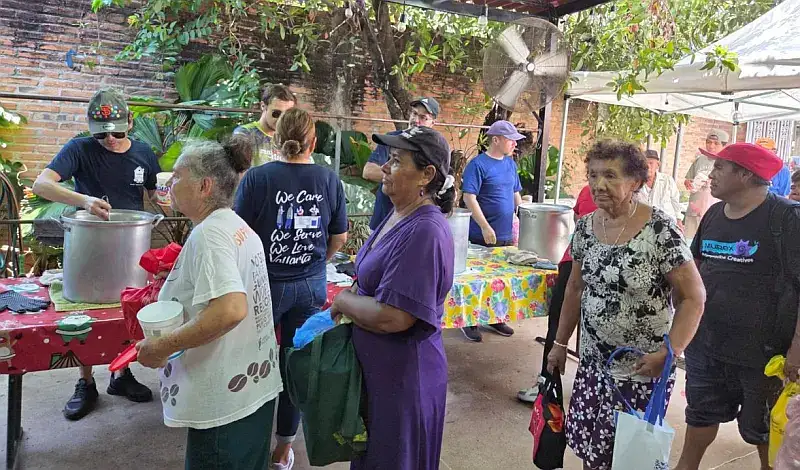
The organisation now operates across Puerto Vallarta, Cabo Corrientes, and Bahía de Banderas. Current programmes include nutrition support to orphanages, rehabilitation centres, and vulnerable households; medical care delivery and supply coordination; educational support; and disaster response logistics for the region.
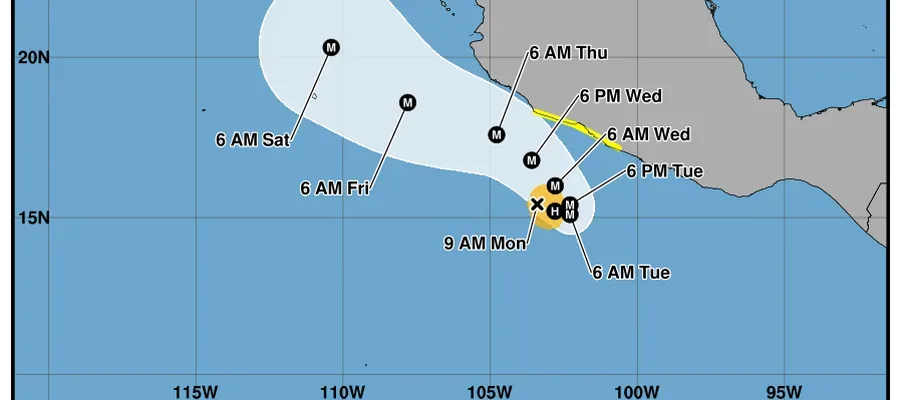
The expansion into disaster relief is particularly relevant given the geography. Cabo Corrientes is an isolated municipality south of Puerto Vallarta, accessible by boat or a long rough road. When Pacific tropical storms hit the Jalisco coast, which happens periodically during the cyclone season, communities in Cabo Corrientes can be cut off from official supply chains for days. Vallarta Cares has established the relationships and local logistics that allow faster response than agencies operating from outside.
The Challenge of Consistent Funding
Providing consistent nutrition to institutional recipients like orphanages requires supply chain reliability that is difficult for small nonprofits to maintain. Donor contributions fluctuate, logistics costs vary, and the institutions being served typically cannot absorb service interruptions. Vallarta Cares's mix of recurring individual donors and event-based fundraising is designed to reduce that volatility.
The Spring Fair generates a concentrated inflow that helps smooth operational costs across leaner months. It also functions as a renewal moment for the donor relationship: a social occasion tends to sustain longer-term giving commitments more reliably than direct appeal letters or online donation drives alone, because it reinforces connection to the cause rather than treating the act of giving as a purely financial transaction.
Frequently Asked Questions (FAQs)
Q: When was Vallarta Cares founded?
A: Vallarta Cares was founded during the COVID-19 pandemic as a community food bank responding to acute food insecurity among Puerto Vallarta residents who lost income as tourism collapsed. It has since expanded into medical care, educational programmes, and disaster relief.
Q: What geographic area does Vallarta Cares serve?
A: Vallarta Cares operates across Puerto Vallarta, Cabo Corrientes, and Bahía de Banderas. Cabo Corrientes is an isolated municipality south of Puerto Vallarta accessible only by boat or rough road, making it difficult for official emergency services to reach quickly after natural disasters.
Q: What programmes does Vallarta Cares currently run?
A: Current programmes include nutrition support to orphanages, rehabilitation centres, and vulnerable households; medical care delivery and supply coordination; educational support; and disaster response logistics for the Banderas Bay region. The organisation maintains supply chains and local contacts that enable rapid response when Pacific tropical storms affect isolated coastal communities.
Q: Why did Vallarta Cares expand beyond food distribution?
A: The organisation built operational infrastructure and community trust during the pandemic that proved applicable to broader ongoing needs. Food insecurity, healthcare access, and educational disadvantage frequently occur together in the communities it serves, and the logistics relationships developed during the food bank phase made expansion into other service areas practically feasible.
Q: How is Vallarta Cares funded?
A: Vallarta Cares relies on private giving rather than government grants, combining recurring individual donors with event-based fundraising including the Spring Fair. Puerto Vallarta's large expatriate population and year-round tourism activity create a higher-capacity fundraising environment than most Mexican cities of comparable size.