







Puerto Vallarta operates a municipal health network that provides free primary care consultations to residents through a combination of fixed clinic locations and a mobile medical unit. The network is distinct from the federal health system operated through the IMSS and ISSSTE, which serve formal sector workers and their families. Municipal clinics are intended to fill access gaps for residents who fall outside those categories.
How the Municipal Health Network Is Structured
The network currently runs two permanent clinic locations within the city. These are fixed facilities with defined service hours, medical staff, and basic diagnostic capacity oriented toward primary care consultations. Patients can receive consultations, basic treatment, and referrals to higher-level services at no cost.
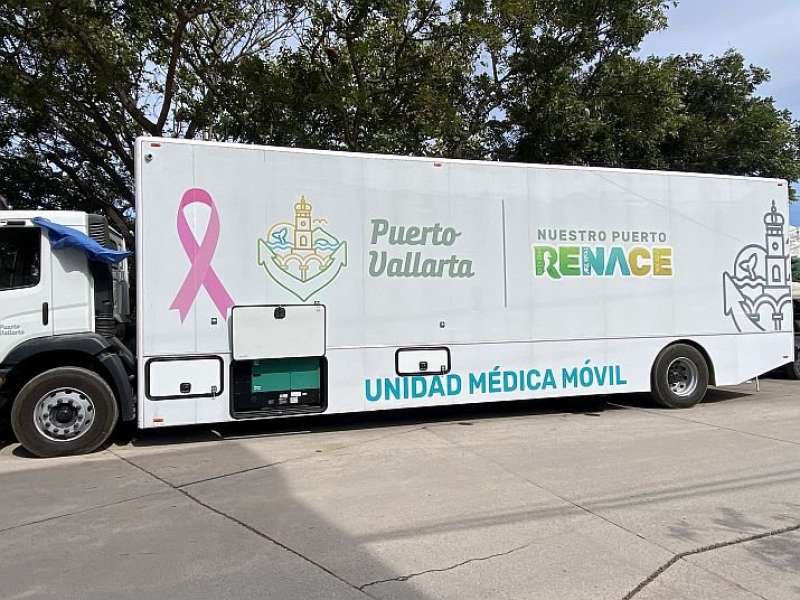
The mobile medical unit extends the network's geographic reach to areas not covered by permanent locations. Mobile units are deployed on scheduled routes or in response to identified need, allowing the network to serve communities at the periphery of the city where a fixed facility is not viable. They carry equipment for consultations and basic procedures.
The Dr. Tucán Clinic in Las Mojoneras, nearing completion, will become the third permanent location. Its addition follows a period in which the municipal government has been expanding primary care capacity in neighbourhoods that have historically had lower access to free services.
The Gap the Municipal Network Fills
Mexico's formal health system is organised around employment status. Workers in the formal sector are enrolled in IMSS, the national social security institute, which provides health coverage as part of the employment relationship. Government employees are covered by ISSSTE. Pensioners and the elderly have access to IMSS-Bienestar and similar programmes.
Residents in informal employment, self-employed workers, and households with no active formal sector earner do not automatically qualify for these systems. The municipal clinic network provides a fallback for this segment of the population, which in a city like Puerto Vallarta includes a significant share of the workforce employed in hospitality, domestic service, and small-scale commerce.
The importance of this access point increases in a city with a large seasonal workforce. Tourism workers who move in and out of formal employment across peak and off-peak seasons may have gaps in their IMSS coverage that coincide with periods when they most need affordable healthcare.
Limits of the Municipal Model
Municipal health networks operate at the primary care level. They are not equipped to handle complex diagnoses, surgical procedures, specialist consultations, or inpatient care. Patients requiring those services must be referred to public hospitals operated by the state or federal government, or to private facilities if they have the means.
Funding for municipal health services comes from local government budgets, which are constrained by the municipality's own revenue and its share of federal transfers. Expanding the network, as the Dr. Tucán Clinic represents, requires sustained budget allocation across multiple annual cycles. This makes incremental growth the standard model rather than large-scale rapid expansion.
Frequently Asked Questions (FAQs)
Q: What services does Puerto Vallarta's municipal health network provide?
A: The network provides free primary care medical consultations through two permanent clinic locations and one mobile medical unit. Services are oriented toward consultations, basic treatment, and referrals to higher-level care. The network is not equipped for specialist consultations, surgical procedures, or inpatient care.
Q: Who is the municipal health network intended to serve?
A: The network is primarily intended for residents who fall outside Mexico's formal sector health systems. Workers in informal employment, self-employed individuals, and households without an active formal sector earner do not automatically qualify for IMSS or ISSSTE coverage. In Puerto Vallarta, this includes a significant share of the workforce in hospitality, domestic service, and small-scale commerce.
Q: How does the mobile medical unit differ from permanent clinic locations?
A: The mobile medical unit extends the network's geographic reach to areas where a fixed facility is not viable. It operates on scheduled routes or in response to identified community need and carries equipment for consultations and basic procedures. Permanent clinics have fixed service hours and more stable diagnostic capacity than mobile units.
Q: How is the municipal health network funded?
A: Municipal health networks are funded through local government budgets, combining the municipality's own revenue with its share of federal transfers. Budget constraints limit the pace of expansion, making incremental growth the standard approach. The Dr. Tucán Clinic represents a multi-year investment cycle from planning through construction to operation.
Q: What is the difference between municipal clinics and IMSS or ISSSTE coverage in Mexico?
A: IMSS covers workers in the formal private sector as part of the employment relationship. ISSSTE covers government employees. Both are funded through payroll contributions from employers and workers. Municipal clinics are funded by local government and serve residents outside those formal sector systems, providing a fallback for informal workers and the self-employed.