








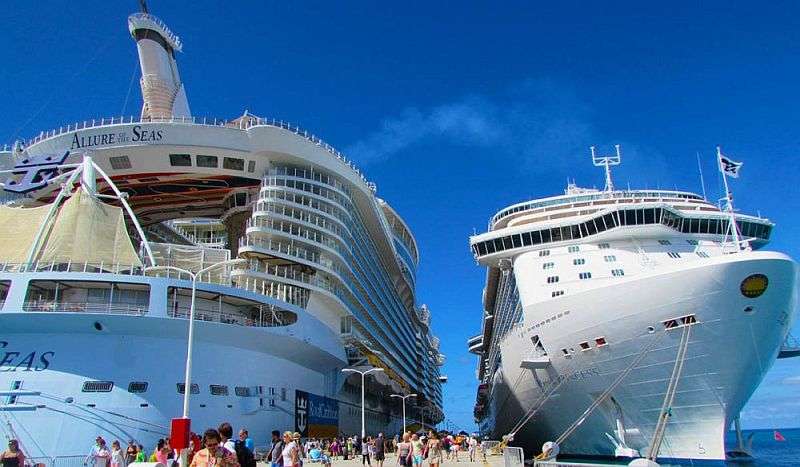
Puerto Vallarta's March schedule of 14 cruise arrivals, covered in our main piece, raises a question that port statistics alone do not answer: what is each arrival actually worth to the local economy, and how is that value distributed? The economic contribution of cruise tourism is frequently cited in aggregate terms by port authorities and tourism promoters, but the distribution of that contribution across different segments of the local economy is less often examined and is essential for understanding which businesses and workers are most exposed to schedule disruptions.
The Per-Passenger Spending Framework
Cruise tourism economics are structured differently from hotel-based tourism. A cruise passenger has already paid for accommodation, most meals, and entertainment aboard the ship. What they spend ashore during a port call is therefore discretionary supplementary spending rather than the primary travel expenditure. Research across multiple cruise markets consistently finds that cruise passengers spend less per person per day ashore than overnight hotel guests, typically in the range of US$80 to US$150 per person for a full port day in a destination like Puerto Vallarta, though this figure varies significantly by ship demographic and itinerary type.
On a large vessel like the Norwegian Bliss, which carries approximately 4,000 passengers, a full-port-day call could generate between US$320,000 and US$600,000 in direct passenger spending, plus additional revenue from port fees and services paid by the cruise line to Asipona. A double-arrival day, two ships of comparable size simultaneously, could approach or exceed US$1 million in combined direct spending, concentrated within a few hours of port activity.
These figures should be interpreted as upper bounds for typical conditions. Not all passengers disembark on every port call; some choose to remain aboard. Not all spending leaves the immediate port area. Tour operators who have contracted directly with cruise lines capture a share of excursion spending that does not flow through the broader local economy. The net economic effect on Puerto Vallarta's general commercial sector is a fraction of the gross spending figure.
Who Captures the Value
The distribution of cruise spending across the local economy follows a geographic and sectoral pattern. Businesses and operators closest to the port terminal and in the most accessible tourist zones capture the largest share. Transportation services, taxis, tour buses, and excursion operators, capture the first layer of value as passengers leave the terminal. Restaurants, beach clubs, and retail establishments in the Romantic Zone and Malecón area capture the next layer. Businesses further from the established tourist circuit, including most locally-owned shops and restaurants in residential neighbourhoods, receive little direct cruise tourism benefit.
The excursion economy is a particularly important segment. Cruise passengers who book organised shore excursions through the cruise line pay the line directly, with a portion flowing to local tour operators who have contracted to provide the service. This structure concentrates a significant share of activity-based spending through a relatively small number of operators with cruise line relationships, rather than distributing it across the broader tourism service sector.
Day workers whose income depends on cruise days, informal vendors, unofficial guides, independent taxi drivers, are the most economically exposed to schedule disruptions. Their income has no fixed component and fluctuates directly with the number of passengers who disembark on any given day. A cancelled port call is a full day of lost income that cannot be recovered through advance bookings or alternative revenue streams.
Cruise Tourism Versus Hotel Tourism
The economic comparison between cruise and hotel tourism is frequently misunderstood in public debate. Cruise passengers spend less per day ashore, but they arrive in concentrated volumes that generate very high short-term demand for specific service categories. Hotel guests spend more per day in the destination but are distributed across a longer stay and a wider range of spending categories including accommodation, which benefits the hotel sector rather than the broader local economy.
For Puerto Vallarta's economic planners, the relevant question is not which type of tourism is better in the abstract, but how the cruise and hotel tourism components interact and complement each other. A port day that brings 4,000 cruise passengers ashore simultaneously creates demand surges in transportation and street-level retail that the hotel guest population alone would not generate, benefiting operators in those categories. The combination of a strong hotel market and active cruise port creates a more diversified local tourism economy than either alone would produce.
Frequently Asked Questions (FAQs)
Q: Why do cruise passengers spend less per day than hotel guests even on the same destination?
A: Cruise passengers have already paid for accommodation, most meals, and onboard entertainment as part of their cruise fare. Shore spending is therefore supplementary and discretionary rather than primary travel expenditure. Hotel guests, by contrast, purchase accommodation, food, and activities locally, making their per-day spending in the destination substantially higher. The cruise model captures a large share of travel expenditure aboard the ship rather than in the port city.
Q: Which local businesses benefit most directly from cruise ship arrivals?
A: Transportation operators, taxis, tour buses, and excursion companies, capture the first layer of value as passengers leave the terminal. Restaurants, beach clubs, and retail establishments in the most accessible tourist zones capture the next layer. Businesses further from the established tourist circuit, including most locally-owned shops in residential neighbourhoods, receive little direct benefit. The geographic concentration of cruise spending is tighter than for hotel-based tourism.
Q: How does the excursion economy affect how cruise revenue is distributed locally?
A: Cruise passengers who book shore excursions through the cruise line pay the line directly, with a portion flowing to local operators holding cruise contracts. This structure concentrates activity-based spending through a relatively small number of contracted operators rather than distributing it across the broader service sector. Passengers who book directly with local operators, bypassing the cruise line, distribute a higher share of spending to small local businesses.
Q: Who is most economically vulnerable when cruise port calls are cancelled?
A: Day workers whose income has no fixed component, informal vendors, independent taxi drivers, unofficial guides, are the most exposed. A cancelled port call is a full day of lost income with no alternative revenue stream. Larger businesses with diversified revenue across hotel guests, advance bookings, and domestic tourism can absorb individual cruise day shortfalls more easily, which means the human cost of cancellations falls disproportionately on the most economically precarious workers.
Q: Do double-arrival days generate proportionally more economic activity than single arrivals?
A: Double arrivals approximately double the passenger volume arriving in the port area within a compressed time window, which creates both opportunity and operational strain. Transportation and street-level retail benefit from the volume surge. However, the concentrated arrival time can exceed the absorption capacity of the most accessible tourist zones, effectively routing some passengers to less optimal experiences and reducing the per-passenger spend relative to a single-ship day with more unhurried tourism conditions.