







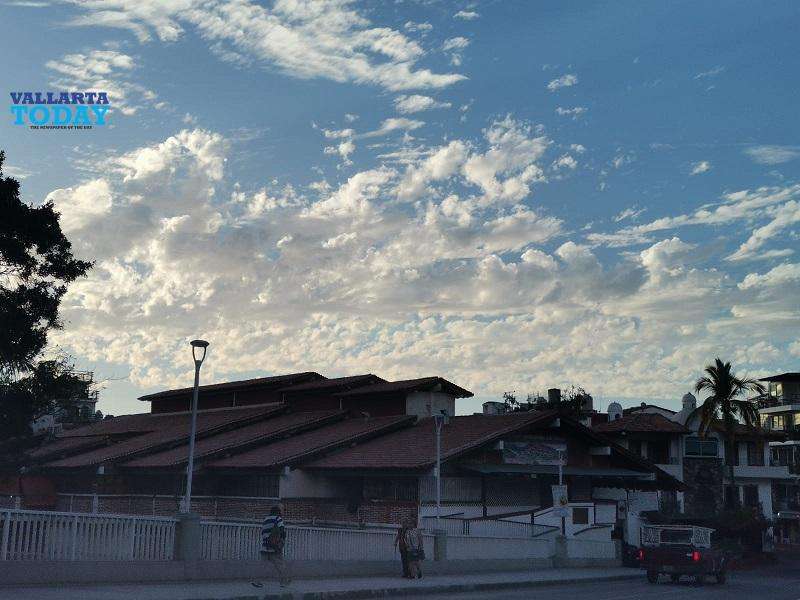
Let us protect the attractiveness of Puerto Vallarta.
That's right, Puerto Vallarta's greatest attraction is being a town of friendly and hard-working people who live in communion with a natural paradise such as its beaches, mountains and rivers; but incredibly the architecture is a very important reference point for tourists to fall in love with this important tourist destination.
The Malecon, which is the public promenade in front of the sea, was born first as a retaining wall and protection against the effects of the waves and over time it became the meeting place first for the people and then for tourists.
This model of public space in front of the sea changed with the resounding growth of tourism and businesses such as hotels and nightlife centers.
The evolution of the economy in Puerto Vallarta also changed public policies causing the bad option of privatizing the beaches creating a frontier between the beaches and the city.
The inequality of social classes so marked in Mexico's tourist destinations is no exception in Puerto Vallarta. Here there is a perception of inequality that is architecturally manifested with a predominant strip and a space marginalized from the rest of the city.
But the problem grew with the arrival of foreigners who came to the Port to live. Incredibly, those who most defend the image of Puerto Vallarta as a town of harmony and not a big city, are precisely the foreigners. Perhaps because the people of Vallarta have let themselves be carried away by the economic benefit more than by the care for the traditional spaces.
Gentrification is a phenomenon that occurs a lot in cities with marked economic inequalities. The concept comes from 1964 and it is a transformation process through which the original population of an urban space, particularly a tourist one, is progressively displaced by another one with a higher purchasing power. Although this concept was born in London, today elitization is something we are experiencing in Puerto Vallarta.
On the one hand, foreign people who arrive with money look for a place to live where they feel fulfilled and then begin to transform their space, investing in fixing the gardens, the sidewalks and the architectural structure of their property.
But, on the other hand, the surrounding people begin to receive the benefits first until the rents and sales of the surrounding houses become unaffordable for the local neighbors, in this case Vallartenses, and they are forced to move to the more distant areas that are cheaper.
The problem is not the good intention of the foreign people who take care of the beauty of the space, nor of the vallartenses who seek to live peacefully. It is really the responsibility of the Government to control, take care and protect the traditional architectural styles and protect that the rents and prices of the property do not exceed what is moderately possible for the population, but as the phenomenon of Gentrification is still very unknown, in Puerto Vallarta and Jalisco there is no legislation whatsoever.