







Mexico has had a legal framework for electronic waste management for over a decade. The gap between what that framework requires and what actually happens when a resident discards a phone or a broken television is the context in which municipal collection campaigns like Puerto Vallarta's exist. The law is not absent. Its enforcement is.
What the Law Says
The General Law for the Prevention and Integrated Management of Waste (LGPGIR) establishes extended producer responsibility (EPR) as the governing principle for special waste categories, including electronics. Under EPR, manufacturers and importers of electronic equipment are legally obligated to establish and fund collection and recycling systems for the products they place on the market. The polluter-pays logic is clear: the entity that profits from selling a device bears responsibility for its end-of-life management.
Mexico's environmental regulator, SEMARNAT, maintains a registry of authorised electronic waste managers and has issued specific norms for the handling of electrical and electronic waste. On paper, the architecture is complete: producer obligation, authorised processors, regulatory oversight, and formal disposal pathways.
Where It Breaks Down
The connection between that formal system and the average consumer is weak in practice. Most electronics purchasers in Mexico are unaware that manufacturer take-back obligations exist. Few retailers actively promote collection points or provide formal disposal information at the point of sale. The geographic density of authorised collection infrastructure is concentrated in Mexico City and a small number of major urban centres, and largely absent in smaller cities and rural areas.
EPR enforcement has been inconsistent. The national system relies on producers self-reporting compliance and voluntarily establishing collection systems rather than on active inspection and credible penalty mechanisms. When the consequences of non-compliance are low and monitoring is limited, the financial incentive to invest in collection infrastructure is proportionally reduced.
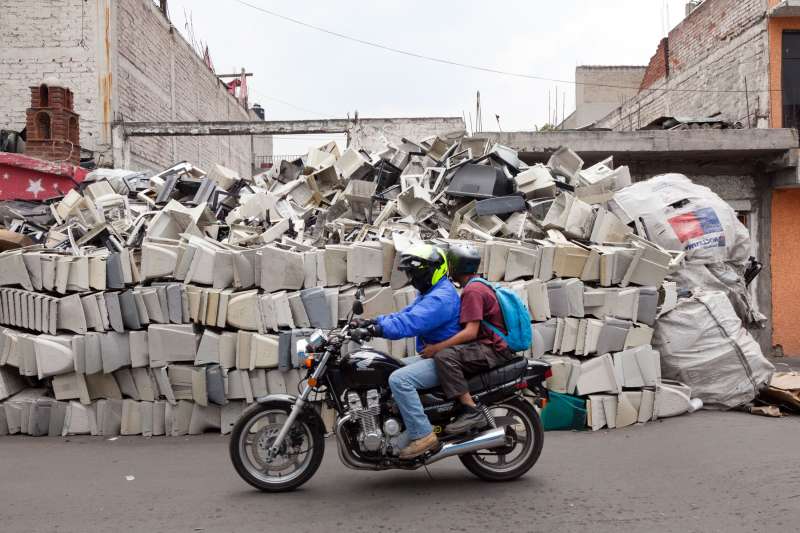
Consumer behaviour fills the resulting vacuum in ways that serve immediate convenience over environmental outcomes. Old electronics accumulate in homes until a disposal moment arises, at which point general waste or informal channels are the path of least resistance. The formal system exists but is not accessible or well-known enough to intercept that moment reliably.
What Would Actually Close the Gap
Countries with effective EPR implementation for electronics tend to share certain design features: deposit-refund schemes that give consumers a direct financial incentive to return devices, retailer take-back obligations enforced at point of sale, and penalty structures for producers with verifiable compliance shortfalls. Mexico's framework has the legal basis for similar mechanisms but has not implemented them with consistent regulatory follow-through.
Municipal campaigns are a practical response to the gap, not a substitute for closing it. They work because they temporarily make formal disposal easy and free for residents who would otherwise default to informal channels. The open question for Mexico's national regulatory agenda is whether EPR for electronics will be strengthened to the point where those campaigns become supplementary rather than primary infrastructure.
Frequently Asked Questions (FAQs)
Q: What is extended producer responsibility for electronics in Mexico?
A: Extended producer responsibility (EPR) under Mexico's LGPGIR requires manufacturers and importers of electronic equipment to establish and fund collection and recycling systems for products they sell in Mexico. SEMARNAT oversees the regulatory framework and maintains a registry of authorised e-waste managers. The principle is that producers bear responsibility for the end-of-life management of their devices.
Q: Why has EPR enforcement for electronics been weak in Mexico?
A: Mexico's EPR system relies primarily on producer self-reporting rather than active inspection and enforceable penalties. When the cost of non-compliance is low and monitoring is limited, the financial incentive to invest in collection infrastructure is reduced. Geographic coverage of authorised collection points is also concentrated in major urban centres, leaving most smaller cities without accessible formal disposal options.
Q: Are electronics manufacturers required to take back old devices in Mexico?
A: Yes, under LGPGIR, producers and importers of electronic equipment have take-back obligations. In practice, manufacturer take-back programmes exist but are not widely promoted at the point of sale, and consumer awareness is low. The formal take-back infrastructure that does exist is geographically uneven, with significantly better coverage in Mexico City than in secondary cities.
Q: What would make Mexico's e-waste regulation more effective?
A: Regulatory approaches that have worked in other countries include deposit-refund schemes giving consumers financial incentives to return devices, enforceable retailer take-back obligations at point of sale, and penalty structures with real consequences for producer non-compliance. Mexico has the legal basis for similar mechanisms but has not implemented them with consistent national follow-through.
Q: What role does SEMARNAT play in e-waste management?
A: SEMARNAT, Mexico's Secretariat of Environment and Natural Resources, is the federal regulatory authority responsible for overseeing the LGPGIR framework. It maintains the national registry of authorised electronic waste managers and sets environmental norms governing how e-waste must be handled and processed. Municipal campaigns operate within a framework that SEMARNAT has the mandate to enforce at the national level.