minimum wage 021014

MEXICO CITY—The Mexican minimum-wage commission on Friday determined to raise the country’s daily minimum wage by 4.2%—in line with current inflation—to about 70 pesos a day, less than $5 at current exchange rates.

The commission, formed by government, business and labor representatives, meets each year to determine the increase in the minimum wage, which is used as a benchmark for contract negotiations in the private and public sectors. It postponed considering proposals to raise the wage much higher than inflation to restore some of its lost purchasing power.

Mexico City Mayor Miguel Ángel Mancera, of the opposition Party of the Democratic Revolution, in August proposed raising the wage by around 23% to 83 pesos in 2015. To raise the wage much above inflation, which currently stands at 4.2% and is expected to slow to 3% next year, it would be necessary to change laws to unlink the wage from a number of payments, including fines and government fees that are set in multiples of the daily minimum.

A proposal to make those changes that President Enrique Peña Nieto sent to Congress earlier this month has passed the lower house and a Senate committee, but was still awaiting a vote in the full Senate when the Congress went into the year-end recess.

The proposal, which Mr. Peña Nieto said was to enable a “serious and broad” debate on ways to increase workers’ incomes, includes a constitutional amendment and so requires state legislatures to vote on it.

Central bankers and some government officials haven’t explicitly opposed a larger increase in a wage that has lost more than two-thirds of its purchasing power in past decades and is inadequate to cover most basic needs. They have, however, expressed concerns about the impact it could have on inflation if not accompanied by gains in productivity.

Central bank Deputy Governor Manuel Sánchez, considered by many analysts to be the most hawkish of the Bank of Mexico’s voting members, warned earlier this year that the minimum-wage proposals risked fueling inflation, which was the main cause of the deterioration in spending power in the 1980s and 1990s.

“This process yielded lower purchasing power for all salaries and underscores the vital necessity of protecting the significant ground gained in the last decade in the battle to control inflation,” he said.

An estimated 6.5 million Mexicans, or 13% of the workforce, earn the minimum, according to the government statistics agency.

Critics of the proposal argue that an increase by decree would exacerbate unemployment, particularly among low-skilled workers.

“The only way to break this vicious circle is to systematically raise productivity,” Luis Rubio, head of the Cidac think tank, said in a recent article.

Write to Anthony Harrup at This email address is being protected from spambots. You need JavaScript enabled to view it.;mailto:This email address is being protected from spambots. You need JavaScript enabled to view it.;

Migrating Monarch populations bounce back from last year

opes for an increase in the migrating monarch butterfly Millions of monarch butterflies have arrived in Mexico's forests as part of their annual migration from Canada and the United States. Conservationists are hoping that there will be an increase in the number of butterflies this year after dramatic falls in recent years. Mexico, the US and Canada have all made efforts to increase butterfly numbers including developing an organic fertilizer which has been spread through the Oyamel Fir Forests of Mexico to protect the monarchs.

[readon1 url="http://world.einnews.com/article/240750284/rhSPBJq2KTJxDmaV"]Source:world.einnews.com[/readon1]

Delhi-government-bans-Uber-taxi-company 1

Mexico City: Representatives of 10,000 Mexico City taxi drivers have brought an illegal transportation complaint against the owners of the smartphone applications Uber and Cabify and this capital's mobility secretary.

The group, Organised Taxi Drivers of Mexico City, filed the complaint Wednesday against Mobility Secretary Rufino H. Leon Tovar and the companies that own these smartphone apps, which connect drivers with people in need of cab service.

"Not only is there omission in not enforcing the law, but there also appears to be collusion on the part of the mobility secretary because now they're looking for ways to bring them in, contrary to the ban imposed in other countries," taxi drivers' representative Daniel Medina said.

In countries such as Germany, France, Colombia, the Netherlands and in some US states, companies have been hit with fines and had their cars taken out of circulation for using these rideshare and taxi service apps, he said.

The complaint accuses the capital's mobility secretariat of not taking action against these services, which impose their own fares and thus usurp the government's role in establishing prices.

The taxi drivers say authorities have failed to enforce existing regulations for years and have allowed Uber, which has operated in Mexico City since August 2013, to violate the current mobility law.

That law's Article 258 states that companies commit the crime of "illegal passenger or cargo transport" when they use vehicles lacking "a concession or permit issued by the (mobility) secretariat for those purposes."

Uber halted its operations in New Delhi Sunday after one of its drivers was arrested for allegedly raping a passenger, Medina noted, adding that that app-based taxi service has also been suspended in Madrid because the company has not complied with public-transport licensing and fare requirements.

The taxi drivers' group recalled that Leon Tovar himself told the media Oct 30 that companies providing taxi service using the Uber and Cabify smartphone apps were breaking the law.

Vehicles providing cab service "without (designated taxi) licence plates and meters are pirates and these vehicles don't have them," Medina said.

[readon1 url="http://zeenews.india.com/news/world/mexico-taxi-drivers-file-complaint-over-uber-cabify-apps_1513343.html"]Source:zeenews.india.com[/readon1]

FCO-VERACRUZ-PORT.00 01 46 00.Still002-800x500

Mexico has begun expanding its largest port at Veracruz to increase global trading and boost its economy. The expansion of the port is set to take place in two stages, with the first to be completed in 2018 and the second by 2030, all at a cost of around $5 billion.

The first stage is underway with the construction of a first sea wall, which is designed to break waves coming in from the Gulf of Mexico.

“The new port will have the capacity to receive 95 million tons of merchandise,” Juan Ignacio Fernandez, the director of the Port of Veracruz, said. “The actual port has only 18 docks that are not all used due to [shallow] waters. However, the new port will have 36 docks for boats of up to 400 meters.”

Crews at the existing Port of Veracruz continued working around the clock as part of the never-ending job of keeping Mexico’s role in the global economy moving.

CCTV America’s Franc Contreras reported from the Port of Veracruz.

[readon1 url="http://www.cctv-america.com/2014/12/15/mexico-to-expand-port-of-veracruz-to-increase-global-trading"]Source:www.cctv-america.com[/readon1]

Mexican-pesos

Mexico's central bank on Friday held borrowing costs steady but said a slump in the peso could add to inflation pressures, and noted that growing social unrest in Latin America's No. 2 economy may crimp growth.

The central bank left its main interest rate at a record low of 3.00 percent, as expected by 19 of 20 analysts polled by Reuters last week.

Mexico's peso slumped to a fresh 2-1/2 year low against the dollar on Friday. The Mexican currency has been hammered as global oil prices have dropped, driving prices for Mexico's crude MXN-OSP to a five-year low.

Policymakers said that in recent years bouts of weakness in the peso had little impact on consumer prices, but they noted that "the sustained depreciation of the national currency could represent an upside risk to inflation."

The peso exchange rate needed to be monitored "with a lot of caution," central bank governor Agustin Carstens said on the sidelines of an event in Santiago, Chile.

However, countering risks from the currency, policymakers said slack in the local economy and slow inflation around the globe would help contain price pressures.

Mexico's annual inflation rate eased in early November to 4.16 percent but it is still above the central bank's 4 percent tolerance ceiling. Policymakers said the rate should fall to around 3 percent by the middle of next year.

The bank also flagged increasing risks to growth due to slowing economies around the world and unrest in Mexico.

The government has faced mass protests over the apparent massacre of 43 students in September in southwestern Mexico.

Mexico's economy grew just 0.5 percent quarter-on-quarter in the July-September period, but signs of stronger U.S. growth are expected to lift demand for manufacturing exports.

Mexico's central bank has held borrowing costs steady since cutting them in June to aid a weak economy. Markets are betting the bank will raise interest rates around the middle of next year, in tandem with the U.S. Federal Reserve.

Stronger-than-anticipated U.S. payrolls data on Friday heightened expectations a rate hike from the Federal Reserve may come sooner than previously thought.

The peso has weakened amid concerns that higher U.S. rates will push investors to dump emerging market assets.

BN-FX043 MEXOIL M 20141205164607
Gas is flared from a tower on an oil drilling rig operated by Petróleos Mexicanos in the Gulf of Mexico. BLOOMBERG NEWS

The Recent Plunge in Oil Prices Is Prompting Mexico’s Government to Rethink Its Oil and Gas Industry Reopening

MEXICO CITY—The recent plunge in oil prices is prompting Mexico’s government to consider scaling back the initial bidding for its momentous plans to reopen its oil and gas industry to private companies, and to offer them better terms.

The government is now likely to delay or scale-down tenders for some of the oil fields and areas that it planned to offer in the coming months, especially in areas with shale oil where recovery costs are higher than in traditional oil fields, Energy minister Pedro Joaquín Coldwell said late on Thursday.

He said the auctions for deep-water fields were unlikely to change because they were longer-term investments, but that other fields with “nonconventional oil, shale gas and shale oil” were likely to be delayed or reduced in scope—including the Chincontepec field, a major onshore area with lots of oil stuck under nonporous rock.

Even before Mr. Coldwell’s comments, the euphoria that greeted Mexico’s moves to open its energy industry for the first time in 76 years had slowly given way to concerns that the round-one bids could be less lucrative for the government than it had expected.

Complicating matters, President Enrique Peña Nieto now faces a political crisis two years into his rule, amid public cries for government accountability in the disappearance of 43 students and allegations of favoritism in awarding government contracts.

The president’s approval rating of about 40% is the lowest for a Mexican leader in nearly two decades, raising the question of whether the president has the political capital to sustain his reform agenda, analysts said.

“This really is a tsunami that is hitting right now, and clearly at the worst possible time,” said John Padilla, managing director for oil consultancy IPD Latin America.

To be sure, Mr. Padilla and others believe that the fundamentals of the energy overhaul are solid and that oil prices could bounce back in time for the initial bids for 109 exploratory blocks and 60 production fields during the course of the year. Shallow-water fields are scheduled to go first, with blocks in deep Gulf waters likely dragging out until the end of 2015.

In addition to low oil prices, Mexico’s regulators have been struggling with putting together a large bid round in a short period of times with vast new responsibilities and limited staff, analysts said.

“They’re saying that it’s all about oil prices but it’s also about recognizing that the amount of work involved in launching a bid round is tremendous and that could have factored into this as well,” Mr. Padilla said.

Industry officials say that lower oil prices won’t turn off the major oil companies to one of the most exciting developments in the global oil and gas sector in recent memory, given Mexico’s significant oil and gas reserves and huge unexplored offshore areas likely rich with resources. But the change in the price climate could make oil firms pickier about where they put their investments.

“I don’t think there’s any question that in an oil-price environment like we see now…where cash flows are down and the stress is a little bit higher on that side, it would be naive to say that won’t have some impact on how the industry responds,” said Marvin Odum, upstream Americas director for Royal Dutch Shell in an interview this week.

Nevertheless, Mr. Odum said areas like deep-water remain attractive because they are long-term projects. “You really have to take a long-term view of where you think oil prices will be.”

Gabriel Salinas, an energy lawyer at Mayor Brown in Houston, said the bid-round modification makes sense. “Leaving some areas out of one round and putting these areas into a future round is not a big concern. It’s just economics.”

The Energy Ministry and the National Hydrocarbons Commission are working to prepare “model contracts” that will set critical terms for the bid round that includes potential oil and gas resources in exploratory blocks of around 15 billion barrels of oil equivalent, and probable reserves of about 4 billion barrels in the oil fields set to be awarded.

The regulators missed the November deadline for those contracts and Mr. Coldwell said they could come out next week.

[readon1 url="http://online.wsj.com/articles/mexico-considers-scaling-back-energy-sector-opening-1417817461"]Source:online.wsj.com[/readon1]

17633 traveling-with-pets-from-the-us-or-canada-l

To travel with your dog or cat to Mexico you'll need to show a valid original and copy of a Health Certificate issued by an approved official vet or by a private vet in the country of origin. It needs to be on official letterhead and have the vet's license number printed on it. These documents need to be presented at the port of entry.

Just to be sure, this certificate needs to state:

1. Your name and address
2. The rabies vacination (date and the expiration) - any animal under 3 months is exempt
3. The previous check up showed no signs of disease

Also important to note is that pets need to enter in a clean cage with no bedding or accessories as these items will be removed and treated if deemed necessary.

Any food must come in its original packaging with a seal (USDA/CFIA) and you should only bring the amount of food needed for the trip.

Entering with 3 animals or less is free, if you have 4 or more (and are obviously very brave!) you need to pay for a certificate, the cost is currently under $2000 pesos and can be paid for online or at the bank.

Visit this site for more information on travelling with pets to Mexico http://www.dogfriendly.com/server/travel/info/customs/uscanadacustoms.shtml

GAVIOTA-video-1

Angélica Rivera, wife of Mexican President Enrique Peña Nieto, owns an ocean-front luxury condominium in Key Biscayne with an estimated value of $3.3 million. She bought it in 2005 for $1.7 million.

Public records show that Rivera, a former soap opera star, financed the condo with a $1.3 million, 30-year mortgage loan. In 2011, 46 days after her wedding to Peña Nieto, Rivera paid off the loan 24 years early.

Rivera is the first First Lady of Mexico- a country where 50% of the population is either poor or extremely poor – known to own luxury property in the U.S., and the first to join the ranks of millionaires with “second homes” in the U.S.

Prominent billionaires in the same category are Carlos Slim Helú, who owns the only private mansion on Fifth Avenue, a century-old Beaux Arts townhouse; mining tycoon German Larrea, who recently purchased a penthouse and an apartment in Chicago’s Ritz Carlton Residence; and media mogul Emilio Azcarraga Jean, who owns an apartment and ocean-front mansion in Miami Beach, and a third residence in Coronado Cays, a high-end residential community near San Diego.

Mexican corrupt figures and shady politicians are also fond of investing in U.S. real estate. At the time of her arrest early last year, authorities found three residences in Coronado Cays connected to Elba Esther Gordillo, the once powerful leader of Mexico’s teachers union, who is currently serving time in a Mexican prison for embezzling millions of dollars from union funds to pay for her lavish lifestyle. One of the properties is a $4.7 million house on an exclusive cul-de-sac.

“There are no restrictions on U.S. realty purchases by foreign persons, corporations, etc. It is wide open,” Peter Francis Geraci, a Chicago real estate attorney, told me.

Although proximity has traditionally made the U.S. an attractive place for Mexicans, over the past decade an increasing number of Mexican citizens have been buying residences seeking safety for themselves and their families, away from the threats of kidnapping, ransom and even murder. According to the National Association of Realtors, in 2014 the median price of buyers from Mexico was $141,071, well below what’s considered a luxury home, real property that has an appraised value of over $1 million.

Located at Ocean Tower One, 799 Crandon Boulevard # 304, Rivera’s condo is part of an exclusive gated community, featuring spas, pools, tennis courts, golf, parks, waterways and a 1000 foot-long beach that overlooks the waters of the Atlantic Ocean. Over the past 10 years, Rivera has paid a total of $260,875 in property taxes.

UNIT 304 OTO, INC., a company Rivera incorporated in Miami in 2005, is the title holder for her condo. “Having someone else hold title is done for privacy, or to avoid personal liability for anything related to the property, such as loans or injuries (since the corportation is the owner),” real estate lawyer Geraci explained.

angelica-rivera-casa-blanca-3-1940x10321111111

Prior to her marriage to Peña Nieto, Rivera was a soap opera actress with Televisa, Mexico’s television giant. Rivera recently said that Televisa paid her $10 million in severance after a 25 year-long career. Televisa has not confirmed the payment. Mexican First Ladies do not earn a salary, but rather a token stipend to cover expenses related to their official functions.

Last month, an internet site run by journalist Carmen Aristegui (morning newscaster for Noticias MVS, the media outlet I represent in Washington), revealed that Rivera’s 15,000-square-foot $7 million presidential mansion in one of Mexico City’s most expensive neighborhoods is actually registered to Grupo Higa, the company that won multimillion-dollar contracts from the State of Mexico while Peña Nieto was its governor. The revelation has put Peña Nieto under suspicion of conflict of interest.

To appease critics of the president, Rivera said in a televised message last month that she would give up her rights to the family mansion. Rivera also revealed that she owns a property in Miami, “to avoid any speculation.”

 222

535e98e0-5e2d-0132-42ac-0ebc4eccb42f

CMT’s hit series Redneck Island is coming back for a fourth season on Thursday, Dec. 4. Just in case you are not familiar with the show, it is a reality competition where contestants battle it out to prove that they have “physical and mental toughness.” Aside from the actual competition, there is a lot of drama, hook ups, and outdoor partying in a sunny location. But where is Redneck Island? Is it an actual place that we can all visit for a party? Well, if it wasn’t clear from its politically incorrect name, it is not a real location, so where do all these shenanigans go down?

This season, the show takes its American roots very seriously filming in what CMT describes as ”a picturesque lake house in Georgia.” That sound about right. Now I wonder if this house will end up gaining notoriety like the reality TV show houses of the past such as those on Jersey Shore and Real World.

But Redneck Island taking place in the U.S. was not always the case. I don’t know about you, but I find it odd that a show about American rednecks did not always film in America. In Seasons 1 through 3, the location seemed pretty mysterious and is only described on CMT’s website as “a tropical island,” the location of which was not specified so I had to do a little research.

It’s actually a bit tougher to decipher the location of former Redneck Islands than a quick Google search. On the IMDb page for the show, the location is listed as “San Francisco, Nayarit, Mexico.” Wait, what does that mean? Are those three separate locations or what? Isn’t San Francisco in California? Thank you, IMDb, for providing more questions than answers on this one. Of course, there can be more than one city called San Francisco…

In fact, Nayarit is a state in Mexico. San Francisco is a city in the state of Nayarit. To make things a little more confusing, the Mexican San Francisco is also referred to as San Pacho. Specifically, the show, at least at one point, taped at the Riviera Nayarit, a beach destination in Mexico.

But for this season, things are much simpler. The cast is somewhere in Georgia, living it up, and vying for that big cash prize.

[readon1 url="http://www.bustle.com/articles/52325-where-is-redneck-island-season-4-takes-the-cast-to-a-much-less-mysterious-location-than"]Source:www.bustle.com[/readon1]

1386380753-international-book-fair-in-guadalajara-mexico 3433421

The country is the guest of honour in one of the most important literary events

Argentine Foreign Minister Héctor Timerman will today preside over the inauguration of the Argentine stand at the Guadalajara Book Fair, the world’s second largest event of its kind and the most important one in the Spanish-speaking world. Argentina is this year’s Guest of Honour at the Guadalajara Book Fair.

Argentina’s stand, with a surface of more than 1,700 m2, will feature a wealth of activities and a varied programme of debates, lectures, poetry recitals, stage performances, music, cinema and art exhibitions. More than 250 personalities from Argentine culture will be present throughout the event.

Prior to the inauguration of Argentina’s stand, last Thursday the Instituto Cultural Cabañas opened the exhibition La protesta: arte y política en la Argentina, which traverses several artistic movements, from engravings published in anarchist magazines and three exhibition halls featuring works by painting masters Antonio Berni, León Ferrari and Carlos Alonso, among others. The exhibit also includes the art emerging from the socioeconomic debacle of 2001.

Arts and politics went hand in hand again at the inauguration of another show, an exhibit devoted to the influencia of Mexican muralismo on Argentine art, focusing on the Ejercicio Plástico saga painted by David Alfaro Siqueiros in Argentina in 1933. Siqueiros’ work was rescued and restored by the Argentine government and placed at the Bicentennial Museum behind Government House in BA.

As for the book industry itself, 30 Argentine publishing houses have sent a commercial delegation, seeking to promote the country’s cultural products and generate business opportunities, industry sources reported.

Organized by the BA City Foreign Trade Board and the Argentine Book Chamber (CAL), the highlights of Argentina’s mission will be two central events: an exhibition by the Argentine publishing industry, with the participation of the 50 libraries under the Universidad Nacional Autónoma de México (UNAM), and a series of commercial round tables with more than 15 potential buyers from Mexico’s official institutions.

The objective, according to organizers, is to introduce a new paradigm — traditionally, Argentina’s main business consisted in associating with Mexican publishers and distributors, whereas this time the country will seek to explore its export potential thanks to the professionalism and quality of Argentine authors and the content of Argentine books.

More than 150 million books are sold yearly in Mexico, and the trade volume exceeds 750 million dollars. Mexico imports more than 40,000 titles every year, amounting to 35 million dollars. Out of this total, 2,897,782 correspond to purchases from Argentine publishers.

The exhibition titled Cortázar, modelo para armar, is the most fitting presence towering above everything else at the Museo de las Artes de la Universidad de Guadalajara. From then on, it’s Argentina all around for visitors interested in the country’s literary and intellectual scene.

As this year’s Guest of Honour, Argentina has programmed an important series of activities and events, such as Encrucijadas de la poesía argentina contemporánea (Argentine Contemporary Poetry at a Crossroads), with Hugo Mujica , Rodolfo Alonso, Jorge Fondebrider and Tamara Kamenszain, and Francisco Garamona as moderator.

Siete preguntas, siete autores (Seven Questions, Seven Authors) will feature Samanta Schweblin, Guillermo Saccomanno, Fernanda García Lao, Leopoldo Brizuela, Selva Almada, Carlos Aletto and Paulina Movischoff, with Silvina Friera as moderator.

A highly relevant round table will be Géneros fronterizos. Innovaciones narrativas a partir de los recursos de la web (Bordering Genres: Narrative Innovations Through the Web Resources), to be debated by Luciano Saracino, Carlos Busqued, Carlos Aletto, Tálata Rodríguez, Fernanda García Lao, and Samanta Schweblin.

Perhaps one of the most attractive activities will be La invención de Bioy. Homenaje a Adolfo Bioy Casares (Bioy’s Invention: Tribute to Adolfo Bioy Casares), in which writers Tununa Mercado, María Rosa Lojo and Juan Ignacio Boido will attempt to shed new light on the work of the undisputed master of Argentine fantascience literary. Journalist Cristina Mucci will moderate the round table.

Writers Perla Sneh, Vicente Antonio Palermo and Ricardo Maliandi will head a panel on Los Premios Nacionales argentinos — categoría ensayo (Argentine National Book Awards — Essays).

In América del Sur en el nuevo mapa geoestratégico global (South America in the New Global Geo Strategic Map), Telma Luzzanni will tackle the challenges faced by writers and the publishing industry in a context characterized by breakneck speed technological and economic and sociopolitical changes.

One of the most-eagerly awaited activities will be headed by renowned playwright Mauricio Kartún and Cristina Banegas, one of Argentina’s most prestigious actresses. With literary critic-journalist Osvaldo Quiroga as moderator, the title of their debate will be Lo tuyo es puro teatro. La escritura teatral como forma de pensamiento (Mere Theatricals: Writing for the Stage As a Way of Thinking).

Finally, poets-performers Tálata Rodríguez and Garamona will grab the spotlight with their blend of poetry, music and stage performance.

Founded 28 years ago by the Universidad de Guadalajara, this Book Fair is a meeting for publishing industry professionals where the public at large is welcome, unlike the main book fairs in the rest of the world.

Never neglecting its business and professional side, it’s a cultural festival focusing on literary and featuring from a multiplicity of countries and writing in different languages. It also provides a space for academic debate.

[readon1 url="http://www.buenosairesherald.com/article/175945/guadalajara-book-fair-welcomes-argentina-"]Source:www.buenosairesherald.com[/readon1]


Sin Viva magazinThis prestigious high society magazine dedicated six pages to the destination in their print edition as well as their website, where they went into detail about all the options offered by the destination, showcasing its appeal to socialites and celebrities.
B2 Ge94CQAAr2ni

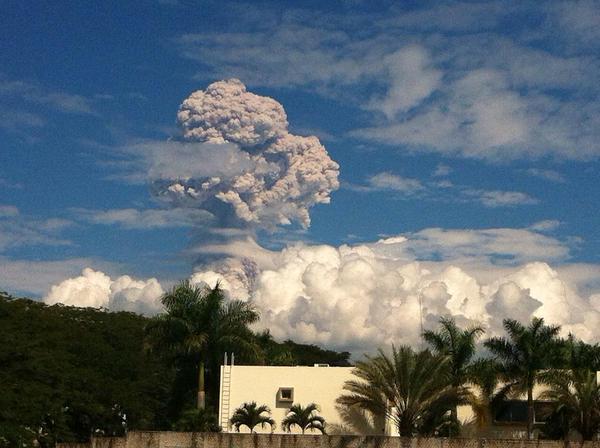
Saturday, November 22, 2014, 2:36 PM - The Colima volcano in western Mexico has erupted, sending a column of ash about 5 kilometres into the air.

Mexico's federal civil defense office said Friday that ash has fallen on towns as far as 25 kilometres from the peak, which is also known as the Volcano of Fire. Glowing hot rock tumbled down the volcano's flanks over a 2 kilometres from the crater.

141120-obama-immigration-jms-2024 e9cd4e9d2cf7830c7f272be73e467ff0

  • Mexican president Enrique Peña Nieto: ‘most important measures in decades’
  • Commentators urge caution – ‘there is still a lot to explain’
  • Barack Obama: we are and always will be a nation of immigrants

Latin American governments have enthusiastically welcomed President Barack Obama’s announcement of sweeping immigration reforms, though some activists and commentators have stressed its limitations.

Mexico’s president, Enrique Peña Nieto, described the reforms on Friday as the “most important measures taken in several decades”, adding that the actions would allow families to stay together.
“I want to publicly recognize the president of the United States for yesterday’s announcement,” said Peña Nieto. “These measures bring relief to principally Mexican immigrants.”

“This is an act of justice which recognizes the great contribution of millions of Mexicans to the development of our neighbor.”

Honduran President Juan Orlando Hernández tweeted his thanks to Obama “in the name of millions of Hondurans and Central Americans”.

His Guatemalan counterpart, President Otto Pérez Molina, told reporters, “We are thankful for, and support, the decisions taken by President Obama.”

El Salvador’s foreign minister, Hugo Martínez, released a statement expressing satisfaction at “the news that will give many of our compatriots temporary relief”.

Central Americans are among those who have most to gain from the executive order which focuses on undocumented migrants who have lived in the US for five years and have US-born children.


Mexico’s foreign ministry released a statement noting that “it has the potential to benefit a significant number of Mexicans in that country, and improve their opportunities and dignity”.

But activists working with migrants in the region were more circumspect, emphasising that the change in policy does not address the more recent wave of migrants seeking family reunification and fleeing rampant crime as well as desperate poverty in several countries – most notably Honduras and El Salvador.

The director of the children’s rights group Casa Alianza in the northern Honduran city of San Pedro Sula described the move as “good but not sufficient”. Carlos Flores stressed that “it doesn’t help the many many people who have gone in recent years, or who want to go now.”

Newspapers across Latin America paid ample but not overwhelming attention to Obama’s announcement, with many limiting their coverage to news stories printed in their international sections.

Honduran national daily La Prensa published a detailed question-and-answer article on what the reform does and does not imply.

Writing in the Colombian newspaper El Tiempo, political scientist Sandra Borda wrote that the announcement was above all a reflection of Democrats’ efforts to shore up support among Latino voters ahead of the 2016 presidential election.

In its leading editorial on Friday, the Guatemalan daily Prensa Libre described the executive order “as a step forward”. But the paper went on to stress “there is still a lot to explain, and this will happen in the imminent launch of the Republican battle against a president who should probably have acted before.”

There was little qualification in the jubilation expressed by a number of participants at the Latin American Grammys, which kicked off just after Obama’s address.

“What a way to start the night,” Mexican comedian and host Eugenio Derbez said. “What’s more, I have an uncle who crossed the border inside a piano.”

la-2413700-1114-na-laredo-mrc07-jpg-20141119
The U.S.-Mexico border, with Laredo, Texas, at left and Nuevo Laredo, Mexico, at right. (Michael Robinson Chavez / Los Angeles)

[readon1 url="http://www.theguardian.com/us-news/2014/nov/21/latin-america-response-us-immigration-reform"]Source:www.theguardian.com[/readon1]