





PNP

A property purchased by Mexican President Enrique Peña Nieto a decade ago is bringing conflict of interest allegations against an administration struggling to regain the country's trust.

The allegation goes back to 2005, shortly after taking office as governor of Mexico state, when he bought an estate on an exclusive country club in the weekend retreat town of Ixtapan de la Sal. According to the Wall Street Journal, the state belonged to a developer who went on to win contracts from state and federal governments.

Peña Nieto has denied any wrongdoing or showing special attention to the developer, identified by the Journal as Constructora Urbanizadora Ixtapan SA.

“Before Mr. Peña Nieto came to power, the company had never won a contract directly from the federal government,” the Journal reported.

While Peña Nieto was governor of Mexico state, which surrounds Mexico City like a horseshoe, from 2005 to 2011, the firm “went on to win more than $100 million in public-works contracts,” the Journal said.

The President’s Office says Peña Nieto’s ownership of the property is public knowledge and its purchase did not involve a conflict of interest.

“The president of the republic legally acquired his Ixtapan de la Sal house,” the President’s Office said in a statement posted on its website. “He showed it in the declaration of his patrimony as governor of Mexico state and in his capacity as president of the republic. The said home has been used in a public and notable way.”

Peña Nieto previously won praise for achieving the approval of structural reforms in areas such as energy, education and telecommunications, but has become stuck in scandal as he and his Institutional Revolutionary Party (PRI) prepare for midterm elections. According to a poll by Reforma newspaper, his approval rating dropped to 39 percent – the lowest for any leader in 20 years.

The controversy on the property comes at a time when Peña Nieto is confronting criticism for his aloof handling of the case of 43 missing students who were allegedly kidnapped by police in late September, turned over to organized crime and presumably killed.

It also follows media stories showing that his wife, Angelica Rivera, and Finance Minister, Luis Videgaray, purchased homes with credit provided by another developer doing business with the government.

Both Rivera and Videgaray have said the properties were purchased properly – and, in the case of Videgaray, while he was not holding any public office. Details of the first lady’s $7.2 million home – reported by Aristegui Noticias – were published shortly after the federal government canceled a $4.3 billion high-speed rail contract awarded to a Chinese company planning to build the line with Mexican partners, which included the developer, Grupo Higa.

Federal officials deny any relation between the first lady’s home and the decision to cancel the contract. The government opened bidding again earlier this month for the project, to be built between Mexico City and Querétaro.

The home in Ixtapan de la Sal is valued at $372,000, according to the Journal, and was purchased from a firm founded by Roberto San Román Widerkehr. San Román passed away in 2010, though his company continues being run by family. The company website showed it completing projects such as schools and roads for various governments in Mexico.

“The relationship of Mr. Peña Nieto with some members of the San Román family goes back several decades,” presidential spokesman Eduardo Sánchez told the Journal.

“The builder that is referred to in the story participated in accordance to the applicable law in the contracting process,” the President’s Office said. “The president of the republic … does not participate in the process of awarding contracts.”

Mexico state has long been a ruled by Peña Nieto’s Institutional Revolutionary Party (PRI,) which has always held the governor’s office, and been characterized by a political culture of closeness between politicians and businessmen, says Bernardo Barranco, an academic and former election official in the state.

Former Mexico State Governor Carlos Hank González, who amassed a fabulous personal fortune, is credited with coining the Mexican political maxim, “A politician who is poor is a poor politician.”

Other observers, such as Alejandro Páez Varela, editorial director of the online publication Sin Embargo, say Peña Nieto has approached the entire country as if it were Mexico state – where the press, civil society and opposition are weak and either co-opted or kept under control by the PRI.

“They forgot that Mexico, in general, experienced a transition in which many Mexicans bought into the idea of having political parties, having transparency and doing away with corruption,” Páez says. “This isn’t on their agenda.”

David Agren is a freelance reporter living in Mexico City.

REPORT AN ERROR

[readon1 url="http://latino.foxnews.com/latino/news/2015/01/21/mexican-president-pena-nieto-confronts-new-questions-about-his-properties/"]Source:latino.foxnews.com[/readon1]
shuttleincancun2 2CANCUM

MERIDA. - When Cuban Revolution and the trade embargo drastically put a stop to the stream of American visitors to the Caribbean Island, Mexico was far from being a touristic power.

It was not until 1965 when Acapulco’s current airport was open. For two decades this was the second busiest airport in Mexico – Mexico City’s being the first one- until it was superseded by Cancun’s airport.

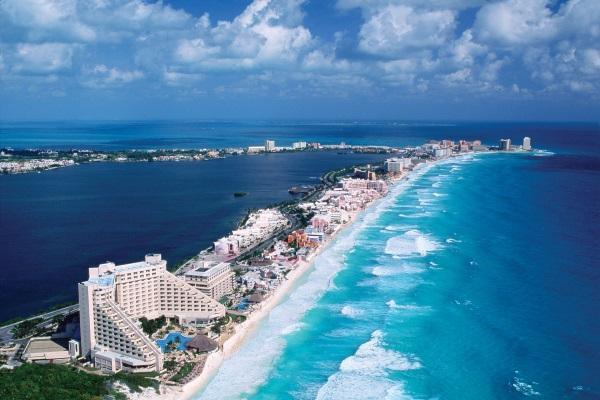
Mexican Caribbean cost was developed with great vision as a tourist centre. In 1973, Cancun’s airport was open; its terminal consisted of just one palm roof; but commercial flights were already landing by March, 1975. Nowadays, Cancun’s airport has three terminals, and a fourth one has already been projected.

Sixty eight airlines offering 119 national and international flights are currently operating at Cancun’s airport. More than 17 million passengers went through CUN facilities in 2014.

In about four decades, Cancun and Riviera Maya have become strong as tourist destinations. According to Quintana Roo’s government statistics, both places, together, welcome about nine million visitors during 2013.

The big question, are the Mexican Caribbean region and the Yucatan Peninsula, in general, ready to face up to what could become a strong competition with Cuba?
This past Thursday, US government announced to lifting restrictions for American citizens to visit the island.

Cuba is the only country in the world which Americans are not allowed to visit. Not even North Korea and Iran are under that category.

Up to 1999, the only way and American could travel to the island was without State Department knowledge, via third countries - like Mexico, Canada and Bahamas - and by making sure their passport were not stamped by Cuban authorities; otherwise they were exposed to paying significant fines.

President Bill Clinton created a list of exceptions for traveling to Cuba in 1999. Americans could travel for journalism, sports and religious and humanitarian reasons. With this exceptions, two hundred thousand Americans travel to Cuba in the year 2003.

George W. Bush’s government however, suspended the issuing of permits for traveling to Cuba, and so the numbers went down to only fifty thousand Americans visiting Cuba in the year 2004.

The number went up again, when Washington authorized the Cubans in exile to visit the island.

In 2011, Barack Obama’s government lifted the restrictions and resumes the issuing of permits. Last year about six hundred fifty thousand Americans went to Cuba.

The measures announced last week, will eliminate the need to obtain a permit to travel. Even if technically speaking, it is still forbidden to make tourism, the American people who wish to visit the island, will only have to declare that the purpose of their trip falls under one of the existent exceptions.

Cuba currently gets about three million tourists a year, out of whom one million are Canadian and the rest are European, Mexicans, Argentineans and of other origins.

The main problem the island is confronting, due to the increment of the number of visitors, is its infrastructure. Cuba has a good number of first class hotels, but not enough rooms to accommodate the amount of tourist that will be now arriving from United States.

Rafael Romeu, former executive of the International Monetary Fund, has been, for the last seven years, studying the changing nature of tourism in the Caribbean. In 2011 he published a document in which he calculated that a lifting of the travel band would mean the arrival of between 3.5 and 5 million American tourist a year.

“We are not there yet”, the now president of DevTech Systems, a Consultant firm dedicated to development topics, told me last Friday

Romeu does not believe that measures announced last week can be translated as an immediate stampede of Americans towards Cuba, although he is sure that the current relationship among both countries is a reflection of mutual recognition that the embargo, or blockade, as the Cuban call it, is a failure, and the best thing is to make it disappear.

To that purpose, he stated, not only restrictions have to be lifted from the US side, but also it is necessary to end the less competitive management of the tourist industry in particular, and of the economy in general, which has been imposed by Cuban authorities.

When that happens, he predicts, other Caribbean’s sun and beach destinations, such as Cancun and Riviera Maya, will suffer the consequences, and they better be prepared.

“There is still time, but Mexico will need to prepare itself by offering diversification or lower prices”; asserted Romeu.

“Once the travel band is gone, the decision American will make between vacationing in Aruba, Dominican Republic or Mexico it’s going to be obvious. They will prefer Cuba because of its proximity”.

Currently, more than half of the nine million tourists that annually visit Quintana Roo, are Americans. A good number of those visitors could change destination if US and Cuba change the current rules of the game.

They are other reasons for Americans to choose Cuba, other than the proximity. Besides having beaches, which compete in beauty with the Mexican Caribbean; Cuba does not have the safety issues that Mexico has.

One of the decisions Mexico can make now, to be ready for the changes, is to attract a vast number of tourist from the West Coast of United States and from Europe; Romeu stated.

No doubt there will be changes. Will Mexico be prepared to face up to those changes?

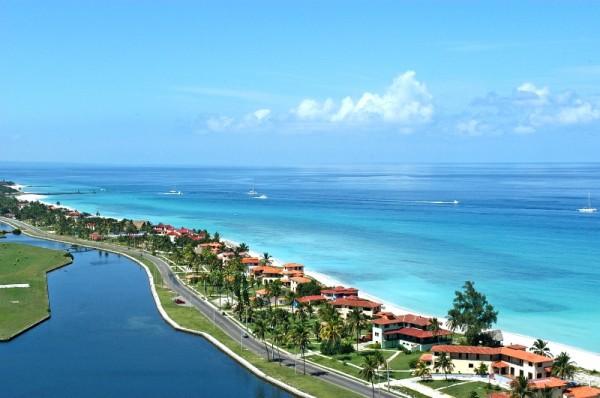
Cuba tours 600x398CUBA

¿A Cancún o a Cuba?Pascal Beltrán del Río


erroREPORT AN ERROR


[readon1 url="http://www.excelsior.com.mx/opinion/pascal-beltran-del-rio/2015/01/19/1003407?mc_cid=67ee415343&mc_eid=19f8006843"]Source:www.excelsior.com.mx-Translated by MAR Translation Services[/readon1]

006

The price of a barrel of oil, today, is US$49.22; but in the income budget was priced at US$79.00 per barrel. Oil prices are dropping rapidly. On June 2014 it was at US$ 102.00 a barrel. It does not look as if prices are going to stabilize soon.

A very simple question: Why is it that gas prices do not go down, if the Oil is cheaper now? The same thing happened not too long ago when corn prices went up and therefore, the tortillas went also up. Then, corn prices came down but tortillas continue at high prices. Another is instance is when, a few years ago, the agave was scarce and the price of the Tequila went up; but then, the agave went from 15 pesos to 50 cent a kilogram, and Tequila price did not go down, it remained at the same high prices. Since my knowledge on economy is limited, I ask: who came out the winner?

Going back to oil, international analysts say that oil is cheap now because of the demand. However, the supply is not real, this is consciously orchestrated, with the purpose of putting pressure on some countries and in a way, punish the countries that are vulnerable to this pressure. That’s the case of Russia, Venezuela, Iran and, unintentionally, Mexico. The over production seemingly started June, 2014, Went US and countries of the European Union decided to sanction Russia for the Ukrainian issue. These affected countries depend on the oil proceeds. In Venezuela case, it has been said that 90% of its income comes from Oil.

Russia not as much; but both countries are losing thousands of millions dollars for each dollar the barrel of oil goes down. And we have not seen the end of this tendency yet. It is the same in the case of Iran: Saudi Arabia, United States and Canada have increased the offer and there won’t’ be a cut in the production in a short term, and perhaps not until the Oil Producers Export Countries (OPEC) meet this year, 2015.

As for Mexico, it produces 2.2 million oil barrels a day, but this ooil is not exported. Specialists say the drop of oil prices does not affect Mexico that much, given the fact that Mexico bought a price (insurance) cover of 700 million dollars. So, no matter; whether prices go up or down, Mexico will pay the same (seven hundred million dollars). Another reason is that now days, we depend less on oil, Exportations have diversified. Prices in gas in USA have gone down, and a big portion of their gas is imported to Mexico.

In spite of all the publicity of law reforms, we don’t see the changes we have been promised. The fact is that if prices go down, the income is lower; if this is so, how is the government going to fund the projects for the year 2015? Where is the government going to get the funds that is not collecting because of less earnings, and to make matters worse, this it is an electoral year? …

One question to think about: Who is the one that can order to lower the prices of gas in Mexico? Is it the legislative power, members of Parliament or member of Congress? Or is it the Executive, the President? Or, who will dare to propose it with a good dose of illusion or a letter to the Wisemen, knowing full well the consequences surrounding this decision?


This email address is being protected from spambots. You need JavaScript enabled to view it.


[readon1 url="index.php?option=com_sobipro&pid=1&sid=703:mar&Itemid=212"]Source:www.VallartaToday.com-by MAR Translation Services[/readon1]

007

More than 10,000 people working at Mexican oil service companies were laid off this week as state-owned Petroleos Mexicanos cut contracts in the face of the global slump in crude prices. More job losses are expected.

Most of the companies are based in Ciudad del Carmen, on the Campeche Bay in the Gulf of Mexico, and were told this week that contracts wouldn’t be renewed with Pemex, as the world’s ninth largest oil producer is known. Job losses could rise to 50,000, Gonzalo Hernandez, secretary at the Ciudad del Carmen Economic Development Chamber, said in a phone interview.

This email address is being protected from spambots. You need JavaScript enabled to view it.

006

Mexico's telecommunications regulator has fined satellite TV provider Dish Mexico 43 million pesos ($2.95 million) for failing to disclose a tie-up with Carlos Slim's fixed-line firm Telmex, Dish Mexico said in a statement on Friday.

The Federal Institute of Telecommunications (IFT) fined the group for having a series of contracts with Telmex that it did not inform the regulator about, and which IFT said constituted a merger, according to the statement.

The IFT determined that Dish Mexico's agreement with Telmex, part of billionaire Carlos Slim's America Movil, did not affect competition in the sector, the company said.

A spokesman for Telmex did not immediately respond to a request for comment.

Dish Mexico is a joint venture between Mexico's MVS Comunicaciones and Colorado-based EchoStar Corp.

The satellite TV company and Telmex had a deal to print a single bill for shared services but competitors complained to the regulator that their relationship violated the terms of Telmex's concession, which prevent that company from offering broadcast or pay-television services. ($1 = 14.5952 Mexican pesos)

(Reporting by Christine Murray; Editing by Alan Crosby)

This email address is being protected from spambots. You need JavaScript enabled to view it.


[readon1 url="http://www.reuters.com/article/2015/01/09/mexico-telecommunications-idUSL6N0UO3O320150109"]Source: www.reuters.com[/readon1]

005

Social responsibility is a process of continuous improvement. Produce growers in Mexico like myself have an opportunity — indeed, a responsibility — to work together to ensure all of our workers are treated with the respect they deserve. Through our trade associations, we can create informational resources and educational programs, and deliver industry guidance.

It's time for our industry to embrace opportunities to change. The challenges facing the farms covered in the "Product of Mexico" series are clear and, fortunately, very solvable. The fact is that the majority of Mexico's fresh produce growers hold the most stringent social responsibility certifications in the world. We can bring our peers forward.

Although many of Mexico's farms are large and technologically advanced, most are still family owned and operated

And our families' legacies are defined by a respect for the people who help us grow. Yet few Mexican growers share stories about their multi-generational family farms or their personal commitment to their workers' health and safety. It's time to tell our stories to one another — and to the consumers who also care about our workers' health and safety.

Eduardo Leyson Castro is the owner of Agrícola San Isidro de Culiacan, a vegetable grower in Culiacan, Mexico.

This email address is being protected from spambots. You need JavaScript enabled to view it.

004

WASHINGTON — The U.S.-Mexico trucking dispute, the oldest sore point in NAFTA, apparently came to an end Friday when the U.S. Department of Transportation said Mexican truckers are now welcome to apply for long-haul trips in the United States.

U.S truckers fought hard to stop this aspect of free trade with Mexico, both in the courts and in Congress. Other opponents focused on perceived safety hazards and pollution. But the risk to some U.S. jobs seemed the point that caused the most concern in Congress.

President Barack Obama and Mexican President Enrique Peña Nieto met at the White House on Tuesday, where both leaders referred vaguely to improving cross-border commerce. U.S. officials said Friday’s announcement should bring an end to $2 billion in trade tariffs that were imposed by Mexico because of the trucking dispute.

The tariffs started in 2009 after Congress halted funding for a pilot program allowing a limited number of Mexican trucks to enter the country. A new pilot program was announced in 2011, which led Mexico to suspend, but not eliminate, the tariffs. The pilot ended in October.

“Opening the door to a safe cross-border trucking system with Mexico is a major step forward in strengthening our relationship with the nation’s third-largest trading partner, and in meeting our obligations under NAFTA,” said Transportation Secretary Anthony Foxx.

“Data from the three-year pilot program, and additional analysis on almost 1,000 other Mexican long-haul trucking companies that transport goods into the United States, proved that Mexican carriers demonstrate a level of safety at least as high as their American and Canadian counterparts,” Foxx said.

Calling the pilot program a failure, Teamsters President Jim Hoffa said he is “outraged” by the move.

“Allowing untested, Mexican trucks to travel our highways is a mistake of the highest order, and it’s the driving public that will be put at risk by the DOT’s rash decision,” he said.

Because Mexican truck drivers were barred from U.S. highways, goods imported from Mexico are transferred at the border to U.S. trucks. A whole industry of trailer transfer stations and short-haul trucking rose up in cities like McAllen and Laredo to handle the restrictions.

Under the agreed terms of Friday’s announcement, companies from Mexico that apply for long-haul service in the United States will be required to pass a safety audit, including systems for monitoring hours of service and to conduct drug testing. All drivers must possess a valid U.S. commercial driver’s license or a Mexican licencia federal de conductor. They also must meet English language proficiency requirements.

Once a Mexican or Canadian firm is approved to operate in the United States, its vehicles will be required to undergo a 37-point North American Standard Level 1 inspection every 90 days for at least four years, U.S. officials said.

Follow Jim Landers on Twitter at @landersjim.

This email address is being protected from spambots. You need JavaScript enabled to view it.


[readon1 url="http://world.einnews.com/article/243678671/n2NzQrGfvmo_4Vnd"]Source: world.einnews.com[/readon1]

0036

Well over half - 59.7 percent - of the 16,283 applicants for more than 5,000 open teaching positions in Mexico's public schools received failing scores in the second round of competitive examinations, the government said Thursday.

Only 6,564 people qualified as "suitable," the National Registry of the Professional Teaching Service said.

Among the suitable applicants, a mere 280 earned the highest qualification, defined as a sufficient command of the necessary knowledge and skills and the ability to apply them in a range of different situations.

Around 60 percent of the 79,000 people who took part in the first round of competitive exams, held last August, also fell short.

Applicants who pass the exam must survive two additional evaluations to enter the National System of Teachers, where new instructors undergo a three-year probationary period before being confirmed in a teaching post.

erro
This email address is being protected from spambots. You need JavaScript enabled to view it.

[readon1 url="http://latino.foxnews.com/latino/news/2015/01/08/60-pct-mexico-aspiring-teachers-fail-selection-exam/"]Source: latino.foxnews.com[/readon1]

001Proteccion Civil Jalisco sends out recommendations on how to take care of your health and how to reduce risks on the high ways.

Guadalajara, Jalisco (01/04/2015). In order to avoid irritation by inhalation or eye contact, Proteccion Civil Jalisco is recommending to everybody, especially those residing in any of the seven municipalities who were showered by ashes, to remain in their homes and to cover all water tanks and foods.

The explosion of the volcano sent a column of ashes that reached an altitude of approximately 1.8 miles.

The prevention office registered the start of the eruption at about 9:00 a.m. yesterday. The magnitude of the eruption had fallout over seven municipalities: Zapotlan El Grande. Concepcion de Buenos Aires, Manzanilla de la Paz, Ayotlan, Poncitlan, Jamay y Tizapan.

At first it was thought that ashes have fallen on Gomez Farias, Toliman, Tuxpan, Zapotiltic, Tamazuela de Gordiano, Valle de Juarez, Mazamitla and Tonila. But it was not the case.

Proteccion Civil sent Ash alerts to nearby villages and recommended to maximize precaution in the streets and highways, giving the fact that the accumulation of fallout from the crater seriously obstructed visibility.


At 11:21 a.m., another column of ashes, of about 200 meters, erupted from the second volcano’s exhalation. Proteccion Civil, however, discarded any risk to nearby villages.

This brought back memories of phenomenon of greater magnitude in the area, like the eruption of the Volcan de Fuego in November 21st. (2014), which left a column of ashes of more than five thousand meters.

[readon1 url="http://www.informador.com.mx/jalisco/2015/568514/6/volcan-colima-rocia-ceniza-sobre-siete-municipios.htm"]Source: www.informador.com.mx - Translated by MAR Translation Services[/readon1]

0010

A gem-studded lineup of 27 movies vie for plaudit

MADRID – Argentina’s “Natural Sciences,” Mexico’s “Gueros” and Spain’s “Magical Girl” and are among a record 27 titles — including “Wild Tales” and “Libertador,” both shortlisted for a foreign-language film Oscar nomination — that compete for the Cine Latino Award at the 26th Palm Springs Intl. Film Festival.

Prize goes to the best movie from Latin America, Spain or Portugal at the fest, which kicks off today. Sponsored by Mexico’s Guadalajara Festival, its biggest film event, and the University of Guadalajara Foundation in USA, the Cine Latino Award is now in its third year.

The Cine Latino Award’s cash prize has been raised to $10,000, Raul Padilla, president of the University of Guadalajara Foundation in USA, announced Friday. This recognizes and strengthens the fast-building bridges between the U.S. and Mexican film communities, seen in the number of companies operating out of both the U.S. and Mexico and the burgeoning number of U.S.-Mexico co-productions, in which Mexico brings increasingly significant coin to the table.

The hike in the competition numbers is hardly surprising. A road movie-reconciliation tale, Matias Lucchesi’s “Natural Sciences” is just one of 10 first Cine Latino Award fiction features, many from helmers who have debuted to instant recognition, sales agent world sales pickups, and often sales, which have effectively – and sometimes energetically – launched careers.

UDI-repped “Sciences” scooped best Ibero-American picture, screenplay and actress at 2014’s Guadalajara Fest; sold by Mundial, an IM Global and Canana j.v., Alonso Ruizpalacios’ “Gueros,” possibly the most laurelled of Latin American freshman outings last year, won Berlin best first feature, San Sebastian’s Horizontes Latinos, the AFI’s New Auteurs’ Audience Award and best film at Los Cabos. Another contender, Brazil’s gay coming-of-age tale “The Way He Looks,” from Daniel Ribeiro, took a Berlin Teddy; acquired for sales by France’s Versatile, social-divide drama “Gente de Bien,” directed by Colombia’s Franco Lolli, nabbed a special mention at San Sebastian’s Horizontes Latinos. Mexican Catalina Aguilar Mastretta’s “The Hours With You” won a Fipresci nod at 2014’s Guadalajara.

Cine Latino Award entries also feature a clutch of films which rep significant steps-up in ambition or recognition for their directors: on Films Distributions’ sales slate, Carlos Vermut’s “Magical Girl” won San Sebastian’s Golden Seashell as critics hailed the confirmation of an original voice in filmmaking.

Picked up by Film Factory, a move to the mainstream for Chile’s Alejandro Fernandez Almendras’ “To Kill a Man,” also at Palm Springs, won a Sundance World Cinema Grand Jury Prize; starring as independence fighter Simon Bolivar in “Libertador,” also a Mundial movie, gave vet Venezuelan helmer Alberto Arvelo a double-digit million dollar budget. Mexican Jorge Perez Solano’s “la Tirisia” won lead actor (Gustavo Sanchez Parra) at Guadalajara, Thessaloniki’s Golden Alexander, Chicago’s Roger Ebert Award.

“Futuro Beach” earned Brazil’s Karim Ainouz a Berlin Competition berth. Trans-Atlantic love story “10,000 KM,” Spaniard Carlos Marques-Marcet’s debut, scooped a SXSW special jury prize for leads Natalia Tena and David Verdaguer. Sold by FiGa, “Sand Dollars,” from Israel Cardenas and Laura Amelia Guzman, stars Geraldine Chaplin in a turn that has won not only won a Chicago fest actress nod for Chaplin but also sales for FiGa. “Flowers,” from Spain’s Jon Garaño and Jose Maria Goenaga, was the first film shot in Basque to make San Sebastian’s main competition.

“Their stories, genres and production values have garnered these films both critical and audience recognition at the most important festivals all over the globe. This will be indeed a very competitive year for an award that is acquiring more and more prestige worldwide,” said Ivan Trujillo, Guadalajara festival director.

“What does it mean to be Latino or Ibero-American? The best answer can be found in the movies: Increasing power of visual language and an innovative spirit –this is what our film industries have in common!” added Hebe Tabachnik, Palm Springs Fest’s Ibero-American programmer.

The Cine Latino Award’s jury includes Josep Parera, entertainment editor at Los Angeles’ La Opinion; Tom Davia, founder and managing partner of Cinemaven Media; and Nacho Carballo, director of Spain’s Gijon Festival.

In all, Palm Springs screens seven Latin American foreign-language Oscar submissions: Damian Szifron’s “Wild Tales”; “Liberator”; Quixotic buddy dramedy “Mr. Kaplan,” from Uruguay’s Alvaro Brechner; Colombia’s conflict-set “Mateo,” by Maria Gamboa; Cuba’s school drama “Behavior,” from Ernesto Daranas Serrano; “To Kill a Man” and “The Way He Looks.”

But the selection also has the virtue of highlighting less-known movies: “A Moonless Night,” a tale of small-town solitude from Uruguay’s writer-producer-turned-director German Tejeira; or “Mother of the Lamb,” a second-chance drama from Chile’s Rosario Espinosa Godoy and Enrique Farias.

The Cine Latino Award contenders underscore building trends in Latin American filmmaking. One is regional cinema. Produced out of Brazil’s Pernambuco, and sold by FiGa, Gabriel Mascaro’s “August Winds,” another standout debut that played in competition at Locarno, taking a special mention, is not only a slice of life movie set against characters’ building perceptions of natural cycles, but also a film set on the borderlands between documentary and fiction, a Pernambuco cinema hallmark.

Some titles – Perez Solano’s unwanted motherhood drama “La Tirisia,” Hector Galvez’s “NN,” a Peruvian “Bones,” with few easy fixes – are fairly straight-arrow social dramas. Spaniard Hermes Paralluelo’s Colombia-set “Not All Is Vigil,” a docu feature, charts an aging couple’s response to infirmity. Mike Ott’s U.S. indie movie “Lake Los Angeles,” the third film in his desert trilogy, charts a friendship between a middle-age Cuban and a 10-year-old Mexican girl, both immigrants chasing the American Dream in the titular location.

But an increasing number of Latin American movies – Chus Gutierrez’s Bollywood-ish salsa-school romantic comedy “Ciudad Delirio” and “One for the Road,” from Mexico’s Jack Zagha Kababie, about three aging friends’ last escapade — lie close to the mainstream. A scathing but gleeful satire of Mexico’s media elite, Luis Estrada’s “The Perfect Dictatorship” has touched a national nerve, grossing $13 million through Dec. 16.

And others mix social concerns – Latin America’s and Spain’s great movie tradition — with more generic tropes, a newer departure.

“Magical Girl” plays sometimes like Ken Loach meets Quentin Tarantino, delineating Spain’s punishing economic crisis in the shabbiness of the lead’s flat, for instance. But its characters often seem just a hair-trigger from ghastly violence, which can by set off by the most involuntary of comments.

The Palm Springs Festival runs Jan. 2-12.

(Emiliano Granada contributed to this report.)

FILED UNDER: Cine Latino AwardNatural SciencesPalm Springs Festival

[readon1 url="http://variety.com/2015/film/news/sciences-girl-gueros-up-for-palm-springs-fests-cine-latino-award-1201391337/"]Source:variety.com[/readon1]

la cruz de huanacaxtle aereo

After such a great summer here in the Northwest, most of us accept the constant clouds and drip, drip, drip of winter philosophically. Still, if 89 straight days of gray winter monsoons get us down, we know what to do – head south to Mexico. Like Hernán Cortés and his murderous conquistador crew, we seek gold. Golden sunshine, that is. My wife and I find it by flying to Puerto Vallarta, where we catch a lift to La Cruz de Huanacaxtle, a small village about 20 miles north of Puerto Vallarta (PV).

Villa-Amor-poolCalled La Cruz, for short, the town is located on the Bahía de Banderas, a large bay on the Pacific

Ocean. While you are close to the excitement of PV Villa-Amor-poolfor day or evening trips, La Cruz offers a more laid-back and relaxing environment. Not too relaxing – you’ll still find plenty to do. A recently constructed marina has boats ready to take you out for cruises, whale watching, fishing, diving or snorkeling. Nearby, there are hiking trails, eco-tours, surfing, jungle canopy tours and more, and of course the beach for when you feel like being simply lazy.

With palm trees, cobblestone streets and a village square, La Cruz retains the small-town feel of the real Mexico. You won’t find hordes of tourists, but you will discover a small army of expatriates who came upon the town and found it impossible to leave. Visitors usually mention the friendliness of the Mexican people they meet in La Cruz – it’s one of the attractions of the town.

Pretty much a must-do is a boat trip to Las Marietas, a group of uninhabited islands that were declared a national park in the late 1960s. A popular day trip, visitors are forbidden to step foot on shore with the exception of one small beach; consequently, the islands and waters surrounding them contain an amazing variety of avian and underwater life. The beach is reached by swimming and/or snorkeling through a short cave – it’s great fun. Boats leave from the marina but many of the trips are booze cruises, meaning lots of people drinking lots of free alcohol. They’re lively, but if you want a more refined option, try Red Dolphin Charters, which takes groups of 12 or fewer to the islands or on whale-watching trips on a 45-foot sailboat (This email address is being protected from spambots. You need JavaScript enabled to view it.).

La Cruz has numerous restaurants to choose from: Tacos in the Street offers rib-eye tacos, while Philos offers Fresh-foodnightly live music featuring terrific local Fresh-foodand gringo musicians playing some of the best music you’ll ever hear. On Sundays, the boardwalk is filled with vendors of all kinds for the Sunday farmers market. Oso’s Oyster Bar at the marina is good for drinks and authentic Mexican lunch and dinner.

For accommodations, a terrific place to stay is Villa Amor del Mar, a small boutique inn located right on the sandy shores of Bahia de Banderas, a five-minute walk from the marina. Rated number 1 in La Cruz by TripAdvisor, Villa Amor del Mar (villaamordelmar.com) is owned by Canadian expatriates Chris and Cindy Bouchard, who have summered at their cabin in Birch Bay for years. The couple is intent on providing the best experience possible for their guests and no detail has been overlooked in doing so. By the time you leave, you’ll have two new friends who have introduced you to half the town and made sure you’ve gotten all there is out of La Cruz.

The villa has five hotel-style rooms that come complete with fridge, coffee maker and toaster. The villa also offers a shared kitchen and BBQs for more elaborate meals. Next to the villa is Casa Amor, a full house with two bedrooms. The villa and house can hold up to 16 people for those looking for a family vacation option. However, if you’re looking for a romantic vacation, Villa Amor del Mar is your place in the sun.

The pool is a few feet from the beach, which is pretty much free from beach vendors; and guests are welcome to use the inn’s paddleboards, kayaks and boogie boards.

For more information and other options, visit insidelacruz.com.

MarinaGetting there: Flights from the Northwest are easy to find. Alaska, United, Delta and Westjet, to name just a few, have frequent flights to Puerto MarinaVallarta, and you have a number of options for getting to La Cruz from there. Car rentals, buses, taxis and car services are all available at the airport. If you’re staying at Villa Amor del Mar, either Chris or Cindy will be waiting for you when you emerge from customs with an air-conditioned car and a big smile.

A word about safety: While there might be parts of Mexico it would be prudent to avoid, Puerto Vallarta and the surrounding region isn’t one of them. We’ve traveled many times to the area and have never felt the least bit concerned for our personal safety.

Photos: by Louise Mugar and Pat Grubb


[readon1 url="http://www.thenorthernlight.com/2014/12/31/travel-searching-for-gold/"]Source:www.thenorthernlight.com[/readon1]

Ancient Mexico provides lesson on human unity, experts sayTarahumara Indians in a community in Mexico. EFE/H. Montaño/INAH

Scientists have found substantial genomic differences among Mexico's indigenous populations that persist despite the widely popular concept of a homogeneous mestizo "la raza," experts say.

"There is a high degree of differentiation among indigenous populations, and more so between those who are more isolated," Victor Acuna Alonzo, an anthropologist at the National School of Anthropology and History, told Efe.

An international team of researchers analyzed genome samples taken from more than 1,000 individuals representing 20 indigenous and 11 mestizo, or mixed, population groups, the journal Science reported recently.

The greatest differences were found between the Seri ethnic group living in northwest Mexico and the Lacandones in the southeast, with genomic differences wider than those existing between European and Chinese people.

The Mexican Constitution states that the country's population is multicultural and rooted in its indigenous populations, but the diversity has tended to be hidden or shunned in mainstream discourse that favors the concept of a monolithic culture.

The National Council for the Prevention of Discrimination says one of the main reasons for this is the "mestizo myth" based on the emergence of a national identity that integrates all the distinct components of Mexico's population.

The 2012 report by the council said it was Mexican philosopher Jose Vasconcelos (1882-1959) "who best defined this narrative."

Vasconcelos's 1925 book, "The Cosmic Race," posited the idea that the "assimilation of the diverse origins coinciding in Mexico and in Latin America place the mestizo as the principal unit."

"Neither the 'cosmic race' nor the government's pro-mestizo propaganda managed to erase the multicultural and multiethnic nature of the country," the report said. "Vasconcelos was wrong: today in Mexico there are many races - not one - and all express themselves through a vast pleiad of spirits, just like that, in plural not in singular."

Paradoxically, both the argument for homogenization through miscegenation and its opposite, the vindication of diversity, have been used to refute racist positions.

The first argues that it is impossible to define clear boundaries among the races since they are so intertwined, while the second highlights each group's contributions to universal human culture.

[readon1 url="http://latino.foxnews.com/latino/news/2015/01/01/ancient-mexico-provides-lesson-on-human-unity-experts-say/"]Source:latino.foxnews.com[/readon1]