lorena rojas 0

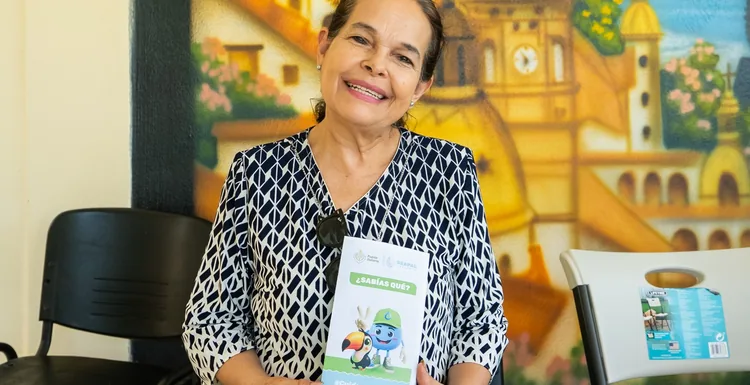
Puerto Vallarta, Jal.- Mexican actress and singer Lorena Rojas passed away today in Miami at age 44 after battling against cancer. Lorena, who courageously faced the disease with courage and a positive attitude with different stages since 2008, gave her last breath peacefully at home, surrounded by the love of her family, her boyfriend and her closest friends.Lorena was one of the actresses that was very loved by not only family and friends but her fans. She leaves a legacy with an ample artistic history in which she highlights in international soap operas like "El Cuerpo del Deseo," "Pecados Ajenos," "Alcanzar Una Estrella" and her most recent project, the series "Demente Criminal."

She also shinned on the big screen with five films and with theater play "Manos Quietas" and "Aventurera." Besides her numerous lead roles, Lorena accomplished in only a few months her dream to debut as a musical composer and singer in the production "Hijos Del Sol." The children’s album was inspired by her daughter Luciana, who now will be in the care of her aunt, the actress Mayra Rojas and her adoptive father just like Lorena wanted. Lorena takes a step into eternal life leaving her greatest legacy which was her love for animals and art in all its expressions, her tender devotion to her daughter, respect for life, grateful to her fans who adored her up to her last moment and rejoicing before her each expected moment of the day: a good dinner with her family and friends who will love her forever. Rest in Peace Lorena Rojas, brave warrior.

Untitled
Source

REPORT AN ERROR

WalMart Mexico Labor(PHOTO BY JOHN MOORE/GETTY IMAGES)

Puerto Vallarta, Jal.- In the wake of a damning newspaper exposé that highlighted alleged abuses at Mexican agro-businesses that supply the U.S. market, Wal-Mart and the Mexican government announced on Thursday steps the world’s largest retailer is taking to improve the lives of farm workers.

Calling the move a "historic" alliance of produce industry groups, Mexican Secretary of Agriculture Enrique Martínez y Martínez said the government and the superstore will work to enforce wage laws and improve housing, schools and healthcare for the more than 1 million laborers at the farms that supply produce to U.S. markets.

The announcement comes soon after The Los Angeles Times published a series of stories following an 18-month investigation that revealed laborers were held in labor camps, many of which did not have beds, reliable water or adequate food supplies. In some camps, according to the Times, labor bosses illegally withheld workers' pay to stop them from leaving until the end of the harvest season.

"This effort is aimed at leveraging the work of a broader coalition to improve the lives of workers, including making it clear that Wal-Mart's standards do not tolerate working conditions as described in the L.A. Times," Wal-Mart said, according to The Los Angeles Times. "We do not want to work with suppliers unless they share this commitment."

Wal-Mart added that it wants to make sure the workers on the farms that supply its produce are treated with "respect and dignity" and that outside suppliers need to certify that they have visited "any new facility they plan to use for Wal-Mart production" and that the facilities meet company standards.

Along with Wal-Mart, the alliance in Mexico represents growers and distributors that handle 90 percent of Mexico's produce exports to the United States – an industry whose profits now exceed $7.5 billion a year.

"We're optimistic and encouraged that the Mexican Ministry of Agriculture … seems to be taking a leading role in the [alliance] by working closely with producers in Mexico," Wal-Mart said.

Wal-Mart’s business in Mexico was under fire for another reason last summer, when it was the New York Times reported that at least eight executives in Mexico, India and Betonville, Ark., have left the company since late 2011, when the newspaper launched its investigation into potential corruption violations by the company.

Wal-Mart is under federal investigation into whether they violated the Foreign Corrupt Practices Act which makes it illegal for American companies to bribe foreign officials. In this case, the company is accused of bribing Mexican officials to speed up building permits and curry political favors. In a bid to build stores quickly, and win market dominance in Mexico, Wal-Mart de Mexico allegedly orchestrated their widespread bribery campaign that allowed superstores to be built on archeologically sensitive land and in areas widely opposed by residents.

Untitled
Source

REPORT AN ERROR

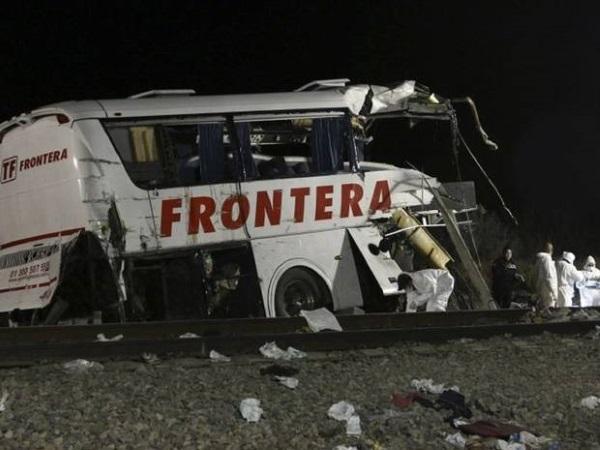
v2 Transporte Frontera bus crash mexico train

Puerto Vallarta, Jal.- At least 16 people were killed in a collision between a bus and a freight train, which also left another 22 people injured at a crossing in northern Mexico, an official said today.

The official said the accident happened yesterday in Anahuac, a town which is in the Tamaulipas state which borders Texas in the US.

Train operator Kansas City Southern de Mexico, issued a statement confirming there had been “a lamentable accident” that occurred at about 5.25pm local time.

The company, which transports between the US and Central America, said its employees reported “an undetermined number of dead and injured at the scene”.

No cause for the crash has been given by the train company.

However the Mexican official said investigators have been looking into whether the driver of the bus, operated by Transporte Frontera, tried to beat the train to the crossing.

Army soldiers and civil protection workers attended the scene as well as forensic and medical teams.

mexico soldiers crash bus train

Untitled
Source

REPORT AN ERROR

edit 22410 1423708285 13

CBS News confirmed that the longtime television journalist died Wednesday night in New York. He was 73.

Bob Simon, a longtime correspondent with CBS’ 60 Minutes, died in a car crash Wednesday night, CBS confirmed.

Simon, 73, also worked as a foreign correspondent in his five-decade news career.

He was a passenger in a livery cab on the West Side Highway in Manhattan Wednesday evening, the New York Post reported. The Lincoln Town Car collided with a Mercedes, the Post reported.

After hitting the Mercedes, which was stopped at a traffic light, the Lincoln crashed into metal barriers separating lanes, the Associated Press reported.

Simon was taken to a hospital, where he was pronounced dead. The driver was left with injuries to his legs and arms.

The driver of the Mercedes said the livery driver swerved and apparently lost control before the crash, Post reported

Simon is survived by his wife, Francoise, and daughter Tanya, who is a producer at 60 Minutes, the New York Daily News reported.
B9nP W4CYAAgOu5

Starting with Vietnam, Simon worked in war zones around the world. His field reporting earned him an “unprecedented” number of awards, including 27 Emmys, according to his CBS biography.

His work took him to Northern Ireland, Portugal, Cyprus, The Falklands, the Persian Gulf, Yugoslavia, Grenada, Somalia, Haiti, and Poland. In 1987, he was named CBS’ chief Middle East correspondent, and he worked out of a bureau in Tel Aviv for 20 years.
In 1991, Simon and his team were reporting on the beginning of the Gulf War when they were captured by Iraqi forces.

enhanced 31332 1423710462 5

They spent 40 days in an Iraqi prison, an experience he recounted in a book, Forty Days.

“I decided to write a book about it if I survived,” Simon wrote. “It would be another dimension of my revenge. The Iraqis had captured me, so I would capture the experience, deal the last blow.”
During his captivity, CBS News prepared an obituary in the event of his death. They gave it to him when he was safely released.

He later returned to Iraq several times as he continued to report on conflicts. He began contributing to 60 Minutes in 1996, most recently covering the film Selma, as well as internet security.

CBS News broke into regularly scheduled programming with a special report announcing Simon’s death:

Untitled
Source

REPORT AN ERROR

img 01

In Mexico’s rigid social hierarchy, holders of bachelors’ degrees revel in the deference the title licenciado bestows.

However, the skills the country needs to attack its stagnant productivity are largely the ones that come from unsexy — and thus unpopular — vocational courses.

It is time for an image overhaul, believes Dieter Holtz, president of Laureate Education in Mexico. Laureate operates two prominent private universities: the Universidad del Valle de México and the Universidad Tecnológica de México, which offer four-year degrees and MBAs, as well as two-year technical programmes.

Only about 3 to 4 per cent of students choose these two-year programmes, well below Chile’s level of some 55 to 60 per cent, Mr Holtz says — and yet the opportunities they open up are huge.

“The main automotive company chief executives in Mexico agree that they could easily hire hundreds of technical people every year if we were to produce them — that would save eight months of on-the-job training.

“About 30 per cent of people in the 18-24 age bracket are currently studying for undergraduate degrees [in Mexico]. But what about the other 70 per cent?”

The talent shortage is acute across Latin America, according to a survey last year by ManpowerGroup, but Mexico’s two decades of disappointing productivity and the huge opportunities opened up by its historic energy reform make training staff with the right technical skills especially urgent.

At a conference in Mexico City this month, Laureate gathered experts and officials together, including former US president Bill Clinton and Inter-American Development Bank chief executive Luis Alberto Moreno, to discuss how to make vocational training more desirable and push it up the national policy agenda.

The plan sounds like a no-brainer, but it is a tricky pitch. Most promising initiatives are being piloted at a local level.

In the northwest state of Jalisco, for example, innovation minister Jaime Reyes Robles is running a series of measures, including a German model of “dual” education, in which students only spend a quarter of their time in lectures and the rest in the private sector.

Mr Reyes Robles’ 35 years in business — 20 as a senior Hewlett-Packard executive and 15 at Kodak — have prepared him well for this job.

“In the private sector, we are used to working at a different speed,” he says. “This is urgent. It’s not about making six-year plans but about resolving practical problems.”

As a result, professors are also seconded to companies “to understand these two worlds which have lived separately for so long,” Mr Reyes Robles explains.

“We want to have 80 per cent employability — graduates finding jobs in their fields . . . Now, it is 43 per cent. This is a huge waste of money.

The state of Jalisco, which contributes more than 6 per cent of Mexico’s GDP, is also seeking to tailor MBAs and postgraduate courses more closely to the state’s needs by having students and professors focus their research on solving real problems.

Ariel Fiszbein, an education expert at the Inter-American Dialogue, sees few incentives for institutions to offer employment-friendly technical courses. Funding, especially of public universities, is not linked to results or employment, he notes.

But courses could be made more attractive to students in Mexico, most of whom study at private higher education institutions. According to Doug Becker, chief executive of Laureate Education worldwide, which has more than 80 institutions in 29 countries: “You could say, ‘We are going to offer loan programmes, but only for students in engineering and science’.”

Time is of the essence as Mexico struggles to reverse a looming talent gap and the prospect of yet more below-potential growth. “This is a real challenge,” says Mr Fiszbein.

Untitled
Sourde

REPORT AN ERROR


03mexico navarro tmagArticle
At Mercado Roma, clockwise from left: Biergarten Roma; the Del Mar sandwich from La Barraca Valenciana; a local vendor's goods.Credit Clockwise from left: Alfonso de Bejar; Wulf Media; Fernando Gomez Carbajal

Tomorrow, more than 120 galleries from 22 countries will descend upon Mexico City for the 12th edition of the Zona Maco International Contemporary Art Fair. And this year, the art set has a new culinary destination to hit up between booth visits: Mercado Roma. Situated in the hipster neighborhood of La Roma, the bustling food market, which opened last summer, takes its cues from sleek stateside food halls like Manhattan’s Chelsea Market. There are communal tables set against a vertical garden out back, where guests can enjoy prepared foods and artisanal treats from approximately 60 vendors, most of whom produce local, farm-to-table dishes and desserts.

Here, for those truly in a time crunch, T rounds up five of Mercado Roma’s notable stalls and stands.

La Barraca Valenciana: Sandwiches worth the wait

The Mercado Roma satellite of this 26-year-old Coyoacan sandwich restaurant is consistently one of the market’s busiest stalls. Prepare to wait it out for the most beloved item on the menu, the Del Mar, which features a hefty serving of garlicky grilled squid stuffed into toasted telera, a slightly salty Mexican white bread traditionally used for tortas.

José Guadalupe, Platos de Cuchara: A pozole pit-stop

The pozole at José Guadalupe, Platos de Cuchara has a cult following of sorts, thanks to chef Zahie Téllez’s secret seasonings and combination of chiles. For those not in the mood for a hot bowl of fortifying soup, though, the tender chicken tostadas are equally satisfying.

Barbacoa del 23: Carnitas and cactus tacos

The Uruguayan chef Daniel Frydman has a few stalls in the market, including La Ahumadora, an all-seafood hotspot for tangy ceviches, lightly grilled clams and fresh oysters. But it’s at his taco spot, Barbacoa del 23, where you can get an authentic taco filled with carnitas or cactus and topped with homemade spicy sauces.

El Churro Moro: The sweet treat

The original El Churro Moro was opened back in 1935 by Spanish immigrants looking to introduce their homeland’s famed fried desserts. Since then, the company has set up shop (in the form of street carts) all over the capital. At their Mercado Roma spot, 14 pesos (about $1) buys a fresh stick of surprisingly non-oily churro coated in either plain or cinnamon sugar.

Biergarten Roma: A refreshing cerveza

This rooftop watering hole — the first beer garden in Mexico City — is a rarity in a town that is surprisingly lacking in al fresco dining. The bar, which specializes in German staples like warm salted pretzels and bratwurst, is outfitted with wooden Oktoberfest-style benches and potted plants. Draft and bottled beers hail from all corners of the world, but the affable bartenders can also whip up a potent cocktail should the need, or desire, arise.

internetlogo2
Source

REPORT AN ERROR


screen shot 2015 02 03 at 12.52.51 pm

McDonald's subsidiary in Mexico is apologizing for a Facebook post that was seen as trashing tamales, Mexico's corn-dough treat.

A statement posted Tuesday on the McDonald's Mexico website said: "It was never the intention of McDonald's Mexico to disrespect traditions or traditional Mexican foods like tamales."

The original tamale post came on Monday's Candelaria day holiday, when tamales are traditionally eaten. Tamales are usually wrapped in corn husks or banana leaves.

The post said roughly, "tamales are a thing of the past. The McBurrito also comes wrapped."

McDonald's wrote "we apologize to those who might have been offended by the publication, which has been withdrawn from our social media."

internetlogo2
Source


REPORT AN ERROR

mexico

In the Official Gazette of December 19, 2014, Mexico’s Secretary of Energy, Pedro Joaquin Caldwell, issued the Transition Strategy to Promote the Use of Cleaner Technologies and Fuels (“Transition Strategy”), as an integral part of the April 2014 National Program for the Sustainable Use of Energy, 2014-2018. Publication of the Transition Strategy obeys a requirement contemplated under the December 2013 constitutional modification that led to the recent reform of the Mexican energy sector, about which Nexant has blogged.

Beyond the introductory language providing background, methodology and context, the core of the Transition Strategy is its enumeration of a series of recommendations for Mexico to increase the use of cleaner technologies and fuels. These recommendations include items under the headings of energy savings in buildings, industry and transport, bioenergy, wind energy,solar energy geothermal energy,hydro energy, and smart grids and distributed generation. The Transition Strategy discusses global trends and recommended actions for each of these areas.

The actions the Transition Strategy recommends for wind energy fall into the categories of:

Regulations and Public Policies, including the establishment of quality and performance norms and standards to ensure the operation of wind generation technologies in local operating conditions, and strengthening and development of simplified regulations and procedures relating to permits, and boundary and land-use guarantees; Institutions, including the strengthening of long-term planning capabilities for new wind power plants, development and integration of a public database with information on the availability and potential of wind resources in order to facilitate project implementation, and establishment of regional institutions to monitor wind projects, and prevent, minimize and mitigate social and environmental impacts.

Technical Capabilities,including the development of training and certification programs for the planning, installation, maintenance and operation of wind systems, and training programs for technical staff and public sector decision-makers for the implementation of network operating procedures.

Markets and Financing, including the creation of public-private joint venture investment partnerships for wind projects, and consolidation of the Clean Energy Certificates (CEC) system, about which Nexant has blogged, to allow clean power plants to earn additional income; and Research and Development, including the development of more accurate weather and micro-location models, and of maintenance practices that improve wind project performance and costs, development of national and regional capabilities in wind technology design and optimization for its operation in extreme conditions, and (iii) strengthening and development of capabilities for implementing energy storage systems and intelligent technologies to reduce intermittency- and ecosystem-related wind energy system impacts.

The recommended actions for energy savings, bioenergy, solar energy, geothermal energy, hydro energy, smart grids and distributed generation similarly fall into these five categories.

In regard to follow-up and next steps, the Transition Strategy directs the Mexican federal government to empanel an Advisory Council to hear input from interested stakeholders (i.e., representatives from domestic industry, universities, research institutions, non-governmental organizations and the public sector) on ways to implement the recommendations contemplated under the Transition Strategy; however, the Transition Strategy contemplates no penalization for failure to adopt the recommendations contained therein, and it allocates no monies in support of such recommendations, making it a largely hortatory document. In this regard, the Transition Strategy more accurately serves as a guide on ways to support renewable energy and energy efficiency initiatives, in the context of a newly reformed domestic energy sector, for those who craft future Mexican federal budgets.

Photo Credit: Mexico Clean Energy Development/shutterstock

internetlogo2
Source

 Carlos

MEXICO CITY – Mexican guitarist Carlos Santana will ring down the final curtain on the 2015 Tajin Summit Festival that will celebrate its 16th edition between March 19-23 in the archaeological area of Veracruz state.

The organizers have released the list of artists who will perform at the Tajin Summit.

Santana, 66, will appear onstage with Javier Batiz, 70, with whom he began playing the electric guitar back in the 1950s.

For the first time Batiz and Santana share a festival billing. Both guitarists, together with the singer from the El Tri group, Alejandro Lora, are considered key figures of Mexican rock.

It is precisely El Tri, together with Maldita Vecindad and Bolina Sin Parne, that will round out the program on the last day of the festival.

The Tajin Summit will be held at Takilhsukut Park, in the archaeological area of Tajin and in the main square of the city of Papantla, three locations in the Veracruz municipality of Papantla.

The festival will go on for five days with the participation of around 7,000 guest artists from Mexico and around the world, and will offer more than 5,000 cultural activities.

Among the attractions will be workshops, conferences, ceremonies, dance, theater, therapies, spiritual talks, expos, circus acts, concerts, kiddie shows and more.

[readon1 url="http://laht.com/article.asp?ArticleId=2371384&CategoryId=13003"]Source:laht.com[/readon1]

 la pipa mexico 1

A gas tank truck exploded outside a maternity and children's hospital in Mexico City on Thursday morning, leaving much of it in ruins.

At least two people were killed and 56 injured, said Claudia Dominguez, spokeswoman for Mexico City's civil defense agency. Officials earlier had said at least four and as many as seven had been killed at the explosion site at the Maternity Hospital of Cuajimalpa, according to the Mexican newspaper El Universal.

Mexico City Mayor Miguel Angel Mancera put the number of injured at 66, with 22 of them in serious condition.

El Universal also reported that the truck's driver and his two helpers are among the injured, according to the municipality's secretary of state, Héctor Serrano, and are being detained while authorities "examine their responsibility."

Reforma, a daily newspaper in Mexico City, said that the Mexican Army is on-site searching for any more victims of the blast and the Red Cross has reported the transfer of nine infants to three hospitals.

“According to the report I have of the injured, the majority of the injuries are from glass, the explosion caused a variety of glass to hit and cut people,” Angel Mancera, said in an interview according to Mexico’s Reforma newspaper.

Thirty-five-year-old Felicitas Hernandez wept as she frantically questioned people outside the mostly collapsed building, hoping for word of her month-old baby, who had been hospitalized since birth with respiratory problems.

"They wouldn't let me sleep with him," said Hernandez, who said she had come to the city-run Maternity and Children's Hospital of Cuajimalpa because she had no money.

The explosion occurred when the truck was making a routine, early morning delivery of gas to the hospital kitchen and gas started to leak. Witnesses said the tanker workers struggled frantically for 15 or 20 minutes to repair the leak while a large cloud of gas formed.

"The hose broke. The two gas workers tried to stop it, but they were very nervous. They yelled for people to get out," said Laura Díaz Pacheco, a laboratory technician.

"Everyone's initial reaction was to go inside, away from the gas," she added. "Maybe as many as 10 of us were able to get out ... The rest stayed inside."

Workers on the truck yelled: "Call the firefighters, call the firefighters!" said 66-year-old anesthesiologist Agustin Herrera. People started to evacuate the hospital, and then came the massive explosion that sent up an enormous fireball and plumes of dust and smoke.

Herrera saw injured mothers walking out carrying babies. He said there had been nine babies in the 35-bed hospital's nursery, one in very serious condition before the explosion.

The blast occurred around 7:15 a.m. local time, and it leveled some 40 percent of the hospital.

Television images showed much of the hospital in western Mexico City collapsed, with firefighters trying to extinguish fires. Mancera said the heaviest damage was near the hospital's loading dock.

The area remained cordoned around the hospital to facilitate the work of the emergency services.

A hundred soldiers have been sent to the blast site to aid in rescue operations, and a spokesman for the Mexican Army said that they will also open the city’s central military hospital to treat the wounded if necessary.

Injured and bleeding, mothers carrying infants fled from a maternity hospital shattered by a powerful gas explosion on Thursday, and rescuers swung sledgehammers to break through fallen concrete in hunt for others who may have been trapped.

Ismael Garcia, 27, who lives a block from the hospital, said "there was a super explosion and everything caught on fire."

Garcia ran to the hospital and said he and others made their way to the nursery. "Fortunately, we were able to get eight babies out," he said.

Rafael González of the Red Cross said one 27-year-old man arrived at the agency's hospital with burns over 90 percent of his body, and he was transferred to another hospital.

President Enrique Peña Nieto expressed his sadness and support for the victims through his official Twitter account.

The hospital, located in a middle class neighborhood, is next to a school.


REPORT AN ERROR

[readon1 url="http://latino.foxnews.com/latino/news/slideshow/2015/01/29/children-hospital-explosion-in-mexico/?intcmp=related#slide=1"]Source:latino.foxnews.com[/readon1]


 butterflies mexico

MEXICO CITY (AP) – The number of Monarch butterflies that reached wintering grounds in Mexico has rebounded 69 percent from last year's lowest-on-record levels, but their numbers remain very low, according to the World Wildlife Fund.

Last year, the Monarchs covered only 1.65 acres (0.67 hectares), the smallest area since record-keeping began in 1993.

This year, the butterflies rebounded, to cover 2.79 acres (1.13 hectares), according to a formal census by Mexican environmental authorities and scientists released Tuesday.

The orange-and-black butterflies are suffering from loss of milkweed habitat in the United States, illegal logging in Mexico and climate change. Each year, the butterflies make a migration from Canada to Mexico and find the same pine and fir forests to spend the winter, even though no butterfly lives to make the round trip.

"Of course it is good news that the forest area occupied by Monarchs this season increased," said Omar Vidal, head of the World Wildlife Fund in Mexico. "But let*s be crystal clear, 1.13 hectares is very, very low, and it is still the second-smallest forest surface occupied by this butterfly in 22 years of monitoring."

At their peak in 1996, the Monarchs covered more than 44.5 acres (18 hectares) in the mountains west of Mexico City.

Lincoln Brower, a leading entomologist at Sweet Briar College in Virginia, has said that with anything below 2 hectares (4.1 acres), "they will remain in the danger category and I will continue to be concerned. " A population covering 4 or 5 hectares (9 to 12 acres) would be a sign of significant recovery, he added.

The butterfly population has plummeted before, and then partially recovered.

In 2001, driving rain and bitter cold killed millions, leading scientists to speculate that migrating populations would be seriously depleted in 2002. To their surprise, twice as many returned as some had predicted.

In 2004, unfavorable weather, pollution and deforestation caused a drastic decline in the population, but the next year, the butterflies bounced back.

But the overall tendency since 1993 points to a steep, progressive decline. Each time the Monarchs rebound, they do so at lower levels. The species is found in many countries and is not in danger of extinction, but experts fear the migration could be disrupted if very few butterflies make the trip.

The temperate climate of the mountains west of Mexico City normally creates an ideal setting for the Monarchs. Every fall, tens of millions of the delicate creatures fly thousands of miles to their ancestral breeding grounds, creating clouds of butterflies. They clump together on trees, forming chandelier shapes of orange and black.

The migration is an inherited trait: No butterfly lives to make the full round trip, and it is unclear how they find the route back to the same patch of forest each year. Some scientists suggest the butterflies may release chemicals marking the migratory path and fear that if their numbers fall too low, the chemical traces will not be strong enough for others to follow.

Extreme cold and drought also hurt butterfly populations, and in Mexico, illegal logging can punch holes in the forest canopy that shelters them, creating a situation in which cold rainfall could kill millions.

Vidal said Mexico has been able to essentially stop illegal logging in the Monarch protected reserve, but he said habitat loss in the United States remains a huge problem. Milkweed, the butterflies' main source of food has been crowded out by pesticide-resistant crops.

"The question we should all be asking now" is whether the U.S. can halt the loss of milkweed habitat, he said.


REPORT AN ERROR

[readon1 url="http://latino.foxnews.com/latino/lifestyle/2015/01/27/number-monarch-butterflies-reaching-mexico-rebounds-but-levels-still-low/"]Source:latino.foxnews.com[/readon1]

 girl pregnancy test 000014716501XSmall

MEXICO CITY—Mexico announced plans Friday for a national campaign to prevent adolescent and teen pregnancy in a country where one in five live births are by mothers under the age of 20.

The strategy represents an about-face in the predominantly Catholic country, where sexual education remains a taboo in many communities and the federal government has long shied away from taking leadership on the issue. The current effort will center on education and health care, including greater access to birth control, government officials said.

Mexican government statistics show that mothers under the age of 20 accounted for 16.3% of births in 1997, with the rate rising to 19.4% in 2012. The World Health Organization estimates that around 16 million babies are born to teenage mothers each year in the world, and that teen girls in low-income countries are five times more likely to become mothers than in wealthier countries.

In presenting the plan, Mexican President Enrique Peña Nieto called on young men to on take more responsibility to prevent early pregnancies.

“In short, we have to advance and eradicate the macho culture that aggravates this social problem,” Mr. Peña Nieto said.

Economic growth, increased urbanization and broader access to education have reduced Mexico’s overall birthrate in recent years to 2.05 children per woman, nearly on par with the U.S. at 1.95.

Yet the rising rate of early pregnancies threatens Mexico’s global competitiveness by cutting educations short, said María del Rosario Cárdenas, a research professor at Mexico’s Autonomous Metropolitan University.

“In addition to impacting the quality of life of the next generation, early reproduction represents a lost opportunity for society to have better-prepared citizens, and with them, a greater potential contribution to development,” Ms. Cárdenas said.

REPORT AN ERROR

[readon1 url="http://www.wsj.com/articles/mexico-announces-plan-to-stem-rising-rate-of-teen-pregnancies-1422056520"]Source:www.wsj.com[/readon1]

 iuaupNoV9I Y

The acquisition includes companies that operate under the name Nextel Mexico, spectrum licenses, network assets, retail stores and about 3 million customers, Dallas-based AT&T said in a statement Monday. The purchase price doesn’t include an unspecified amount of debt from NII, which filed for bankruptcy in September.

Nextel Mexico’s high-paying monthly subscribers will help AT&T accelerate a plan to offer its first cross-border service in the U.S. and Mexico. AT&T’s pending takeover of DirecTV, which has operations in Mexico, marked the company’s first push outside the U.S. in more than a decade as growth slows at home. The company has since added to that expansion with the $2.5 billion acquisition of Grupo Iusacell SA in Mexico, which closed earlier this month.

The deal strengthens AT&T’s efforts in Mexico by adding Nextel’s “more highly-valued postpaid customers and some additional infrastructure,” Walt Piecyk, an analyst at BTIG LLC, said in a phone interview from New York. “Nextel’s spectrum bolsters what Iusacell has to offer: wireless data services, the key element of AT&T’s growth strategy.”

Nextel Mexico’s network covers about 76 million people. AT&T said it plans to combine Nextel Mexico with Iusacell, which will help improve service for people living outside major metropolitan areas. The deal is expected to close in the middle of this year, AT&T and NII said.

America Movil

“The acquisition of Nextel Mexico will support AT&T’s plans to bring greater competition and faster mobile Internet speeds to the Mexican wireless market,” AT&T said in the statement.

This is AT&T’s third deal that hasn’t involved Mexico’s largest wireless-service provider, America Movil SAB. Carlos Slim’s company has been looking to sell a large portion of its business to comply with new laws that penalize it for being a dominant phone company.

AT&T shares fell 0.7 percent to $33.13 at 9:38 a.m. New York time. America Movil dropped 2.1 percent to 16.89 pesos in Mexico City.

AT&T has been on the prowl specifically for deals in Latin America and Mexico. In September, Chief Strategy Officer John Stankey said that Mexico was poised for investment and that he sees a lot of options in Latin America.

NII, which has been in bankruptcy protection, said it will use the proceeds of the Nextel Mexico sale to help emerge from Chapter 11 and fund its Brazilian unit. The deal requires approval from the U.S. Bankruptcy Court.

“The sale of Nextel Mexico represents an opportunity to reduce our operational risk, deliver value to our stakeholders and provide the liquidity that will position us to emerge from Chapter 11 reorganization,” NII Chief Executive Officer Steve Shindler said in a statement.

--With assistance from Kenneth Wong in Berlin.

REPORT AN ERROR

[readon1 url="http://world.einnews.com/article/246387328/4vzNcz2ZevCa1CkR"]Source:world.einnews.com[/readon1]