 Puerto Vallarta is a Mexican balneario resort city situated on the Pacific Ocean's Bahía de Banderas. The 2010 census reported Puerto Vallarta's population as 255,725[1] making it the sixth-largest city in the state of Jalisco. The City of Puerto Vallarta is the government seat of the Municipality of Puerto Vallarta which comprises the city as well as population centers outside of the city extending from Boca de Tomatlán to the Nayarit border (the Ameca River).
The city is located at 20°40′N 105°16′W. The municipality has an area of 502.19 square miles (1,300.7 km2). To the north it borders the southwest part of the state of Nayarit. To the east it borders the municipality of Mascota and San Sebastián del Oeste, and to the south it borders the municipalities of Talpa de Allende and Cabo Corriente.
Puerto Vallarta is named after Ignacio Vallarta, a former governor of Jalisco. In Spanish, Puerto Vallarta is often shortened to "Vallarta", while English speakers call the city P.V. for short. The city occasionally is spelled or pronounced as Porto Vallarta. In internet shorthand the city is often referred to as PVR, after the International Air Transport Association airport code for its Gustavo Diaz Ordaz International Airport.
Pre-Hispanic times to the 19th century
Few details are known about the history of the area prior to the 19th century. There is archaeological evidence of continuous human habitation from 580 BC, and there is archeological evidence (from sites near Ixtapa and in Col. Lázaro Cardenas) that the area belonged to the Aztatlán culture which dominated Jalisco, Nayarit and Michoacán from approx. 900-1200 AD. The limited evidence and relative lack of interest in occidental Mexican archeology have limited the current knowledge about pre-historic life in the area.
Spanish missionary and conquistador documents chronicle skirmishes between the Spanish colonizers and the local peoples. In 1524, for example, a large battle between Hernán Cortés and an army of 10,000 to 20,000 Indians resulted in Cortés taking control of much of the Ameca valley. The valley was then named Banderas (flags) after the colorful standards carried by the natives.
Also the area appears on maps and in sailing logs as a bay of refuge for the Manila Galleon trade as well as for other coastal seafarers. As such it figures in some accounts of pirate operations and smuggling and pirate contravention efforts by the viceregal government. During the 17th and 18th centuries the Banderas Valley and its beaches along the Bay of Banderas served as supply points for ships seeking refuge in the bay. The area also served as a point where smuggled goods could be sent on to the Sierra towns near Mascota, evading the customs operations at San Blas, Nayarit
El Carrizal and Las Peñas - 19th century
During the 19th century the history of Puerto Vallarta, then called El Carrizal or Las Peñas, was linked to the history of the Sierra towns of San Sebastian del Oeste, Talpa de Allende and Mascota. While today these towns are considered quaint tourist destinations, during much of the 18th century, Mascota was Jalisco's second largest town, after Guadalajara. Mascota and its neighboring towns located in the high plateaus of the Sierra, developed as agricultural towns to support the growing mining operations in the Sierra.
During the 18th century, as Mascota grew, Puerto Vallarta grew with it, transforming itself from a small fishing and pearl-diving village into a small beach-landing port serving the Sierra towns. At the time the main port serving Jalisco was located at San Blas, but the inconvenient overland route from San Blas to the Sierra towns made Puerto Vallarta a more convenient alternative for smaller shipments, not to mention smuggling operations which evaded the tax collectors at San Blas. Puerto Vallarta also became a vacation destination for residents of the Sierra Towns, and by the mid 19th century, the town already had its regularly returning population of vacationers. Most of the early settlers in Puerto Vallarta were families who had left the Sierra towns for one reason or another.
1859 saw an important turning point for the small village, then known as Las Peñas. That year the Union en Cuale mining company took possession of land extending from Los Arcos to the Pitillal river and extending back up into the Sierra for miles. The Union en Cuale company was owned in part by the Camarena brothers of Guadalajara who had developed a small trade in oil palm in Las Peñas. The purpose of the government's sale of the land to the company was to provide for shipping, fishing and agricultural support for the mining operations which were growing quite quickly in the Sierra.
The official founding story of Las Peñas and thus of Puerto Vallarta is that it was founded by Guadalupe Sánchez Torres, on December 12, 1851, as Las Peñas de Santa María de Guadalupe. Unfortunately the record of Sr. Sanchez's purchase of property in Las Peñas dates the sale to 1859. Also even as early as 1850 the area was already peopled by fisherman, pearl divers, smugglers and foragers, all of whom had something of a permanent existence in the area. Given the existing historical documents it is simply impossible to date the first permanent settlement in the area,
There is however no doubt the development of Las Peñas into a self-sustaining village of any significant size happened in the 1860s as the mouth of the Cuale area was exploited to support the operations of the newly enfranchised Union en Cuale company. As such 1859 marks the beginning of Puerto Vallarta as a village. Twenty years later, by 1885, the village comprised about 250 homes and about 800 residents.
The early municipality - early 20th century
n 1918, the village was elevated to municipality status and renamed after former state governor Ignacio Vallarta. During the early years of the 20th century, most of Puerto Vallarta was owned by the Union en Cuale company controlled by the American Alfred Geist. Geist sold land only in large plots at prices that were quite high for the time and otherwise leased the land on short term leases. To remedy this situation and to enable the new municipality to develop, the citizens petitioned the government for a land grant based on the new constitution's provisions.
In 1921, the Local Agrarian Commission approved a grant of some 9,400 hectares (23,000 acres; 36 square miles), with the land to be expropriated from the Union en Cuale company. The grant was established as an ejido holding (a farming cooperative administered by the government). Legal squabbling over the size of the land grant, and the ejido status of the properties involved would stymie growth in Puerto Vallarta into the 1960s, as developers were reluctant to build anything too substantial on land for which one could not obtain clear title. (Ejido land is controlled by individuals who are given licenses to use it, but it could not be sold, subdivided or leased.)
During the Cristero War, the municipality was twice taken over by Cristero forces (April 1927 and January 1928). After it was recaptured for a second time, the national government stationed a small garrison there under Major Ángel Ocampo. The garrison was stationed near the mouth of the Cuale River and is responsible for planting many of the palms that now line the beaches on near the mouth of the Cuale River to help limit beach erosion during heavy rains in October 1928. One casualty of the skirmishes was local pastor Padre Ayala who was exiled to Guadalajara for his role in fomenting the local revolt. He died there in 1943, though his remains were returned 10 years later and interred in the main parish church of Our Lady of Guadalupe.
As mining activities in the Sierra waned in the early years of the 20th century, Puerto Vallarta and the agricultural valley to the North of the city became important destinations for those leaving the Sierra towns and looking for a place to settle. Many of those who arrived had family members already living in Puerto Vallarta, and the pattern of migration that ensued turned the town into a collection of more or less extended families, giving it the cohesion of a typical sierra town.
From 1925 until 1935, the Montgomery Fruit Company operated in the area around Ixtapa. Friction with the state government over labor issues eventually led to the venture being abandoned, but for ten years it provided an important source of employment in the area.
The first airplane service arrived in 1932, with electrical service on a small scale arriving about the same time. The first suspension bridge over the Cuale went up in 1933. The city's first plumbing system was started in 1939. In 1942, Puerto Vallarta was finally connected by road to Compostela, Nay. Until then the only access to Puerto Vallarta was by sea, air, or by mule trails to the sierra towns. Also in 1942, in the New York based magazine Modern Mexico the first advertisement for a Puerto Vallarta vacation appeared, sponsored by the Air Transport Company of Jalisco. By 1945, the company was landing DC-3s in Puerto Vallarta (carrying 21 passengers).
By the 1950s, Puerto Vallarta had started to attract Americans, mostly writers and artists in search of a retreat from the USA of the era of Eisenhower and McCarthy. Gringo Gulch began to develop as an expatriate neighborhood on the hill above the Centro. The city also attracted Mexican artists and writers who were willing to trade the comforts of life in the larger cities for its scenic and bucolic advantages.
In 1956, the Mascota mule trail was replaced by a packed dirt road. In 1958, 24 hour electrical generation arrived. A new airport arrived in 1962 connecting Puerto Vallarta with Los Angeles via Mazatlán, and the Mexican Aviation Company began offering package trips.
By the early 1960s, the population had started to spread beyond the Centro and Gringo Gulch, and the Colonias of 5 Diciembre (north of the Centro) and Emiliano Zapata (south of the Cuale River) began to grow.
The modern resort - 1960s to the present
Four influences converged during the 1960s and early 1970s to launch Puerto Vallarta into its trajectory toward becoming a major resort destination.
First the federal government finally resolved century old property disputes involving the status of communal land originally appropriated from the Union en Cuale mining company to be parceled out as farms. The communal (ejido) status of the land had stifled development in the town for much of the 20th century. The transition to private ownership of much of the land within present city limits culminated in the appropriation of much of the land in 1973 and the establishment of the Vallarta Land Trust (Fideicomiso) to oversee selling the land and using the revenue to develop the city's infrastructure.
Second, the American director John Huston filmed his 1963 film The Night of the Iguana in Mismaloya, a small town just south of Puerto Vallarta. During the filming, the US media gave extensive coverage to Elizabeth Taylor's extramarital affair with Richard Burton, as well as covering the frequent fighting between Huston and the film's four stars. The subsequent publicity helped put Puerto Vallarta on the map for US tourists.
Third, in the late 1960s and early 1970s, the Mexican government invested in the development of highways, airport and utility infrastructure, making Puerto Vallarta easily accessible both by air and ground transportation for the first time. The city's first tourist boom occurred in the late 1960s and early 1970s because of this work. During those years most tourists in Puerto Vallarta were Mexican, and the reason they started travelling to Puerto Vallarta then was because the trip between Guadalajara and Puerto Vallarta was made sufficiently convenient because of the governments investment in infrastructure.
Finally, in 1968 the municipality was elevated to the status of a City. The change in status reflected the renewed interest shown by the federal and state government in developing the city as an international resort destination. The town has since also attracted a lively expatriate community from the U.S., Canada and Europe.
Also significant was the August 1970 visit of US President Richard Nixon who met with Mexican President Gustavo Díaz Ordaz in Puerto Vallarta for treaty negotiations. The visit showcased Puerto Vallarta's recently developed airport and resort infrastructure, and thus contributed to the growing visibility of the city as a resort destination.
Prior to 1973, hotels in the city tended to be modest, and only two large sized luxury hotels existed (the Real and the Posada Vallarta). After 1973, Puerto Vallarta experienced rapid growth in the number of larger luxury hotels, culminating in 1980 with the opening of the Sheraton Buganvilias. In 1982, the peso was devalued and Puerto Vallarta became a bargain destination for US tourists. Consequently, the mid-1980s saw a marked and rapid rise in the tourist volume. This in turn fueled more development, for example the Marina which was started in 1986. By the early 1990s, development of other destinations in Mexico like Ixtapa and Cancún caused a slump in travel to Puerto Vallarta.
It was also during the early 1980s that Puerto Vallarta experienced a marked increase in problems related to poverty. While the devaluation of the peso brought record numbers of tourists to the area, it also stifled investment and thus construction. So while more and more workers were arriving in Puerto Vallarta to try to cash in on the booming tourist trade, less and less was being done to accommodate them with housing and related infrastructure. So during the mid-1980s the city experienced a rapid growth in impromptu communities poorly served by even basic public services, and with a very low standard of living as the boom of the early 1980s leveled out. During the late 1980s, the city worked to alleviate the situation by developing housing and infrastructure, but even today the outlying areas of Puerto Vallarta suffer from poor provision of basic services (i.e. water, sewage, roads) as a legacy of the early 1980s.
In 1993, the federal Agrarian Law was amended allowing for more secure foreign tenure of former ejido land. Those controlling ejido land were allowed to petition for regularization, a process that converted their controlling interest into fee simple ownership. This meant that the property could be sold, and it led to a boom in the development of private residences, mostly condominiums, and a new phase of Puerto Vallarta's expansion began, centered more on accommodating retirees, snow-birds, and those who visited the city enough to make purchasing a condominium or a time-share a cost-effective option
Climate
Puerto Vallarta's climate is typical Tropical wet and dry (Köppen climate classification Aw), with a marked dry season in the winter. The high temperature and variations in humidity can make July through September nearly intolerable. It has pronounced wet and dry seasonal variation, with sudden monsoon-like rains from July through September, normally for a few hours in the evenings.
The average daily high temperature is 86 °F (30 °C); average daily low temperature is 70 °F (21 °C); average daily humidity is 75%. The rainy season extends from mid June through mid October, with most of the rain between July and September. August is the city's wettest month, with an average of 14 days with significant precipitation. Even during the rainy season precipitation tends to be concentrated in large rainstorms. Occasional tropical storms will bring thunderstorms to the city in November, though the month is typically dry. February, March and April are the months with the least cloud cover.
Prevailing winds are from the southwest, and most weather systems approaching Puerto Vallarta are consequently weakened as they pass over Cabo Corriente. Thus even during the rainy season Puerto Vallarta's weather tends to be mild compared to other areas along the Mexican Pacific coast.
Hurricanes seldom strike Puerto Vallarta. In 2002, Hurricane Kenna, a category 5 hurricane, made landfall about 100 miles (160 km) northwest of Puerto Vallarta, and the city suffered some damage from the resulting storm surge. In 1971, Hurricane Lily, a category 1 hurricane, caused serious flooding on the Isla Cuale, prompting the city to relocate all of its residents to the new Colonia Palo Seco.
Tourism trends
Puerto Vallarta was once named as La ciudad más amigable del mundo (The Friendliest City in the World), as the sign reads when entering from Nayarit. Today, the presence of numerous sidewalk touts selling time-shares and tequila render the city's atmosphere more akin to tourist-heavy resorts like Cancun and Acapulco, but overall the city's reputation remains relatively undiminished.
Tourism in Puerto Vallarta has increased steadily over the years and makes up for 50% of the city's economic activity. The high season for international tourism in Puerto Vallarta extends from late November through March (or later depending on the timing of the College Spring Break period in the USA.) The city is especially popular with US residents from the West Coast because of the sheer number of direct flights between Puerto Vallarta and Los Angeles, San Francisco and Seattle. The city is also popular with tourists from western Canada with a number of direct scheduled and charter flights from western Canadian cities.
Puerto Vallarta is also a highly popular vacation spot for domestic tourists. It is a popular weekend destination for residents of Guadalajara (tapatíos), and a popular national destination for vacations such as Semana Santa (the week preceding Easter) and Christmas. Also in recent years Acapulco has experienced a rise in drug related violence and consequently Puerto Vallarta has absorbed a lot of the Mexico City resort vacation business (Acapulco has long been a common destination for tourists from Mexico City).
Puerto Vallarta has become a popular retirement destination for US and Canadian retirees. This trend has spawned a condominium development boom in the city.
Rapid growth in tourist volume in Puerto Vallarta has given rise to rapid growth in hotel and rental apartment construction. This growth has spilled over from the city limits into Nuevo Vallarta in the neighboring state of Nayarit. The area is one of the fastest growing regions in the Americas.
[readon1 url="http://en.wikipedia.org/wiki/File:Portada_Puerto_Vallarta.png"]Source:en.wikipedia.org[/readon1]








 Minister Schroeder had generated controversy in addressing this issue when talking about education.
 A couple must pay about $ 1.6 million for having octuplets through in vitro fertilization.
 Due to the fact that FM3Mexico.com is based out of the beautiful city of Puerto Vallarta, we're able to offer a much more personalized service to our clients.
 I am a Chihuahua
 Traditionally observed day in many countries
 In terms of pharmaceutical controversies and advances,
 I have always associated Christmas with family traditions.
 Roy Pickler lay on the floor, dripping with sweat, as trainer Bob Harper quipped, "You look like you got run over by a reindeer."
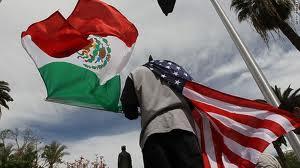 On a recent trip to Mexico City, I had barely made my way down the concourse and arrived at the immigration processing area when I got stumped.
 A smile can do wonders.
 Doomsday hour is here, at least in much of the world, and so still are we.


 How to resolve AdBlock issue?