








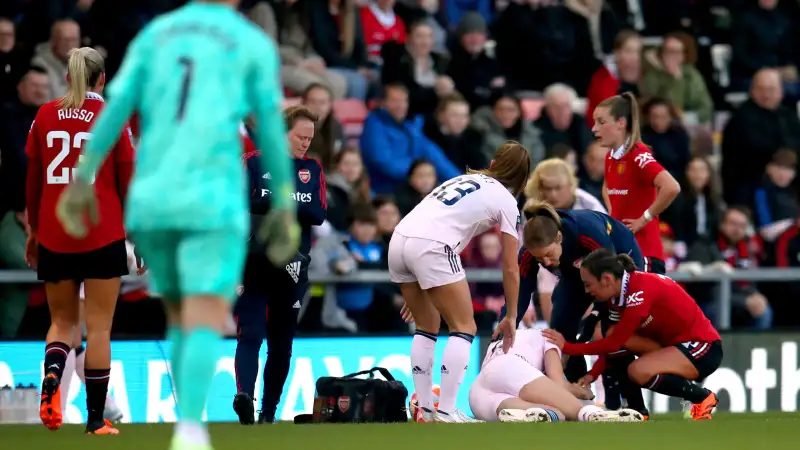
The anterior cruciate ligament is one of four main ligaments stabilising the knee joint. It connects the femur to the tibia and is critical for rotational stability and changes of direction. In football, it is among the most career-disruptive injuries a player can suffer, not because it is always permanent, but because the recovery timeline is incompatible with most major tournament schedules.
What Happens When an ACL Tears
An ACL tear typically occurs during a non-contact deceleration or rotational movement, a landing from a jump, or a direct impact to the knee. The injury often involves other structures simultaneously. In Ruiz's case, Toluca confirmed both the ACL rupture and a meniscus tear in the same joint. Combined injuries of this type require more complex surgical planning and typically extend the rehabilitation period.
The immediate symptoms are well documented:
- A loud pop or snap at the moment of injury
- Rapid onset of significant swelling
- Inability to bear weight or continue playing
- Instability in the joint when attempting to pivot or change direction
Diagnosis is confirmed by MRI scan. Surgery is typically recommended for athletes who want to return to competitive sport, though the specific procedure depends on the severity and whether other structures are involved.
Why the Recovery Timeline Ends World Cups
Reconstructive ACL surgery is followed by a rehabilitation programme that sports medicine consensus places at nine to twelve months for a return to competitive football. This timeline is not arbitrary. The reconstructed ligament undergoes a biological process called ligamentisation, during which the graft material progressively develops the mechanical properties of native ligament tissue.
Returning too early, before ligamentisation is sufficiently advanced, significantly increases the risk of re-rupture. Re-rupture rates for players who return before nine months are substantially higher than for those who complete the full protocol. This is why elite clubs and national team medical staff do not allow compressed rehabilitation timelines even when competitive pressure creates an incentive to do so.
For Ruiz, surgery has not yet taken place as of the announcement. Post-operative rehabilitation begins only after the surgical wound heals sufficiently for physiotherapy to start. The nine to twelve month clock begins at the time of surgery, not the time of injury. This pushes the earliest realistic return to competition to early 2027.
How the Meniscus Complicates the Picture
The meniscus is a C-shaped cartilage disc that acts as a shock absorber between the femur and tibia. A meniscus tear occurring simultaneously with an ACL rupture is a common combined injury pattern, sometimes called an unhappy triad when the medial collateral ligament is also involved.
The surgical approach to a combined ACL and meniscus injury depends on the nature of the meniscus damage. If the meniscus can be repaired rather than partially removed, the procedure is preferred for long-term joint health but adds to rehabilitation complexity. Meniscus repairs require a period of protected weight-bearing after surgery that extends the early phase of recovery.
For a 25-year-old player, the priority in surgical decision-making is long-term joint preservation. Choices that reduce immediate recovery time but compromise the knee's long-term durability are generally avoided at that age. This further underlines why the World Cup timeline, regardless of medical optimism, is not a realistic target.
Frequently Asked Questions (FAQs)
Q: What is the anterior cruciate ligament and why is it important for footballers?
A: The ACL is one of four main ligaments stabilising the knee joint. It connects the femur to the tibia and is critical for rotational stability and changes of direction. In football, it is essential for virtually every movement the game requires: cutting, pivoting, accelerating, and decelerating. A complete tear ends a player's season and typically their campaign in any tournament scheduled within the following twelve months.
Q: How long does ACL recovery take for a professional footballer?
A: Sports medicine consensus places ACL reconstruction and rehabilitation at nine to twelve months for a return to competitive football. The timeline reflects the biological process of ligamentisation, during which graft material develops the mechanical properties of natural ligament tissue. Returning before this process is complete significantly increases the risk of re-rupture.
Q: Why can't ACL rehabilitation be shortened to allow a player to make a tournament?
A: The rehabilitation timeline is not primarily about pain tolerance or fitness. It is determined by the biological maturation of the ligament graft, which cannot be accelerated beyond physiological limits. Players who return before nine months face substantially higher re-rupture rates. Elite medical staff do not compress this timeline regardless of competitive pressure.
Q: What is a meniscus tear and how does it affect ACL recovery?
A: The meniscus is a C-shaped cartilage disc that cushions the knee joint. A meniscus tear occurring alongside an ACL rupture is a common combined injury. If the meniscus can be repaired rather than partially removed, the surgery is preferred for long-term joint health but adds complexity to rehabilitation. Meniscus repairs require a period of protected weight-bearing that extends the early recovery phase.
Q: How common are ACL injuries in professional football?
A: ACL injuries are among the most common serious injuries in professional football. Studies tracking injury rates in professional leagues consistently place ACL ruptures in the top tier of severity by duration of absence. The injury rate is higher in positions requiring frequent direction changes, such as central midfield, wide positions, and full back, which are the roles most exposed to the rotational and deceleration movements that cause ACL tears.