







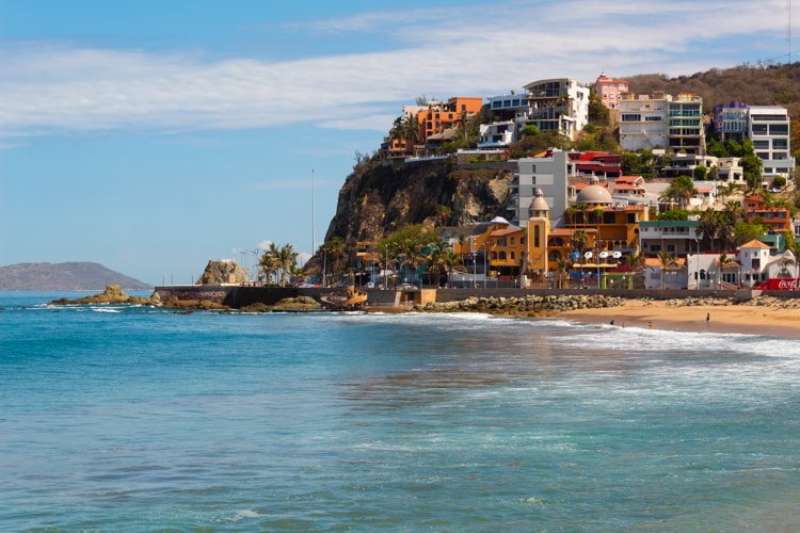
Estero El Salado is an unusual case in Mexico's coastal conservation landscape. Most protected areas along Mexico's Pacific and Caribbean coasts are located in zones with limited urban development, where the primary management challenge is preventing future encroachment rather than managing an existing urban context. The estuary's survival within Puerto Vallarta's hotel zone reflects a specific set of historical, regulatory, and institutional factors that do not automatically replicate elsewhere.
Protected on Paper, Still Threatened in Practice
Mexico's coastal conservation relies on several overlapping regulatory frameworks. Federal protected areas fall under the National Commission of Natural Protected Areas, known as CONANP. State-level designations like Estero El Salado's State Park status are governed by state environmental agencies. Mangroves specifically receive additional protection under the General Law of Ecological Balance and Environmental Protection, which prohibits their removal without federal authorisation.
Despite these protections, mangrove loss in Mexico has been significant. Estimates from research and government monitoring indicate Mexico has lost a substantial proportion of its historic mangrove cover over the past five decades. The primary drivers of loss are:
- Coastal tourism development, including hotel construction, marinas, and resort infrastructure
- Aquaculture pond construction, particularly for shrimp farming
- Urban expansion of coastal cities
- Agricultural conversion in some regions
The rate of loss has slowed since legal protections were strengthened, but documented cases of illegal removal and degradation continue to be reported.
Why Urban Protected Areas Erode
Protected areas within or adjacent to urban zones face a qualitatively different set of pressures from those in remote locations. Land values in tourist zones are high, creating strong financial incentives to find ways around protection frameworks. Development interests are well-organised and politically connected in cities built around tourism. Legal challenges to development applications consume institutional capacity that enforcement agencies have in limited supply.
The maintenance of an urban protected area also requires sustained budget allocation from government agencies managing multiple competing priorities. Remote protected areas face less immediate encroachment pressure, but urban ones require active management of their boundaries, monitoring of water quality and runoff, and engagement with the surrounding development environment on an ongoing basis.
Estero El Salado has survived six years under State Park designation in this environment. The anniversary is an occasion to note that survival, not to assume permanence. The conditions that enabled it, state environmental oversight, eco-tourism revenue, and public visibility, require continued maintenance.
Los Cabos and Mazatlán Have Comparable Remnants but Less Institutional Backing
Los Cabos, Huatulco, and Mazatlán are among coastal destinations with remnant natural areas existing within or adjacent to developed tourism zones. Each has varying levels of formal protection. The Estero El Salado model, combining formal state park designation with eco-tourism programming that generates revenue and public engagement, offers one approach to sustaining urban protected areas in tourism-dependent cities.
Transferability depends on site-specific factors: the ecological integrity of the area, the institutional capacity of the managing agency, and the political commitment to maintaining protection against development pressure.
Urban protected areas require active ongoing management, not passive regulatory protection. A designation without the institutional follow-through to enforce it, monitor it, and engage the surrounding community tends to erode over time regardless of the legal framework. The estuary's sixth anniversary is worth noting not as an achievement that can be taken for granted, but as a condition that requires continued maintenance to sustain.
Frequently Asked Questions (FAQs)
Q: What legal framework protects mangroves in Mexico?
A: Mangroves in Mexico receive protection under the General Law of Ecological Balance and Environmental Protection, which prohibits their removal without federal authorisation. Federal protected areas are managed by CONANP. State-level designations like Estero El Salado's State Park status are governed by state environmental agencies. Multiple regulatory layers provide overlapping protection, though documented cases of illegal removal continue.
Q: What are the primary drivers of mangrove loss along Mexico's coasts?
A: The primary drivers of coastal mangrove loss in Mexico are coastal tourism development including hotel and resort construction, aquaculture pond construction for shrimp farming, urban expansion of coastal cities, and agricultural conversion in some regions. Legal protections strengthened over the past two decades have slowed but not eliminated documented mangrove loss.
Q: Why are urban protected areas more difficult to maintain than remote ones?
A: Urban protected areas face high land values, well-organised development interests, and legal challenges to protection frameworks that consume enforcement capacity. They also require sustained budget allocation for active management of boundaries, water quality monitoring, and engagement with surrounding development. Remote areas face less immediate encroachment pressure, though they have their own management challenges.
Q: What other coastal cities in Mexico have similar conservation challenges?
A: Los Cabos, Huatulco, and Mazatlán are among the coastal destinations with remnant natural areas existing within or adjacent to developed tourism zones. Each has varying levels of formal protection. The specific conditions of Estero El Salado, including its state park designation, eco-tourism revenue, and public visibility, do not automatically replicate in other locations without comparable institutional and political support.
Q: What does the Estero El Salado model suggest for urban conservation in Mexico?
A: The model, combining formal designation with eco-tourism programming that generates revenue and public engagement, offers one approach to sustaining urban protected areas in tourism-dependent cities. Its transferability depends on site-specific factors including the ecological integrity of the area, institutional capacity of the managing agency, and political commitment to maintaining protection against development pressure. The core lesson is that formal designation alone is insufficient without active ongoing management.