







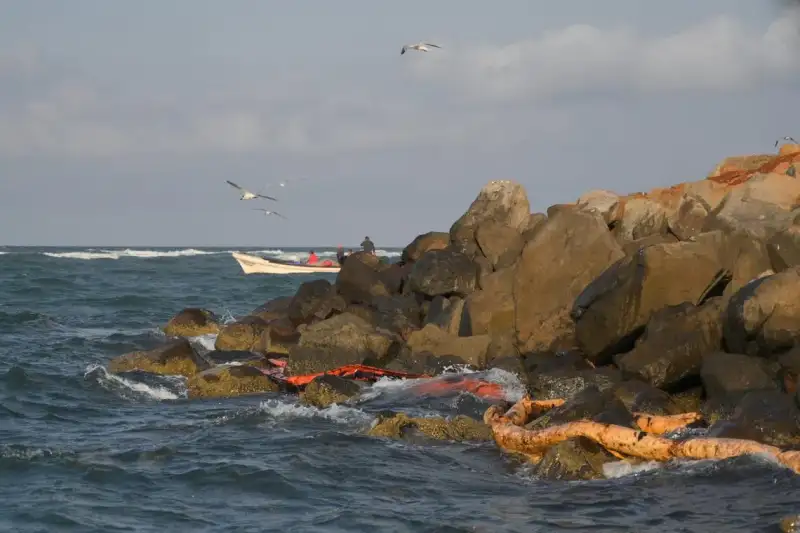
The communities of Jicacal and Las Barrillas, affected by the March 2026 oil contamination covered in our main piece, represent a category of coastal settlement whose economic model is simultaneously productive and fragile. Fishing and small-scale aquaculture provide stable livelihoods when the marine environment is healthy. They can be disrupted or destroyed quickly when it is not.
What makes the current situation particularly difficult is that the spill affects both of the community's main income sources at once, not just one.
Why the Dual Economy Provides No Buffer Against This Kind of Shock
Many small Gulf of Mexico coastal communities operate an effectively dual economy: commercial fishing provides year-round income, while coastal tourism, day visitors and weekend travellers from regional cities, generates supplementary income through food service, accommodation, and recreational activities during peak periods. In normal conditions the two are complementary: the fishing culture and fresh seafood are part of the tourism appeal, and tourism revenue diversifies income when fishing is less productive.
An oil contamination event breaks that complementarity completely. Fishing gear becomes unusable when nets collect oil. The immediate loss of fishing days translates directly into income loss for households with no alternative revenue stream. Tourism collapses when beaches are visibly contaminated, because the appeal that draws visitors, clean beach, fresh seafood, coastal atmosphere, is exactly what the oil destroys.
The dual-sector model provides resilience against normal market fluctuations: a poor fishing season is offset by tourism income, a slow tourism month is offset by fishing. It provides no resilience against an environmental shock that damages both sectors through the same mechanism simultaneously.
Geographic isolation compounds the problem. The absence of a nearby labour market means fishing families displaced from their primary income source cannot easily substitute alternative employment while their environment recovers. The economic impact of a contamination event in an isolated coastal fishing village is more severe per household than the same event in a more economically diverse location.
Aquaculture: The Slower and More Costly Recovery
Lagoon fish and shrimp farming involves capital investment, in enclosures, juvenile stock, feed systems, water quality management, and a production cycle that ties up that investment for months before harvest. Shrimp are particularly sensitive to hydrocarbon contamination: it affects both survival rates and commercial quality, since contaminated shrimp cannot be sold for human consumption regardless of physical condition. A single contamination event that forces early harvest of substandard stock or destroys growing animals represents the loss of a full production cycle's invested capital, feed costs, and expected revenue.
Recovery from lagoon aquaculture contamination is also slower than recovery from beach fishing disruption. Open-water fishing can resume once oil clears from the surface; lagoon aquaculture requires not only clean water but the restocking of juvenile animals and the completion of a new production cycle before harvest income is generated again. The gap between contamination and the resumption of aquaculture income can span six to twelve months even in cases of relatively rapid water quality recovery.
Institutional Support and Its Limitations
Mexico's fishing sector support infrastructure is managed primarily through Conapesca, which administers aquaculture concessions, fishing permits, and some support programmes. In cases of environmental damage, affected fishers can register losses and apply for support through official channels. In practice, the process is slow relative to the immediate income loss and requires documentation of damage that communities managing an active crisis may not have the capacity to produce in the required form.
Civil society organisations and academic researchers with coastal economics and environmental law expertise have played important roles in other Gulf of Mexico contamination cases, helping communities document losses, navigate the official claims process, and maintain public attention on incidents that authorities might prefer to see fade. Cemda is already documenting the March 2026 spill's geographic extent. Whether that translates into meaningful support for Jicacal and Las Barrillas depends on how the attribution question resolves and whether a legally responsible party can ultimately be established.
Frequently Asked Questions (FAQs)
Q: What fishing methods do communities like Jicacal typically use?
A: Small-scale coastal fishing communities on the Gulf of Mexico typically use a combination of cast nets, gill nets, and small boat fishing with lines and traps. Aurora Apolonia Martínez's description of casting nets and finding them full of oil illustrates the immediate practical impact: oil-contaminated nets become unusable because the oil coats the mesh and makes it visible to fish while also being difficult to clean from net fibres. Contaminated gear represents both immediate income loss from lost fishing days and a capital loss from gear that may need to be replaced.
Q: How long does it take for a beach to recover commercially from oil contamination?
A: Commercial recovery of a beach, meaning the return of tourism visits and fishing activity to pre-contamination levels, depends on the extent and type of contamination, the speed and thoroughness of cleanup, and how quickly source markets receive and believe information that the beach is clean again. Physical cleanup of heavy tar can take weeks to months even with organised effort. Reputation recovery in tourism source markets typically lags behind physical recovery, as negative experiences and images circulate through social networks and review platforms more durably than positive news about cleanup completion.
Q: What is Conapesca and what support can it provide to affected fishing communities?
A: Conapesca (Comisión Nacional de Acuacultura y Pesca) is Mexico's federal fisheries and aquaculture authority. It administers fishing permits, aquaculture concessions, and various support programmes for fishing communities. In cases of environmental damage, Conapesca can in principle provide emergency support and facilitate the official loss documentation process. In practice, support delivery in environmental incident cases has been slow and the documentation requirements can be burdensome for communities managing both the immediate crisis and the process of claiming relief simultaneously.
Q: Why is shrimp aquaculture particularly vulnerable to hydrocarbon contamination?
A: Shrimp are physiologically sensitive to hydrocarbon compounds, which disrupt gill function, affect osmoregulation, and accumulate in tissue at concentrations that render the animals commercially unsuitable even if they survive. The commercial consequence is dual: contamination events directly increase mortality in growing populations and render surviving animals unsaleable for human consumption due to taint. Lagoon environments where water circulation is limited may maintain elevated hydrocarbon concentrations for extended periods after a coastal spill, prolonging exposure even after beach conditions improve.
Q: How do fishing communities typically document economic losses from environmental damage?
A: Documentation typically involves recording fishing days lost, gear damaged or destroyed, harvest reductions compared to historical averages, and aquaculture investment exposed to contamination. Photographs of contaminated gear and water, sales records showing income reduction, and logbooks documenting fishing activity before and after the incident all contribute to a damage claim. Cemda and other environmental civil society organisations often assist communities with this documentation process, combining legal expertise with the community's direct evidence of impact.