







Racing to Protect Yucatán's Cenotes Before Development Erases 13,000 Years of History
The prehistoric skeleton recently recovered from the Yucatán cave system, covered in our main piece, survived 8,000 years of submersion because the flooded cave environment is one of the most stable and protective archaeological contexts on earth. That stability is now under threat. The same cave network that preserved ancient human remains and yielded eleven prehistoric skeletons over three decades is increasingly stressed by development, tourism, and the environmental impact of infrastructure projects that have altered the hydrology and ecological balance of the underground waterways.
How the Maya Train Changed the Cave System
The most significant recent impact on the Yucatán cave system came from the construction of the Tren Maya, the tourist railway project initiated under former President Andrés Manuel López Obrador. The project required cutting through swaths of jungle and driving support columns deep into the ground, and, in several sections, directly into the cave systems beneath. The construction effectively damaged portions of a network that had remained intact for millennia.
Cave-diving archaeologist Octavio del Río, who has spent decades exploring and documenting the cave system, was among the most vocal critics of the Maya Train's route and construction methodology. The project proceeded despite sustained opposition from environmental and archaeological researchers, and the long-term consequences for the hydrology and integrity of the cave network are still being assessed.
The Maya Train is now operational. The question for Mexico's environmental and archaeological communities is what comes next: how to manage the damage already done, how to prevent further degradation, and how to establish a regulatory framework that protects the remaining intact portions of the cave system from future development pressures.
The Push for National Protected Area Status
In response to the ongoing threats, Mexican authorities are now working to designate the entire cave zone as a national protected area. Mexico's Environmental Ministry confirmed to the Associated Press that achieving this designation is a goal for 2026. A national protected area designation would create a formal legal framework for restricting development, managing tourism, and enforcing environmental standards within the zone.
INAH has argued that the cave system merits protection not only on environmental grounds but on cultural heritage grounds, because its archaeological significance, demonstrated by eleven prehistoric skeletons and a range of historical artefacts, makes it a site of national and international importance comparable to any above-ground archaeological zone. The combination of environmental and cultural heritage arguments creates a stronger legal and political basis for protection than either would provide alone.
Octavio del Río supports the protected area designation and has been an advocate for its establishment. He acknowledged that the relationship between researchers and government authorities has evolved: the same officials who previously oversaw the Maya Train construction are now working with archaeologists and ecologists on the protection framework. That shift reflects both the political change of administration in Mexico and the accumulating evidence from the cave discoveries that the zone's scientific and cultural value is exceptional.
Tourism, Development and the Long-Term Pressure on the Cenotes
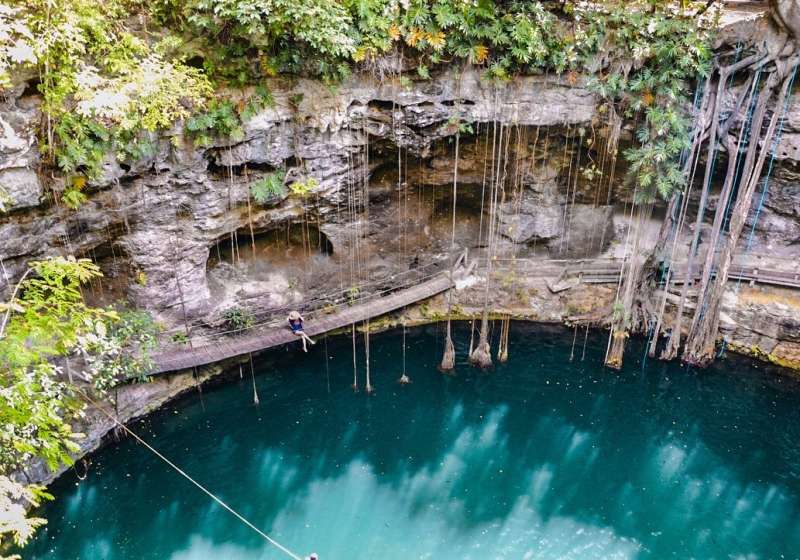
The tourist infrastructure of the Tulum and Playa del Carmen corridor has expanded rapidly over the past two decades, driven by the popularity of cenote swimming and snorkelling with international visitors. The Yucatán Peninsula's publicly accessible cenotes, beautiful, crystal-clear natural pools connected to the underwater cave network, have become major tourist attractions, drawing hundreds of thousands of visitors annually.
That tourism creates economic value and incentive for conservation, but it also creates pressure. Sunscreen chemicals, human waste, and the physical disturbance of high-traffic cenotes have degraded water quality in portions of the cave network. Hotel and resort development along the Caribbean coast has contributed to groundwater pollution that flows through the hydrologically connected cave system. Even well-intentioned tourism, at sufficient scale, creates cumulative impacts on a fragile underground ecosystem.
The cenote cave system represents something genuinely irreplaceable: a continuous underground environment that has preserved biological, hydrological, and archaeological evidence spanning tens of thousands of years. The archaeological discoveries have demonstrated its scientific value with increasing clarity over three decades. The challenge for Mexican environmental and heritage policy is translating that demonstrated value into the legal protections and enforcement mechanisms that can sustain it against the development pressures that will not abate as long as the Yucatán coast remains one of the world's premier tourist destinations.
Frequently Asked Questions
Q: What is the Tren Maya and what impact did it have on the cenote cave system?
A: The Tren Maya is a tourist railway initiated under former President López Obrador, connecting major Yucatán Peninsula destinations. Its construction required cutting jungle and driving support columns into the ground, damaging portions of the underground cave system in several sections. Cave-diving archaeologist Octavio del Río was among the project's most vocal critics. The train is now operational, and the long-term hydrological consequences of the construction are still being assessed.
Q: What would national protected area status mean for the Yucatán cave zone?
A: A national protected area designation would create a formal legal framework restricting certain types of development, establishing management plans for the zone, and providing enforcement mechanisms against activities that damage the cave system's environmental or archaeological integrity. Mexico's Environmental Ministry has confirmed that achieving this designation is a 2026 goal.
Q: Can tourists swim in the cenotes near where prehistoric skeletons have been found?
A: Yes and no. The specific caves containing prehistoric remains are not accessible to recreational visitors, they require expert cave-diving certification and are protected research sites. However, the broader cenote network in the Tulum and Playa del Carmen area includes hundreds of accessible cenotes where swimming and snorkelling are permitted and enormously popular with tourists.
Q: How does pollution from tourism affect the cenote cave system?
A: Sunscreen chemicals, particularly oxybenzone and octinoxate, are harmful to the aquatic ecosystems of cenotes at high concentrations. Human waste from insufficient sanitation at high-traffic sites contributes to bacterial contamination. Groundwater flowing through the hydrologically connected cave system carries pollution from agricultural runoff, hotel development, and coastal construction. The cumulative effect of these pressures is degraded water quality in portions of the network.
Q: Why is the cenote cave system so important for biodiversity as well as archaeology?
A: The Yucatán cenote system supports specialised cave-adapted aquatic species, including endemic crustaceans, fish, and microorganisms found nowhere else on earth. The water in the caves also functions as the primary freshwater source for the Yucatán Peninsula, the region has no rivers, and groundwater from the cave system is what sustains coastal communities, agriculture, and tourism infrastructure. Protecting the caves is therefore simultaneously a biodiversity, freshwater supply, and archaeological heritage imperative.
Q: What can visitors do to minimise their impact when visiting cenotes?
A: Use reef-safe or mineral-based sunscreen (zinc oxide or titanium dioxide) rather than chemical sunscreens before entering any cenote. Avoid using insect repellent in the water. Follow all posted rules at individual cenote sites, which may include showering before entry. Consider visiting less-trafficked cenotes rather than the most popular tourist sites. Support locally operated cenote businesses over large tour operators where possible.