





97611118495e1232690f6a706700e474

NEW YORK (AP) — "The Interview" was put back into theaters Thursday when Sony Pictures Entertainment announced a limited theatrical release for the comedy that provoked an international incident with North Korea and outrage over its cancelled release.

Sony Entertainment CEO Michael Lynton said Tuesday that Seth Rogen's North Korea farce "will be in a number of theaters on Christmas Day." He said Sony also is continuing its efforts to release the film on more platforms and in more theaters.

"We have never given up on releasing 'The Interview,'" Lynton said in a statement Tuesday. "While we hope this is only the first step of the film's release, we are proud to make it available to the public and to have stood up to those who attempted to suppress free speech."

For Sony, the decision was the culmination of a gradual about-face: After initially saying it had no plans to release the movie, the company began softening its position after it was broadly criticized.

Moviegoers celebrated the abrupt change in fortune for a film that appeared doomed as "The Interview" began popping up in the listings of independent theaters across the country Tuesday, from Atlanta to Los Angeles. The film stands to open in as many as a few hundred theaters on Thursday, the day it was originally set for wide release.

One of the loudest critics of the film's shelving — President Barack Obama — hailed Sony's reversal.

"The president applauds Sony's decision to authorize screenings of the film," said Obama spokesman Eric Schultz. "As the president made clear, we are a country that believes in free speech, and the right of artistic expression. The decision made by Sony and participating theaters allows people to make their own choices about the film, and we welcome that outcome."

Rogen, who stars in the film he co-directed with Evan Goldberg, made his first public comments in a surreal ordeal that began with hackers leaking Sony executives' emails and culminated in an ongoing confrontation between the U.S. and North Korea. The FBI has said North Korea was behind the hacking attacks.

"The people have spoken! Freedom has prevailed! Sony didn't give up!" said Rogen on Twitter.


"VICTORY!!!!!!!" said James Franco, who co-stars in the film. "The PEOPLE and THE PRESIDENT have spoken."

North Korea's Internet was shut down in an apparent attack Monday, and continued to be roiled by intermittent outages Tuesday. That followed President Barack Obama's vow of a response to what he called North Korea's "cyber vandalism" of Sony. The White House and State Department have declined to say whether the U.S. government was responsible for North Korea's outages.

After hackers last Wednesday threatened terrorist attacks against theaters showing the film, the nation's major multiplex chains dropped "The Interview." Sony soon thereafter canceled the film's release altogether and removed mention of it from its websites.

But that decision drew widespread criticism, including from Obama, who chastised Sony for what he deemed "a mistake" that went against American principles of free speech. George Clooney also led a chorus pressuring for the movie's release and rallying against alleged corporate self-censorship.

The unusual release will give indie theaters a chance to debut the most talked-about movie in the country. James Wallace, creative manager for Alamo Drafthouse's Richardson, Texas, location said the Texas chain received word from Sony on Tuesday morning that Thursday's showings were a go. Among other touches, the theater will offer a patriotic menu featuring burgers, "freedom fries" and apple pie.

"You better believe it's going to be all-American," Wallace said.

Releasing "The Interview" could potentially cause a response from the hackers, who called themselves the Guardians of Peace. There have been none of the embarrassing data leaks of Sony emails since the movie's release was delayed. In a message last week to the studio, the hackers said Sony's data would be safe so long as the film was never distributed.

A limited release could potentially be followed by expansion into larger multiplex chains, a rollout that has been used in the past for controversial films including "Zero Dark Thirty." The country's top chains — Regal Cinemas, AMC Theatres and Cinemark Theatres — didn't comment Tuesday.

Independent theaters had shown a stronger appetite to screen "The Interview." Art House Convergence, which represents independent exhibitors, sent a letter Monday to Sony saying its theaters (comprising about 250 screens) wished to show the film.

In recent days, Sony has been trying to secure digital partners to help distribute "The Interview" either through streaming or video-on-demand. Such a multi-format release would be historic for Hollywood, whose studios have long protected the theatrical release window.

Sony did not immediately say how many theaters will show the film, but "The Interview" will open in far from the wide release originally planned on up to 3,000 screens.

Colby Cohen, 29, of Atlanta came to the Plaza Theatre shortly after 1 p.m. with a goal of buying 5 tickets for a Thursday showing. He said while he wanted to see the film in the first place, the circumstances "completely changes things."

"I want to see it a lot more," said Cohen. "I'm going to get to fight terrorism on Christmas Day now."

[readon1 url="http://news.yahoo.com/select-us-theaters-theyll-show-interview-thursday-174125104.html"]Source:news.yahoo.com[/readon1]

 Unknown3

A recent outbreak of listeria has been traced to prepackaged caramel apples, sickening at least 24 persons and resulting in four deaths in 10 states.

Health officials are warning consumers to avoid these products until a full investigation by the CDC reveals the source of the outbreak.

According to the CDC, there have been 28 cases of people affected, with at least 26 hospitalized. There have been five reported deaths from the outbreak, of which four have been directly linked to listeria.

Nearly 83 percent of ill persons who provided information to the CDC stated that they had eaten the prepackaged caramel apples prior to becoming ill. It is unclear which brands are affected and how the contamination actually occurred. However, the CDC has made it clear that there is no reason to stop eating caramel or apples that have not been prepackaged.

The outbreak began around mid-October extending into Halloween, which is the time when the confections are typically purchased. The commercially produced and packaged item can have a shelf life of up to 30 days, so it is possible that some may still be in stores with low turn over of products.

Listeria is a foodborne illness which can have a devastating effect on the elderly, pregnant women, infants, as well as those whose immune systems are compromised, especially those with chronic illnesses such as diabetes. In these persons, it could lead to meningitis, a potentially fatal illness affecting the brain and the central nervous system.

Symptoms of listeria, a bacterial illness, can be nonspecific, and may include nausea, diarrhea, muscle aches, headache, malaise and fever. The disease typically does not lead to serious infection in healthy persons, and can successfully be treated with antibiotics if detected early in its course.


One pitfall is that listeria can mimic the flu, so persons may not seek medical treatment, believing that the illness will just runs its course. However, if there is a recent history of consumption of caramel apples along with flu-like symptoms, then persons should contact their medical provider, or seek care in an emergency department.


Listeria can be especially dangerous for women who are pregnant because it can be transmitted to their unborn children, particularly in women who are asymptomatic. Obstetric complications can include preterm labor or delivery, along with miscarriages or even fetal demise.

According to the CDC, the majority of those affected in this outbreak have been younger children, pregnant women, some infants, as well as elderly persons.

During this outbreak, three previously healthy older children developed meningitis. This is uncommon, since listeria typically affects newborns or neonates. The children with meningitis were not part of the five deaths reported, according to the CDC.

It is unclear why more children have been involved in this outbreak, but it may be related to the fact that children more often eat caramel apples.


There have been two deaths reported in Minnesota, as well as 2 additional deaths in California and Texas. Other affected states with illness include Utah, Arizona, California, North Carolina, New Mexico, as well as Missouri, Washington and Wisconsin. New Mexico and Missouri each have persons with five illnesses at this time.

The bottom line is that consumers should dispose of any recently purchased prepackaged commercially produced caramel apples. It is not worth the risk of contracting this potentially virulent bacterial illness.

[readon1 url="http://www.forbes.com/sites/robertglatter/2014/12/20/caramel-apples-linked-to-recent-listeria-outbreak/"]Source:www.forbes.com[/readon1]


 Perez Oscar Christina

In what's being called a historic move, on Wednesday President Barack Obama announced the administration’s move to normalize relations with the communist government of Cuba — the most dramatic shift in U.S. policy toward the island nation in more than 50 years.

In his address to the nation, Obama called the embargo on Cuba a failure, an “outdated approach that for decades has failed to advance our interests.”

The announcement came after the release an American intelligence agent who had been imprisoned for more than 20 years and the American contractor Alan Gross, who had been captive for five years. In exchange, the U.S. released three Cuban spies – members of the known “Cuban Five” – who had been imprisoned in the U.S. since 1998.

Reactions to the news in Hollywood were mixed.

Fox News Latino reached out to music power couple Gloria and Emilio Estefan, both Cuban-born and outspoken critics of the regime, but their publicist said the couple had no comment. They were on the set of “Glee” when news broke.

“A Most Violent Year” actor Oscar Isaac, whose mother is Guatemalan and his father Cuban, told Variety Latino on Wednesday: “I grew up in Miami, and to a certain extent you, as every person does, inherit a lot of your parents’ ideas of things and of where you grow up, so I understand a lot (of the history),” he said. “The anger is still very much there but I think it’s a good thing; I think it’s about time (for a change).”

He continued: “There has been something that’s been a little bit hypocritical about the isolation of Cuba versus our relations with China. It excites me because I am interested in going back – or going there in the first place. I’ve never been. It’s a part of my heritage that I have not been able to really experience, unlike Guatemala, which I visit all the time.”

Singer and actress Christina Milian chimed in social media.

“Today is a day that I am so grateful and proud to witness in my lifetime. Proud of our president Barack Obama and excited that I can finally experience the land of which my Mom, Dad & Ancestors come from... CUBA! It's no longer an urban legend!,” she wrote in an Instagram post. “We're finally going to visit Cuba and so will our children. #blessed #Cuba! Here we come!! S/o Mom & Dad. They're both so excited right now. And my whole familia! #CubaLibre!"

Oscar-nominated actor Andy Garcia, who was born in Havana and has been very outspoken against the Castro regime, declined to comment as did “Law & Order: Special Victims Unit” actor Danny Pino.

Cuban-American celebrity blogger Perez Hilton chimed in on Twitter to express his joy.

"I've literally had dreams about going to a free Cuba with @GloriaEstefan to watch her perform in concert. That dream is closer to a reality!" he tweeted.

Perez, whose real name is Mario Lavanderia, also said in a statement that it was a “great first step of several needed towards a free Cuba.”

Actress Laz Alonso said in a statement to Variety Latino:

“I am encouraged that after half a century of political stalemate, with no progress in either direction, President Obama has made headway in mending the relationship between both my homeland and that of my family. I sincerely believe this is the first of many necessary steps towards helping the people of Cuba enjoy the freedoms that I have in exile.”

TV personality Daisy Fuentes, who was born in Havana, tweeted: “Hoping #cuba news is the beginning of change. No reason to celebrate until Cuban people are free. Let's work to restore their human rights.”

[readon1 url="http://latino.foxnews.com/latino/entertainment/2014/12/18/some-cuban-celebrities-react-with-optimism-to-obama-move-others-remain-silent/"]Source:latino.foxnews.com[/readon1]

  79854490 025162556 1

(Reuters) - President Barack Obama vowed on Friday to respond to a devastating cyber attack on Sony Pictures that he blamed on North Korea, and scolded the Hollywood studio for caving in to what he described as a foreign dictator imposing censorship in America.

Obama said the cyber attack caused a lot of damage to Sony but that the company should not have let itself be intimidated into halting the public release of "The Interview," a lampoon portraying the assassination of North Korean leader Kim Jong Un.

"We will respond," Obama told an end-of-year news conference. "We'll respond proportionally, and we'll respond in a place and time and manner that we choose."


Earlier, the Federal Bureau of Investigation announced it had determined that North Korea was behind the hacking of Sony, saying Pyongyang's actions fell "outside the bounds of acceptable state behavior."

Obama said North Korea appeared to have acted alone. Washington began consultations with Japan, China, South Korea and Russia seeking their assistance in reining in North Korea.

It was the first time the United States had directly accused another country of a cyber attack of such magnitude on American soil and set up a possible new confrontation between longtime foes Washington and Pyongyang.

The destructive nature of the attack, and threats from the hackers that led the Hollywood studio to pull the movie, set it apart from previous cyber intrusions, the FBI said.

A North Korean diplomat at the United Nations in New York said Pyongyang had nothing to do with the cyber attack. "DPRK (North Korea) is not part of this," the diplomat told Reuters.

Obama said he wished that Sony had spoken to him first before yanking the movie, suggesting it could set a bad precedent. "I think they made a mistake," he said.

"We cannot have a society in which some dictator someplace can start imposing censorship here in the United States," he said. "Because if somebody is able to intimidate folks out of releasing a satirical movie, imagine what they start doing when they see a documentary that they don't like, or news reports that they don't like."

Sony Pictures Entertainment Chief Executive Michael Lynton insisted the company did not capitulate to hackers and said it is still looking for alternative platforms to release "The Interview." Earlier this week, a spokeswoman for Sony had said the company did not have further release plans for the $44 million film starring Seth Rogen and James Franco.

"We have not caved, we have not given in, we have persevered and we have not backed down," Lynton told CNN. "We have always had every desire to have the American public see this movie."

OBAMA'S OPTIONS

Despite Obama's stern warning to North Korea, his options for responding to the computer attack by the impoverished state appeared limited. The president declined to be specific about any actions under consideration.

North Korea has been subject to U.S. sanctions for more than 50 years, but they have had little effect on its human rights policies or its development of nuclear weapons. It has become expert in hiding its often criminal money-raising activities, largely avoiding traditional banks.

The FBI said technical analysis of malicious software used in the Sony attack found links to malware that "North Korean actors" had developed and found a "significant overlap" with "other malicious cyber activity" previously tied to Pyongyang.

But it otherwise gave scant details on how it concluded that North Korea was behind the attack.

U.S. experts say Obama's options could include cyber retaliation, financial sanctions, criminal indictments against individuals implicated in the attack or even a boost in U.S. military support to South Korea.

It could also take the largely symbolic step of restoring North Korea to its list of countries designated as sponsors of terrorism, which carries automatic restrictions.

But the effect of any response would be limited given North Korea's isolation and the fact that it is already heavily sanctioned for its disputed nuclear program.

There is also the risk that an overly harsh U.S. response could provoke Pyongyang to escalate into cyber warfare.

"GUARDIANS OF PEACE"

The attack on Sony, more than three weeks ago, was conducted by hackers calling themselves "Guardians of Peace."

The FBI said the hack rendered thousands of Sony's computers inoperable, forced the company to take its entire computer network offline, stole proprietary information and confidential communications.

U.S. movie theater chains had said they would not show the film after hackers made threats against cinemas and audiences. Many in Hollywood and Washington criticized Sony's cancellation as capitulating to the hackers.

Security experts said Sony's decision to shelve the film could mean that more businesses will be targeted for cyber extortion. "I fully expect to see more actions like this against film studios or other soft targets," said Jeffrey Carr, chief executive officer of Taia Global, a cyber security company.

Obama called on the new Congress to work with his administration on new cyber security legislation.

Non-conventional capabilities such as cyber warfare and nuclear technology are the weapons of choice for the impoverished North, defectors said in Seoul.

They said the Sony attack may have been a practice run for North Korea's "cyber army" as part of its long-term goal of being able to cripple its rivals' telecommunications and energy grids.

[readon1 url="http://www.reuters.com/article/2014/12/19/us-sony-cybersecurity-usa-idUSKBN0JX1MH20141219"]Source:www.reuters.com[/readon1]

2013 12 15T090931Z 01 PX10 RTRIDSP 3 MANDELA MOURNING 15 12 2013 11 12 46 227
US President Barack Obama (L) greets Cuban President Raul Castro (C) before giving his speech, as Brazil's President Dilma Rousseff looks on, at the memorial service for late South African President Nelson Mandela. File photo.
Image by: KAI PFAFFENBACH / REUTERS

To many exiles and their allies, President Raul Castro is a brutal dictator who locks up dissenters in gulag-like jails, snuffs out political discourse and condemns his people to socialist poverty.

Cuba's supporters see the government as heroic, its sins justified by the behavior of its giant enemy to the north, and offset by the fact it provides health care and education that most developing countries could only dream of.

As often is the case, the truth lies somewhere in between.

President Barack Obama said on Friday that he began his historic call with Castro earlier in the week by delivering a 15-minute lecture on human rights and political freedom, adding: "This is still a regime that oppresses its people."

Even so, he said that US policy had failed to change Cuba for more than a half century and it was time to try something new.

Human rights activists welcomed the overhaul of US-Cuba relations, but added that the Communist government has much to answer for, including a denial of freedom of speech, the banning of independent labor unions and a lack of fair and competitive elections.

"I believe that President Obama is making the right decision, but that does not mean that our serious human rights concerns with regard to Cuba have gone away," Jose Miguel Vivanco, executive director for the Americas division at Human Rights Watch, told The Associated Press. He said the abuses were "part of state policy, systematic and widespread."

Castro has defended the single-party political system, saying open elections would be tantamount to "legalizing the party or parties of imperialism on our soil."

Accusations of human rights abuses have dogged the Cuban government since the beginning, starting with summary trials and executions after the 1959 revolution that ousted dictator Fulgencio Batista, whose regime committed its own abuses, including torture, executions and persecution of the press.

In the years that followed, priests, gay people and others considered socially dangerous were sent to labor camps in the countryside, and political opponents were jailed or forced into exile.

The panorama has undoubtedly shifted in recent years, particularly since Fidel Castro handed power to his brother in 2006.

In 2010, Raul Castro negotiated a deal with the Roman Catholic Church and Spain to free the last of 75 political dissidents who had been rounded up in 2003 and sentenced to long jail terms, and he has allowed more church freedom on the island, building on the opening worked out between Fidel and Pope John Paul II.

Amnesty International counts five Cuban inmates as "prisoners of conscience," down sharply from years past, though Marselha Goncalves Margerin, the group's advocacy director for the Americas, said Amnesty has campaigned for others that don't meet its strict definition.

"Cuba has always used the excuse of the U.S. embargo and restrictions to crack down on dissidents," she said. "Once this is removed, we do hope this will generate human rights changes."

As part of this week's deal with the United States, Castro agreed to free 53 people the White House describes as dissidents, though their identities have not been released. It was not clear if any of those on Amnesty's list were among them.

Elizardo Sanchez, one of the only independent human rights activists tolerated on the island, said he has been getting calls from inmates asking him if he has a list and whether they're on it, but he's had to say he doesn't know. There's been no evidence of any mass release, he said.

Sanchez also welcomed the restoration of diplomatic ties with the United States, despite what he described as a sharp increase in acts of harassment and intimidation.

While the government has moved away from sentencing dissidents to long jail terms, he said that short-term detentions have spiked under Raul Castro, from 2,074 in 2010 to 8,410 through the first 11 months of this year. Cuban authorities dismiss his findings as a fiction, and consider the dissidents to be paid stooges of Washington.

While the Castro government has not budged on the issue of a one-party state, Vivanco says that Cuba's rights problems aren't in the same league as a country such as North Korea, and says there has been movement on some key issues such as freedom of travel that was tightly controlled under Fidel Castro.

Prominent dissidents such as the blogger Yoani Sanchez have been allowed to travel under the reforms, using their trips to speak out against government policy.

The younger Castro has opened the island to some private enterprise, and allowed Cubans to own cellphones and computers. Rights for the LGBT community have also advanced under Raul Castro, whose daughter is the island's most prominent advocate for gay rights. The government's free universal health care system now pays for gender reassignment surgery, and gay pride parades are an annual fixture.

Jorge Duany, director of the Cuban Research Center at Florida International University, acknowledged progress on some issues like freedom of religion, but added that Raul Castro largely shared the attitudes of his brother.

"Since Raul took over, repressive strategies have become more subtle, not necessarily less brutal," he said.

Elizardo Sanchez warned against believing that an improving relationship between Washington and Havana would change much on the human rights front.

"I don't think there's a cause-and-effect relationship between the normalization of relations between the countries and the necessary implementation of reforms by the Cuban government," he said.

Obama concurred, saying he did not expect improvements overnight.

[readon1 url="http://www.timeslive.co.za/world/2014/12/20/human-rights-in-spotlight-after-us-cuba-deal"]Source:www.timeslive.co.za[/readon1]

Luxury yacht Silvertip Photo by Anthony Twibill

New charter opportunities have opened for Silver Star Yachting clients with the addition of a luxury sloop sail.

NAPLES, ITALY, December 20, 2014 /24-7PressRelease/ -- Leading Mediterranean luxury yacht charter brokers, Silver Star Yachting, is proud to announce the addition of the S/Y FAR AND WIDE to its fleet of 1,400 yachts worldwide.

S/Y FAR AND WIDE is a 30.20m (99'0"ft) sloop sail built by the prestigious Southern Wind 100 DS and launched in Cape Town in 2007. The yacht's naval architecture was designed by Farr Y. Design and includes a carbon fibre, kevlar and epoxy resin high performance hull. The yacht features a stunning interior styled in collaboration with the premiere design house Fendi. Charter demands for sailing yachts in the French and Italian Rivieras have increased significantly recently and luxury sloops, such as FAR AND WIDE, have proved very popular with clients.

S/Y FAR AND WIDE is a luxurious and high performance super yacht equipped with state-of-the-art technologies. She features a full range of modern extras to please every guest. This luxury vessel accommodates a maximum of eight guests in "grand comfort." It boasts a large salon and a dining area. The Owner's studio is forward and has direct access to the full beam master double bed cabin. All cabins come with en-suite shower room and modern audio-visual system including the aft ward VIP double bed cabin and two further twin guest cabins. S/Y FAR AND WIDE is also capable of carrying up to 4 crew on-board. She offers an aft independent crew quarter with heads, wide galley, crew mess and a chart table. She was last refitted in 2008.

Commenting on the arrival of S/Y FAR AND WIDE, founding member of Silver Star Yachting, Rosanna Arcamone said "S/Y FAR AND WIDE is a beautiful, classical vessel that will please all yacht enthusiasts, providing both an authentic sailing experience and a luxury yacht charter in one."

Silver Star Yachting is an expert yacht charter brokerage in the Mediterranean. The company provides luxury motor and sailing yachts for charter across the Mediterranean and the Caribbean. Working closely with the Mediterranean Yacht Brokers Association (MYBA), Silver Star Yachting have amassed a fleet of over 1,400 fully crewed yachts worldwide to become one of the leading yacht charter brokers in the Mediterranean. Visit the Silver Star Yachting website at www.silverstaryachting.com for further information.

[readon1 url="http://world.einnews.com/247pr/399007"]Source:world.einnews.com[/readon1]

2014-12-10-Cuenca-thumb

Cuenca, Ecuador, has been one of the world's top retirement destinations for a decade. This former Inca capital is one of the best-preserved Spanish colonial cities in the Americas. It enjoys spring-like weather year-round, the available health care is excellent and inexpensive, and the cost of living overall is super low. This is also a walkable city (meaning you don't need a car) and home to one of the largest expat communities in the world.

If you've been researching retire-overseas options, you probably know all that already. What you may not realize is that Cuenca has something else to recommend it right now -- its property market is one of the best performing in Latin America.

Over the past 10 years, well-located properties in Cuenca have appreciated in value 10 percent to 12 percent per year. Cuenca was virtually unaffected by the property crash of 2008/2009. Expat retirees have continued to relocate to this city in big numbers not only in spite of the financial woes the world has experienced these past half-dozen years, but in fact because of them. Cuenca has become recognized as an appealing alternative to a "getting-by" retirement in the States.

The rate of capital appreciation property values in Cuenca have enjoyed is cooling. Growth rates for 2014 will be about 5 percent. However, another interesting opportunity is presenting itself in this market. Increasingly, North American retirees relocating to Cuenca are interested in renting a place to live rather than buying one. As a result, the market for short-term, fully equipped, turn-key rentals is blossoming.

A two-bedroom, two-bath condo convenient to El Centro that sells for $75,000 would rent for about $750 per month short term (meaning fully furnished) or about $500 per month long term (meaning you wouldn't have to furnish or mess with the hassle of managing a short-term rental, which is considerably more work than managing a long-term unit). Either way, whether you rent short term or long (and this is uncommon), you're looking at a net return of about 8 percent per year, after costs including utilities, condo fees, and taxes. In today's world, that's a respectable yield.

And it's readily achievable. Graciela Quinde, the city's top rental property manager with the largest inventory, reports an inventory-wide occupancy rate of 95 percent.

If you're considering future retirement in Cuenca yourself, you could invest in an apartment today, at today's prices, then rent it out until you're ready to use it yourself. Don't bother furnishing it now. Instead make it available for long-term tenants. That'd be a relatively hassle-free way to store value in the market and create a turnkey retirement plan that'd be ready when you are.

Graciela Quinde explains that the ideal rental in this market is two bedroom and two baths. She also says that people who rent apartments in Cuenca are generally great tenants. This city doesn't see a young holiday crowd as you might find in Puerto Vallarta or Cancun. In Cuenca, you're renting to responsible folks who generally take good care of the property

[readon1 url="http://www.huffingtonpost.com/kathleen-peddicord/best-places-to-retire-abroad_b_6302014.html"]Source:www.huffingtonpost.com[/readon1]

image

TORONTO -- A Toronto man who made headlines last month by offering a free round-the-world air ticket to a woman with the same name as his ex-girlfriend has found Ms. Right.


Jordan Axani, 28, and his then girlfriend, named Elizabeth Gallagher, booked heavily discounted round-the-world air tickets in May, but their relationship ended and he didn't want her ticket to go to waste. The ticket had a strict no-transfer policy, but since passport information was not required when booking, it can be used by any Canadian named Elizabeth Gallagher.

image 1

Axani posted his offer last month on the popular Reddit social media website, and received thousands of emails, including 18 from actual Elizabeth Gallaghers with Canadian passports

[readon1 url="http://news.yahoo.com/canada-man-finds-woman-free-trip-around-world-122836388.html"]Source:news.yahoo.com[/readon1]

Alan Gross Jeff Flake
This handout photo from the Twitter account of Sen. Jeff Flake, R-Ariz. shows Alan Gross arriving at Andrews Air Force Base, Md., Wednesday, Dec. 17, 2014. The US and Cuba have agreed to re-establish diplomatic relations and open economic and travel ties, marking a historic shift in U.S. policy toward the communist island after a half-century of enmity dating back to the Cold War, American officials said Wednesday. The announcement came amid a series of sudden confidence-building measures between the longtime foes, including the release of American prisoner Alan Gross, as well as a swap for a U.S. intelligence asset held in Cuba and the freeing of three Cubans jailed in the U.S. Gross' wife Judy is at center. (AP Photo/Jeff Flake)

American Alan Gross, who was imprisoned in Cuba for more than five years, has returned to the United States.

The 65-year-old subcontractor with the U.S. Agency of International Development, arrived at Andrews Air Force Base outside Washington, D.C. late Wednesday morning, just hours after news broke of his release.

Arizona Sen. Jeff Flake, who travelled with Sen. Patrick Leahy (D-Vt.) and Rep. Chris Van Hollen (D-Md.) to the Caribbean island, tweeted a photo of Gross walking out of the plane at the air force base.

He followed it up with a photo of Gross reunited with his wife Judy Gross.

“Alan and Judy Gross. Together again. Just before leaving Cuba this morning,” Flake tweeted.

Gross was held in a Cuban prison for five years after he was arrested for helping Jewish communities on the island connect to the Internet.

His release was part of a swap for U.S. intelligence asset held in Cuba and the freeing of three Cuban jailed in the U.S.

The United States and Cuba have agreed to re-establish diplomatic relations and open economic and travel ties, marking a historic shift in U.S. policy toward the communist island after a half-century of enmity dating back to the Cold War.

B5Eia1kIYAEr7Sn

[readon1 url="http://latino.foxnews.com/latino/news/2014/12/17/american-alan-gross-arrives-at-andrews-air-force-base-after-five-years-in-cuba/"]Source:latino.foxnews.com[/readon1]

2014-12-17T160241Z 1825280000 TM3EACH0UG501 RTRMADP 3 CUBA-USA-BANKING

WASHINGTON (Reuters) - The United States plans to open an embassy in Havana, a U.S. official said on Wednesday before President Barack Obama's expected announcement on a policy shift with Cuba.

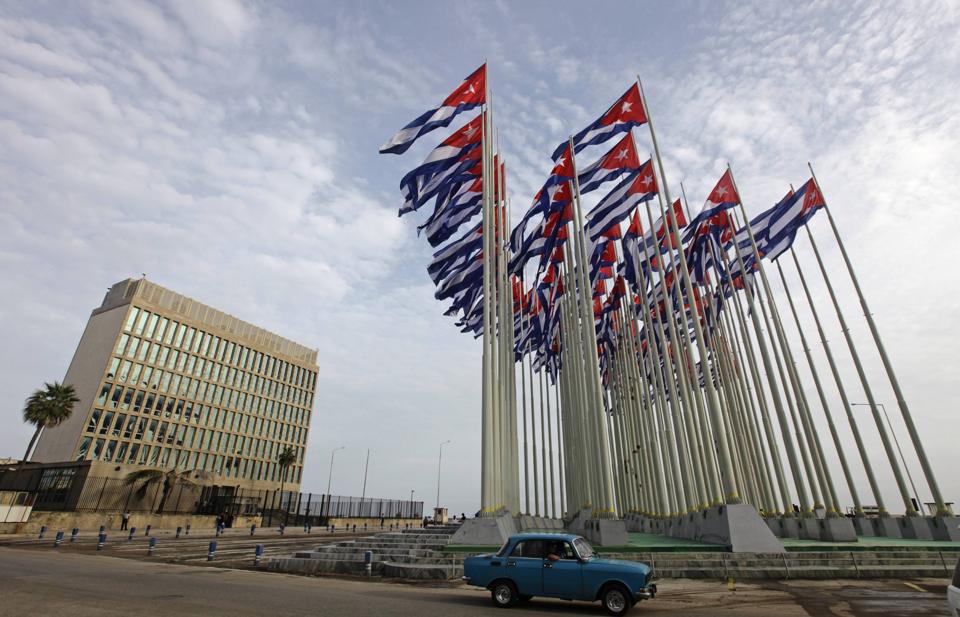
The United States currently has an interests section in Havana.

U.S. congressional officials reported Obama's changes are likely to include relaxed travel restrictions and expanded trade. CNN reported Obama plans to announce the resumption of U.S.-Cuba banking and an increase in allowed remittances.

[readon1 url="http://news.yahoo.com/u-open-embassy-havana-u-official-says-160634423.html"]Source:news.yahoo.com[/readon1]

 10658052

  • For Vitamin D-challenged Canadians trip to southern sunshine is a remedy for the winter chills

The taxi arrived at the crack of dawn. Howling rains pursued us to the airport like angry bill collectors.

By breakfast, we were aboard the plane — and by noon sitting poolside in Scottsdale. We basked in the afternoon sunshine like hospital patients, working up an appetite for dinner with a few laps in one of the resort’s heated pools.

At 5 p.m., the sun sank in the western sky, a golden stone tossed into red-hot lava. Immediately it was winter again. We scurried over to the ice rink and sat down by the warmth of the fire pits to watch people skating on real ice.

Such is Christmas in the Arizona desert. For Vitamin D-challenged Canadians facing a four-month winter, an escape to southern sunshine is a sure remedy for the December chills.

Save for a family vacation once in Puerto Vallarta, all-inclusive resorts have never been a favourite of mine. The Princess, a Fairmont hotel in suburban Scottsdale just east of Phoenix, is not all-inclusive; but the resort features so many amenities the visitor might as well throw away the car keys and settle back to bask in the glow.

The Valley of the Sun enjoys 300 days of sunshine annually. No need for long flights to faraway Mexico or Hawaii when it’s three hours’ travel time to the desert. The local joke is that only Canadians swim at Christmas time, but when the air temperature is 25 degrees and the pool is heated, what’s funny is that the pool is not crowded.

We met Vancouver resident Daenna Van Mulligen, better known to her online fans as The Wine Diva. She comes every December to escape the rain. Two PGA-calibre golf courses lurk a shanked 9-iron across the hotel fence; and should wanderlust intrude, it’s no more than 15 minutes to a huge variety of desert hikes on local mountain trails.

Across town in Glendale (20 minutes away) you can catch an NHL hockey game at Westgate Center, or basketball in downtown Phoenix.

Downtown Scottsdale is only a 10-minute drive. It’s an arts and fashion district for dedicated shopaholics, with fine dining opportunities galore. Every week there’s a guided art walk, and in the arts district you’ll find hundreds of shops selling traditional, native and desert paintings, carvings, rugs, clothing, ceramics and more.

But why bother to wander at all? The warm desert sunshine is best experienced with a cold beverage sipped by the pool and a good book to read. Suddenly it’s a soft B.C. September day again. Lovebirds chatter and chirp in the palm trees above.

Thankfully, the pop music on the sound system is never Burl Ives or Dean Martin warbling awful 1950s-era Christmas tunes. It’s golden oldies, peace on earth of a different kind.

To accentuate the process of stress relief, it’s but a five-minute perambulation over to the Well and Being Spa, where those who have been busy stashing away their ill-gotten gains as a Christmas gift to themselves can afford to choose between dozens of spa treatments.

Tennis anyone? There’s a professional ready to instruct. For families, the Fairmont offers a kid’s club that will keep the little rugrats busy all day, or simply take the tykes to the family pool with its waterslides.

Call it the Wayne Gretzky effect, but outdoor skating rinks are popping up during the Christmas season all over the Los Angeles region (where the Great One played) and Phoenix (where he coached.)

At the famous Coronado Del Rio Hotel on the beach in San Diego on a recent trip, we witnessed skaters crowding a rink just a few metres from the Pacific Ocean.

In the Southern California wine country of Temecula, Old Town hosts a real ice rink in front of City Hall.

Even more pleasant than finding an ice rink in the desert is discovering that holiday light shows have become the newest attraction in the Southern U.S.

Downtown regions of many towns and villages in California and Arizona are awash with festive colour.

Christmas trees and holiday trimmings are found everywhere from malls to city streets.

The Fairmont hosts an electronic light show that rivals New York’s Times Square display.

Families make reservations and drive from all over the Valley of the Sun just to gaze in wonder at the half-million LED lights.

It may be endless summer down in the desert, but when the sun goes down it’s suddenly North Pole South.

WestJet runs daily flights from several Canadian cities to Phoenix’s Sky Harbour Airport, 15 minutes from Scottsdale, and Allegiant Air runs daily flights into suburban Mesa airport from Bellingham.

All told, there are more than 150 flights a week to the desert. Canadians bought up so much distressed property during the recession that we are welcomed with open arms.

In the winter months, the population of the Valley of the Sun swells from 4 to 6 million, and many locals swear most of the increase is due to Canadian snowbirds flocking to this oasis to escape the snow and cold back home.

Hey, when you can swim in the afternoon outside on many sunny afternoons and skate an hour later at night with almost no chance of rain, they are probably right.

[readon1 url="http://www.theprovince.com/travel/Christmas+heart+desert/10658051/story.html"]Source:www.theprovince.co[/readon1]

LON112-417 2007 101057 high

MADRID - In a decision that will reverberate around the globe, Google announced Thursday it will close Google News in Spain and block reports from Spanish publishers from more than 70 Google News international editions due to a new Spanish law requiring aggregators to pay to link content.

Google News in Spain will shut down on Dec. 16 — several weeks before a new Spanish intellectual property law takes effect Jan. 1 requiring news publishers to be paid.

That means people in Latin America, where Spanish news organizations have sought to boost their audiences, won't see news from Spain via Google News in Mexico or elsewhere. Also set to disappear are reports in English from Spanish publishers like Madrid's leading El Pais newspaper.

People who use Google's standard search in Spain and anywhere else around the world will still be able to find articles on their own from Spanish publications, because the law applies only to aggregators and not to individuals who do their own searches outside of Google News.

The decision by Google Inc. is the first shutdown since Google News debuted as an experimental project in 2002.

Richard Gingras, head of Google News, said the decision was made "with real sadness" because Google News is "a service that hundreds of millions of users love and trust, including many here in Spain."

Spain's AEDE association, which represents large news publishers, had lobbied for the law nicknamed the "Google Tax" and said that Spaniards and Spanish businesses will suffer as a result of Google's decision.

AEDE said the full impact of the move that will make news produced by Spanish media vanish globally will only become known after the shutdown but added that the law was needed to "effectively protect the rights of citizens and businesses."

A spokesman for El Pais said the newspaper did not plan to comment on Google's action and the publishers of three other large Spanish newspaper groups also declined to comment or did not respond to requests for comment.

Spain's Culture Ministry characterized Google's move as a legitimate business decision. The ministry also said the law doesn't apply to individuals and will protect the intellectual property of publications that spend money to create content without hindering freedom of information.

The new law did not specify how much publishers would have to be paid by Google or other aggregators, but the company said Spain's law is much stricter than similar legislation enacted elsewhere because it mandates payments even if publishers don't want them because they get traffic via Google News.

"This new legislation requires every Spanish publication to charge services like Google News for showing even the smallest snippet from their publications, whether they want to or not," Gingras wrote in a blog. "As Google News itself makes no money (we do not show any advertising on the site) this new approach is simply not sustainable."

Google News has long irked newspaper publishers and other content providers, who contend the service tramples on copyrights by creating a digital kiosk of headlines and story snippets gathered from other websites. Most criticism has likened Google to a freeloader, but there have been attempts to force the company to change its ways through the courts.

Google maintains it obeys all copyright laws while sending more people to websites highlighted in its News services. The company also allows publishers to prevent material from being displayed in Google News, an option few websites choose because the service is an important traffic source to sell ads.
Alejandro Tourino, a Madrid-based lawyer who specializes in media issues and has worked for The Associated Press on several legal cases, said Spanish news publishers may "have shot themselves out of the market. Time will tell."

After Germany revised its copyright laws last year to allow — but not force — Google News to make royalty payments, Google required publishers there to give their consent for summarizing content. Most did.

Google last year agreed to help French news organizations increase their online advertising revenue and fund digital publishing innovations to settle a dispute over whether the company should pay for news content in its search results.

The French news agency Agence France Presse sued Google for copyright infringement in 2005, a move that culminated in Google agreeing to a licensing agreement with AFP for an undisclosed amount. The Associated Press, another critic of Google News' tactics, reached a licensing agreement with Google in 2006.
Now Google no longer licenses material from AFP, AP or any other news service.

Google also had to respond to a ruling this year from Europe's highest court, which decided that Europeans have a right to scrub unflattering or outdated information from Google's search engine that pops up in a search of their names. That case started in Spain.

Under the new "Right to be Forgotten" rule, the company as of September had received more than 120,000 requests to take down 457,000 links. Google did not say at the time how many requests had been approved.


header 11

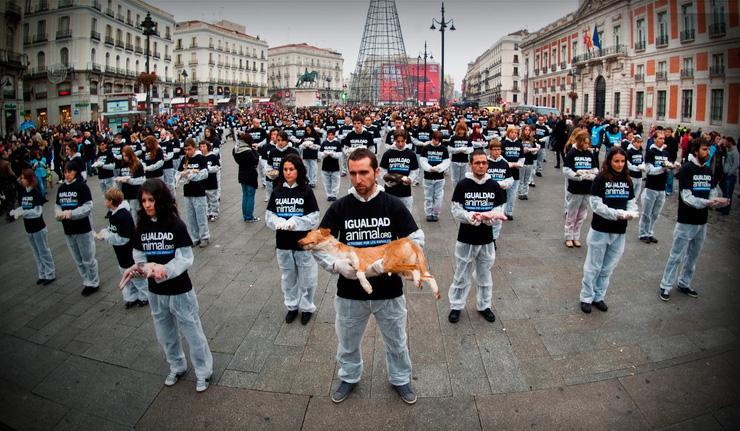
A day for events across the world, calling for fundamental rights to be bestowed upon non-human animals by 2048 (100 years after the Declaration of Human Rights on this date).

Groups are encouraged to hold candle-lit vigils outside local sites of animal abuse, campaign stalls or other outreach events to highlight links between human and animal rights.

Please unite with thousands of people around the world for the Annual International Animal Rights Day (IARD) on 10th December.

- Organise a candlelit vigil at a local place where the rights of animals are abused/ignored, such as offices and shops of companies, universities, government departments and charities that conduct, support or promote animal testing, factory farms, abattoirs, butchers, fast food outlets, greyhound stadia, racetracks, bookies, live export docks, bull-rings, hunt supporting organisations, or even at a prominent or historical site in the town centre. You will need: candles, lanterns, banners, warm clothes! If you have plenty of candles, lanterns, banners and posters etc. the vigils look very powerful and effective - even if there are only a few of you.

- Conduct a campaign stall

Inform the public that 'animal rights' is not scary, frightening and irrational, but a logical, well thought out, peaceful and sensible way to think. Send news releases to your regional media too. We will have leaflets, posters, petitions available.

- Write letters

Write to national, regional papers (including the freebies), magazines, comments sections of websites, online animal forums etc.

Anything you can do helps. Be part of history!

Why an International Animal Rights Day?

IARD is the focus for our long term campaign for the international acceptance of the Universal Declaration of Animal Rights, which states that humanity must respect all animals' basic moral rights to 'life, liberty and natural enjoyment'. Humans' ability to distinguish right from wrong demands that we act ethically towards other sentient beings.

The 10th December is the anniversary of the ratification of the Universal Declaration of Human Rights in 1948. Now, we're seeking to demonstrate the moral imperative of extending fundamental rights to all animals.

IARD strengthens the animal rights cause by unifying specific campaigns under a global banner and generating solidarity between compassionate people from Auckland to Aberdeen.

Everyone who signs up, writes letters to the media, conducts a candle-lit vigil or campaign stall, or spreads the message in other ways on IARD becomes a comrade with 1000s of activists worldwide in an historic movement for change.

Such peaceful and dignified actions promote the positive nature of animal rights. We are reclaiming our movement's image from the animal abusers who try to discredit us as aggressive and unreasonable. Every positive action helps make the world a better place!

International Animal Rights Day was established by Uncaged Campaigns, who have since moved on to other projects.

animalrightsday