







What A Drag's durability as a fundraising institution, covered in our main piece, depends on infrastructure that did not exist by default: professional performers willing to participate, a venue capable of staging large-scale theatrical production, and an audience with the established habit of attending live performance. Puerto Vallarta has all three. Understanding how that performing arts ecosystem developed offers a more complete picture of what the city is, beyond its beaches and tourism statistics.
The Venue Infrastructure
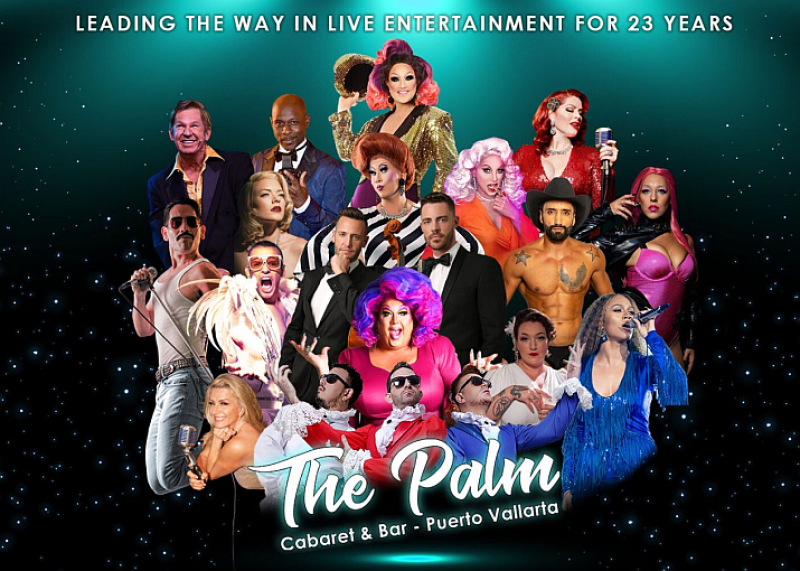
Puerto Vallarta's performing arts scene is anchored by a cluster of mid-sized venues operating year-round programmes. Teatro Vallarta, The Palm Cabaret and Bar, and Act II Entertainment are the principal spaces, each with distinct programming identities that collectively sustain a dense enough calendar to support a professional performing community across the full year rather than only during peak tourism season.
The year-round character of the programming matters structurally. A scene that operates only when tourist volume is high cannot sustain professional careers, performers need reliable income across the calendar, not just from November to April. The fact that Puerto Vallarta's principal venues programme consistently through summer and into the shoulder seasons reflects a genuine resident and expat audience base whose demand does not track the tourism cycle.
That resident base, long-term foreign nationals, seasonal residents, Mexican professionals who have relocated to the city, and the established local community, provides venues with the programming stability that purely tourist-facing entertainment cannot achieve. It also means the scene has evolved to serve multiple taste profiles simultaneously, which is part of why events like What A Drag, which do not fit neatly into any single genre, can find an audience.
Cabaret as a Format and Why It Fits
Cabaret, combining music, comedy, theatrical staging, and audience interaction, has become the dominant format in Puerto Vallarta's live performance scene, and the fit is not accidental. The city has a large and established LGBTQ+ community and a social atmosphere that is more open than most Mexican cities of comparable population. Cabaret's historical roots in queer performance culture and its formal flexibility, capable of accommodating drag, stand-up, musical theatre, and experimental work within a single evening, make it well-matched to a city whose cultural identity is partly defined by that openness.
The format also scales appropriately. Cabaret works best in spaces large enough to be commercially viable but small enough to maintain the audience proximity and communal energy that distinguish it from arena-scale entertainment. Puerto Vallarta's principal venues sit in exactly that range. The intimacy is part of the product.
Armando Chakám's upcoming debut of a Las Vegas golden era tribute at The Palm Cabaret, mentioned in What A Drag's programme, is a small indicator of how Puerto Vallarta functions within a broader performing arts circuit. A Guadalajara-based performer choosing Puerto Vallarta for a new show's debut reflects a professional judgment that the city's audience is sophisticated enough and its venues credible enough to serve as a meaningful launch platform.
The Civic Function of a Cultural Scene
The most significant thing What A Drag demonstrates about Puerto Vallarta's arts scene is not its entertainment quality but its civic reach. The same infrastructure that entertains residents and visitors on any given evening is also the mechanism through which a domestic violence shelter funds the majority of its annual operations. The performing arts community and the social services community have developed an interdependence that converts cultural capital into material support for the city's most vulnerable residents.
This relationship between arts infrastructure and civic outcomes is not unique to Puerto Vallarta, but it is unusually explicit here. The directness of the connection, a cabaret fundraiser as the primary funder of a shelter, makes visible a dynamic that exists in most cities but rarely gets articulated so clearly. A performing arts scene is not only an amenity or an economic driver. In Puerto Vallarta's case, it is part of the city's social safety net.
Frequently Asked Questions
Q: What are the main performing arts venues in Puerto Vallarta?
A: The principal venues are Teatro Vallarta, The Palm Cabaret and Bar, and Act II Entertainment. Each operates year-round programming across cabaret, musical theatre, comedy, and live music. Together they sustain a professional performing community serving both the tourism market and the city's long-term resident and expat population.
Q: Is Puerto Vallarta's performing arts scene primarily for tourists?
A: Tourism contributes significantly to audience volume, but the scene also serves a substantial resident base, long-term foreign nationals, seasonal residents, and the established local community, whose attendance is independent of tourism cycles. This resident-base demand is what allows venues to programme year-round and supports professional performers building careers in the city rather than treating it as a seasonal market.
Q: Why has cabaret become the dominant performing arts format in Puerto Vallarta?
A: Several converging factors: an established LGBTQ+ community whose cultural preferences align with cabaret's historical performance traditions; venue sizes well-suited to the format's intimacy requirements; a socially open atmosphere relative to most comparable Mexican cities; and a resident-plus-tourist audience mix that supports diverse programming within the format's inherent flexibility.
Q: How does Puerto Vallarta's performing arts scene compare to Guadalajara or Mexico City?
A: Guadalajara and Mexico City have larger, more institutionally diverse performing arts sectors with major opera houses, symphony orchestras, and large-scale theatrical productions. Puerto Vallarta's scene is smaller in absolute scale but unusually dense relative to its population, with a concentration of mid-sized cabaret and theatre venues that sustain year-round professional programming. Its distinctiveness comes from its specific format concentration and the depth of audience engagement rather than institutional scale.
Q: What is Surf Hula and where can it be seen?
A: Surf Hula is a performance practice created by Adán Carano that merges Pacific coast surf culture aesthetic with hula-hoop movement technique. It is a movement-based form combining the visual language of surfing with the physical discipline of professional hula-hoop performance. Carano is based in the Puerto Vallarta area and performs the work at events including What A Drag and other local productions.