baby-in-train-of-dress-300x160This past weekend, Shona Carter-Brooks made headlines after she wanted to have her one-month-old daughter be a part of her wedding ceremony, so she attached the baby to the train of her wedding dress and dragged her down the aisle.
This is wrong on so many levels I don't know where to begin.

Clearly this couple has poor judgment. The bride held her flowers, NOT her baby. What does that say about her priorities?

What's even more shocking to me is that no one in the wedding party thought this was a bad idea. Her fiancé, her bridesmaids, her parents -- what were they thinking? Although the wedding happened about a month ago, it wasn't until the photo was posted on Facebook that the outrage began and people started questioning her ridiculous decision.

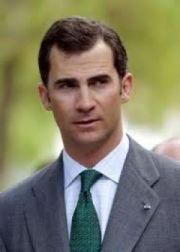
Crown Prince Felipe-180x252Spain’s crown prince will be proclaimed King Felipe VI on June 18 before Parliament in Madrid, legislative officials said Tuesday.

The 46-year-old Felipe de Borbon, who currently holds the title of Prince of Asturias, will succeed his father, King Juan Carlos, who announced on Monday that he was abdicating.

The body that manages legislation in the lower house of Parliament introduced the bill making King Juan Carlos de Borbon’s abdication official on Tuesday afternoon.

Under Spanish law, Parliament must approve legislation governing the succession process for the Crown.

The succession law is expected to be approved by the lower house of Parliament next week, with the Senate likely following suit on June 17.

The constitutional mechanisms for the succession will be activated once the law is published in the Official Bulletin of the State, or BOE, and Prince Felipe will then be proclaimed king before Parliament.

The one-article document, which has two sections, states that King Juan Carlos I is abdicating the Crown of Spain and the move will “produce an automatic succession, following the order established in the Constitution.”

The proclamation of Felipe VI as king of Spain will be carried out before a joint session of the two houses of Parliament.

King Juan Carlos and Crown Prince Felipe on Tuesday made their first public appearance together since the monarch announced that he was abdicating in favor of his son.

The Spanish monarch and his son participated in a military ceremony at the San Lorenzo de El Escorial Monastery that was attended by the army and air force commanders.

King Juan Carlos and Crown Prince Felipe, both wearing military uniforms, arrived at the monastery as a large crowd of tourists and residents looked on, with many people shouting “Long live the king!”

The Spanish monarch said Monday he was abdicating in favor of his son after nearly 39 years on the throne.

“Today, a younger generation deserves to move to the forefront, with new energy, committed to carrying out the transformations and reforms that the current situation demands with determination,” the king said, referring to Felipe, the Prince of Asturias.

King Juan Carlos said he began preparing to step down in January, when he turned 76.

Juan Carlos ascended to the throne on Nov. 22, 1975, and his son, Felipe de Borbon, became Prince of Asturias, the title held by the heir to the Spanish Crown, in January 1977.


[readon1 url="http://www.hispanicallyspeakingnews.com/latino-daily-news/details/prince-felipe-ascends-to-spanish-throne-on-june-18/30143/"]Source:www.hispanicallyspeakingnews.com[/readon1]

angelmAngelina Jolie and Walt Disney’s live-action label turned out surprisingly large crowds for “Maleficent” over the weekend, as Seth MacFarlane discovered there is no surer way to die in the West than making a vanity film.

“Maleficent,” starring Ms. Jolie as an evil fairy in a “Wicked”-style reworking of “Sleeping Beauty,” took in an estimated $70 million at theaters in the United States and Canada, according to Rentrak, which compiles box-office data. Foreign audiences responded even more favorably, pushing this PG-rated fantasy to $100.6 million in overseas ticket sales, a total that was “significantly above what we needed,” said Sean Bailey, Walt Disney’s president for live-action production.

“We were pleased to see that the movie played well across all audiences, male and female, family and general,” Mr. Bailey added. Although “Maleficent” drew mixed reviews, domestic audiences gave it an A grade in CinemaScore exit polls.

It’s still a big question whether “Maleficent” will make money. Disney spent at least $300 million to make and market the film. Accounting for the cut of ticket sales given to theater owners, it will need to take in roughly double that total just to break even at the box office. And the movie faces a potential buzz saw next weekend: “The Fault in Our Stars,” a tear-jerker love story from 20th Century Fox, is expected to be enormously popular among women and girls, the “Maleficent” target audience.

But the strong initial turnout gave Ms. Jolie and Disney important victories. Ms. Jolie, who has not appeared on movie screens for four years, proved that she remains capable of herding people into theaters. (“It’s not a fairy tale: There are still movie stars,” Mr. Bailey said.) A flop would also have complicated her efforts to make an Oscar run this year for “Unbroken,” a period drama that will be her second effort to direct a feature film.

For Disney, the response to “Maleficent” demonstrated life at the studio’s signature live-action label; three of its last four releases have been box-office failures (“Muppets Most Wanted,” “Million Dollar Arm,” “The Lone Ranger”), and the fourth, “Saving Mr. Banks,” was profitable but turned into Oscar derby roadkill. The big turnout also showed that Disney could pull a film out of the fire; early buzz was not good after reports of reshoots and re-editing.

Hollywood was watching “Maleficent” carefully, in part because other big-budget movies centered on villains are on the way. Sony, for instance, has two “Spider-Man” spinoffs, tentatively titled “Venom” and “The Sinister Six.”

How did Disney pull it off? Some analysts theorized that mothers and daughters were interested in “Maleficent” partly because they had such a good time at Disney’s animated “Frozen.” Others pointed to a marketing campaign that broke through the clutter with bold imagery and signed up the pop star Lana Del Rey to update the classic Disney song “Once Upon a Dream.”

A witty advertising campaign couldn’t save the weekend’s other wide release movie, “A Million Ways to Die in the West” (Universal). A scatological comedy that was directed and written by Mr. MacFarlane, who also cast himself in the lead role, the film arrived with an estimated $17.1 million in ticket sales, roughly 25 percent less than analysts had anticipated. Media Rights Capital and Universal teamed for the film, which cost $40 million to make and tens of millions more to market.

Comedic westerns are one of Hollywood’s riskiest genres, but hopes were high for Mr. MacFarlane’s effort, because his “Ted” generated $54.4 million in opening-weekend ticket sales in 2012 and ultimately took in about $550 million worldwide.

[readon1 url="http://www.nytimes.com/2014/06/02/movies/maleficent-casts-spell-burying-ways-to-die.html?rref=business/media&module=Ribbon&version=context&region=Header&action=click&contentCollection=Media&pgtype=article"]Source:www.nytimes.com[/readon1]

mhjMarilyn Beck, a widely read newspaper columnist and broadcast figure who helped introduce a style of impartial journalism to the celebrity gossip beat, died on Saturday at her home in Oceanside, Calif. She was 85.

The cause was lung cancer, said Stacy Jenel Smith, Ms. Beck’s writing partner in her last decades.

At their peak in the 1970s and ’80s, Ms. Beck’s syndicated columns reached 20 million readers in hundreds of newspapers, including The Daily News in New York. She was also a familiar presence on radio and television, hosting “Marilyn Beck’s Hollywood Outtakes” specials on NBC and long-running stints on the syndicated “PM Magazine” and on the E! Channel’s “Gossip Show.”

Ms. Beck was among the first Hollywood journalists to have an online presence in the late 1980s, eventually starting her own website with Ms. Smith.

Ms. Beck bridged two eras in Hollywood journalism — between the gossip columnists of the 1930s and ’40s like Louella Parsons and Hedda Hopper, who derived power from their studio connections, and a generation of reporters who came along after the death of the studio system. Ms. Beck forged most of her connections directly with the people she wrote about.

In the 1960s and ’70s, her straightforward style earned her the trust of many celebrities with stories to tell. Elvis Presley gave her his first interview after being discharged from the Army in 1960. Dick Van Dyke publicly revealed his struggles with alcoholism in an interview with her. And before supermarket tabloids got wind of it, Michael Landon told Ms. Beck about his dependence on prescription pills.

She could be as tough as a “60 Minutes” cross-examiner — questioning Sylvester Stallone and Clint Eastwood about leaving their wives; pressuring Bob Hope to talk about his money; digging up celebrity culture dirt in 1976, after the singer Claudine Longet was charged in the shooting death of her boyfriend, the skier Spider Sabich.

She could also be as fawning as — well, a celebrity gossip columnist.

In one of her biggest scoops, Ms. Beck was invited to Puerto Vallarta, Mexico, in 1963 to interview a Hollywood couple whose romance was the celebrity scandal of its day, both partners being married to others at the time.

“Elizabeth Taylor and Richard Burton have discovered paradise — and they freely admit it,” she wrote on Nov. 11 from a remote Burton-Taylor redoubt. “In this tiny tropical village they have found their heaven on earth, where they can openly display their love for each other, freer than they have ever been from notoriety and criticism.”

Ms. Beck had never intended to be a gossip columnist, she told interviewers; but having found herself in the job, she embraced it without pretense.

“The day of the wicked whisper is passed,” she said in a 1969 interview with Editor and Publisher magazine. “But gossip based on fact will continue as long as there is a Hollywood. Gossip is news.”

She was born Hanna Marilyn Mohr in Chicago on Dec. 17, 1928, and raised in Los Angeles. She graduated from the University of Southern California with a degree in journalism, then married Robert Beck, a Los Angeles newspaper reporter, and had two children. She and Mr. Beck later divorced.

When her youngest child was in grade school, Ms. Beck began writing freelance articles for local newspapers and fan magazines. She became a Hollywood columnist for the Bell-McClure syndicate in 1967.

Ms. Smith was in her early 20s when she teamed up with Ms. Beck in the late 1970s, working alongside another young reporter assistant, Ms. Beck’s daughter, Andee (who went on to become a television critic in Oregon).

Ms. Beck’s columns were carried by The New York Times Special Features syndicate beginning in 1972 and by the Creators syndicate from the 1990s onward.

The column, “Hollywood Exclusive,” is now written by Ms. Smith.

She is survived by her second husband, Arthur Levine; her daughter, Andee Beck Althoff; a son, Mark Beck; a brother, Mitchell Mohr; and four grandchildren.

[readon1 url="http://www.nytimes.com/2014/06/03/business/media/marilyn-beck-hollywood-journalist-dies-at-85.html?_r=0"]Source:www.nytimes.com [/readon1]

rhRobb Hernandez, assistant professor of English, has been awarded a Hellman Fellowship for 2014-2015 for his book project on “Archival Body/Archival Space: AIDS, Queer Remains, and the Chicano Avant-Garde.”

“Archival Body/Archival Space” will be the first book-length study to reveal a queer genealogy of Chicano avant-gardism, an experimental language of Chicano cultural production in Southern California emerging in the late 1960s, Hernandez said.

“These artists, notorious for their garish performance personas, provocative visual spectacles, and ‘live art’ embodiments, are obscure in the story of Chicano art due to erasure wrought by a prescient heteronormative vision of the past and the AIDS crisis,” he said. The project requires challenging new forms of fieldwork and the reconstruction of alternative archival bodies and spaces “to show how queerness remains, though scattered in a mélange of dust and debris.”

The $27,634 Hellman Fellowship will support additional research travel to El Museo Del Barrio in New York City, Smithsonian Archives of American Art in Washington, D.C., and the Colección Tloque Nahuaque at the University of California, Santa Barbara’s Davidson Library. Hernandez also will conduct extensive interviews and house visits with surviving friends, family, and artist-colleagues in Palm Springs, Los Angeles, San Francisco, and Riviera Nayarit, Mexico.

The fellowship also will support professional photo documentation and digital preservation of rare documents, artworks, and domestic interior displays.

“This is a great — and well-deserved — honor for Robb,” said Deborah Willis, department chair. “Robb’s work is richly compelling and important, and he is inventing a completely new way of doing archival research.”

Weihsin Gui, assistant professor of English, won the fellowship in 2012.
The Hellman Fellows Fund contributed funds to establish the UC Riverside Hellman Fellows Program to provide support and encouragement for the research and creative activities of promising faculty at the assistant professor rank who exhibit potential for great distinction in their area of expertise, according to the program website.

[readon1 url="http://ucrtoday.ucr.edu/22577"]Source:ucrtoday.ucr.edu[/readon1]

gcarGoogle has revealed a prototype of its latest driverless car -- and this one doesn't even have a steering wheel.

The car will only have a stop and go button. No steering wheel. No pedals.

Unlike Google's previous self-driving vehicles, which have been based on conventional cars adapted to navigate around without a driver, this model has been designed from scratch.

"They won't have a steering wheel, accelerator pedal, or brake pedal... because they don't need them," Google said in a statement.
Google's new car: No driver, no brakes
How smart tech is shaping the future

The car can carry two passengers and has a maximum speed of 25 miles per hour.

Google says the car's most important feature is its safety.

"They have sensors that remove blind spots, and they can detect objects out to a distance of more than two football fields in all directions, which is especially helpful on busy streets with lots of intersections," the company said.

With its front designed to look like a friendly smiley face, the Google autonomous car is not just efficient and futuristic, but also cute to look at.

Google said it planned to build around 100 prototypes, which it will start testing in a few months.

The company started developing its self-driving cars in 2005, and is testing previous models across the U.S. They are expected to be available to buy by 2020.

[readon1 url="http://edition.cnn.com/2014/05/28/business/google-driverless-cars/index.html?iid=article_sidebar"]Source:edition.cnn.com [/readon1]

amawGrenada Underwater Sculpture Park
Globetrotting artist and photographer Jason deCaires Taylor (pictured) crafted 65 concrete-and-rebar figures—a combination of human forms and still lifes—anchored beneath Moliniere Bay. A snorkeling tour through the marine area allows travelers to get a fish’s-eye view of the works.

Museo Subacuático de Arte (MUSA)
Taylor’s masterpieces also lie at the heart of an installation located between Cancún and Isla Mujeres in Mexico. In an effort to repair some of the region’s damaged coral reef, the artist partnered with the country’s Environment and Natural Resources Secretariat to open an artificial habitat where sea life could settle and thrive.

Shipwreck Trail
Nearly a dozen sunken ships spanning three centuries rest in the shallow waters of the Florida Keys National Marine Sanctuary. The underwater archaeological preserves give divers clues into maritime eras with submerged guides that encompass each vessel’s history, plus which aquatic inhabitants might be making their homes there today.

Herod’s Harbor
A city that once served as a trade port for the Roman Empire now lies 20 feet below sea level off the coast of Caesarea, Israel. Snorkelers and divers can examine such artifacts as marble columns, anchors, and shipwrecks from Phoenician and Byzantine eras as they make their way through 36 exhibits.

Underwater Museum at Cape Tarkhankut
Crimea's been in the news for its tumultuous political climate, but beneath the surrounding waters of the Black Sea, there's a quieter convergence of government honchos. Once the U.S.S.R. fell, diver Vladimir Borumensky collected thousands of discarded busts and figures of erstwhile Communist icons—including Lenin, Stalin, and Marx—and turned them into a subaquatic "Alley of Leaders." Over the past 20 years, it's grown to more than 50 sculptures, from Paris's Eiffel Tower to London's Tower Bridge.

Monterroso’s Underwater Museum
In Sandy Bay, off the coast of Roatan, Honduras, snorkelers can spot authentic pieces, including pre-Columbian burial masks and 17th-century sundials, along with replicas of Spanish galleon ships and Mayan-era monuments.

Underwater Museums


[readon1 url="http://www.cntraveler.com/daily-traveler/2014/05/5-underwater-museums-submerged-art-and-artifacts"]Source:www.cntraveler.com [/readon1]

ormMusic is on every corner of Vienna, but there is only one place a person can go to virtually direct the philharmonic or compose a waltz - the House of Music, a groundbreaking project that will soon be duplicated in Mexico.

The new Vienna House of Music will be housed in an old textile factory in Puebla, converted into the first replica of the Haus der Musik with all its innovative, entertaining programs for enjoying and learning about music.

An example of its attractions is the "virtual director," the dream of any would-be maestro who will never be able to mount the real podium of the Vienna Philharmonic.

A video of the orchestra's musicians reacts to the rhythm and indications of the baton, and at the end rewards the director with applause if the performance was good, or jeers if it was bad.

"The idea is to send forth from the world from Vienna, the capital of music, our way of teaching sound and music," Simon Posch, director of Europe's only museum dedicated to this art, told EFE.

On all of its six floors, this institution linked to the Vienna Philharmonic involves visitors in the world of classical and contemporary music.

Visitors can learn all about such legendary composers as Haydn, Mozart, Beethoven, Schubert, Strauss and Strauss the Younger, Mahler, and the master of atonality, Arnold Schoenberg, all with strong ties to Vienna.

After several years deciding where to found a second House of Music, a proposal came from Mexico's Puebla state government, Posch said.

The La Constanza complex, built in 1835, is today the national seat of the Esperanza Azteca symphony orchestras, a musical project for needy youths and children.


[readon1 url="https://au.news.yahoo.com/entertainment/a/23889674/mexico-to-be-home-to-new-music-museum/"]Source:au.news.yahoo.com [/readon1]

 World-No-Tobacco-Day-281x300Every May 31 since 1987, celebrates the World No Snuff with the WHO wants to draw attention to the impact of smoking. The theme this year goes directly to industry: ‘Stop the tobacco industry interference.’

The war on snuff is at its peak and the highest authority in matters of health, WHO, points directly to the heart of the industry. “The campaign will focus on the need to expose and counter attempts increasingly brazen and aggressive tobacco industry to undermine the Framework Convention for the Control of Snuff,” says the organization.

The leading prevention causes of death in the use of tobacco. WHO estimates that the snuff is behind six million deaths per year, and a third of all cancer deaths? The positive note is that after five years of quitting smoking drastically decreases the risk of developing cancer and from the 10 years that risk equals that of nonsmokers.

“Tobacco Industry Interference” this is the theme of word No Tobacco Day by the World Health Organizations.

[readon1 url="http://indiaonearth.com/world-day-without-snuff-world-day-against-the-tobacco-industry"]Source:indiaonearth.com[/readon1]

ate"There is a brand new study suggesting that the sugars in the agave plant, which is used to make tequila, may offer health benefits to people who are overweight or have diabetes," says Master Tequilier David Khaim, of Baron Tequila (www.baronspirits.com), the newest, ultra-premium tequila handcrafted in Tequila, Jalisco, Mexico and certified gluten free and kosher. "In fact, according to researchers, these specific sugars may lower blood glucose levels for people with type 2 diabetes."

According to the Mexican scientists who conducted the study, the type of natural sugar, agavins, are non-digestible and do not raise blood sugar. In their research, the scientists fed mice a normal diet and added agavins to some of their drinking water. It was discovered that the mice who consumed the agavins ate less and had lower blood glucose levels than the other mice. Researchers say that those mice also produced a hormone called GLP-1 that keeps the stomach full for a longer period and produces insulin.

"Can we actually say that if you want to lose weight and be healthier, you should drink more tequila," Khaim asks. "Not exactly, but it shows that drinking tequila, when enjoyed in moderation, isn't only pleasurable, but can even be healthy as well."

However, Khaim says that you don't want to trust your health to just any tequila, noting that well-produced tequila, like Baron, is definitely the way to go.

"Because Baron is distilled three times, it results in an extract that gets cleaner and cleaner, ultimately achieving a zero-zero taste profile, eliminating any bad odor and bitter taste," he explains. "Unlike larger industrial producers, Baron is able to achieve a pure taste without the use of glycerin or other additives."
 
The authors of the recent study say that agavins are in a tremendous position for their consumption by both obese and diabetic people, for better health.

First unveiled in 2013, Baron Tequila is organic, gluten free, kosher tequila that exemplifies small batch superiority. Handcrafted in Tequila, Jalisco, Mexico, Baron Tequila is the brainchild of founder Jana Khaimof and her desire to build a business for her children after battling cancer. She teamed up with the family-owned and operated Ansan Distillery where 20-years of experience oversees each step of the process – from growing and harvesting the agave to the triple distillation and bottling. For more information, visit www.baronspirits.com

[readon1 url="http://www.digitaljournal.com/pr/1945501"]Source:www.digitaljournal.com[/readon1]

galleriapremioArmory Center for the Arts has been awarded $140,000 to research social spaces created through alternative art practices in Mexico City and Guadalajara in the 1990s. The research award comes from the Getty Foundation and is part of the Getty’s second iteration of its Pacific Standard Time initiative, entitled LA/LA, which will result in a series of exhibitions of Latin American and Latino art at institutions across Southern California. Grants were awarded to 40 Southern California cultural institutions to initiate research and planning for exhibitions in 2017.

The Armory’s 18-month research project, entitled Aesthetic Experiments and Social Agents: Renegade Art and Action in Mexico in the 1990s, will focus on key concepts around art practices that promote conversation, engagement, and political or social change; the complex, interrelated social spaces they generate; and the ongoing negotiation and realignment of those practices and spaces.

The 1990s were a period of fervent change throughout Mexico, where the collateral effects of social, economic, and political upheaval included rabid violence, industrial pollution, political corruption, border politics, the devalued peso, and a widening gap between the wealthy and the impoverished. Against this backdrop, artists in Mexico City and Guadalajara created alternative spaces to gather and show work, often with content that engaged directly with the politics and economics of these circumstances. These hyper-localized spaces and communities nurtured the most experimental practices of the time; influenced established cultural institutions to support art that was more expansive, ephemeral, and socially based; and generated dialogue among diverse communities and individuals who would otherwise not connect. Through these activities and the dialogue around them, strong relationships were formed with practitioners (artists, curators, academics, collectors, and others) in other international art world hubs such as Los Angeles, New York, London, Tokyo, and São Paulo. The expanded dialogues generated through these exchanges have radically influenced discourses and practices in contemporary art ever since. Aesthetic Experiments and Social Agents: Renegade Art and Action in Mexico in the 1990s will focus on practices of the time that were artist centered and generated, self-sustained and localized, while looking toward an emergent transnational art community.

The Project Director/Principal Investigator is Irene Tsatsos, Gallery Director/Chief Curator at Armory Center for the Arts, who will work with a team of three Project Researchers and Advisors. Their research will be the groundwork of an Armory exhibition and publication in 2017:

” Alexis Salas – visual artist and art historian affiliated with the Center for US-Mexican Studies at the University of San Diego as a Visiting Scholar working toward a Ph.D. at University of Texas at Austin

” Guillermo Santamarina – art critic, visual artist, and curator at the Museo de Arte Carrillo Gil in Mexico City

” Lorena Wolffer – artist, cultural activist, and the founding director and former curator of Ex Teresa, the alternative art venue in Mexico City that remains active today and the archives of which will be instrumental to the research being undertaken

About the Armory
Armory Center for the Arts, in Pasadena, California, believes that an understanding and appreciation of the arts is essential for a well-rounded human experience and a healthy civic community. Founded in 1989, the Armory builds on the power of art to transform lives and communities through presenting, creating, teaching, and discussing contemporary visual art. The organization’s department of exhibitions mounts numerous exhibitions each year at its main facility and in locations throughout the City of Pasadena. In addition, the Armory offers studio art classes and a variety of educational outreach programs to more than fifty schools and community sites.

About Pacific Standard Time
Pacific Standard Time: LA/LA will take place in 2017. It is the second iteration of the Getty’s Pacific Standard Time initiative; the first, focused on art in Los Angeles from 1945-1980, was an unprecedented collaboration of more than 60 cultural institutions across Southern California coming together to celebrate the birth of the LA art scene. In 2013, a smaller scale program, Pacific Standard Time Presents: Modern Architecture in L.A., explored the built heritage of the Los Angeles region.

The J. Paul Getty Trust is an international cultural and philanthropic institution devoted to the visual arts that includes the J. Paul Getty Museum, the Getty Research Institute, the Getty Conservation Institute, and the Getty Foundation. The J. Paul Getty Trust and Getty programs serve a varied audience from two locations: the Getty Center in Los Angeles and the Getty Villa in Malibu. The Getty Foundation fulfills the philanthropic mission of the Getty Trust by supporting individuals and institutions committed to advancing the greater understanding and preservation of the visual arts in Los Angeles and throughout the world. Through strategic grant initiatives, the Foundation strengthens art history as a global discipline, promotes the interdisciplinary practice of conservation, increases access to museum and archival collections, and develops current and future leaders in the visual arts. It carries out its work in collaboration with the other Getty Programs to ensure that they individually and collectively achieve maximum effect.

Additional information is available at www.getty.edu.

[readon1 url="http://www.sierramadreweekly.com/school-and-education/armory-center-for-the-arts-receives-140000-research-grant-from-the-getty-foundation/"]Source:www.sierramadreweekly.com [/readon1]

adeltpvSEATTLE, May 27, 2014 /PRNewswire/ -- Delta Air Lines (NYSE: DAL) this fall will add new service from Seattle-Tacoma International Airport to popular ski and beach destinations, including Spokane, Wash.; Maui, Hawaii; Bozeman, Mont.; Calgary, Alberta; Cabo San Lucas, Mexico; and Puerto Vallarta, Mexico. This will give Seattle-area travelers more choice as the airline continues growing its domestic and international network in the Emerald City. All new international destinations are pending foreign government approval, and Puerto Vallarta service is awaiting U.S. government approval and is not yet available for sale.

"As part of our expanding network, Seattle customers will now have direct jet service to popular ski and beach destinations while enjoying Delta's investments in the airport as well as onboard every flight," said Mike Medeiros, Delta's vice president – Seattle. "With every addition, our goal is not only to offer more choices but also to provide a unique experience that only a global carrier can deliver."

Delta's new Seattle service beginning Nov. 3, 2014, includes:
Four daily flights to Spokane International Airport using two-class, 65-seat CRJ-700 aircraft
Two daily flights to Calgary International Airport using two-class, 76-seat Embraer E-175 aircraft

New Seattle service beginning Dec. 20, 2014, includes:
One daily flight to Maui's Kahului Airport using a Boeing 757-200 aircraft
One daily seasonal flight to Bozeman Yellowstone International Airport through Jan. 4, 2015, then Saturday service from Jan. 10 through March 28, 2015, using two-class, 76-seat Embraer E-175 aircraft

Four weekly flights to Los Cabos International Airport through Jan. 10, 2015, then Saturday service beginning Jan. 17, 2015, using an Airbus A319 aircraft
Four weekly flights to Puerto Vallarta's Licenciado Gustavo Diaz Ordaz International Airport through Jan. 10, 2015, then Saturday service beginning Jan. 17, 2015, using an Airbus A319 aircraft

Delta began nonstop international service in March to London-Heathrow and will begin nonstop service to Seoul and Hong Kong on June 2 and 16, respectively. The airline is in the process of beginning significant new Seattle growth to markets including San Francisco; Fairbanks, Alaska; Juneau, Alaska; San Jose, Calif.; San Diego; Vancouver, British Columbia; Portland, Ore.; Phoenix; Palm Springs, Calif.; Tucson, Ariz.; and Jackson Hole, Wyo.; as well as expanded service to Anchorage; Las Vegas and Los Angeles.

In addition to London-Heathrow, Delta currently operates nonstop flights from Seattle to Amsterdam, Beijing, Paris-Charles de Gaulle, Shanghai-Pudong, Tokyo-Haneda and Tokyo-Narita. By this summer, Delta will offer more international service from Seattle than all other carriers combined with 10 daily destinations and more than 2,500 daily international seats as part of the market's 86 peak-day departures to 26 destinations.

Delta is the only carrier to offer full flat-bed seats with direct aisle access in BusinessElite on every long-haul international flight from Seattle along with Economy Comfort seating and entertainment on demand in every seat throughout the aircraft.

In February, Delta launched a double miles promotion for Seattle-based SkyMiles members. Customers who book and fly Delta or Delta Connection-marketed and -operated flights from Seattle by Dec. 31, 2014, will be awarded double miles and double Medallion Qualification Miles on the nonstop segment departing from or arriving into Seattle. Registration is required.

Delta currently operates 50 peak-day departures to 18 destinations from Seattle, and every flight offers BusinessElite/First Class and Economy Comfort seating as well as Wi-Fi service on all domestic aircraft. Delta also introduced international Wi-Fi on its Boeing 747-400 fleet earlier this year and will complete installation of Wi-Fi service on its entire long-haul international fleet by the end of 2015. The airline has also invested $15 million in its facilities at Sea-Tac, including its recently completed lobby renovations, new Delta Sky Club, Sky Priority services, new gate area power recharging stations, expanded ticket counters and enhancements to the international arrivals area.

Delta Air Lines serves nearly 165 million customers each year. This year, Delta was named the 2014 Airline of the Year by Air Transport World magazine and was named to FORTUNE magazine's top 50 Most Admired Companies in addition to being named the most admired airline for the third time in four years. With an industry-leading global network, Delta and the Delta Connection carriers offer service to 322 destinations in 59 countries on six continents. Headquartered in Atlanta, Delta employs nearly 80,000 employees worldwide and operates a mainline fleet of more than 700 aircraft. The airline is a founding member of the SkyTeam global alliance and participates in the industry's leading trans-Atlantic joint venture with Air France-KLM and Alitalia as well as a newly formed joint venture with Virgin Atlantic. Including its worldwide alliance partners, Delta offers customers more than 15,000 daily flights, with hubs in Amsterdam, Atlanta, Cincinnati, Detroit, Minneapolis-St. Paul, New York-JFK, New York-LaGuardia, Paris-Charles de Gaulle, Salt Lake City and Tokyo-Narita. Delta has invested billions of dollars in airport facilities, global products, services and technology to enhance the customer experience in the air and on the ground
 

[readon1 url="http://www.prnewswire.com/news-releases/delta-launching-new-seattle-service-to-popular-ski-and-beach-destinations-260785641.html"]Source:www.prnewswire.com [/readon1]

arjFollowing the release of the 2014 edition of the QS University Rankings: Latin America, here’s a look at this year’s top 10 universities in Latin America. While relatively stable overall, the ranking has seen some significant changes at the top, most notably in the rise of Chile’s Pontificia Universidad Católica de Chile (UC) to the number one position – knocking Brazil’s Universidade de São Paulo (USP) into second. However, while its leading institution has been edged out, Brazil continues to strengthen its overall representation, now claiming half of the top 20 entries – two more than last year.

The full ranking highlights the top 300 universities in Latin America, based on seven indicators selected to reflect regional priorities, as well as tracking universities’ impact at a global level. A total of 18 countries are featured, led by Brazil with 78 entries, Mexico with 46, Colombia with 41, Argentina with 34 and Chile with 30. Beyond these five dominant countries, Costa Rica, Venezuela and Peru all have a university ranked within Latin America’s top 30. Read on for an overview of what gave this year’s top 10 (in fact 11, as 10th place is shared) their leading positions.

1. Pontificia Universidad Católica de Chile (UC)
Climbing one place this year, the Pontificia Universidad Católica de Chile (UC) claims the top spot for the first time, having occupied second place since the ranking was launched in 2011. The Santiago-based institution has seen improvements to its scores for faculty/student ratio and web impact this year, while maintaining strong results for the other five indicators. In the two global reputation surveys, it’s rated fourth in Latin America by academics and third by employers.

2. Universidade de São Paulo (USP)
This is the first time Brazil’s Universidade de São Paulo (USP) has not headed the Latin American ranking; while maintaining a strong performance, it hasn’t quite made the gains needed this year to keep hold of the top spot. It still claims the region’s strongest scores for both papers per faculty and web impact, and in the reputation surveys it’s rated third by academics and second by employers (behind the Universidad de Buenos Aires, which comes 19th overall due to weaker scores elsewhere).

3. Universidade Estadual de Campinas (Unicamp)
Fellow Brazilian institution Universidade Estadual de Campinas (Unicamp) holds onto third place this year, where it’s remained stable since the ranking launched. Like most of Brazil’s leading universities, it scores especially well for research productivity, coming second in the papers per faculty indicator. Brazilian institutions also tend to compare favorably when considering the percentage of academic staff members with a PhD; Unicamp comes fifth in the region for this, one place behind USP.

4. Universidade Federal do Rio de Janeiro
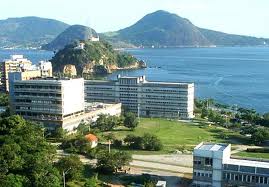
Brazil’s third entry, the Universidade Federal do Rio de Janeiro has climbed four places this year. Sharing similar strengths to its country-mates, it’s within the top 10 universities in Latin America for web impact, papers per faculty and reputation among academics, and just outside for proportion of staff with a PhD. It’s gained some ground this year in the global employer survey, now appearing in the region’s top 50 as perceived by graduate recruiters worldwide.

5. Universidad de Los Andes Colombia
The highest-ranked Colombian university, the Universidad de Los Andes Colombia (or “Uniandes”) falls one place this year, with improved scores for citations per paper and staff with a PhD offset by weaker performance for web impact and faculty/student ratio. The Bogotá-based private university is rated among the top 10 universities in Latin America by both the international academic and graduate employer communities.

6. Universidad de Chile
Chile’s second representative likewise falls one place this year, though remaining the region’s fifth institution in the eyes of both academics and employers. Like UC, the Universidad de Chile is based in capital Santiago, contributing to the city’s place among the world’s top 50 student cities, according to the 2013 QS Best Student Cities index. It’s made progress this year in the indicators measuring proportion of staff with a PhD and faculty/student ratio, though the latter remains a relative weak point.

7. Instituto Tecnológico de Monterrey (ITESM)
The top Mexican entry, Instituto Tecnológico de Monterrey (ITESM) or “Monterrey Tech” stays stable in 7th place – where it’s remained since 2011 – with improved scores in a number of indicators still not quite sufficient for an overall advancement. The engineering-focused university is rated highly by both academics and employers, but particularly the latter; it comes out fourth in the employer survey and fourteenth in the academic survey.

8. Universidad Nacional Autónoma de México (UNAM)
The Universidad Nacional Autónoma de México (UNAM) may have fallen two places this year overall, but it remains Latin America’s number one institution in the results of the global academic survey. It also maintains the second strongest score for web impact, but has lost ground in the indicators for faculty/student ratio, citations per paper and proportion of staff with a PhD.

9. Universidade Estadual Paulista "Júlio de Mesquita Filho"
Returning to Brazil, which continues to dominate the Latin American ranking overall, Universidade Estadual Paulista "Júlio de Mesquita Filho" climbs two places this year, claiming a place among the top 10 universities in Latin America for the first time. Like other Brazilian universities, it scores especially well for research productivity, and is also within the Latin American top three for proportion of staff with a PhD – narrowly beating both USP and Unicamp on this measure.

10= Federal de Minas Gerais
The Universidade Federal de Minas Gerais outdoes even its higher-ranking fellow Brazilians in the staff with a PhD indicator; it comes top in Latin America on this measure. It’s also within the top five for papers per faculty and top 10 for web impact, but sees lower scores this year for both citations and faculty/student ratio, with the latter representing its weakest point. Overall, it just manages to hold onto its top-10 spot, though now joined here by another Brazilian entry.

10= Universidade Federal do Rio Grande do Sul
Rising four places to enter the top 10 for the first time, the Universidade Federal do Rio Grande do Sul is one among a number of leading Brazilian universities to have improved or consolidated their positions this year. Again reflecting wider national trends, it claims its strongest scores for papers per faculty, web impact and staff with a PhD. It’s rated within the region’s top 20 by academics, and while not yet as well known among international employers, has an improving rating in the employer survey too.

About the QS University Rankings: Latin America
Published annually since 2011, the QS University Rankings: Latin America highlights the 300 top universities in the Latin American region, based on seven indicators. These are: academic reputation, employer reputation, faculty/student ratio, citations per paper, papers per faculty, proportion of staff with a PhD and web impact.

Top 10 Universities in Latin America 2014

[readon1 url="http://www.topuniversities.com/university-rankings-articles/latin-american-university-rankings/top-10-universities-latin-america-2014"]Source:www.topuniversities.com [/readon1]