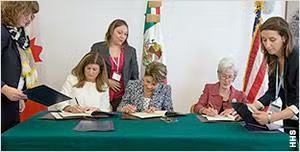
05212014 signing-agreement-geneva 300Washington — The United States, Canada and Mexico agree on how the three countries’ governments will share in public information and communications products during health emergencies of mutual interest.

U.S. Health and Human Services Secretary Kathleen Sebelius, Canadian Minister of Health Rona Ambrose and Mexican Secretary of Health Mercedes Juan signed a declaration of intent May 20, which formally adopts the principles and guidelines, at a trilateral meeting during the 67th World Health Assembly in Geneva.

“The United States, Canada and Mexico have had a long and close relationship in supporting and improving our collective ability to respond to public health events and emergencies of mutual interest when they arise,” Sebelius said. “This declaration reinforces our joint efforts to strengthen our national capabilities to communicate effectively with our respective populations.”

“Infectious diseases are not limited by countries’ borders, and neither are the ways through which we receive the news,” said Ambrose. “This declaration will help our countries work together on the essential task of communicating more effectively on public health issues, which will protect the health of all of our citizens.”

“The collaboration between the three North American countries has proved to be an extraordinary contribution to strengthening the security of health in the region,” said Juan. “The clear, transparent and timely exchange of information has been, and will remain, a central pillar of this cooperation, particularly for responding to public health emergencies.”

The declaration calls on the three countries to:

• Share public communications plans, statements and other communications products related to health emergencies with each other prior to their public release.
• Apprise other appropriate authorities, depending on the type of health emergency, within their respective governments when the declaration is invoked.
• Conduct a short communications exercise annually to improve joint coordination.
• Hold recurrent meetings, as they may mutually determine, to review and propose amendments to the declaration of intent.

The formal declaration supports not only the requirements of the International Health Regulations, which call for neighboring countries to develop accords and work together on shared public health issues, but also the underlying principles of the 2012 North American Plan for Animal and Pandemic Influenza (NAPAPI).


The NAPAPI builds on the experiences of the H1N1 influenza pandemic and outlines how the three countries intend to strengthen and coordinate their emergency response capacities, including public communications, in anticipation of a pandemic virus originating in or spreading to the North American continent.

[readon1 url="http://iipdigital.usembassy.gov/st/english/article/2014/05/20140521299531.html#axzz32wpiROF2"]Source:iipdigital.usembassy.gov [/readon1]

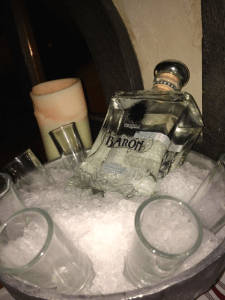
baronAccording to Master Tequilier David Ruiz, of Baron Tequila (www.baronspirits.com), the newest, ultra-premium tequila handcrafted in Tequila, Jalisco, Mexico and certified gluten free and kosher, the spirit is turning heads at competitions across the country.

“We embarked on a two-year tequila fact-finding mission to create the category's next premier product,” Ruiz says. "At Baron, family is very important to our vision. That’s why we partnered with the family-owned and operated Ansan Distillery, with 20-years of experience overseeing each step of the tequila making process - from growing and harvesting the agave to the triple distillation and bottling.”

Ruiz says that Baron and its owner, Jana Khaimoff, spare no expense or amount of time to make Baron Tequila “the epitome of quality spirits,” and it shows; A few months ago, at the 2014 San Francisco World Spirits Competition at the Hotel Nikko in San Francisco, Baron’s Platinum Blanco Tequila walked away with a gold medal.

This is particularly important, according to Ruiz, because this year’s event was the largest in its 14-year history, with a total of 1,474 entries. Spirit entries were evaluated by 39 of the finest palates from the spirits industry including spirit experts from noted restaurants and hotels, well-known spirit journalists from major national media, spirit buyers for large purveyors, and spirit consultants.

“Baron has achieved a uniquely, clean smooth taste through a natural process maximizing the power of the agave itself,” Ruiz explains. “After ten years of growth, only the best parts are harvested for production and then slow cooked at a low heat allowing for all of the sugars to caramelize. Hand-guided pot-still distillation cooks off all of the impurities leaving only the heart.”

According to Ruiz, because Baron is distilled three times, it results in an extract that gets cleaner and cleaner, ultimately achieving a zero-zero taste profile, eliminating any bad odor and bitter taste. Unlike larger industrial producers, Baron is able to achieve a pure taste without the use of glycerin or other additives.

In addition to winning a gold medal at the 2014 San Francisco World Spirits Competition, Baron received Very Good. Strong Recommendation a score of 88 in the Ultimate Beverage Challenge and 91 from Wine Enthusiast , whose primary goal is to generate a new platinum standard of trustworthiness, integrity, reliability, and, most important, meaningful and relevant results to international beverage competitions in order to recognize the highest degree of product quality.

“We are proud and humbled to have earned these accolades from some of the most important individuals in the industry,” Ruiz concluded.

First unveiled in 2013, Baron Premium Tequila is organic, gluten free, kosher tequila that exemplifies small batch superiority. Handcrafted in Tequila, Jalisco, Mexico, Baron Tequila is the brainchild of founder Jana Khaimof and her desire to build a business for her children after battling cancer. She teamed up with the family-owned and operated Ansan Distillery where 20-years of experience oversees each step of the process – from growing and harvesting the agave to the triple distillation and bottling. For more information, visit www.baronspirits.com

[readon1 url="http://world.einnews.com/pr_news/206145582/new-ultra-premium-handcrafted-tequila-making-a-splash-with-judges"]Source:wworld.einnews.com[/readon1]

rcmChef Betty Vázquez accompanied the team to New York, where they held several events with some 30 media sources whose circulation will result in millions of advertising impressions.

The Riviera Nayarit Convention and Visitors Bureau (CVB) and Chef Betty Vázquez took advantage of the May celebrations from the 5th through 9th to visit New York and hold series of promotional activities with the media, which in turn generated huge exposure throughout North America.

There were four events where the Riviera Nayarit’s culinary ambassador shone as she demonstrated her cooking with a seafood theme, “Con Sabor a Mar” (Taste of the Sea), aimed at promoting the destination. Meanwhile, the CVB held face-to-face interviews with the media during the five days of the tour.

On May 5th the Mexican Chamber of Commerce’s northeast US office held a celebratory dinner with the Riviera Nayarit as the platinum sponsor.

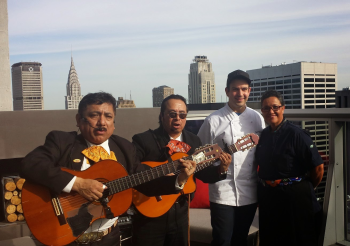
That same night guests, outside clients and journalists were serenaded by mariachi music as they enjoyed the delicious entrées prepared by Chef Vázquez at B54, the bar on the top floor of the new Hyatt Times Square. It’s currently the hottest bar in town with the best view of the heart of the Big Apple.

There were 14 different media present during these two events, among them: Travel + Leisure (circulation 5,577,717), Reader’s Digest (circ. 5,578,357), Shape (circ. 1,582,687) and MSN.com (192,403,258 page views per month).

On May 8th, Chef Betty took over the employee cafeteria at The New York Times, where there a meeting was held with the directors of the daily paper. The New York Times has a circulation of 1,865,318.

Finally, on May 9th, the target was Saveur, the most important culinary themed magazine in the United States, with a circulation of over 300 thousand. A five-course dinner took center stage and made quite an impression on the magazine’s editorial team.

As mentioned before, besides the events there were direct interviews with media representatives specializing in general information, tourism, weddings, gastronomy, wine, and the Hispanic market in the United States, as well as freelancers.

The team had contact with around 30 different media in total. Other standout interviews included time with Departures (circ. 1,111,423), Vogue (circ. 1,222,373), New York Daily News (circ. 516,165) and Latina Magazine (circ. 506,934).

The sum total of all possible impressions is in the millions, which will no doubt generate incredible visibility for Mexico’s Pacific Treasure.

happcwParaguay is the happiest country in the world, with 87 percent of residents scoring high on an index of positive emotions, according to the latest Gallup poll on well-being.

Mexicois in Top 25% with an emotion index of 76.

Not surprisingly, Syria, suffering through a civil war, is the unhappiest and people there are so badly off they’ve hit a new low, the survey finds.

Overall, 70 percent of adults worldwide say they are frequently laughing, smiling or enjoying themselves. The United States comes in the top one-quarter, with a happiness score of 78, the same as Chile, Argentina and Sweden.

Jon Clifton, managing director of the Gallup World Poll, says he is not surprised at the findings. "We know in Latin America culturally, there are a lot of highly positive emotions," he said. "It is a pretty emotional culture."

Image: Gallup finds that a majority of adults worldwide are experiencing positive emotions Gallup
Gallup finds that a majority of adults worldwide are experiencing positive emotions.

Gallup surveyed 1,000 adults in each of 138 countries to make up the index. They asked five questions: whether people felt rested, felt they were treated with respect, laughed or smiled a lot, whether they experienced enjoyment and whether they had learned or done something interesting the day before.

Gallup then makes up a Positive Experience Index score for each country. Most of the happiest countries are in Latin America, the survey finds. The five top countries all are:

    Paraguay 87
    Panama 86
    Guatemala 83
    Nicaragua 83
    Ecuador 83

At the bottom:

    Syria 36
    Chad 52
    Lithuania 53
    Bosnia 54
    Serbia 54

Gallup worked with Healthways,a company that promotes and studies well-being, to develop the index. While the five simple questions point to basic well-being, it's important to take a deeper dive also, says Clifton.

"What we wanted to find out was what was driving those five things," Clifton said. A big factor is workplace, or school for students, he said. "Another is financial well-being." Sense of community is also important.

And it's important to see whether negative experiences outweigh positive ones. It doesn't happen in Latin America, where people reported both the highest positive emotions and the highest negative emotions -- and yet still ended up on top in terms of well-being.

    "People will take paycuts in order to do jobs they love."

"You take two middle-aged women, one that has a child and one that does not have a child," said Clifton. "Which one evaluates her life the higher? It is the one that has the child. Who has the most stress and also the most sadness? It is also the one with the child."

Ongoing research show the United States consistently scores poorly in workplace happiness, Clifton says -- especially on Wednesday. U.S. happiness peaks on weekends. "We need to do a better job of understanding workplace happiness," Clifton said. "People will take paycuts in order to do jobs they love."

Gallup takes the measure to heart. Clifton says Healthways came in and assessed Gallup's employees, and the scores indicated they could feel better on community measurements. So they made changes. "We do a range of things where the office will get together and say 'let's choose an emphasis on community well-being' and we choose five non-profits and get involved in them," Clifton said.

Did it make people happier? "It certainly improved their well-being," he said.

[readon1 url="http://www.nbcnews.com/health/health-news/worlds-happiest-country-would-you-believe-paraguay-n110981"]Source:www.nbcnews.com [/readon1]

RL"Look," Ralph Lauren says, "I’m in the fashion business, but I’m not in the fashion business." We are sitting by a king-size coffee table in his souvenir-strewn office as the impatient honks of yellow cabs echo faintly up from the New York street below. Alarm bells are ringing, too. What on earth is this Bronx-born billionaire personification of one of the world’s biggest fashion brands on about? Even without a speck of due diligence I’d know that after 46 years Ralph Lauren is America’s alpha-designer: 500-and-something shops in 80 countries, 23,000 employees, 15 (at my last count) separate sub-brands, revenues of $6.9 billion last year alone – and that mallet-swinging Polo player logo, for heaven’s sake. If anybody is "in" the fashion business, then surely it is this diminutive (5ft 6in, according to Vogue) but wiry 74-year-old.

Lauren expands. "What I think is cool is the expression of yourself. That’s what’s cool. Take you, if you’d walked in today wearing some 'outfit' then you wouldn’t look like you. But your dark coat, your scarf around your neck, your shirt – you look like a writer. You look like you. You’re classical but you’re cool. And you’re in the fashion business too. Your clothes are your statement about who you are. And I’m sure you thought it, right?"

Whoa, Ralph Lauren is interviewing me. And trowelling on the flattery as he does it. But he’s also illustrating the idiosyncrasy that makes Lauren so appealing to millions of people who don’t give two hoots about the cult of fashion. Where other designers try to impose an aesthetic on the wearer, Lauren indulges his fantasies, observes his audience then provides them with the tools to share the fantasy. When it comes to mustering a palette of reference he is highly promiscuous: Navajo print and prairie cowboy denim, aviation, safari, field sports, flappers, Tsarist Russia and the all-important Ralph Lauren trope, preppiness, are just a few of the themes he has mined over the decades. "What I do is make movies with my clothes. Movies via fashion."

Today, Lauren has chosen to come to the office he could comfortably have retired from a decade ago dressed in a melange of hiker, biker and cowboy: below a pale-purple down jacket he is sporting some fringed grey leather cowboy trousers and a pair of battered biker boots with a touch of tassel to them. This is not a uniform, though; he has happily appeared in public wearing head-to-toe Lauren-tailored tweed, matinee idol tuxedo jackets (teamed with jeans) and even a sarong. "I live different lives," he says, "but my product and myself, it’s the same thing… Anti-fashion fashion, whatever you want to call it, but something that’s meant to be timeless. Watch Cary Grant in To Catch a Thief tomorrow, next year, whenever – you would still want to be him at the end of it. And a woman will want to be Grace Kelly. That’s timeless."

Because so much of his currency depends on igniting fantasy, Lauren has never overly worried about reality. When he designed his first hit "safari" collection in 1983 he had never been to Africa – in fact he still hasn’t. As he learnt when he first came to England, reality can be a disappointment. Growing up in the Bronx in the 1950s he developed a fondness for the Anglo-influenced preppiness of Brooks Brothers, where he eventually worked. He wore a lot of tweed jackets – on the days when he wasn’t wearing army surplus. "So the first time I went to England [in the 1970s] I was upset. I thought I would see guys with moustaches in hacking jackets. Instead there were Italian suits everywhere and funny clothes in the windows. It was shocking. They thought the Italian stuff was better than what they had been wearing before. So I tried to bring back a lot of the clothes that people thought were old-fashioned and overlooked."

Now Ralph Lauren is thinking of England again, and not just the idealised vision he has become hooked on, Downton Abbey. "It is one of my great pleasures to watch that show. It is so beautiful. The writing is spectacular, the sets are fantastic and the clothes amazing. It’s like, 'Thank you, God, for this!'"

This month Lauren will land in London "for the first time in a long time" to attend a dinner for the Royal Marsden Hospital. It would be poor form to press Lauren for details – philanthropy is its own reward – yet it is fair to assume that the Marsden may be in line for some good news: Forbes magazine ranks Lauren as the 195th wealthiest person in the world, with an estimated $7 billion knocking about in his current account. And cancer care is a long-standing Lauren philanthropic focus. As well as endowing a research centre at Georgetown University in Washington, DC, and donating to American cancer care units, Lauren established one. It was set up 11 years ago in Harlem, after Lauren learnt of the low rates of diagnosis there, particularly among African Americans.

 He first became involved, he says, when Nina Hyde, a journalist friend of his at the Washington Post, told him she had been diagnosed with breast cancer. "I’d had a brain tumour just before I met her, and I felt a very strong connection." Lauren’s benign tumour was removed by surgery in April 1987, a few months after its detection. "We started Fashion Targets Breast Cancer in America," he continues. "And for some reason I thought I was going to be able to save her. Because I couldn’t believe that this woman, this alive woman that I was talking to was not going to be here. But she passed away."

It was during this early period of his cancer charity work that he met Diana, Princess of Wales – who was then the president of the Royal Marsden just as her elder son is now. Lauren has met many of his heroes down the years, and proudly escorts me to the en suite bathroom of his office where some of his most cherished trophies are hung: signed pictures from Frank Sinatra (complimenting Lauren on his "smashing" Polo ties), Audrey Hepburn, Gregory Peck and his all-time masculine idol, Cary Grant. Infinitely more respectfully, however, his picture with the Princess sits in a prime spot behind his desk.

"Time goes so fast I can’t even remember when I first met her. But it was during her troubled times, when she was coming to New York. We did this event for breast cancer. Later she presented me with an award in Washington. Once we met accidentally on a plane going to England and had a good conversation. And when I was in London we met at the Connaught for coffee. She had her lady-in-waiting with her, and I had my son with me. We were friendly in a nice way. And she was always shopping for Polo for her kids."

This uptown office, peppered with pictures of princesses and movie stars, is mere miles from the Bronx of Lauren’s extrovert, tweed-wearing youth, but the gulf between them is enormous. "It was a pretty tough neighbourhood. There was this area, Parkway, near all the schools, where we used to sit. Some guys liked what I wore and some didn’t. But I was just an individual, and a good athlete, so no one said anything to me. Anyway it wasn’t about the guys, it was about the girls."

Lauren’s mother, Fraydl, and father, Frank, had emigrated from Belarus. "My father, people say he was a house painter, but he wasn’t. He painted houses when he couldn’t get a job. But he was an artist. Life wasn’t easy with four children so he did what he had to do." Still, the family spent its summers in their small country place in Monticello, outside the city."It wasn’t much but I loved it," Lauren says. As well as sport and cinema, Lauren was always interested in clothes. He keenly recalls staring yearningly through a shop window at a pair of blue suede shoes when he was knee-high to a grasshopper. "Those blue suede shoes are every pair of shoes I ever desired."

After college, a stint at Brooks Brothers and time in the US Army Lauren went to work in 1964 as a tie salesman. Thinking back, Lauren is in full flow. "I had no credentials but I was dressed well. With my last money I’d bought some clothes from Brooks Brothers. And I sold those ties. There was this Englishman, I remember…" He pauses. "He used to come over from this company called, Vanners and Fennell? I don’t remember, it’s starting to slip away. [He remembered correctly, though.] Anyway, I loved the way he looked. He used to wear this beautiful scarf, very casually thrown away. He gave me that scarf and I still have it today."

Lauren’s success as a salesman and his observation that the Mod movement had hit a wall in America inspired him to think he could design some ties for himself that might just fill a niche. "So I asked the company if I could. They said, 'The world’s not ready for you, Ralph!'" Lauren left, found the manufacturer for the then très snob brand Sulka, and produced some three-and-a-half-inch-wide ties under the then-inconsequential brand name Polo. "I liked sports. Cricket was a name I liked, and rugby, which I use now. But I couldn’t call it baseball or basketball." Lauren’s ties, launched in 1967, took off. Soon he found a shirtmaker who could produce the collars he thought would best complement their shape. And then a suit manufacturer to complement the shirts. That suit manufacturer lent him $50,000 to start his company, and so Lauren has expanded ever since, mushrooming slowly from one collection to another.

In 1971, the year after being named America’s best menswear designer, Lauren produced his first collection of women’s clothes, a selection of mannish shirts in whose cuffs debuted the Polo-player logo that has since been embroidered on to tens of millions of garments. The Polo polo shirt, prepwear staple par excellence, was released in 1972. That filmic sensibility was requited by Woody Allen and Francis Ford Coppola when Lauren’s clothes made Diane Keaton look adorable in Annie Hall (1977), and Robert Redford devastatingly dashing in The Great Gatsby (1974). Lauren’s first store, which opened in 1971, was in Beverly Hills, and his designs for those films – and particularly for Keaton – helped define an easy tailored 1970s feminine look that is still influential today.

When Lauren designs it is via the "rig", a minutely detailed physical moodboard collated by Lauren’s team. During a trip to New York a few years ago I saw that season’s rig for RRL (my favourite Lauren collection, inspired by his ranch and all things Western, rugged and worn). There was a vast room with Winchesters and saloon doors on the wall, vintage Johnny Cash shirts by the dozen, cabinets full of belt buckles – a treasury of authentic, vintage raw material to act as a lightning rod for design inspiration. Another room, for his prime Purple tailoring collection, featured a painstakingly – and in retrospect awfully Downton-ish – recreation of an English manor house living room, complete with Persian carpet and fireplace. All of his collections get the same treatment. Which is why, he says, "I hardly ever sit at this desk. I am standing all day long because I work. Going from one office to another, always moving; menswear, womenswear, children’s, wherever I need to be."

Unsurprisingly for a man so immersed in the images he creates, his stores are immersive too. Bond Street, opened in 1984, has an ocean liner-inspired interior, while expats say the Paris flagship on the boulevard St Germain produces the best American food in the city. His ultimate store, though, is a few blocks away at 867 Madison Avenue – the Rhinelander mansion. This magnificent faux-gothic folly of a house was built for, but never inhabited by, a 19th-century heiress and fell into decline before Lauren bought the lease in 1983. He spent millions on its restoration, installed a gleaming wooden staircase modelled on that of the Connaught hotel in London, and turned its interior into the template Ralph Lauren environment, as dense with detail as those rigs.

In 2010 Lauren opened a new building opposite it, a neoclassical chateau made of Indiana limestone to house the women’s collections that complement the men’s in the Rhinelander. In 1997 Lauren took his company to Wall Street, offering 30 million shares at $24 apiece. Long-term investors have since profited: today the share price is around 12 times that, and after years of expansion under his chairmanship the "market capitalisation" of the company is estimated at $14 billion.

So, outside looking in, just as Ralph Lauren once stared at those blue suede shoes, he would seem to inhabit a landscape entirely unclouded by misfortune. Multiple landscapes, in fact. "I live those different lives, and am fortunate enough to have different homes. You wear different clothes in each environment, and live in a different way. Jamaica has the sun, and the beach, and is very colonial. My ranch out west is very cowboy, and that’s another dimension in my life. And the house on the beach in Montauk is very rustic."

These multiple lives have been shared with his wife, Ricky, his sons, Andrew and David, and daughter, Dylan. Campaign-perfect childhood pictures of them on the beach at Montauk, or on the porch of the family ranch in Colorado are all around us. Today Andrew is a film producer, and Dylan runs a four-chain sweetshop called Dylan’s Candy Bar that claims its 7,000-strong selection of lollipops and chocolate to be the largest in the world. Naturally, it sells clothes too. Only 42-year-old David is involved in the company founded by his father. As well as spearheading Lauren’s philanthropic foundation, David is a vice-president of the company and oversees its marketing around the world. He is married to Lauren Bush, the niece of George W. Today the children are a key catalyst for Lauren’s own continued curiosity and drive to innovate. "People are not as old as they were when my parents were old," he says. "My parents’ tastes did not affect me strongly, but with me and my children there is a total connection of life. Age today is not the same thing."

Lauren met his future wife, Ricky Loew-Beer, in 1964, thanks to a sore eye. "I went to the doctor, and there she was. She was the doctor’s assistant, and she kept coming into the room. I thought she was sort of paying attention to me." Lauren insists he was not in the habit of propositioning comely medical professionals: "No, no, no! This was one of those very rare things!" As for Ricky, once Lauren had asked her out on a date, she ran the suggestion by her boss. Entirely unethically, he cast his eye over Lauren’s medical records and family history, then deemed him a safe bet. Ricky and Ralph were married eight months later. Lauren was still at the very earliest stage of his empire-building but that doctor’s intuition proved correct. Today, the marriage is as solid as the Rhinelander and Ricky acts as muse to Ralph as well as family curator; two years ago she published a book of the recipes, photographs and watercolours she created during the children’s formative years summering in the Hamptons. Just as Lauren began by placing himself – and his own fantasised version of himself – at the heart of his work so the family and its six-strong portfolio of exotic properties has become a fashion Camelot-like cipher for the image of his products.

Even unvarnished, then, Lauren’s progress seems charmed. Yet there have, he says, "been lots of shakes along the way. Once or twice I thought I was going to lose my business. And you start to feel pain. That can be good for you, but you still don’t want it to happen." Lauren is a master of crafting idealised images with beautifully made clothes. Set in the context of his painstakingly designed stores these act as a prism for the fantasy lives of his customers. So when the occasional blemish sullies the lens of Lauren’s own image, it rather rankles.

When he was 16, Ralph and his elder brother, Jerry – who is also deeply involved in the company and helps oversee its menswear – elected to change their surname from Lifshitz, which Frank had brought from Belarus. They wanted something easier to live with. "As a kid, when other kids are laughing at your name you don’t want to raise your hand to it in class. You don’t want to have to carry something that is holding you down." Today the snarky sometimes use that name-change to suggest Lauren was airbrushing away his heritage: for a man who is particularly keen on "authenticity", this is annoying. "You know, in those days changing your name wasn’t seen as a denial of where you had come from," he says. "It was because you didn’t want to be made fun of. People came from Europe, and they Americanised their names. And my name had a tough spelling. I don’t know why it was spelt that way – there was a famous artist called Jacques Lifschutz – but anyway, that was the reason."

Another blot came far more recently. When Lauren unveiled his collegiate attire for Team USA at London 2012, most of it came labelled made in china, as at previous Games. This time, though, in an America sensitive to its position in the world and languishing in a sub-prime hangover, it was seized on. "I was battered by politics," Lauren says, "and in politics they suck you up and spit you out again. But I know about manufacturing, I try to make the best products I can, and I try to give my customers value." Lauren’s bemusement is fair enough, when you consider the provenance of most sportswear. "Look at Nike, look at all that stuff. But what happened happened, and I think it will always be a little stigma." For the closing ceremony the athletes wore the same designs, but this time American-made.

Lauren’s assistant curls her neck around the door and says his two o’clock is here – the day’s schedule is a packed one. "You know," he says as we drift towards the exit, "I built my company, and it still has my message. I’m here every day. So when you see the clothes come out you know they are Ralph Lauren…I try to stay tuned so that I don’t become yesterday’s news. You have to move and keep your mind open."

Still, after nearly 50 years in the saddle, doesn’t it all get a bit much? "It does takes its toll," Lauren concedes. "I used to be 6ft 3."

Ralph Lauren

Ralph Lauren


[readon1 url="http://www.telegraph.co.uk/luxury/womens-style/32447/ralph-lauren-the-man-who-dresses-america.html"]Source:www.telegraph.co.uk [/readon1]


mfoodXanthe Clay ventures down Mexico way to check out its national dish – with a chef and restaurateur who know their dough

Hold on to your sombrero: Latin food is on the rise. Maybe it’s mounting World Cup fever that has fuelled the interest. But Brazil, to my mind, still doesn’t quite make the grade. Foodies rave about the ants-and-jungle-plants cuisine of high-end São Paulo joints such as Dom and Mani, but mainstream Brazilian food (chiefly meat, more meat and, if you’re lucky, a dodgy dried herb sauce called chimichurri – which is actually Argentinian) wouldn’t even make it to the qualifying stage of the World Food Cup.

According to market researchers Mintel, while Indian is the clear leader, it’s Mexican food that is now poised to take over from Chinese as the second most popular world food in Britain when it comes to ready meals. And the number of Mexican restaurants is increasing, with big money involved. Prezzo-owned chain Chimichanga is expanding fast, now with 37 restaurants, 17 of which have opened in the past 18 months. And Benito’s Hat, a small but rapidly growing chain of Mexican café-restaurants based in London, opened its sixth branch in Leadenhall Street last month, and has another due to open at London Bridge in late summer.

How authentic is the British take on Mexican? Most aficionados sneer that they are not the real thing, just Tex-Mex, an American bastardisation of a cuisine that in 2010 Unesco singled out as of Intangible Cultural Heritage. The only other national food to have this status is Japanese.

What sets Benito’s Hat apart is that alone among the chains it has a Mexican chef, Felipe Fuentes Cruz, overseeing the menu. And there’s no doubt about his Mexican credentials: he invited me to a fiesta at his home in the tiny village of San Antonio Texcala, four hours south of Mexico City, to see for myself how it all started.

I travelled with him and the founder of Benito’s Hat, Ben Fordham. A mariachi band struck up as we reached the modest Cruz house and his mother, Señora Cruz Lima, a tiny, softly spoken woman in a traditional embroidered dress, met us on the shady patio. Her son’s success in Europe is clearly a source of great pride.

 We sipped faintly grainy, sweet horchata, a cool milky-white drink made from rice, while she led us into the airy kitchen shed, with views of the Sierra Madre through an open side panel. A baby-bath-sized vat of chicken mole, or spiced stew, was bubbling away over charcoal burner. It smelt rich and spicy, but not chocolatey. The mole poblano (from the local Puebla district) I had tried in Mexico City were heavily laced with dark chocolate. Like their forebears the Aztecs, Mexicans are very comfortable with chocolate as a savoury ingredient. But Señora Cruz Lima explained that hers had chillies, peanuts, apple, grapes, plantain, crushed biscuits and sesame (there’s nothing simple about making a mole) as well as 20kg of chicken, but no chocolate. But isn’t chocolate traditional? “I was taught not to use it,” she said firmly. “It makes it too sweet. I use lots of spices instead – cloves, thyme, cinnamon and bay leaves.”

At the kitchen table, a local lady (cooking is strictly women’s work in Mexican homes) from the Popoloca tribe was preparing the local delicacy of fritters of flor de savila, the aloe vera flower, while another from a different village rocked on her toes, kneading a creamy white dough, the corn-based masa de maìs for making tortillas.

There was plenty to do to be ready for the 120 fiesta guests. I tried my hand at kneading the dough until it was the right silky consistency called “suavecita”, then flattening balls of it into circles on a metal press. My tortillas tore, and I burnt my fingers trying to flip them on the shimmeringly hot “comal” (flat griddle), much to the amusement of the early arrivals.

But then, these guys know their tortillas – and not just the packet variety. Tortillas are at the heart of Mexican food. They turn up in every dish from enchiladas to tostadas, as well as burritos, which are often thought of as Tex-Mex but in fact hail from northern Mexico, and are easy to find on street stalls in Mexico City.

 Most common are the mini-tortillas called tacos, small folded semicircles filled with everything from sheep’s offal (surprisingly good) and ox eyeballs (rather rubbery and tasteless, but not bad with a shake of the spicy red sauce that is always on the table) to simple black beans.

Tacos are always made from corn, treated with alkali to soften it, but tortillas can be made from either corn or flour, explained Fordham. “Corn is much more usual, it’s the way it began. Flour came later, and became more popular because it has a milder flavour that some people like, and they keep better too.” Cruz pointed out: “I don’t think my mum’s ever had a flour tortilla. They don’t eat them in the village.”

Corn tortillas are also gluten-free. Fordham has a family interest here – his sister is coeliac so none of the fillings at Benito’s Hat has gluten in.

Back at the fiesta, it was very much a family affair as well. We tucked into the dark, intense mole and a barbecoa (pit roasted) lamb, one of Señora Cruz Lima’s flock that live over the fence with the chickens, turkeys and a sleepy pig. There were peppers stuffed with local walnuts, made by Cruz’s sister Rosita, and black beans flavoured with criollo avocado leaves collected by his brother Fernando, with a mild aniseed flavour reminiscent of basil. Fordham imports the family avocado leaves for Benito’s Hat, along with the delicate, nubbly textured salt that Señora Cruz Lima harvests, without machinery or chemicals, from the salt springs in the village. “It’s perfect for the margaritas,” Fordham explained in a pause from the impressive dance display by the local school, “and we like the connection.”

 As the light faded, it was our turn to dance to the mariachi band, Fernando leading me decorously through the crowds. “Felipe is the heart of the family,” he told me. We ate slices of a tres leches (three milk) cake decorated with both the Union Jack and the Mexican colours of red, green and white, and toasted Fuentes Cruz as he took to the stage and sang throaty Mexican folk songs. It couldn’t be much more authentic, or delicious.

The many faces of the corn tortilla

Taco – a small tortilla, about 4in/10cm across, always made from corn, generally folded and with a simple filling.

Tortilla – larger, up to 8in/20cm across, and made from either corn or flour.

Tostada – a crisp grilled corn tortilla, generally with a topping.

Totopos – fried corn tortillas, usually cut into triangles – sometimes called tortilla chips over here.

Taquito – a slender rolled taco usually stuffed with potato, but sometimes chicken, beef or mutton, and deep-fried.

Flautas – like taquitos, but made with a tortilla.

Burrito – tortilla, rolled around a filling with one end folded over to close it.

Enchiladas – small corn tortillas, filled generally with meat, rolled up and then covered with a salsa and cheese before being baked.

Enfrijoladas – corn tortillas dipped in a black bean purée, then sprinkled with queso fresco (fresh cheese) and red onion.

Other corn dough treats

Memelita – soft, small and slightly thicker than a tortilla, topped with salsa and cheese.

Chalupa – small and slightly thicker than a tortilla. Fried so crisp at the edges but soft in the middle, topped with salsa, meat, or veg.

Panucho – a Yucatan speciality, like a chalupa but with a raised pinched edge and topped with cochinita pibil (slow-cooked pork), pickled onion and habanero salsa.

Gordita – similar to a chalupa but thicker and served with chicken, steak, avocado, salsa, sour cream… you name it.

Huaraches – stuffed corn tortillas, made by wrapping the dough around a black bean purée, then pressing it flat and cooking on a flat griddle. Served with salsa roja or verde and anejo queso fresco (aged fresh cheese).

Tamales – thicker corn dough parcels typically filled with black beans or pork then steamed in a corn husk and coated in salsa or mole to serve.

*benitos-hat.com


[readon1 url="http://www.telegraph.co.uk/foodanddrink/10741857/Mexican-food-a-tortilla-thriller.html"]Source:www.telegraph.co.uk[/readon1]

netflixNetflix has announced plans to create its first Spanish-language original series.

The show will be a comedy from director Gaz Alazraki, who helmed one of Mexico’s most successful box office hits, “Nosotros Los Nobles” (We Are the Nobles). The 13-episode series will reunite the director with “Nobles” star Luis Gerardo Mendez.

Netflix did not announce a name for the new series, which will be a satire on the world of professional soccer. It will premier sometime in 2015.

“We formed a very special team for 'We Are the Nobles,' and we all knew we wanted to keep working together,” said Alzraki in a press release provided to The Huffington Post by Netflix. “When I told the team that Netflix was interested in producing the show, the excitement was contagious since there’s nobody cooler and more innovative in this day and age than Netflix.”

“We Are the Nobles” grossed $27 million at the box office, making it Mexico’s second highest-grossing film of all time, according to The Hollywood Reporter.

“We’re thrilled to be working with the talent from 'We Are the Nobles,' a movie that managed to capture a cultural phenomenon in a fun and engaging way, while also breaking box office records. Gaz has the disruptive vision and creative storytelling we were looking for in producing our first original series in Mexico,” said Ted Sarandos, Netflix’s chief content officer, per the release. “We’re confident our members in a market as important to us as Mexico and Latin America will love this family comedy.”

[readon1 url="http://www.huffingtonpost.com/2014/04/23/netflix-spanish-language-_n_5200672.html?utm_hp_ref=mexico"]Source:www.huffingtonpost.com [/readon1]

sdfMultiple wildfires ripped through 9,000 acres, threatening homes and forcing evacuations

As wildfires ripped through San Diego County amid hot, dry, red flag warning conditions, local fire crews, law enforcement, leaders and residents united in the fight against the fires.

Nine fires scorched more than 9,000 acres Wednesday, primarily in the North County. Flames erupted in Carlsbad, San Marcos, Camp Pendleton, Fallbrook and Oceanside, among the impacted communities, threatening homes and forcing residents to evacuate.

Many of those fires continued to burn Thursday.

Click Here: Map of Wildfire Activity and Open Shelters


Cocos Fire – San Marcos
Of those still burning, the Cocos Fire in San Marcos continued to pose problems and keep evacuations in place Thursday as it burned dangerously close to homes.

The blaze has scorched at least 800 acres so far, prompting mandatory evacuations for Cal State University San Marcos (CSUSM) and the areas of Questhaven, Harmony Grove, Elfin Forest and parts of neighboring unincorporated areas.

One CSUSM student said she had just finished taking her final and was turning in her books Wednesday when she spotted smoke near the campus. Shortly after that, she said students were evacuated.

“A lot of the students were concerned about their finals,” she said.

The fire caused CSUSM to postpone commencement ceremonies for Thursday and Friday.

“All the plans for graduation have been canceled,” the student added.

The Cocos Fire continued to burn in Elfin Forest Thursday and was only 5 percent contained. At least three homes had been destroyed in this fire.

Officials said the Cocos Fire remained Cal Fire’s top priority, as it continued to threaten homes.

Cal Fire Battalion Chief Nick Schuler said crews were pushing to keep the fire out of Harmony Grove, “with an emphasis on structure protection, structure defense and perimeter control.”

“We have six airplanes on this fire now, with numerous helicopters. They were here at first light,” said Schuler. “We have the resources we need for this fire.”

“Overnight, we made some good progress,” said San Marcos Fire Department Chief Brett Van Wey.

An evacuation shelter was established at Mission Hills High School located at 1 Mission Hills Court.

“It’s a crisis. We have to shift from education to taking care of folks. So that’s what we’re going to do,” said Mission Hills High School principal Courtney Goode. “Tests can be made up and what not but lives are being heavily impacted right now so that needs to be our focus.”

Several road closures remained in place Thursday as crews continued to hone in on the blaze.

Poinsettia Fire -- Carlsbad
In Carlsbad, the Poinsettia Fire – which sparked on El Camino Real and Poinsettia Lane – tore through 400 acres, destroying 22 homes in its path. This included a condo complex with 18 units and four single-family homes. The fire damage was estimated at $22.5 million and counting.

The county issued 15,000 evacuation notices to homes, cell phones and businesses threatened by the Poinsettia Fire. This includes residents west of El Fuerte Road, south of Palomar Airport Road, north of Aviara Parkway and west to the coast.

As smoke billowed through neighborhoods, a group of three Good Samaritans ran door-to-door trying to make sure residents got out safely.

“I grew up in this area. I knew I needed to do something to help the people living around here,” one man told NBC 7.

“I saw a woman in complete hysteria. We went into her home and got her daughter and dogs out. Her backyard was engulfed in flames,” said another Good Samaritan.

“My friend has two little brothers who live by the church and I just wanted to make sure they were safe – that everyone was safe,” added the third helper in the trio.

A Carlsbad couple forced to evacuate described the moments they saw plumes of smoke taking over their street. They knew they had to move quickly.

“I opened up the drapes and the smoke is coming down the hill. We packed a bag, family pictures, got our cat and got out,” said the husband.

“We lived through 2007 fires in Rancho Bernardo. I’m confident that they’ll get this. Hopefully no lives and homes will be lost,” said his wife. “We’re packing a bag. We can replace everything in the house. Hopefully everyone is okay.”

As of Thursday morning, the blaze was approximately 60 percent contained, with 300 firefighters remaining on the fire line. Many evacuees were allowed to return home, though some road closures remained in place. Officials asked residents to limit their driving as much as possible in order to keep the roads clear for emergency vehicles.

Natalie Emons returned to her home, which was spared in the fire, but was awestruck by how much vegetation the fire had burned in her neighborhood.

“This is such a beautiful canyon and now it’s just – it’s so surreal. I could never imagine looking at this devastation. We were really, really lucky. Our neighborhood was very fortunate,” said Emons.

A man who lost his Carlsbad home in the wildfire said he was lucky to be alive and would soon rebuild, adding that all he could do, at this point, was move forward.

Meanwhile, the Carlsbad Police Department established a Tip Hotline for the Poinsettia Fire at (760) 602-7599. Anyone with information regarding the origin of the fire or suspicious activity or persons who may be involved with the starting of the fires were asked to call the tip line.

Highway Fire – Fallbrook and Bonsall
Fallbrook resident Sam Curreri was ordered to evacuate his home as crews battled the 500-acre “Highway Fire” off Interstate 15 and State Route 76, near Old Highway 395 and White Lilac. He grabbed his dog and left his home behind.

“You’ve got mementos in there, pictures, clothes. I may only walk out with what I’ve got here. I hope not, but it might be that way,” he told NBC 7.

As he drove away from his neighborhood, deputies in the area called out, “We’re all in this together.”
Another Fallbrook couple followed Curreri down the road. They were confident firefighters would get a handle on the Highway Fire.

“We have a lot of help here,” said one resident. “It doesn’t worry me.”

Later that night, Fallbrook resident Robert Hankins echoed that sentiment, saying that fire crews appeared to be winning the battle.

“They know what they’re doing. There’s a science to it now,” said Hankins.

Hankins said police officers had also stormed his neighborhood and were helping residents. Hankins said he saw an officer go into a home on the fire line and get an elderly evacuee’s medicines before that resident left the area.

As of Thursday morning, the Highway Fire had burned approximately 500 acres and continued to be a top priority for Cal Fire crews. It was about 40 percent contained as of 9 a.m. and no homes had been destroyed or damaged.

Cal Fire Battalion Chief Mike White said the Highway Fire had spread rapidly on Wednesday and was at the mercy of Santa Ana winds. These winds caused what appeared to be a cluster of “fire tornadoes” or “fire whirls.” One of those whirls reached a height of 1,000 feet.

“Fire whirls are typically caused by rapid vertical movement of heated air and battling winds,” White explained.

Tomahawk Fire – Camp Pendleton
In the Camp Pendleton area, the Tomahawk Fire burned 6,000 acres and was 20 percent contained as of Thursday. This blaze started at Naval Weapons Station – Fallbrook and led to an evacuation order for nearly 900 residents on base, including those living in the De Luz housing area where the fire damaged 40 power lines and caused ongoing outages.

No structures were destroyed. Officials said 10 aircraft crews would tackle the fire Thursday, and 12 additional crews were requested.

Riverbed Fire – Oceanside
The riverbed fire in Oceanside had burned about 100 acres as of 10 p.m. Wednesday. Though it was mainly contained to the riverbed, 40 to 50 homes were evacuated in the area. Residents were allowed to return home shortly thereafter.

Cal Fire Battalion Chief Joe Ward said crews worked through Wednesday evening building a dozer line stop the fire from spreading further down the riverbed.

The task was challenging, Ward said, for a variety of reasons, including limited resources and rough terrain filled with trees that stood in the way. The bulldozer broke down halfway through the process,
making it all even more difficult.

Still, Ward said firefighters were able to gain control.

“Crews out here have been working hard, without any breaks, and with limited resources,” said Ward.
The battalion chief said more resources were requested to continue fighting this fire Thursday. Two or three homes were damaged in the blaze.

Support from County, Leaders
County officials said nearly 350 wildfire evacuees stayed at three shelters overnight, including 100 people at two shelters in Carlsbad and 241 at San Marcos shelter. In many cases, The Red Cross helped the displaced at evacuation centers and shelters.

San Diego Mayor Kevin Faulconer sent out a memo Wednesday to city employees thanking first responders and local agencies for their “unified effort to battle these fires.”

“We are all in this together,” wrote Faulconer. “And together we will persevere no matter what challenges Mother Nature throws our way.”

San Diego County Sheriff Bill Gore said 120 deputies have been stationed in San Marcos alone to protect the vacated properties. He advised residents to follow the directions of firefighters and stay out of the area as long as requested.

“We are watching your neighborhoods,” Gore said.

In all, the San Diego wildfires have consumed or damaged more than a dozen structures and caused tens of millions of dollars in damage. Though the timing and proximity of the fires has fueled speculation that arson could be involved, officials said it would be premature to comment on a cause of the fires in the early stages of the investigation.

Officials noted that current weather conditions could cause even a small spark to ignite a massive brush fire.

For updates on these wildfires by the numbers, click here.

San Diego Unites in Fight Against Fires

[readon1 url="http://www.nbcsandiego.com/news/local/San-Diego-Wildfires-Unite-Community-Cocos-Fire-Poinsettia-Fire-259424951.html"]Source:www.nbcsandiego.com [/readon1]

4fc5838b53ec53ea170150da017dbd29d40b32faIt's not the winning that counts but the spotting of a major movie star!

This year's edition of the Cannes Film Festival will begin on 14 May 2014. If you are planning a visit to the French Riviera for the second half of May, you are probably interested in having a peek yourself, just to find out what all the fuss is about.

Here we give you a brief introduction to the event and a few tips of where to go and how to spot a movie star -- and where not.

First, a few facts about the nature of the event: Many people misunderstand the Cannes film festival and the role it plays in the city's (and region's) economy. Festival fortnight is the manufacturing of the product, not the sale. It is not there to earn money but to define the brand.

So who brings in the cash, who makes Cannes such a wealthy place? Property salesmen, travel agents, admen, middle management types -- people from far less glamorous industries who gladly pay for the privilege of listening to each others' presentations in the same environment where Hollywood stars receive awards and bathe in frenetic applause.

No sneering, please, because this is not a bad thing. After all, everybody wins: estate agents from Minnesota and Nebraska leave happily for home in the belief that some of the Hollywood glamour has rubbed off on them, the Cannes businessmen make a living, and Brad Pitt does not care.

Secondly, the festival is primarily a trade fair, an annual get-together for the movie industry's big wigs and their key distributors. Films are shown, but more importantly, deals are made. This is not a spectator sport.

So what can a "normal visitor" expect to see or experience in Cannes during the two weeks of the festival? Not very much, frankly. It is nearly impossible, for example, to get your hands on tickets for any film from the "official selection" (in as well as out of competition) -- screenings are strictly by invitation only.

There is, however, a Cannes Cinephile booth next to the Palais which mainly distributes tickets for "fringe" events such as Un Certain Regard. And there is the Cinema de la Plage with free open-air screenings of classic movies by the beach.

If you want to spot movie stars, however, your best -- and practically only -- chance is to join the crowds in front of the Palais des Festival, where the gala performances of the competition movies take place every evening (at 7:30 and 10:30 pm).

The few hundred metres on the Croisette -- Cannes's beach promenade -- that separate the Carlton from the Festival Palais represent, in many ways, the axis of the event, but do not expect to see any stars there, ever.

If, for some reason, it becomes necessary to go from one place to the other, a car will be provided, preferably a stretch limo. You will never see a proper movie star mingle with mere mortals on the sidewalk. Critics and journalists, conversely, walk this way many times every day, if for no other reason than to agree a time for dinner and to exchange the latest gossip.

Finally, there is always the beach -- not to swim, of course, but to watch. Catch sight of a starlet who wants to attract attention -- or of established actors who are being interviewed by TV hosts in front of azure Mediterranean backgrounds. This is also where the French television stations normally erect their studios for the festival fortnight -- and where you can spot people coming, going or waiting their turn.

Be there early, certainly before six if you want to see anything. Familiarize yourself with the etiquette: the first guests to arrive are the "little people," cultural attachés and bureaucrats who got tickets to make their wives happy, able to walk down the red carpet for once in their lives, while the stars generally show up at the last minute.

Spot those who know where to stop and smile for the photographers -- turning once left and once right so that the photographers on either side of the aisle get a good shot -- and those who do not. Also note that the bigger the star, the longer they take to march all the way up to the top of the stairway.

The second epicentre of the festival is the Carlton hotel, booked solid one year in advance. There are other luxury hotels in Cannes, but the Carlton is where all the great stars and important producers stay. If they stay in Cannes at all, that is. (Some prefer to book a hotel in Monaco and fly in by helicopter.)

Cannes Film Festival

[readon1 url="http://www.huffingtonpost.com/michael-schuermann/cannes-film-festival-2014_b_5304090.html"]Source:www.huffingtonpost.com[/readon1]

MOTHERSDAY1If you’re thinking of spending big bucks on mom this weekend, showering her with flowers and chocolate—think twice. Anna Jarvis, known as the founder of mother’s day, lamented how commercialized the day had become in an interview ten years after the holiday was officially recognized.

A hundred years ago, in 1914, U.S President Woodrow Wilson made the official announcement declaring Mother’s Day as a national holiday.  The holiday was to be held each year on the second Sunday of May. Soon after this announcement, Jarvis started to campaign against it.

In an interview, published by the Miami Daily News and Metropolis, Jarvis discussed the true meaning of the holiday.

“Mother’s Day is a personal family memorial day.  It’s a celebration for daughters and sons; a thanks offering for the blessings of good homes.”

Jarvis, not a mother herself, campaigned for about a decade to have a recognized day to honour mothers. She was also the president of the Mother’s Day International Association. The second Sunday in May was the date of her mother’s death in 1905.

By 1924, she was worried that greed was starting to overshadow the real meaning of the holiday.


“Commercialization of Mother’s Day is growing every year, since the movement has spread to all parts of the world; many things have tried to attach themselves because of its success.”

One hundred years later, these ‘many things’ she speaks of are an integral part of how modern day society celebrates. Take for example flowers: in 2013, 45 per cent of Canadians said they would be purchasing flowers for their mother.

This is something Jarvis disagreed with: “The white carnation is the emblem of mother’s day because it typifies the beauty truth and fidelity of mother-love. But it does not mean people should wear a white carnation. This false idea has led to florists flagrantly boosting prices for the Mother’s Day trade.”

But who else was taking advantage of the holiday?

“Confectioners put a white ribbon on a box of candy and advance the price just because it’s Mother’s Day, there is no connection between candy and this day. It is pure commercialization.”

And greeting card companies weren’t off the hook either; Jarvis had a strong opinion about that too:

“A printed card means nothing except that you are too lazy to write to the woman who has done more for you than anyone in the world.”

Fast forward a century, where nearly half of Canadians polled (47 per cent) are planning to get mom a holiday card.

But were it not showering her with gifts, how else would we celebrate our mothers?  According to Jarvis, it’s quite simple.

“Make Mother’s Day a family day of reunions, messages to the absent and the spirit of good will to all.  Go home on Mother’s Day, or at least write to mother.”

AAAAMMM

[readon1 url="http://globalnews.ca/news/1321783/were-celebrating-mothers-day-all-wrong-according-to-holidays-founder/"]Source:globalnews.ca/news [/readon1]

seasonwApproximately 16,000 workers expected on Ontario farms during 2014 growing season
 MISSISSAUGA, Ont. (MAY, 2014) – The seasonal labour program at the root of Ontario’s fruit and vegetable industry is ready for the upcoming growing season — once the record-breaking winter eventually releases the province from its frigid grip.

Over the winter, Mississauga-based Foreign Agricultural Resource Management Services (F.A.R.M.S.) has been busy finalizing arrangements with its international partners for Spring 2014 when approximately 16,000 workers will return to Ontario farms under the 48-year-old Seasonal Agricultural Workers Program (SAWP).

Widely recognized as the best of its kind in the world, the program was established in 1966 to respond to a critical shortage of available and suitable local Canadian agricultural workers. Because SAWP is a “Canadians first” program, supplementary seasonal farm labour is hired from other countries (Mexico, Jamaica, Barbados, Trinidad/Tobago and the Eastern Caribbean States) only if agricultural operators cannot find domestic workers to fill vacancies.

 “Knowing a reliable source of seasonal workers exists allows farmers to plan for the future, invest in their operations and continue a livelihood that has sometimes been shared by their families for generations,” says Forth, a Lynden, Ont. broccoli farmer.

Not only does SAWP benefit Ontario farmers, but also the province’s our overall economy.  It’s estimated that two jobs for Canadians are created in the agrifood industry for every seasonal agricultural worker employed through SAWP at Ontario farms.

The program also pays tremendous dividends for the seasonal workers hired each year and the source countries which are partners in SAWP.

Seasonal workers can earn as much as five times or more working here than they could in their own countries. This income allows the workers to improve the standard of living of their families, educate their children and buy and operate businesses and farms in their own countries

Some seasonal workers are already in the province for the 2014 season assisting at greenhouse operations, but the largest influx is expected in mid-April when fruit growers begin pruning trees and vegetable growers begin field work.

About the Seasonal Agricultural Worker Program:

More information about Canada’s Seasonal Agricultural Worker Program (SAWP) can be found at www.farmsontario.ca

peruIntricate rock lines in the Peruvian desert probably advertised for ancient trade gatherings. Above, a marker points to the solstice sunset.

New rock lines discovered in Peru predate the Nazca Lines by "centuries" and probably marked the site of ancient fairs, according to a recent study.

The lines were made by people of the Paracas, a civilization that ascended around 800 B.C. in what is now known as Peru.

The Paracas culture came before the Nazca culture, which arrived around 100 B.C. The Nazca were known for their geoglyphs, or rock lines, built in the shapes of birds, monkeys, and other animals, according to Discovery.com.

The newly discovered lines date to approximately 300 B.C., meaning they're about 300 years older than the oldest Nazca lines, according to Charles Stanish, the director of the Cotsen Institute of Archaeology at the University of California, Los Angeles.

Stanish's research was published this week in the journal Proceedings of the National Academy of Sciences.

"They used the lines in a different way than the Nazca," Stanish said to Live Science. "They basically created these areas of highly ritualized processions and activities that were not settled permanently."

Stanish and his colleagues discovered the lines in the Chinca Valley, which is approximately 125 miles south of Luma, Peru.

The location has a history of pre-European-contact settlements from at least 800 B.C. to the 1500s A.D.

Archaelogical surveys showed large, ancient mounds in the Chinca Valley. Over three field seasons, Stanish and his fellow researchers were able to map out these mounds, as well as nearby rock lines associated each specific mound.

They discovered 71 geoglyph lines or segments, 353 rock cairns, rocks forming circles or rectangles.

At one point a series of lines converged in a circle of rays, according to Discovery. The researchers were also able to excavate one cluster of man-made mounds.

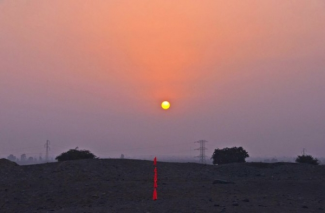
The excavations and mapping showed a carefully built environment. Some lines marked the spot where the sun would have set during the June solstice.

The researchers found three large mounds that were used for a ceremonial purposes. Each was connected to separate pairs of geoglyphs that point directly to the spot where the sun sets on the winter solstice in June, according to Discovery.

"I don't think people needed the signposts, but it was more kind of a ritualized thing, where you come down and everything's prepared," said Stanish.

[readon1 url="http://www.autoworldnews.com/articles/7297/20140506/new-paracas-rock-lines-discovered-in-peru-predates-nazca-lines.htm"]Source:www.autoworldnews.com[/readon1]

sarA view of Saturn acquired at a distance of approximately 611,000 miles away. The planet has at least 53 moons. (Photo : NASA)

Saturn, the ringed gas giant three planets over from Earth, will be especially visible this weekend when it goes into opposition with the sun.

During opposition, Saturn and the sun are lined up on opposite sides of the Earth, meaning that the ringed planet will rise in the east when the sun sets in the west, the Pittsburgh Post-Gazette reported.

Saturn should be most visible after midnight this weekend, shining around 20 degrees above the southeastern horizon around 10 p.m. and then rising into the southern sky. Before it sets around dawn, the planet will be a spectacular sight especially through a telescope, burning brighter than the nearby stars in the constellation Libra.

Composed of hydrogen and helium, Saturn is a gas giant with no solid surface, according to NASA. The unique planet is known for having the biggest ring system in our solar system, seven rings total with spaces in between them. The sixth planet from the sun, Saturn has 53 known moons and may have nine more.

NASA's Cassini spacecraft, which has been exploring Saturn since 2004, came close to the planet's Titan moon last month and captured images of its smoggy surface, the Los Angeles Times reported.

Scientists recently discovered through the Cassini images that Titan's "seas" of liquid methane and ethane have waves similar to those in Earth's oceans.

Another of Saturn's moons was the subject of a study published in April that showed evidence of an ocean below the moon's ice and rock.

While the moon's surface temperature is -180 degrees Celsius, or -292 degrees Fahrenheit, tidal forces could be creating enough heat to flex and melt the ice, making an ocean of liquid water below the surface, National Geographic reported.

[readon1 url="http://www.autoworldnews.com/articles/7299/20140506/see-saturn-rise-in-the-southern-sky-this-weekend.htm"] Source:www.autoworldnews.com [/readon1]