




hawaii latinos 2

Hilo, Hawaii is nearly 2,500 miles from the mainland of the United States and even further from Mexico, Central America and South America. But for Hispanics who move here, it can feel like familiar territory.

“What I love about Hilo culture is that it’s similar to Latin culture,” said Marlene Calderon, a retired accountant who was born in Panama and spent most of her life in California. “That’s why Hispanics like it here. With the culture here, they may have just met you, but they embrace you, feed you, love you, and pretty soon you feel like family. That’s how Hawaiians are. The cultures are very similar.”

Calderon, who moved here in 2012, is one of the Hawaiian transplants who is helping make Latinos the fastest growing ethnic group in the state.

According to the U.S. Census Bureau, the “Hispanic or Latino” population grew 40 percent between the 2000 Census and the 2012 American Community Survey.

The Hispanic population was 87,699 in 2000, but grew by 35,123 and is now 122,822, the data shows, and now represents about 9 percent of Hawaii’s total population of 1.4 million people.

About a third of Hawaii’s Hispanic population is identified in census data as Puerto Rican. That’s due to a presence here that dates to the early 1900s, when thousands of Puerto Ricans moved to the island chain to work the sugar plantations. Those immigrants joined the melting pot of Chinese, Japanese, Filipino and other laborers who came for the same reason.

The sugar industry has almost completely disappeared, but the mix of ethnicities remains. Residents with an Asian background comprise about 39 percent of Hawaii’s population, Whites represent about 25 percent, and Native Hawaiians and other Pacific Islanders represent another 10 percent.

Many Hispanics who move to Hawaii today come to work in the robust tourism industry, as well as the construction and agricultural sectors, Calderon and others said.

Andrea Dela Cruz, for instance, moved here from Mexico in 2012 because her husband found work as a veterinarian on a local dairy farm.

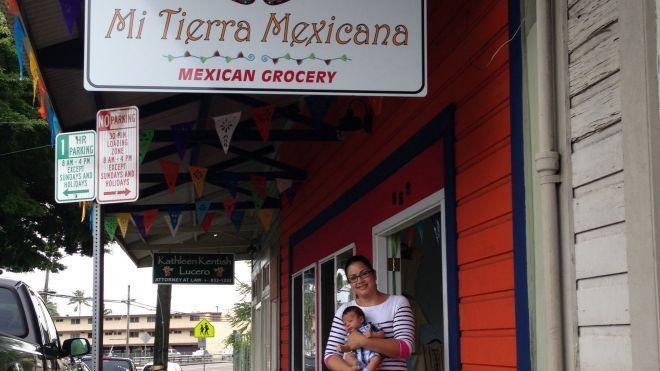
Dela Cruz recently opened a store in Hilo called Mi Tierra Mexicana that sells food, candies, and clothing from her native country.

On a recent Wednesday morning she cradled her month-old baby boy in her arms behind the counter. Dela Cruz said she has watched the Hispanic community grow during the past couple years, particularly in the Kona area of Hawaii Island (also called the “Big Island”).

“There are more people in Kona, for the coffee and the macadamia nuts,” said Dela Cruz.

Dela Cruz loves Hilo. The second largest city in Hawaii after Honolulu, Hilo’s population is just 43,000 and feels even smaller.

“It’s beautiful, and the climate I like,” Dela Cruz said. “It’s slow, which I like for my baby. The people are friendly and always say good morning and always say hello and aloha.”

Other recent arrivals moved to Hawaii for less predictable reasons, including Calderon. Her husband died in 2000, and she retired from her job with the state of California in 2010. After retirement, she was seeking a change.

“I saw a Craigslist ad that said ‘the Big Island awaits you,’ and I answered it,” she said.

On a recent Thursday night, Calderon and other Hispanics gathered at the Elks Club in Hilo. Below a large, stuffed elk head mounted on a wall, local residents line-danced across an open floor. Drinks flowed from the bar, and nearby a potluck-style dinner covered a table.

Dance, particularly salsa, helps bring members of the local Hispanic community together, said Calderon.

“That’s how I got to meet a lot of people,” she said.

Elizabeth Moore, who is a mix of El Salvadoran, Puerto Rican, English, Spanish and Portuguese, was also at the Elks Club with her husband and told her story of moving to Hawaii. Following her service in the U.S. Army, Moore applied for a position with the Federal Aviation Administration. She needed to select three states where she would move for a job, and her husband suggested making Hawaii one of them.

“He said, ‘Let’s do Hawaii,’ and we actually happened to get it,” said Moore. “It was a weird gamble.”

Moore, 30, now manages the air traffic control tower at the Hilo International Airport and has adjusted well to island life.

[readon1 url="http://latino.foxnews.com/latino/lifestyle/2014/10/20/hola-aloha-latinos-are-fastest-growing-ethnic-group-in-hawaii/"]Source:latino.foxnews.com[/readon1]
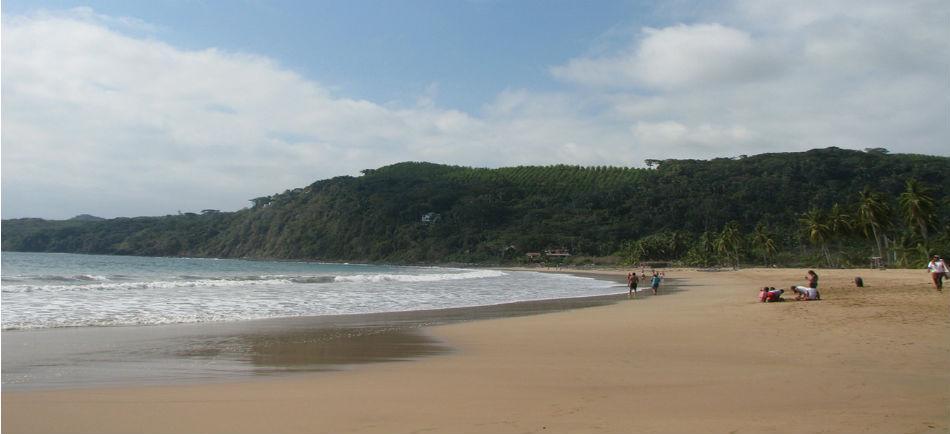
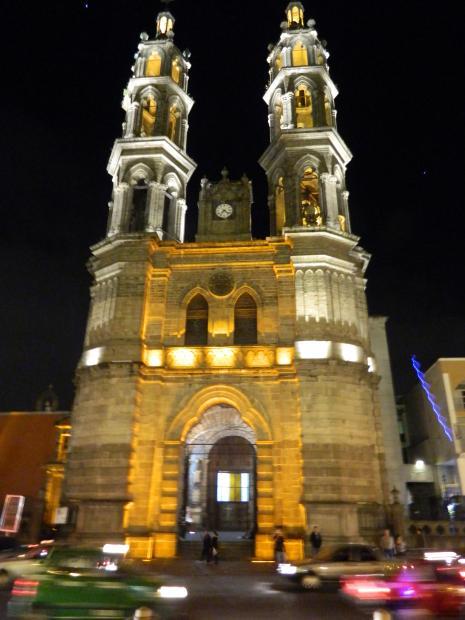
photoEscudo Playas certificadas de Nayarit PLAYA CHACALA MAIN

Sitting at a bright-red table overlooking an estuary in the fabled village of Mexcaltitan in the Riviera Nayarit, we threw bits of tortillas in the air to acrobatic sea birds to catch mid-flight.

Dozens of great white pelicans floated by on the green water, while a family lustily sang Las Mananitas, Mexico's birthday song, nearby.

Nayarit's beloved "pescado zarandeado" - a whole snapper, caught that morning, grilled on aromatic mangrove wood and served with homemade corn tortillas, grilled scallions, cucumbers, tomatoes - plus a delectable shrimp paté with crackers were available. Icy cold Pacifica beers in hand, we marvelled that such a place still exists.

Never heard of Nayarit? It is Mexico's 10th smallest state (out of 31) and incredibly diverse - birdwatchers, wildlife enthusiasts and those seeking the authentic, unsullied-by-tourism Mexico are drawn to it.

On a recent week-long visit, we travelled through green rolling hills, endless sugarcane fields with fronds blowing in the breeze - and mango, banana, papaya and tobacco farms.

We were just a few yards from enormous crocodiles, inches from an exquisitely beautiful jaguar, viewed thousands of migratory birds in the emerald-green rainforest. We were also eating succulent dishes we had never heard of, and meeting fascinating people from all walks of life, such as elaborately adorned Huichol Indians still living their traditional lifestyle. It's easy to travel from one fascinating part of Nayarit to another. Nayarit's southern border is just 10 minutes north from the Puerto Vallarta airport. The modern, intercoastal highway is serviced by comfortable, air-conditioned buses that stop in each town - with very reasonable fares.

If you want the mega all-inclusives overlooking the Pacific, luxury spas, fabulous surfing, world-class golfing and lie-on-the-beach vacations, it's all in the Riviera Nayarit; but if you yearn for adventure, colonial architecture and art and a heady dip into other cultures, venture into the rest of the state and "know Nayarit."

The Nayarit Colonial zone offers Spanish colonial architecture, history and museums of the capital city of Tepic (founded in 1542) as well as the delightful cobblestoned villages of Jala, Ixtlan del Rio and Bellavista. Tepic is a bustling, lively city perfect as a base for exploration of nearby Huichol Indian villages and other areas.

We enjoyed walking the lively Plaza de Armas with its enormous cathedral and beautiful Municipal Palace, as well as the Amado Nervo, Museo de las Cuatro Culturas (Museum of Four Cultures) and Juan Escutia museums, and gazed for a long while at a father and small son cutting, trimming and bagging sugar cane stalks at their street stand Nayarit has several spectacular "enchanted lagoons" such as San Pedro, Tepetiltic and Santa Maria del Oro, where we spent the night in a rather swank, modern boutique 20-room hotel called Lago Encantado.

The morning there was breathtaking - with mist rising over the lake and layers of multi-hued mountains rising beyond. People come to these towns to fish, bike, water ski, boat, rest and to enjoy the area's famous delicacies.

We started our Riviera Nayarit exploration in the large town of San Blas (founded in the 17th century,) renowned as one of the world's most important natural bird refuges.

While birdwatching here is wonderful all year, its rich migratory display every winter season (November-April) brings an estimated 80 per cent of the migratory North American bird species to interact with local species, about 2½ hours north of the Puerto Vallarta airport. Caution - you will need insect repellent in this area!

In San Blas, we stayed at the very pretty Garza Canela, a garden-filled inn run by the four very friendly Vazquez sisters (one of whom is Betty Vazquez, an acclaimed Paris-educated chef, and the Culinary Ambassador for the Riviera Nayarit) and their brother.

This property caters to bird watching groups, provides very early breakfasts to birders, and is just a 15-minute walk from the town's long sandy beach. The Delfin restaurant, with Chef Betty's gastronomic marvels (written up in Bon Appétit and Gourmet) is well worth the trip. The Garza Canela sisters will help you book the services of a very reliable and knowledgeable taxi driver, Juan Martinez Velez, who regularly attends to international visitors and can be booked in advance for private trips in the area.

But there's much more to San Blas - the nearby dense mangroves and hilly rainforest's microclimate attract thousands of birds to mate, nest and feed in the nutrient-rich estuary. One morning, we arose before sunrise to climb up through the rocky paths at Tecuitata, through impossibly dense mango, jackfruit, banana and papaya trees, and as the first rays of sunlight hit us, so did the cacophony of sound - birds calling, singing, and cawing all around us, along with crickets and woodpeckers. Our bilingual guide, expert birdwatcher Francisco Garcia, called in excitement to us when he spotted a squirrel cuckoo.

The next morning, we skimmed the glasslike surface of the estuary in a small panga boat to enter the peaceful and beautiful La Tovara, a mangrove refuge filled with about 60 crocodiles, a multitude of turtles, lizards and herons, storks, hawks, eagles, egrets, ducks, falcons and more.

About a 45-minute drive from San Blas, small boats take visitors to the fascinating village of Mexcaltitan, mentioned above. This no-vehicle village of 1,800 residents is only reachable by boat; inside the estuary, this delightful town is completely walkable (after dining on that fabulous fish mentioned above - try La Alberca, about $25 per couple for enormous fish and shrimp lunch with beer). Everyone's doors are open, children are outside playing, the church has an exceptionally bloody Jesus Christ statue, and there is a surprisingly well executed small historical museum (Museo del Origen).

Stroll the paths into yesteryear and slow down - what would it be like to live here, we wondered. In fact, we learned that some locals have never left - afraid to experience cars, noise and big city life.

As our magical day in Mexcaltitan drew to a close, we embarked onto the little boat alongside some 25 great white pelicans. It was a day like no other we've ever had.

For our time of sun and surf, we headed back to Riviera Nayarit. We chose picturesque San Pancho (formally called San Francisco), where we stayed at the lovely Cielo Rojo boutique hotel, perfectly decorated with Mexican folk art. In San Pancho, we visited the fabulous Entreamigos Community Center - a utopia-like non-profit established and run by a former Californian. It is well worth an hour of your time.

Moving on to Bucerias, we stayed in an outstanding ecoproperty. Los Arroyos Verdes is a botanical garden built around 36 private casitas, a restored Airstream trailer and small RV, with 26 staffers attending to the organic chef's garden, nursery, authentic Temazcal sweat lodge, maintenance, activities (yoga, tai chi, salsa dancing, etc.). We explored the surrounding countryside on the cute vintage bicycles, and swam in the huge azure swimming pool.

Knowing Nayarit is a joy, one that takes much more than one trip there - this gloriously beautiful, lush, authentically Mexican destination will happily fill your minds, hearts and stomachs.

10288313

For more information, visit www.rivieranayarit.com

map tropprjpath20 ltst 5nhpao enus 600x405 1

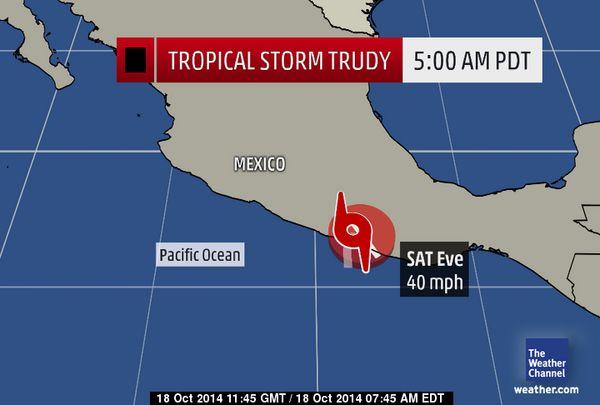
Tropical Storm Trudy is maintaining its strength off the southwestern coast of Mexico. Some additional strengthening is possible before Trudy makes landfall, as it is in a very moist and light-shear environment and over warm water.

A hurricane watch has been issued just east of Acapulco, where a tropical storm warning is in effect.

Tropical Storm Trudy formed on Friday in the Eastern Pacific about 85 miles south-southeast of Acapulco, Mexico. Trudy is moving slowly to the east and is expected to make landfall in southern Mexico on Saturday.

The primary threat associated with Tropical Storm Trudy is the torrential rain that is expected. Trudy will produce as much as 6 to 12 inches of rain -- with isolated areas receiving 20 inches -- over portions of the Pacific coast of Mexico, including the Acapulco area. This will lead to life-threatening flash floods and mudslides, especially in hilly and mountainous areas.

Tropical storm-force winds are expected in parts of southwestern Mexico through Saturday night.

High surf and dangerous rip currents will also affect portions of the southern coast of Mexico over the next day or two.

bc-Banner

October is National Breast Cancer Awareness Month and it's a time of year that I always pause. My favorite aunt, Agnes Cooper, died of complications from breast cancer when I was 16 years old. Until that point, no one I really knew had ever died. I had all my grandparents, and had never known my great-grandparents. Agnes was not a blood aunt, but she was closer to me than any other adult. She was the person I went to when I had to talk to a grown-up without getting in trouble. Throughout my life, she always treated me like a human being, never like an infant.

I remember spending time during punishments (there were a lot of them, mostly unearned) fantasizing that she was really my mother, and that she had given me up because she knew how much my actual mom needed a child. I was aware it was fantasy, but I clung to it.

When she first got cancer, none of us were truly surprised. She'd been a heavy smoker all her life. But when you're 13 years old, you know that your own family won't die from these things. It's other people who die. And after long and arduous surgeries and chemotherapy and losing all her hair (which she did with good grace), she was told she was in remission.

Life was good. All was as it should be. And then it came back. And she beat it again. And then it really came back. Now, with my own age and with the ministerial training I've had, I can look back and see how it had spread, and how she was sent home to die. She didn't want to die in hospice. She knew the end was very near, and determined not to leave a mess behind. All I saw was that the hospital sent her home, so that meant she was on the mend and would just have to go through more chemo. After all, that's what had happened before.

She didn't get better. She put all her affairs in order, long before the cancer reached her brain. Every piece of jewelry was bagged with a name on it. Every bill was paid, every possession accounted for. We didn't know that until after, of course, when my parents (her executors) went to begin cleaning things out and organizing. They were stunned.

I remember the last time I saw her. We had gone to visit. There was a hospital bed in her bedroom in her apartment. Her black cat, Flower, was refusing to leave her side. She was pretty out of it, and I had thought it was due to medications. I talked with her a bit, then my mother said we had to go.

As I was leaving, she took my hand and she whispered, "I need to say goodbye, hon." I smiled and said not to be so serious, because after all, we were going to be back tomorrow. She kept holding my hand until I kissed her and said okay, and we said a proper goodbye. She died in the early hours of the following morning.

Her cancer started in her breasts, and spread to her lymph nodes under her arms, and eventually to her spine and up into her brain. After her death, they did an autopsy to find out what happened, and basically her brain was mush. That's why she was so dopey when we were there. But she was still herself. And she knew she was going.

My aunt was incredibly brave. She was understanding, to a point I can't even imagine. I know that during her own cancer woes, she sat patiently and listened to me gripe about my mother and how awful my life was. She never teased me about anything. She always took what I said seriously, and never made me feel she was bored or thought I was stupid or "just a kid."

I honor my aunt a lot. I say prayers for her. I've written poems about her and for her. As I've become friends to teens, I have kept her lessons in mind. I've always tried to take them seriously, be honest and even blunt, and never lie. I've tried to carry on for them what she did for me. Sometimes I'm better at it than others, but I always keep trying. When I do it well, I feel as if I'm getting a ghostly hug from a woman that taught me more in the few years I knew her than anyone else.

So... it's Breast Cancer Awareness month. If you're high risk or over 40, have your boobs checked. Ask your doctor, or go to the American Cancer Society's website and find a place to get a low cost or free screening done. In Keene, NH, you can get low cost and free screening done at the hospital downtown. Just call for information or email them from their website. Early identification makes all the difference.

While you're waiting for that mammogram, why don't you pause, too. Remember those in your life who've been taken away by breast cancer, or who beat it and are doing well. Say a prayer of thanks. Talk to them on the phone if you can, or go visit.

10191890

aa5149857180 6ee208ee4c b

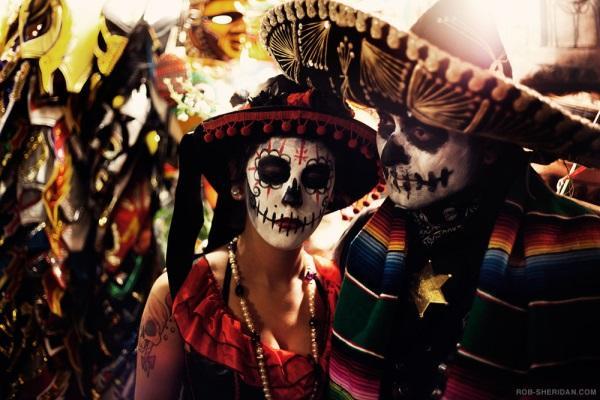
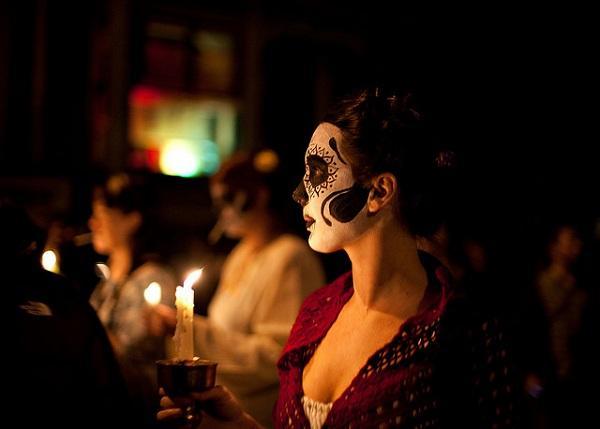
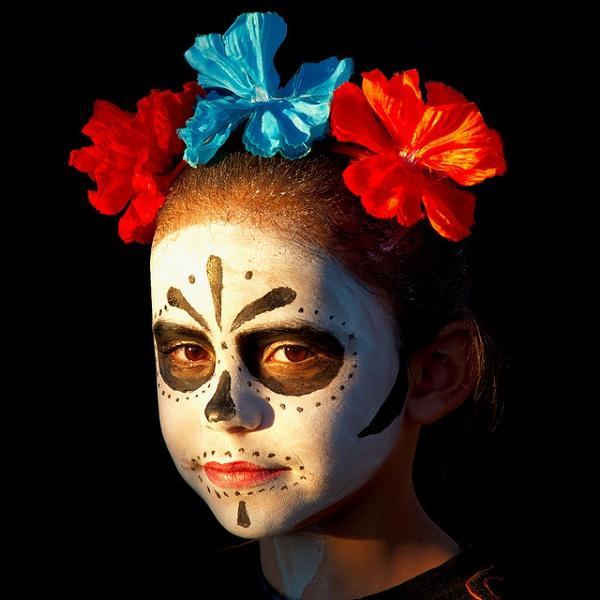
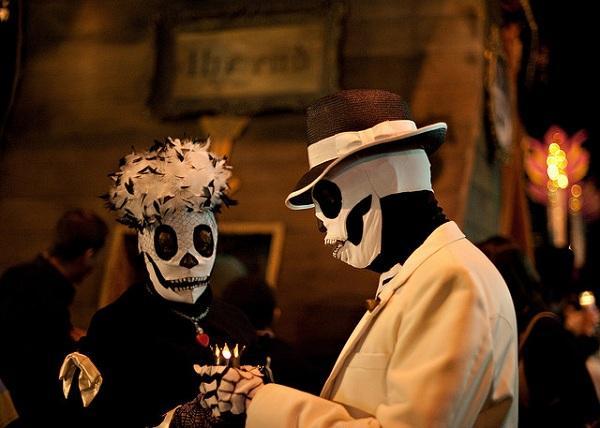
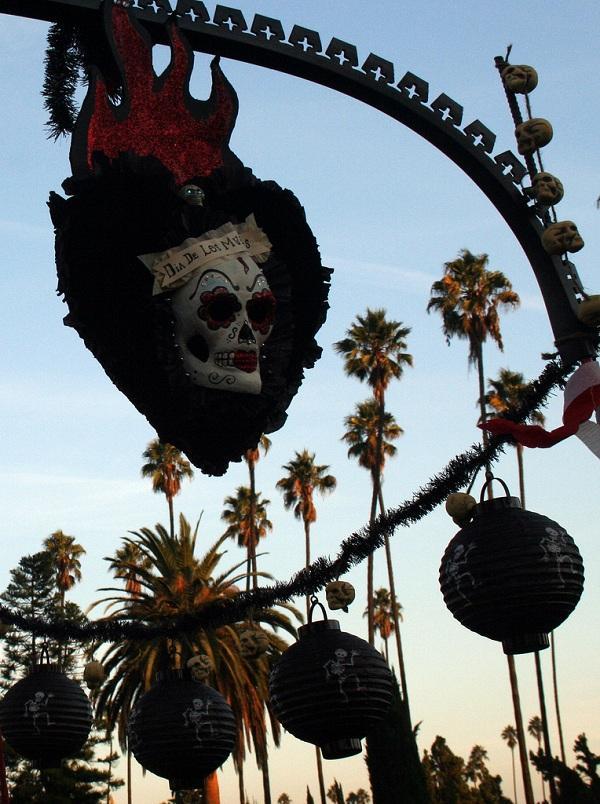
People swarm by in ornate costumes, their white are faces painted lavishly as skeletons, they march slowly holding candles, celebrating in the same breathe their joy for life and their respect for death. It’s Day of the Dead, or Dia de Muertos, a Mexican celebration to honor the lives of past friends and family members

4072843573 0b4fd922dc z

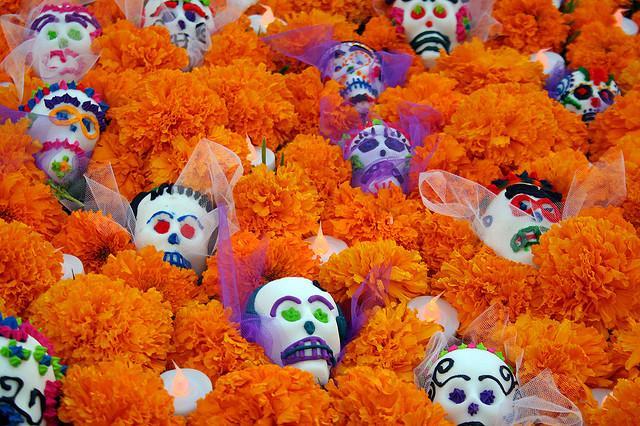
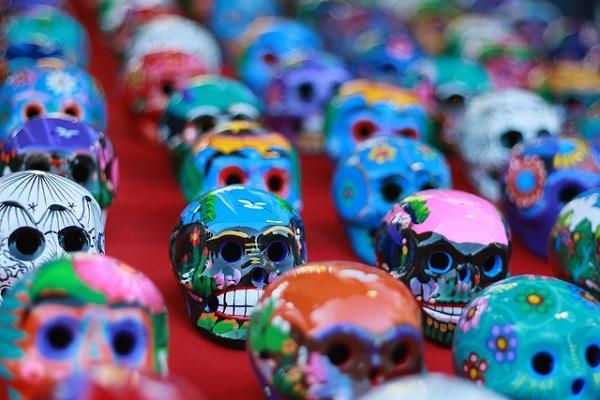
Like most things Mexican, the celebration takes on a lively and colorful tone. Ornate alters are created for everyone honored, and loved items of the person are placed upon them, from a favorite stuffed animal, a favorite food, to a favorite tequila. Each participating culture both throughout Mexico and beyond has made the holiday its own, however the bright marigold flowers and decorated candy skulls have become synonymous symbols of the holiday world-wide..

4237772746 a49698347b z

My favorite part of the holiday is that rather than mourning the dead’s lives, they are celebrated in a purposefully raucous way, in the belief the more extravagant and flamboyant the party is the higher the chance the dead will hear of it and come to visit.

4043549578 3103b7e004 z

Originally the holiday was celebrated in August by the Aztecs. When the Spanish came over from Europe they thought the holiday was sacrilegious, mocked the dead, and tried to eradicate it. After failing over and over they compromised and moved the holiday to coincide with the Catholic All Saints’ Day and All Souls’ Day on November 1 and 2, (right after Halloween) where it is still celebrated today.

4072844329 c2f51541db z

Day of the Dead is also celebrated in many other parts of the world. Guatemala’s celebration, for example, is unique because of the giant kites they fly. In the United States it is celebrated in Texas, Arizona, Los Angeles, San Francisco, and everywhere else there is Mexican influence. In San Francisco it has become a giant street party and the city’s major museums feature displays and alters. The Philippines have turned it into an excuse for a family reunion. And in historically Roman-Catholic Europe, some of its traditions have merged with All Saints’ Day and All Souls’ Day, like the offering of food and beverage to grave sites.

5164590374 9c453dc120 z

There are parties, and then there are celebrations for a purpose. This holiday speaks to me because it reminds us that we are alive and we should embrace every moment. Plus, anyone who know me knows that I will take any excuse to dress up and eat candy. Life and death it seems are just two kinds of the same coin, so enjoy every moment, but don’t forget to honor those who cannot anymore.

4086075030 98cdd46093 b

Have any of you been lucky enough to be part of a Dia de los Muertos or funeral in Mexico or another country? I’m curious… leave me a comment below!

4043427554 902f2bd764 b

o-182021903-570Yes, there's the stereotype of partying spring breakers, and yes, the State Department issued a travel warning in August for Americans visiting select spots in the country.

But let's not forget that Mexico is truly a beautiful place.

The country boasts 67 national parks and 41 biosphere reserves. Among Mexico's deserts, rivers and mountains, you'll find more than 5,000 miles of coastline and one of the world's longest underwater cave systems.

Cabo San Lucas is currently recovering from a hurricane that hit in September, but this winter is still a great time to visit Mexico. Here are a few stunning places to put on your list.

Cenote Dzitnup
Oh, it's nothing -- just your average blue-water sinkhole. There are thousands of them on the Yucatan Peninsula.

Diplomado AHMBB low

26 employees from 12 AHMBB member hotels passed the free certification program that forms part of the constant training sessions offered for Association members; 70% of hotels benefitted from this action.

The Banderas Bay Hotel and Motel Association’s (AHMBB, by its acronym in Spanish) Human Resources Committee offered a certification program for supervisors as part of its commitment to take advantage of the resources available and offer free courses on the topics the union members need the most.

For eight weeks starting on August 20th, twenty-six employees from twelve local hotels completed seven modules that covered topics including: The 7 Habits of Highly Effective People, Teamwork, Leadership, Empathetic Communication, Positive Attitude, Coaching, Quality and Productivity.

Alejandro Asomoza, Operations Manager and part of the AHMBB’s Human Resources Committee, announced that 70% of the union members participated in the certification program. The remaining hotels were unable to participate because they were at capacity and the managers needed to attend to their guests.

“This has a ripple effect, because what we’ve done is to prepare ourselves ahead of time to define the courses that were most needed to train the staff of the different hotels in the region,” he noted. “They can now apply everything they learned from these modules to their work.”

The certification program came to an end during the second week of October with a surprise ceremony at Villa del Palmar, where the participants received their recognition in the presence of their family members. The event was also presided over by José Antonio Ayala and Alma Gómez of the AHMBB, as well as instructor Daniel Posadas.

“This is just the start, because I’m sure that next year we’ll have better programs and even better results,” assured Alejandro Asomoza, who added that the topic of security will be one of the main themes to be discussed in order to offer the tourist a better and safer experience.


Participating hotels included: Matlalí, Dreams, Hotelito Los Sueños, Rancho Banderas, Iberostar, Paradise Village, Villa del Palmar, Hard Rock, Marival, Grand Velas and Grupo Vidanta.

NEW Riviera Nayarit Logo March 2013

PUN 534 aspect16x9Puerto Vallarta, Mexico, is a popular tourist destination, whether visitors are arriving via cruise ships or staying at one of the many all-inclusive hotels and resorts. With 250,000 permanent residents, Puerto Vallarta attracts nearly 3 million visitors each year and is a generous, hospitable city

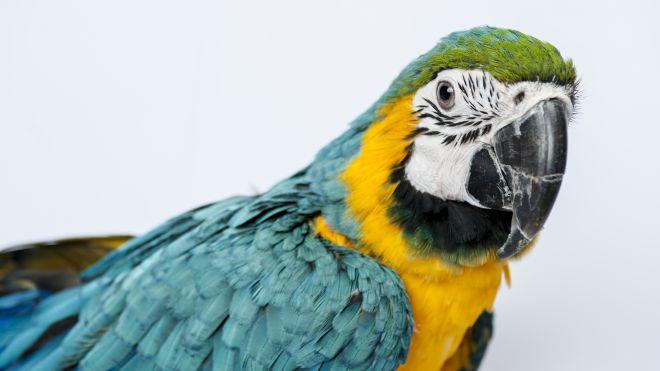
474390767A pet parrot that spoke with a British accent when it disappeared from its home four years ago has been reunited with its owner — and the bird now speaks Spanish.

The Daily Breeze reported Sunday the reunion was brought about by a Southern California woman, Julissa Sperling, who owns Happy Tails Dog Spa with her husband, Jonathan.

They originally thought it was Teresa Micco’s pet – another vet known in the community because she had numerous placed ads searching for her beloved ‘Benjamin,’ who flew away in February.

“I heard somebody whistling and saying, ‘Hello? Hello?’ ” Sperling told the Daily Breeze.

“I own a dog-grooming business so we put him in a little cage and brought him with us to the store,” she said. “He was the happiest bird. He was singing and talking without control. ... He was barking like the dogs. I’m from Panama and he was saying, ‘What happened?’ in Spanish.”

After scanning the bird’s microchip and finding out it was not Micco’s ‘Benjamin,’ Sperling then tracked it to Darren Chick, a British man who lives in Torrance.

Little is known about Nigel's whereabouts the past four years, but Chick says the bird's British accent is gone and it now speaks Spanish.

According to the Daily Breeze, last week’s reunion was an emotional one but not a smooth one: at first Nigel tried to attack Chick when he tried to pick him up.

But all is understood, Chick told the paper. “He’s doing perfect,” he said, still a bit awed about the whole thing. “It’s really weird, I knew it was him from [the] minute I saw him.”

[readon1 url="http://latino.foxnews.com/latino/lifestyle/2014/10/13/parrot-missing-for-years-returns-speaking-spanish/"]Source:www.latino.foxnews.com[/readon1]

thanksgivingThanksgiving isn’t just an American holiday. Canada celebrates Turkey Day, too -- and it was the first country to do so.
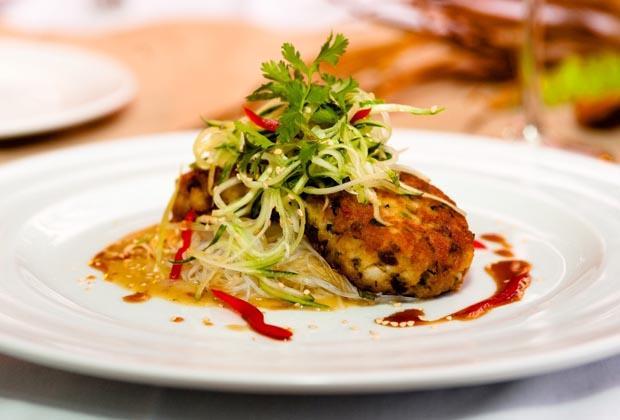
Canadian Thanksgiving, which falls on the second Monday in October, was first celebrated by the arctic explorer Martin Frobisher in 1578 -- more than 40 years before the Pilgrims arrived. After the end of the Seven Days War in 1763, the celebration was brought to Nova Scotia and other parts of the country. Today, Canadians celebrate the holiday much like their southern neighbors: turkey dinner, football and family time. It's considered a statutory holiday everywhere in Canada except in Atlantic Canada.

For those unfamiliar with Canadian Thanksgiving, below are three answers to common questions surrounding the holiday:

What’s the history behind Canadian Thanksgiving?

Thanksgiving was proclaimed a national holiday in 1879. Parliament called it "a day of General Thanksgiving to Almighty God for the bountiful harvest with which Canada has been blessed." In Canada, the holiday draws from three traditions: harvest celebrations in European peasant societies, formal observances like Frobisher’s where the crew gave thanks for their safe return from their search for the Northwest Passage and the Pilgrims’ harvest celebration in Massachusetts that incorporates harvest foods like squash, pumpkin and turkey.

While Frobisher’s meal is considered the first Thanksgiving celebration in North America, First Nations and Native American tribes throughout the continent had organized harvest festivals long before the Europeans arrived.

When French settlers arrived in Canada, explorer Samuel de Champlain drew upon the traditions of First Nations tribes and earlier explorers by establishing a similar feast of thanks. He called the event “The Order of Good Cheer,” which first took place on Nov. 14, 1606.

“These feasts were often attended by Indians of all ages and both sexes, sometimes twenty or thirty being present. The Sagamore, or chief, Membertou, the greatest Sagamore of the land, and other chiefs, when there, were treated as guests and equals,” Marc Lescarbot, a Parisian lawyer and poet who recorded the first account of “The Order of Good Cheer,” wrote at the time.

Later, loyalists during the American Revolution moved to Canada and brought their traditions with them. This included celebrating the harvest, which later became American Thanksgiving. This was when the turkey was introduced to Canadian festivities.

When is Canadian Thanksgiving?

Beginning in 1879, Thanksgiving was officially celebrated on Nov. 6. Later, the holiday was celebrated on the third Monday in October. On Jan. 31, 1957, parliament solved the confusion by proclaiming that Thanksgiving be celebrated on the second Monday in October. The earlier date draws from the fact that Canada is located further north than the United States, causing harvest season to take place earlier.

How do Canadians celebrate?

Canadian families typically take advantage of the long weekend. While a turkey dinner is in order, it doesn't necessarily take place on Thanksgiving Day. It could be on any day during the weekend. Football is also a Thanksgiving tradition. The Canadian Football League holds the Thanksgiving Day Classic every year. Typically the game is hosted in Montreal. However, unlike American Thanksgiving, Canadians don't typically see the holiday as a kickoff event to Christmas shopping. Just a few stores have adopted Black Friday sales. Since the day coincides with Columbus Day, American border towns typically see an influx of Canadian visitors during the holiday weekend.

[readon1 url="http://www.ibtimes.com/canadian-thanksgiving-2014-3-ways-holiday-differs-americas-turkey-day-1703250"]Source:www.ibtimes.com[/readon1]

Xinalani-Puerto-Vallarta-Mexico-area-healthy-vegetarian-cuisine-workshopsWhile vacationing in Puerto Vallarta, Mexico, my boyfriend and I tried two vegetarian restaurants we found on Happy Cow (HappyCow.net): Planeta Vegetariano and Mary Vegetariano. How was the food and how do they compare?
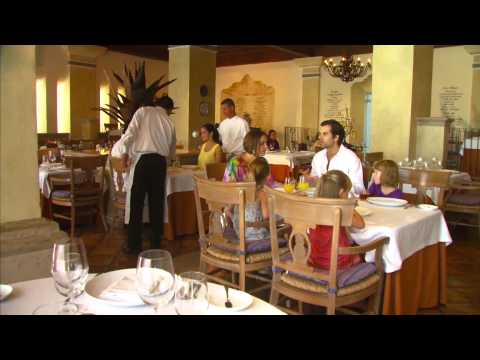
While traveling in Mexcio for our anniversary vacation, my boyfriend and I visited a couple vegetarian restaurants we'd researched on HappyCow.net before leaving for our trip. Both restaurants were absolutely delicious and fairly priced, offered a great selection, and were centrally located in the downtown area. How do they compare and what are the pros and cons of each?

Mary Restaurant Vegetariano

Mary Vegetariano was a bit hard for our cab driver to find. We'd obviously never been there before, so we didn't really know exactly how to get there or precisely where it was located. That was really the only drawback to this establishment. It was a small restaurant nestled in between a few other businesses on a street downtown. Eventually we arrived and were very warmly greeted by the owners.

The restaurant was much bigger on the inside than it looked from the outside. It was brightly decorated with lots of cute and eclectic art on the walls. There were a good twelve to fifteen tables available.

Some of the pros about this restaruant is that it definitely served authentic Mexican dishes, but it also had quite a variety of foods as well as beverages. I sampled some fresh vegetables in my salad, from deliciously marinated tomatoes and lettuces to garbanzo beans, carrots, and other assorted vegetables and fruits. Of course, there were marinated black beans and there was a seasoned meat substitute, which I think might have been some sort of textured vegetable protein, which was absolutely amazing! Warm tortillas were brought to our table once we prepared our plates and were seated.

Once we finished eating they brought us some delicious dessert, which tasted like a moist banana cake of some sort.

This price was incredibly cheap for two people, in my opinion, but the food certainly didn't reflect this. It was delicious, plentiful, and had a great variety.

The address for Mary Vegetariano is Hondouras #309 Hotel Paloma del Mar, Planta Baja C in downtown Puerto Vallarta, Mexico. According to Happy Cow, breakfast is served daily 9am to noon, and the evening buffet is daily from 1 pm to 6 pm. We had gotten there just after 5:15 pm, but we never felt rushed or unwelcome. They stayed open a little later than 6 pm that day. I don't know if this is common or just because they had us for late guests. We engaged in conversation and very much enjoyed our visit there.

Planeta Vegetariano

This restaurant, Planeta Vegetariano, was very easy to find and well known by many. It was ideally located right beside the central cathedral downtown, which is a very popular spot.

The food here was just as delicious as the food at Mary Vegetariano, but it was also a bit pricier. Although the prices were higher than Mary Vegetariano, I feel Planeta Vegetariano's prices were still reasonable for a full buffet with a wide selection of delicious vegetarian and vegan items from which to choose. One of our favorites was the shish kabobs with mock meat and veggies and a pineapple glaze on the side.

This establishment was also a bit small in size, but not cramped, and also had brightly colored walls and artwork. The food was fresh, plentiful, and offered a vast selection from which to choose. Everything was tasty and we were brought banana bread dessert here as well.

Aside from the delicious food and great service, Planeta Vegetariano is open much later than some other vegetarian restaurants. This restaurant was open daily 8 am to 11:30 am for breakfast and then noon to 10 pm for the evening buffet. The address is Iturberide 270 next to the main cathedral (Catedral Guadelupe) in Puerto Vallarta, Mexico.

In Summary

I was incredibly impressed with the freshness of all the foods offered. Although they were buffets the food didn't taste rubbery, dry, or old as with some buffets. The salad bar was colorful with juicy fruits and vegetables. The tomatoes were deep bright red. Some tomatoes were seasoned with fresh basil and the flavor was glorious! I usually use a lot of salt, much to my dismay!, but I didn't need to add any salt to anything I tasted here; everything had enough flavor on its own and didn't need anything else.

Both restaurants accept only cash, but the prices are not very high, so it's easy to carry a small amount of cash and have enough to dine there. Both served a wide selection of delicious foods, including fruits, vegetables, side dishes, soups, beverages, and main dishes. Everything we tried was delicious. Also, each restaurant served a dessert and were very cordial. We had pleasant experiences at both restaurants.

[readon1 url="https://vegetarian-vegan-diets.knoji.com/vegetarian-buffet-comparisons-in-puerto-vallarta-mexico-mary-vegetariano-and-planeta-vegetariano/"]Source:vegetarian-vegan-diets.knoji.com[/readon1]

0The "Beyond All-Inclusive, Beyond All-Compare" Grand Velas Riviera Nayarit, known for outstanding fine dining, recently debuted a new menu at its gourmet Mexican restaurant, Frida. A tribute to the legendary Mexican artist Frida Kahlo, the AAA Four Diamond restaurant offers a wide range of dishes featuring ingredients from the various regions of Mexico complemented by original and colorful presentations. Specialty ingredients that define Fridas new menu include Chapulines, or grasshoppers; elote fresco, Mexican grilled corn; Chilhuacle Negro Chile, a very rare chile with strong notes of cocoa, tobacco and dry fruit grown only in Oaxaca; Achiote, used in the Yucatan spice mixture recado rojo; and more.

Menu highlights include thinly sliced Giant Sea Scallop served over mango and tequila jelly, with organic greens and charred habanero oil; Oaxaca cheese casserole with sautéed ajillo-style shrimp; Roasted sweet corn cream soup with cotija cheese and chili oil; Seared ahí tuna steak over diamonds of papaya with mint, tamarind and tequila vinaigrette and salad of sautéed green beans; Sea Bass in avocado and ancho chili, over jalapeño and green tomato sauce with Mexican zucchini; and Dark Chocolate Mousse with a white chocolate and mole poblano center topped with amaranth crisp. Changing every 6 to 8 months, the menu also offers gluten free, organic and vegetarian options.

A perfect complement to the new menu, Grand Velas Riviera Nayarit offers its guests the latest in margarita mixology, from Chili Pepper and Tamarind to Avocado Pistachio and Hibiscus. The margarita menu boasts twelve libations including a Cocoa Signature Margarita that combines the full-bodied flavor of chocolate directly from Chiapas with a touch of orange essence; Avocado Pistachio; Cilantro Coriander; Hibiscus, Chili Mango; Huitlacoche Signature Margarita, which combines the corn truffle with tequila, resulting in a slightly salty, very flavorful and unique drink served on the rocks; and more.

[readon1 url="http://www.consumerelectronicsnet.com/article/New-Gourmet-Mexican-Menu-for-Foodies-Debuts-at-Grand-Velas-Riviera-Nayarits-Frida-Restaurant-3542125"]Source:www.consumerelectronicsnet.com[/readon1]


6d898c9d-ae51-4897-9e81-d617441716f5-1020x612As guns from the U.S. pour across the border and fuel violence in Mexico, artist Pedro Reyes uses his work as a peaceful, cathartic form of protest
There's only one gun store in Mexico, so Mexican drug dealers stocking up on AK-47s tend to look north of the border: Every year, more than 250,000 guns are smuggled in from the U.S. As violence has increased over the last decade--in part thanks to the expiration of the U.S.'s assault weapons ban--artist Pedro Reyes decided to help bring new attention to the problem by making sculptures from melted guns.

"I wanted to make a kind of protest," Reyes says. "A large number of weapons have entered Mexican territory, 90% from the United States. I wanted to turn that around and call attention to the need to stop the flow of weapons to Mexico."

In one project, Reyes collected guns in the city of Culiacán, which had the highest rate of gun deaths in the country, and then smashed them with a steamroller, melted them down, and turned them into 1,527 shovels for planting trees.

After six years, that project is almost complete--Reyes plans to plant 1,527 trees, one for every gun that was destroyed. The plantings are happening all over the world; one week, in Costa Rica, and the next week, in Germany.

"When a planting happens it's an opportunity for people to speak out," Reyes says. "Weapons are something that are praised in media as sexy and cool. If you play video games, or turn on the TV, or see any action film, it's like a big advertisement all the time. People who have been victims of gun violence need opportunities to speak out and say that in real life, the effect that weapons have are disastrous."

In two other projects, Reyes transformed guns into musical instruments to show a literal example of how people might express anger in a different way. "Rock and roll gives a certain degree of catharsis," he says. "Turning a machine gun into an electric guitar is a kind of transformation where you can still have a totemic object of power--an electric guitar has that kind of magical power and aura."

Here's one set of instruments in action, in a video from Vice:

While the artist doesn't expect violence to ever disappear, he hopes the art helps remind people of alternatives. "I think there's a reason why guns produce such a thrill," he says. "We're not much different from apes in that we have inherited a brain structure that gets excited by violence...I think violence is part of our nature, but the evolution is that we can express it towards objects instead of people."

He also hopes to slowly begin to shift cultural acceptance of guns. "It's almost a kind of impossible idea that you could turn around that perception," Reyes says. "But it's a kind of a cultural battle, and I hope art can be one little contribution to that cultural change. There were things that were normal 50 years ago, like overt racism or discrimination against gay people, that we have seen start to change in our lifetime. I believe we should also change our perception of guns."

[readon1 url="http://www.fastcoexist.com/3035161/a-mexican-artist-turns-assault-weapons-into-musical-instruments-and-art"]Source:www.fastcoexist.com[/readon1]