There were spectacular scenes in Yuctan, Mexico, this Saturday for the final event of the 2014 Red Bull Cliff Diving World Series.

Britain's Gary Hunt won on the day and also took the overall men's title, while Rachelle Simpson, of the US, won the women's crown.

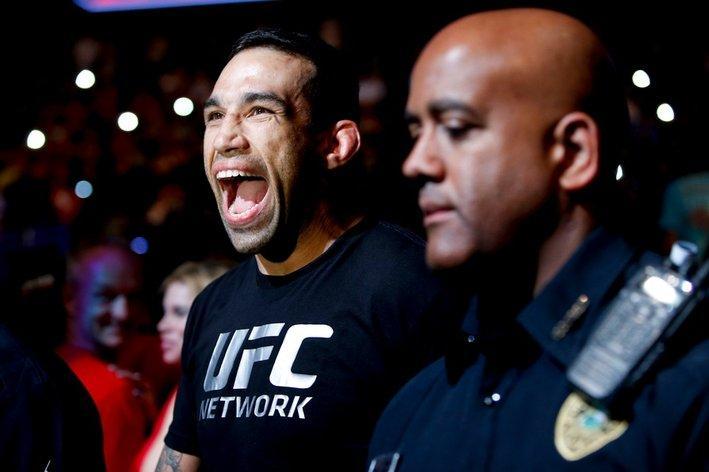
werdum.0 standard 709.0

Fabricio Werdum decided to move his training camp to Mexico in preparation for a heavyweight championship fight with Cain Velasquez on Nov. 15, but a bad choice almost ended his life.

Werdum moved to Nevado de Toluca with Rafael Cordeiro, Felipe Werdum, Renato "Babalu" Sobral and eight other coaches and sparring partners, and their first day of training almost became their last, as they were poisoned by carbon monoxide from a gasoline generator.

"It was terrible," Werdum told MMAFighting.com. "We came to Nevado de Toluca to train, and we didn’t see the house before renting it. There was no power, nothing, and it was really cold there. I was there with 12 other guys from my team, and they got us a gasoline generator to get power. They usually left the generator outside the house, but put this one inside the house.

"We were training inside the house, had dinner and went to bed. They didn’t tell us to turn that thing off before sleeping. I woke us in the middle of the night with a huge headache, nausea, and couldn’t get out of bed. Everyone was dizzy. My brother got out of his bed and managed to turn that thing off. We almost died from poisoning.

"We went to the hospital, everybody throwing up and with diarrhea. The doctor said that we would have died in two hours if nobody had turned that thing off."

Werdum and his team moved to another house in Jiquipilco, 60 miles away from Nevado de Toluca, and the Brazilian heavyweight now laughs at the dangerous situation he’s been through.

"What doesn’t kill make you stronger. That made me stronger," Werdum said with a laugh. "We’re fine now. That was a huge scare. We almost died. Imagine the headlines: ‘Werdum moves his camp to Mexico and dies with his whole team.’ We were searching for a breath of fresh air and almost died from carbon monoxide poisoning [laughs]."

Werdum, who coached the Latin American version of The Ultimate Fighter reality show in opposite to heavyweight champion Cain Velasquez, headlines UFC 180 in Arena Ciudad de Mexico on Nov. 15.

[readon1 url="http://www.mmafighting.com/2014/10/17/6996143/fabricio-werdum-almost-died-on-first-day-of-training-in-mexico"]Source:www.mmafighting.com[/readon1]

pinktober1012

Who's ready for Pinktober 5K? We know we are at Hard Rock Vallarta!

Start preparing yourselves for the philanthropic event of the year by stocking up on your pink and supporting breast cancer research and awareness.

You can get the beautiful commemorative t-shirt above by participating on Sunday, October 19 in our 5K walk or run!

Have you registered yet? You can do so at the Hard Rock Hotel front desk and pick up your race kit.

You can participate either by running or walking the 5K. Here's the route:

1901958 662176030556135 2079378895424718765 n

The race will begin at 8:00 am. Donation entry fee is 290 pesos per person.

The Hard Rock Vallarta is located at Paseo de los Cocoteros No. 19 in Nuevo Vallarta, Front Desk telephone is (322) 226-8470.

Don't miss on the opportunity to run for this great cause and help spread cancer research throughout the world.

The answer is out there, and together we'll find it!

10620788 661591300614608 8260201393615748885 n

[readon1 url="http://pvangels.com/news/2909/third-annual-pinktober-5k-at-hard-rock-vallarta"]Source:pvangels.com[/readon1]

1297575735427 ORIGINAL

Proud Canadian fondly recalls his time on senior men’s national baseball team

Three years ago, Chris Bisson helped his baseball team win Pan Am gold as Canada defeated the United States 2-1 at the Pan Am Games in Guadalajara, Mexico.

Despite no longer being an active baseball player, Mr. Bisson has carried over his skills on the diamond and his enthusiasm to being a volunteer promoting the Toronto 2015 Pan Am Games. He was on hand in Toronto on Sept. 15 to help launch the ticket opening for the Games.

“I’m doing my best to be a key part (of the Games),” he said.

Mr. Bisson still has fond memories of Canada’s victory three years ago. He was videotaping his teammates with a hand-held camera when the final out was recorded and he admitted to watching the clip over and over since the victory.

“It was just amazing. To hear the chants for Canada was phenomenal,” he said in describing the moments after he dropped the camera and joined his teammates in celebration on the field.

An arm injury while playing in the San Diego Padres farm system forced him to retire from baseball in 2013. He finished his degree and now works as a kinesiologist for the Centre de Santé Communautaire in Welland.

The 24 year old said he’d love to be able to play for Team Canada again but “the arm’s just not in it anymore.”

Looking at the Canadian men’s senior national team, though, he said he’s excited for the players as they set out to defend their gold medal “on home turf.”

Looking back at his experiences in Guadalajara, Mr. Bisson admitted he didn’t expect to play as much as he did. It was his first time on the senior team and he was hoping to contribute any way he could.

“I didn’t think I was going to have such a big role,” he said.

That said he was encouraged by the returning players who had experience playing at the international level against some of the world’s best baseball teams.

“The older guys were good role models. It’s really all about team chemistry,” Bisson said.

It’s that chemistry, that love of the game, of country and the pursuit of excellence that sets the Pan Am Games apart from the big leagues, Mr. Bisson explained. He said when you’re playing professionally it’s all about making it to the “show”. Players never know when they’re going to get cut or traded. For them, “It’s all about getting to the major leagues,” he said.

Playing for Canada at the Pan Am Games was like playing in school when he was at the University of Kentucky: it was all about pride.

“I love the team aspect,” he said. “When you play for Canada you’re not playing for the name on the back of the jersey, you’re playing for the name on the front. You play for your country. It’s the biggest honour.”

His advice to all athletes heading to next summer’s Pan Am Games and the Parapan Am Games is to “soak it all in.”

He said the baseball and softball facilities in Ajax look great. Couple that with the best players in the world playing on those fields and the experience for the fans should be incredible.

“There’s great young talent that’s going to be there,” he said.

And don’t be surprised to see a few players at the Pan Am Games end up in Major League Baseball. There are a few players from the 2011 Pan Am Games playing in the big leagues today including Toronto Blue Jay’s pitcher Todd Redmond who played for the United States in the last Pan Am Games. Mr. Bisson fondly remembers knocking a double off the wall on one of his pitches.

“Canada has build such a good program (baseball). Player development is improving, kids are exposed to so much more,” he said.

The Toronto2015 Pan Am Games run from July 10 to 26. Softball and baseball take place at the President’s Choice Ajax Pan Am Ballpark while Oshawa hosts weight-lifting and boxing at the GM Centre. The Toronto 2015 Parapan Am Games run from Aug. 7 to 15. Whitby hosts judo and boccia at the Abilities Centre.

For more information about the Games visit www.toronto2015.org.

[readon1 url="http://www.durhamregion.com/news-story/4914526-chris-bisson-has-gold-medal-memories/"]Source:www.durhamregion.com[/readon1]

guayaExpect a night ride, beach activities, a BMX and antique bike exhibit, mountain routes, street rides and plenty of fun for every skill level; the Corsa Beach Party car exhibit will also be in full swing at the same time.

amessi-barcelonaLionel Messi played in his first competitive match for FC Barcelona 10 years ago this month, on October 16, 2004. He was already famous, of course, among the hardest-core coterie of Barça fanciers, the types who write forum posts about training-academy gossip; to the rest of the world, his eight scoreless minutes at the end of Barcelona’s 1-0 win over Espanyol didn’t do much to make him a household name.

Still, if you watch the video now, it’s pretty clear, even allowing for the benefit of hindsight, that at 17 Messi was a frightening talent. He’s not ready yet, not quite, but he already has that strange quality of slant directness, that mysteriously straightforward elusiveness, that would later make him seem magical, insoluble. Probably he was born with it. The top-line definition of “prodigy” in Webster’s is the standard one about a gifted child. The next two refer to “a portentous event : OMEN” and “something extraordinary or inexplicable.” And maybe that’s the right frame for appreciating early Messi — that you have to go three numbers deep in the dictionary before he even starts to exhaust the word.

It has something to do with balance, this quality, with the way the planes of his body intersect the x-axis of the pitch at just slightly odd or unexpected angles. You notice, in the video of that Espanyol match, that when he’s running straight ahead over the ball he’s also leaning fractionally to his right. When he cuts to his right, he has this weird ability to sort of counter-lean to his left — and sometimes not even to actually do it, but (and this is where it gets impossible to talk about Messi) just to seem like he’s doing it, to give the impression that he’s tilting in a way that defies the basic arrangement of masses and forces in play. It’s as if your brain is registering microdegrees of movement that your eye can’t really see. When he does the surprising thing, it looks normal, because you already felt a steady-state, low-level surprise watching him do the normal thing.

Here’s what I mean. A few times in his debut he gets the ball past Espanyol defenders who thought they had him covered — he breaks through toward the goalkeeper or whatever. At these moments your reaction as a viewer exactly tracks what those beaten players must have been thinking. He puts you in their place. It’s an early glimpse of the slow-blooming wonder that, among both viewers and defenders, would be his calling card over the next decade. I understood what was happening the whole time. Only how did you end up there?

It would take a few years, and one earth-shattering wondergoal, for the murmur around Messi to gather into a roar. Still, though. Ten years.1 Those 10 years have both defined this era of soccer and stood completely outside it in fascinating ways.

Lightning to the Children: 1998-2004

His first contract was written on a napkin. That’s the detail that still jumps out, no matter how shopworn the mythos of his childhood becomes — the upbringing in Rosario, Argentina; the local-club youth team (“the Machine of ’87”) that lost one match in four years; the diagnosis with a growth-hormone deficiency at 11. How his father worked in a steel factory. How his mother did some cleaning part-time. His medical treatment cost $900 a month. They hoped a soccer team might cover the cost.

The Messis had relatives in Catalonia, through whom they were able to get the tiny Leo a trial in front of Barcelona sporting director Carles Rexach. Rexach had spent 22 years as a winger for the club and served as an assistant under manager Johan Cruyff, himself one of the greatest attacking players ever; I bring this up only to give you an idea of what it might take to make Rexach flip out over a soccer talent. What he expected from the trial, I have no idea; Horacio Gaggioli, the agent who helped connect the Messi family with the club, has said that the first time he saw Leo, he was “open-mouthed” — not with awe, but because “he was so small and skinny that the notion of him playing football seemed impossible.” But — well, here’s a video of Messi as a kid, footage from before he signed with Barcelona. You can guess how Rexach felt.

The idea that Barcelona wanted to pay for Messi’s hormone treatment when no other club would do so is arguably the crucial piece of his origin story. It provides fans with a reason to treat the bond between player and club as something special, something beyond a business transaction, and it’s a moving confirmation of Barcelona’s still-real-for-some-people “more than a club” identity. In fact, though, there was intense opposition within the club to signing Messi at all. Barcelona had never committed to a foreign player so young. Its new president, Joan Gaspart, was (understandably) reluctant to spend money on a frail-looking child with medical problems, a child whose value to the club wouldn’t be realized for years, if it ever was.2 Rexach insisted that Messi was a one-of-a-kind talent. The debate dragged on. Finally, on December 14, 2000, Messi’s father met with Rexach at the Pompeia Tennis Club in Barcelona. The Messis threatened to walk if a deal wasn’t signed quickly. Rexach didn’t have a contract on hand. Thus, this:

messi-napkin-triangle

In Barcelona, on the 14th of December of 2000 and in the presence of Josep Minguella and Horacio [Gaggioli], Carles Rexach, FCB technical secretary, commits under his responsibility and despite some views against it to sign the player Lionel Messi, as long as we remain within the amounts agreed upon.

It’s partly the cliché, of course, that makes the napkin thing feel so poignant. It’s the Picasso-paying-his-bar-tab version of high-stakes business negotiation, the offhand butterfly flap that set Hurricane Leo in motion. Oh, we just did it on a napkin — and without that casual scribble, the history of 21st-century soccer looks completely different. Anyway, Messi moved to Catalonia, a big-eyed, elfin 13-year-old, and he trained at La Masia, Barcelona’s legendary academy, and he took hormone supplements, and he played for the youth team. And he got better.

Success in Circuit: 2004-08

It’s hard to believe, looking back, that Messi spent four years on the Barcelona first team before Pep Guardiola took over as manager. They’re so closely associated with each other now — almost as much as Messi and Xavi, or Guardiola and Xavi, or Andrés Iniesta and all of them, all the players who galloped over the rest of world football between 2008 and 2012 — that the Frank Rijkaard regime seems like a warm-up act, a blip. But in fact the first Champions League trophy Messi won came under Rijkaard, in 2005-06, as did the first two La Liga titles. There were long years when he was not the center of the team’s attack, when he was Ronaldinho or Samuel Eto’o’s wingman — literally, in the sense that he played on the right wing.

He was injured some. He missed more than two months at the end of the Champions League season with a torn right thigh muscle, not playing in the final, and he missed three months the following year with a broken metatarsal. When he was healthy, his game grew by impatient leaps. He scored one goal in nine matches his first season — a winner at Albacete in the game’s dying moments — eight in 25 his second, 17 in 36 his third. He scored a hat trick against Barcelona’s hated rival Real Madrid in March 2007, the first player to score three in a Clásico derby in more than a decade. That was also the year when he did this in a match against Getafe:

 It probably behooves us to be a little cautious. One goal didn’t make Messi’s career, even one in which he beat six players; soccer fans knew about him before this happened, and his highlight reel would have soon been overbooked even if it hadn’t. It’s a piece of fantastic flair that had no effect on the outcome of the game.3 On the other hand … maybe you watched the video? Spellbinding is a not-inappropriate word for what he does here, with his legs churning and his floppy, teenagery hair streaming behind him — he’s 19 — and a small army of fluorescent kits converging on him like slow magnets. If you want to announce to the world that you can do anything, do everything. Maybe we needed this sort of breakthrough for him more than he needed it for himself; in any case, this was the moment when soccer fans went “oh” and quietly erased the ceiling from their expectations.

There was more to it that that. It is a rite of passage, for any young Argentine player of notable talent, to be called “the next Maradona,” often by Diego Maradona himself.4 In 2006, Maradona had dramatically proclaimed that “I have seen the player who will inherit my place in Argentinian football, and his name is Messi.” Now, Maradona’s most famous goal, the goal for which he is most extravagantly celebrated, the goal that is often considered the greatest in the history of soccer, came against England in the 1986 World Cup. Here it is:

Eerie, right? The goals are dead ringers, down to the peeling-off-toward-the-corner-flag celebrations. Obviously, no one’s saying Messi’s goal is the equal of Maradona’s; one came in a World Cup game supercharged by resentments left over from the Falklands War, the other in a relatively forgettable domestic tournament match.5 But for Messi to have so precisely duplicated Maradona’s career-peak moment6 hinted at something bigger and wilder than soccer, something elusive to mere human reason. It was a coincidence that seemed radiant with meaning. It was something extraordinary or inexplicable, a portentous event. An OMEN. It was maybe the moment in sports that, when I watched it, felt most like magic.

The Truth’s Superb Surprise: 2008-14

All this before tiki-taka,7 before Cristiano Ronaldo ever set foot in a Liga match, before Ronaldinho left for his long, slow wipeout through Sad Times FC. By 2008 Messi was already being talked about as the best player in the world; he finished second, behind Kaká, in the World Player of the Year voting that season, and there were people who thought that was a bad result. But it was under Guardiola that the Messi legend flared into something timeless, that it became, if anything, even more improbable than the glimmering the world got from the Maradona cover-band goal.

That sounds ridiculous, maybe, until you take even a cursory look at his career — at, say, the 2011-12 season, when he scored 73 goals in 60 appearances. Who does that? Guardiola moved him to a false-nine position where (a) he’s free to move about where his creative whim takes him, and (b) he’s often standing more or less in front of Xavi, which is historically a good targeting reticle to hang out in if you like scoring goals.8 Guardiola implemented a tactical system that meant Barcelona kept possession of the ball at all costs, also useful if scoring goals is something you want to try. Messi scored absurd numbers of them, brilliant goals, routine goals, goals that made you make small creaking sounds in the back of your throat.

Barcelona embarked on what, if the team hadn’t seemed almost childishly positive, you’d call a vengeance trail through world soccer. Under the circumstances, it was more like a fabulously successful play date. Two Champions League titles and three La Liga titles in three seasons, plus multiple smaller trophies and an outrageous record in El Clásico. Messi won the Ballon d’Or, the trophy given to the best player in the world, four straight times. Jose Mourinho’s Real Madrid teams would defend him by literally hacking at his shins; didn’t matter. He’d score anyway. Guardiola called him, beautifully, “the only player who runs faster with the ball than without it.” He’d do stupid stuff, like finish a league season with more assists than anyone else, because why not? Those Barça teams could afford to treat stat sheets as elaborate inside jokes.

He was the key player, and the most famous, on the team that defined its era. But there was always something a little strange about his game, a little removed even within the cocoon of Barcelona. The character of his dominance was so mild. You’d have expected him to grow up, take the reins of the team, get mad more. Instead he remained a kind of pleasantly neutral cipher, even as he passed into his mid-twenties. He had a baby and cut his hair and started carrying himself like an adult. But he retained so much of the quality of the kid from those early videos.9 There’s one in particular. He’s 10, and he’s surrounded by other kids in full uniforms — it’s during a match, maybe it’s halftime. And he’s just juggling the ball with his left foot. The other kids are standing close. He doesn’t seem to notice. He just watches the ball, keeps it up, foot, knee, foot, knee. He looks transfixed. You get an impression of someone so absorbed by the movement of the ball that it occupies his entire mind. That everything outside the connection he has with the ball is not quite real. Not that it’s menacing or unpleasant; just that it’s sort of to one side. He’s not interested in other people and their egos or in whether he’s being watched. He’s interested in the ball, in making it do what he wants. It’s an end to him, not a means. There’s a feeling of extreme serenity that I take from this. He played the same way as a 17-year-old. He plays the same way now.

The irony of that goal against Getafe, in retrospect, is that he’s not the next Maradona; he’s nothing like Maradona. Maradona was all energy, right on the surface; watching Messi is like watching someone run in a dream. Like Cristiano Ronaldo, Maradona jumped up to challenge you; if you took the field against him, he wanted to humiliate you, to taunt you. Messi plays like he doesn’t know you’re there. His imagination is so perfectly fused with his technique that his assumptions can obliterate you before his skill does.

He has always seemed oddly nonthreatening for someone with a legitimate claim to being the best soccer player in history. He seems nice, and maybe he is. (He goes on trial for tax evasion soon; it is impossible to believe he defrauded authorities on purpose, because it is impossible to believe that he manages his finances at all.) On the pitch, though, this is deceptive. It’s an artifact of his indifference to your attention. He doesn’t notice whether or not you notice. His greatness is nonthreatening because it is so elusive, even though its elusiveness is what makes it a threat.

In one way, then, it feels strange to mark this anniversary at all. Cristiano Ronaldo would RSVP yes to your banquet for him, but Messi? You have no sense that he craves it. But that’s what I meant earlier, when I said that we needed the breakthrough goal more than he did. It’s the same with the anniversary. The Grand Canyon doesn’t care whether you watch it, either. When something is that awe-inspiring, you just want to.

He’s slowed down a bit — a bit — since Guardiola left. The whole team has, Neymar or no Neymar. Last season, limited by multiple injuries, Messi scored a mere 41 goals in 46 appearances, a ludicrous return that was nevertheless his lowest since 2009. He didn’t win the World Cup this summer, though he dragged Argentina to a final it had no business reaching. He probably never will. He’s 27, in his prime; but his next 10 years are not likely to be as golden as his last 10 were. How could they be? Still, I can’t feel sorry for him. He seems magical to us not just because of his awesome talent, but because the game still seems magical to him. A lot of the time, we treat what the ball does on the pitch as a means; we rush past it to talk about legacy, rankings, fame, contracts, transfers, whatever. For Messi, I think, it’s the opposite. A contract is a means. Celebrity is a means. Being in sync with his teammates is a means. Even winning is a means. The ball is the end.


brian-phillips1 
 BRIAN PHILLIPS  a staff writer for Grantland.

[readon1 url="http://grantland.com/the-triangle/lionel-messi-tenth-anniversary-barcelona-debut/"]Source:grantland.com[/readon1]


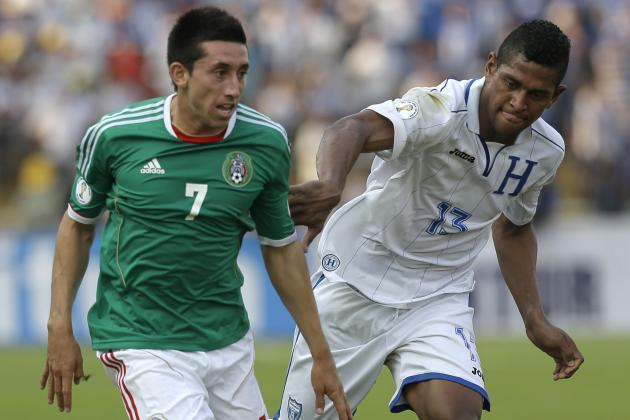
hi-res-948caa0c4589375d7b4b1c91843de400 crop northThe last time Mexico faced Honduras, El Tri lost at the Estadio Azteca. But this is a new era, with a different coach and a promising generation of footballers.

Miguel Herrera saved the national team from missing the 2014 World Cup. His squad managed to qualify to the round of 16, after defeating Cameroon, surprising Brazil with a scoreless draw—due to Guillermo Ochoa's saves—and a convincing victory over Croatia.

But it's all in the past now. Herrera has to address several issues before dreaming of another stellar performance in the upcoming World Cup.

He needs to shape a new defensive line. Rafael Marquez will probably miss Russia 2018—he will be 39 years old—same thing goes for Francisco Rodriguez, who will be a 36-year-old veteran, and Carlos Salcido.

Moreover, "El Piojo" needs to put together two teams for 2015.

The first one for the Copa America, which will probably be full of youngsters, which Mexico have produced in large quantities—just take a look at the 2011 and 2013 U-17 FIFA World Cups, as well as the 2012 Summer Olympics.

The second is for the 2015 Gold Cup, which will feature the A-team, and since El Tri is a CONCACAF side, they must give priority to this tournament.

The new chapter in Mexico's history continues this week (October 9), when they face Honduras at the Estadio Victor Manuel Reyna in Chiapas.

Let's take a look at the key issues that will shape the match.

Miguel Herrera capped five forwards for the upcoming friendlies: Javier Hernandez, Oribe Peralta, Javier Orozco, Erick Torres and Alfonso Gonzalez.

Mexico coach has always used a 5-3-2 formation, the question is: Who should start?

Hernandez and Peralta have played several times together, and although they have had good results, it seems like there's not enough spark between these two.

Torres missed several opportunities against Bolivia, but he has proven to be a game changer for Chivas USA.

Meanwhile, Javier Orozco has performed well in the 2014 Apertura, and is Santos Laguna's top scorer, with five goals to his name in 12 appearances.

Alfonso Gonzalez is the youngest of the pack (20 years old) and this is his first cap for the senior team. He is an undisputed starter with Atlas, where he has put the ball away four times, more than any other of his teammates, however he is used to playing from the left.

Herrera should go with Peralta and Orozco, or Hernandez and Torres. Both pairs have played together before. The first with Santos Laguna, the second with Guadalajara.

El Tri have struggled with the final touch, and Herrera hasn't tried those combinations.

Rafael Marquez and Francisco Rodriguez weren't capped for this game, while Carlos Salcido has already announced his retirement from El Tri and Hector Moreno is still recovering from a fracture.

The center of the box is a major concern for Mexico. The verticality of the team allows the left-back and the right-back to join the attack on a regular basis, putting a lot of pressure and responsibility on the centre-backs.

In the previous friendlies (Chile and Bolivia) the coach decided to try Rodriguez, Hiram Mier, Miguel Angel Herrera (not related), Hugo Ayala, Oswaldo Alanis and Luis Venegas.

However, the back line was shaky. The lack of experience with El Tri, as well as the pressure, left much to be desired.

Mier, Herrera and Ayala were consistent, but Rodriguez, Alanis and Venegas faltered constantly.

Chile shot five times from inside the box, while Bolivia completed one, as per Mi Seleccion Gamecast (Spanish).

For the upcoming games, Miguel Herrera capped several centre-backs: Julio Dominguez, Enrique Perez, Ayala, Alanis, Venegas and Herrera.

All together, they have been capped 25 times. Ayala, the most experienced with El Tri, has been on the team 13 times, Herrera and Venegas, once.

The coach needs to find the perfect balance soon, or else the team will have to slow down the attack through the flanks to compensate the lack of experience from those covering the box.

Miguel Layun has been the undisputed starter in the left flank. He is going through a fantastic moment with America.

The defender has scored six times during the 2014 Apertura, proving that his flexibility is perhaps his most valuable asset.

However, Miguel Herrera relies a lot on Layun and a little competition won't hurt.

Jorge Torres Nilo is a veteran player. He has appeared 37 times with El Tri, 24 of them in the starting position.

It is important for Herrera to find a suitable sub for Layun.

Miguel Angel Ponce was sharp against Chile, and has improved his performance ever since he joined Toluca in the 2014 Clausura, but other than him, the coach hadn't tried any other player.

Torres Nilo is slowly getting back to his old self, he just needs confidence, which is something Herrera provides easily.

Marco Fabian keeps getting chances to play for Mexico, but he is yet to make a real impact with El Tri.

The left midfielder hasn't performed at his best while wearing "La Verde," at least not since he played in the 2012 Summer Olympics.

Fabian has speed and accuracy. According to Squawka, after 11 appearances in the 2014 Apertura, he averages 84 percent of pass accuracy, and he has created six goal opportunities, through key passes.

However, he hasn't been sharp when shooting. He has 33 tries, but has only 11 shots on target; the other 22 have been far from surprising the goalkeeper.

Miguel Herrera didn't call Andres Guardado, which means Fabian has a good chance to start against Honduras and Panama.

It's now or never for the Cruz Azul midfielder. He has to prove he has what it takes, if he wants to continue with the team.

ose Juan Vazquez is not on the list, and Miguel Herrera has other three options: Antonio Rios, Javier Guemez and Hector Herrera (not related).

It seems tough that the Porto midfielder takes over the center of the pitch, because he has been a fantastic addition in the right flank.

So everything will fall on Rios and Guemez.

The first is an undisputed starter with Toluca. In 12 appearances in the 2014 Apertura he records 89 percent of pass accuracy, plus 16 chances created, as per Squawka.

He had a good performance against Chile, which secured him a spot in the starting XI vs. Bolivia. He played 87 minutes in front of Mauricio Soria's boys.

On the other hand, this is Guemez's first cap. The Tijuana midfielder can provide support to the back line, as his defensive skills are superb.

After 12 matchdays in the Liga MX, he has 25 clearances, four blocks and 17 interceptions, according to Squawka. He has completed 84 percent of his passes, 74 percent to the last third of the pitch.

Since Rios has already worn "La Verde" twice, he should take over the starting spot, and Guemez should debut in the second half.

 hi-res-948caa0c4589375d7b4b1c91843de400 crop north  1
 2  3
 4  5

afaWhether you’re lacing up running shoes to compete or heading to the route in flip-flops as a spectator, you won’t want to miss the 6th Annual Touristic Half-Marathon and 10K slated for Friday, Nov. 22.

apescaOver 62 vessels will vie for prizes that include nine cars, sport fishing equipment and marine motors and will generate plenty of excitement from October 15-19, 2014, at the Marina Riviera Nayarit in La Cruz de Huanacaxtle, the Nautical Capital of the Riviera Nayarit.

The Tepic Sport Fishing Club recently announced the 3rd International Sport Fishing Tournament to be held in La Cruz de Huanacaxtle from October 15-19, 2014, at the Marina Riviera Nayarit, the most modern of its kind in Latin America, located in the Nautical Capital of the Riviera Nayarit.

The official tournament presentation took place in Tepic and La Cruz de Huanacaxtle during press conferences led by Raúl Rodrigo Pérez Hernández, Tourism Secretary for Nayarit, and Carlos Menchaca Díaz del Guante, Council President of the Tepic Sport Fishing Club, as well as other public figures.

During his speech Pérez Hernández emphasized the importance of these fishing tournaments as far as tourism is concerned, because their close connection with the Vallarta-Nayarit joint campaign helps to place Mexico’s Pacific Treasure as one of the country’s most complete vacation destinations.

The Government of the State of Nayarit backs the event via the Secretariat of Tourism. The Riviera Nayarit Convention and Visitors Bureau also cooperates in the execution of these tournaments because of their relevance to tourism and sports within the region.

The more than 62 expected vessels will be trying to capture the largest sailfish, marlin, dorado and tuna they can find in order to take home the grand prizes that are included within the $4.5 million peso purse. Twenty-five vessels are flying foreign flags and the rest come from 13 of Mexico’s states.
Among the many prizes to be awarded are nine cars, sport fishing equipment and marine motors. Anglers who don’t win any of these will be eligible for a final raffle of a brand new car.

Those who break records established in previous tournaments will receive special awards. To get all the details on the prizes, registration and the tournament program click here: http://www.clubdepescadeportivatepic.com/es/.


Click here for the digital version of the official magazine: http://issuu.com/clubdepescatepic/docs/armada_press_q.

NEW Riviera Nayarit Logo March 2013

IMG 3864-1024x768Puerto Vallarta Jal . 'In a press conference yesterday presented what will be the big Doctor's race day , taking verificative on Sunday October 19, at about 7:00 am, with the start and finish the center lanes against sports Agustín Flores Contreras .

The organizers of this event, Dr. Javier Aceves Ortiz, Miguel Angel Meza Valdez, as well as Felipe Reyes "Greyhound" outstanding sprinter Vallarta, commented to the media, what is relevant to this event, with the antecedent past year's race at over 600 competitors, this time the invitation is nationwide and expected about twice competitors important opportunity in sports as well as the dissemination of this important aspect to shape the destiny as one both attractive sports sunglasses and beach.

This race will feature sports official standards regulation, each competitor will have a chip that yielded the results of times each of the competitors. With a stock of over 100,000 to distribute to the winners stood out were rewarded 8th. Places to greater motivation.

The men's and women, Youth categories: 14-18 years.

Free: 19 to 39 Master: 40 to 49 years.

Veterans: Veterans 50 to 59 A: Age 60 +.

Cost before October 5: General $ 150 Students $ 100

After October 6: General $ 200 Students: $ 150.

Special strokes for Medical institution present their badge or card.

Enrollments Gallery Vallarta, the invitation to the athletic population, young people interested athletes in the region. Also in this program will make a special presentation on "group the rocktors " it forms a group of doctors. important to mention, in addition to healthy living, this will cause a race that benefits a local organization that promotes and supports local sports talents.

[readon1 url="http://notivallarta.com/2014/09/29/presentan-gran-carrera-dia-del-medico-5k-y-10k/"]Source:notivallarta.com[/readon1]


ai-miyazatoThe Royal and Ancient Golf Club at St. Andrews is no longer just for men.

The spiritual “Home of Golf” became the latest club to end years of male-only exclusivity on Thursday when its members voted overwhelmingly in favor of inviting women to join. The vote was effective immediately.

“I can confirm that The Royal & Ancient Golf of St. Andrews is now a mixed membership club,” R&A secretary Peter Dawson said in a brief statement he read just outside the clubhouse at the Old Course.

Dawson said more than three-quarters of the club’s 2,500 members worldwide voted, with 85 percent in favor. It was the first time in the club’s 260-year history that members were allowed to vote by proxy at the annual business meeting.

The result was far more predictable than Scotland voting for independence on the same day, especially when the Royal & Ancient approved voting by mail, and comments earlier this year by Dawson of early indications of support.

Even so, it was hailed as an important step by golf organizations, public officials, sponsors and even a prominent golfer.

“I am thrilled the R&A has voted overwhelmingly to allow female members. This is a great day for golf and a historic one for women in golf,” Annika Sorenstam tweeted.

The members also voted to fast-track a “significant” number of women to join in the next few months. The R&A did not say how many women would be invited, though previous reports indicated it could be as many as 15. The club previously said the first women members would likely have made a “significant contribution” to golf.

“This is a very important and positive day in the history of the Royal and Ancient Golf Club,” Dawson said. “The R&A has served the sport of golf well for 260 years and I am confident that the club will continue to do so in future with the support of all its members, both women and men.”

Augusta National, home of the Masters, decided two years ago to invite women to join. Unlike the R&A, Augusta National did not have a written policy that banned women. Former Secretary of State Condoleezza Rice and South Carolina financier Darla Moore were the first female members.

While the R&A members have access to the clubhouse behind the first tee at the Old Course, they belong to a club, not a golf course. The seven golf courses at St. Andrews are open to the public.

“This is positive news for the sport, and I hope we will now see other golf clubs that still have outdated same-sex policies follow suit,” said Helen Grant, Britain’s minister for sport. “With golf in the next Olympics there is a huge opportunity for the sport to grow and this sends out the right inclusive message that golf is for everyone.”

The Royal & Ancient governs golf everywhere in the world except for the United States and Mexico. It is separate from “The R&A,” a business arm created 10 years ago to handle the Rules of Golf, organize the British Open, and operate other business affairs. But while the R&A has female employees, the committees and board are populated by club members, so there had been no women in leadership roles governing the game or running championships.

“It’s a very positive message for the game of golf and the R&A in its position as the governing body for the game,” Dawson said. “It’s quite right that members have agreed to embrace this concept and welcome women members to the club. It’s a great day for the game.”

When asked if he had contacted some of the all-male clubs in the British Open rotation, Dawson declined further questions.

“This is a night for celebration,” he said.

The R&A was coming under increasing pressure when The Open was held at all-male clubs, most recently Muirfield in 2013. Even some of its sponsors were getting uncomfortable with the centuries-old policies barring women.

Others in the rotation are Royal St. George’s in England and Royal Troon in Scotland, which will host golf’s oldest major in 2016. Dawson said this year that the policies of other golf clubs in the UK were not connected to the R&A vote on its membership.

Royal Troon said in a statement this week to Sky Sports News, “At present, membership of Royal Troon Golf Club is open only to those of the male gender and we have no plans to change our constitution at this time although I must point out that we are quite different from many of the other single gender clubs in that we share our facilities with an active Ladies Golf Club.”

Giles Morgan, the global head of sponsorship and events for HSBC, said the bank welcomed the R&A news.

“Our commitment to the value of diversity and our support of women’s golf .... is a cornerstone of our global golf portfolio,” Morgan said. “We look forward to continuing this successful partnership at St. Andrews in 2015 for what promises to be the start of a new era.”

The Women’s British Open has been played at St. Andrews twice since 2007, and they were allowed in the clubhouse during the championship.

“The LPGA is happy to hear that the members of the Royal & Ancient Golf Club in St. Andrews have voted to include female members,” the LPGA Tour said in a statement. “This decision is certainly a step in the right direction and one that better captures the current diversity and inclusiveness of our great game.

[readon1 url="http://napavalleyregister.com/sports/ap/royal-ancient-golf-club-to-admit-female-members/article_0e581b44-6dc1-580a-b78e-c63682634413.html"]Source:napavalleyregister.com[/readon1]


dibujo 1  4  animationTopFour American boxers earned the top spot on the medal stand with final round victories on Saturday at the 2014 Elite Women’s Continental Championships in Guadalajara, Mexico. 2012 Olympic gold medalist Claressa Shields (Flint, Mich.) and 2012 Olympic bronze medalist Marlen Esparza (Houston, Texas) both added new hardware to their trophy cases with championship round wins at the Pan American Volleyball Complex. Returning welterweight champion Danyelle Wolf (San Diego, Calif.) defended her title and international newcomer Krystal Dixon (New Rochelle, N.Y.) claimed the heavyweight crown with final round wins. In addition to the four gold medals, bantamweight Christina Cruz (New York, N.Y.), featherweight Tiara Brown (Fort Myers, Fla.), and light welterweight Destiny Chearino (Warwick, R.I.) each won silver medals in the event.

Esparza opened final round competition for the United States team in a flyweight bout with Brazil’s Clelia Costa. The two faced off on Mexican soil just two months ago at the Pan American Olympic Festival and Esparza looked to repeat her unanimous decision victory in the rematch. The international veteran put on another strong performance, defeating Costa by a 3-0 margin to win the first gold medal of the night for the United States.

Her fellow Olympic medalist took on Canada’s Arine Forti in the middleweight finale and as a Michigan native, Shields is quite familiar with boxers from the United States’ northern neighbor. She claimed another win over the Canadian squad with a unanimous decision victory over Forti in the middleweight championship bout. The 2014 Elite Women’s Continental Championships title is the first for Shields after missing the event last year due to her age.

Wolf was competing in her second straight continental championship in Mexico and she used that experience to her advantage in her bout with Canada’s Myriam da Silva. The two boxers had already battled twice in 2014 with Da Silva claiming victories in both USA vs. Canada duel meetings. Yet Wolf had something new in store in the third bout and she pulled out a 2-1 victory over the Canadian for her second consecutive continental championship.

Dixon was one of two U.S. boxers making their Elite Women’s Continental Championships debut in Mexico and she made her experience memorable with a gold medal victory. She took the third U.S. win of the night over Canada, claiming a 3-0 decision over Vanessa Lepage for her first international gold medal.
Cruz enjoyed a dominating victory in her semifinal bout but the momentum didn’t carry over to her championship round contest with Argentina’s Leonela Sanchez. The American bantamweight lost a 3-0 decision to Sanchez and will return home with a silver medal.

Brown battled in an ugly contest with Brazil’s Taynna Cardoso in featherweight final round action. The reigning world champion tried to keep the bout clean, but at the end of four rounds, the judges gave the decision to Cardoso by a 2-1 margin.

Chearino was competing in her first continental championship event and she enjoyed her first international win earlier in the tournament. She wasn’t able to take a second victory in the light welterweight finale, losing a 3-0 decision to host nation boxer Esmerelda Falcon of Mexico. She takes home a silver medal for her strong effort in Mexico.

Team USA’s Queen Underwood (Seattle, Wash.) and light heavyweight Heidi Henriksen (St. Louis Park, Minn.) won bronze medals in the event.

Coaches Benny Roman (New York, N.Y.), Israel Acosta (Milwaukee, Wis.), and Juan Estrada (San Diego, Calif.) led the U.S. team at the Women’s Continental Championships in Guadalajara.

Saturday’s Championship Round Results
112 lbs: Marlen Esparza, Houston, Texas/USA, dec. Clelia Costa, BRA, 3-0
119 lbs: Leonela Sanchez, ARG, dec. Christina Cruz, New York, N.Y./USA, 3-0
125 lbs: Taynna Cardoso, BRA, dec. Tiara Brown, Fort Myers, Fla./USA, 2-1
141 lbs: Esmerelda Falcon, MEX, dec. Destiny Chearino, Warwick, R.I./USA, 3-0
152 lbs: Danyelle Wolf, San Diego, Calif./USA dec. Myriam da Silva, 3-1
165 lbs: Claressa Shields, Flint, Mich./USA dec. Ariane Forti, CAN, 3-0
178+ lbs: Krystal Dixon, New Rochelle, N.Y./USA, dec. Vanessa Lepage, CAN, 3-0

USA Boxing, as the national governing body for Olympic-style boxing, is the United States’ member organization of the International Amateur Boxing Association (AIBA) and a member of the United States Olympic Committee (USOC).

[readon1 url="http://www.boxing247.com/press-release-boxing/four-united-states-boxers-win-gold-medals-at-the-2014-elite-womens-continental-championships-in-guadalajara-mexico/34276"]Source:www.boxing247.com[/readon1]