







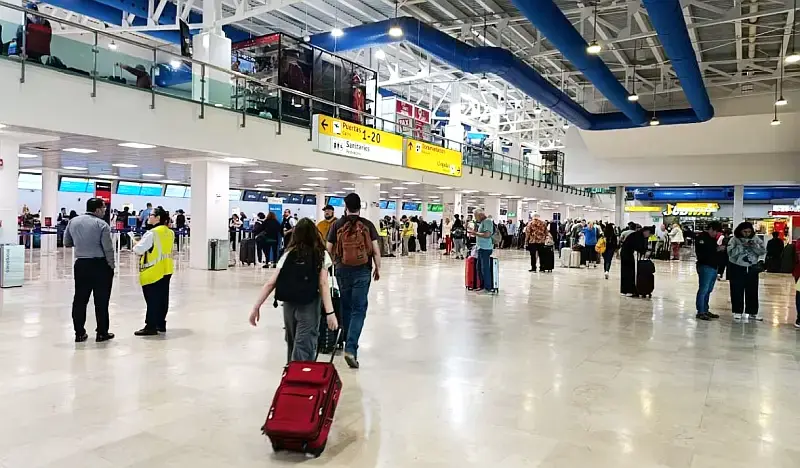
While the subsidy packages and airport restoration announcements covered in our main piece address the supply side of Puerto Vallarta's recovery, the most revealing data point comes from the demand side. Hotel occupancy in Puerto Vallarta is currently running at approximately 80%, according to Abel Villa Sánchez, president of the Puerto Vallarta Hotels and Motels Association. Tourists already in the city chose to complete their planned stays rather than depart early. These numbers do not simply describe a recovery in progress, they describe a destination whose visitors, when tested, demonstrated that their confidence in the place was more durable than the disruption that tested it.
What 80% Occupancy Means in Context
Hotel occupancy rates are one of the hospitality industry's most watched metrics because they reflect the actual behaviour of paying guests rather than bookings or intentions. An 80% occupancy rate in late February, typically the tail end of Puerto Vallarta's peak winter season, is a strong absolute figure. It indicates that four in five available hotel rooms are occupied, and that the revenue generating capacity of the accommodation sector has not been materially undermined by the disruption period.
The absence of a wave of early departures is in some ways more significant than the occupancy rate itself. When visitors who are already checked in and experiencing a destination decide en masse to leave early, it generates a visible and widely reported signal of confidence collapse, empty resort pools, cancelled excursions, restaurants operating at a fraction of capacity. None of that happened in Puerto Vallarta. The guests who were there stayed, completed their itineraries, and left on schedule.
This behaviour reflects several converging factors. The disruption, while operationally significant, did not directly affect the tourist zone where most visitors stay and spend their time. Hotel operators responded proactively, in some cases offering free accommodation to ensure that no guest was left without a safe place to stay, a gesture that directly reinforced the trust relationship between the destination and its visitors. And government communication was active enough that visitors had reliable information about the actual status of conditions around them.
The Hospitality Sector's Response During the Critical Period
The decision by some hotel operators to offer complimentary accommodation to guests during the most uncertain period of the disruption is worth examining as a strategic choice, not only as a humanitarian one. A guest who receives an unexpected night of free accommodation in a difficult moment goes home with a story that is the opposite of the one a destination most fears: instead of 'we had to leave early because conditions were unsafe,' the story becomes 'the hotel took care of us when things got complicated.' The word-of-mouth and review implications of that experience are genuinely positive, and the cost of the complimentary accommodation is small relative to the reputation value it creates.
All three levels of government, federal, state, and municipal, maintained active public communication during the disruption period, which Villa Sánchez's association credited as a meaningful contributor to guest confidence. Visitors who receive timely, accurate, official information about conditions are far less likely to make decisions, including early departure, based on unverified reports or social media speculation. The coordination between government communication and hotel-level guest care created a unified experience that appears to have been sufficient to keep most visitors in place.
The proactive well-being measures extended beyond complimentary rooms. Hotels prioritised guest safety, maintained normal food and beverage operations where possible, and kept staff present and responsive. For international visitors unfamiliar with Mexico's geography and risk landscape, the reassurance of a functioning, attentive hotel environment during a period of external uncertainty is not a minor comfort, it is often the deciding factor in whether a guest stays calm or panics.
What This Means for Puerto Vallarta's Forward Booking Trajectory
The occupancy and retention data from the disruption period will feed directly into Puerto Vallarta's forward booking performance. Travellers who completed their stays as planned, and experienced the hospitality response positively, are likely to return. Travel agents and tour operators who were monitoring conditions and considering whether to redirect client bookings will have noted the occupancy stability and the absence of mass departures as indicators that the destination maintained its visitor experience standards through the disruption.
The promotional campaign that municipal authorities and business chambers are designing will be able to reference tangible operational evidence rather than simply assertions of normalcy. Occupancy data, flight restoration confirmation, and the absence of early departures are credible, verifiable signals, the kind of specific, factual evidence that sophisticated travellers and travel trade intermediaries respond to more than general reassurances.
Puerto Vallarta enters its post-disruption promotional period with stronger evidence than most destination recovery campaigns can marshal. The hospitality sector demonstrated resilience in practice, not just in statements. The data supports the campaign, and the campaign can now build on the data, a virtuous cycle that positions the destination for a recovery that is faster and more durable than the disruption timeline might have suggested.
Frequently Asked Questions
Q: What is Puerto Vallarta's current hotel occupancy rate?
A: Hotel occupancy in Puerto Vallarta is currently running at approximately 80%, according to Abel Villa Sánchez, president of the Puerto Vallarta Hotels and Motels Association. This figure reflects strong demand for the destination despite the operational disruptions of late February.
Q: Did tourists leave Puerto Vallarta early during the late February disruption?
A: No. The hospitality industry did not experience a wave of early departures. Tourists already in Puerto Vallarta chose to complete their planned stays as scheduled, demonstrating sustained confidence in the safety and hospitality of the destination. This outcome was supported by proactive government communication and hotel operators who prioritised guest well-being throughout the disruption period.
Q: What did Puerto Vallarta hotels do for guests during the disruption?
A: Hotel operators prioritised guest well-being throughout the disruption, maintaining normal operations where possible and, in some cases, providing complimentary accommodation to ensure that no traveller was left without a safe place to stay. All three levels of government maintained active public communication to keep guests informed, which hotel association leaders credited as a key factor in preventing early departures.
Q: What is a typical hotel occupancy rate for Puerto Vallarta in late February?
A: Late February falls within the tail end of Puerto Vallarta's peak winter tourism season, when the destination benefits from significant North American snowbird and vacation travel. Occupancy rates above 70 to 80% are typical for quality-branded hotels during this period, making the current 80% figure consistent with normal seasonal performance rather than a post-disruption rebound from lower levels.
Q: How does visitor retention during a disruption affect a destination's long-term reputation?
A: Visitors who complete their stays as planned during a disruption, particularly when supported by proactive hotel and government responses, tend to generate positive word-of-mouth and reviews that counteract negative media narratives. Their direct experience of a destination that functioned reliably during a difficult period creates advocacy that is more credible than any marketing campaign. Travel agents and tour operators monitoring destination performance also note occupancy stability as a signal that the visitor experience quality has been maintained.
Q: Is March and April a good time to visit Puerto Vallarta in 2026?
A: Yes. March and April are excellent times to visit Puerto Vallarta. The weather is warm and dry, with lower humidity than the summer months. Hotel occupancy is normalising from peak season levels, which can mean more accommodation options and potentially better rates than peak February. The city's restaurants, beach clubs, and water sports operators are fully operational, and the broader hospitality ecosystem is actively welcoming visitors as part of the post-disruption recovery and relaunch strategy.





 How to resolve AdBlock issue?